Washing Hands to a Cleaner World

When Dr. Pawan found out about the unhygienic living conditions in Gadchiroli, Maharasthra, India, he created a hand-washing device in just Rs.35 (50 cents) that has been saving the lives of the villagers. - PHOTO: Better India

When Dr. Pawan found out about the unhygienic living conditions in Gadchiroli, Maharasthra, India, he created a hand-washing device in just Rs.35 (50 cents) that has been saving the lives of the villagers. – PHOTO: Better India

Clean care is safe care, says the World Health Organisation and follows it with a campaign on washing hands towards cleaner living and working conditions across the globe. And Dr. Pawan did his part too. By creating a hand-washing device that costs less than 50 cents, roping in children to keep the initiative going, and relying on elders for the device to adapted and adopted into the community.

In 2008, Dr. Pawan was one of the seven students selected for a two-year fellowship programme at Nirman’s SEARCH (Society for Education, Action and Research in Community Health), in Gadchiroli district, Maharashtra, India. The programme encourages students to work in areas affecting rural communities like water management and NRGA schemes, and being a physician, Dr. Pawan chose to work in the health sector. Living in the community, he realised that there were several diseases persisting in the village, those that could be prevented by merely drinking clean water or paying more attention to cleanliness. He promptly did a study that revealed that of the 64 families living in the village, only six families used soap for washing hands.

Continue reading

Ancient Knowledge and a Nobel

In giving Youyou Tu the prize, the Nobel Prize committee has recognized the role ancient knowledge can play in the modern world. PHOTO: New Scientist

In giving Youyou Tu the prize, the Nobel Prize committee has recognized the role ancient knowledge can play in the modern world. PHOTO: New Scientist

Traditional Chinese medicine has found its Nobel Prize moment. A cure for malaria. And its origin is marked by war, military, learning, and more.

The Quartz reports:

In the war, the North Vietnamese were not just fighting American-supported forces but also failing to fight malaria. The parasite that caused the disease had developed resistance against chloroquine, which was commonly used as treatment. So, in desperation, they turned to China’s leader, Mao Zedong, for help. Mao’s answer was to make searching for a new malaria drug a military project.

Continue reading

Cleaning Kenya’s Slums Through a Toilet Franchise

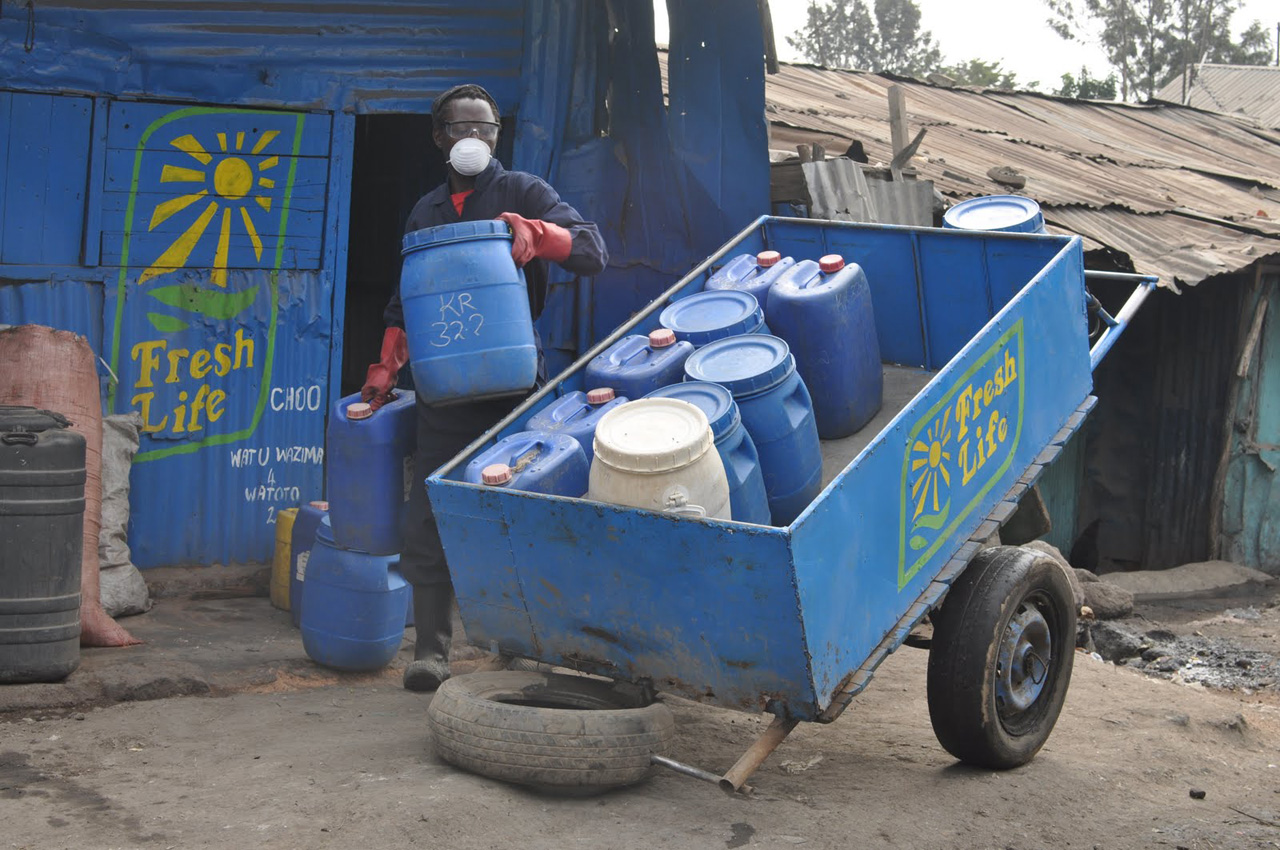
Sanergy builds healthy, prosperous communities by making hygienic sanitation affordable and accessible throughout Africa's informal settlements.

Sanergy builds healthy, prosperous communities by making hygienic sanitation affordable and accessible throughout Africa’s informal settlements.

Innovations are intriguing, ones with the power to change lives more so. Add development of communities, better health and dignity of life to the equation and you can’t say no to knowing more. We are talking toilets. Do you know Caltech engineers and Kohler designers are testing a self-cleaning, solar-powered toilet that turns human waste into hydrogen and fertilizer? Then there’s Peepoople making ‘toilet bags’. Inside are chemicals that break down human waste into fertilizer, offering alternative sanitation in slums and refugee camps. Then there’s what Sanergy is doing in Kenya.

Continue reading

Use Them Lights to Grow Some Vegetables

In this huge urban farming lab, LED "Recipes" grow juicier tomatoes and sweeter basil. PHOTO: Co Exist

In this huge urban farming lab, LED “Recipes” grow juicier tomatoes and sweeter basil. PHOTO: Co Exist

Behind a vault-like door, the long, windowless room has the same purple glow as the cabin on a Virgin America flight. Instead of passengers, the space is filled with row after row of plants, each growing under a carefully calibrated series of red and blue lights. White-coated researchers walk by studying each leaf of lettuce or kale. Welcome to the GrowWise Center, one of the largest homes for urban farming research in the world.

Continue reading

A ‘Ketchup’ Sachet and its Power to Heal

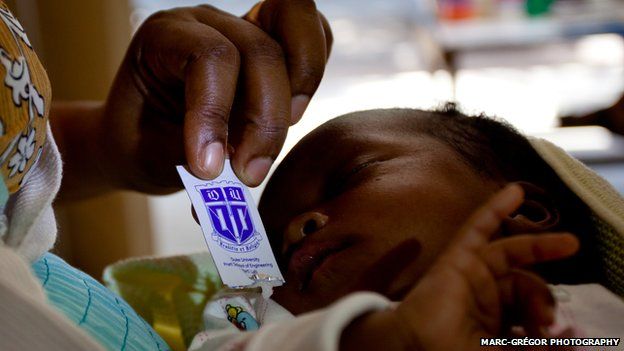
An HIV positive mother in Moshi, Tanzania, giving her baby antiretroviral medicine from the sachet

An HIV positive mother in Moshi, Tanzania, giving her baby antiretroviral medicine from the sachet

Inside a foil sachet, which looks more at home in a fast-food restaurant, an exact dose of antiretroviral medicine is helping to protect newborn babies against the threat of infection from their HIV-positive mothers. According to the UN, mother-to-child transmission in the developing world creates 260,000 new infections in children every year. Thanks to a program involving the Ecuadorian government, the VIHDA foundation in Guayaquil and Duke University in North Carolina, at least 1,000 babies have been born without the infection from HIV-positive mothers.The program is enabling newborn babies to take their medicines efficiently – via a pouch that looks just like the small ketchup sachets you get at fast food restaurants. Only in this case, they are filled with antiretroviral drugs, which protect against HIV.

Continue reading

Let’s See You Shop Sustainably

HowGood, an independent research organization based in New York City, may have answers for the food industry’s many scales of sustainability. PHOTO: ucla.edu

HowGood, an independent research organization based in New York City, may have answers for the food industry’s many scales of sustainability. PHOTO: ucla.edu

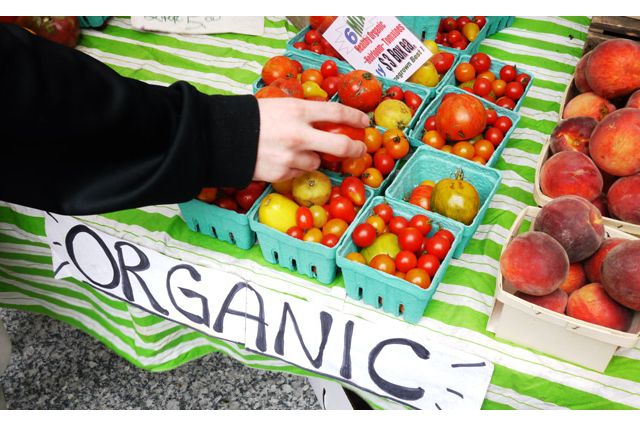
Are you a conscientious shopper? Do tags of ‘organic’, ‘locally sourced’, ‘homegrown’, ‘all-natural’, etc easily sway you and your shopping cart? Got questions that can better aid your shopping choices? Then HowGood is where you should stop by before you head to the check-out counter.

But if one apple touts organic certification, and an adjacent apple boasts local sourcing, which green reigns supreme? And what grocery store offers the singular scale for weighing the overall benefits? HowGood, an independent research organization based in New York City, has toppled the food industry’s many scales of sustainability to answer these questions through a more nuanced, easy to understand system.

Continue reading

More of This Fish, Please

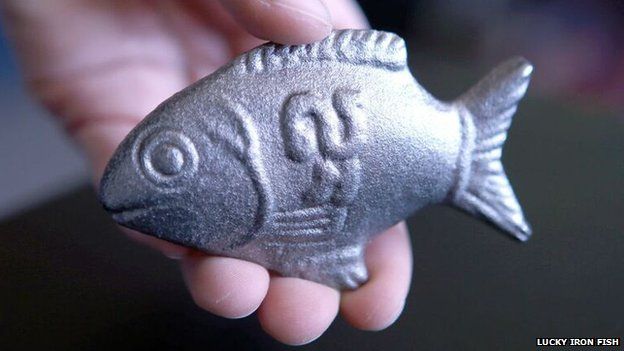
The lucky iron fish, designed by Gavin Armstrong, was based on the iron fish used in Dr Charles' research

The lucky iron fish, designed by Gavin Armstrong, was based on the iron fish used in Dr Charles’ research

Anemia is the most common and widespread nutritional disorders in the world, affecting 2 billion people globally – or over 30 percent of the world’s population. But Canadian scientists have come up with an ingenious solution, and it’s so simple, it fits in the palm of your hand. Meet the Lucky Iron Fish – a chunk of iron that’s thrown into the saucepan and boiled with lemon to give adults 75 percent of their daily recommended iron intake, and close to 100 percent for kids.

And this little fish just won the Product Design Grand Prix at Cannes.

When Canadian science graduate Christopher Charles visited Cambodia six years ago he discovered that anaemia was a huge public health problem. In the villages of Kandal province, instead of bright, bouncing children, Dr Charles found many were small and weak with slow mental development. Women were suffering from tiredness and headaches, and were unable to work. Pregnant women faced serious health complications before and after childbirth, such as hemorrhaging. Ever since, Dr Charles has been obsessed with iron.

Continue reading

Yoga – Popular and Partisan in Nature?

India celebrates its first International Yoga Day today. PHOTO: Members of the Navy performing Yoga at sea.

India celebrates its first International Yoga Day today. PHOTO: Members of the Navy performing Yoga at sea.

On Sunday morning, the Indian capital New Delhi’s broadest and grandest avenue, Rajpath, will be covered in a sea of yoga mats, with some 35,000 people expected to indulge in mass physical contortions to mark the first International Day of Yoga—a pet initiative of India’s Prime Minister Narendra Modi. He pitched the idea to the U.N. General Assembly (UNGA) in his maiden speech at the annual diplomatic confab in September. A formal UNGA resolution to establish an international yoga day was passed in December, with more than 170 countries co-sponsoring the move. Modi’s government has since gone all out to promote the first yoga day, calling its diplomatic corps into service to plan events in more than 190 countries.

The Modi government is attempting to set two world records, including the largest yoga lesson (the current record was set in India in 2005, when nearly 30,000 students from more than 360 schools participated in a yoga session in the central Indian city of Gwalior). It also wants to set a record for the number of nationalities involved in a single yoga lesson, a category it hopes to pioneer.

Continue reading

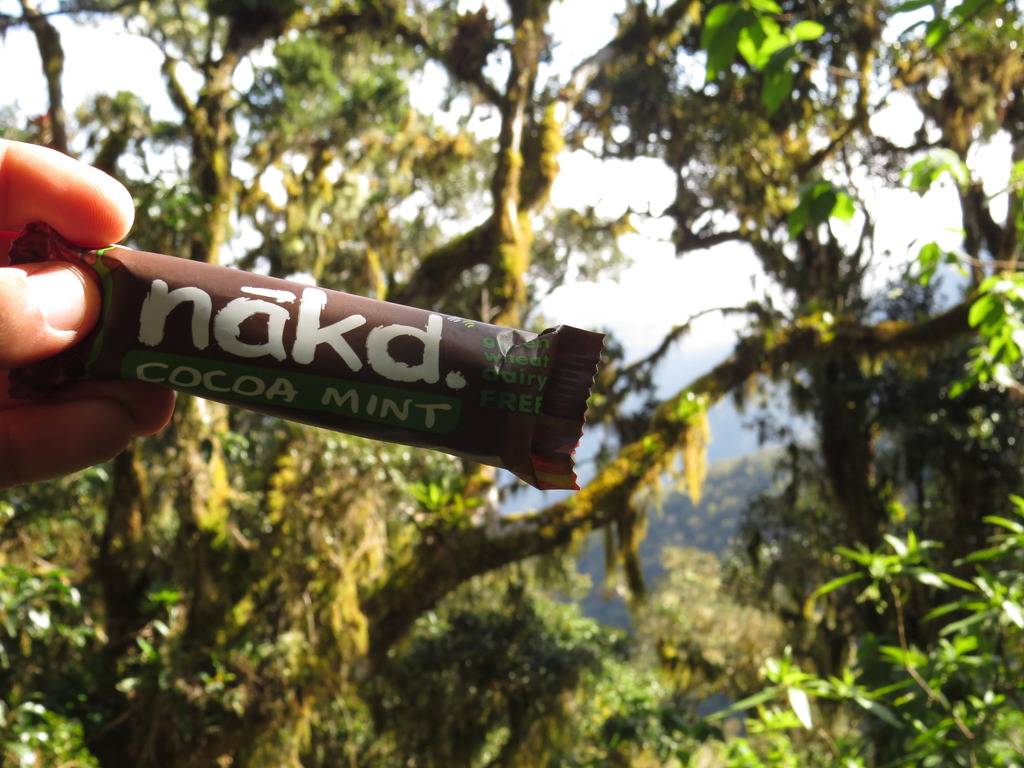
The Great Golden Swallow Gear Review: nākd edition

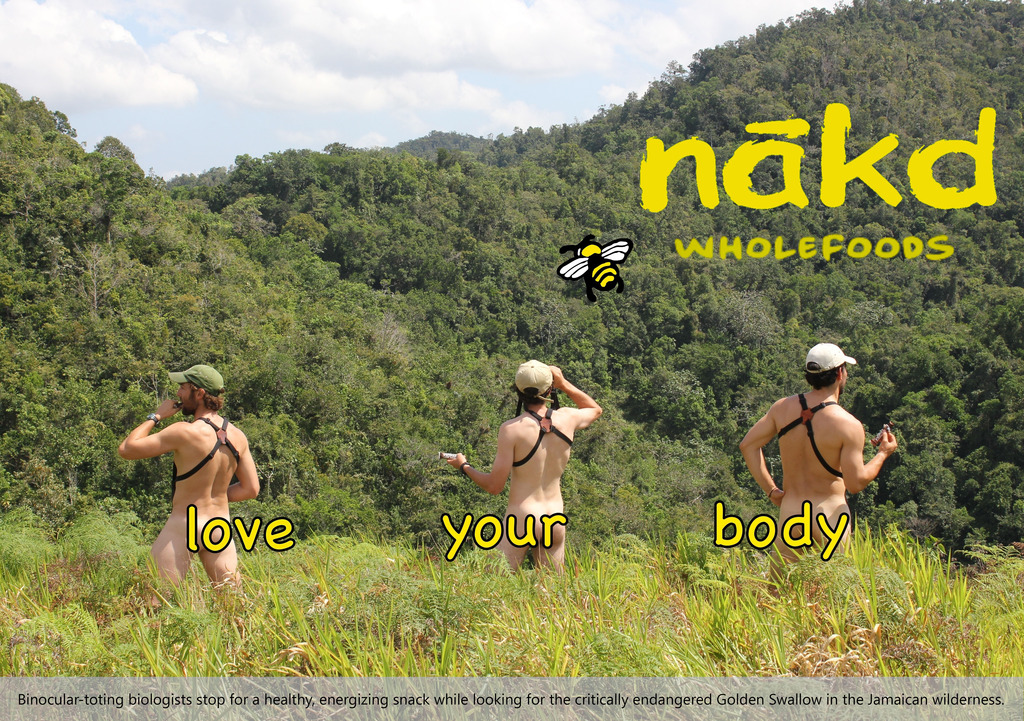
Given the photo above, perhaps this post would have been better suited to April Fools’ Day. However, since April 1st was the first day we had back in Ithaca, the precise editing required to keep the photo PG-rated would have been rushed and the result would have been, shall we say, sloppy. Although it may seem like a strange way of saying thanks, this post — and especially the header photo — are a token of our great appreciation for the folks at nākd (Nature Balance Foods), particularly for Traci in US operations, who coordinated everything with us! I should clarify that we created the photo above of our own volition and without any explicit sponsorship — it is not a nākd photo shoot, it’s just a naked photo shoot.

On the trail up to Blue Mountain Peak, the highest summit in Jamaica.

We had mentioned long ago that we were receiving lots of nākd bars to help us through our expeditions, and no amount of expressed gratitude can reflect the true value of these snacks to our diet during the past three months. The best part is that we could eat as many as we felt like it since they have no added sugar or artificial ingredients, and are basically just a combination of 1) dates and/or raisins, 2) almonds, cashews, or pecans, and 3) spices or natural flavoring like cocoa powder or coffee.

Continue reading

Big Goals About Basic Things

In response to this successful project, the Gates Foundation recently approved a two-year grant to Kohler to design and fabricate five closed-loop flush toilet systems for field testing in developing world locations that do not have adequate sanitation. Kohler

Some of the things many of us take for granted in the “developed” world – access to toilets and clean drinking water among them, are daily challenges for many living in the “developing” world. India’s new prime minister set a challenge for a Clean India by 2019, which will include 100 million toilets across the country. The goals coincide well with the Bill and Melinda Gates Foundation’s Reinvent the Toilet Challenge, and Kohler’s production of a closed loop toilet system design created by Caltech University that is already coming on line in test areas in India. Continue reading

Superfoods & Taste Of Place

Migle/Flickr

Migle/Flickr

Several of us scouting in Ethiopia recently have been treated to roasted barley as a snack.  It has us thinking about super foods, diet, wellness, taste of place, and lots more to ponder in future blog posts; for now, this catches our eye:

The Skinny Carb

A recent study shows that people who simply ate more fiber lost about as much weight as those who went on a complicated diet.  Olga Khazan

Continue reading

Costa Rican Wildlife Saving Under-vacationed Americans

We have many connections with Costa Rica at Raxa Collective, but especially after the inclusion of Xandari in our network. So we were happy to hear that, facilitated by Costa Rica’s Tourism Institute (ICT), the country’s animals have gotten together to try to save overworked Americans by offering them natural habitat and a stress-free paradise to escape to. Or at least that’s what the Save the Americans website declares after you watch the video embedded above. Spinning off statistics like “Americans leave 500,000,000 vacation days unused,” “1 in 4 Americans get no paid vacation,” and “59% of Americans feel vacation deprived,” the initiative’s true purpose is to advertise and inform American travelers about the opportunities for different vacation experiences in Costa Rica.

Continue reading

Don’t Just Sit There!

The WeBike cycling desk can be found at airports and train stations across in Western Europe. WeWatt

The WeBike cycling desk can be found at airports and train stations across in Western Europe. WeWatt

Do something! That is a call to action everyone has heard at some moment in their life, from a drill sergeant, a coach, a parent…and it turns out there is good reason to heed the call for the sake of longevity. And entrepreneurs are doing something about it to give you options in unexpected ways and places, as we learn in this story from National Public Radio (USA):

Amsterdam is famous for its laissez-faire attitude about extracurricular activities, its beautiful canals and of course, its bicycles. Now, even if you only have a layover at Amsterdam’s Schiphol Airport, you can get in some pedaling, and power your phone and other devices at the same time. Continue reading

Notes from the Garden: The Gift of Cardamom

10304348_10201573979311117_9159413022094666722_n

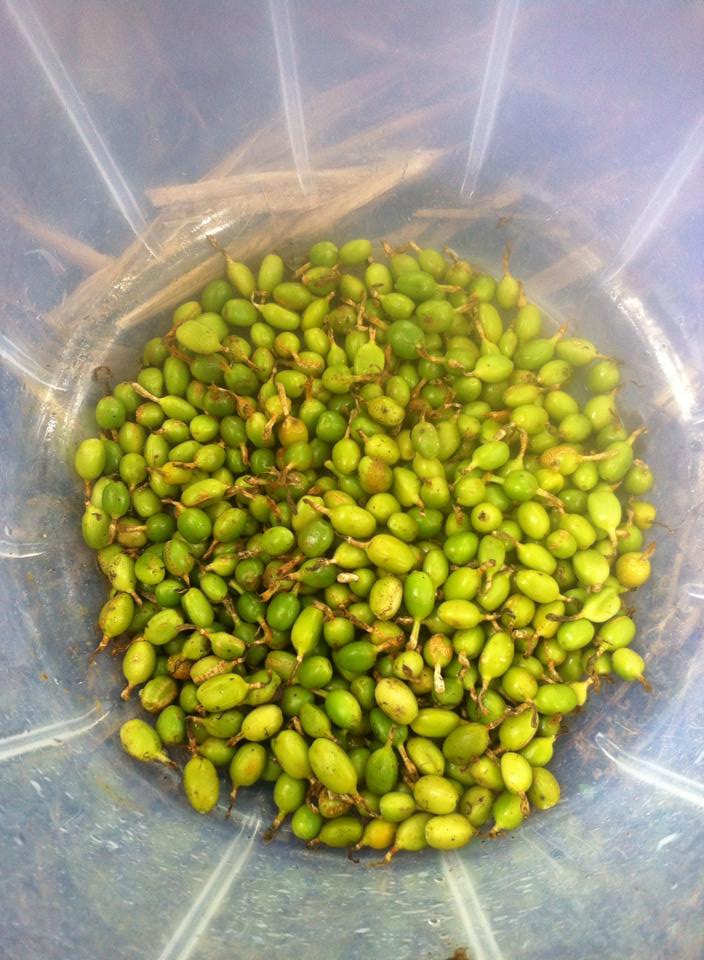
Today’s task in the garden was to harvest the ever-abundant cardamom in Cardamom County.

This is a task that cannot be completed by machines, so even in commercial fields, it must be handpicked. That is because figuring out which ones are ripe requires tuned fingers.

It was a bit of a learning curve for me at first because I thought I was supposed to be looking for which ones were the darkest, but then I learned otherwise.

I was looking for the ones that fell off easily into my hand from tugging slightly. When ripe, the small seed pods on the inside are dark colored.

10501720_10201573978111087_4542956712817123894_n

We may be most familiar with this sweet spice in masala chai tea, but it has many uses.

To do a little research, I asked the Ayurvedic doctor here if he could enlighten me on some of the traditional medicine uses of cardamom. He said that it is good for throat and lung troubles, skin problems such as acne, and digestive issues.

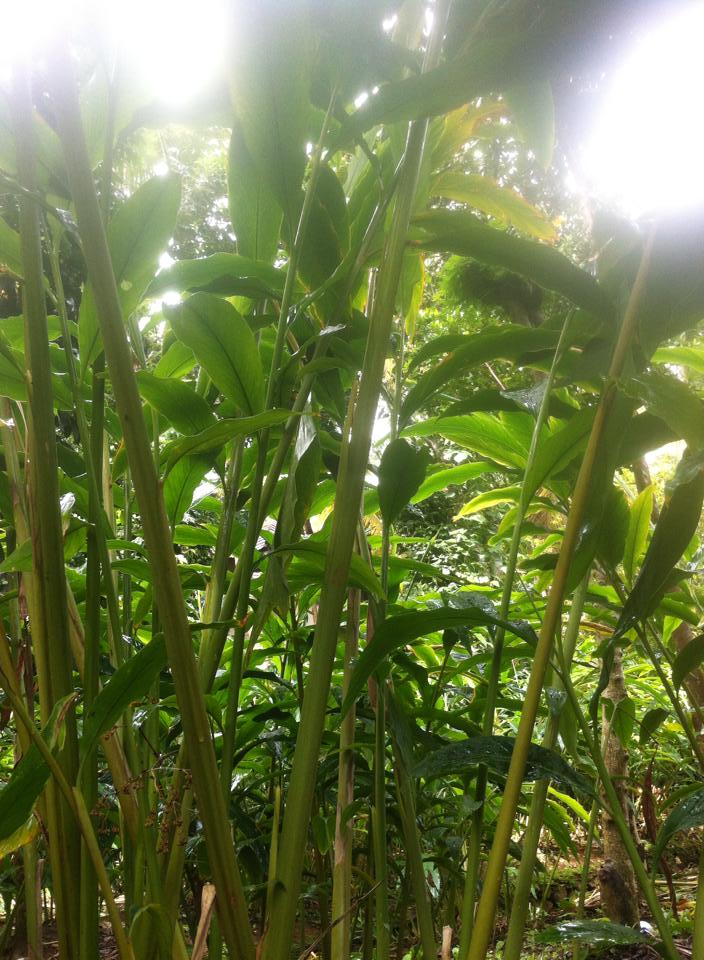
The type of cardamom we have here is the Malabar variety and it is native to Kerala. The green leaves are pretty tall- probably about 5 feet on average. The pods are on short vines that cluster at the bottom of the tall leaves.

When we were harvesting them, it started  Continue reading

Humanity’s Diet Makes A Difference, Historically As Well As Futuristically

On the timescale of evolutionary history, paleo enthusiasts note, agriculture is a fad. Credit Illustration by Mike Ellis.

On the timescale of evolutionary history, paleo enthusiasts note, agriculture is a fad. Credit Illustration by Mike Ellis.

Since the early days of this blog we have been hungry consumers of environmental long form journalism, of which Elizabeth Kolbert’s New Yorker chronicles are best-in-category. They are also, frankly, almost always depressing.

Nonetheless, they put humanity into its natural context. This not-at-all-depressing chronicle demonstrates the value of that contextualization well:

The first day I put my family on a Paleolithic diet, I made my kids fried eggs and sausage for breakfast. If they were still hungry, I told them, they could help themselves to more sausage, but they were not allowed to grab a slice of bread, or toast an English muffin, or pour themselves a bowl of cereal.

Continue reading

Boiled Banana

Photo credits : Shymon

Photo credits: Shymon

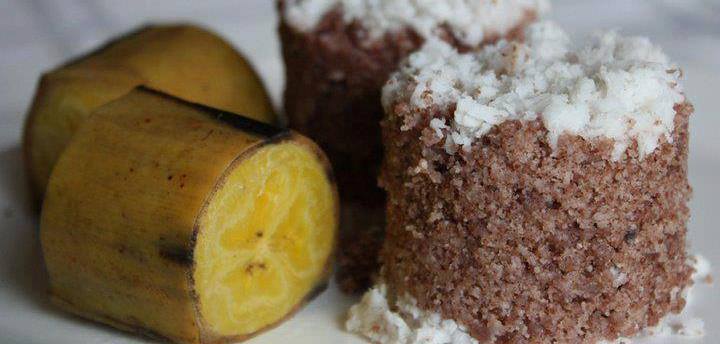
When bananas are so ubiquitous here in the tropics, it’s good to have a variety of ways for eating the fruit. For Western readers, boiling bananas might seem strange, but it is quite common in India. Boiled banana is considered an excellent food for infants and children in Ayurveda. In Kerala, cuisines like puttu and rava uppuma (a savory south Indian breakfast dish) are perfectly matched with boiled bananas.  Continue reading

Yes, I Should Be Vegetarian

Unloading vegetables from a boat on a foggy January morning in Bangladesh (A.M. Ahad/AP)

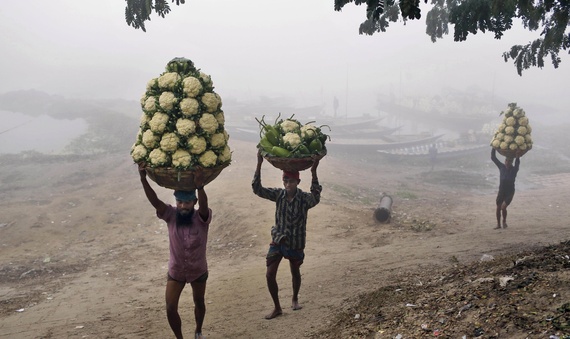
Unloading vegetables from a boat on a foggy January morning in Bangladesh (A.M. Ahad/AP)

If you have thought about dropping animal protein from your diet, or at least thought about it and decided not to do so, this blog post at the Atlantic‘s website is worth a read:

“Let me be clear about this. A low carbohydrate diet is quackery,” Dr. Neal Barnard told me over the phone. “It is popular, bad science, it’s a mistake, it’s a fad. At some point we have to stand back and look at evidence.”

Note to self: Don’t ask Dr. Neal Barnard about limiting your carb intake.

“You look at the people across the world who are the thinnest, the healthiest, and live the longest; they are not following anything remotely like a low-carb diet,” he said. “Look at Japan. Japan has the longest-lived people. What is the dietary staple in Japan? They’re eating huge amounts of rice.” Continue reading

Statler Hotel Partners with Clean the World

Jason Koski/University Photography

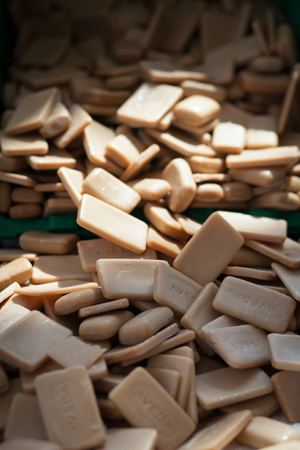
According to the Cornell Chronicle from a few weeks ago, Cornell University’s Statler Hotel has been a partner with the nonprofit Clean the World organization since March, and has collected over 2,500 bars of soap from the Statler’s rooms. This soap has been recycled and distributed to communities in need throughout over 55 countries.

Clean the World is a great group that we have written about before, since its goal is to take something that would otherwise be wasted and provide it to people at risk of poor health due to hygienic conditions  that can be easily ameliorated by increased access to soap.

Continue reading

Superior Urban Design, Superior Health

Excerpted from Happy City: Transforming Our Lives Through Urban Design by Charles Montgomery, published in November 2013 by Farrar, Straus and Giroux, LLC. Copyright © 2013 by Charles Montgomery. All rights reserved.

Happy City: Transforming Our Lives Through Urban Design by Charles Montgomery, published in November 2013 by Farrar, Straus and Giroux, LLC. Copyright © 2013 by Charles Montgomery. All rights reserved.

The text below is excerpted from the book above (click above to go to the source), and we thank Slate for publishing what amounts to a public health announcement disguised as a commentary on urban design.  Because several of Raxa Collective’s contributors and more than a few of those who follow this blog have lived in, worked in or gone to school in Atlanta the case study here hit home to more than one of us:

…Of every 100 American commuters, five take public transit, three walk, and only one rides a bicycle to work or school. If walking and cycling are so pleasurable, why don’t more people choose to cycle or walk to work? Why do most people fail to walk even the 10,000 daily steps needed to stay healthy? Why do we avoid public transit? Continue reading