A Stay in History

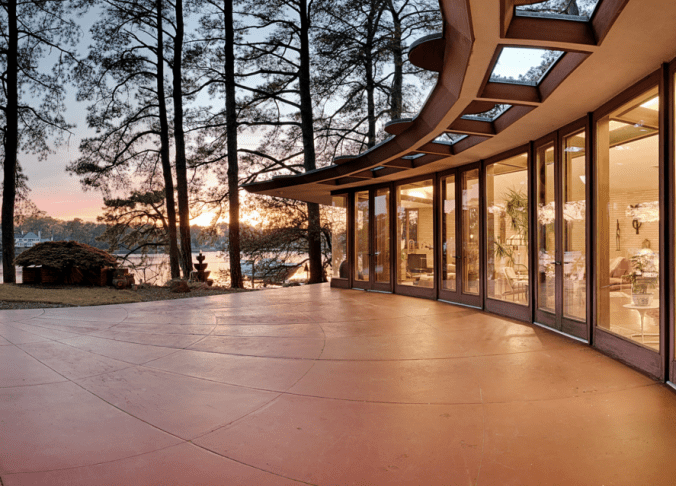
The Cooke House in Virginia Beach, Va., built in 1959. Credit Dave Chance Photography

Earlier this year when I wrote about the Art Institute of Chicago’s Airbnb listing of their reproduction of Vincent Van Gogh’s famous Arles bedroom I thought that was the pinnacle of Airbnb cool.

Staying at a home designed by famed architect Frank Lloyd Wright seems equally as fun but far more expansive then the 19th century artist’s exuberantly painted bedroom – taking in the view for starters.

The Cooke House in Virginia Beach, Va., built in 1959, is one of Wright’s last commissioned works. It’s a hemicycle-shaped dwelling made of brick with a vast windowed living area overlooking a lake. Continue reading

Library Reading Room, Luxury, Legacy

schwartz-restored-rose-reading-room-1200

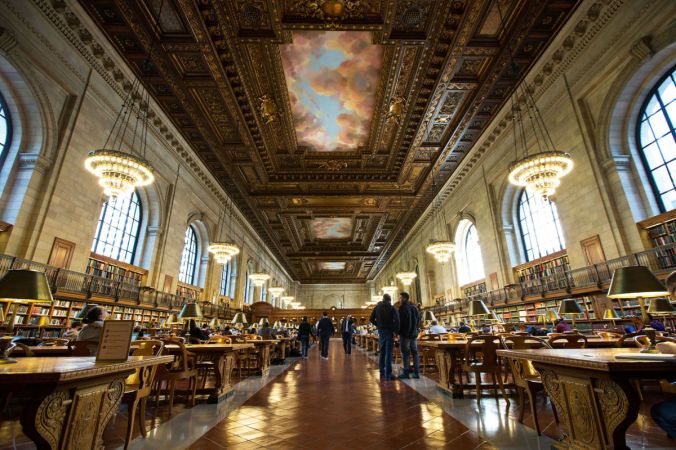
The Rose Reading Room is luxurious in the way that only certain shared spaces can be. Its grandeur attracts its visitors, and is in turn amplified by their presence: the true urban symbiosis. PHOTOGRAPH BY DREW ANGERER / GETTY

It was the room in the photo above where I sat, in the early 1990s, collecting some data for a research project that would eventually become my doctoral dissertation. I had been in that room once or twice in my youth, but as an adult on a specific mission (little did I know the data collected that day would help me develop ideas that we now call entrepreneurial conservation within La Paz Group) the room barely registered in my notice. Except as a very practical place to read some historical documents.

So I am delighted to see that room again after a long time. It looked great to me the last time I saw it. Now I can say wow for different reasons. The legacy of the room is protected, and perhaps renewed for another hundred years. If you click the image and go to a larger viewing with greater detail, you will understand why the word luxury fits in the title of this post on the New Yorker website.

It is not our practice to use the word luxury because it is so laden with old and often inappropriate (considering the ecological condition of the planet, considering advances in socio-economic development, and considering other modern sensibilities) meanings. So we appreciate when others take care in how they use it:

THE ROSE READING ROOM AND THE REAL MEANING OF “LUXURY” IN NEW YORK CITY

By

To say that the ceiling of the Rose Main Reading Room, at the New York Public Library’s main building, on Fifth Avenue—the biggest room in the biggest public-library branch in the country’s biggest city—is an ornate piece of work is putting it mildly. Continue reading

Patrimonial Matrimonial Innovation

10tuscany1-master768.jpg

A fort atop the Italian town of Montalcino. In October, residents there and in neighboring San Giovanni d’Asso will vote on whether to merge the two communities. CreditNadia Shira Cohen for The New York Times

Although we appreciate, even adore, the wines and the fungi referenced in this story, it is worth reading for a look at practical issues facing aging towns that possess world class patrimony:

A Merger of Brunello and Truffles? 2 Tuscan Towns May Be Better Together

By

SAN GIOVANNI D’ASSO, Italy — Two small towns in southeastern Tuscany, one famous for red wine, the other for truffles and organic grain, are considering a municipal marriage of convenience that could blur their cherished identities, separately formed over the centuries.

With a population of just 853, San Giovanni d’Asso can no longer deliver basic services to its citizens on a daily basis. Left with only three town officials to do the work, something as simple as getting an identity card drawn up and stamped requires making an appointment days in advance.

So the town’s mayor, Fabio Braconi, picked up the phone back in 2014 and sought help from a neighbor, Montalcino, 10 miles to the south across rolling wheat fields. Continue reading

Pepper’s Historical Place

A painting of Muziris by the artist Ajit Kumar. In 2004, excavations in Kerala sparked new interest in this lost port. Illustration: KCHR

A painting of Muziris by the artist Ajit Kumar. In 2004, excavations in Kerala sparked new interest in this lost port. Illustration: KCHR

Our first exposure to the name Muziris was during the planing stages of the 1st edition of the eponymous Kochi-Muziris Biennale in 2012. The flurry of activity in Fort Kochi not only brought Kochi into the spotlight of the international Art World, but added focus to the archeological works at Kerala’s ancient port.

Lost cities #3 – Muziris: did black pepper cause the demise of India’s ancient port?

Around 2,000 years ago, Muziris was one of India’s most important trading ports. According to the Akananuru, a collection of Tamil poetry from the period, it was “the city where the beautiful vessels, the masterpieces of the Yavanas [Westerners], stir white foam on the Periyar, river of Kerala, arriving with gold and departing with pepper.”

Another poem speaks of Muziris (also known as Muciripattanam or Muciri) as “the city where liquor abounds”, which “bestows wealth to its visitors indiscriminately” with “gold deliveries, carried by the ocean-going ships and brought to the river bank by local boats”.

The Roman author Pliny, in his Natural History, called Muziris “the first emporium of India”. The city appears prominently on the Tabula Peutingeriana, a fifth-century map of the world as seen from Rome. But from thereon, the story of this great Indian port becomes hazy. As reports of its location grow more sporadic, it literally drops off the map.

Continue reading

When Silence Is Golden

Finland

It is not a principle of branding, per se, that silence is golden; just the opposite normally, since getting the message out is the point, and messages seem defined by noise, however subtle or clever. But Finland, by way of this article in Nautilus, has had me thinking, in the couple days since I read it, about alternative views on the value of silence, on messaging, on branding:

One icy night in March 2010, 100 marketing experts piled into the Sea Horse Restaurant in Helsinki, with the modest goal of making a remote and medium-sized country a world-famous tourist destination. The problem was that Finland was known as a rather quiet country, and since 2008, the Country Brand Delegation had been looking for a national brand that would make some noise.

Over drinks at the Sea Horse, the experts puzzled over the various strengths of their nation. Here was a country with exceptional teachers, an abundance of wild berries and mushrooms, and a vibrant cultural capital the size of Nashville, Tennessee. These things fell a bit short of a compelling national identity. Someone jokingly suggested that nudity could be named a national theme—it would emphasize the honesty of Finns. Someone else, less jokingly, proposed that perhaps quiet wasn’t such a bad thing. That got them thinking. Continue reading

Kakaw Designs

kakaw_zpsromz8y4q

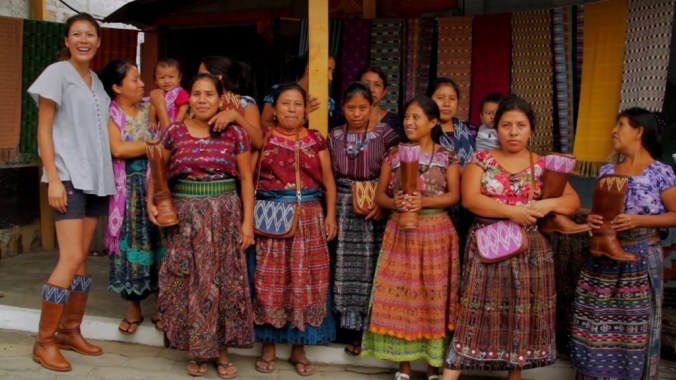
Image from Vimeo

Recently I was introduced to a small online business that sells handmade women’s boots and bags called Kakaw Designs. Seth met the company’s founder, Mari, before his work at the school they both taught at in the Galapagos four years ago and mentioned the ethical concept of her business.

Continue reading

Corn, Heritage & Conservation

980x

Masienda / Facebook

Thanks to EcoWatch for this:

Heirloom Non-GMO Corn Is Helping Sustain Mexico’s Heritage and Farmers

It’s not often that a conversation inspires an idea leading to a project that improves people’s lives and potentially transforms an industry. But that’s what happened to Jorge Gaviria, founder of Masienda.

While serving as a host and translator at the G9 Chefs Summit at Blue Hill at Stone Barns in Pocantico Hills, New York in 2013, Gaviria heard chefs discuss responsibly sourced ingredients. Continue reading

If You Happen To Be In London

p03xgwg5

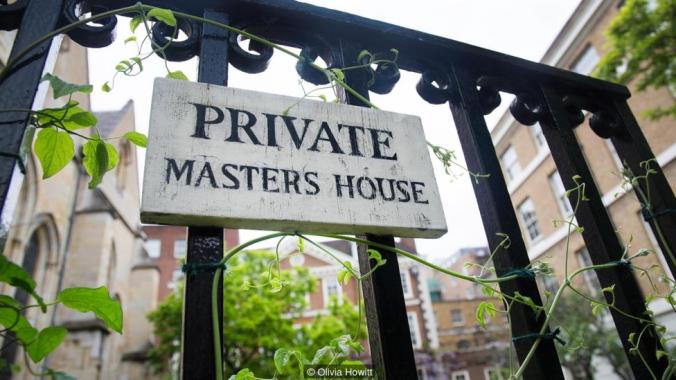
Behind closed doors The 2016 Open Gardens Weekend marks the first time the Master’s Garden is accessible to the public. For gardeners, one of the interesting aspects of the space is the difficulty of the soil – which, being situated on a raised plateau, is so free-draining that it is very dry. But, said gardener Bob McMeekin, the garden also comes with plus points: “Central London has its own micro-climate, and the garden is protected from pollution by the surrounding buildings.” (Credit: Olivia Howitt)

Intangible Heritage In Ireland

p03swypw

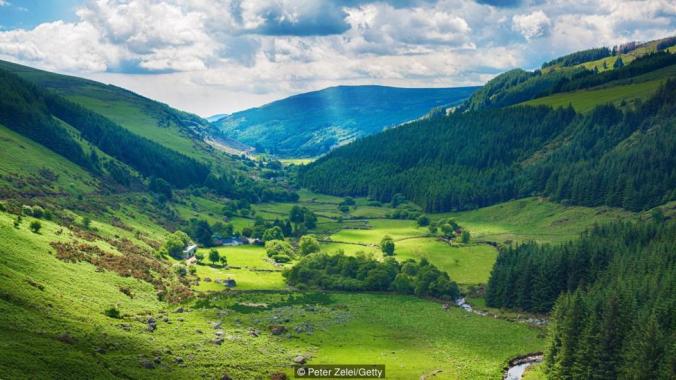
Irish landscape

Apropos of this post yesterday, and many that preceded it on the topic of intangible patrimony (thanks to the BBC):

How The Irish Lost Their Words

New storytelling groups are reintroducing the Irish to ancient myths and the art of blarney.

By Rory Boland

I always knew my Uncle Peter was setting up for a story when he’d lean back in his bar stool. Nothing dramatic, nothing too flashy, just a gentle recline – always followed by a more determined pushing away of his half-drunk pint of Harp and a wipe of the whiskers. Stage set, audience warned, he’d begin by saying “C’mere ‘till I tell you.” By the time that pint of Harp was drained, half the pub would be leaning in to listen and laugh. Continue reading

Intangible Heritage Worthy Of Conservation

9-690

Who gets to decide what is worthy of conservation, and what is not? I am given reason to think about this on a regular basis, given the work that we have been doing for the last two decades. There is no one answer, of course, but I conclude regularly that it comes down to very deep personal experiences–those which lead individuals to alter the path of their lives and thereby have an impact on the conservation of something they have come to care deeply about. John Muir, Teddy Roosevelt and others come to mind on the larger scale of this line of thinking.

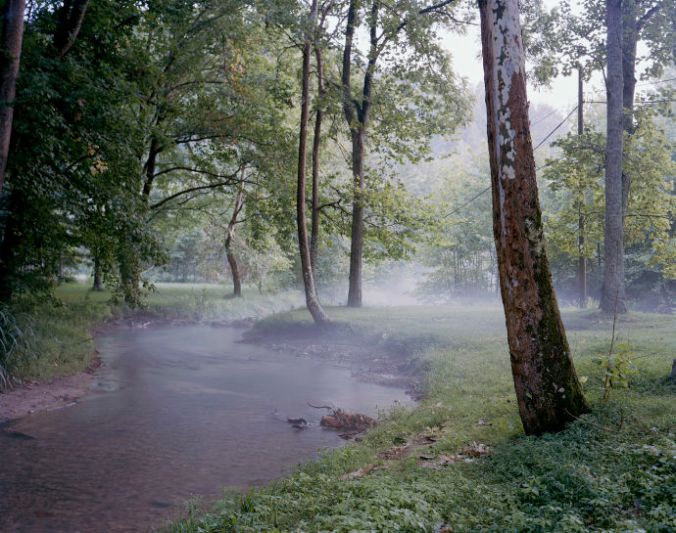
Reading one of our other blog posts today, I was taken back in time to pre-India workdays, 2008-2010. Milo, I had forgotten until just now, had a chance to wrestle firsthand with one of Patagonia’s most important conservation issues, and it is fair to say that what he is doing today is influenced by intense experiences he had in Patagonia, followed by a couple of years living with us in India. That would be an example of a smaller scale of this line of thinking. Same goes for the story I just read, and when I look at the photo above, and the one below, I am reminded that sometimes an image alone, or a series of images like these, can lead to this same path-changing epiphany.
4-690

I have family in the vicinity of this story’s subjects, and am thinking just now that I have not made a visit to that family in too long; time to plan a visit? The thought is now lodged deeply in my thinking.
Continue reading

WWF Reports Half of World Heritage Sites Put at Risk by Development

Ambatotsondrona cliffs, in the Marojejy National Park of Madagascar. This park is one of several included in the UNESCO World Heritage Site named Rainforests of the Atsinanana, which has been declared In Danger. Photo by Jeff Gibbs via WikiMedia Commons

We deeply care about UNESCO World Heritage Sites anywhere on the globe, and believe they can be a great conservation tool, so reading that the World Wildlife Fund thinks almost three times more of the Sites are threatened than UNESCO lists as “In Danger” is worrisome, to say the least. Fiona Harvey reports for the Guardian:

Close to half of the sites around the world designated for special protection as areas of outstanding importance for nature are now being threatened by industrial development, a new survey has shown.

The sites, which include Australia’s Great Barrier Reef, the Grand Canyon in the US, and China’s giant panda sanctuaries in Szechuan, are all supposed to be protected under the United Nations’ designated world heritage status. But encroachments from industries, including fossil fuel exploration and illegal logging, are threatening to destroy the valuable habitats, the conservation charity WWF said on Wednesday.

Continue reading

The Earliest Artists

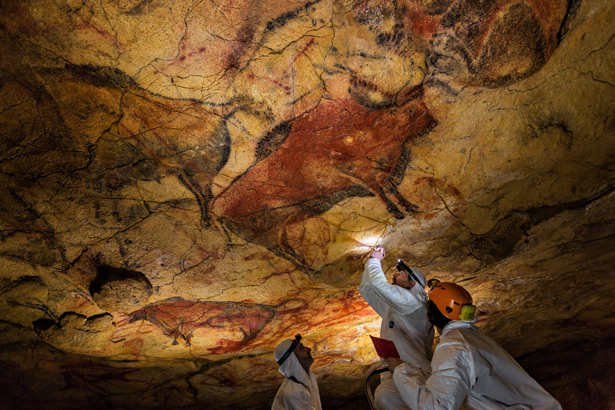
Located in southern France, the Cave of Pont d’Arc holds the earliest-known and best-preserved figurative drawings, dating back to the Aurignacian period (30,000–32,000 BP). PHOTO: Nat Geo

Located in southern France, the Cave of Pont d’Arc holds the earliest-known and best-preserved figurative drawings, dating back to the Aurignacian period (30,000–32,000 BP). PHOTO: Nat Geo

The Cave of Chauvet-Pont-d’Arc has been ferociously protected by the French Ministry of Culture. An exceptional testimony of prehistoric art, the cave was closed off by a rock fall and remained sealed until its discovery in 1994. The images demonstrate techniques of shading, combinations of paint and engraving, three-dimensionality and movement.

Around 36,000 years ago, someone living in a time incomprehensibly different from ours began to draw on its bare walls: profiles of cave lions, herds of rhinos and mammoths, a magnificent bison off to the right, and a chimeric creature—part bison, part woman—conjured from an enormous cone of overhanging rock. Other chambers harbor horses, ibex, and aurochs; an owl shaped out of mud by a single finger on a rock wall; an immense bison formed from ocher-soaked handprints; and cave bears walking casually, as if in search of a spot for a long winter’s nap. The works are often drawn with nothing more than a single and perfect continuous line. In all, the artists depicted 442 animals over perhaps thousands of years, using nearly 400,000 square feet of cave surface as their canvas.

Continue reading

Spotted Owls, Intangible Heritage, Future Fortunes

Screen Shot 2016-02-07 at 8.53.56 AM

About one minute in to Mr. Ziermann’s story, he explains how his intent to pursue a life of timber logging in Oregon was waylaid by the “rules and regulations” (he did not sound happy about these) to protect the spotted owl in the American northwest. I recommend taking five minutes with the video here, and a moment more below if you want my two cents on it.

A Fraught Search for Succession in Craftsmanship

Video by Andrew Plotsky
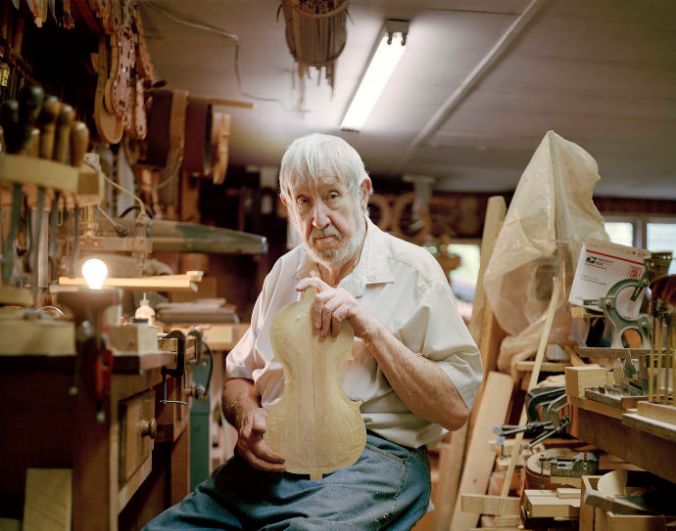
George Ziermann has been making handmade boots for over 40 years.

Continue reading

Walking In on the Sari

Walk. That’s my one-word gospel for all who will listen in on the best way to discover. Meander. Be curious, the good kind. Because stories wait around corners, discoveries often plonk themselves on one-way streets. And some are found in messy backrooms of squeaky clean shops lined with mannequins and smiles. Like this woven tale of the people, history, and fabric that go into the making of the Indian drape. There’s more than just five yards to the sari, trust me.

Continue reading

Where We Stand


There’s something beautifully timeless about Bazar Road in Mattanchery. The classic counting methods and long-standing relationships between the stevadores and shop keepers. The ebb and flow of commerce as merchandise moves through the streets. The noble patterns of fishermen setting their nets or going out to sea.

Experience a portal into those journeys here…

Who Dreamed This City into Being?

paris

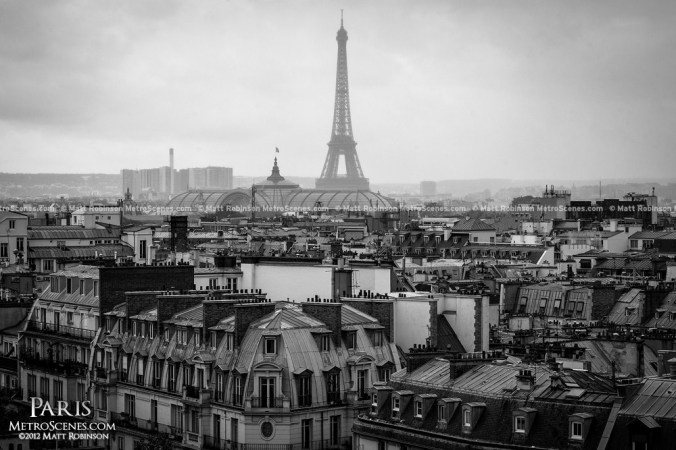
In the 19th century, George-Eugene Haussmann completely redesigned and rebuilt the French capital. PHOTO: Matt Robinson

“Paris was a universe whole and entire unto herself, hollowed and fashioned by history; so she seemed in this age of Napoleon III with her towering buildings, her massive cathedrals, her grand boulevards and ancient winding medieval streets–as vast and indestructible as nature itself. All was embraced by her, by her volatile and enchanted populace thronging the galleries, the theaters, the cafes, giving birth over and over to genius and sanctity, philosophy and war, frivolity and the finest art; so it seemed that if all the world outside her were to sink into darkness, what was fine, what was beautiful, what was essential might there still come to its finest flower. Even the majestic trees that graced and sheltered her streets were attuned to her–and the waters of the Seine, contained and beautiful as they wound through her heart; so that the earth on that spot, so shaped by blood and consciousness, had ceased to be the earth and had become Paris.”
Anne Rice, Interview with the Vampire

Literature, history, art, everyday news, talk at a neighborhood cafe – the exquisite and the commonplace are rife with paeans to this city. But how did she come into being?

Continue reading

Sifting Through Food Memories

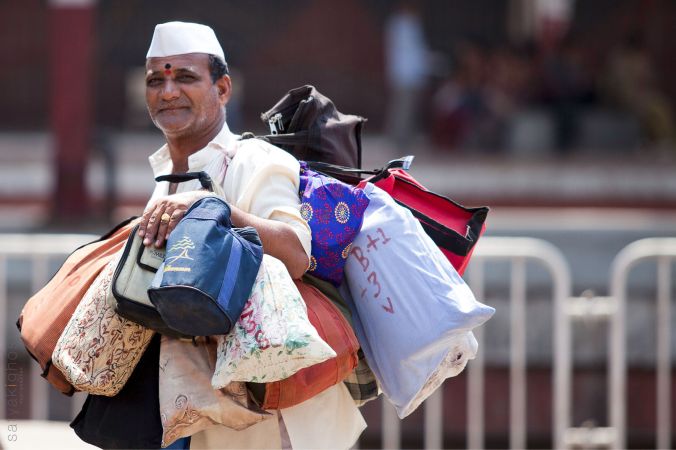
Dabbawala,the lifeline of Mumbai.

The Indian city of Mumbai is home to the ‘dabbawala’ service wherein boxes of hot lunch make their way from homes to customers’ offices.   PHOTO: Satyaki Ghosh

Food memories. Absolutely universal, absolutely distinctive. Across cultures, across borders. United by the emotions they evoke – nostalgia, love, warmth, hope. While travel memories are notched up by the miles, they are bound to feature a food memory or two. Of cultures, smells, people, faces, history.  Jacques Pepin, noted French chef, writes of his in The New York Times:

There is something evanescent, temporary and fragile about food. You make it, it goes, and what remains are memories. But these memories of food are very powerful. My earliest memories of food go back to the time of the Second World War. My mother took me to a farm for the summer school vacation when I was 6 years old with the knowledge that I would be lodged and fed there. I cried after she left and felt sad, but the fermière took me to the barn to milk the cow. That warm, foamy glass of milk is my first true memory of food and shaped the rest of my life.

Continue reading

When A Legend Fades Away

Stories about the Yeti date back thousands of years, especially in the Himalayan nations. Legends say it can be seen only when it comes down from the high mountains to lower elevation and that it passes through the forests and into the villages where it surprises or scares people and sometimes kills a yak for food. Several climbers claim to have seen an unusual animal on their way up Mount Everest. A few have taken photographs of very large footprints in the snow, claiming they belong to the Yeti. It has another name that many people will recognize: Abominable Snowman. Think of a big human-like animal covered in white hair, with huge canine teeth and very big footprints.

But now, no one’s looking for the Yeti.

Continue reading

Design Lessons from History

Masdar city in the United Arab Emirates has attempted to combine some of the lessons learned from the past with modern technologies by increasing shaded areas, creating narrow streets and constructing a wind tower.

Masdar city in the United Arab Emirates has attempted to combine some of the lessons learned from the past with modern technologies by increasing shaded areas, creating narrow streets and constructing a wind tower.

Oil heartlands of Abu Dhabi, Dubai, Doha and Iran’s coast will experience higher temperatures and humidity than ever before on Earth if the world fails to cut carbon emissions, according to a recent study. While air-conditioned homes and offices provide respite from the heat, architects are looking to history to find how civilizations battled the hostile conditions.

Historically, the inhabitants of the Gulf were either farmers living near oases in agricultural villages, Bedouins living in tents in the desert, or urban dwellers living in cities. Given the global trend toward urbanisation, it makes sense to take a closer look at how the latter group coped with the heat. Traditional buildings in the gulf’s cities and villages are designed to maximise shading, reduce thermal gain of the sun radiation, regulate building temperature and enhance air circulation. These effects are achieved through a clever combination of building materials, placement and design.

Continue reading

When a Way of Life Melts With the Ice

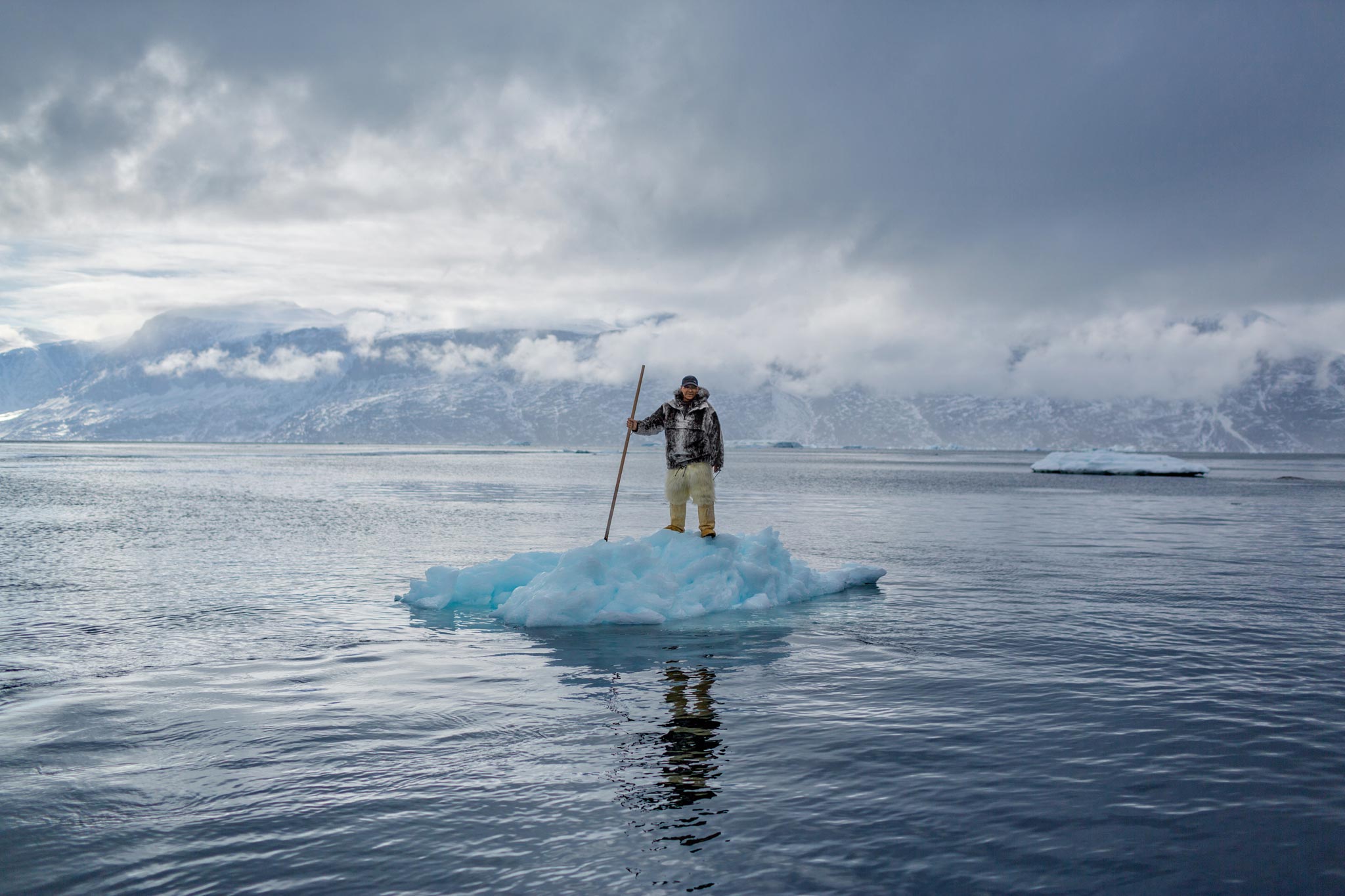
Albert Lukassen’s world is melting around him. When the 64-year-old Inuit man was young, he could hunt by dogsled on the frozen Uummannaq Fjord, on Greenland’s west coast, until June. This photo shows him there in April. PHOTO:  Ciril Jazbec

Albert Lukassen’s world is melting around him. When the 64-year-old Inuit man was young, he could hunt by dogsled on the frozen Uummannaq Fjord, on Greenland’s west coast, until June. This photo shows him there in April. PHOTO: Ciril Jazbec

Climate change – a situation that choices can better, but circumstances see it go from bad to worse. Much talk, much less done. Temperatures rise, glaciers melt, and seas begin to usurp shores. Also, people like the natives of Kiribati and now the Inuit are forced to rethink ways to survive on their lands which once provided for all. And did not threaten their lives. National Geographic reports from the North:

Something else is vanishing here too: a way of life. Young people are fleeing small hunting villages like Niaqornat. Some of the villages struggle to support themselves. And now a culture that has evolved here over many centuries, adapting to the seasonal advance and retreat of sea ice, is facing the prospect that the ice will retreat for good. Can such a culture survive? What will be lost if it can’t?

Continue reading