Aguada Fort – Sinquerim Beach, Goa

Photo credits : Dileep

Photo credits: Dileep

Named for the Portuguese word meaning “watering place”, Aguada Fort is one of the largest and best preserved forts in the state of Goa. Portuguese rulers built the fort between 1609 and 1612 for providing a fresh water supply to their passing ships. Continue reading

Memories of Vishu


Vishu

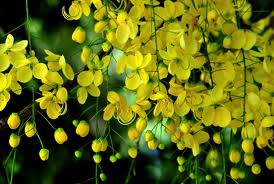
When we were kids, we used to wait with great anticipation for Vishu– which falls around the 14th of April each year. Actually it depends on the Malayalam  Calendar, and this year it falls on the 15th. Most Keralaites, especially the older generation, go by the Malayalam calendar for birthdays or any other auspicious occasion.

Vishu is a happy festival, filled with lights, fireworks and bursting crackers as part of the celebration. Other elements of Vishu include the buying of new clothes for the occasion, the tradition of giving money called Vishukaineettam and the culinary treat, the Vishu feast or Sadya.

The most important event in Vishu is the Vishukkani, which means “the first thing seen on the day of Vishu after waking up”. Continue reading

Bekal Fort – Kasaragod, Kerala

Photo credits : Sijo

Photo credits: Sijo

Bekal Fort is situated in the Kasaragod district in the north of Kerala. One of the largest and most well-preserved forts in the state, Bekel is spread over 40 acres. The fort was built by Sivappa Naik of the Ikkari dynasty in 1650. The west side of the fort offers a magnificent view of the sea and the beach. Continue reading

If You Happen To Be In New York City

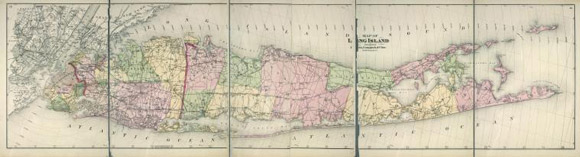
04-nypl-580

It has been a while since we have seen any old maps of Iceland, or old images of anything for that matter, so combined with a few select Raxa bloggers receiving a near-final copy of Seth’s honors thesis for review a few moments ago, this announcement came as a pleasant surprise:

Last week, the New York Public Library released twenty thousand maps from its extensive collection, which includes more than four hundred thousand sheets and twenty thousand books and atlases, as free, high-resolution digital downloads. In announcing the newly accessible maps, the N.Y.P.L explained that the holding includes more than a thousand maps of New York City from the seventeenth century to the twentieth century, “which detail transportation, vice, real estate development, urban renewal, industrial development and pollution, political geography among many, many other things.” Continue reading

Santa Cruz Basilica – Fort Kochi

Photo credits : Abhay

Photo credits: Abhay

The Santa Cruz Basilica is a heritage church in Fort Kochi with a colorful history. Built by the Portuguese in 1505 and elevated by Pope Paul IV to cathedral status in 1558, it was demolished by the British in 1795 when they took over Kochi. Bishop Dom Gomez Ferreira commissioned a new building at the same site in 1887. Continue reading

Traditional Ironing Box

Photo credit : Dileep

Photo credit: Dileep


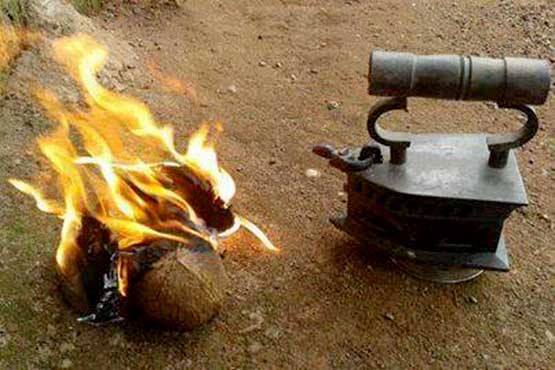
Charcoal ironing boxes were heated with smoldering coals that were taken from a fire and placed inside a box on the top of the iron. The lid of the box had a handle, which allowed people to hold the hot iron as they ran it over clothing, smoothing out wrinkles. In Kerala the box was traditionally made of bronze.

Continue reading

Thrissur Pooram

Thrissur Pooram Kerala Festival Photo Images - 11

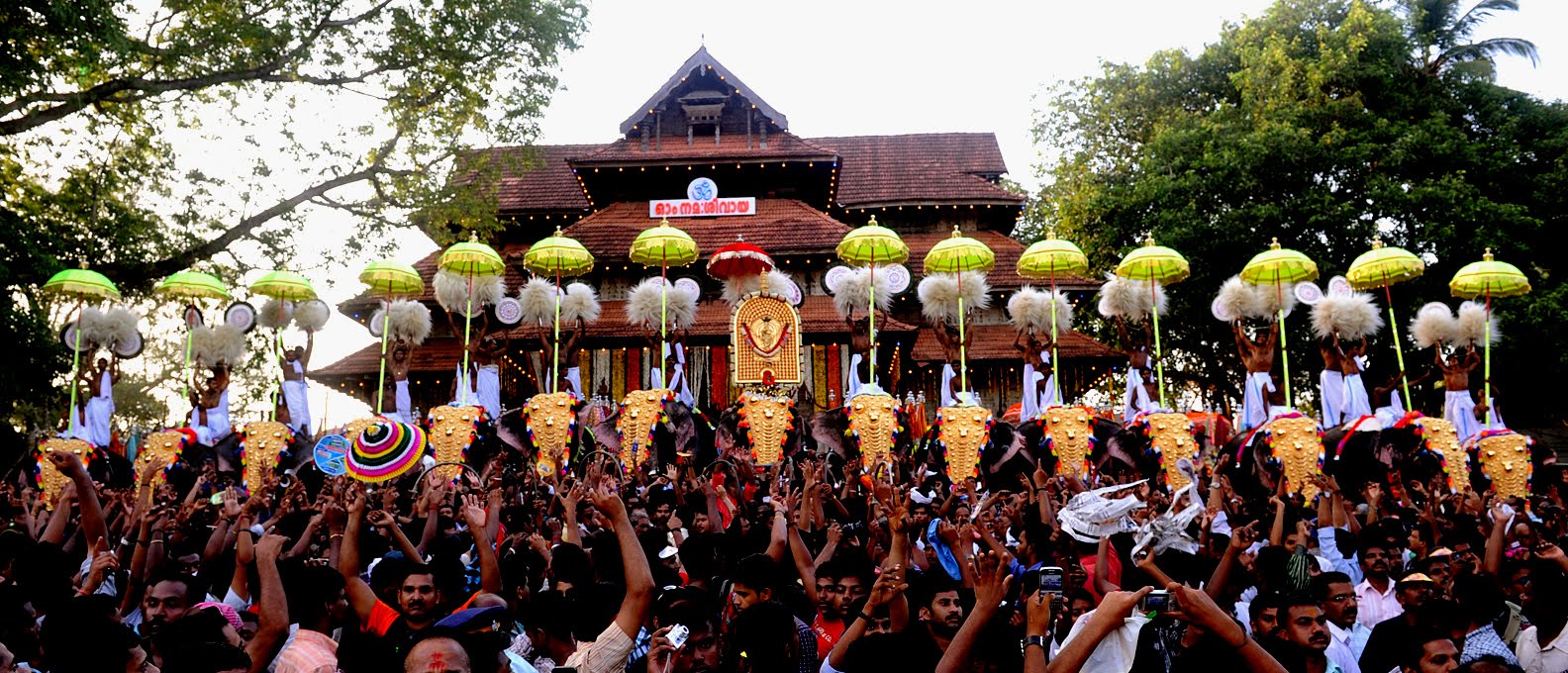
There is a saying in Malayalam – Poorathil Pooram Thrissur Pooram, which means that amongst all festivals in Kerala, the Thrissur Pooram is considered the best and the most sought after. Pooram Day changes annually because it’s a star based on the Malayalam Calendar, but the festival is always held at the Vadakkunnathan Temple in Thrissur town.

Thrissur Pooram was the brain child of Raja Rama Varma aka Shakthan Thampuran, who was the Maharajah of Cochin from year 1790–1805. In 1798, he unified the 10 temples situated around the Vadakkunnathan Temple  and organized the celebration of Pooram as a mass festival. He invited temples with their deities to Trissur to pay obeisance to Lord Vadakkunnathan, (Lord Shiva). Continue reading

If You Happen To Be At Yale

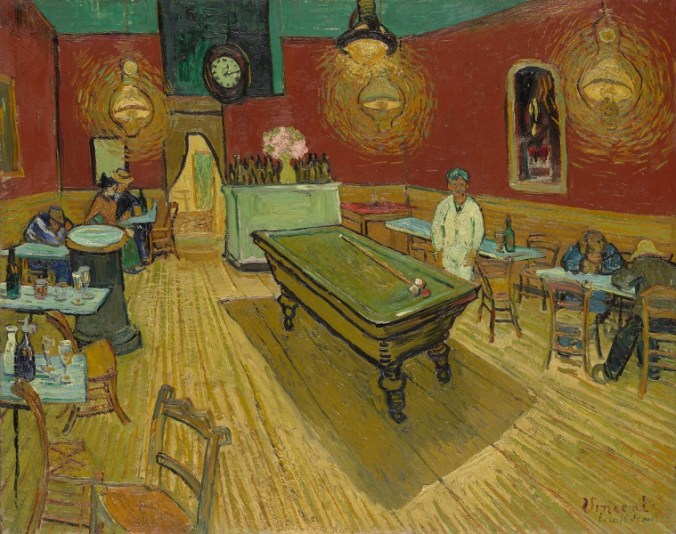
Vincent van Gogh, Le café de nuit (The Night Café) (1888). Photo: courtesy Yale University Art Gallery.


The intersection of these three names–one, a painter who is known to have influenced a community of influential fellow-painters during his own brief lifetime (not to mention since); one, a community of revolutionaries; and the other (how many ways can we categorize Yale according to the communities it represents?)–is as oddly appealing as the painting in question:

Van Gogh Painting Seized by Bolsheviks Will Stay at Yale

Continue reading

Libraries Old And New, Big And Small, At The Core Of Communities

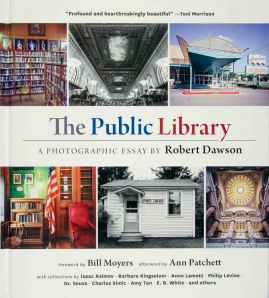
Cover_The_Public_Library_bookThis book by Robert Dawson pays attention to one of the institutions we care most about, libraries–specifically public ones. Why do we care so much about them? Because of the essential role they play in so many communities, both small and large, with regard to education and egalitarian opportunity.

Toni Morrison’s assessment of the book is that “Robert Dawson’s work is an irrefutable argument for the preservation of public libraries. His book is profound and heartbreakingly beautiful.”  From the author/photographer’s own website the text that introduces the work is a mix of promotion and fact:

This project is a photographic survey of public libraries throughout the United States featuring essays on libraries and the public commons from prominent American writers. The book The Public Library: A Photographic Essay will be published in April, 2014 by Princeton Architectural Press. ISBN 978-1-61689-217-3

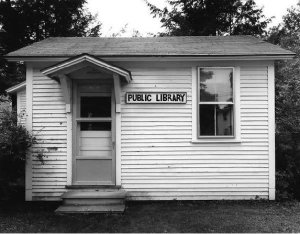
Smallest library, now closed, Hartland Four Corners, Vermont

There are over 17,000 public libraries in this country. Since I began the project in 1994, I have photographed hundreds of libraries in forty-eight states. From Alaska to Florida, New England to the West Coast, the photographs reveal a vibrant, essential, yet threatened system.

For the past two centuries public libraries in America have functioned as a system of noncommercial centers that help us define what we value and what we share. The modern library in the computer age is in the midst of reinventing itself. What belongs in a library? Continue reading

If You Happen To Be In New York City

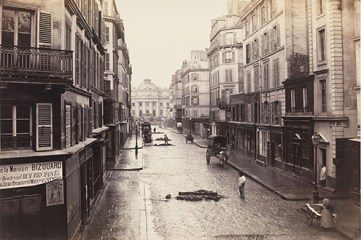
Charles Marville: Photographer of Paris
January 29 – May 4, 2014

Rue de Constantine fourth arrondissementteaser

…As the exhibition of his photographs at the Metropolitan Museum makes clear, Marville was the right man for the job. For starters, he was a local. His father was a tailor, his mother a laundress. He grew up on a cramped street near the Louvre that later vanished to make way for one of Haussmann’s imperial avenues. Like Baudelaire, his contemporary, Marville honed his eye on Paris; the city taught him to see…

Brought to our attention by a post on the New Yorker’s website today, from which the snippet of text above is taken (and where you can see 10 excellent images from the collection the text describes), this exhibit catches our eye because it has to do with both the history of photography and the cultural heritage of a lost form of Paris:

Exhibition Location: Galleries for Drawings, Prints, and Photographs, Second Floor, Galleries 691-693
Press Preview: Monday, January 27, 2014, 10 a.m.–noon Continue reading

Papanasini – Wayanad

Photo credits : Surus

Photo credits: Surus

Papanasini is a spring fed stream that originates in the Brahmagiri Hills, which later joins the River Kalindi. Located about a kilometer from the Thirunelli Vishnu Temple, devotees believe that the cool waters have the ability to wipe away a lifetime of sins.   Continue reading

Kathakali – Traditional Dance Of Kerala

Photo Credits :Ramesh Kidangoor

Photo Credits: Ramesh Kidangoor

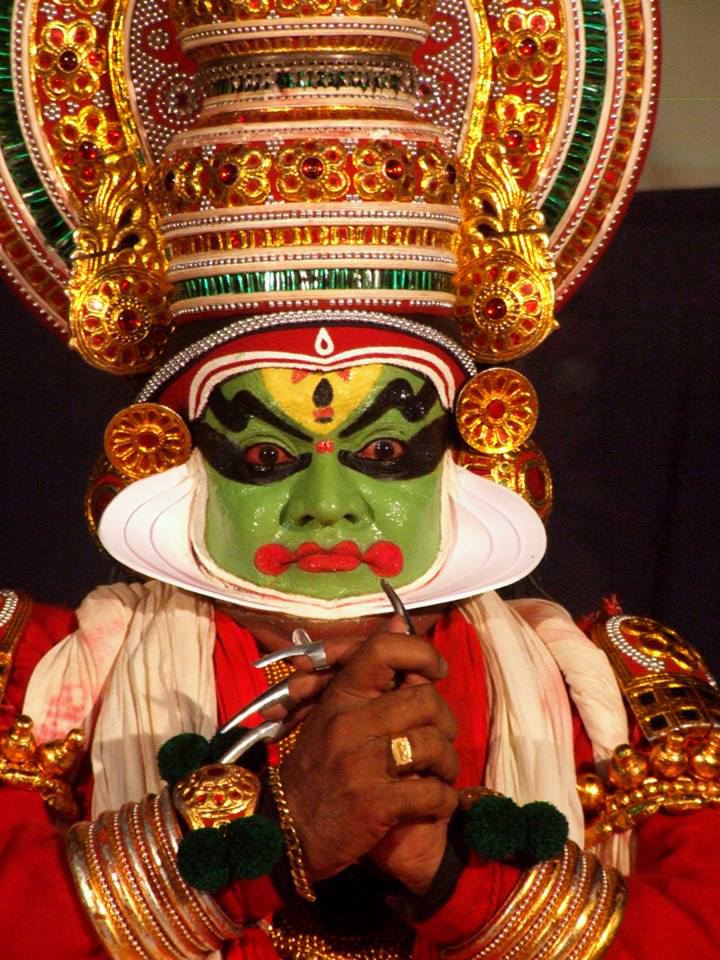
Kathakali is the most famous dance-drama of Kerala, and originated about 1500 years ago. This classical art form is distinguished by several unique features: it’s a marvelous blend of the Tandava (masculine) and Lasya (exotic) elements of dancing; Continue reading

If You Happen To Be In Muzuris

The ancient port city of Muzuris came into the spotlight in 2012 with the critically acclaimed Kochi-Muzuris Biennale, but the Muzuris Heritage Project highlights the region in a more historical context.

Located just 30 km north of Kochi in Paravur and Channamangalam, the four museums–Kerala History Museum, Lifestyle Museum, Kerala Jewish History Museum, and Jewish Lifestyle Museum–were inaugurated this Sunday.

The four museums together present a comprehensive picture of the political and cultural history and lifestyle of the region….

…The Muziris Heritage Project, spearheaded by the Tourism Department, envisaged a group of heritage and tourism plans around key historical monuments in North Paravur, Kodungalloor, Chennamangalam, Pallippuram, Mala and other areas. Continue reading

Raja Ravi Varma

Photo credits : Dileep

Photo credits: Dileep

Born in the princely state of Travancore, Kerala (1848 – 1906), Raja Ravi Varma is considered among the greatest painters in the history of Indian art. Influenced by the Western tradition of art, he initiated a new movement of oil paintings on canvas in India, bringing to the life portraits and dramatic scenes from Hindu mythology and imbuing them with three dimensional qualities.
Continue reading

Yoga In Perspective

San Antonio Museum of Art

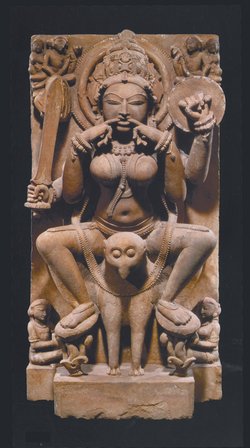
San Antonio Museum of Art. ‘Yogini’; sandstone statue, Kannauj, Uttar Pradesh, first half of the eleventh century. William Dalrymple writes that ‘in ancient India yoginis were understood to be the terrifying female embodiments of yogic powers who could travel through the sky and be summoned up by devotees who dared to attempt harnessing their powers.’

William Dalrymple, in the New York Review of Books, provides a summary of four books that should be considered essential reading to understand yoga in its proper historical context. The last few paragraphs are among the best:

…Yogis seem to have gone particularly out of control during the eighteenth-century anarchy between the fall of the Mughals and the rise of the British. This is a subject explored by William Pinch in his brilliant 2006 study of the militant yogis of the period, Warrior Ascetics and Indian Empires.

European travelers of the period frequently describe yogis who are “skilled cut-throats” and professional killers. “Some of them carry a stick with a ring of iron at the base,” wrote Ludovico di Varthema of Bologna in 1508. “Others carry certain iron diskes which cut all round like razors, and they throw these with a sling when they wish to injure any person.” A century later the French jewel merchant Jean Baptiste Tavernier was describing large bodies of holy men on the march, “well armed, the majority with bows and arrows, some with muskets, and the remainder with short pikes.” By the Maratha wars of the early nineteenth century, the Anglo-Indian mercenary James Skinner was fighting alongside “10 thousand Gossains called Naggas with Rockets, and about 150 pieces of cannon.” Continue reading

One Birthday, Two Remarkable Men

lead

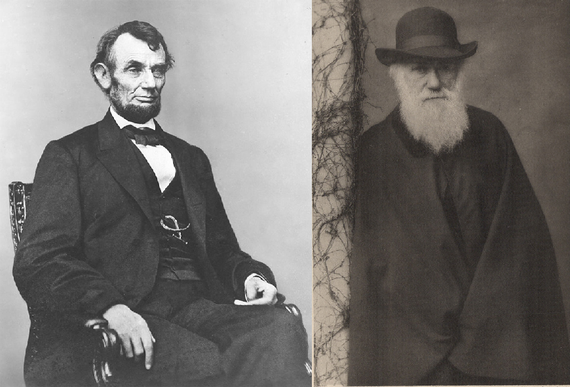
Birthdays do not really matter. But ideas do. And when big ones come along, we celebrate the men and women who shared them in various ways. One way, pedestrian as it may seem, is remembering them on their birthday. Artists and musicians, likewise. We had not remembered, when we posted this yesterday, of this coincidence, but the Gopnik essay mentioned below (we now recall) is worth reading and we thank the Atlantic‘s website for reminding us via this blog post by Alexis Madrigal:

February 12 was a big day in 1809. Abraham Lincoln was born in a wild Kentucky; Charles Darwin was born in a refined Shrewsbury, Shropshire. One man held together the Union. The other developed a theory that resonates through the sciences and beyond to this day. While it’s often difficult to unspool the impacts that individuals have on the world, it seems fair to say that these two minds did something consequential on this rock.

And in a 2009 essay, writer Adam Gopnik tried to get at the shared method of their influence. Continue reading

If You Happen To Be In New York

This slideshow requires JavaScript.

Thanks to the New Yorker‘s website for keeping us posted on the first show of a new curator at MOMA, in a medium of expression we care about for various reasons both aesthetic and technical:

In this week’s issue of the magazine, Vince Aletti talks to Quentin BajacMOMA’s new chief curator of photography, about “A World of Its Own: Photographic Practices in the Studio,” his first show for the museum:

“I’m a bit tired of the predictable history from the daguerreotype to the digital print,” says the Paris-born Bajac, who comes to MOMA from stints at the Musée d’Orsay and the Centre Pompidou, where he was the head of the photography department from 2007 to 2013. Continue reading

Kanakakunnu Palace – Trivandrum

Photo credit: Ramesh Kidangoor

Kanakakunnu Palace was built during the reign of Sree Moolam Tirunal (1885-1924), one of the most popular ruler’s of Travancore state.  Situated near the Napier Museum, it was mainly used for the Royal family guest entertainments. Continue reading

Traditional Architecture Of Kerala

Photo credits : Renjith

Photo credits: Renjith

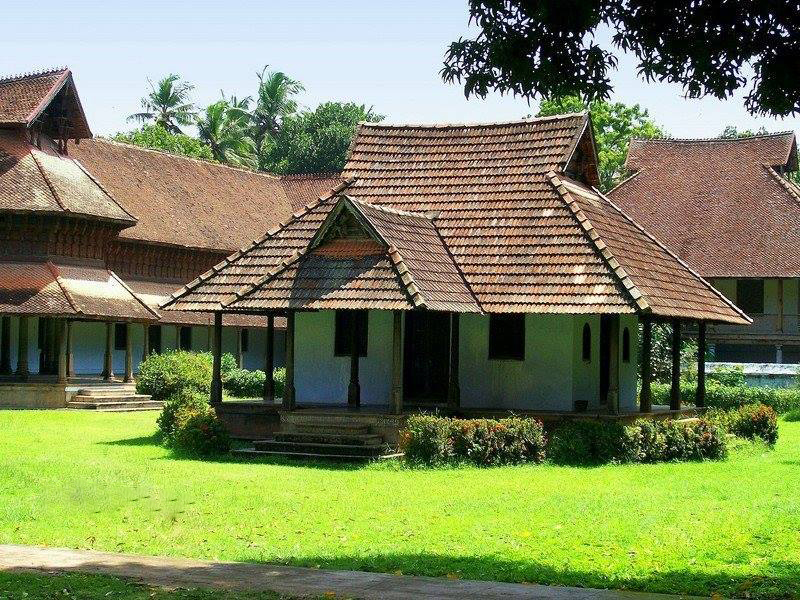
Kerala has a rich legacy of architectural excellence. The ancient buildings, temples and palaces reflect the styles of sculpture and wood work adopted by artisans from ancient times. Traditionally the architecture of the state has been of a humble scale, an ensemble of simplicity and elegance tailored to suit Kerala’s climate and culture. Continue reading