Muniyaras Dolmens

Muniyaras

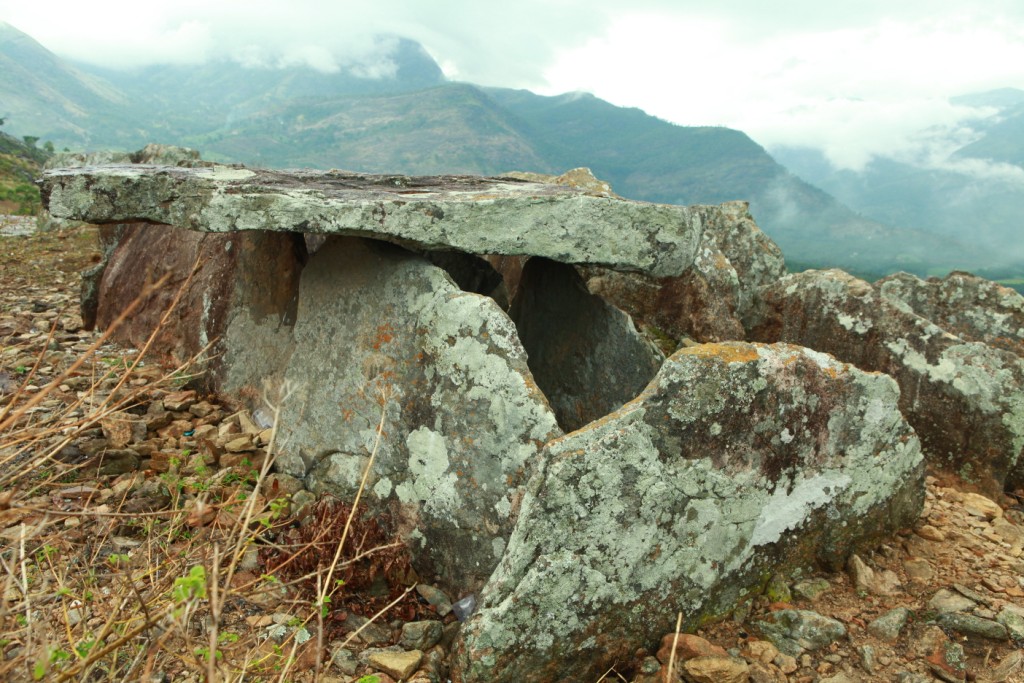
Muniyaras Dolmens are burial chambers belonging to the Megalithic age made of huge rocky slabs. It is believed that this was the ideal place for the  ancient sages for meditation and Yoga. There are many dolmens in and around Munnar especially Marayoor, Kovilkadavu and near the cliffs overlooking the Pambar River.

Continue reading

Leading With Historical Vision

President Barack Obama shows students from Johnson College Prep in Chicago, Illinois, a model of Samuel Morse’s telegraph patent in the Oval Office last October. (The White House/Flickr)

We avoid politics, but call out the good, the bad and the ugly in the public sector when needed.  Admittedly, too much of the latter two and not enough of the good. So hail to the geek in chief of the United States of America, who followed through on his promise in one of our favorite magazines two years ago:

When I was sworn into office, I had a chance to request objects from some of America’s finest museums to put on display in the White House. One of my requests was for patent models from the Smithsonian National Museum of American History…

What’s good?  Telling your constituents you want to invest in the future through education; telling young students that innovation is the future of the economy; getting those dusty plates off the wall and celebrating the history of innovation instead. Continue reading

Gorky In Residence

In other news from Russia, we return to Moscow via Other Russia.  Yes, we are ignoring Mr. Putin’s adorable stunt with Siberian Cranes to return to Maxim Gorky’s legacy. No offense to Mr. Putin, of course, as we (for now) also choose to ignore news of an upcoming “Flashmob Kissing City in Gorky Park on September 23” and on that same date:

“…more than 3000 people will take part in a huge pillow fight in Gorky Central Park of Culture and Leisure! You can bring pillows from home or buy them at the place of the fight for very low prices (from 100 rubles). Except the flashmob “Pillow Fight”, the organizers will hold many interesting competitions for you while DJs will be playing their music all the time.”

That earlier news about Gorky Park reopening mentioned a museum in his honor, so we could not resist investigating.  And we found an amazing collection of images (credits for all photos are embedded in the base of the images).

This slideshow requires JavaScript.

It is difficult to find any information about the museum, which seems not to have its own website, so desk research is limited to some travel magazines and books that cover Moscow, like this one: Continue reading

Wadi Feynan’s Copper Mines: Part I (History)

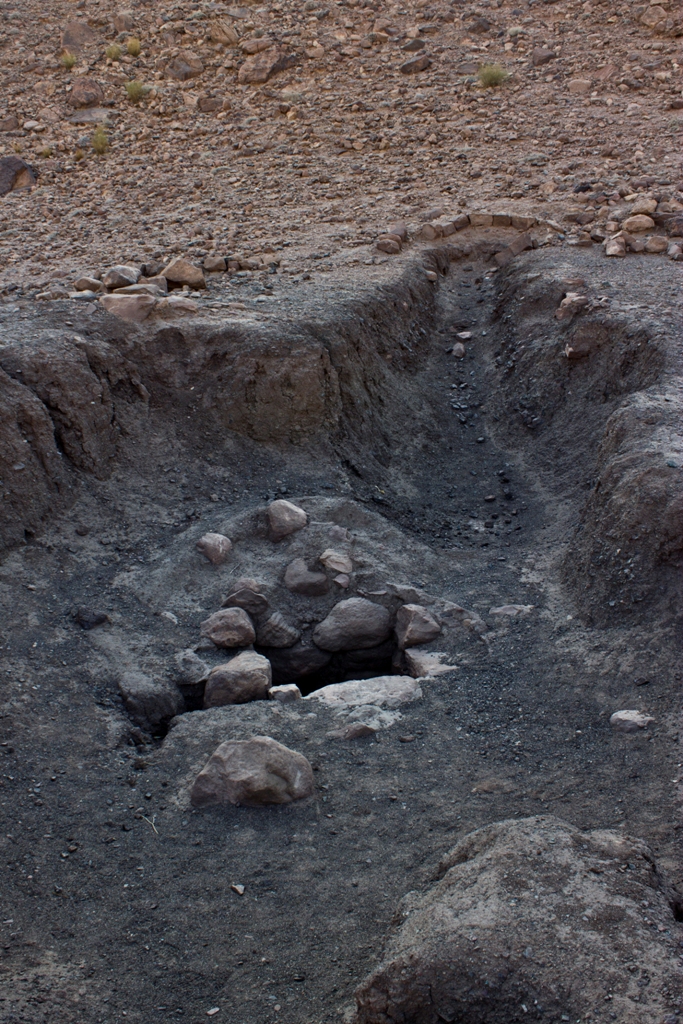
Wadi Feynan was one of the first places in the world where copper was mined and smelted by humans, which when
paired with one of the first Neolithic settlements in the world, makes Feynan an extremely important area in terms of prehistoric human development. Few places in the world can boast this sort of historical wealth – and visitors to Feynan can journey into the past with or without a guide. From the first bit of ore extracted to the collapse of the Roman Empire to the 20th century, copper mining has been a major aspect of human settlement in these valleys. Innumerable shafts have been opened, collapsed, reopened, and abandoned using a wide range of methods and technologies. Today, guests at Feynan Ecolodge have the chance to venture into the past by walking or biking to these historic sites nestled in the rocky foothills of the Dana Biosphere Reserve – and learn about their historical significance. Continue reading

Consequential Incidents

We have all had defining moments.  An event–small, medium or large–that seems to change the course of everything.  For me, it was the rather random choice of topic (more on which after the jump) for a research project with a friend in graduate school, leading to my doctoral dissertation and then onward to nearly two decades in entrepreneurial conservation.  Not my expected career path in my teens, my twenties or even my early thirties. When I saw this opening line in a “culture” piece on The New Yorker‘s website, I was hooked:

In 1833, Ralph Waldo Emerson, a New England pastor who’d recently given up the ministry, delivered his first public lecture in America. The talk was held in Boston, and its nebulous-sounding subject (“The Uses of Natural History,” a title that conceals its greatness well) helped lay the groundwork for the nineteenth-century philosophy of transcendentalism. It also changed Emerson’s life.

With no illusions or delusions about the significance of Emerson’s random epiphany, versus my own, I can still relate. Emerson’s ideas and their impact had consequence during his lifetime for the place that became my research focus a century later.  As it happens, Emerson visited that place just before his 60th birthday, and was deeply amused (it inspired his writing for another two decades) and amazed.  That place, which I was interested in for historical reasons related to collective action (thus the occasional posts on this site with that topic as centerpiece), had consequence for late twentieth-century notions of how to develop tourism under a new model.

Continue reading

A Day Without Shoes

Over dinner one night, I revealed to a few of my fellow interns my fear of feet, specifically adult feet.  We established that I may have podophobia: an irrational fear of feet.  You may think that I should consider taking a quick course in dinner convo dos and don’ts, or consider seeking psychiatric help; however, I guess I feel I have bigger fish to fry than to try to acquit myself of this fear.  We discussed other phobias and how many people overcome theirs by simply “facing” them.  I certainly am not at a place in my life to face my peculiar fear, but I am happy to say that a trip the following day to Meenashki Amman Temple helped me take one step (well, many steps really) towards defeating podophobia.

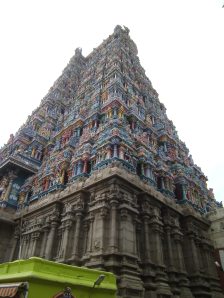
This beautiful Hindu temple is located in Madurai, Tamil Nadu, India, and devoted to Meenashki, an avatar of Parvati, one of the few female Hindu deities to have a major temple named for her.  Before entering the temple, visitors must remove both socks and shoes to be held outside.  Thousands of devotees and tourists visit this temple daily, and from the lines of barefoot men, women, and children, I and my fellow interns seemed to be visiting on a busy day.  I must admit: at first, I was not keen on sauntering around where so many people have trod, and for some time I tip-toed around to minimize my foot-to-ground contact.  Though, with each step against the granite flooring, my focus shifted to the detailed sculptures and the passionate faces of those around me. Continue reading

“I found love when I was 6”: A Story of Tattoos and Love

There are many things I could have named this blog post, but I decided it should sound scandalous, it should sound crazy, it should sound epic. I mean, what is more scandalous, more crazy, and more epic than falling in love when you’re is only 6 years old?

Getting a tattoo? No.

Getting a tatttoo at 6? No.

Getting a tattoo of your true love at 6? Now that, my friends, is crazy.

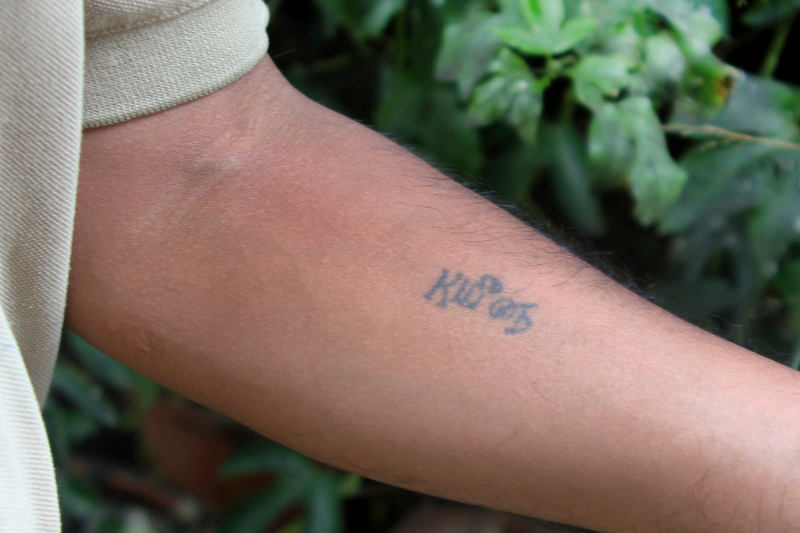
Kamal's Tattoo of his wife's name, Meena

Kamal’s Tattoo of his wife’s name, Meena

Continue reading

Lord Shiva – Major Hindu Deity

Lord Shiva is one of the three powerful Gods of Hinduism, with Lord Vishnu and Lord Brahma. According to the epics of Hindu tradition he has the power to transform and destroy the creatures in the world.

In ancient times he took many avatars to destroy demons and it is believed that those who worship him regularly will receive his blessings in the form of  “boons”, or wishes granted. He is often represented with the  River Ganga on his head and a snake round his neck, illustrating his powers against poison.  He has an eye in the middle of his forehead which he opens when angered, ejecting a rain of fire. In Malayalam this eye is called  Netrikkan. He is also the father of Lord Ayyapan, the famous deity of Sabarimala temple.

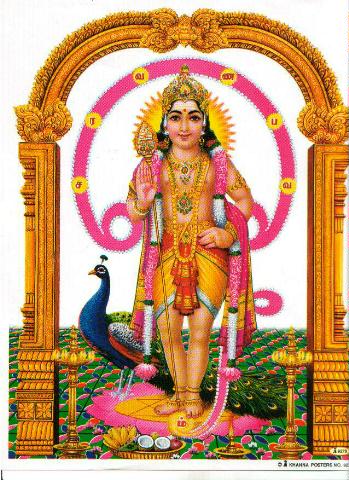
Lord Murugan – God of Tamil

Lord Murugan is the son of Lord Shiva and his wife Goddess Parvati.  He is very popular and is more frequently worshipped in the state of Tamil Nadu than the other Indian states.  He has other names (or avatars) such as Arumugan (meaning six faced), Palaniyappan, and Kadirvelan.  His vehicle is a peacock, so he is known as Mayilvahana in Tamil language.

A popular story is that when Murugan was born there were several maids willing to take care of him.  Embarrassed by having to choose, Murugan took six avatars at once so he wouldn’t have to disappoint any of them and hence was given the name Arumugan. Continue reading

Many Stripes. Many Tales. Few Tigers.

When I decided to come to Kerala this summer for my internship, I got most excited not entirely about my work, but really about seeing a tiger. I can’t even remember the last time I went to a zoo, but I know deep in my closet I have a dusty photo of me and a tamed tiger from Thailand. At this time, seeing a wild tiger was actually more of a WILD idea. Since I’m working next to the Periyar Tiger Reserve, a home to approximately 40 tigers and many other animals, I’m practically neighbors with them and awaiting a miraculous moment to see a tiger before my trip to Delhi.

As a Korean descendent, I must introduce you all to some Korean culture and explain why I’m writing a blog post that is dedicated just to tigers. I’m sure a lot of my Korean folks will agree that tigers and Koreans go way back. My relationship with tigers started when I was 3 years old when my grandmother told me a story about a tiger that smoked using bamboo pipes.  My reaction was: “Really? Tigers smoke, too?”

Source & Credit: Picture of a Tiger at SamChunSa (삼천사) at BookHanSan (북한산)

Continue reading

Report To Greco

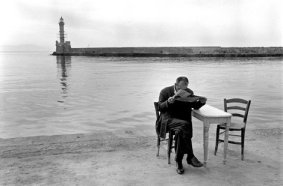
Man reading, Chania, Crete, 1962 (Costa Manos/Magnum Photos)

Click the photo to go to the recent post titled “Do We Need Stories?” in the blog site of the New York Review of Books.  It starts out:

Let’s tackle one of the literary set’s favorite orthodoxies head on: that the world “needs stories.” There is an enormous need,” Jonathan Franzen declares in an interview with Corriere della Sera (there’s no escape these days), “for long, elaborate, complex stories, such as can only be written by an author concentrating alone, free from the deafening chatter of Twitter.”

Continue reading

나는 한국말을 해요 (I speak Korean)

Ok, maybe that’s a little white lie. I don’t really speak Korean – you can thank good old Google Translate for the post title – but I’m on my way! My interest was piqued back in first year when my phonology lecturer mentioned the language, since it has a unique alphabet in which the shapes of the written letters actually represent the shape your mouth makes when you sound them out! Isn’t that amazing?!

Thanks to wright-house.com for a great article on why Korean looks the way it does.

Well, call me a language freak, but I just had to learn more. It took me a while (read: two years) to take the plunge, but when my friend Kim posted this on my Timeline yesterday (girl, you know me so well…), I decided. I have so much time on my hands and it’s driving me nuts, so today I finally started making use of the university’s language centre: I trammed it in to the centre, grabbed a bagel and a lemonade for good measure, then showed up at the library and got Korein’! Continue reading

Selective Pantheon

The Guardian, more than most newspapers, investigates and reports stories of historical-scientific “cabinet of curiosities” value that match our interests on this site.  This slide show below is an example, and is worth a visit.

It is a side show, actually, from a story the paper covered titled “How a book about fish nearly sank Isaac Newton’s Principia” (also worth a visit) and had the subtitle “Poor sales of lavishly illustrated book forced Royal Society to go back on promise to finance publication of Newton’s Principia;” so if pictures intrigue you visit their site and read the captions for each image.

This slideshow requires JavaScript.

Of Sylphs and Shadows

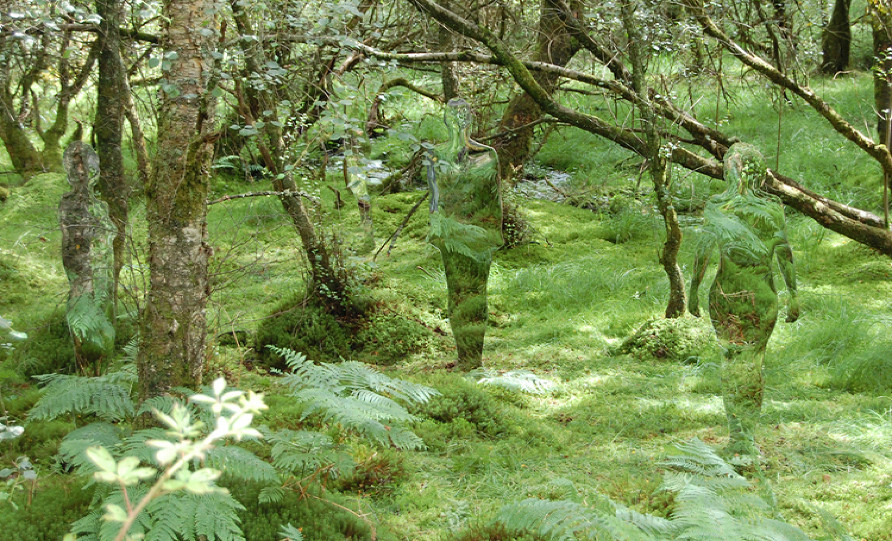
Vestiges, David Marshall Lodge, 2012

Scottish artist Rob Mulholland‘s work touches on Man’s relationship with Nature in many ways, but for me the most essential is the most literal.  At our very best we reflect the beauty of our environment, in the same way that we are said to reflect the divine.

A few minutes ago every tree was excited, bowing to the roaring storm, waving, swirling, tossing their branches in glorious enthusiasm like worship. But though to the outer ear these trees are now silent, their songs never cease. Every hidden cell is throbbing with music and life, every fiber thrilling like harp strings, while incense is ever flowing from the balsam bells and leaves. No wonder the hills and groves were God’s first temples…

-John Muir Continue reading

Museum of Innocence: Written, Published, Built, Open

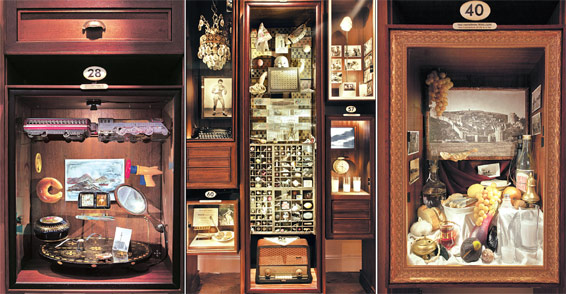
Click the image above to go to the article in Financial Times about a museum inspired by a book, and an author’s life experience:

In a dark-red Ottoman town house in Istanbul’s antiques district, a fast-gentrifying quarter where brassware spills on to steep, cobbled lanes, an idiosyncratic museum has been taking shape. Continue reading

Dance Then

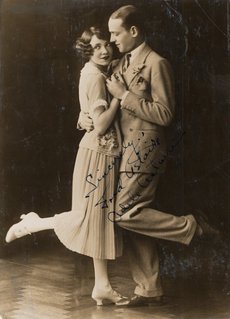
Click the image to the right for a wonderful reminder, in the form of book review, of what makes dance uniquely suited to certain important cultural tasks:

Now that The Artist has whetted our interest in the silent film and the revolutionary impact of sound, it may be time to reconsider the career of the man who made the conversion to sound the basis of a whole new kind of movie, Fred Astaire. The Artist suggests quite accurately that the definitive event of the new sound era was the arrival of the film musical. Sound meant music; music meant jazz. But the technological transition was slow. After the first feature-length sound movie, The Jazz Singer (1927), which starred Al Jolson, it was six years before the advent of the Jazz Dancer proved that talking and even singing mouths were not nearly as expressive in the new medium as dancing feet, especially and almost exclusively the feet of Fred Astaire. Astaire and the difference he made to the film musical add up to more than the story of one career. No other film genre provided as perfect a synchronization of sight and sound or an experience as exhilarating, and that was very largely Astaire’s doing. Continue reading

Thekkady, Through an Old Camera’s Lens

“We have fallen heirs to the most glorious heritage a people ever received, and each one must do his part if we wish to show that the nation is worthy of its good fortune.” –Theodore Roosevelt

We have commented elsewhere on the counterintuitive observation that hunters and fishermen are sometimes, perhaps even often, the best conservationists. (See Seth Inman’s posts from last autumn.) At least in the “North American Wildlife Conservation Model” established in the early 20th century it can be understood that way. Some environmentalists would call the slope between the two concepts a “slippery” one.

Theodore Roosevelt, the 26th President of the United States was a very public example of this. Approximately 230,000,000 acres of wilderness, including deserts, mountains, wetlands and forests were placed into the public trust under his presidency. I wrote about his importance to the early conservation movement in the U.S. in a post called The Natural. At the time I wrote that post I purposefully avoided using the archival photographs that portrayed Roosevelt’s long history of hunting, assuming it wouldn’t fit with our Conservation point of view. Continue reading

Thekkady Remembered

This slideshow requires JavaScript.

Our contributor Vijaykumar Thondamon received an extraordinary gift last week: His Highness Marthand Varma of Travancore, who celebrated his 90th birthday March 16th, presented him with his collection of rare photos of Thekkady.  We are honored that Mr. Thondamon is sharing them with us. Continue reading

Meeting in the Middle

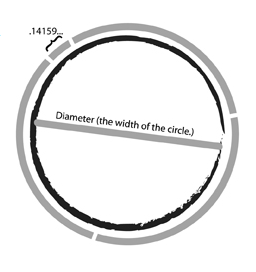
Pi, Greek letter (π), is the symbol for the ratio of the circumference of a circle to its diameter.  The area of a circle is calculated using Pi and the radius of the circle.

In honor of this perfect proportion, math enthusiasts around the world celebrate Pi Day on March 14th. Pi = 3.1415926535…

Multiple ancient civilizations including Egypt, Greece and Iron-Age India have stunning examples of the use of Pi; think “Great Pyramids” and you get the idea. Continue reading