Brown Takeaways, & Galapagos Giveaways

For the work we do, there are a few places always on my radar.  I do not mean some search engine tool for getting all the news on such and such.  I mean radar in the sense of, what really matters?  Why? When and where did it start mattering for me?  September, 1983 at JFK Airport is at the very top of the list, believe it or not, but I will save that story for another day. August, 1988 at Cornell University is near the top, as is February, 1995 in Costa Rica.  The Galapagos Islands joined the list in July, 1998 when I had my first work assignment there.  Ever since, I have had WWDD? buzzing in my thoughts, something like a bumper sticker in the back of my mind that cannot and will not go away.

This story from 2000 is a reminder of one my my subsequent visits.  Continue reading

Color Wheels

Whether by coincidence or just being on a roll (sorry), I just came across an inspiring urban art project that is part Civil Disobedience, part Public Art Initiative, part plain old recycling and completely FUN! Continue reading

Takeaways & Giveaways

The mention of Brown and the questions students raised in a postscript exchange of ideas continues to inspire.

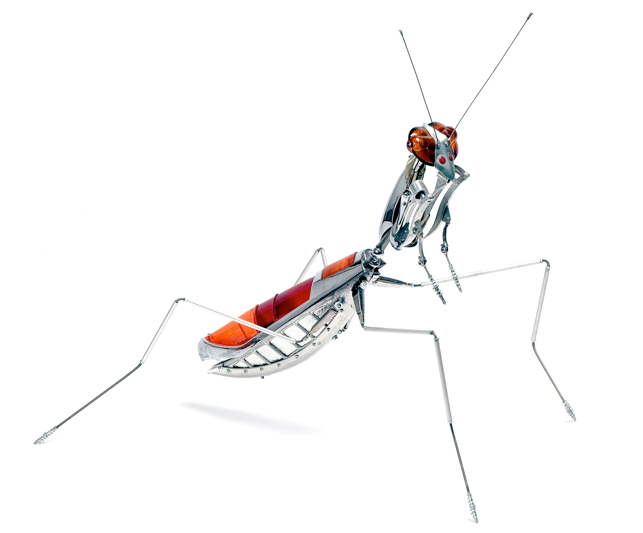
In a world of give and take, another mention of our favorite sculpteur of late is one way to think again about the fable mentioned here.  Ants are not just the worker drones implied, and grasshoppers are not just the partiers implied.  Could it be that the praying mantis has the answer? :

What Wheels Can Do

This slideshow requires JavaScript.

From Bike Share programs to recycled wheels, Tour de France to backwater byways, bicycles are universal, or at least global.

More than just a method of transportation, they are often a form of expression, of the person riding it or the job they do. Continue reading

Columbian Exchange & Bananas Ca. 2011

The book mentioned in this previous post is proving difficult to stop thinking about.  The historical clarifications are part of it in a purely fascinating way (no domesticated animals in the pre-Columbian New World, really?); better understanding of phenomenal events such as the potato blight of 150+ years ago, and kudzu in the present day southeastern USA, are equally illuminating, if more alarming.  For anyone who has lived in the old or new tropics, this naturally leads to thinking about bananas, and then the clicking starts.  And if you are lucky you end up somewhere like this (click on the image above): Continue reading

Footprints

As of this writing, the biographical section of this author’s personal website begins with an inaccuracy that can be easily forgiven.  He just hasn’t updated it yet.  That’s okay, glass houses and all.  But what about all the students interested in topics like this, at places like Brown and Cornell, who want to figure out how one becomes Charles C. Mann?  We learn a bit about the initial C in his name, but not about how he got interested in this topic, he prepared to research it, write it, etc.  That’s okay too.

He brings light to so many topics that we take for granted, even those of us studying some of these topics–do you picture the local population of what is now North America, pre-Columbus, riding horses?–that we can be thankful that he has been busy at researching and writing this book, and less busy explaining to us how he learned to do such work.  Just this passage should get you thinking:

Newspapers usually describe globalization in purely economic terms, but it is also a biological phenomenon; indeed, from a long-term perspective it may be primarily a biological phenomenon. Two hundred and fifty million years ago the world contained a single landmass known to scientists as Pangaea. Geological forces broke up this vast expanse, splitting Eurasia and the Americas. Over time the two divided halves of Pangaea developed wildly different suites of plants and animals. Before Colón a few venturesome land creatures had crossed the oceans and established themselves on the other side. Most were insects and birds, as one would expect, but the list also includes, surprisingly, a few farm species—bottle gourds, coconuts, sweet potatoes—the subject today of scholarly head-scratching. Continue reading

Footprints & Impact

No sooner had I posted the words of a former President of Brown University than a colleague at Cornell sent me news that Mathis Wackernagel is serving a term as a Rhodes Professor (as it is known in shorthand).  This brought to mind two things: first, this book that was published as I was completing my doctoral dissertation and starting work in Costa Rica on a related topic (more on which, soon); second, the President of Cornell University during all of my seven years on campus.  The book was to have a huge, lasting impact.  The same is clearly true for President Rhodes, whose hand I had the honor to shake more than once.  The confluence of events in 1996–this book’s publication and an unrelated group of grateful and generous Cornell alumni creating this Professorship that would later honor the book’s author–is pretty cool:

Frank H. T. Rhodes Class Of ’56 University Professorship

To commemorate their 40th reunion, the Class of 1956 initiated an endowment to create the Frank H. T. Rhodes Class of ’56 University Professorship in honor of Cornell’s ninth president (1977–1995). The purpose of the Rhodes Class of ’56 Professorship is to strengthen the undergraduate experience by bringing to the university individuals from every walk of life who represent excellence of achievement and to create opportunities for interaction with undergraduates. The endowment also makes it possible to create public events related to the professorship such as lectures, performances, films, art exhibits, or conferences. Rhodes Class of ’56 Professors are full members of the faculty while in residence. Appointments are awarded for a period of three years. During each year of their appointment, Rhodes Class of ’56 Professors visit the campus for a week to engage in a variety of activities including public lectures, ongoing courses, and collaborative research.

What Goes Around, Comes Around

Despite the fact that this post makes me look like a “one trick pony” I have to share yet another recycling innovation that involves, well, you know…

The Canadian company Knowaste has opened several facilities in the U.K. that are making a significant dent in the nearly 800,000 tons of disposable nappies and other “absorbent hygiene product” waste that would normally go directly to landfills annually.

The company has pioneered a system that, after heat sterilization, converts the plastics in the products into items such as roof shingles and plastic tubing, with the waste from that processing used to generate heat and power for the plant itself. Continue reading

Those Brown People

In a post some weeks ago on this site, thanks were given to several individuals who have advanced education for all humanity, and provided La Paz Group some of its most talented Contributors.  In this, my first post on this site, I would do the same for Nicholas Brown and all the others responsible for the experience I had yesterday; but the list would be long.  Instead, I will pay tribute to them all through an anecdote about a few:

I was giving a lecture in Quito, Ecuador last year about themes you would recognize as La Paz Group-ish.  In the discussion period after my lecture I was asked if I was aware of “the brown people” in Ecuador.  While many people I have worked with in Ecuador over the last 14 years have skin pigment darker than my own, I would never refer to them that way, so I replied politely that I was not aware of them. Continue reading

Wordsmithing: Possibilian

Breaking with the tradition established several Wednesdays ago, we will not adhere strictly to the OED definition for the word we want to consider today.  We could not, even if we wanted to, because according to OED it does not yet exist.  A close cousin does, and it is worth noting that possibilism (which neither MS Word’s spell-checker, nor WordPress’s, recognize as legitimate) has a meaning somewhat close to what we want to highlight.  The second sense of that word, anyhow, does:

2. Geogr. The belief that human freedom of action is not limited by the natural world.

A possibilian may be a person who does not let the natural world get in the way of doing things.  But it is actually much more interesting than that.  When you have twenty minutes set aside for some intrigue and inspiration, take a look at this for a fuller understanding of the word (from the smith who coined it):

Moving Through Space, Time, and Culture

Hundreds of years of studying physics has told us that the journey through time is linear, and only goes one way. Laws of gravity aside, travelling through space need not be linear – any course can be taken as we move through our lives. These videos were created on a journey through 1056 hours of time and 38,000 miles of space – but the cultures witnessed and experienced by the travelers  are innumerate.

[vimeo 27246366]

Continue reading

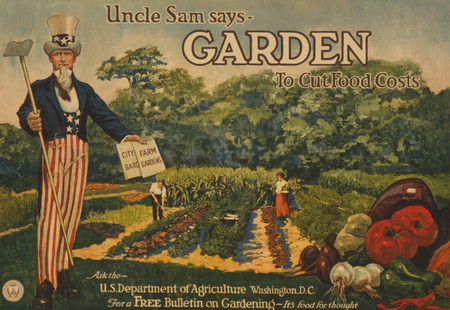
Victory Gardens Redux


As innovative and “hot topic” as they are, the concept of urban and suburban community gardens is not actually new, nor a USA phenomenon.  Just a seemingly “modern” and “developed economy” phenomenon.  Innumerable acres of public and private land across the USA, U.K., Canada and Germany were being used for small scale agriculture during WWI and WWII. London’s Hyde Park, San Francisco’s Golden Gate Park and New York City’s Riverside Park (not to mention Eleanor Roosevelt’s White House lawn) all had plots for cultivation in order to mitigate the costs of growing and transporting produce during wartime.  A Victory Garden campaign during WWI is said to have influenced the creation of over 5 million gardens in the USA alone. Continue reading

Go Grinnell!

The inauguration of Grinnell College’s 13th president Raynard S. Kington, M.D., Ph.D in 2011 marked a transition point for the college. The prize commemorates the occasion and celebrates Grinnell’s historic and future commitment to positive social change.

News(Paper) Power

Despite the now ubiquitous use of the internet to follow both local and world news, newspapers continue to exist for many people as their daily connection to current events.  In many countries that’s not their only use of course.  We’ve written about the recycling initiatives of newspaper bags and baskets, as well as their use as wrappers and packaging in markets around the world.  But used for fueling our cars?  Now that’s news!

Tulane University associate professor of cell and molecular biology Dr. Mullin and his team have just applied for a patent for a method to produce the biofuel butanol from organic material.  Continue reading

Flattering Mother Nature

The Art and Design worlds are constantly giving us examples of our interpretive abilities when it comes to nature.  In fact, the very roots of Art go back to those expressions. But if “Imitation is the Sincerest Form of Flattery” then scientists and engineers are also following the adage that “form follows function” in ways that have the potential to direct us out of some of our environmental problems.

Lindsey Doermann writes about how an elephant’s trunk, water strider’s legs, woodpecker’s beak, peacock’s feathers or a beetle’s back (to name a few) are inspirations toward conservation focused engineering.

Continue reading

Challenge: Nappie-free Landfills

Even if the jury is still out comparing the environmental impacts and carbon footprints of cloth vs. disposable nappies, it’s clear that standard disposables are a landfill problem.  As in, a space problem if nothing else.  Being a petroleum-based product, they pose other problems as well.

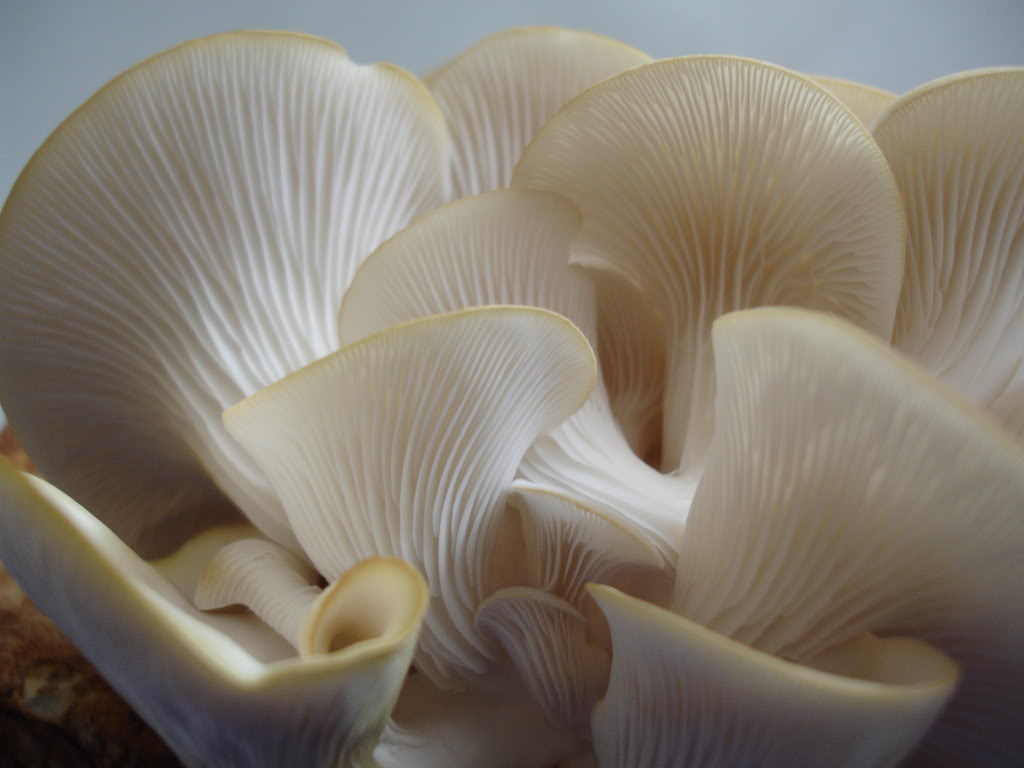
But since the main component of these stubbornly indispensable items is cellulose,  and mushrooms are nature’s cellulose-eating machines, Mexican scientist Alethia Vázquez-Morillas of The Autonomous Metropolitan University in Mexico City has found a solution.   Continue reading

Balancing Act

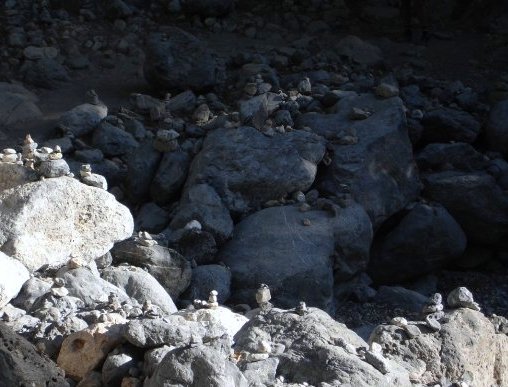
Stacked stones at Samaria Gorge on the Greek island of Crete

Many of us enter a wilderness area to get away from the obvious signs of human habitation.  We go to commune with nature, to be awed by rock, tree or water that has power and age beyond what we can comprehend.

Ancient ruins and other cultural conservation sites have no less appeal.  To stand near a structure built with the often inexplicable ingenuity of early civilizations can be literally breathtaking.

The desire to leave a time capsule of that moment by means of a scratched name and date is nothing new.  Greeks, Romans, Egyptians, Mayans, not to mention Eighteenth Century Romantic Poets have succumbed.  (Lord Byron’s carved name on a column of the Temple to Poseidon at Cape Sounion, Greece is likely one of the world’s most famous pieces of graffiti.) Continue reading

Finding Your Way Back Home

Sign post to the world in Punta Arenas, Chile

Many of us take having an address for granted.  We all know the obvious formula: house number, street name, town or city name, state, zip code,  country (when it differs from our own).  But what may not be obvious is the fact that fewer places in  world are so “perfectly aligned” than we think.  Continue reading

Wordsmithing: Respect

This post from a few days ago brought the phrase “respect your elders” to the fore, because the man presenting those ideas commands respect.  Not in the Napoleonic sense of command, but in the gentle, humble sense.  Not to mention the witty sense.  So, if there are variations on how to command, are there also variations on respect?  Of course. And they are just as surprising as some previous wordsmithing investigations have discovered for other well-worn words.

If you are musically inclined, you might go with Aretha’s definition.  It probably gets at the common usage definition that most North Americans of a certain age carry around with them.  But in OED territory “giving propers” can be seen in a different light with the first two entries for respect:

1. n. regard, gaze; visual attention.

2. v. to postpone, to suspend; to relieve temporarily.

Neither form of the word, especially the verb form, matches what we thought if we had Aretha’s (or Napoleon’s) definition in mind.  Nor is either a definition we had ever even heard of.  Yet when we gaze at those water-collecting and storage devices of old in the desert, we regard them in awe; and they do, temporarily, relieve us of our belief that innovation is only forward-looking.