Gold’s Glitter Gratifies

17TH-TRAVANCORE_COINS.jpeg

Travancore Coins from Beena Sarasan’s Collection. Photo: Special Arrangment

A couple of  my recent posts appreciating the perspective of a capable Western observer on the topic of India, combined with my family’s pending celebration of Thanksgiving in a foreign land (as per our tradition), got me thinking: what news item in India since living here am I most grateful for.

No hesitation.  It has to do with the aftermath of a discovery in July. The discovery happened not too far from where we live, in the foundations of a Hindu temple.  The descriptions were remarkable on their own, in part just because of the difference between journalistic style in the culture where I grew up (fourth estate and all) versus India’s journalistic flourish:

…gold, jewels, and other treasures were unearthed in the vaults of the temple. Several 18th century Napoleonic era coins were found, as well as a three-and-a-half feet tall gold idol of Mahavishnu studded with rubies and emeralds, and ceremonial attire for adorning the deity in the form of 16-part gold anki weighing almost 30 kilograms (66 lb) together with gold coconut shells, one studded with rubies and emeralds… Continue reading
Kolbert, Kerala & Clouds

Reading this post from Elizabeth Kolbert, a familiar cloud of doom came over me.  Read almost anything she writes, and you will know what I mean.  She writes most frequently about seemingly intractable environmental problems, and those about climate change have the most intense effect on me.  But ignorance is not an option, so I read.  The cloud lasted about seven hours, and parted just now in a most interesting manner. As if my head were just lifted out of the sand.  First, the portion that stuck with me:

Since we can’t know the future, it is possible to imagine that, either through better technology or more creativity or sheer necessity, our children will be able to find a solution that currently eludes us. Somehow or other, they will figure out a way to avoid “a 4°C world.” But to suppose that an answer to global warming can be found by waiting is to misunderstand the nature of the problem.

Continue reading

Another Friedman Keeper

This quote may not be clear without the context, so read the full story here.  But following my previous mention of its author I was pleased to see that he is still writing from India, and I am most interested in this snippet because it captures a general point beyond the specific innovation he describes in the full article.

That conversation is the sound of history changing.

And not just for India. We’re at the start of a nonlinear move in innovation thanks to the hyperconnecting of the world — through social media, mobile/wireless devices and cloud computing — which is putting cheap innovation devices into the hands of so many more people, enabling them to collaborate on invention in so many new ways.

Continue reading

When It Doesn’t Rain, It Pours

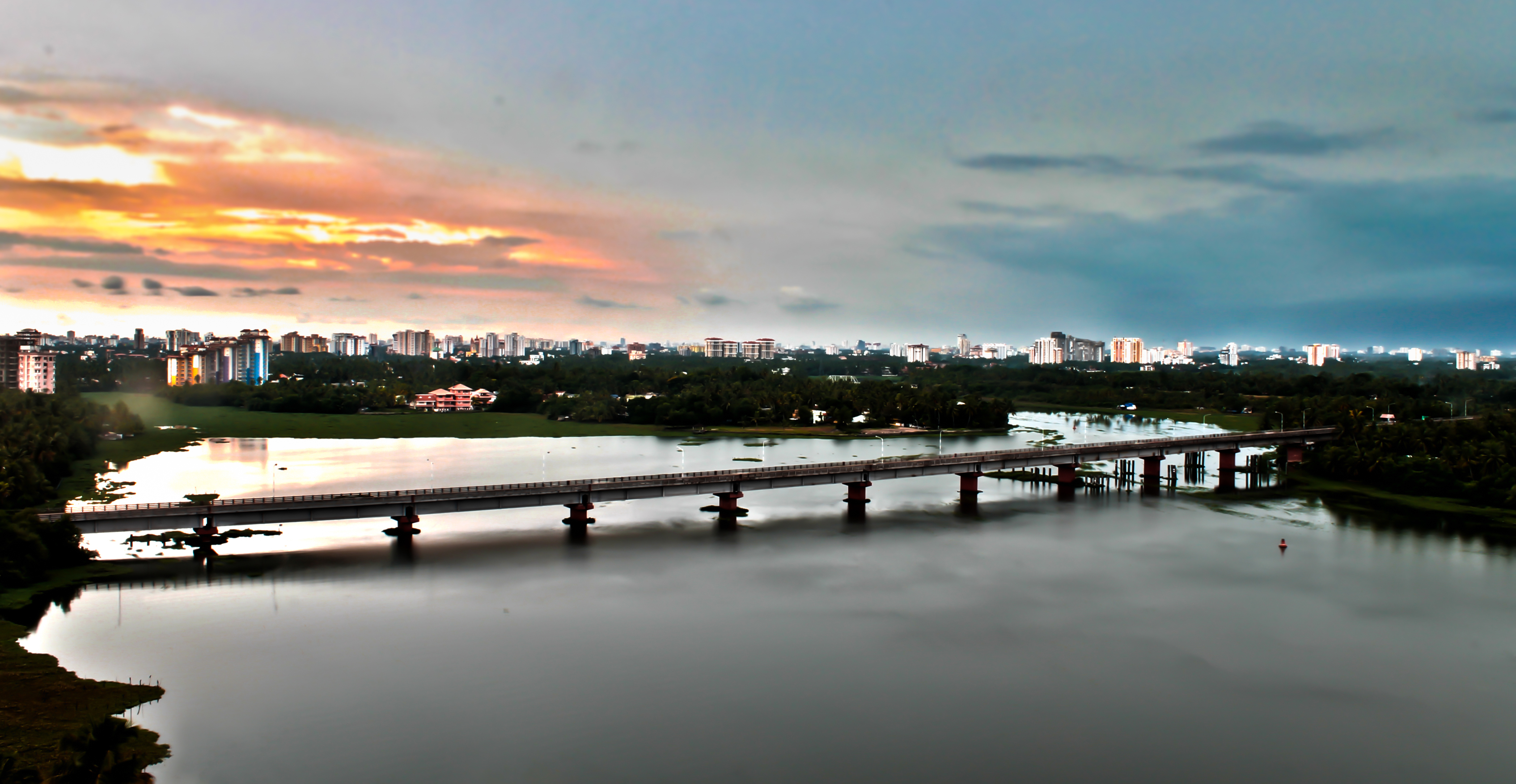
Perhaps it’s a bit of a cliché to use the phrase “calm before the storm”, but that’s exactly what it was. The sun was setting and clouds were gathering – the grey sky occasionally illuminated by a flash of lightning, although thunder never followed. Lately, Cochin has been having rains that are seemingly erratic to someone who hasn’t lived here long, but to the locals, they’re as predictable as… well, the seasons.

Continue reading

Revisiting The Tiger Trail

When I send emails to friends, colleagues, and others about this website, and the objectives of Raxa Collective, I normally add links to a few posts that I think are representative.

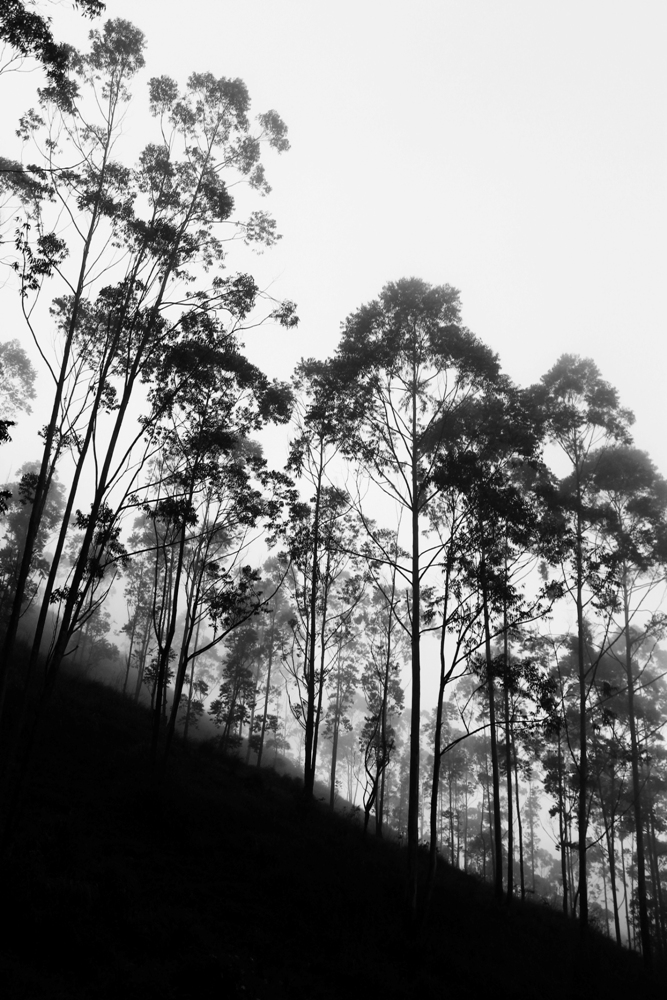
Almost always, this one is included.  Michael captured the moment well.

As we continue adding contributors to this site, and the diversity of topics and locations we pay attention to expands, for some reason I still come back to the Tiger Trail as a favored topic because it is such a good example of what we care about.

That tendency to return, at least in thought, led me to reconnect with a “lost” member of our Tiger Trail entourage. Continue reading

Progress Back And Forth

We have noted before the intriguing coincidences that link the “old world” to the “new world”–not least the desire to establish trade with what is now Kerala and the accidental discovery of somewhere else; and other links in both directions.  “Old” and “new” become fuzzy qualifiers when considering “modern” European travelers of the 15th century sailing to “ancient” India and instead encountering people we now call Pre-Columbians.  Seth has posted on the environmental impacts of people from that so-called old world as they settled in the new world and brought their definitions of progress with them.  Now, thanks to an article in Smithsonian Magazine our attention is brought to a book and a man who broaden our horizons back to the old world from which those people came. Continue reading

“Horoscope not matching, that lady…”

A few weeks ago I wrote about the importance of the astrologers‘ input in choosing a life mate.  Yesterday I asked a member of the family whether the young man had chosen a bride yet.  The title of this post was his simple response.

So, back to the drawing board, as the saying goes….

A Well-Rounded Adventure

“Mists, ah, very problem!”

I glanced sideways at the boisterous Mallu man driving the jeep along the winding mountain road. Like his passengers, he was peering out of the vehicle at the steep slopes around us, scanning them for wildlife, abetted by the pre-dawn lighting and the heavy mists.

If any elephants or bison were grazing upon the high hills we drove through, they were impossible to see thanks to the cotton-thick mists blanketing the tall grass and trees that covered the terrain. As the vehicle banged and clunked over potholes at high speeds, I held determinedly onto the railing for dear life, occasionally risking freeing my hands for a photograph of the scenery speeding past.

Some ways down the road, once the sun had risen above the horizon, the jeep rolled to a stop under a densely canopied corridor. My eyes began to search the trees for the reason of our stop to no avail – the driver pointed to what I had previously taken for a pile of rocks, proclaiming it to be a tribal temple. Upon a second look, I realized that the blocks of granite were hewn into rough rectangles, and while in no particular order, they were indeed surrounding a small garlanded icon. Continue reading

Can Your Horoscope Do This?

Living in India has really highlighted the cultural differences of things that I have often taken for granted.  How we meet our future spouses is most definitely a case in point.

My culture certainly has its fair share of well meaning friends, relatives and co-workers who have the “perfect person” in mind for someone to spend their lives with.  Even if one doesn’t wish to avail themselves of this advice, it is often persistently given.  Barring that, people meet frequently at school, parties, conferences, libraries, sporting events, airports…the list is endless, and one has to wonder at the statistics of how frequently those serendipitous meetings lead to long term relationships.

In Kerala (and I believe the rest of India as well) there is still a tradition of family involvement in the choice of life partner. Historically there was always an “auntie” (the catch-all name for an older, married woman) who has just the right match for young men and women of their acquaintance.  But times are changing and computers and the internet have taken a role in this process, whether it be “on line dating” in the Western world, or “matrimonial sites” here.

I was recently shown a “print out” from an on line matrimonial site based in Kerala.   Continue reading

Primitive Garage

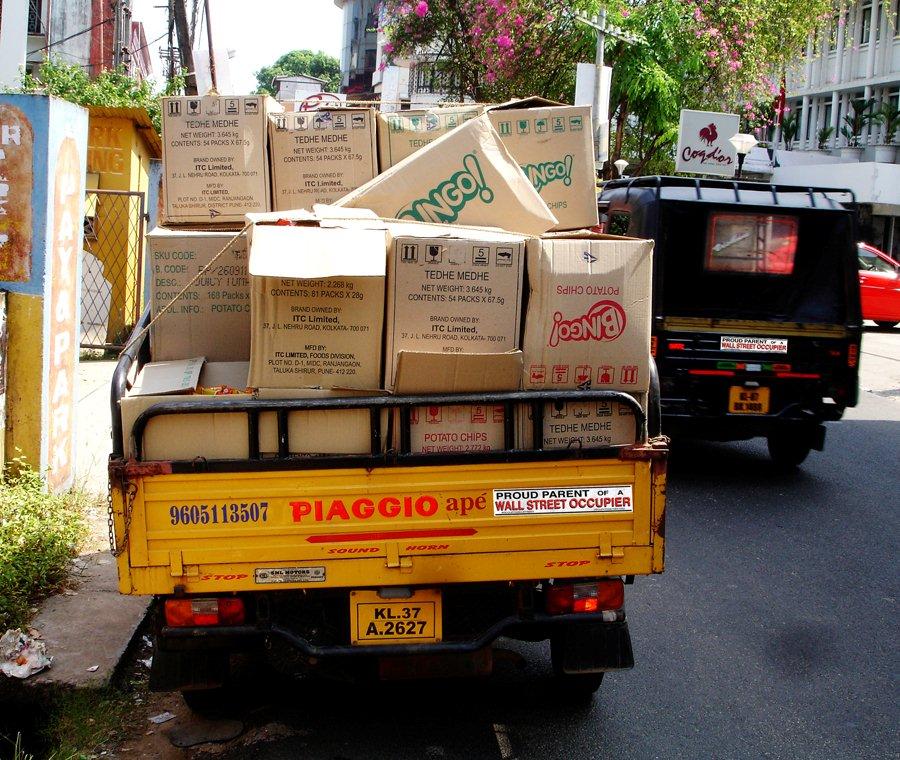
While driving through Tamil Nadu a few weeks ago, there were more  than enough of those moments one experiences when travelling through a culture not your own, during which your eyes glaze over as you try to determine either what someone was doing, what you saw, or what in the world is going on. Tamil Nadu, of all the places I have traveled in the world, very likely has the highest concentration of these moments I have personally experienced, and in addition to a truck garage that looks more like an elephant parking space, one is liable to see extravagantly mustachioed motorcycles, patchwork oxcarts, and large angry red men.

This slideshow requires JavaScript.

Walton Ford, Come To India!

In my last post, I walked along a border–the one separating the land of nostalgia from the land of meaning–and am still not sure which side of the border I was on.  One person’s memory lane is full of madeleines, and another’s may have no particular there there (so be it, glass houses and all).  The link to Brother Blue is the puzzle.  Can anyone, out of context, realize who that man was and what he accomplished from that little bit of Lear jive?  I do not know.  But recycling is an ethos that India is instilling, so I go with it.

The thread linking Thoreau and Brother Blue for me the other day kept un-spooling, and led me back to my favorite living artist:

Modern India, Bootstrapping

 It may have seemed implied in the previous post that looking backwards is the only amazement India offers.  Not so.  To outsiders and locals alike, in India sometimes the Shock of the New is the only path forward. This week in The New Yorker there is an article (click on the image to the left to read the abstract, but either full subscription or pay-per-article is required for the full text) about one of India’s many new billionaires, and his private sector approach to a moonshot.

We could distinguish his approach from the entrepreneurial bootstrapping initiatives we highlight on this sight in a few obvious ways (ok, a few billion obvious ways), but why bother? We need only say we like it.  And in a place with thousands of years of experience making things work against all odds, we can also say we have hope.  Even optimism.

Mystical India, In Practical Terms

There have already been plenty of posts on this site that give the perspective of non-Indians living in or visiting India.  Here is another good example of an Indian describing a local feature of life that, to the non-Indian, is more of a phenomenon.  And so the style of delivery, while quite different from that of this man, is equally intriguing (fair warning: the accent is stronger here, but you can train your ear to understand)–both men talking about old stuff, rather genially and humbly, but clearly aware that they are sharing with the world something of value that might have been overlooked because it has been hiding in plain sight for so long.

The style of delivery, in fact, is as interesting as the content itself, if you are a non-Indian trying to figure out what makes the place called India so worthy of attention.  It is not what Robert Hughes called the Shock of the New, translated from art to service or organization; it is another example of the Shock of the Old.  And the style of delivery reinforces just that.

The joking self-effacement–no Silicon Valley-type innovation or technology, but we get by in our own way–belies an organizational philosophy made tangible that would be the envy of many organizations around the world.

Dawn and Dusk

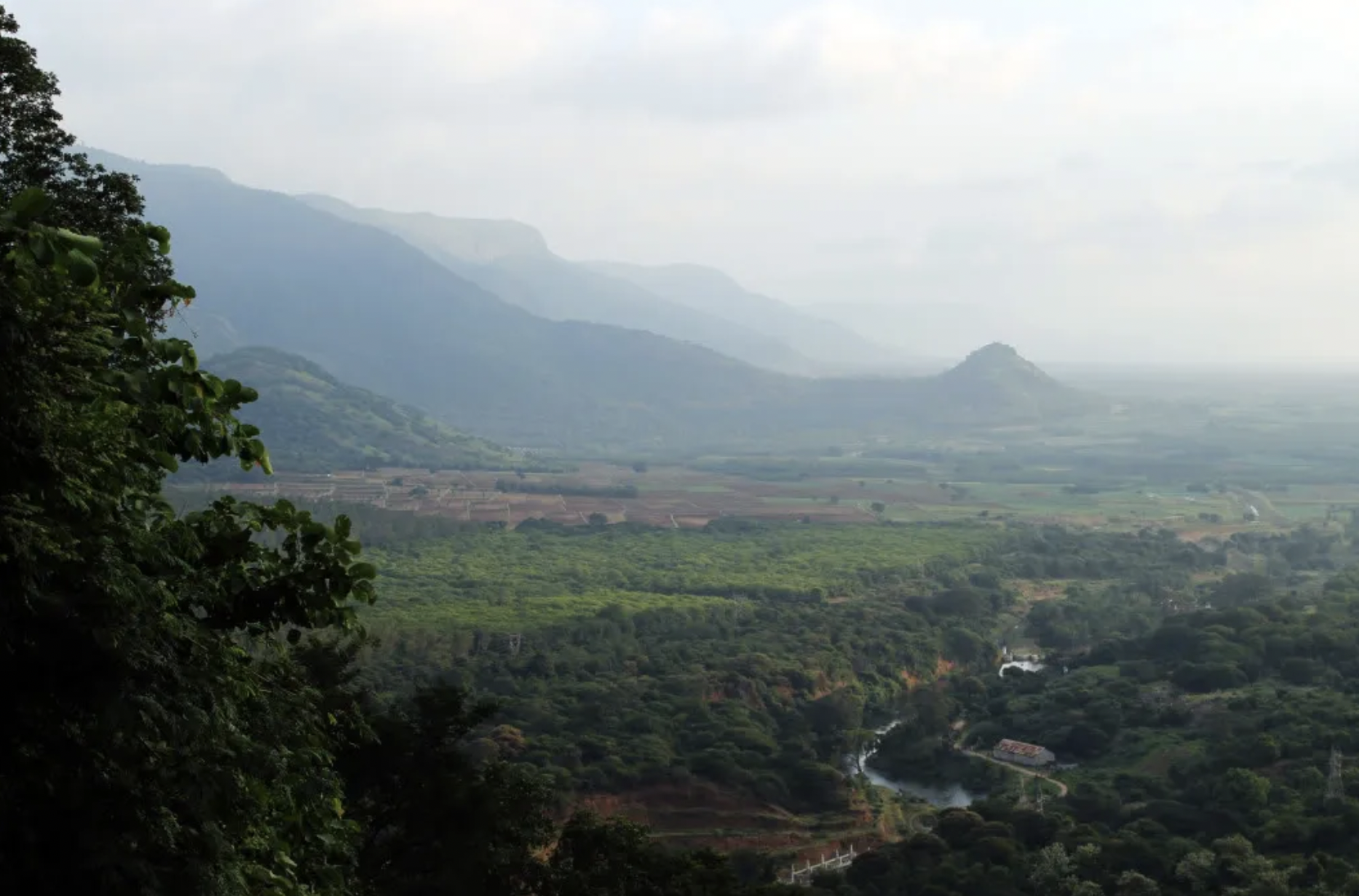
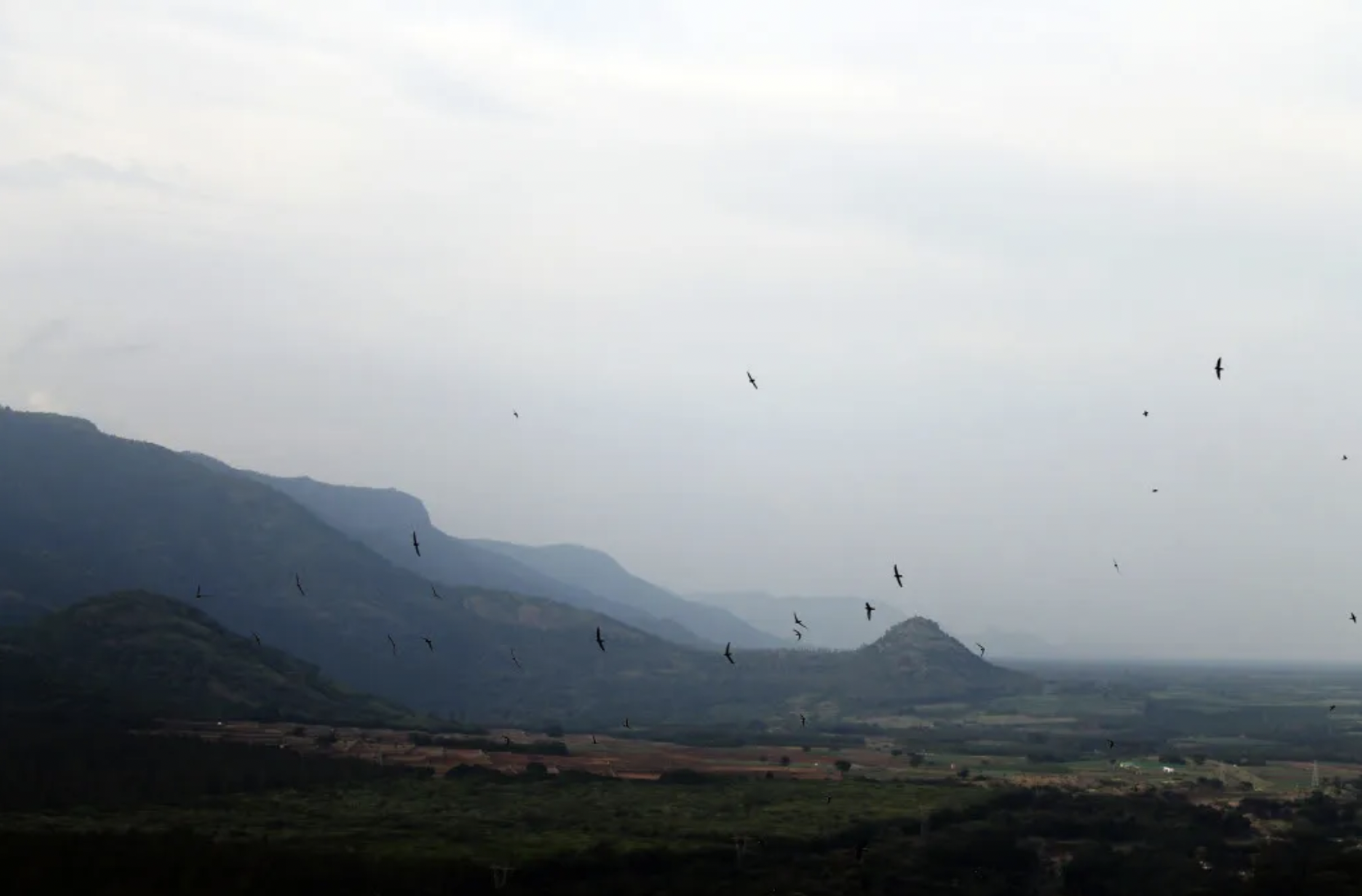
The clear skies and fair weather last Saturday allowed for breathtaking views across the expansive scenery on the drive down from Kerala’s Idukki District into Tamil Nadu. The following pictures were taken respectively at 7AM and 5PM (not quite dawn or dusk, but close enough) from different points along the drive down from and back up to Kumily.

Watch It On National Geographic Channel

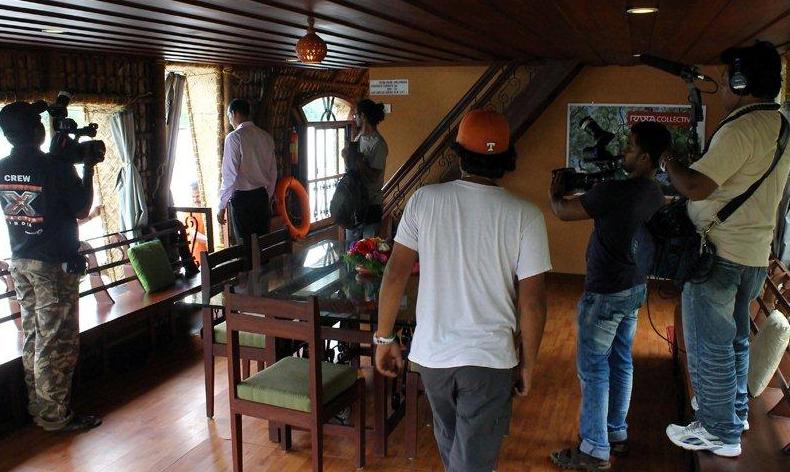
Our colleagues offer amazing experiences on the backwaters of Kerala, in the houseboats described here, with some visual support here and here; and once more here (really, look at it to get a sense of grocery shopping in our neighborhood); so no surprise that a film crew and remarkable cast of characters asked to spend time with them.  The crew of 15 or so (I lost count) was from all over India; so was the cast.  The four featured men in this film are part of a “bucket list” adventure that is being filmed in the locations ranked most highly in a national competition as “must go.” Kerala’s backwaters made that list. Raxa Collective’s houseboats were chosen as the venue for best experiencing those backwaters.

The four men–a student, an IT marketing executive, an Indian Capoeira master-in-training, and a famous Bollywood actor–met for the first time not long ago, and by the time we met them they seemed like old friends.  By the time it airs on the National Geographic Channel, that will stand out as much as the fabulous locations (I like the picture hanging on the wall past the camera man).  We will share more on the broadcast times when we have them.  The photo below is Milo’s, and we have some additional photos by Sung from this particular day (they were on the houseboats for many more days), more on which as we have those photos, and hopefully some film outtakes.

Shop on the Water

Kerala’s Backwaters may be the only home to certain cultural items such as the snakeboat races and the traditional Kettuvalam houseboats, but they are also host to universal waterway phenomena. There is the mandatory bounty that nature provides in the form of distinct and delicious fish and crustaceans, not to mention the huge swathes of coconut palms that grow naturally. Acres and acres of rice paddies are cultivated at below sea level – a feat not unique of Kerala. But in today’s universal culture of rapid globalization, few areas are content with being entirely self-sufficient. So what do the residents of the Kerala Backwaters do if they can’t grow or forage a supply they want? The strips of land are too remote and inaccessible for a  run-of-the-mill supermarket to be profitable, let alone practical. As usual, Kerala folks have come up with a creative yet simple solution to the problem of accessibility and functionality – a floating supermarket.