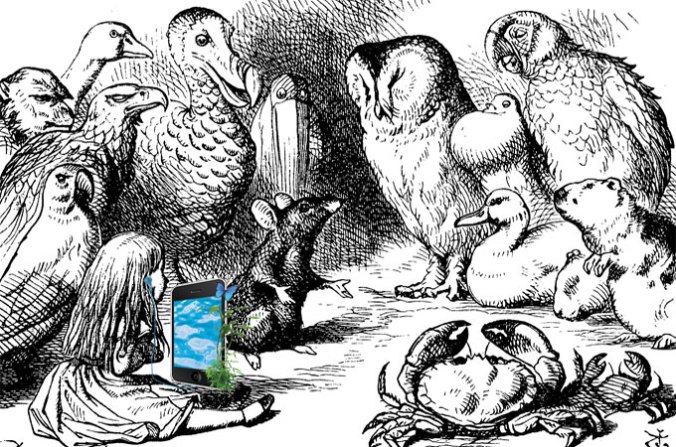
Nature’s Apps

It’s not all fun and games when it comes to games featuring the environment. With some green game apps, not only can you live in your world and play in it, you can learn stuff too.

It’s not all fun and games when it comes to games featuring the environment. With some green game apps, not only can you live in your world and play in it, you can learn stuff too.

Thanks to Conservation magazine for this article, published coincidentally exactly at the time when several Raxa Collective contributors were visiting the Cornell Lab of Ornithology, which itself is participating in the App business (more on which, by Seth soon) in a manner resonant with the focus of this article:

DIALING INTO THE OUTDOORS THROUGH PHONE APPS

The Nature Deficit

Judging from the amount of time my grandkids hunch over their iPhones and iPads for game time, I’d have to say games have garnered a major portion of the younger set’s mindshare. And in my book that’s a shame. While more and more studies find that children’s outdoor time contributes to their well-being — by mitigating obesity, promoting cardiovascular, musculoskeletal, and mental health, as well as boosting academic achievement — the number of hours children spend outdoors is on the decline. (See also here.) Continue reading

Big Business, Conservation, Innovation

We have written about and linked to others’ thoughts on altruism more than once, thinking we will eventually have an ultimate illumination on its origins and how to increase its likelihood. Likewise on our main theme as an organization, with regard to entrepreneurial conservation. We also keep a watch out for big companies (versus entrepreneurs) and governments (as in the case of the state initiative in the banner above, which is discussed below) doing the right thing.

Thanks to this article in the New Yorker for bringing our attention to the efforts to bring sustainable and affordable water to the good folks of Texas, and at the same time raising our awareness of the tightrope walking between big businesses that have many motivations to participate in innovative conservation schemes, and the organizations that have been the innovators in this regard for decades:

Mark Tercek, the head of the Nature Conservancy, recently took a tour of the largest chemical-manufacturing facility in North America: the Dow plant in Freeport, Texas. The Nature Conservancy, which is responsible for protecting a hundred and nineteen million acres in thirty-five countries, is the biggest environmental nongovernmental organization in the world. Tercek, accompanied by two colleagues, had come to Freeport because the facility—a welter of ethylene crackers and smokestacks built next to a river that flows into the Gulf of Mexico—is at the center of a pilot collaboration that he hopes will reshape conservation.The key idea is to create tools that can assign monetary value to natural resources. Continue reading

Mobile Art Exhibitions

The Rodi Gallery, parked in Astoria Park in Queens. Credit Aaron Graham

The Rodi Gallery, parked in Astoria Park in Queens. Credit Aaron Graham

Thanks to the New York Times for its coverage of the arts in general, and for this specific reporting on the efforts to get art where it may be seen outside the normal venues:

On a recent Saturday, Elise Graham and her 22-year-old son, Aaron, pulled a 12-foot van into a parking spot on West 14th Street in Greenwich Village, swung open the back doors, lowered the aluminum stairs, and welcomed visitors inside their mobile Rodi Gallery.

Around the United States, art is on the roll. Inspired by the success of food trucks, gallery owners like the Grahams, who are based in Yorktown Heights, N.Y., have been taking their show on the road. For the last year, they have traveled to populated spots like the meatpacking district of Manhattan, the Peekskill train station and Astoria Park in Queens. This Saturday, they are parking in the center of Bushwick Open Studios, a three-day festival in Brooklyn. Continue reading

Innovation In Humanities, Essential To Our Future

Image by Corbis Images.  Thomas Rowlandson’s view of the library of the Royal Institution in London, circa 1810

Image by Corbis Images.
Thomas Rowlandson’s view of the library of the Royal Institution in London, circa 1810

We have been monitoring Harvard Magazine and some of its kindred publications since the early days of this blog, as constant sources of interesting articles relevant to our interests; and now this:

Toward Cultural Citizenship

New gateways into the humanities for students “still fully molten as human beings” by Jonathan Shaw  May-June 2014

Continue reading

Useful Or Not, Therein Lies The Rub

Horace Dediu

Horace Dediu

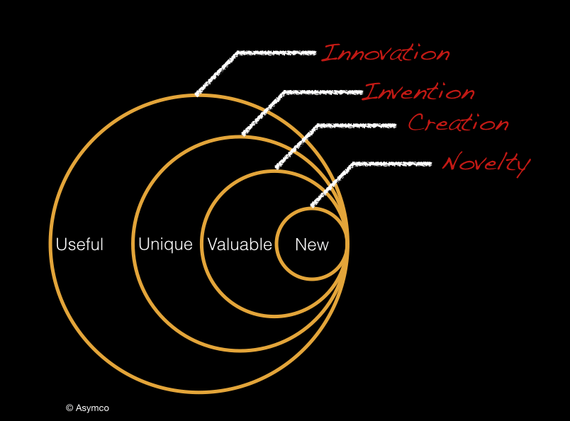
We frequently link to stories about innovation related to protecting natural and cultural heritage, particularly our own favored practice of entrepreneurial conservation. We do so with the hope, and sometimes blind faith, that what we are focused on is not only effective (as in, accomplishing what we set out to accomplish), but also useful (as in, of lasting, rather than just short term value). So, Horace Dediu has our attention. Not the clever new terminology, which is not what we find innovative, but the basic point behind it seems to be:

Innoveracy: Misunderstanding Innovation

Illiteracy is the inability to read and write. Though the percent of sufferers has halved in the last 35 years, currently 15% of the world has this affliction. Innumeracy is the inability to apply simple numerical concepts. The rate of innumeracy is unknown but chances are that it affects over 50% of us. This tragedy impedes our ability to have a discourse on matters related to quantitative judgement while policy decisions increasingly depend on this judgement.

But there is another form of ignorance which seems to be universal: the inability to understand the concept and role of innovation.

Continue reading

Chicago’s Vertical Farming

Plant Chicago, NFP/Rachel Swenie

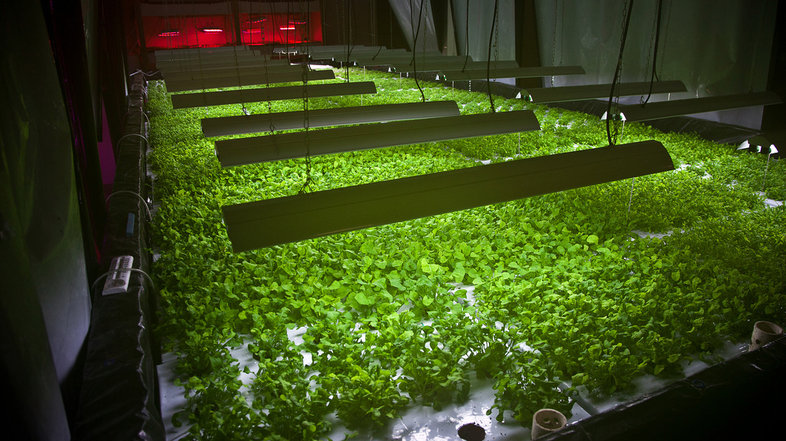
Arugula plant beds inside The Plant, a vertical farm operation in Chicago. Plant Chicago, NFP/Rachel Swenie

Thanks to National Public Radio (USA) for this story on their weekly program called The Salt:

From plant factories fueled by the magenta glow of blue and red LED lights, to the 30-foot tall Ferris wheel for plants in Singapore, we’ve shown you the design possibilities for growing vegetables up instead of out.

But critics ask, what kind of stresses does that put on the plant? And how do you feed this kind of intensive cultivation without spending more than what you get back in the harvest? Continue reading

Font Innovation, Greening Government

We like all the dots that can be connected in this story.  First, for our friends at Thought Factory Design, another story about font innovations. Second, the fact that at 14 years old this fellow is thinking about waste reduction in such inventive ways means he may be a candidate for membership on the Young Creatives dream team. Third, a bit of home team pride for several hundred members of Raxa Collective, some of the stories that ran after CNN first reported this mention that Suvir is from a family of Indian origin:

(CNN) — An e. You can write it with one fluid swoop of a pen or one tap of the keyboard. The most commonly used letter in the English dictionary. Simple, right?

Now imagine it printed out millions of times on thousands of forms and documents. Then think of how much ink would be needed.

OK, so that may have been a first for you, but it came naturally to 14-year-old Suvir Mirchandani when he was trying to think of ways to cut waste and save money at his Pittsburgh-area middle school.

It all started as a science fair project. As a neophyte sixth-grader at Dorseyville Middle School, Suvir noticed he was getting a lot more handouts than he did in elementary school. Continue reading

Add Cello To The Trinity Of C-Words


Welcome To Yo-Yo’s Playhouse…Watch the superstar cellist Yo-Yo Ma and many of his close friends from all over the world in action at a theatrical props warehouse in Brooklyn.

Ever on the lookout for stories that have one or more connections to our primary interests–community, collaboration, conservation–we are particularly fond of bifectas and trifectas, double-dips and triple plays. Versatility and eclecticism are signatures of Yo-Yo Ma, so no surprise that today we see a bit of all our interests combined in this story on the National Public Radio (a USA radio network funded by listeners, corporate/foundation donors, and taxpayers) website:

by ANASTASIA TSIOULCAS

When you’re lucky enough to have cellist Yo-Yo Ma and members of the Silk Road Ensemble, some of the world’s premiere instrumentalists and composers, gather for an afternoon of offstage music making, you’ve got to think long and hard about where to put them. And we decided that the perfect match would be ACME Studio, a theatrical props warehouse in Brooklyn.

Continue reading

Do The Green Thing Countdown 25/29

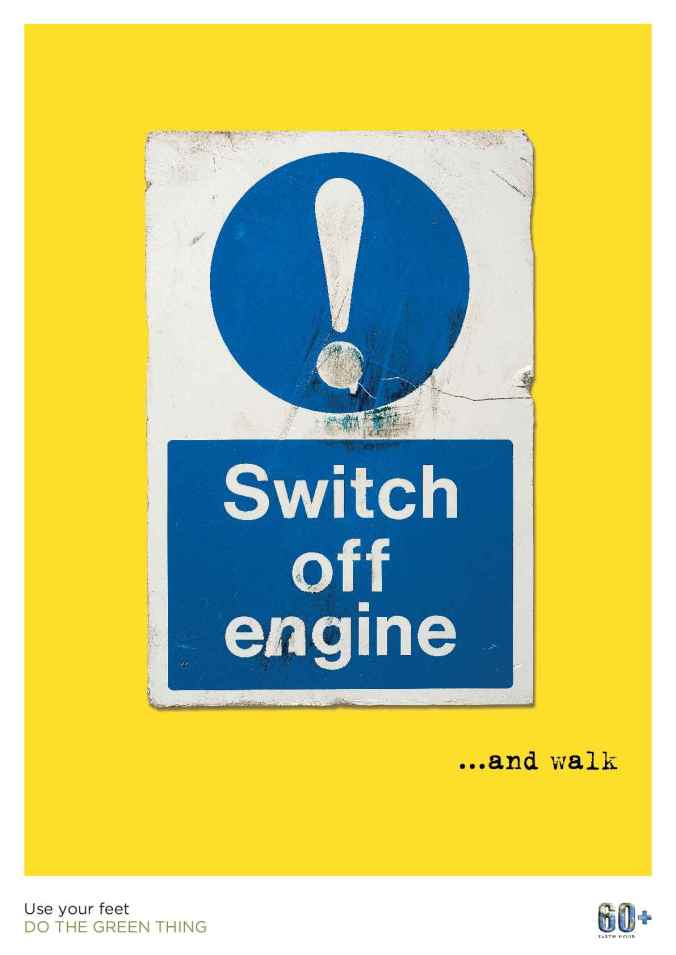
Continuing our promotion of Do The Green Thing’s campaign on behalf of WWF for Earth Hour, we point you to Switch Off Engine by Harry Pearce in which he:

…takes a warning sign from the depths of the car world and reuses it to create a messages that instructs us to step away from our vehicles and go by foot instead.

“The visual language of obedience demands our attention and compliance,” says Harry. “Maybe the car industry should follow its own rules.”

Why?

Continue reading

Improving Governance For The Environment, One Citizen And One Pollinator At A Time

We have been noting increasing stories about loss of pollinators in the USA and Europe, and especially notice how seriously this problem is taken in the UK. Solutions? Not so obvious.  But we are on the lookout each day for innovations in both the public and private sectors. This UK governance procedure seems a promising mechanism for getting citizens aware of, then involved finding solutions for environmental challenges such as the alarming loss of pollinators nationwide:

A consultation on the National Pollinator Strategy: for bees and other pollinators in England

Overview

Defra is seeking views on a proposed national pollinator strategy for bees and other pollinators in England.  The strategy sets out proposals to safeguard these important insects given their role in pollinating many food crops and wild plants and their contribution to our food production and the diversity of our environment… Continue reading

Leap Seconds Become Leap Years

One of our contributors is a leap year baby, so we take note at the passing of each February into March, without always remembering why on certain years there is an extra day. Today our office team celebrated that birthday, rather than doing so tomorrow, thinking it is better to be early than late.  Here is a secondary explanation from the Atlantic‘s Alexis Madrigal:

The mechanics of the leap year are well known: We add a day to February every four years to maintain the synchronization of our earthly calendar with the celestial reality of the Earth’s orbit.

Weeelllll, it turns out that a similar phenomenon plays out on a much smaller time scale. Along with the leap year, there is the leap second. Continue reading

A Master Puzzle

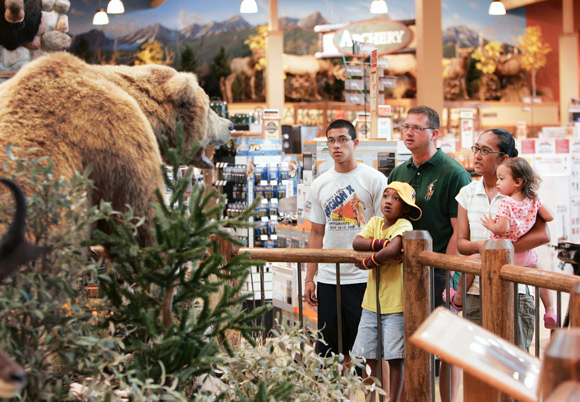
Photograph: Nati Harnik/AP

Photograph: Nati Harnik/AP

If you have shopped there in person, or ordered from them online, or see that the interrelation between the USA’s various communities are sometimes not easy to figure out, you know why this story is important:

…The growth of Cabela’s reflects Americans’ odd relationship with the outdoors: we mythologize it even as we pave it over. To accommodate their bulk and the crowds that they attract, Cabela’s stores are often built next to interstates and surrounded by giant parking lots. Generally, the only wildlife in sight are the crows picking over the litter. Some of the newest branches are on the edges of cities—Denver, Austin—that epitomize sprawl. In Greenville, South Carolina, where Cabela’s plans to open on a congested retail strip in April, other retailers are worried that traffic jams will scare away their customers. Continue reading

First Porsche, First Green Automobile?

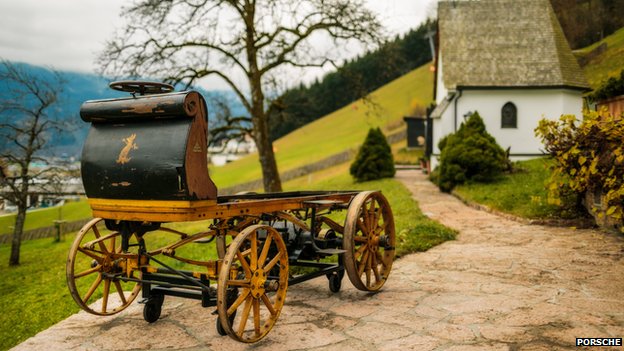
This is the first Porsche-designed vehicle, which had been stored in an Austrian garage since 1902

This is the first Porsche-designed vehicle, which had been stored in an Austrian garage since 1902

We are decidedly not the go-to source for information about automobiles, though from time to time we have been known to point out the innovations related to green tech and cars. Thanks to the BBC for their coverage of this intriguing conservation story we might file under cultural heritage, or alternative energy vehicles, or both:

Luxury automaker Porsche has revealed the first car designed by its founder was electric, in a show at its museum in Stuttgart-Zuffenhausen, Germany.

Ferdinand Porsche’s design was dubbed the Egger-Lohner electric vehicle C.2 Phaeton model, or the P1 for short. Continue reading

The Cornell Lab Of Ornithology’s Student Innovators, Dreamers, and Leaders

After you watch the video above you might recognize some faces from the Cornell expedition to Borneo that we featured about a month ago, and be introduced to the faces of other friends that I made in ornithology class several years ago and have kept up with through soccer, squash, and biology classes we’ve taken together.  Continue reading

Self-Sufficiency Taken To The Outer Extremes

Before the lights go out on the last New Yorker issue of 2013, one more of several articles we found worth the read, and relevant to our common themes of interest–community-building, innovation, environmentalism, farming, etc.–on this blog, even if we tend to incremental change rather than the radicalism on display here:

Marcin Jakubowski, the owner of a small farm in northwestern Missouri, is an agrarian romantic for high-tech times. A forty-one-year-old Polish-American, he has spent the past five years building industrial machines from scratch, in a demonstration of radical self-sufficiency that he intends as a model for human society everywhere. He believes that freedom and prosperity lie within the reach of anyone willing to return to the land and make the tools necessary to erect civilization on top of it. His project, the Global Village Construction Set, has attracted a following, but among the obstacles he has faced is a dearth of skilled acolytes: the people who show up at his farm typically display more enthusiasm for his ideas than expertise with a lathe or a band saw. Continue reading

A Different Kind Of Travelogue

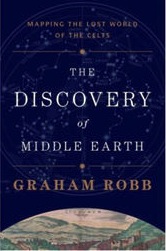
10-08discovery_full_380We are unabashedly in favor of reading, thinking and decision-making in advance of travel, during travel, and after travel. We are also in favor, when the fancy strikes, of just hitting the road without knowing why, where to, or for how long. On our pages you will find posts for either end of the spectrum from meticulously planned to wanderlust journeys.  It is about  discovery.  So this book caught our attention. Nothing to do with hobbits, as reviewed by the Monitor (click the book image to the left to go to the source) it sounds like the perfect prelude, accompaniment or postscript for travel in a part of the world we have not been covering in our pages as much as we maybe should:

…In “The Discovery of Middle Earth,” Robb sets out to establish the momentous contributions made to the arts of cartography and communication by the once-great Celtic peoples, who at various points in history spread all the way from modern-day Turkey to Ireland. In the process, he consults old documents, interviews experts, examines artifacts, and bicycles more than 26,000 kilometers across France, taking his readers along with him… Continue reading

Demolition, Conservation, Fascination

Image ©Maria Kazanova/123rf

They just keep coming, these good reads from Conservation Magazine; this one, thanks to Megan Molteni about how the business of demolition is getting greener (click the image above to go to the source):

The modern age is built upon concrete. Concrete is cheap to make, easy to transport, and highly formable—making it a ubiquitous and universal feature of the developed landscape. But unlike building materials that defined past eras, concrete doesn’t exactly stand up to the test of time. Concrete structures have an expiration date—they can last up to 100 years in some situations, but often much less—after which they need to be demolished and rebuilt. And that process creates a lot of waste. Approximately 200 million tons of waste concrete are generated annually in the U.S. alone. About half of that is recycled, and the rest of it winds up in landfills. But what if that concrete could be given a new life as a filter for runoff? Or what if we could eliminate that waste altogether with a new and smarter way to demolish buildings? Two recent innovations explore these possibilities for a greener concrete afterlife. Continue reading

Tackling Tough Topics

Author Vaclav Smil tackles the big problems facing America and the world.   Andreas Laszlo Konrath

Author Vaclav Smil tackles the big problems facing America and the world. Andreas Laszlo Konrath

Thanks to this interview in Wired magazine (click the image above to go to the source) we hear a bit about the craft of a thinker-writer’s approach to major economic, environmental and technological puzzles, one book at a time, but at an amazing pace:

You’ve written over 30 books and published three this year alone. How do you do it?

Hemingway knew the secret. I mean, he was a lush and a bad man in many ways, but he knew the secret. You get up and, first thing in the morning, you do your 500 words. Do it every day and you’ve got a book in eight or nine months.

What draws you to such big, all-encompassing subjects?

I saw how the university life goes, both in Europe and then in the US. I was at Penn State, and I was just aghast, because everyone was what I call drillers of deeper wells. These academics sit at the bottom of a deep well and they look up and see a sliver of the sky. They know everything about that little sliver of sky and nothing else. I scan all my horizons. Continue reading

Engineering A Safer Future On The Road

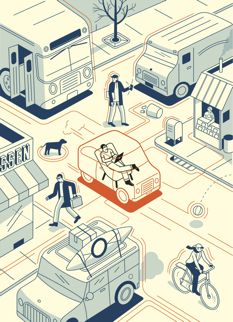
The Google car knows every turn. It never gets drowsy or distracted, or wonders who has the right-of-way. Illustration by Harry Campbell.

In most of the developing world, or at least where La Paz Group operates and where more and more European and North Americans are engaged in experiential travel, road conditions and driving habits are “different.” It is our educated guess that these travelers do not consider driving time to be their favorite part of these experiences. We do not hide from this fact. On the contrary, we take our drivers’ safety training seriously.  But we are always on the lookout for new approaches.  This week’s new New Yorker magazine, hot off the press, is the annual technology-focused issue.  An article there has got us thinking and discussing:

Human beings make terrible drivers. They talk on the phone and run red lights, signal to the left and turn to the right. They drink too much beer and plow into trees or veer into traffic as they swat at their kids. They have blind spots, leg cramps, seizures, and heart attacks. They rubberneck, hotdog, and take pity on turtles, cause fender benders, pileups, and head-on collisions. They nod off at the wheel, wrestle with maps, fiddle with knobs, have marital spats, take the curve too late, take the curve too hard, spill coffee in their laps, and flip over their cars. Of the ten million accidents that Americans are in every year, nine and a half million are their own damn fault. Continue reading

Science-Education-Technology Convergence


Museums and libraries are the stewards of culture in many ways. They both offer us a place to go for quiet contemplation as well as dynamic discovery. Kudos to the Smithsonian for accepting new technologies with open arms and sharing it with their researchers, curators, educators and conservators, and thereby with us.

Continue reading