Sign Of The Times

The only time(s) we link to commercials is when there is some point of interest related to our main themes, and/or if the amusement value is too good to resist. In this case, while we strongly prefer the hand made roti that many of Raxa Collective’s team members make and serve up at various properties, this appliance could be a signal that the economic progress of India has made such actions quaint history for the average local household:

Rotimatic is world’s first fully automatic roti making appliance. Continue reading

Reading, Libraries & Good Citizenship

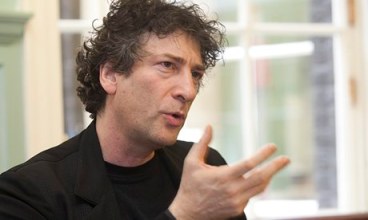
'We have an obligation to imagine' … Neil Gaiman gives The Reading Agency annual lecture on the future of reading and libraries. Photograph: Robin Mayes

‘We have an obligation to imagine’ … Neil Gaiman gives The Reading Agency annual lecture on the future of reading and libraries. Photograph: Robin Mayes

Libraries still have enough friends that we do not yet count them out, but the challenges they face are undeniable. Thanks to the Guardian‘s coverage of one prominent writer’s address on this important topic:

Neil Gaiman: Why our future depends on libraries, reading and daydreaming

A lecture explaining why using our imaginations, and providing for others to use theirs, is an obligation for all citizens

It’s important for people to tell you what side they are on and why, and whether they might be biased. A declaration of members’ interests, of a sort. So, I am going to be talking to you about reading. I’m going to tell you that libraries are important. I’m going to suggest that reading fiction, that reading for pleasure, is one of the most important things one can do. I’m going to make an impassioned plea for people to understand what libraries and librarians are, and to preserve both of these things. Continue reading

Education, Social Entrepreneurship, And The Next Wave Of Innovation

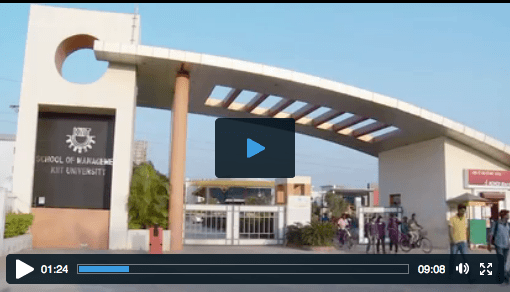
Entrepreneur Offers India’s Aboriginal Children Opportunity to Attend School

From the transcript of a segment on a PBS (USA public television) program some months back (click above to go to the video) that gets us thinking about our outreach programs in south India:

FRED DE SAM LAZARO: Here, education begins with meeting the most basic needs on an industrial scale and free of charge to the students.

ACHYUTA SAMANTA: Now they’re going for lunch.

FRED DE SAM LAZARO: How many students?

ACHYUTA SAMANTA: It is approximately now 8,000-plus are going for lunch. Continue reading

Emerging Photographers , Subscribe

This slideshow requires JavaScript.

We have been experiencing an acceleration in the growth rate of our admiration for the New Yorker‘s embrace of its digital future. We believe this erstwhile magazine is worth a subscription. We have nothing to gain by saying so other than the theoretical possibility that more subscribers and visitors to their site makes their recent innovations and improvements more worthy of more such experimentation. Such is our social media obligation: to point out to our friends what we take note of. Earlier this month we noticed this and neglected to share, but we correct that now:

As part of our ongoing Emerging Photographers series, today we’re highlighting the work of Sara Cwynar, a Vancouver native who lives and works in Brooklyn. I have been following her work for a while, and was drawn in particular to the monochromatic “Color Studies” as well as the series “Accidental Archives”—both of which drew on a confluence of literature, kitsch, and photographic tropes, which she cites as inspirations. Most recently, Cwynar has been preparing for her solo show, opening this week, at the Cooper Cole Gallery in Toronto, where she will début a new collection of photographs called “Flat Death” (a reference to Roland Barthes). I caught up with Cwynar to find out more about the exhibition and her latest work. Continue reading

Walking the Talk

Nowadays people are sitting 9.3 hours a day, which is more than we’re sleeping, at 7.7 hours. Sitting is so incredibly prevalent, we don’t even question how much we’re doing it, and because everyone else is doing it, it doesn’t even occur to us that it’s not okay. In that way, sitting has become the smoking of our generation.

If business innovator Nilofer Merchant had her way there would be a “surgeon’s general warning” placed on desk chairs around the world. But she isn’t only referring to the health reasons why we shouldn’t be sitting as much as we are. Continue reading

Photographic Wonder

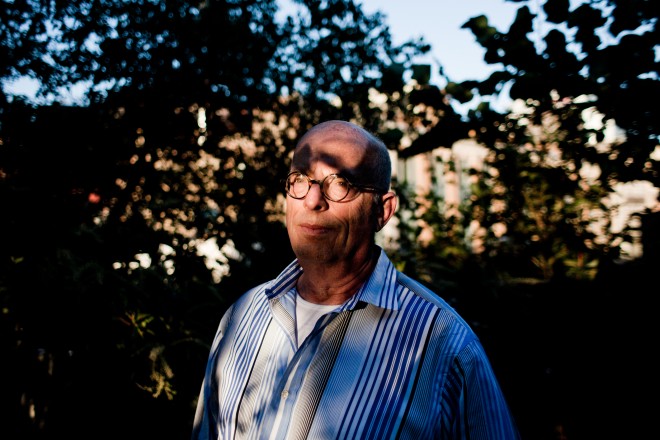
Marvin Heiferman. Photo: Alex Welsh/WIRED

We know that one day, hopefully not too far off, the wunderkind of La Paz Group’s photographic contributors will get his gear fired up and we will be displaying his latest wonders here again. We hear that his hiatus in Ithaca, NY since about one year ago has run its course, full of fascinations, back-looking reflections, photographic recapitulations, and even small distractions. Onward, westward, as ancestors of his did in previous centuries. More from Milo soon, we hope.

Meanwhile, on the topic of photography and wonders, Wired offers an interview to illuminate what might not otherwise be obvious at first glance:

For his book Photography Changes Everything, Marvin Heiferman spoke to experts in 3-D graphics, neurobiology, online dating, the commercial flower industry, global terrorism, giant pandas, and snowflake structure to understand the infinite ways imagery affects our everyday lives… Continue reading

The Internet and Citizen Science

Eurasian Nuthatch by Pieter Colpaert on ProjectNoah.org

For the past two years I’ve been working at one of the Cornell Lab of Ornithology’s citizen science projects, Celebrate Urban Birds, which largely relies on the Internet to disseminate information about birds and urban habitat, to reach new audiences, and to receive the daily data that participants provide by uploading their observations directly onto the CUBs website.

The CUBs science model involves thousands of 10-minute bird observations around North America, and many of them come to the Lab of Ornithology on pen and paper data forms that then have to be scanned in, so internet observations are preferred. Another citizen science project based out of Cornell that I’ve highlighted before, the Lost Ladybug Project, isn’t based on data forms, but on photographs of ladybugs found across the US, focusing in particular on the nine- and two-spotted ladybug. As I  mentioned in my brief post on the Lost Ladybug Project, one of the goals outlined in their National Science Foundation Project Summary is to create “one of the largest, most accurate, accessible biological databases ever developed.”  Continue reading

Superlative Sharing

India Republic Day Doodle

India Republic Day Doodle

Although the “Google Doodle” above was published to commemorate the day the Indian Constitution came into force, it seems appropriate to reshare it for Indepence Day as well. That spirit of sharing is evident in the internet giant Google’s launching of the Google Impact Challenge in India. Nikesh Arora, Google’s senior vice president and chief business officer, wrote

On the eve of India’s Independence Day, we’re celebrating the spirit of creativity and entrepreneurship of the world’s largest democracy by spotlighting the best local nonprofits that are using technology to make the world better. Continue reading

Innovation, Collaboration & Illustration

Thanks to the man who, without fail, coaxes a smile with another New York Times blogpost keeper:

After spending the first 15 years of my life drawing and painting analog, I first dabbled in computer-generated graphics in the mid-1980s on a Sinclair ZX81, followed by an Amstrad CPC664. “Drawing” with these machines meant entering strings of binary code to manipulate ASCII codes into something vaguely resembling images. Continue reading

19th Century Modern

daguerrotype-004-580

Students in need of tuition money sometimes prove the saying that necessity is the mother of invention, as this New Yorker historical note indicates:

In 1843, a Dartmouth College freshman named Augustus Washington needed to earn some money for tuition. As a man of mixed-race—a black father, a South Asian mother—many professions were closed to him. But anyone could learn the new art of daguerreotype photography, which had been perfected and publicized a few years earlier by the French artist Louis-Jacques-Mandé Daguerre. After mastering the bulky camera, Washington opened a studio in Hartford, Connecticut, where he made a good living photographing middle-class families. Continue reading

Bravo, WWF & Odnoklassniki!

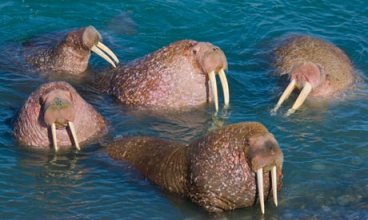
Pacific walruses (Odobenus rosmarus divergens) come ashore at a gravel beach on Arakamchechen Island in the Bering Sea, Chukotka, Russia. Photograph: Jenny E Ross/Corbis

Thanks to Guardian’s coverage of this excellent, innovative campaign:

The 148m users of the Russian social network service Odnoklassniki are being targeted by a World Wildlife Fund for Nature campaign that uses ‘404’ error pages to raise awareness of species on the verge extinction.

Continue reading

Urban Muse

This slideshow requires JavaScript.

It does not matter whether you are a farmer, a geneticist, or whatever you do with your time: you will almost certainly be affected in important, unexpected ways after time spent in Paris.   Continue reading

Like Water Into Wine

By now everyone knows that availability of potable water is among the most important challenges facing this and coming generations. Thanks to the USA-based tax and donor-funded National Public Radio for bringing this to our attention:

…A more common technology for removing salt and other impurities from water is known as reverse osmosis, which uses lots of energy to produce the extremely high pressure required to force raw water through a semi-permeable membrane. You can see a diagram of how it works here. Continue reading

Impossible, Past Tense

There are already more than a million views of this, in what looks like one day’s time (but may be a hoax and may be old news, but does not look like either as this is posted, so we hope to add to the hype if we are correct).  Thanks to the folks at The Verge for this story:

A Canadian duo and their Kickstarter-funded, pedal-powered helicopter have won one of the longest-standing challenges in the history of aviation — keeping a human-powered aircraft hovering up in the air at height of at least 9.8 feet, within a 32.8 by 32.8-foot square, for 60 seconds minimum. The challenge, known as the Sikorsky prize, has withstood at numerous failed attempts since it was established in 1980, 33 years ago, even with a $250,000 bounty. But it was finally bested earlier in June by the Atlas, a gigantic human-powered helicopter designed by Cameron Robertson and Todd Reichert, aeronautical engineers from the University of Toronto, who cofounded a company AeroVelo. Continue reading

Birthday Present For Mr. Tesla

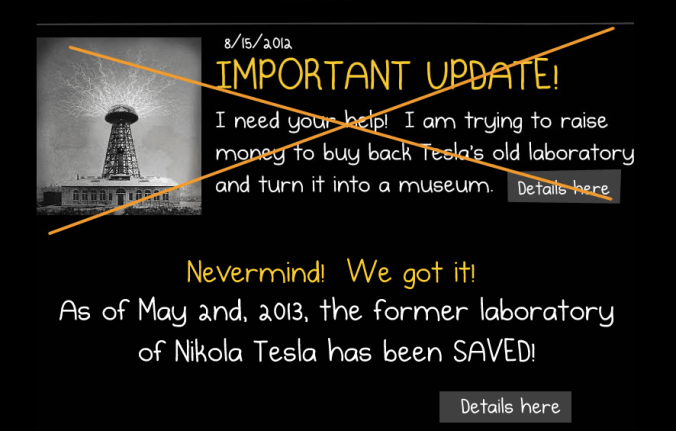
Last August we recommended reading to the end of Mr. Inman’s mischievously hilarious tribute to Nikola Tesla, partly because every bit of it was great, but the end asked for attention to an initiative that rang true to us: the conservation of patrimony related to this exceptional man.  A couple months ago, when we saw on Mr. Inman’s site that the initiative had succeeded we decided to investigate further before celebrating this. Now, in honor of Tesla’s birthday, seems like a good time to highlight it.  Click the image above to see the results.  There have been some birthday tributes to Tesla elsewhere and we share one of those as well. Continue reading

Voice Versus Exit

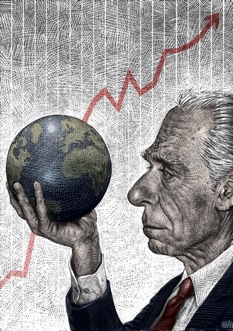
Malcolm Gladwell brings to our attention an economist/planner/idea guy who might not otherwise have found his way to our reading list.  In his usual writing style, Gladwell makes the man, by reviewing his biography, irresistible.  Toward the end of the review, what is described as one of the economist’s key contributions provides a perfect counterpoint to these ideas.  We like this guy because he chooses voice over exit (click the image to the right and it is definitely worth reading to the end):

In the mid-nineteenth century, work began on a crucial section of the railway line connecting Boston to the Hudson River. The addition would run from Greenfield, Massachusetts, to Troy, New York, and it required tunnelling through Hoosac Mountain, a massive impediment, nearly five miles thick, that blocked passage between the Deerfield Valley and a tributary of the Hudson. Continue reading

Seasteading, Self-Reliance Utopia, And Our Shared Future

An article recently published in n+1 examines a utopian futurist form of an idea that seems oddly symmetric with Seth’s posts about the history of exploration using Iceland as a case study. Looking back, we see much in common with explorers, pioneerspilgrims and adventurous thinkers of all sorts.  Looking forward, we are inclined to embrace smart, creative, enthusiastic group efforts to resolve seemingly intractable challenges. Especially when they involve living on boats. We recommend reading the following all the way through:

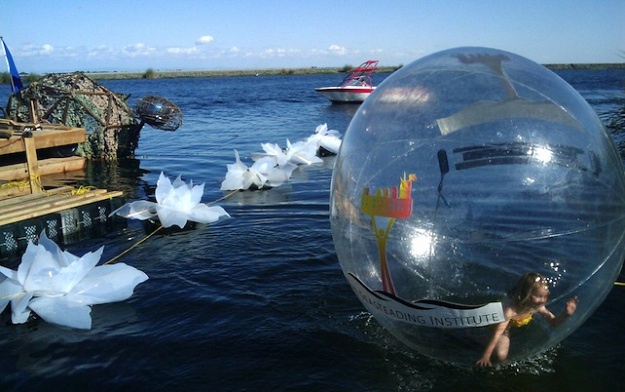
To get to Ephemerisle, the floating festival of radical self-reliance, I left San Francisco in a rental car and drove east through Oakland, along the California Delta Highway, and onto Route 4. I passed windmill farms, trailer parks, and fields of produce dotted with multicolored Porta Potties. I took an accidental detour around Stockton, a municipality that would soon declare bankruptcy, citing generous public pensions as a main reason for its economic collapse. After rumbling along the gravely path, I reached the edge of the Sacramento–San Joaquin River Delta. The delta is one of the most dredged, dammed, and government subsidized bodies of water in the region. It’s estimated that it provides two-thirds of Californians with their water supply.  Continue reading

Creative Uses Of Intelligence, Intelligent Uses Of Creativity

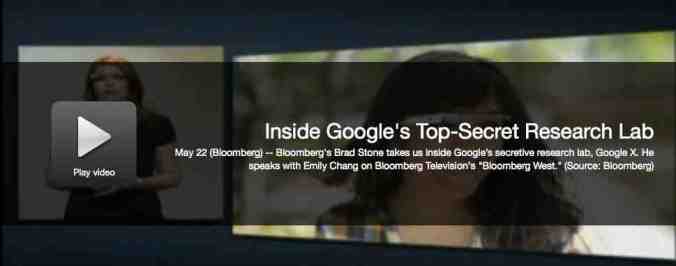
How smart are they? Do they drink alot of coffee?  Find out by clicking the image above, or reading the following from the article accompanying that video:

…Google X seeks to be an heir to the classic research labs, such as the Manhattan Project, which created the first atomic bomb, and Bletchley Park, where code breakers cracked German ciphers and gave birth to modern cryptography. After the war, the spirit of these efforts was captured in pastoral corporate settings: AT&T’s (T) Bell Labs and Xerox (XRX) PARC, for example, became synonymous with breakthroughs (the transistor and the personal computer among them) and the inability of each company to capitalize on them. Continue reading

False Starts, Heroic Conclusions

ESSAY: A Different River Every Time
What is ‘smart’ and how does it fit our consciousness? Is there just one way to it? Are smarter people happier, richer? The answers may not always be that obvious. by SANDIPAN DEB

…Which, of course, brings us to that common capitalist question: “If you’re so smart, why aren’t you rich?” There is something abhorrent about this query. Of course, Mukesh Ambani is super-smart, but so was Jagadish Chandra Bose, who invented wireless communication at least a couple of years before Guglielmo Marconi, who received the Nobel prize for the breakthrough (It is now established that Marconi met Bose in London when the Indian scientist was demonstrating his wireless devices there, and changed his research methods after that meeting). Bose also invented microwave transmission and the whole field of solid state physics, which forms the basis of micro-electronics. Bose’s contributions are all around us today, from almost every electronic device we have at home to the most powerful radio telescopes in the world. But he steadfastly refused to patent any of his inventions, or to license them to any specific company. Some 70 years after Bose’s death, the global apex body, Institute of Electrical and Electronics Engineers, officially acknowledged Bose to be the father of wireless communication.

This is an excerpt whose catchy question pervades an essay worth reading in full. Intelligence, specifically smart Indian people, is the subject of a whole special issue of Outlook magazine. We have pondered amazing people from India on occasion in the past, and if the brief tale above intrigues you then see this post about Tesla versus Edison, but for now Continue reading

Entrepreneurial Conservation And Language Apps

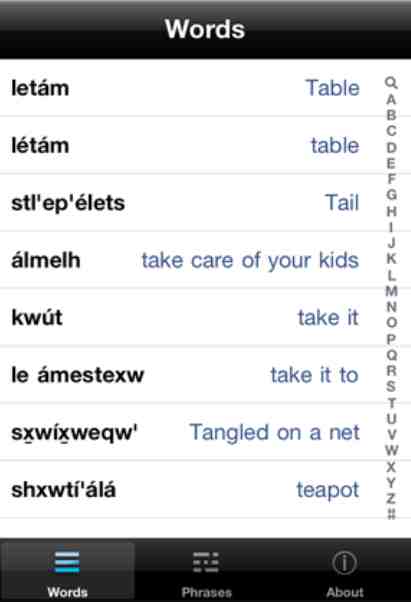
This recent post about a language app was thought to be a one off on a funny subject. Then the topic was no longer one off, and not particularly funny. Even less funny, but technologically amazing, and certainly an example of one of our favorite topics, is this one (click the image to the left to go to the source):

…Last June, FirstVoices launched an iPhone app that allows indigenous-language speakers to text, e-mail, and chat on Facebook and Google Talk in their own languages. Users can select from a hundred and forty keyboards not recognized by iOS; the app supports every indigenous language in North America and Australia. (By default, iOS supports just two: Cherokee and Hawaiian.) The app accomplishes this through mimicry. When a text box is selected, a keyboard identical in form and function to iOS’s appears. The keyboard includes the characters necessary to write in, say, Cree, and follows a layout unique to the chosen language.  Continue reading