World Building Through Media

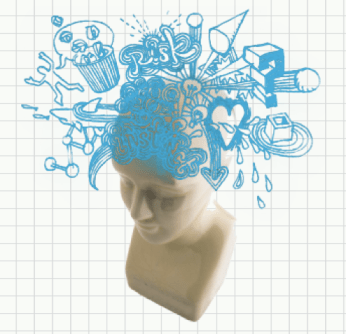
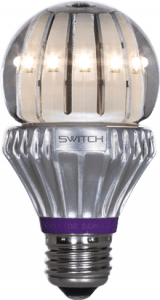
Every day for the past three years or so we have posted a few personal accounts, links to news stories, sometimes told through video, etc. all in the interest of highlighting collaborative, community-based contributions to conservation.  We reach far and wide for inspiration, and some daily features are there not as a direct statement about conservation but about the world we see around us. So when we see a story about world building though media, and a name like 5D Institute, it catches our attention. According to their website, the future of narrative media is a form of world building, and an important contribution to it can be found here:

5D Institute is a cutting edge USC non-profit Organized Research Unit dedicated to the dissemination, education, and appreciation of the future of narrative media through World Building. World Building is the interdisciplinary process of building worlds that evolve into containers for the new narrative resolutions. World Building is the intersection of creativity and technology for students in academia and industry who need to understand now how to thrive in the media jungle of the future. World Building works beyond the edges of known media to express the full arc of our creative role in making new narrative worlds. Continue reading

Getting It Done, With Attitude

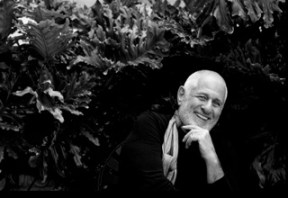
Richard_Saul_Wurman2

Harvard Magazine writes about a man we have appreciated since hearing him interviewed on a show whose podcasts with some of our heroes we have mentioned in previous posts.  It is easy to perceive Wurman as a world class pain in the neck. Listen to the end of that podcast and you learn that he is self-aware of this. For those who know ourselves to come across as unreasonable, contentious, etc. Wurman is an inspiration worthy of the pantheon:

Described by Fortune magazine as an “intellectual hedonist with a hummingbird mind,” Wurman created and chaired the TED conference from 1984 through 2002, bringing together many of the world’s pathbreaking thinkers to share their ideas and spark discussion.  Continue reading

Innovative Cross-Cultural Sound

Thanks to the folks who created the music-recording studio (more on which to come) we had the opportunity to experience this live:

Hindugrass at Manifold Recording

Kicking off our recording sessions for the new album with a live performance in the magnificent music room at Manifold Recording. Continue reading

A Fresh Social Enterprise Story

This slideshow requires JavaScript.

We are happy to spread the news about social enterprises we encounter, even if we have not yet tested their products.  In this case, it is the Origins story that catches our attention:

FreshPaper was created by a young inventor who happened upon the active ingredients after accidentally drinking some tap water while visiting her grandmother in India. Her grandma gave her a home remedy – a mixture of spices, which kept her from getting sick. (Click here to hear the story in her own words.) Continue reading

Innovation And Toxic Hope

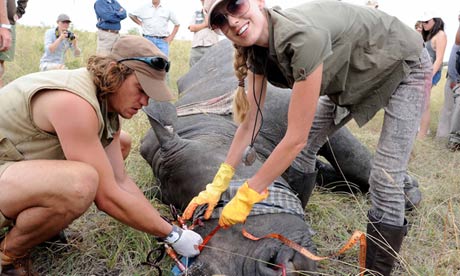
The Sabi Sand Game Reserve is injecting non-lethal chemical mixtures into rhino's horns. Photograph: David Smith/Sabi Sand Game Reserve

The Sabi Sand Game Reserve is injecting non-lethal chemical mixtures into rhino’s horns. Photograph: David Smith/Sabi Sand Game Reserve

We have only occasionally mentioned the facts surrounding the epidemic slaughter of rhinoceros, mainly because the stories are hopelessly hopeless almost (but not all) all the time. This one may be either another case in point, or a perverse example of innovation in times of extreme need. Click the image above to go to the story in the Guardian:

A game reserve in South Africa has taken the radical step of poisoning rhino horns so that people risk becoming “seriously ill” if they consume them.

Sabi Sand said it had injected a mix of parasiticides and indelible pink dye into more than 100 rhinos’ horns over the past 18 months to combat international poaching syndicates. More than 200 rhinos have been poached so far this year in South Africa, driven by demand in the far east, where horn ground into powder is seen as a delicacy or traditional medicine. Continue reading

Sharks As Charismatic Megafauna

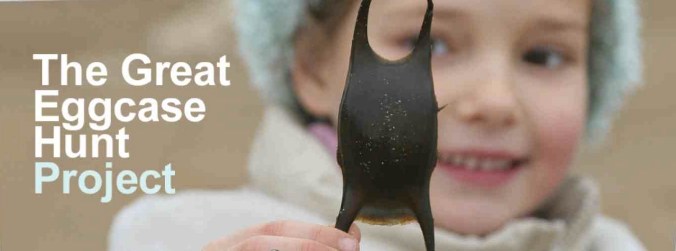
If you are like most people, the words shark and trust do not normally work well together in the same sentence. Sharks are predators, and predators predate. So unless you are a professional you should not take anything for granted when in their waters. But the two words work together well in a sentence about this organization, and the project they have launched to help sharks is intriguing. Entrepreneurial, even.  Click the image above to read more about this initiative:

With over 600 species of skate and ray worldwide, at least 16 species have been regularly recorded in UK coastal waters; most of these species reproduce by laying tough leathery eggcases on the seabed. Of more than 30 species of British sharks, only two species lay eggcases that are commonly found on our beaches; the Smallspotted Catshark and the Nursehound. Continue reading

A Man. A Plan. A Canal. Gujarat.

Canal solar power: Gujarat has attracted investments of Rs 9,000 crore so far on solar energy projects.

To some it might seem odd to compare Gujarat’s innovative solar canal project to Panama’s nearly 100 year old global game changer. Although there are obvious and vast differences, there is also something powerfully familiar about the ultimate impact of the two projects.

While the 48 mile (77 km) Panama Canal saved ships traveling between the Pacific and Atlantic Oceans from taking the 8000 miles (12,875 km) journey around the southern tip of South America, the Solar Canal Project provides a duel purpose alternative energy system that both creates clean energy and conserves water. Continue reading

Shine A Light

chipata-blog480

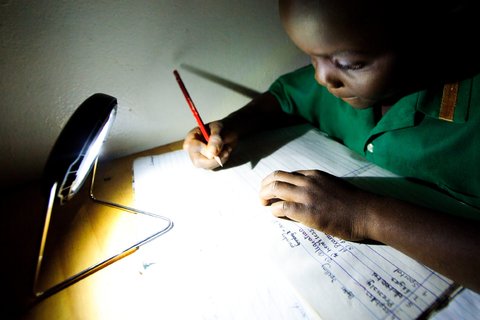
Green Blog shares this news about a significant innovation at the intersection of crowdfunding, renewables and community welfare in Africa and Asia:

By visiting Web sites like Kickstarter and Indiegogo, you can give money to any number of causes. These Web sites collect small amounts from many individuals in what is known as crowdfunding to finance everything from business start-ups to charitable causes to art projects.

While online crowdfunding is still relatively new, it has already demonstrated that many small contributions can add up. Deloitte, the accounting and consulting firm, estimates that the largest 30 crowdfunding sites raised more than $1.5 billion over the last five years, and expects that in 2013 alone the number could be $3 billion.

Continue reading

Alternate Views Of The World We Live In

Click the map above to go to the explanation:

Tigers and pandas live in Asia, kangaroos and koalas in Australia and polar bears and snowy owls in the Arctic. The world can be divided into regions based upon the unique types of animals that live there. Or so the thinking went when Alfred Russel Wallace published the scientific world’s first global biodiversity map in 1876. Continue reading

Foxes, Henhouses And Old Watchdogs Learning New Tricks

We believe governments and NGOs, supported by research in academia and elsewhere, are the institutions best designed to establish, enforce and monitor environmental protection schemes.  NGOs can also play a philanthropic role.  Enterprises such as ours have evolved in the last couple decades to approach conservation challenges better suited for market solutions.  Now, another random variation in this never-ending evolution of ideas.

What is the implication of conservation NGOs getting into business deals with the very businesses that are causing environmental problems?  We favor innovation, but also evaluation of those new approaches.  We have only recently been paying attention to this relatively new phenomenon, so do not have the answers, but each time we see questions being raised we take note (and will share them here).  This, from the excellent Yale Environment 360 site:

Like plastic bags, coal, and SUVs, beef has few friends in the environmental community. Most environmentalists would point to beef — in particular, beef cattle that spend their final days in confined feedlots — as being responsible for an array of ills — the greenhouse gas emissions that the cattle generate; the groundwater pollution from their manure; the use of antibiotics in animal feed; the vast quantities of monoculture corn grown to feed the cattle; and the enormous amount of chemical fertilizers and water needed to grow the corn. As advocacy group Food and Water Watch put it in a 2010 report, “The significant growth in industrial-scale, factory-farmed livestock has contributed to a host of environmental, public health, food safety and animal welfare problems.” Continue reading

Plowshares, Swords And Wildlife Conservation

This slideshow requires JavaScript.

Whatever your opinion about a military-industrial complex possibly running amok, you might agree that the state of endangered wildlife deserves some radical brainstorming. Today, sometimes the plowshares plunder while the swords save. It is slightly creepy to celebrate military tools, sponsored by corporations and conservation NGOs, being repurposed this way.  But these are truly times that try men’s souls.  We will chalk this one up as net-gain innovation.

We Care About Innovation, So Patents Matter Even If We Will Never Have One

The one previous post on our site worth a visit on this topic happens to be a mostly funny, and fun one.  If you have 34 minutes to spare, the best explanation of why this issue matters to all of us is in this podcast.  Meanwhile, for those with only two minutes to spare, thanks to the Atlantic‘s attention to this matter:

If there’s one thing Schoolhouse Rock taught us all, it’s that the easiest way to explain a dry topic to someone with a short attention span is to show them a cartoon. So kudos to George Mason University economist Alex Tabarrok and Idea Rocket Animation for putting together this delightful two-minute clip laying out the case against software patents Continue reading

If You Happen To Be In Liverpool

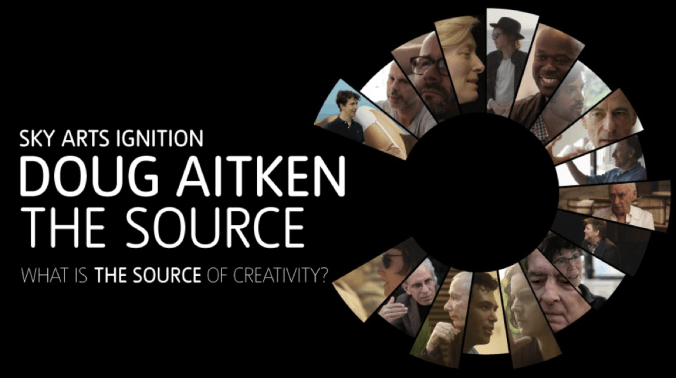
Click the image above for more information on the exhibition. In case you cannot make it there in person, click the link below to see Doug Aitken’s films:

Tate Liverpool: Exhibition 15 September 2012 – 13 January 2013. Films from Doug Aitken – The Source will be published in the Channel each week… Continue reading

An Award, In A Word: SafetyNet

Safetynet won this year’s James Dyson Award and is explained on the website of that award program:

Function

The goal of the SafetyNet system is to make commercial fishing more sustainable by significantly decreasing the numbers of non-target and juvenile fish caught during the trawling process. Escape Ring devices form a part of this system, and are currently the focus of the development work. The rings tackle the problem of

Continue reading

Alternative Bulbs, Designed For Aesthetes

From Clean Technica, a story about a new light:

SWITCH Lighting has now designed a light emitting diode (LED) bulb that is much more industrial looking, like the standard incandescent bulbs, and demonstrates many of the same qualities that consumers like without the wasted energy.

They’ve been widely praised for their sleek industrial design and have even been featured as a work of art in several art galleries. In addition, the SWITCH75 was a Consumer Electronics Show 2012 Innovations Honoree, was named by TIME Magazine as one of the 50 Best Inventions of 2011 and also received a silver rating in the prestigious Edison 2012 Awards.

Genomic Approach To Art Discovery

Click the banner above to explore, or go to the site’s explanatory page, where the founder lays out the idea in plain and simple language:

Welcome!

On behalf of the Art.sy team, welcome to Art.sy and thank you for joining our beta. Our mission is to make all the world’s art freely accessible to anyone with an Internet connection. Art.sy is a free platform where you can discover, learn about, and collect art. Continue reading

Cornell’s Silicon Island

From the New Yorker’s website (click the image above to go to the story):

Can photovoltaics ever be romantic? Morphosis Architects’ design for a new academic building for the Cornell NYC Tech campus, scheduled to open on Roosevelt Island in 2017, suggests the answer could be yes. Continue reading