Can Beetles Stop the Hemlock Woody Adelgid?

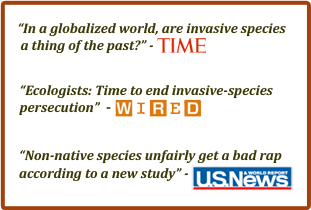
Headlines from news sources responding to a pair of scientific articles from 2013 that highlighted the importance of scale in assessing the effect of invasive species. Photo by Diana Lutz.

Headlines from news sources responding to a pair of scientific articles from 2013 that highlighted the importance of scale in assessing the effect of invasive species. Photo by Diana Lutz.

Five years ago this month, I wrote in a post titled Preventing Invasive Fire that, “Absolute regulation of invasive species is not possible. We cannot search every inch of soil that enters a country for microorganisms, dormant insect eggs, or plant seeds. But controls must be imposed, and more severe ones than currently in place. The intensely focused damage (biodiversity loss) that a male and female zebra mussel, emerald ash borer beetle, Asian carp, or fire ant can have on a vulnerable ecosystem is much greater than the thinned-out costs of higher taxes or more stringent customs inspections.”

The following year, I discussed the merits of Integrated Pest Management in helping eradicate or at least control pests, which are sometimes introduced from other countries. Reading today about a plan in North Carolina to use beetles as a predator of the hemlock woody adelgid, an aphid-like invasive species from east Asia, I am reminded of those two posts from the past, inspired by Cornell courses in environmental governance and entomology.

Continue reading

Novel and Efficient Mosquito Control

The predator cues emitted by the Backswimmer, a mosquito larvae predator, trigger a stress response in the mosquitoes, which impairs their immune system.
Photo © E. Van Herk

Two weeks ago we saw a chemically-baited, solar-powered trap for mosquitos implemented in Kenya. New research – conducted only in the laboratory so far – has shown the potential for another chemical cocktail to be used in a very different way for mosquito control, hopefully in a manner that can reduce quantities of pesticide applied in eradication efforts. From the EurekAlert press release by the Belgian University of Leuven:

Existing strategies for mosquito control often involve the use of pesticides that harm the environment. These pesticides are increasingly less effective as well, as insects can become resistant to existing products relatively quickly.

Biopesticides are a possible alternative. The most commonly used biological pesticide is the Bacillus thuringiensis israelensis (Bti) bacteria. Unfortunately, mosquitoes are already developing a resistance to this pesticide as well. This means we have to keep increasing the dose of Bti to kill mosquitoes, so that this biological substance, too, is beginning to harm the environment.

Continue reading

Superlens from Spider Silk

(a) Nephila edulis spider in its web. (b) Schematic drawing of reflection mode silk biosuperlens imaging. The spider silk was placed directly on top of the sample surface by using a soft tape, which magnify underlying nano objects 2-3 times (c) SEM image of Blu-ray disk with 200/100 nm groove and lines (d) Clear magnified image (2.1x) of Blu-ray disk under spider silk superlens. Images © Bangor University and Oxford University, via EurekAlert

We’ve seen silk made without spiders, photomicrograph competitions, and the development of a new underwater microscope, but never thought that a strand of spider’s silk could be put under a normal microscope to then magnify an image even more than previously possible with current technology. But biologists from the Department of Zoology at Oxford University provided the silk know-how for engineers at the Bangor University’s  School of Electronic Engineering to create a natural superlens:

Extending the limit of classical microscope’s resolution has been the ‘El Dorado’ or ‘Holy Grail’ of microscopy for over a century. Physical laws of light make it impossible to view objects smaller than 200 nm – the smallest size of bacteria, using a normal microscope alone. However, superlenses which enable us to see beyond the current magnification have been the goal since the turn of the millennium.

Continue reading

New Mosquito Trap Tested With Mixed Success

A mosquito trap that runs on solar electricity and mimics human odor as bait. Credit Alexandra Hiscox via NYTimes

We’ve seen solar power used for many things here, but not yet as a source of power for insect trapping.  On the island of Rusinga in Lake Victoria, Kenya, scientists from the Netherlands, Kenya, and Switzerland tested new traps that use electricity from solar panels to release a chemical similar to the carbon dioxide we exhale (which attracts mosquitos) and a blend of chemicals that mimic human odor (which also draws in the blood-suckers) as bait for the disease-bearing biters. From the New York Times:

Although the traps appeared quite effective at lowering mosquito populations, they had some significant drawbacks.

Because they need power from rooftop solar panels, they are relatively expensive. Still, the panels appealed to residents who could also use them to power a light bulb or charge a cellphone.

Continue reading

Grubby Animal Feed

4980

Source: The Guardian

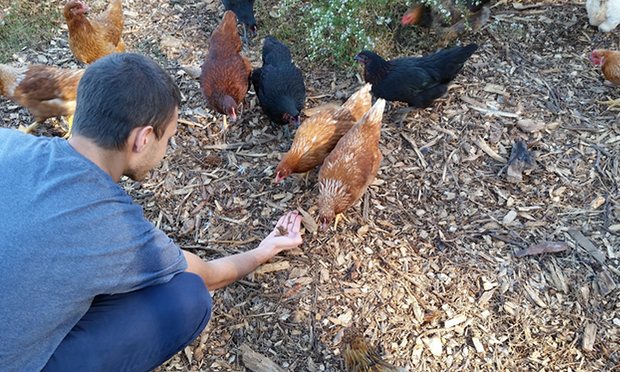
Two Georgia Tech graduates (who also happen to be cousins), Sean Warner and Patrick Pittaluga, are breeding and selling an insect many people consider revolting in order to provide a more sustainable substitute for animal feed (if you are about to eat a meal, I recommend postponing this article for a later, food-free, time). The insect they are growing is larvae, specifically black soldier fly larvae. Grubbly Farms, the name of their company, dries the larvae and sells them whole as chicken treats. This is a more sustainable protein and fat source for chickens, pigs and farmed seafood compared to the more popular animal feed that is based on fish, called fish meal.

Around 75% of the fish used in [conventional fish meal] are wild-caught species of small fish such as anchovies, herring and sardines. Demand for these species will likely increase as the world relies more on fish farming – and less on depleting wild fish stocks – to feed the growing appetite for seafood.

Grubbly Farms’ business plan isn’t just about creating more nutritious and sustainable animal feed, Warner said. It’s also looking to tackle America’s billion-dollar problem with food waste – produce and leftover foods being tossed away by businesses and homes and clogging up landfills at the rate of 52m tons per year. Warner is feeding the larvae fruit and vegetable pulp from a local juicery, and the company has also recently started working with a bakery to add days-old bread to the mix. Warner estimates that once production is up-and-running, they will use around two tons of food waste a day.

Continue reading

Ants & Agriculture

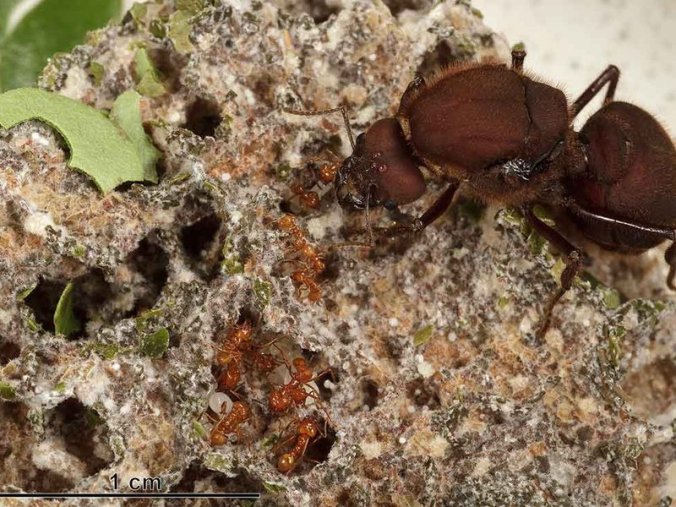
attaqueennest1cropt1web.jpg__800x600_q85_crop

Tiny nurse ants tending to white ant larvae are dwarfed by the queen ant in the upper right. All the ants feed upon protein-rich food produced by a white-grey fungus that they cultivate underground. (Karolyn Darrow)

Thanks to the folks at Smithsonian for this one:

Were Ants the World’s First Farmers?

A new study shows that a group of ants have been conducting a subsistence type of farming since shortly after the dinosaurs died out

By Jackson Landers

Humans have been practicing agriculture for about 10,000 years. But the attine ants of South America (which include the well-known leafcutters) have us beat by a long way.

According to a new paper co-authored by entomologist Ted Schultz, curator of ants at Smithsonian’s National Museum of Natural History, attine ants, which farm on an industrial scale similar to humans, have been carefully cultivating gardens with a complex division of labor to grow an edible fungus. Schultz’s team found that the ants have been doing this far longer than previously believed—up to 65 million years—and that we have much to learn from them. Continue reading

Camouflage by Debris

Specimens preserved in amber. © Wang et al. in Science Advances, 2016.

We’ve featured posts here concerning camouflage plenty of times, whether in birds and their eggs, in beach-dwelling crabs, plant-mimicking insects, or strange caterpillars. That last example is the closest to the subject matter of Ed Yong’s latest post on Nat Geo’s Phenomenon blog, where he writes about insects that cover themselves in debris to hide from predators or prey alike:

Every year, in northern Myanmar, thousands of farmers pull tonnes of Cretaceous amber out of the ground, and send the glistening nuggets to local markets. For six years, Bo Wang from the Chinese Academy of Sciences and his colleagues have visited the markets and sifted through 300,000 of the glistening nuggets. It was a lot of work. Then again, it takes a lot of work to find animals that spent their whole lives trying not to be found.

Continue reading

We Never Tire Of This Clever Creature

baird_beetle-5336-1--e98afd45ca45c51af0b6ec49cc8417c456611fbb-s1400-c85

Scientists at the University of Lund in Sweden have shown that dung beetles use mental “snapshots” of the Milky Way to navigate. E. Baird / Lund University

Thanks to National Public Radio (USA) for this story, which we link to even though we just recently linked back to some earlier stories on the same.

And speaking of NPR, one of the podcasts that originates on its New York City affiliate WNYC–Radio Lab, which was featured in some of our earliest posts–this episode featuring another beetle may have been the greatest of all time.

Dung Beetles Navigate Poop-Pile Getaways Using Celestial ‘Snapshots’

It’s not easy being a dung beetle.

Besides the obvious fact that they eat, well, dung, the act of just getting a meal is an involved process.

In the most elaborate carry-out scenario, the dung beetles must first stake claim to their piece of poop at the main dung pile, then shape it into a sphere for easy transport, fend off other dung beetles trying to steal it, and then — using the stars to navigate — determine the fastest way to roll their prize away to a safe spot for consumption. Continue reading

Unintentional Conservation

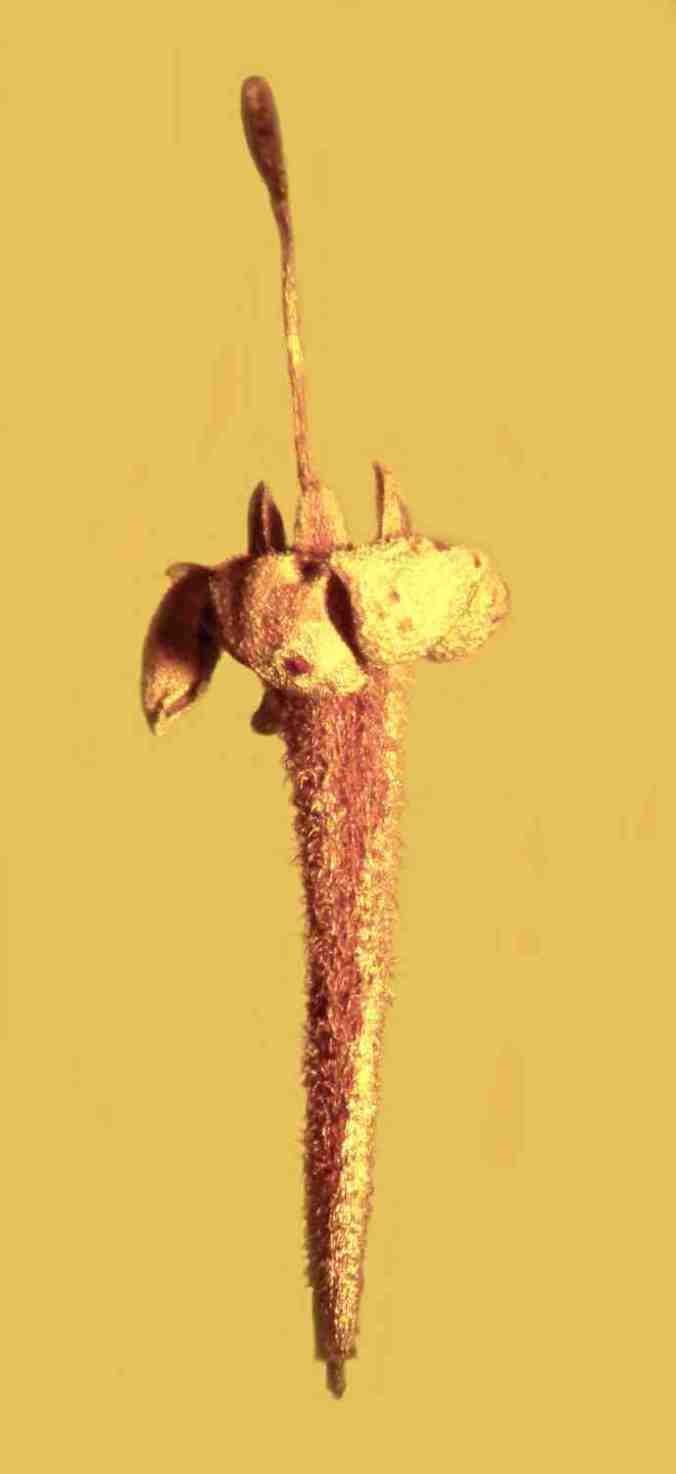
Twilley-Ancient-Flower-Amber3-690

S. electri. COURTESY GEORGE POINAR / OREGON STATE UNIVERSITY

Amber is awesome. In so many ways, it is the definition of a natural wonder. One of those definitions might be its role as unintentional conservator of ancient natural history. This collection of images, from an amber-trapped flower to an prehistoric stingless bee, make the case for this definition:

The flowers of Strychnos electri are slim and small and trumpet-shaped. Their petals flare out at the tip to form a star, out of which a single spindly pollen tube protrudes. They look as if they might have fallen from the stalk yesterday, but they are ancient. At least fifteen million years ago, and possibly as many as forty-five million, they landed in the sticky sap of a tree that is now extinct, in a kind of forest that no longer exists on Earth. The sap hardened into amber, the tree died, and eventually geology took over. The fossilized flowers were submerged in water, buried under layers of gravel and limestone, and finally thrust upward into the foggy hills of the modern-day Dominican Republic. There, in 1986, an American entomologist named George Poinar, Jr., unearthed them. Continue reading

Insect Behavior at Xandari

Over the last month or so, I’ve been recording videos of animal behavior at Xandari, and I finally have enough to share a small compilation of insects doing their thing on property. Sometime during the next week, I’ll also upload a video of new bird behavior observed here.

In the video above, you’ll see a small colony of leaf-cutter ants Continue reading

Are You on the Bee Highway?

Oslo's bee highway has pollen pitstops and bee hotels. PHOTO: Wikimedia Commons

Oslo’s bee highway has pollen pitstops and bee hotels. PHOTO: Wikimedia Commons

Oslo, Norway now has a “bee highway,” consisting of bee-friendly routes through the city. Each features flowery, green rest stops along the way so the bees can take a break and fill up on nectar.

Continue reading

There, There, the Insects Feel You

Are insects conscious beings, asks a new study. PHOTO: Wikimedia Commons

Are insects conscious beings, asks a new study. PHOTO: Wikimedia Commons

A recent survey suggests that, for most of us who have ever had a pet companion, it’s a no-brainer that mammals and birds are emotional creatures, sharing emotions with multiple species and not just their own. Yet despite the thousands of YouTube videos and hundreds of recent scientific studies presenting easily accessible evidence and examples, not everyone thinks so. It was only in 2012 that scientists finally agreed that nonhuman animals are conscious beings. It has only just been discovered that dogs display immensely complex, human-like emotions like jealousy, and that cows express positive emotions through the whites of their eyes. But what about insects?

Continue reading

Dad, I Dirtied the Nest!

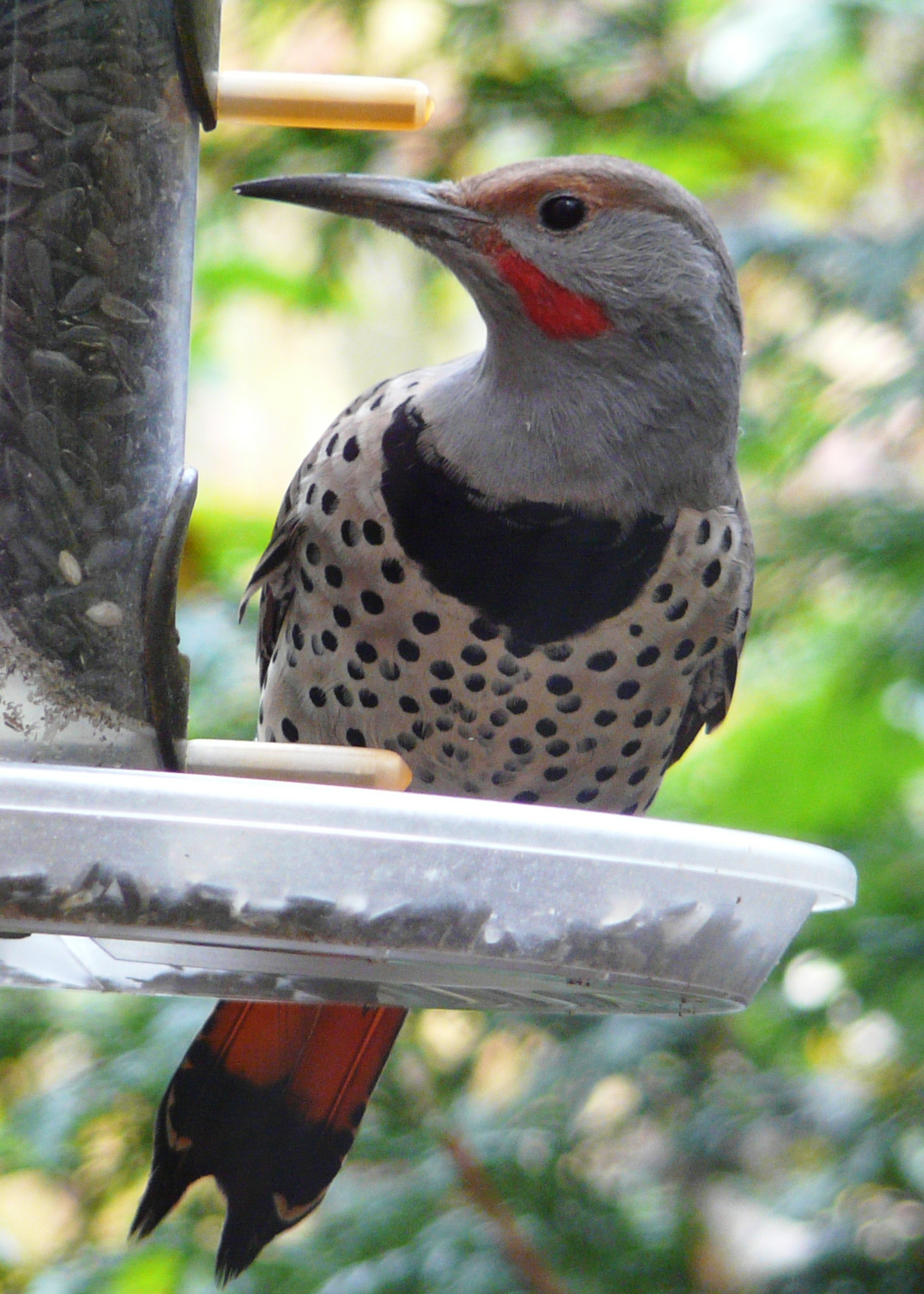
Animal sanitation studies — the exploration of how, why and under what conditions different species will seek to stay clean, stave off decay and disrepair, and formally dispose of the excreted and expired. PHOTO: John Rakestraw (Northern Flicker - male)

Animal sanitation studies — the exploration of how, why and under what conditions different species will seek to stay clean, stave off decay and disrepair, and formally dispose of the excreted and expired. PHOTO: John Rakestraw (Northern Flicker – male)

Nature may be wild, but that doesn’t mean anything goes anywhere, and many animals follow strict rules for separating metabolic ingress and egress, and avoiding sources of contamination. Want examples? Take the Northern Flicker. According to a new report in the journal Animal Behaviour on the sanitation habits of these tawny, 12-inch woodpeckers with downcurving bills, male flickers are more industrious housekeepers than their mates.

Researchers already knew that flickers, like many woodpeckers, are a so-called sex role reversed species, the fathers spending comparatively more time incubating the eggs and feeding the young than do the mothers. Now scientists have found that the males’ parental zeal also extends to the less sentimental realm of nest hygiene: When a chick makes waste, Dad, more readily than Mom, is the one who makes haste, plucking up the unwanted presentation and disposing of it far from home.

Continue reading

It’s About Bee-ing Alive

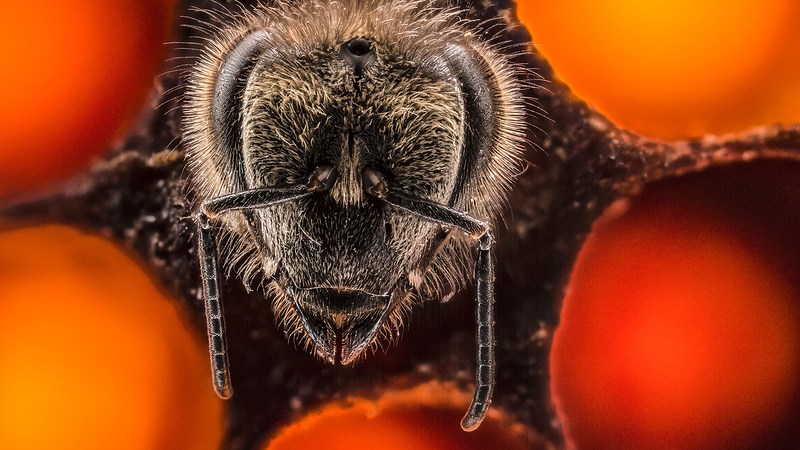
Must-watch: A stunning time-lapse video of the first 21 days of a bee's life by photographer Anand Varma

Must-watch: A stunning time-lapse video of the first 21 days of a bee’s life by photographer Anand Varma

Your first instinct when around a honeybee is to keep distance. But not for Indian American photographer Anand Varma. When he was asked to photograph a story on honeybees for National Geographic magazine, he knew he was going to have to take a different approach to capture new views of one of the world’s most photographed insects. And he did, his photographs forming a brilliant timelapse video of the first 21 days in a bee’s life. Over the video and the stellar photographs, the exercise addresses a key issue: the disappearance of bees and colonies dying quickly. Now why is this a problem?

Continue reading

Heroic Termites

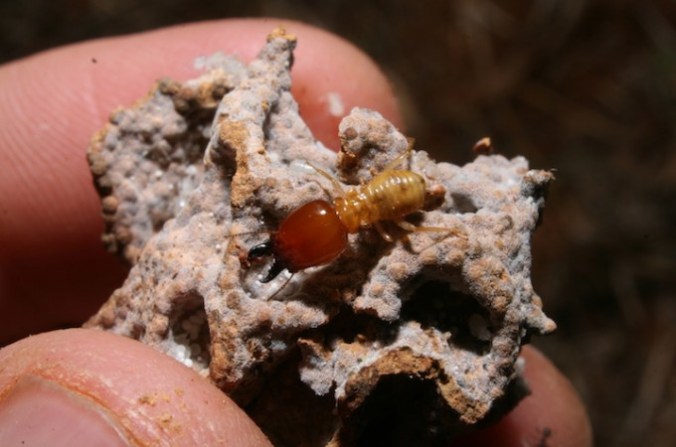
Termite on a fragment of its nest. Credit: Photo by Robert Pringle, Princeton University Department of Ecology and Evolutionary Biology.

Termite on a fragment of its nest. Credit: Photo by Robert Pringle, Princeton University Department of Ecology and Evolutionary Biology.

Conservation, on hiatus while they rethink their approach to a constantly rapid-fire changing media landscape, still provides the daily summaries of important environmental news to which we have become accustomed:

TERMITES EMERGE AS UNLIKELY CLIMATE HEROES

In the past several years, designers have looked to termite nests, earthen mounds that dot grasslands throughout the tropics, as a model for energy-efficient dwellings. Now, a study suggests that these mounds may also make their own landscapes more resilient to climate change, preventing savannas from turning into deserts during periods of drought. Continue reading

The Gears in Planthopper Nymph Legs

Igor Siwanowicz’s image of planthopper nymph gears won 9th place in the Olympus BioScapes International Digital Imaging Competition. Photo by Igor Siwanowicz, HHMI Janelia Research Campus, Ashburn, Virginia. Via Science Friday.

In September of 2013, Science published a paper by Malcolm Burrows and Gregory Sutton titled, “Interacting Gears Synchronize Propulsive Leg Movements in a Jumping Insect.” The two British biologists were discussing the fascinating structures they had found in the legs of small insects called planthoppers. At the top joints of each pair of legs, the tiny jumping insects had gears with interlocking teeth that synchronized the kicking motion between the two appendages, so that the planthoppers could jump straight rather than slightly to the left or right if one leg had acted even slightly before the other.

Covering the story back in September, Joseph Stromberg wrote for Smithsonian Magazine that:

To the best of our knowledge, the mechanical gear—evenly-sized teeth cut into two different rotating surfaces to lock them together as they turn—was invented sometime around 300 B.C.E. by Greek mechanics who lived in Alexandria. In the centuries since, the simple concept has become a keystone of modern technology, enabling all sorts of machinery and vehicles, including cars and bicycles.

Continue reading

Masters of Disguise

The green coloration helps this cricket blend into its leafy environment

Members of the animal kingdom have developed an amazing number of ways of defending themselves from predators. Some have highly evolved poisons that can wound or kill animals many times larger than themselves (think venomous snakes and spiders, or poison dart frogs); others have barbs, spines, or just generally prickly parts that render them unappetizing, making would-be-assailants think twice about the hassle of getting the creature into its craw; finally, there are more innocuous methods of self-defense, like cryptic camouflage. Cryptic camouflage makes the creature more Continue reading

Butterflies from the Butter-files

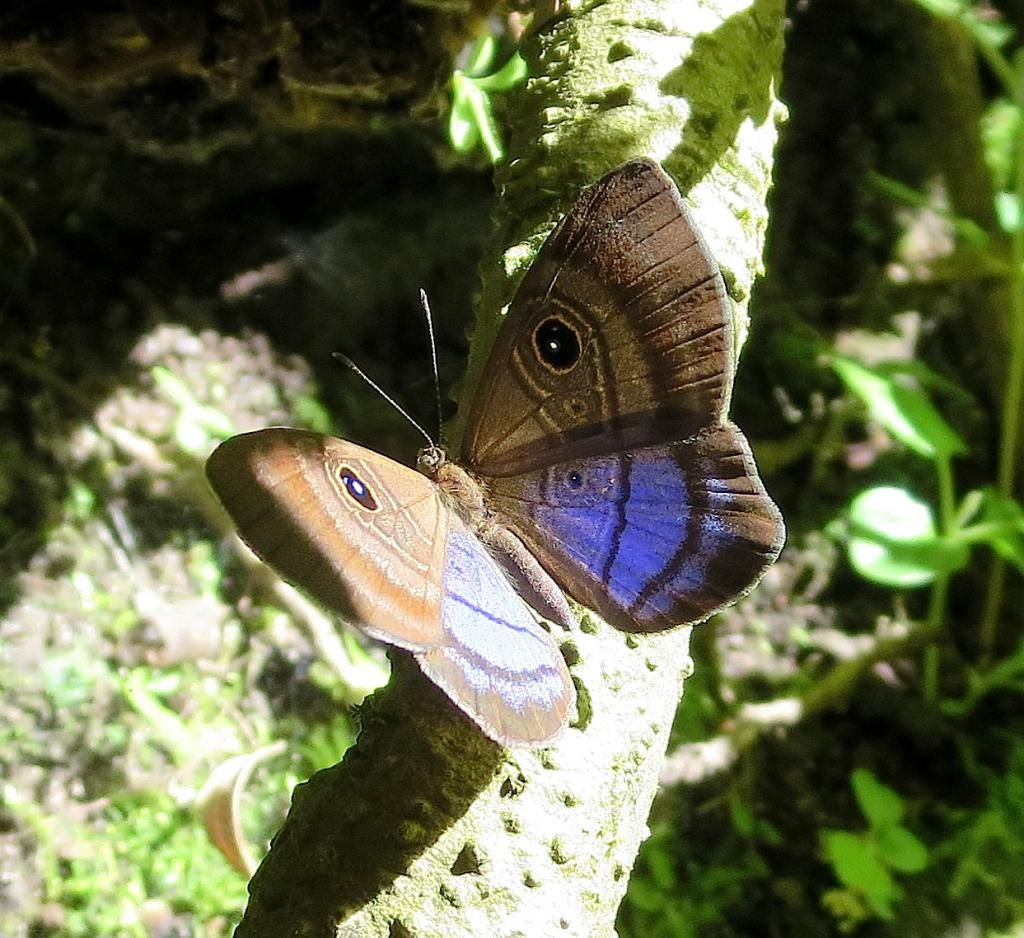
As I mentioned in the “flora-file” series (see posts #1 and #2, more are forthcoming), I’m posting a number of photos I collected during my time at Xandari Resort & Spa this summer. Some of these photos aren’t of plants, so I’ve got to think of another punny name for this post featuring butterflies: what about the “butter-files”? It’ll have to work for now! Continue reading

Breakthroughs In Nutrition Via Entrepreneurial Conservation

Exo's peanut butter-and-jelly bar contains about 40 ground-up crickets and has a familiar nutty, sweet flavor. Meredith Rizzo/NPR

Exo’s peanut butter-and-jelly bar contains about 40 ground-up crickets and has a familiar nutty, sweet flavor. Meredith Rizzo/NPR

Thanks to National Public Radio (USA)’s food-focused program, The Salt, for another story on unexpected breakthroughs in nutrition:

…”Insects are probably the most sustainable form of protein we have on Earth,” Bitty Foods founder Megan Miller, who spoke passionately about eating bugs at a TEDx Manhattan event earlier this year, tells The Salt. “The only real barrier to Americans eating insects is a cultural taboo.” Continue reading

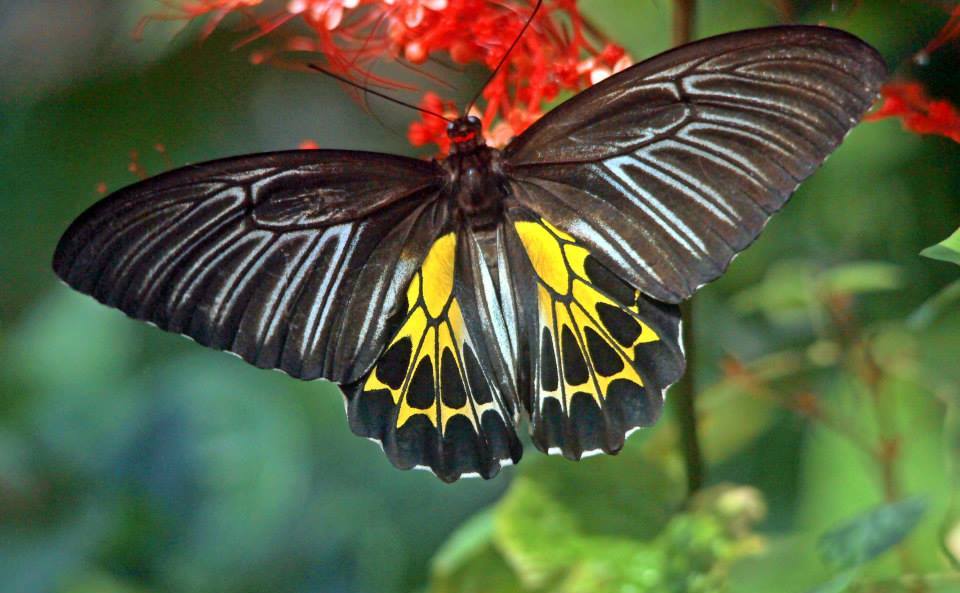
Southern Birdwing Butterfly

Photo credits : Josekallukaran

Photo credits: Jose Kallukaran

The Southern Birdwing butterfly  is the largest butterfly in India, and is endemic to the Western Ghats. Males are more frequently seen than females, mainly feeding on flowers of the Pagoda plant, west Indian jasmine, mimosa, and other ornamental bushes. Unlike many butterfly species that prefer full sun, the southern birdwing tends to be more active during the evening. Continue reading