Mango Culture

More subscription-worthy coverage from the New York Times:

Mangoes are objects of envy, love and rivalry as well as a new status symbol for India’s new rich. Mangoes have even been tools of diplomacy. The allure is foremost about the taste but also about anticipation and uncertainty: Mango season in the region lasts only about 100 days, traditionally from late March through June; is vulnerable to weather; and usually brings some sort of mango crisis, real or imagined.


Weather Puzzles

The Guardian‘s Environment section covers the odd spring weather’s effect on one of the rich varied beauties of the animal kingdom (click the image to the left to go to the story).  Whether this is just an oddball season or another sampling of climate change impacts, it is disheartening to think of the depletion of color that might result: Continue reading

Nature’s Gravitational Pull

What is it with publications in New York?  They catch our attention most weeks, if not most days, with something that helps us understand our natural and/or cultural world a bit more thoroughly.  Or interestingly.  Click the image above for an example from today’s New York Times.  If the wonders of southern India’s traditions were not enough to get your day going, then the plebeian wonders outside your own window might:

I’ve logged thousands of miles to catch a glimpse of one exotic creature or another, to Costa Rica to be dazzled by the bird known as the resplendent quetzal, to Hawaii to admire sea turtles, to Venezuela to spy man-eating anacondas. So it seemed more than a little odd that the one time I made a sighting worthy of a scientific publication, I was looking out of my living room window.

Continue reading

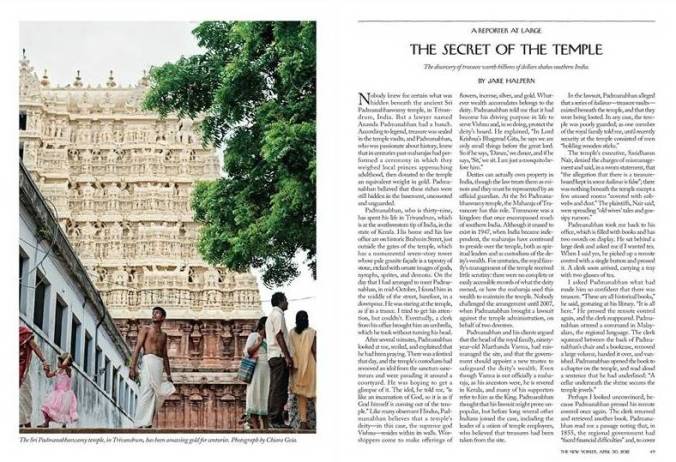
Gold’s Glitter Illuminated

Back at about the time when Michael and Seth had posted their first reflections on this site, and Michael had just encountered his own first truly unusual finding in southern India, the newspapers across India were starting to report on this.  It took me months to be sure it was a true story.  And finally, about Thanksgiving time (USA holiday calendar) I took a moment to reflect on it.  I could not be happier to find that The New Yorker has done the kind of homework I had not had time to do.  If you are not yet a subscriber, now might be a good time to reconsider. Continue reading

Yoga & Evolution

A few months ago there was an article in The New York Times that apparently caused a ruckus (click the image to the left to read The Guardian‘s coverage of that aftermath) in the Western yoga community.  Maybe it is because I am not a member of the Western yoga community that, when I read the article originally I thought:   Brilliant.  Eastern tradition meets Western science.  Evolution.  Improvement.

Today I had a reminder about that article, and my response to it, while listening to this podcast.  The journalist (a Pulitzer-toting science writer who also has practiced yoga for more than 40 years and recently published The Science Of Yoga) writing that article says something about half way through that rings true: Continue reading

Guardians

This slideshow requires JavaScript.

A trusted source of information, ideas, news, and more — the website of The Guardian is always worth a visit.  Today is no exception, but above (click here to go to the original) is an exceptional example of its visual contribution to our sense of wonder about India’s diverse communities and how they worship.

Continue reading

Water, Success, India

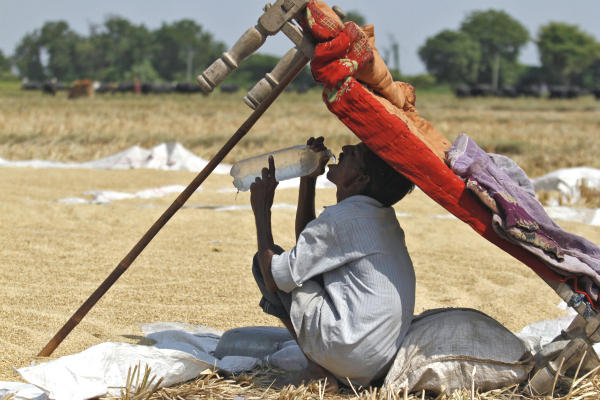
Those are three words that have a certain ring together.  But as per their tradition of seeking out news with a purpose, we appreciate this story in the Monitor, not least because it has to do with our neighbors to the north.  Click the image below to read the story at its source.

A laborer drinks water while taking a break from spreading paddy crop in a field on the outskirts of the western Indian city of Ahmedabad. In the tiny village of Wankute, water-management practices have eliminated the need to haul water to the village by truck, raised the water table, and widened the variety of crops that can be grown. Amit Dave/Reuters/File

Wankute, a tiny village located high in the Sahyadri mountain range of the Maharashtra state of India, was dry and near-barren in the 1990s. Agriculture was limited to crops that could withstand hot temperatures and little water, such as millet and certain legumes.

Continue reading

What Is India?

For any new resident of India, let alone its own citizens, the question is always interesting.

The following is the text of a speech delivered by Justice Markandey Katju, chairman of the Press Council of India, at Jawaharlal Nehru University on November 14, 2011.

Friends,

I am deeply honoured to be invited to speak before all of you. My time is limited, as I was told I should speak for 30 minutes and after that there will be a question answer session. As my main speech will be restricted to 30 minutes, I may come to the topic of discussion immediately, that is, What is India? …

…The difference between North America and India is that North America is a country of new immigrants, where people came mainly from Europe over the last four to five hundred years, India is a country of old immigrants where people have been coming in for 10 thousand years or so.

Continue reading

Thinking, Fast And Slow

Speaking of awesome intelligence it was intended to make a small point (pop culture is not as kind to intelligence as it is to glossy, gossipy stuff) and later highlight that intelligence itself.  While the accolades of scholars–those whose own work has been influenced by Kahneman–are interesting to read, so are those published by reviewers advising lay readers to read his most recent book.  For example, last month in FT:

There have been many good books on human rationality and irrationality, but only one masterpiece. That masterpiece is Daniel Kahneman’s Thinking, Fast and Slow. Continue reading

Mahatma Gandhi In Paris

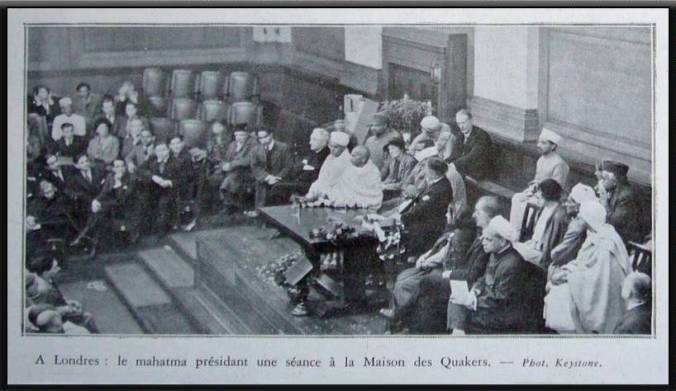
With a mission like this how could we not pay attention? The image above links to the story about two of our favorite subjects, brought together by The Caravan.  The image is from a French magazine, which covered the Mahatma’s visit to Paris (and elsewhere) with reverence.

Continue reading

In Conservation, Mystery

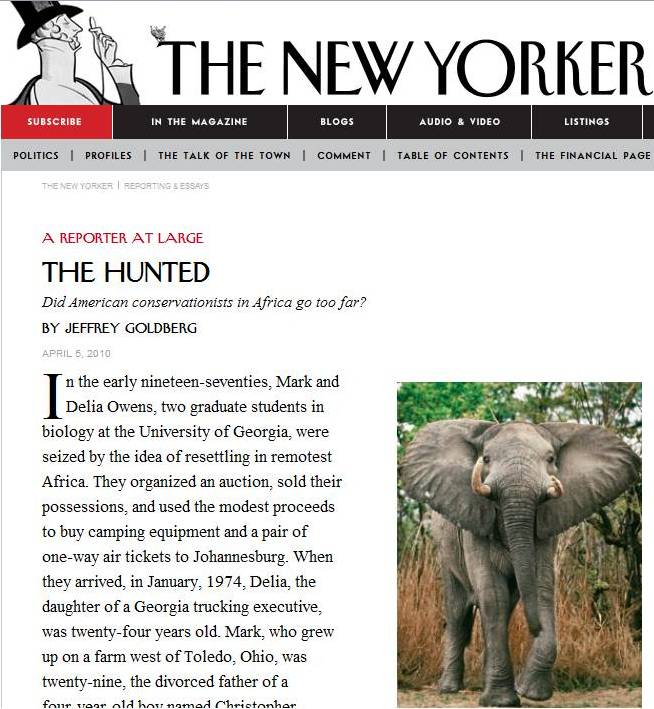
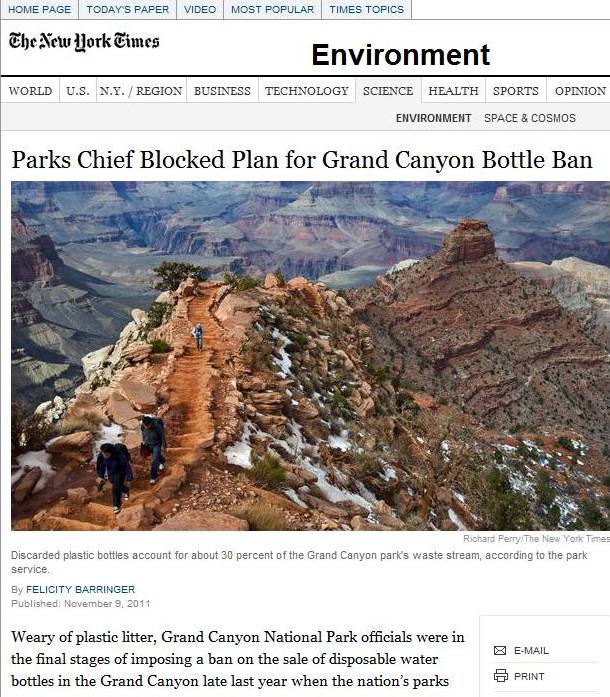
Click on the image to the right to get the full story of a conservation whodunnit.  After linking to Felicity Barringer’s investigative story on the scuttling of a trash reduction plan for one of the world’s most iconic national parks (really, Coca Cola?), some other conservation-focused articles seem worthy of attention.

The New Yorker has a deliciously quirky approach to covering environmental issues, and this one is representative.  It delivers on multiple fronts, reading like a detective story while also informing about one of those before it’s too late topics.

Continue reading

Really, Coca Cola?

Click on the image above to be taken to the story, which describes a great trash reduction plan in the Grand Canyon National Park that suddenly got scrapped under mysterious circumstances. The circumstantial evidence suggests that Coca Cola was influential, if not responsible, for that canceled plan.  Every day this newspaper seems more worth the subscription price. Continue reading