Lighting Up Language

Malayalam Project at Kochi Biennale

Malayalam Project at Kochi Biennale

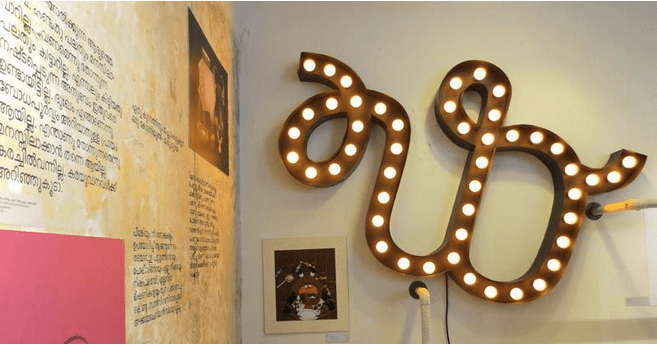
As a language, Malayalam is a perfect example of form as function: its “loopy” forms seem to roll off the speaker’s tongue. The word itself is even a palindrome, reading forward and backward in a never-ending loop. The high literacy rate in Kerala is evident in the newspapers found in tea stalls at every corner, not to mention the ubiquitous walls painted with verbal signage in both urban and rural settings, and those signs often feel more like murals due to the graphic nature of the language itself. The Kochi-Muziris Biennale ’14 is the perfect platform to express this concept:

Among the various internationally-acclaimed installations at the Kochi-Muziris Biennale ’14 is Malayalam Project that strives to draw the world’s attention towards the regional language and script.

A partner project at the Biennale, Malayalam Project is a collaborative forum that experiments with Malayalam letterform and typography. Kochi-based firms Thought Factory Design and Viakerala have put together this typography cum graphic design exhibition in collaboration with Riyas Komu, secretary of the Kochi Biennale.

“In the digital era, where imagery is used to communicate ideas, words become canvas of graphic. We are looking at how Malayalam, which is either a sound or a text enters the visual age we live in,” said the creative director Theresa Joseph George.

Pointing out that her firms have done lot of research into the field of Malayalam typography, Theresa, who is also a graphic designer, says, “Malayalam script with its loopy curves provides immense scope for experimentation.” Continue reading

Lady Mondegreen

Everyone has done it before, probably by accident or perhaps by malaprop. You’re singing along to a song you like, in the company of a friend, when suddenly they stop you and say, “Wait, what did you just say? You know that’s not the actual lyrics, right?” And you stare at them in disbelief and retort, “No, I think you’re wrong. Bob Marley clearly sings ‘three little birds sitting on my toaster.'”

“Not ‘toaster,'” your friend replies exasperatedly, “why would Bob be talking about a toaster? He says ‘doorstep.‘” And you think about it for a second and then sheepishly come to the realization that your friend must be correct. If you had been talking about Bob Dylan, there might be no guessing what the actual lyrics are without an authoritative reference, but Bob Marley is a lot more straightforward. It turns out that the misinterpretation of lyrics due to a failure to hear the words in a song correctly has a name, coined in the 1950s. One of our go-to contributors for the New Yorker, Maria Konnikova, writes this week about the phenomenon, and you can read some excerpts of her piece below. But before you do so, you might want to listen to pop/country singer/celebrity Taylor Swift, who has a song in her new album 1989 that has elicited many a case of mondegreen during one line in the chorus. It is called “Blank Space,” (you may have heard it on the radio a dozen times already) and to find the mondegreen, you simply have to be primed to hear the word “Starbucks.” Actually, the mondegreen potential is so severe that articles have been written online about it, indicating that you don’t really need to be primed at all.

Continue reading

What We Read, Why, And How

Chris Hughes, the thirty-one-year-old owner of The New Republic. CREDIT PHOTOGRAPH BY JONATHAN WIGGS/THE BOSTON GLOBE VIA GETTY

Chris Hughes, the thirty-one-year-old owner of The New Republic. CREDIT PHOTOGRAPH BY JONATHAN WIGGS/THE BOSTON GLOBE VIA GETTY

We care about books, and libraries, and languages, and long form journalism among other reasons to get perspective, to become informed beyond our local experience. When a century-old vital institution from any of these realms perishes, it is worth taking note, and mourning as George Packer does in a short punch of a post:

…As for the mass self-purge of editors and writers at The New Republic, it might be taken as part of the ongoing demise of old journalistic institutions in the face of new realities of technology and business. Or it might just be the story of one incompetent media mogul. Two years ago, with a lucky Facebook-based fortune and earnest talk about great journalism, Chris Hughes seduced a lot of hardened veterans of the New York-Washington news world who were desperate for a vision of the future.

Continue reading

Preservation Of Language

We have posted on the topic of intangible patrimony and include it in our explanation of entrepreneurial conservation; the topic extends to our interest in reading and the liberal arts. Below is a link to an op-ed piece published today, penned by a savvy academic whose primary focus is language, that we consider worthy of the brief reading time, even if you are not a language fanatic:

07gray-thumbWideGRAY MATTER

Why Save a Language?

Strunk, White, & ?

83675489cd8eeca11102a05f0acde9d1

Click the book cover to go to the Powell’s website for a description of the book we formerly only knew as being authored by, and generally referred to simply as, Strunk and White. We love Maira Kalman and never knew she had illustrated this classic. That is interesting enough, but if you are ever accused of being a member of the “grammar police” as some of us are, or are a fan of Steven Pinker, or both, check this out (thanks to the Chronicle of Higher Education):

The voice on BBC radio was that of Professor Steven Pinker, fluent and engaging as ever. But my blood froze as I listened to what he said.

On the panel show A Good Read (Radio 4, October 17, 2014), each guest recommends a book, which the other guests also read and discuss. And Pinker’s recommendation for a good read was … The Elements of Style !

It was like hearing Warren Buffett endorsing junk bonds. It was like learning that Stanley Kubrick called Plan 9 From Outer Space high-quality cinematography. It was like seeing Chet Atkins  (Never mind. I am too dispirited to go on with this potentially entertaining game of analogy-making.) Continue reading

Notes from the Garden: A Harvest for Everyone

10491215_10201551076698566_8417073961388965292_n (1)

Green beans at Cardamom County

When we see an abundant harvest overflowing from a wheelbarrow, maybe it’s primal, but I think there is a sense of never going hungry. There is a sense of the aliveness of freshly picked food.

Remember how we used to share our food? Remember the connection to food we had before it came from chain grocery stores? I think something in us does. Or something in us wants to remember.

By simply putting out our hand, the food passes into our possession, but it’s a different kind of possession than picking up something in a supermarket and putting it in a cart. A possession isn’t really yours, which happened without the exchange of money. I think that the natural givingness of the land makes us feel like it is not really ours and that it is for everyone, meant to be shared. When I harvest, I remember this gift. I like sharing it with other people.


Since I have been here as an intern, I haven’t done all that much field work. This is probably the first day I’ve been able to help just by providing extra hands. I felt like it was a way to connect with the people I am working with as language barrier has stopped us. I appreciate the togetherness that can be felt by simply harvesting something together. They are teaching me Malayalam words and using the English words they know.

Continue reading

Malayalam Mother Tongue, Second Language

malayalam_0


For those of us non-Indians living in Kerala, the following story sounds familiar because most of our friends and colleagues of the same age, and younger, as the writer share some similar story about their relationship to their mother tongue:

I’m at one of my favourite restaurants in Chicago, nearing the end of a long week which has been both more and less productive than I’d hoped for.  I dragged myself here in an effort to finish a piece I’ve been working on forever.

The rain has kept most customers away, I’ve had the privilege of a large dining room to myself, and the television set directly above my head has been mercifully silent.  Every now and then, people will come in and leave when they’re done.  I’ve stayed on, nibbling at my chicken biryani and downing endless cups of tea as I lie hunched over in my corner. Continue reading

Conversation, Language Navigation, Identity

Spoken

If more conversation is the goal, and as we have indicated we should put everything we have on the table regardless of how difficult the topic, then we should not add too many caveats. But after listening to this young man, we are tempted to create some rules for the game:

Phuc Tran grew up caught between two languages with opposing cultural perspectives: the indicative reality of Vietnamese and the power to image endless possibilities with English. In this personal talk, Tran explains how both shaped his identity. Continue reading

More Conversation Is More Interesting In More Languages

“It’s on the left,” he says. “No, it’s southeast of here,” she says. iStockphoto

If we are going to engage in more conversation in 2014 and beyond, we all would do well to do so with as much perspective as possible, wherever we are. This reporting on scientific findings about bilingualism is particularly interesting for those of us in India, where most of our colleagues speak a minimum of two but often three or four distinct languages:

Lera Boroditsky once did a simple experiment: She asked people to close their eyes and point southeast. A room of distinguished professors in the U.S. pointed in almost every possible direction, whereas 5-year-old Australian aboriginal girls always got it right.

She says the difference lies in language. Boroditsky, an associate professor of cognitive science at the University of California, San Diego, says the Australian aboriginal language doesn’t use words like left or right. It uses compass points, so they say things like “that girl to the east of you is my sister.” Continue reading

Entrepreneurial Conservation And Language Apps

This recent post about a language app was thought to be a one off on a funny subject. Then the topic was no longer one off, and not particularly funny. Even less funny, but technologically amazing, and certainly an example of one of our favorite topics, is this one (click the image to the left to go to the source):

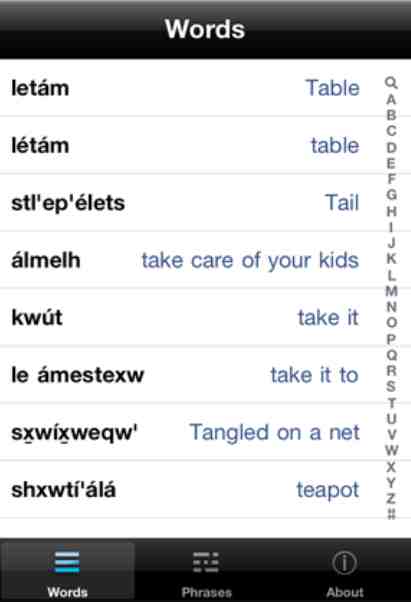
…Last June, FirstVoices launched an iPhone app that allows indigenous-language speakers to text, e-mail, and chat on Facebook and Google Talk in their own languages. Users can select from a hundred and forty keyboards not recognized by iOS; the app supports every indigenous language in North America and Australia. (By default, iOS supports just two: Cherokee and Hawaiian.) The app accomplishes this through mimicry. When a text box is selected, a keyboard identical in form and function to iOS’s appears. The keyboard includes the characters necessary to write in, say, Cree, and follows a layout unique to the chosen language.  Continue reading

On Language, Travel And Imagination

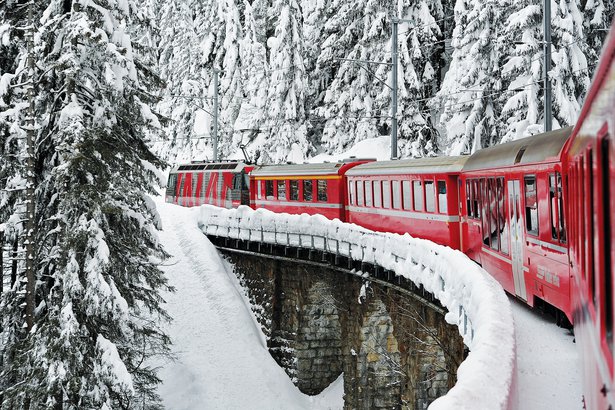
The snow-covered mountains and punctual trains of Montreux, Switzerland, summon childhood train sets, and the daydreams that accompanied them. (Harold Cunningham/Getty)

The snow-covered mountains and punctual trains of Montreux, Switzerland, summon childhood train sets, and the daydreams that accompanied them. (Harold Cunningham/Getty)

If we failed to get you reading him here, shame on us. If you choose to ignore this short piece of his, well, you have only yourself to answer to. He has had a running series of blog posts on the Atlantic‘s website dealing with the frustrations and wonders of language acquisition as an adult, a phenomenon several of us at Raxa Collective can relate to perfectly well.  He captures some of the many benefits of the process and the outcome, especially the collaborative part, in short order here:

When I was about 6 years old, I started collecting model trains with my father. We would assemble the track in the attic, put a foam mountain with a tunnel over the top, and, through the magic of a transformer, watch the trains make their rounds. My dad took me to train shows, and for my birthdays back then, I always got train sets or trestles. I had books on model trains, and books on actual trains. Both kinds showed pictures of big mountains parted by trains, small towns bisected by trains, and trains adorning white Christmas-scapes. Continue reading

Kathakali: non-speaking communication as an art form

My colleagues pressed me to arrive at Kathakali half an hour early : “You cannot miss the make-up session”, they insisted. Kathakali is non-speaking theatre you see. So the performance starts early on, before the show even starts. Continue reading

Happy Mother Language Day

Ruth Fremson/The New York Times. A sign in Bangla language in the front window of a shop in Astoria, Queens, in this March 7, 2001, file photo.

Ruth Fremson/The New York Times. A sign in Bangla language in the front window of a shop in Astoria, Queens, in this March 7, 2001, file photo.

From our friends at India Ink:

I take pride in the fact that despite being born and raised in New York City, I speak Bangla fluently. I credit this mostly to my Bangladeshi parents for being brutal in their approach to teaching my younger sister and me a language that that was so violently fought for. Feb. 21 is recognized by the United Nations Educational, Scientific and Cultural Organization as International Mother Language Day in honor of linguistic diversity, Continue reading

Language, Heritage & Meaning

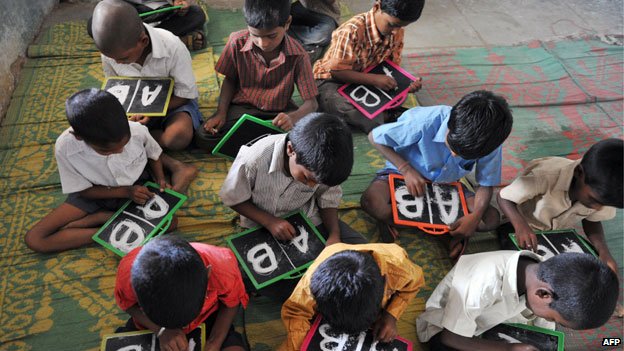
Today’s aspirational Indians want their children to go to a school where lessons are taught in English. But often the pupils leave speaking a language that would not be recognised in London or New York. Could this Hinglish be the language of India’s future?

Thanks to the BBC for this note on languages in our adopted home country:

Why, half a century after Indian independence, does English remain the language of higher education, national media, the upper judiciary and bureaucracy and corporate business? Continue reading

Engineering a Conversation

Guest Author: Siobhan Powers

My roomie Chi-Chi recently blogged about miscommunication between clients and architects so I thought it may be timely to bring to light some of my own recent difficulties in conversation and work development. I could not even begin to blog about engineer-non-engineer relations as that would take all day and there’s no point-we’re nerds to the core, I’ve realized and thus, misunderstood. Recently, however, I’ve found not just confusion between myself and non-engineers, but also with my fellow engineers-my people!

I have had few moments of serious language barriers during my time in India. Most people speak at least a little English, and if not there are pictures and hand gestures that can get points across. Shopping and dining is easy enough. Camping with strangers? You’ll find something to talk about (reference my other blog post– shout-out to Chief and Wise Eyes!). Engineering conversations, however, are not like this-there are no commonalities across language boundaries that can be pointed at and then nodded about, but instead there are abstract concepts like energy and science (gasp!).

Gijo and I talking over some data in the engineering office.

Continue reading

Learning a New Language: Malayalam

Many Cornell “hotelies” are multilingual; not only bilingual but often speaking three or four languages. Their coursework is in English, they may speak Spanish or French from high school education, and Chinese helps as the number of Chinese travelers increase every year. For example, my good friend from the Cornell Hotel School speaks Spanish because she is from Venezuela, speaks Chinese because her family is a Chinese-origin, speaks English just like all my classmates, and maybe she speaks some other languages that I don’t even know about. Similarly, I speak English, Korean, and some Spanish and Mandarin. So, as an hotelier, I called myself a multilingual and thought I could easily communicate with people anywhere I go. Until I arrived in Kerala.

Learning Malayalam is the first time in my life trying to learn a language that has a totally different alphabets and pronunciation.  So the experience is totally different from learning English, Spanish, or French. One of my colleagues here learned Hindi before she arrived in Kerala for her studies but Malayalam is so different from Hindi that it doesn’t help her communicate. The one thing that saved all of us (Interns from US) is that English is an official second language in Kerala so all of the resort staffs here speak English pretty well. However, most of them speak Malayalam to each other during work and speak English only with foreigners, so I thought that learning Malayalam would be a good idea to get to know the culture and people better.

My first step in learning Malayalam started with memorizing some simple words and phrases so that I can initiate conversation with everyone.  So our journey of learning Malayalam started by asking around for some Malayalam lessons.

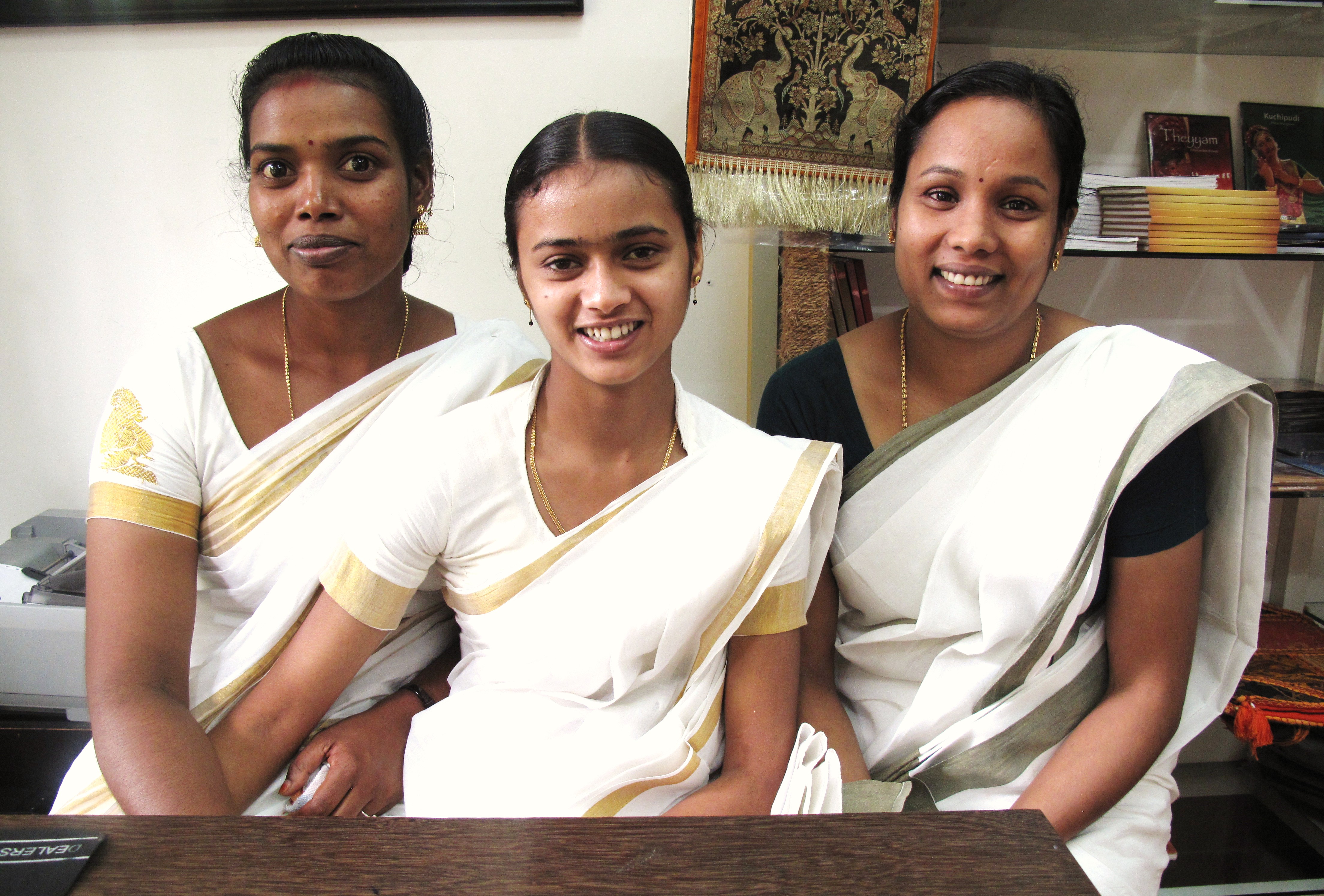
Ayuraveda Therapists & Receptionist

Continue reading

Language & Conservation

Click the image above to go to National Geographic‘s valuable contribution to address one of the least discussed conservation crises facing the world today:

Every 14 days a language dies. By 2100, more than half of the more than 7,000 languages spoken on Earth—many of them not yet recorded—may disappear, taking with them a wealth of knowledge about history, culture, the natural environment, and the human brain.

National Geographic’s Enduring Voices Project (conducted in collaboration with the Living Tongues Institute for Endangered Languages) strives to preserve endangered languages by identifying language hotspots—the places on our planet with the most unique, poorly understood, or threatened indigenous languages—and documenting the languages and cultures within them.

Kaiser the Puppy and the Rising Middle Class in India

Three days ago, we pulled up in front of an art deco gate and half-abandoned mansion on the property of a soon-to-be new RAXA Collective resort. By ‘we’ I mean the design team comprising of an architecture student (me, Chi-Chi), a landscape architecture student (Rania), a hotelie-turned-interior architecture student (Jonathon), and an engineering student (Siobhan). We were told to get a feel of the property.

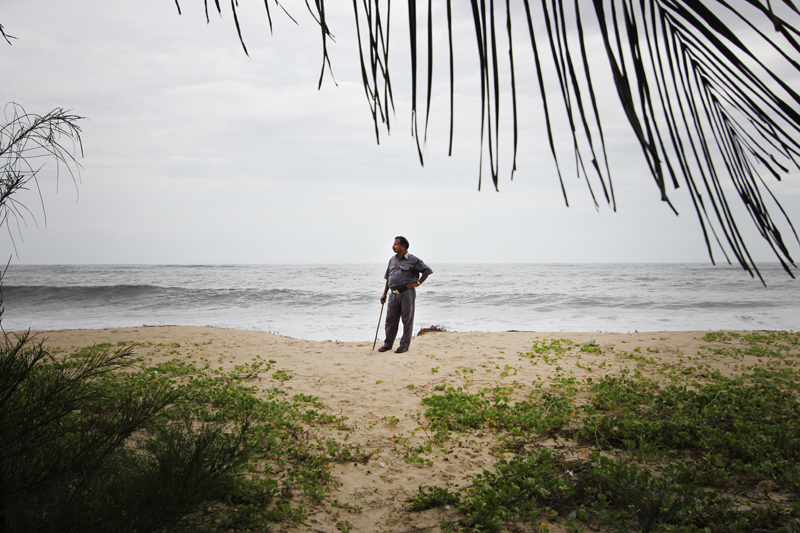
Trusty Guard at Marari Beach

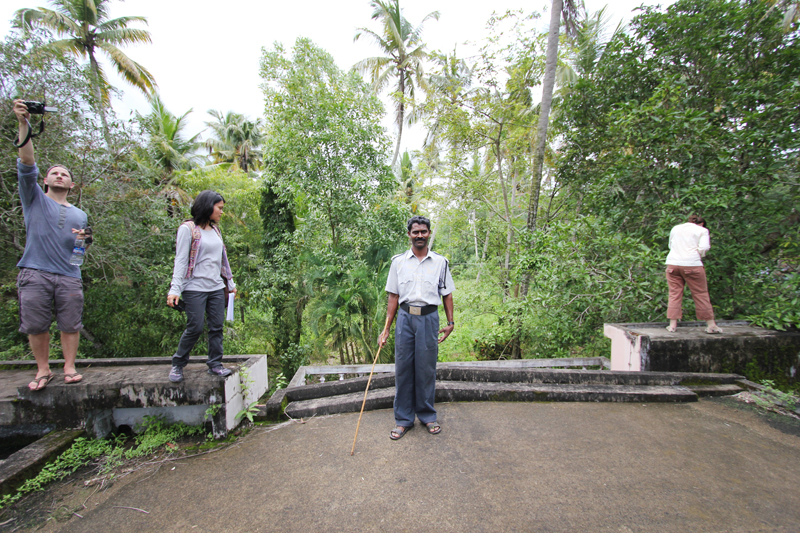
We, the interns, walked around the property with Amie and the trusty guard. The bamboo stick to protect against rumored snakes on the beach.

We found: ‘objects’ (modest fishermen’s homes); an endless, unobstructed beach with marbled sand and black waves; and our new favorite hangout spot, a nearby internet café.

Exploring the ObjectsRania Inspects a Decorative Statement Wall

Guard and us exploring the roofline

Exploring the roofline of an abandoned wealthy fisherman’s house with the guard.

Kaiser found: two Indian security guards; their next-door-neighbor friend; our cook Manu; and us.

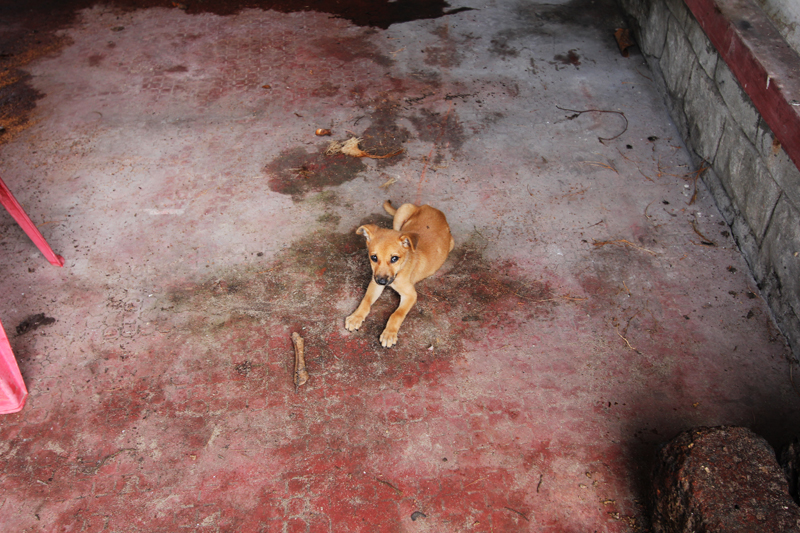
Kaiser is a tiny mixed puppy who arrived on site only an hour before we did. As a dog-lover and all-around “everything happens for a reason” believer, I KNEW KAISER WAS A SIGN. A sign for what, I don’t really know, but he was a very cute and very small sign, so I immediately focused all my down-time obsessing and fussing over Kaiser.

Kaiser the Puppy

This is Kaiser.

I think Kaiser gave me more insight to Indian attitudes. It’s very difficult to converse with someone about abstract ideas without a common language, but if you throw a dog in the mix, it becomes a lot easier.

Continue reading

First Few Days at Tomás de Berlanga: Part 2/3

This post continues the description of my first week working at Unidad Educativa Tomás de Berlanga.

On Wednesday, I started playing soccer with the students during recess. School for these grades goes from 7:10AM to 2PM with a 25-minute break at 9:10AM and 12:15PM, and many of the boys play on the cement basketball court, which is fitted with soccer goals as well. There is actually a bigger court just a half-minute away, but it is essentially made of crushed lava-gravel (the red variety) and when I asked why they didn’t play there I was told the surface is too slippery to run on without falling relatively often. The guys normally play with teams of three or four and play to between one and three goals, rotating the losing team until recess is over.

As the youngest of the teachers here (and probably the least concerned about getting back to class all sweaty), I’m the only one to play soccer, and so far I’ve been on teams with mostly my own students. I think this helps them remember that I’m not just someone teaching them about birds in English, asking them to quiet down, or tell me what I just said, but a person they can have fun with both in and out of class.

Continue reading