Papa Was Here

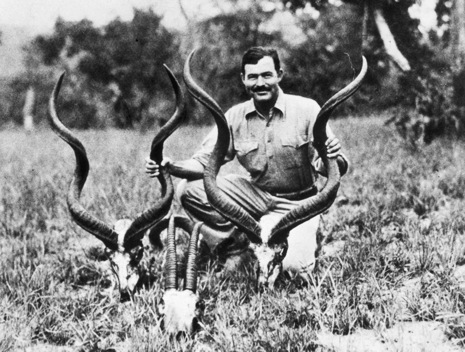
1937: American writer Ernest Hemingway (1899 – 1961) kneels while holding a pair of antelope horns during a safari, Africa. (Photo by Hulton Archive/Getty Images)

From The New Yorker‘s Page Turner series we highlight the last paragraph of a short comment by writer  (click the image above to go to the source):

At his best, Hemingway creates a terrain where he is no longer breaking any rules of grammar or codes of good writing. In this particular territory, the codes no longer apply. After all his travels, he has taken the ultimate step and fabricated his own landscape, and those who come to inhabit it are his followers, abiding by his rules. They are legion. Turn any which way. Welcome to Hemingway country.

Gorky In Residence

In other news from Russia, we return to Moscow via Other Russia.  Yes, we are ignoring Mr. Putin’s adorable stunt with Siberian Cranes to return to Maxim Gorky’s legacy. No offense to Mr. Putin, of course, as we (for now) also choose to ignore news of an upcoming “Flashmob Kissing City in Gorky Park on September 23” and on that same date:

“…more than 3000 people will take part in a huge pillow fight in Gorky Central Park of Culture and Leisure! You can bring pillows from home or buy them at the place of the fight for very low prices (from 100 rubles). Except the flashmob “Pillow Fight”, the organizers will hold many interesting competitions for you while DJs will be playing their music all the time.”

That earlier news about Gorky Park reopening mentioned a museum in his honor, so we could not resist investigating.  And we found an amazing collection of images (credits for all photos are embedded in the base of the images).

This slideshow requires JavaScript.

It is difficult to find any information about the museum, which seems not to have its own website, so desk research is limited to some travel magazines and books that cover Moscow, like this one: Continue reading

Religion, India, & Timeless Observations

Click the banner above to go to this literary-intellectual online magazine edited by Russell Bennetts. Click the image after the jump to go to their reprinting of an item by a lion of letters from another era, writing about a place familiar to us, translated by Louise and Aylmer Maude. It was first published in 1885 in the short story collection What Men Live By.  Thank you berfrois and thank you Leo!

The Coffee-House of Surat

by Leo Tolstoy

In the town of Surat, in India, was a coffee-house where many travellers and foreigners from all parts of the world met and conversed… Continue reading

Novel Approaches To Environmental Concern

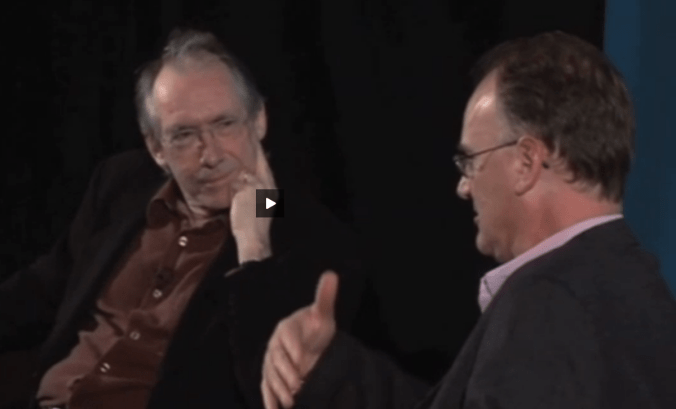
Click the image below to go to the interview, in two parts, with one of the English language’s best living writers, who with this other great writer shares a deep concern for issues facing our planet’s environment and that writer’s uncanny ability to personalize it, as he talks about

the inspiration for Michael Beard, the anti-hero in his comic novel Solar about climate change. The idea came to McEwan when he attended a gathering of 35 Nobel prizewinners, all men of a certain age, ‘big beasts’ in the scientific world who were nevertheless ‘living in their own shadow’ with their most creative years behind them.

113 Hemingway

Screen shot from my subscriber’s access to old New Yorker articles–the text is cut off at the bottom of the image but you can still savor the journalistic description in the sampling.

Lillian Ross, today among the last living chroniclers, along with A. E. Hotchner, of Hemingway in living technicolor, wrote this profile of him when he was a 50-year old superstar and she was a 24-year old who had been a New Yorker staff writer since she was 19.  How’s that?

Who cares how?  I care that.  And thank her for it on this, his 113th birthday.  She has always had a distinctively invisible presence in her writing, which makes Hemingway pop on her page.  Of course he never popped. He banged. Exploded.  Her profile makes a trip to your local public library worthwhile to find a 62-year old hard copy of the magazine.

Or, if the library near you is no longer, subscribe to the magazine and gain access to all content in past issues.  I care that she, and Hotchner, and others, have shared small sketches not designed to titillate as gossip, but yes to amuse.  As in amuse-bouche.  Small tastes for those who aspire to greatness and are not embarrassed from time to time to wonder how the great think, how they feel, what they do:

The Swerve, Prized Again

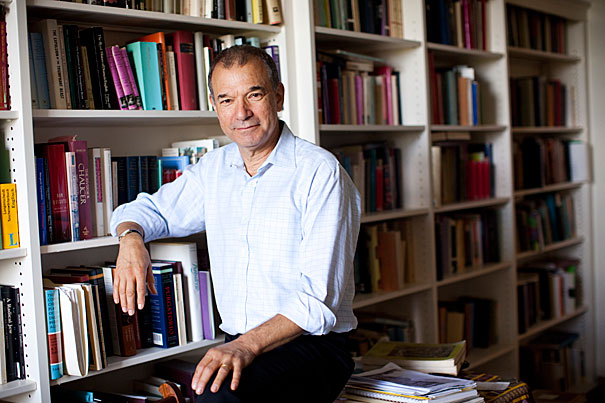
File photo by Stephanie Mitchell/Harvard Staff Photographer

I have already said how surprising I found it that writing about the influence of classical literature on modern thought can be so effectively illuminated; in fact I could not help but say it a couple of times.  On this site we like to celebrate the success of our favored visionaries, writers, producers, educators, artists, thinkers, doers.  One of the publications at the university where he teaches had special reason today to put his name in visible circulation (click the image above to go to the story) with the announcement mentioned here:

Greenblatt’s book, which describes how an ancient Roman philosophical epic helped pave the way for modern thought, was awarded the 2012 Pulitzer Prize for general nonfiction.

In its citation, the Pulitzer board described “The Swerve” as “a provocative book arguing that an obscure work of philosophy, discovered nearly 600 years ago, changed the course of history by anticipating the science and sensibilities of today.”

Continue reading

“You-er Than You!”

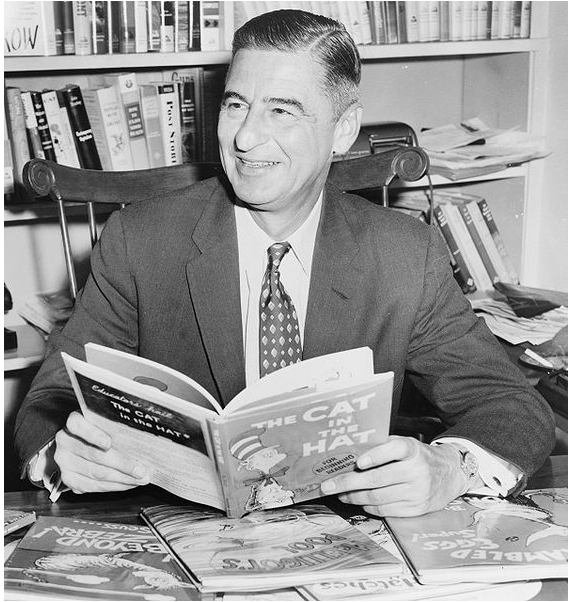
Photo: Library of Congress Prints and Photographs Division

A Dr. Seuss centennial had come upon me a few days ago in an “almost missed it moment”. In many ways the consumate “ad man” who became one of the most beloved children’s book authors never actually changed careers.  Nearly each and every one of his books continues to reach the pinacle of salesmanship, but not for a product. With joy, wit and often irony, they sold the love of reading, imagination and exploration.

Continue reading

Melville’s Muse

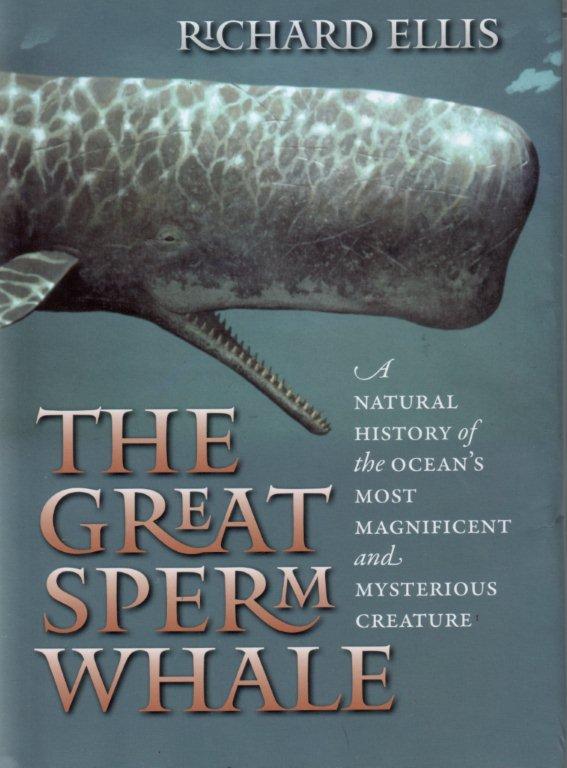
Click the image above to go to the publisher’s website (which also sells the book directly).  If your only knowledge of the title creature comes from a high school literature class, the blurb on the book’s promotional page might make you think this book belonged in the syllabus of the last biology course you took:

Ranging far and wide, Ellis covers the sperm whale’s evolution, ecology, biology, anatomy, behavior, social organization, intelligence, communications, migrations, diet, and breeding. He also devotes considerable space to the whale’s hunting prowess, including its clashes with the giant squid, and to the history of the whaling industry that decimated its numbers during the last two centuries.

According to the review provided in the Times Literary Supplement, the book deserves more attention than that blurb would imply. Continue reading

You Value The Books You Turn To In Need

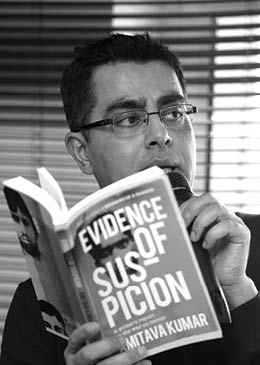
Click the image to the left for a trip to Jaipur via The Guardian and the fertile mind of Amitava Kumar:

When I was younger books were fetish objects. They sat in a small group on a bare shelf or a window sill, depending on whether I was at home or staying in my room at the college hostel. Now, with more money, I’m able to acquire the books more easily, and they have lost their ancient magic as objects. Now, they are treasured as friends. Or, more likely, as guilty reminders of money wasted — because I hardly have the time to read one-tenth of the books I buy.

Mr. Kumar is quoted here in a series called “Of Writers & Reading” in honor of the Jaipur Literature Fest. Continue reading

Just So

First Edition 1864

Now Rann the Kite brings home the night

That Mang the Bat sets free–

The herds are shut in byre and hut

For loosed till dawn are we.

This is the hour of pride and power,

Talon and tusk and claw.

Oh, hear the call!–Good hunting all

That keep the Jungle Law!

“Night-Song in Jungle” by Rudyard Kipling

In the world of literature we associate Rudyard Kipling first and foremost with India, although in reality he only spent about 12 years of his life here.  Born December 30th 1865 in Bombay to English parents, he spent his very early childhood there before returning to England at the age of 5.  In his mid-teens he returned to India and spent an additional 6 and half years working as an editor in Punjab.  Despite living the majority of his life elsewhere (England and the United States), India and his self-identification as an “Anglo-Indian” defines much of Kipling’s work.

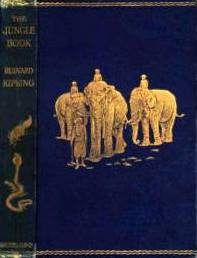
The Jungle Book  first appeared in serialized versions but was eventually published in  1894 under one cover, with illustrations by Kipling’s father, John Lockwood Kipling.  The Jungle Book and the Just So Stories still remain among Kipling’s most beloved works. Continue reading

License To Obsess

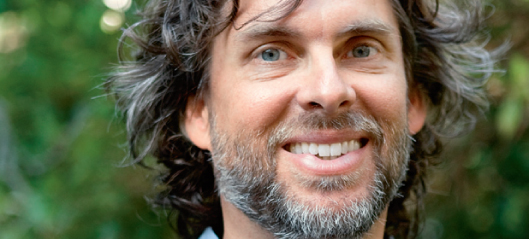
If your life has a certain soundtrack and you read American literary fiction, you may have already encountered the novels of Michael Chabon.  Click the image above for a snapshot interview with him.  When he announced at the beginning of this year that he was working on a new novel, it was seen by many in a blog post split over two days.  A turn of phrase in the middle of the second post resonates with the small group of people who form Raxa Collective:

…thanks to Wax Poetics, one unexpected but maybe not unforeseeable result of the decision to have some characters own a shop together selling battered old things that are beautiful and valuable only to a small number of randomly assorted Geeko-Americans has been the joyful return to my life of hip-hop…

Things that are beautiful and valuable only to a small number: those are the things we are focused on here.  See all of Salim’s recent posts for examples.  Milo’s too.  Chabon’s new novel may focus on the culture of hip-hop, which you will not likely encounter on our pages, but the underlying idea has both profound and light-hearted implications. Continue reading

Vive La Différence

One of our favorite phrases comes to mind upon seeing the news that Umberto Eco, whose book on experiential travel is as must-read as it is little-known, is curating an exhibition on lists at a museum.  Long live the difference: the man of letters, whose academic work on semiotics even many scholars are challenged by, can write trash-free page-turners as well as travel books and, why not, curate a museum exhibition.  Long live the difference: the museum that resists the trashy blockbusters can invite a man such as this to open his cabinet of curiosities. Continue reading

Snow Angels

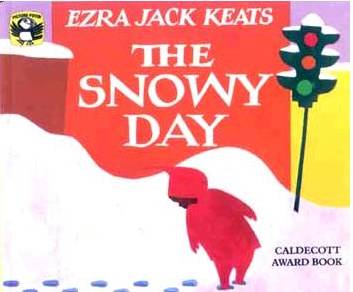
It says a lot when a children’s book reaches the “ripe old” age of 50 while still remaining universally popular.  The Snowy Day by Ezra Jack Keats is such a one. Winner of the Caldecott Medal for the year’s most distinguished American picture book, the title was ground breaking despite its simplicity.  Through the use of colorful, textured illustrations and an unaffected story line, the book “changed the face of children’s books” by featuring a little black boy in a manner neither condescending nor provocative;  He was merely a little boy. Continue reading

When It Rains, It Pours

We try not to favor any one source when we link out to interesting items, but sometimes a source seems to have a “hot hand”.  Just after noting one great, short item of enormous consequence we can recommend another longer item (click the image to the right) for anyone–especially parents of those most likely to read this series–for whom quality of writing in the English language is a concern.  Not to mention that yesterday we had a completely unrelated reason to mention visiting Oxford

Here is the shocking opening line that should get you reading this piece (and as always we encourage subscription to that publication, without which we would not get so much vivid, varied and valuable reportage):

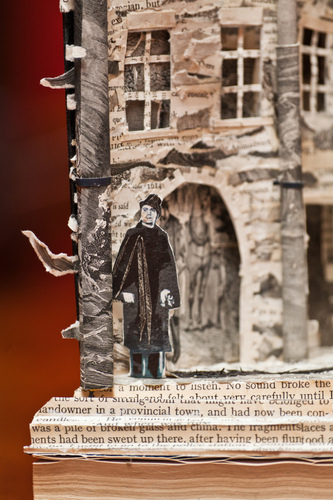
At Oxford in the nineteen-forties, Professor John Ronald Reuel Tolkien was generally considered the most boring lecturer around, teaching the most boring subject known to man, Anglo-Saxon philology and literature, in the most boring way imaginable.

No one who had read, let alone seen placed on film, this man’s writing would have guessed that to be the case. Continue reading

Indians In North America

Click the photo to the left to read the interview of mother by daughter, artist by artist.  The interviewer shares this perspective on the interviewee’s art:

Her work has, over the years, centred on forgotten, vanishing worlds, art and language that exist on the margins. The epigraphs to her novels (TS Eliot, Emily Dickinson, Borges …) often make reference to the persistence of memory. She writes: “The ancient Chinese believed time is not a ladder one ascends into the future but a ladder one descends into the past.” Her new book, The Artist of Disappearance, is made of three delicate stories about the frailty as well as the transforming power of art.

Continue reading

Voltaire Strikes Again

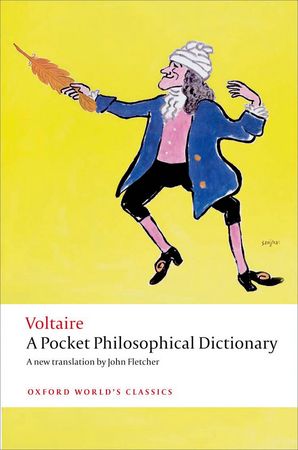
The cover illustration is not very inviting, but the reviews and blurbs in more than one newspaper make it sound worth the read:

Not really a dictionary, but a series of short essays on such topics as equality, Hell, miracles, religion, tyranny and superstition by one of the leading spirits of the Enlightenment. The tone is witty, catty, and there are many neat aphorisms such as: “Atheism does not prevent crimes, whereas fanaticism commits them.”

Incidentally, in case you are already a Voltairophile, you may want a deeper well from which to draw inspiration.  In which case you may want to pay a visit to Oxford.

Continue reading

Sacred Trees

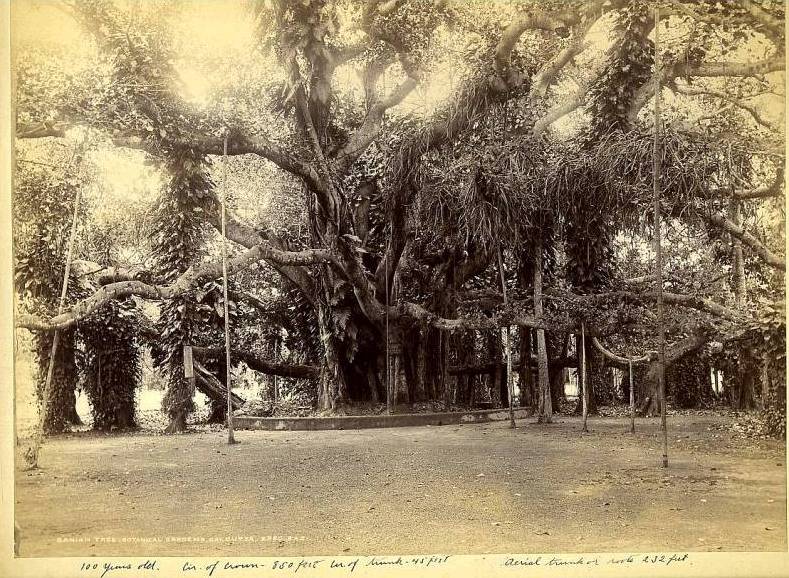
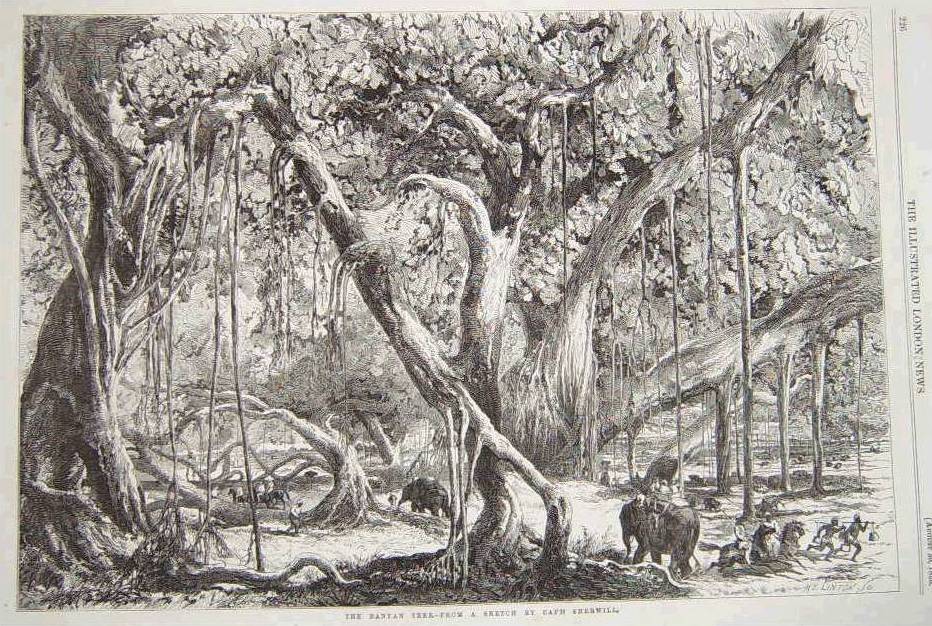
The fig-tree at this day to Indians known

In Malabar or Deccan, spreads her arms,

Branching so broad and long, that on the ground

The bended twigs take root, and daughters grow

About the mother tree, a pillar’d shade,

High over-arched and echoing walks between.

–John Milton, Paradise Lost

Continue reading

Rotam fortunae non timeo!

Rotam fortunae non timeo -- "I do not fear the wheel of fortune!"

“Mortal men travel by different paths, though all are striving to reach one and the same goal… happiness,”[1] or so says Boethius, the great Roman philosopher. I think we can all agree that, no matter what we want to do or how we choose to do it, our ultimate goal is happiness. It is “the good which once obtained leaves nothing more to be desired.”[2] It doesn’t necessarily take a philosopher to realize this, though; approach any random person and he or she will probably confirm that a happy life, is, of necessity, a good one.

But what is happiness? We say we are “happy” when we get an A on a test, win an important sports game, or finish a grueling paper—but what do we mean by it? The joy from these moments, however real at the time, begins to appear ephemeral in retrospect. Think back to the 6th or 7th grade: do you still glow with warmth when you remember getting a 93 on an Earth Sciences test (if you remember at all!)? Continue reading