Transformative Innovation, Collaboration And The Growth Of Community

Click the image to the left for an interview with Tim Westergren about his experience prior to and as founder of Pandora. The path to that founding is colorful and unlike other startup stories. Launching a business that threatens the status quo is a classic tale, retold often.Travis Kalanick tells his own variation on a founder’s story about an industry’s reaction to disruptive technology; it is worth listening to both interviews back to back.

Michael Philips has a very insightful blog post covering Pandora’s recent moves in a brutal chess game–incumbents are under no obligation to sit back and watch an upstart deliver creative destruction on a silver platter, but the defensive moves to protect entrenched interests from the power of innovation obviously do not always serve the best interests of society. Philips gives attention to Kalanick’s Uber travails at the same time:

This week, the Internet-radio service Pandora planted itself in South Dakotan soil. It bought an FM radio station in Rapid City. The station, KXMZ-FM (Hits 102.7, “Today’s hits without the rap”), serves the two hundred and fifty-fifth largest radio market in America. Its Facebook page highlights a local Good Samaritan who bought new tires for a stranger’s beat-up pickup truck. But Pandora’s purchase is not a bid for heartland radio; it is the company’s latest gambit in the war between artists, publishers, broadcasters, and technology companies over who will profit from popular music. Continue reading
Kerala’s Classical Music

Photo Credits: Ramesh Kidangoor

Photo Credits: Ramesh Kidangoor

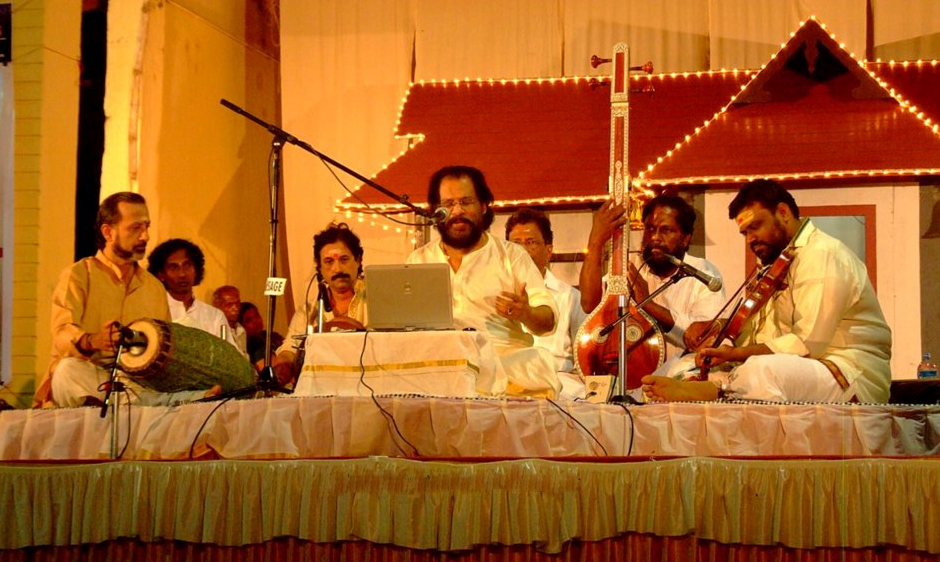
Musical traditions in Kerala consists of both vocal and instrumental forms, the latter gradually overtaking the former in terms of popularity. Sopana sangeetham (classical music) is a typically Keralan style of music. The name comes from the fact that it was recited at the steps of the temple. Some consider sopana saneetham as merely a rustic variation of a local style of singing, sharing some elements with classic Carnatic music. Continue reading

Panchavadyam – Rhythms Of Kerala

Photo Credits: Ramesh Kidangoor

Photo Credits: Ramesh Kidangoor

Panchavadyam is an orchestra made up of five instruments, primarily percussion but one wind instrument – chenda, kombu, kuzhal, elathalam and maddalam. Kerala temple festivals are the ideal occasion to witness its entire range of traditional musical expertise. Originally this was the music that accompanied temple processions where caparisoned elephants carried the idol. A panchavadyam performance takes hours, with a pyramid-like rhythmic structure in which the instruments go through five musical stages, or peaks.
Continue reading

Innovative Cross-Cultural Sound

Thanks to the folks who created the music-recording studio (more on which to come) we had the opportunity to experience this live:

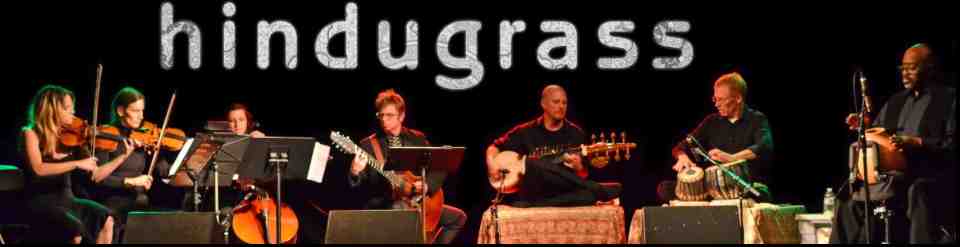
Hindugrass at Manifold Recording

Kicking off our recording sessions for the new album with a live performance in the magnificent music room at Manifold Recording. Continue reading

Musical Crossovers

This slideshow requires JavaScript.

For some of us New Yorkers, it was a superb experience attending the India debut of Norah Jones in Mumbai recently.  The most recent installment of the India Ink series that mashes up images, themes and ideas related to the commonalities and differences between New York and Mumbai is a perfect complement to that recent musical outing: Continue reading

If You Happen To Be In Washington, DC

Nordic

From our friends in the north comes our favorite kind of cultural festival–all mixed up. It is reviewed in this podcast and explained on the Kennedy Center’s website:

About the festival

February 19-March 17, 2013, the Kennedy Center presents Nordic Cool 2013, a month-long international festival of theater, dance, music, visual arts, literature, design, cuisine, and film to highlight the diverse cultures of Denmark, Finland, Iceland, Norway, and Sweden as well as the territories of Greenland, the Faroe Islands, and Áland Islands. Continue reading

If You Happen To Be In Chennai (Or These Other South Indian Cities)


header-new-800

Recently the New Yorker posted news that was music to the ears of all banjo-lovers.  Most baby boom-aged Americans know who Steve Martin is, but many did/do not know he is a seriously talented banjoist–he does not just use the instrument as a comedic prop. A smaller subset of Americans know who Edie Brickell is (not just that she is Mrs. Paul Simon), but they remember her music with the New Bohemians with intense affection.  She disappeared for a while, but she is back, and back with Steve Martin of all people:

Of the rushing river of records heading toward us, there are two I’d like to mention, one imminent and one on the horizon: “Love Has Come for You,” by Edie Brickell and Steve Martin, which arrives in April…Brickell and Martin’s record is a banjo-and-singer collaboration, a form without many footprints…

Anyone who loves banjo is almost by definition a lover of collaboration, which is why we pay attention to this particular instrument more than most. This got us thinking: What is Béla Fleck up to these days?  If you do not know who he is, and you at least like the banjo, you should find out by clicking the banner above. And to our delighted surprise, he is playing gigs near us in south India over the next few weeks.  After the jump below, you can see the schedule, and also you will get a sense of what we mean by banjo collaboration. Continue reading

Land Fillharmonics

From the collaborative film Waste Land about the catadores (trash pickers) of Jardim Gramacho to the new documentary Trashed, there are film makers and organizations talking about the growing and overpowering problem of waste. Waste Land talks about the transformation of trash into art. The documentary film Landfill Harmonic is about “people transforming trash into music; about love, courage and creativity.”

With the ethos of reuse and recycle there are those who grab the creative spirit along with our attention with programs like the Paraguayan Sonidos de la Tierra (Saving Children Through Music) and Favio Chávez, director of the orchestra of recycled instruments on the Catuera Landfill on the banks of the Paraguay River. Continue reading

Ambience, Raxa & You

Photograph by Michiko Nakao accompanying “The Discreet Charm Of Ambient Music” from the New Yorker website’s Culture Desk

Raxa Collective, an affiliation of conservation-oriented enterprises employing 180+ people serving 25,000+ travelers each year, looks from some angles like it is in the resort business.  It is.  But it also is not.  Among its several founders there was much discussion at the outset along the lines of: does the world really need another of those?

Not really.  So it is not a resort business any more than it is a conservation NGO (which it is also not, but from some angles it might look like one), a learning laboratory (which it is and is not) or a distribution channel for ornithologically-inclined photographers (ditto).

If there were to be a book called Resort Confidential it would be an insider’s view of all that should change in the resort industry globally.  We would hope to write a seminal chapter in that book.  We would not want to write the whole book.  We love company.

One inspiration is Brian Eno. A reminder of this is in Joshua Rothman’s review of Eno’s pioneering role in the evolution of, and his most recent contribution to, ambient music. Excerpting that review, it could be said that we hope to accomplish with our activities at Raxa Collective what “Lux” accomplishes musically:

…Ambient music isn’t like pop music. It doesn’t want the spotlight, or to conscript your body and mind. Instead, it aims to transform and divide your attention in more subtle ways…At the ideal, low volume, you’re aware of the music. But you’re equally aware of the way that it frames the other sounds you’re hearing and making: the traffic in the street, your own breathing, the keys on the keyboard, the creaks in the floorboards, the rustle of your clothes when you move. You’re also more in touch with the small inflections in your own moods. Each key change, and each new instrument, with its new timbre, is an opportunity to measure the difference between the feeling of the music and your state of mind. “Lux” is fascinating as music. But it also makes the world more fascinating. It’s a catalyst for consciousness and self-awareness…

Loving company, we invite you to sample.

Nothing Is Good, Frequently

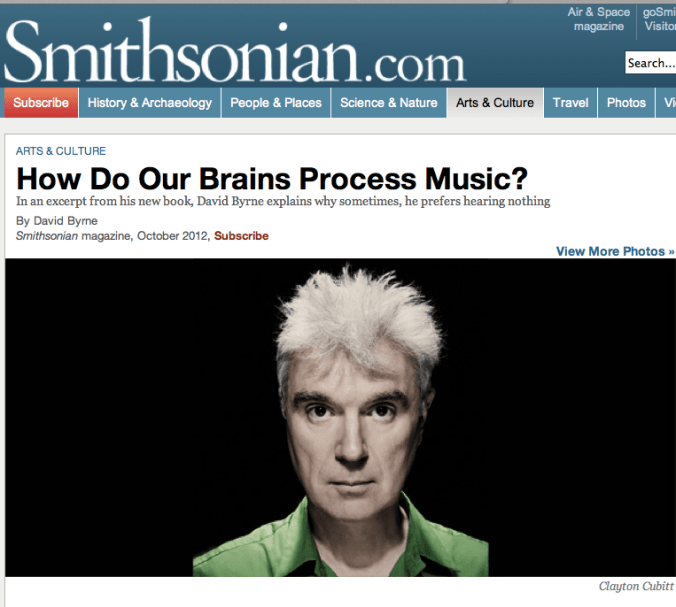
From a man who knows how to make loud noises worth listening to, the ideas (especially for those of us interested in reduction of noise pollution, click the image above to go to the  full story) here are most welcome:

Music, more than many of the arts, triggers a whole host of neurons. Multiple regions of the brain fire upon hearing music: muscular, auditory, visual, linguistic. That’s why some folks who have completely lost their language abilities can still articulate a text when it is sung. Oliver Sacks wrote about a brain-damaged man who discovered that he could sing his way through his mundane daily routines, and only by doing so could he remember how to complete simple tasks like getting dressed. Melodic intonation therapy is the name for a group of therapeutic techniques that were based on this discovery.

Eine Kleine Teslacoilmusik

Thanks to the Boston Museum of Science’s Theater of Electricity for this application of Tesla genius.  We should not be surprised if, by now it may have been patented and commercialized elsewhere by some outpost of the Edisonian tradition. So what. The Tesla tribe moves in mysterious ways, and eventually prevails.

Golden Rule Loops

the fourth instalment of the “valtari mystery film experiment” is by icelandic directors arni & kinski. their video for rembihnútur focuses on meditation:

the much needed changes in the world will happen through changes within each and every one of us. we all want and need love. this film is a celebration of sigur rós’s music and the benefit it is having in the elevation of consciousness that is happening with humankind. people are finding strength in love, care, and respect for themselves, each other, and the world we live in.

more information is here

Happy Centenary Birthday, Woody

I am a week late, but I do not think he would mind.  There is plenty to read and listen to with Woody in mind, but my first realization that I had missed his birthday was while listening to a podcast a few days ago.  If you are interested in Woody’s life and the context of his music, it is worth a listen.  I also do not think Woody would mind sharing the celebration a bit, so after the jump have another go at this song.

Continue reading

Eine Kleine Bankmusik

Not many people would mistake us for a bank advertising medium.  But today, full disclosure, we feel willing to play that role.  Just because the music is nice, the scene is well thought out in a family-friendly, music-as-inspiration kind of spirit.  As banks go in today’s world, this one has the right idea: it is the community that really matters; and we love the collaboration.  That town square seems well conserved, doesn’t it?

I Can Feel My Heart Beat With Kalari Moves

Guest Author: Rania Mirabueno

Image

Beyond the nature tours of the Periyer Tiger Reserve near Cardamom County, the cultural scene in Thekkady offers a traditional Kerala martial arts performance called Kalari that I would definitely recommend for everyone to experience. Kalari is truly an art form combining music, dance and performance in the context of martial arts.

What I enjoyed most about Kalari was the diverse audience that attended. Kalari attracted all ages and from all backgrounds. I was able to share a unique moment with the community to see an ancient art form. From dagger to long stick to sword, I was at the edge of my seat the entire hour. Continue reading

Sound Suits

This slideshow requires JavaScript.

I’ve written about numerous artists who have just the right “tinker’s eye” to see the aesthetic potential in what many would call trash.  But as far as I know, Chicago based artist and educator Nick Cave (not to be confused with the deep voiced musician of the same name) is the only one to take the next step to turn sculpture into a kinetic, interactive celebration. Continue reading

Heart Throb

There’s something about drums. Like dance, they have an almost primordial capacity to rouse even the most complacent person to action.  The sound connects with the heartbeat and makes it impossible to stand still. Personally I can’t decide whether I prefer West African Djembes, Indian Tablas or Japanese Taiko. Percussion seems to be by nature a communal activity, and the bottom line is that I love the way the sound makes me long to participate.  Continue reading

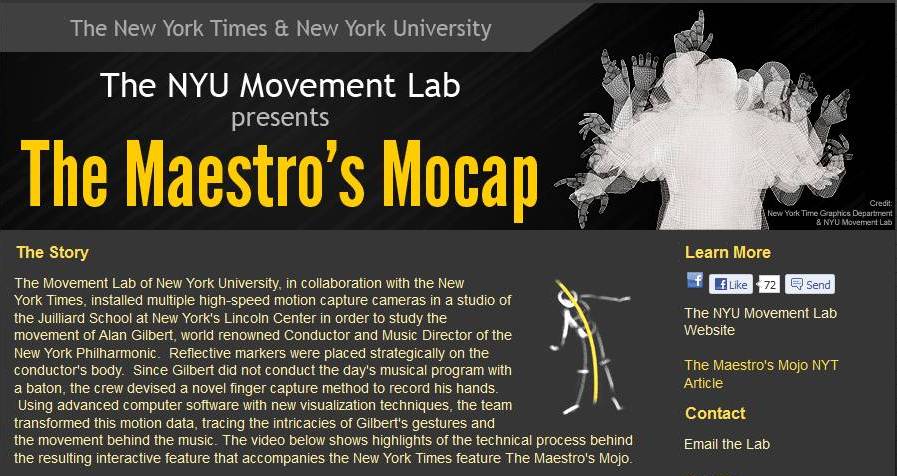
Conducting, Captured

Since we began here last year, we have had some interns, volunteers and employees who graduated from some great programs at some great universities.  But NYU’s Mocap program is unlike any of those programs at any of those universities.  And we do not have anyone on our team who can do this.

Continue reading

The Chenda melam- Traditional band of Kerala

The Chenda melam is the most widely performed keshtra vadhyas (songs or programmes based on temples festivals) of south India. Irrespective of cast or religion, the melam have been an important part of every Kerala festival for over 300 years old. The most important among these melams are Pandy and Panchari, which may extend up to 5 hours. The leading instrument in these compositions is the Chenda, a cylindrical drum that originated in Kerala. The Chenda is divided into Valamthala Chenda & Edamthala Chenda (right & left side of the instrument) or also known as “Veekam Chenda” & “Uruttu Chenda”.

Continue reading

Wild Things Lurk In Tranquil Places

Two of Milo’s recent posts–one about appetites and the other about maternal instincts–provide reminders that as beautiful as nature is, there are situational downsides. In an earlier post we mentioned Walton Ford, and it is interesting to consider Milo’s photographic observations in light of Ford’s work.  And since Milo was writing from India, perhaps even in conjunction with the musical encounter below.

This slideshow requires JavaScript.

Do not let Milo’s fearsome photography, nor Walton Ford’s phantasmagorical extrapolations, lead you astray. Continue reading