National Park of the Week: Plitvice Lakes National Park, Croatia

Plitvice Waterfalls

Source: holicoffee.com

Granted UNESCO World Heritage status in 1979, Plitvice Lakes National Park is Coratia’s largest and most popular park. Sixteen lakes, all inter-connected over a distance of 8 km by series of waterfalls and cascades, are set deep in the woodland and have a height difference of 135 meters (Veliki Slap, the largest waterfall, is 70 meters tall). Although the terraced lakes comprise only a small area of the total 300 sq km park, they offer a stunning sight with their changing hues throughout the seasons and garner practically all the attention from local and foreign tourists alike. Continue reading
National Park of the Week: Ruaha National Park, Tanzania

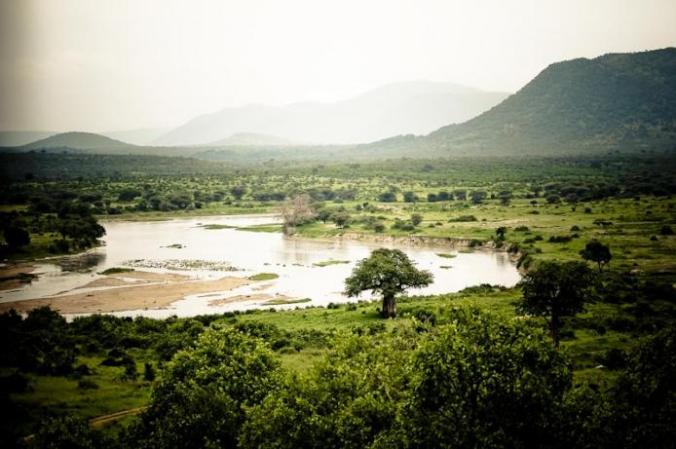
As Tanzania’s largest national park, Ruaha National Park boasts of untouched and unexplored ecosystems at the center of Tanzania. The 20,226 sq km park is the watershed between the Mzombe and the Great Ruaha rivers, with a distinctive escarpment, above which are large stretches of miombo woodland. Below lie undulating plains of dry bush country to treeless grasslands, swamps and evergreen forests, all with sand rivers intersecting through them. Continue reading

National Park of the Week: Torres del Paine National Park, Chile

b45e8ef1

Source: parquetorresdelpaine.cl

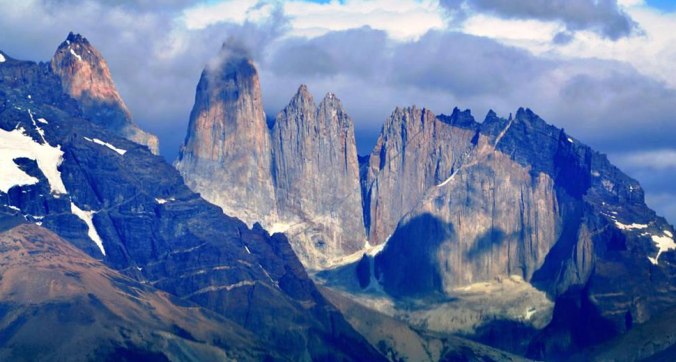
For the type of jaw-dropping  sights that Torres del Paine National Park in Chile has to offer, it is only fair to know a bit of geological history that formed these towering, sheer ridges and deep, mirrored lakes. Located in the southern tip of the Andes of South America, the landscape of the park is owed to earth movements which occurred 12 million years ago and the gradual glacial erosion thereafter, which formed the “torres” (towers) measuring more than 2,200 meters in altitude. The 2,422 square kilometer area was established as a park in 1959; since 1978 it has been part of UNESCO’s Biosphere Reserve system. Continue reading

Using Those Final Months Well

midwayatoll_wide-1f160673ec1ed0fd74e6f9d1873a19f4ecc530f8-s1100-c85

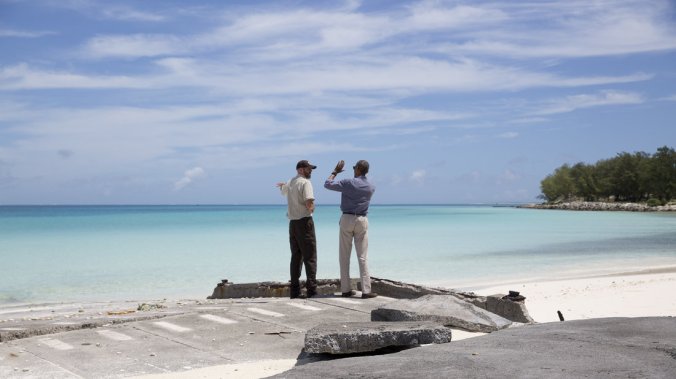
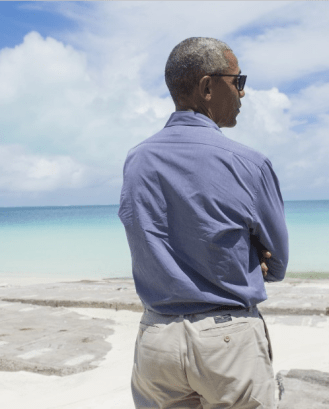
President Barack Obama on Midway Atoll in the Papahānaumokuākea Marine National Monument, Northwestern Hawaiian Islands, earlier this month with Marine National Monuments Superintendent Matt Brown. Obama expanded the monument using his authority under the 1906 Antiquities Act. Carolyn Kaster/AP

We are happy to see the Antiquities Act again proving so useful, so soon (the clock is ticking):

Obama To Designate First Marine National Monument In The Atlantic Ocean

During the Our Ocean conference later this morning in Washington, D.C., President Obama will establish the first national marine monument in the Atlantic Ocean.

The area of the Northeast Canyons and Seamounts Marine National Monument is the size of Connecticut and has been called an “underwater Yellowstone” and “a deep sea Serengeti.” Continue reading

National Park of the Week: Jiuzhaigou National Park, China


crystalline-turquoise-lake-jiuzhaigou-national-park-china-01

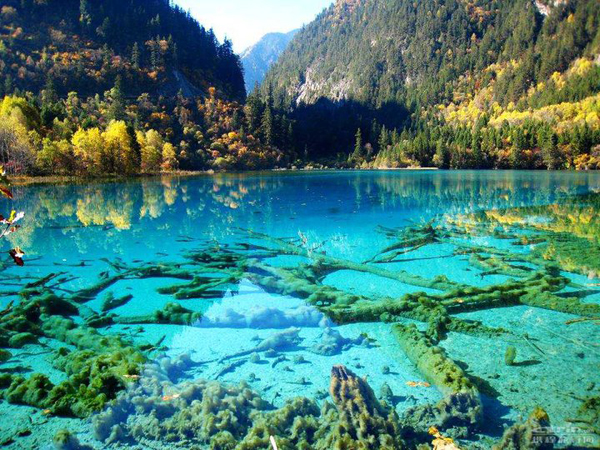
Five Flower Lake. Source: thousandwonders.net

Located in the northern part of Sichuan province in China, Jiuzhaigou National Park is comprised of a speckling of multi-colored lakes surrounded by deep woodlands and impressive conic waterfalls in between precipitous mountains. Given the high altitude of the jagged valley, 4,800 meters, the landscape has a range of diverse forest ecosystems over the 300 square km and half of which is virgin forest. About 140 bird species inhabit the valley as well as a number of endangered plant and animal species, including the giant panda, the Sichuan takin, and the golden snub-nosed monkey. Continue reading

Yosemite, Bigger & Better

ap_16251730452359_custom-c087184ae5c62fc4faaf27c7f89712aed7b80839-s1400-c85

A photo provided by The Trust for Public Land shows Ackerson Meadow in Yosemite National Park, Calif. Visitors to the park now have more room to explore nature with the announcement on Wednesday that the park’s western boundary has expanded to include Ackerson Meadow, 400 acres of tree-covered Sierra Nevada foothills, grassland and a creek that flows into the Tuolumne River. Robb Hirsch/AP

The full story here. All we can say is a three-letter word (no spoiler, so after the jump):

Yosemite National Park is growing by 400 acres — the largest expansion to the park since 1949.

NPR’s Nathan Rott reports that the new addition to the park, a stretch of land along the western boundary of Yosemite, has historically been used for logging and cattle grazing.

The Trust for Public Land, a conservation group, bought the land from private owners for $2.3 million and donated it to expand the park. The purchase was supported by the Yosemite Conservancy, National Park Trust and American Rivers, as well as private donors.

“The area includes a sprawling grassy meadow, wetlands and rolling hills dotted with tall pine trees, and is known to be home to at least two endangered species,” Nathan reports. Continue reading

National Park of the Week: Ergaki National Park, Siberia

information_items_555

Photos by Moscow based photographer, Alexander Ermolitsky

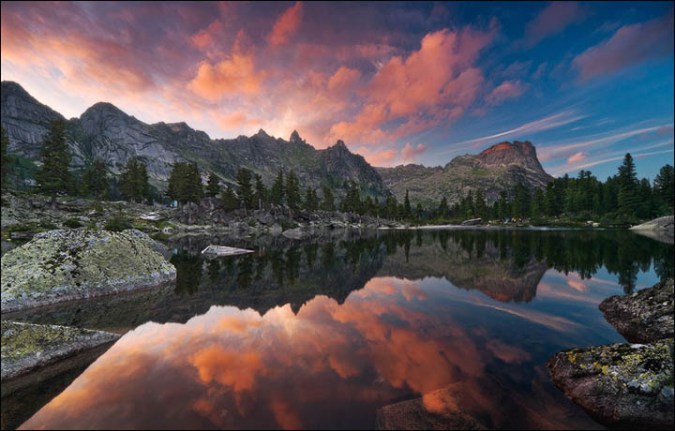
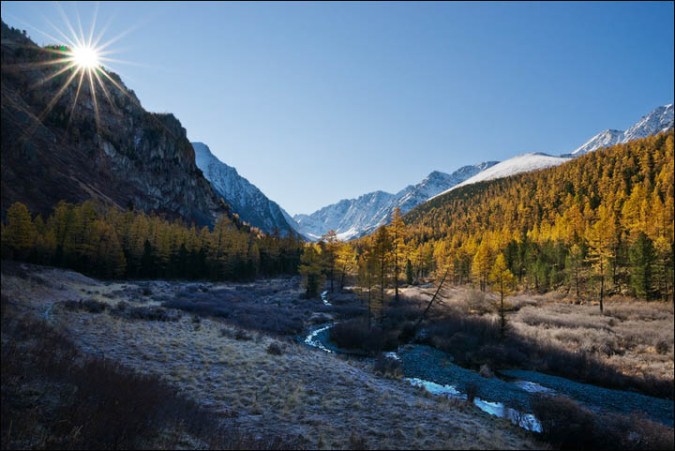
Colloquially referred to as the “Russian Yosemite,” Ergaki National Park is a mandatory stop for those who ever plan to travel to Russia, and more specifically, to Siberia. Located in the Western Sayan Mountains of Siberia, this 342,873 hectare park of steep mountain ranges and glacial streams and lakes will break your camera lens with its beauty – figuratively speaking.

Continue reading

VLMPAs Face Risks of Becoming Paper Parks

Image © CNN

President Obama at Midway Atoll. Image © CNN

Two definitions are needed here at the outset: VLMPAs are “very large marine protection areas” and “paper parks” is a phrase used by conservationists and researchers to convey the idea of parks designated by governments only on paper – that is, they don’t get appropriate funding or management to create actual conservation within park limits. Most paper parks are found in developing nations where politicians may have good intentions in setting aside land to protect, but then don’t have enough resources to enforce the rules adequately, or in worse-case scenarios turn a blind eye to extraction if it favors them. Last week I discussed a possible race for bigger parks, and both examples happened to be marine in nature. Two researchers have commented in the academic journal Marine Policy to warn against creating ever-larger marine parks in remote areas that might be hard to monitor, unless there’s commitment for real enforcement. John Vidal reports:

“It is not enough to simply cover the remotest parts of our oceans in notional ‘protection’ – we need to focus on seas closer to shore, where most of the fishing and drilling actually happens,” said Peter Jones, a marine researcher at University College London.

Co-author Elizabeth de Santo, an assistant professor at Franklin and Marshall College in Pennsylvania, added that the push for quantity over quality threatens to undermine sustainability.

Continue reading

59 Parks in 59 Weeks

every-national-park-1024x683

All images from: Darius Nabors

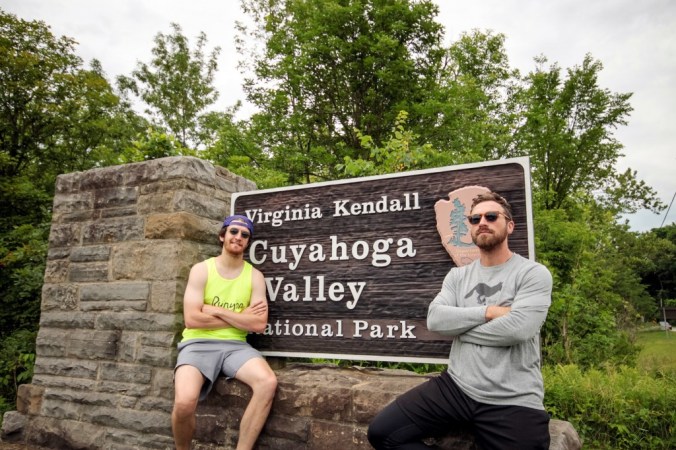
We continuously incentivize our readers to go out and explore the nature that abounds in the great outdoors. Well, Darius Nabors (although not a follower of ours – that we know of) raises our proposition to a whole new level by visiting all fifty-nine National Parks in fifty-nine weeks. In order to begin the pursuit of his goal, Nabors quit his job when he realized that it would take him forty-two years to see the ones he had not yet visited if he only traveled to one park per year. Therefore, he set himself this challenge while he is still young and active and can explore everywhere without worrying about physical limitations.

So far, Nabors and his friend and travel companion Trevor Kemp, who recently finished his Ph.D. in mechanical engineering, have visited 34 parks, including Glacier, Gates of the Arctic, Crater Lake, Haleakala and Joshua Tree.

Continue reading

National Park of the Week: Acadia National Park, Maine, U.S.A

ry400

Source: ouracadia.com

I am happy to introduce Acadia National Park in Maine, U.S. as the first feature on our new weekly segment – shout out to Justin for the recommendation! This park is one of many firsts: it was founded as the first national park east of the Mississippi River by President Woodrow Wilson in 1916 (so yes, it is celebrating its centennial along with the National Park Service). In addition, it is famed for being the first place to see the sunrise in the U.S. when standing at the top of Cadillac Mountain during certain times of the year (part of the fall and winter seasons). Continue reading

Russkaya Arktika National Park Expanded

Big sky can be seen above Tegetthoff Island.
Photograph by Cory Richards, National Geographic Creative

We have lots of land conservation news going on right now (just scroll down), which can only be a good thing, and is perfect timing given the US National Park Service centennial. Jocelyn will be posting a close-up feature of a park later today, but first I invite you to imagine a new arms race between Russia and the United States – not of weapons, but rather in the sphere of conservation through protected national park expansion. President Obama just quadrupled the area of marine national monument Papahānaumokuākea, and now Prime Minister Dmitry Medvedev of Russia expanded the island region of Russian Arctic National Park by over eighty percent. In this case, I say, the more friendly competition the better! Brian Howard reports on the Russian expansion:

Made up of more than 190 islands, Franz Josef Land is a mostly uninhabited area that is encased in sea ice for much of the year. Yet the rocky, glaciated islands are home to stunning biodiversity. The newly expanded park will protect habitat for such species as the Atlantic walrus, bowhead whale, polar bear, narwhal, and white gull.

Continue reading

A New National Monument

gettyimages-454072594_custom-c478935973f2d700617482299bf825218fd6b3e6-s800-c85

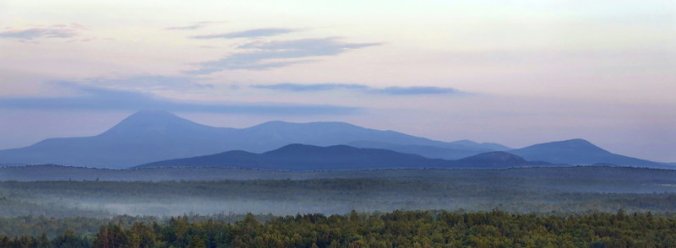
Early morning haze colors from Mount Katahdin and its surrounding mountains. All images from: npr.org

Just in time for the U.S. National Park system centennial, a total of 87,500 acres of mountains, forests and water were donated yesterday by the co-founder of Burt’s Bees, Roxanne Quimby, and then declared a national monument. President Obama announced the creation of the Katahdin Woods and Waters National Monument, a land that used to feed paper mills and is now permanently protected from lumber extraction. The monument will be managed by the National Park Service and allow recreation while protecting resources.

The designation of the woods as protected territory has been in the works for years — and has been controversial among locals, who worried about federal oversight of lands that used to be central to the regional economy.

Continue reading

The Legacy of U.S. National Park System

glaciernationalpark_davesizer800

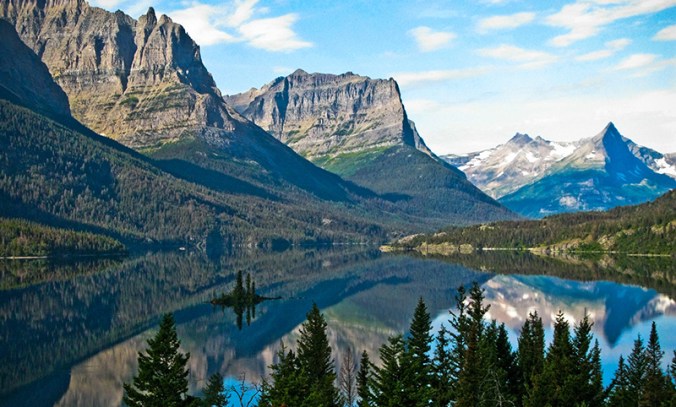
Saint Mary Lake in Glacier National Park, Montana. All images from: Yale News

Thanks to Yale News for a wonderful commemoration to the history and value to the scientific community of the U.S. National Park system – visit our National Parks category page for over a hundred posts on the subject – as we celebrate its centennial today (US time, it’s still August 25th):

As the United States marks the centennial of the National Park Service, which was officially established 100 years ago this week, the nation’s parks are being widely celebrated for their natural grandeur and vistas, their wildlife, and their abundant recreational opportunities.

Far less appreciated though is the critical role that the U.S.’s 59 national parks and hundreds of other park service units play in scientific research, providing unspoiled, protected, and accessible landscapes that host research that can be done few other places. In fact, with a long history of data and field study on everything from wildlife to wildfires, the national parks offer scientists an incredibly rare living outdoor lab. And the high profile of the parks in the American imagination often provides an avenue for conveying that research to the public.

Continue reading

A New Weekly Feature!


inside20sun20over20the20mountains

Ergaki National Park. Source: siberiatimes.com

Drawing inspiration from our site’s Bird of the Day, a new weekly feature titled National Park of the Week will publish every Sunday starting on August 28th. We love birds – but other wildlife too! – and we love the environment they (as well as we) live in, so we decided to start this new “column” (if this was a newspaper) to promulgate the protected areas that reflect the range of biodiversity and natural beauty around the globe. Although this weekly article has the words national park in the title, all types of government-protected areas, such as refuges, reserves, sanctuaries, and parks, will be featured in this category.  Continue reading

Op-Ed: US National Protected Lands at Risk

From the New York Times, president of the Wilderness Society Jamie Williams writes an opinion editorial titled “Don’t Give Away Our Wildlife Refuges.” Perhaps given the global crisis I read the final word as refugees accidentally, so I was expecting something else entirely – maybe animals that are displaced by climate change. Instead, I learned that there is a relatively strong segment of the US Congress and state legislatures that are constantly trying to undermine the country’s system of public protected lands, sometimes in ways that could lead to the park or refuge’s destruction:

Tucked into the fiscal relief package for Puerto Rico this spring was a provision to give away a national treasure that belongs to all Americans — 3,100 acres of the Vieques National Wildlife Refuge. The proposal had nothing to do with the economic recovery of Puerto Rico. But it would have handed an important victory to extremists in Congress and state legislatures who want to grab national lands and turn them over to the states to be sold or leased.

Continue reading

National Parks Service, Careers Of Import In Important Places

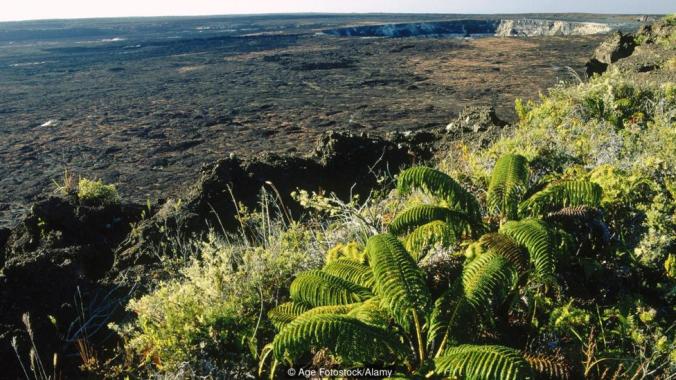
Kilauea, Hawaii Volcanoes National Park. Big Island, Hawaii. USA

Paul Banko bikes through lava flows and fern forests to get to work (Credit: Age Fotostock/Alamy)

Continuing the celebration of the National Parks Service (USA) centenary, thanks to the BBC for this notable story:

In 2002, the last pair of wild ‘alalā disappeared from the forest. Biologist Paul Banko is fighting to return this rare charismatic bird to the wild.

By Shannon Wianecki

Paul Banko has an enviable commute: he rides his bike through cooled lava flows and dense fern forests to reach his office at Hawai‘i Volcanoes National Park. He’s been climbing trees, poking around in nests and rescuing imperilled birds here since his teenage years. Continue reading

National Parks Valorizing Flora & Fauna

5616.jpg

Glad to see chefs in South America leading this innovative form of entrepreneurial conservation, and crossing country borders to do so:

Bolivian national park serving up sustainable ingredients for fine dining

Chefs among travellers proving there is demand for produce from Madidi – and helping communities understand commercial potential of their flora and fauna

Deep in Bolivia’s Madidi national park, Kamilla Seidler – the head chef of the Gustu restaurant in La Paz – was looking at a basket of cusí, the fruit of the babassu palm. An oil processed from the seeds is already marketed as a hair and skin product, but Seidler suspected it could have culinary potential, too.

“Bring me three kilos of it and in a month I can tell you all kinds of things you can do with it,” she told Agustina Aponte, who was representing a group of women from Yaguarú, one of 31 campesino and indigenous communities living within Madidi’s 1.89m hectares.

Continue reading

USA National Park, Feisty Leadership Outlier

Lake Superior Presque Isle Royale National Park Michigan in USA Great Lakes no not people nobody isolated low angle horizon

Lake Superior Presque Isle Royale National Park Michigan, USA, Great Lakes

We like the idea of a leader of a national park with a “feisty nature,” since sometimes that is exactly what it takes for conservation to succeed, either in the public or the private sector; so this profile from the BBC, in its ongoing appreciation of the National Parks Service’s 100th anniversary, is the kind of story we are especially happy to share:

…Isolated and iconoclastic, Isle Royale National Park is something of an anomaly among US National Parks, with its territory spread over 200 islands and outcroppings emerging from the frigid waters of Lake Superior, part-way between the US state of Michigan and Canada.

Isle Royale’s former Superintendent, Bill Fink (no relation to me), is an iconoclast himself, almost as if the qualities of the archipelago rubbed off on him during his four years running operations there from 1990 to 1993. Continue reading

National Park Service Service

lead_custom-7aa8c94bf10d83452c0788e0437655e91158e9c4-s1400-c85.jpg

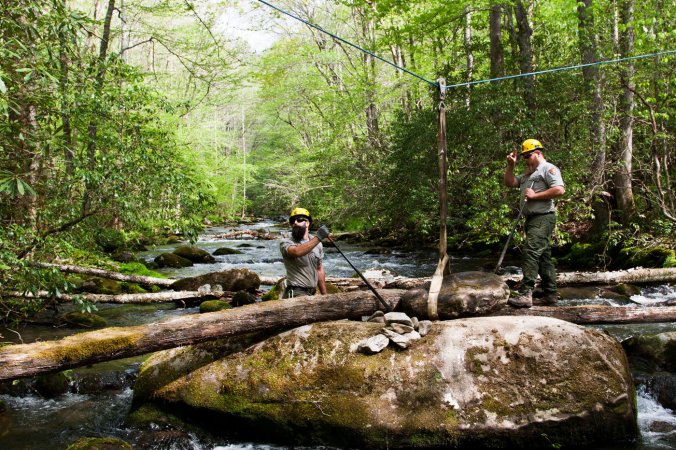
Brad Metler (left) and Mason Phillippi position a rock that will serve as an abutment for a small footbridge across the Oconaluftee River to an old cemetery in Great Smoky Mountains National Park. Both men work for the park’s trail crew, which maintains more than 800-miles of trail in the park. Nathan Rott/NPR

Thanks to National Public Radio (USA):

Life In The Park: Finding Meaning In Park Service Work

There’s a popular refrain among National Park Service employees, one that doubles as a reminder, of sorts, after a long, wearisome day: “We get paid in sunrises and sunsets.”

For many park employees, the pay is seasonal and not great. The hours are long. The question is usually the same (“Where’s the bathroom?”). And no matter how many pamphlets you pass out, instructions you give or “Attention!” signs you put up, people still wander off trails, carve their names in trees and get too close to the bears. Continue reading

Putting A Value On National Parks

Academic research publications tend to appear dry and out of reach to most non-academics. As someone who prepared for an academic research career, but who subsequently left that career, I am conflicted in what to say about that.

So I will say nothing about that. Instead, I say, read this (we rarely post without images, but the point of this post is purely a thought exercise, so I am keeping it strictly limited to words):

1. Summary This paper presents the first-ever comprehensive estimate of the total economic value of the National Parks Service. The estimate covers administered lands, waters, and historic sites as well as NPS programs, which include protection of natural landmarks and historic sites, partnerships with local communities, recreational activities and educational programs.

Our estimate of the total economic value to the American public is $92 billion. Continue reading