“Certified Transitional” Ingredients

An interior view of Clif Bar headquarters in Emeryville, California. Photo © GreenBiz Group

We put a lot of stock in organic farming, as well as eating and drinking. If companies do it right, sourcing organically can make a difference. So it’s uplifting to read that two companies we support by buying their delicious products, Clif Bar and Kashi, are making an effort to bolster the organic ingredient supply chain by leading a new category for crops produced by farmers who are in the three-year process of switching from conventional agriculture to an organic label; it’s called “Certified Transitional.” Lauren Hepler reports for GreenBiz:

Inside an airy, post-industrial space situated on the East side of the San Francisco Bay, several brightly colored mountain bikes and the sail of a kite surfing set hang from a lofted ceiling above some 350 employees sprawled across the 150,000-square-foot headquarters of Clif Bar.

Outside, a small organic gardening plot has been set up next to the free daycare center for the children of employees at the famously outdoorsy food company.

“We start ’em young,” jokes Dean Mayer, Clif Bar’s communications manager.

Continue reading

Five Minutes Related To Taste

Screen Shot 2016-04-27 at 7.54.16 PM

By NATALIA V. OSIPOVA. Image by Joshua Thomas for The New York Times.

Thanks to the New York Times for continuing to reach for our attention (click above to go to the video):

Eduardo Rivera, a Mexican-born farmer living in Minnesota, is striving to make organic vegetables accessible to the Latino community.


What The Holiday Wrought

071029_r16568c_p646-320

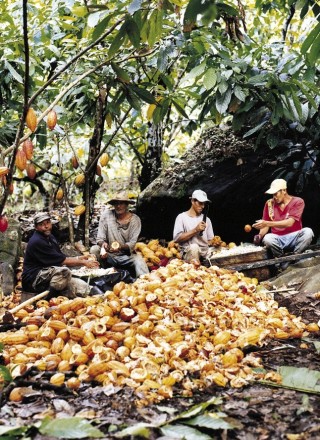
Cutting cacao pods on Diego Badaró’s farm, in Bahia. PHOTOGRAPHS BY JASON FLORIO

Because celebrating the Easter holiday is now so closely associated with chocolate, I presume, this article from the archives is suddenly front and center at one of our favorite websites. During our time in India I have learned from artisanal chocolatiers about Cadbury, among other big candy companies, who incentivized the removal of the high quality cacao that was growing here, in favor of more economical lower quality cacao. Bummer.

I remember first learning about chocolate from this article (click the image to the right to go to it), and it was worth the time to read it again based on my now-expanded interest in chocolate; also because it is a great story of entrepreneurship; and because Bill Buford is one of the greatest long-form writers on food:

Extreme Chocolate

The quest for the perfect bean.

BY BILL BUFORD

On July 7, 2001, Frederick Schilling and his girlfriend, Tracey Holderman, arrived in New York to attend the Fancy Food Show and launch Dagoba, an organic-chocolate company. Schilling had just turned thirty, Holderman was twenty-nine, and the show was the first entrepreneurial event of their lives. Dagoba had no employees and no orders. It had a lease for a ground-floor industrial space in Boulder, Colorado (the “factory”), and an investment of twenty thousand dollars (borrowed from Schilling’s mother and an uncle), which, after flights, a hotel, and a fee for the smallest possible booth, against a dark wall in the basement of the Jacob K. Javits Convention Center, was gone. It also had “launch products”—seven bars, including infusions of raspberry and mint—an amateurish jamboree, confected and poured into molds by a man who had never liked chocolate, hand-wrapped by a woman who rarely ate more than two ounces a year, and tested only by their Boulder friends and roommates, a scraggly crew of ski bums and folksingers. Dagoba was more bedroom than boardroom. In New York, that changed. Continue reading

The History of Organic Design

organic design

Carl Aubock II [Austrian, 1900-1957] Ashtray, Model No. 3597, 1948. Ashtray Model No. 4736, 1947. PHOTO: CoExist 

What about the world of design is organic? Literally, yes it involves environmental concerns, also the premise of using Nature as the basis for design. Design that grows – inside out – as the elements of Nature. CoExist delves into the history of organic design:

In the 1930s, the central belief of the organic movement was that furniture and architecture should reflect a harmony between people and nature. In furniture design, this meant natural materials like wood, and smooth, rounded forms. The bent plywood furniture of legendary French designer Jean Prouve came out of this period, as did Marcel Breuer and his laminated birch plywood armchair with a calfskin cushion. These designers prided themselves on being dedicated to their craft, and their pieces were painstakingly made and not easily reproduced. “They saw it as a unique work that refers to nature,” says Olshin. “These pieces tend to be unique one-of-a-kind studio work that’s not easily produced in mass quantities.”

Continue reading

India’s First Organic State

sikkim

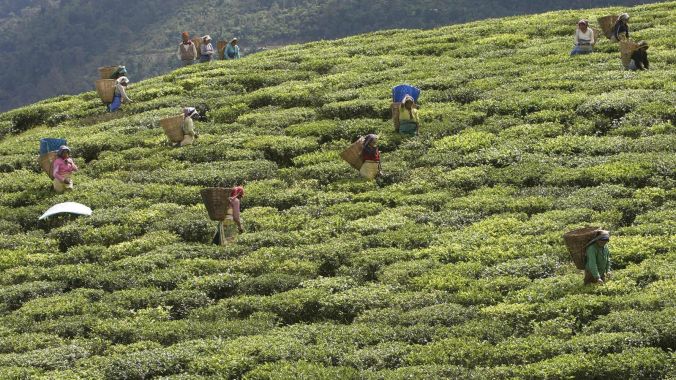
Tea plantations on the hillside. PHOTO: Reuters/ Rupak De Chowdhuri

The buzzword is organic. From grocery store shelves to textile designers to travel. At the center of this phenomenon is respect to the land, cognizance of the immense potential of living organisms, acknowledgement of a way of life that has restorative powers. Today, India hears that message loud and clear in the North-eastern hill state of Sikkim.

Continue reading

Redefining Disabilities Through Organic Farming

39-year-old Mahadev Charokar is vision impaired but has got amazing hearing, olfactory and tactical senses. He can differentiate between various denominations of currency notes, can walk up to his farms 1.5 km away and even lead a bullock-driven plough on fields. PHOTO: The Alternative

39-year-old Mahadev Charokar is vision impaired but has got amazing hearing, olfactory and tactical senses. He can differentiate between various denominations of currency notes, can walk up to his farms 1.5 km away and even lead a bullock-driven plough on fields. PHOTO: The Alternative

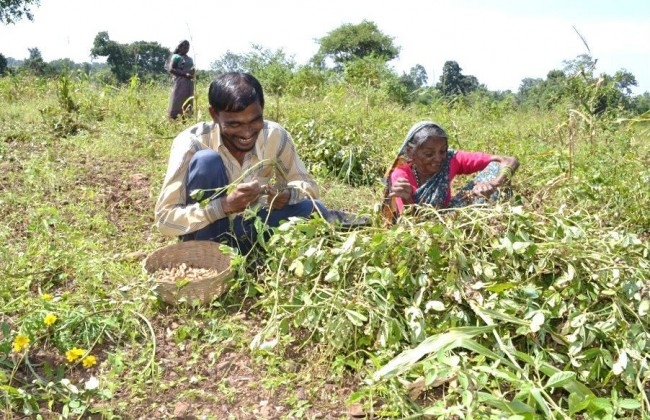
The adoption of the World Programme for Action concerning Disabled Persons in 1982 laid the foundation for a new approach to disability, with the goals of full participation and equalization of opportunities for persons with disabilities. The World Programme of Action has time and again reinforced the role of persons with disabilities as both agents and beneficiaries of development. The onus is on taking action so that persons with disability do not end up being referred to as a “vulnerable group” but rather, that disability itself will be considered as a cross-cutting theme in any emerging goals on sustainable development. In Madhya Pradesh, India, a unique experiment with organic farming is mainstreaming people with disabilities.

Continue reading

Food Packaging, Counterintuitive Proposition

broccoli

Staying informed about best practices to reduce your carbon and other footprints is one of our objectives on this blog. When we see something we had not known, and which seems worthy of consideration, we pass it along here. Thanks to Professor Tyler, and Conservation, for this one:

And when can packaging actually be good for the environment?

If you’re like me, you probably get a bit annoyed when you discover that an item you bought in the grocery store uses too much packaging. It seems like such a waste of plastic and cardboard. From an environmental perspective, wouldn’t it be better to conserve resources and use less packaging material?

Not necessarily—it depends on the type of food.

Continue reading

Notes from the Garden: Building a house or a vegetable cage?

photo 2

Measuring the length of our new monkey-protected area in the organic farm at Cardamom County

Building a 15 meter x 20 meter vegetable cage is no small feat. The last estimate we had was that it would cost about 4 lakhs, which is apparently the cost of a small house. A lakh is a unit in the South Asian numbering system equivalent to 100,000. So, is 400,000 rupees worth it for a vegetable cage? I think spending energy to get a smarter design would be more worth it.

With the help of Raxa Collective’s head engineer, it is very likely we will be able to lower that cost significantly. As I talked about in my post about quantifying farm-to-table, I think that with a combination of lowering the cost and then taking advantage of the monkey-protected area as vigorously as possible with efficient use of the space, it will be worth it. There are elements of farm-to-table that are not quantifiable but can be seen in the overall conservation story of supporting smart land-use practices.

At the end of the day, at least the food here is locally sourced mostly from the Cumbum vegetable market in Tamil Nadu. This market is only about 25 km away and the farmers in that market are relatively close. This is far better then the way most food is sourced in the United States.

In the United States, eating local is a challenge. Most agriculture in the states is for corn and soybeans, rather than vegetables. And “local” is difficult when the local environment has few green spaces left, let alone farmland. So even though we don’t have “monkey-challenges” to growing our food locally in the states, we have monocultures and rapid suburbanization keeping us farther and farther away from fresh food.  Continue reading

Notes from the Garden: Tropical Composting

10366090_10152547906815712_3231564213131287158_n

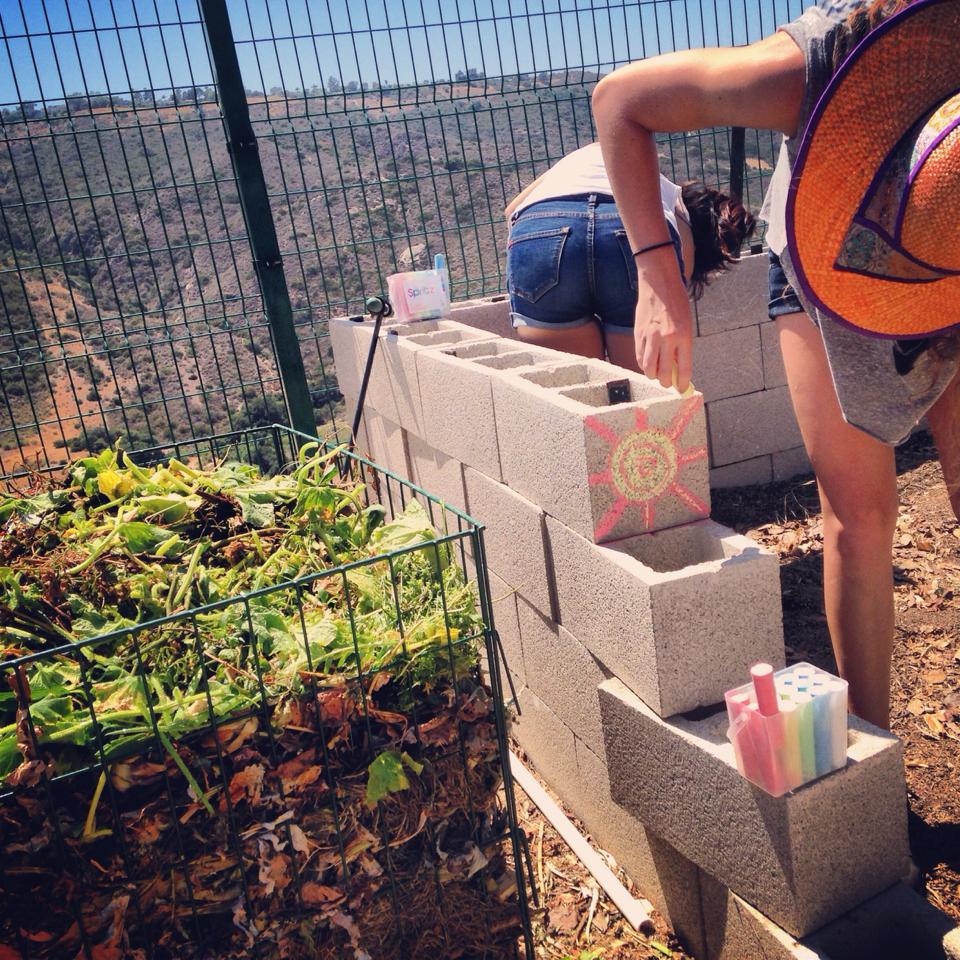
Soka Instructional Garden, Soka University of America. Photo credit: Leia Marasovich

Composting where I live in a sunny Southern California desert climate is very different than the composting we have done since I have been here in tropical Thekkady, India. Here are some pictures of our composting at my university garden I work at. We do ‘hot composting’ above ground. At Cardamom County they’ve been doing a type of vermicomposting, or worm composting. As a gardener, I have always considered earthworms to be a little magical. When there are worms in our garden beds, we always take it as a good omen that our soil is healthy, and healthy soil is the only path to healthy plants. They speed up the decomposition process and essentially create compost gold. They add really beneficial microorganisms to the soil and their castings, or poop, is extremely nutrient rich with the essential ingredients of good soil: nitrogen, phosphorous, and potassium! Where I work in the Soka Instructional Garden (SIG), we make compost tea from the worm castings, and any time a crop is struggling, we can usually nurse it back to life within weeks of adding worm compost tea.

So here, I was happy to see, not only are the worms already dancing happily in the soil, but they have a thriving worm composting bed.There is a hole dug in the ground, maybe 6 feet deep and a good 10 feet across. They fill the hole with any garden waste, add several wheelbarrows of dirt dug up from the poultry area, which is already rich in nitrogen from their poop (therefore speeding up the decomposition process and helping the pile heat up) and then just let the worms feast. Continue reading

UK Organics Back In Black

The nation's appetite for organic food is growing. Photograph: Nick Turner/Alamy

The nation’s appetite for organic food is growing. Photograph: Nick Turner/Alamy

Thanks to the Guardian‘s ongoing coverage of environmental issues, this story about sales of organics in their home market:

Sales of organic food and drink rose by 2.8% last year after successive years of decline, fuelled by strong growth among independent retailers and healthy online sales. Continue reading

Organic Farming At Cardamom County

Organic Farming

Organic Farming

At Cardamom County we believe in providing guests with the best experience possible, and an eco-friendly one at that. We not only provide this during their stay with things like rich flora on property and solar water heaters, but also through our food: with fresh eggs from our farms and a variety of greens for the most crisp and refreshing salads. Here are a few pictures of the farm. Soon, this fresh produce will be used in many of our upcoming properties. Continue reading

Early Adopters Of Agricultural Ethics

In conversation with Milo recently, several of us concluded that we might soon expect a series of illuminating posts from him on the topic of alternative agriculture, much as we have had from him over the last few years illuminating and visually arresting series of posts on dragonflies, mushrooms and photography itself.  So, we share the article below from the Science section of the New York Times this week, in anticipation of those posts on a topic of great interest to Raxa Collective:

FARM-slide-V3OF-thumbStandard-v2The Elders of Organic Farming

By CAROL POGASH

For nearly a week, two dozen pioneers of sustainable agriculture from the United States and Canada shared decades’ worth of stories, secrets and anxieties.

Cardamom Harvesting At Cardamom County

Cardamom Harvesting

Cardamom Harvesting

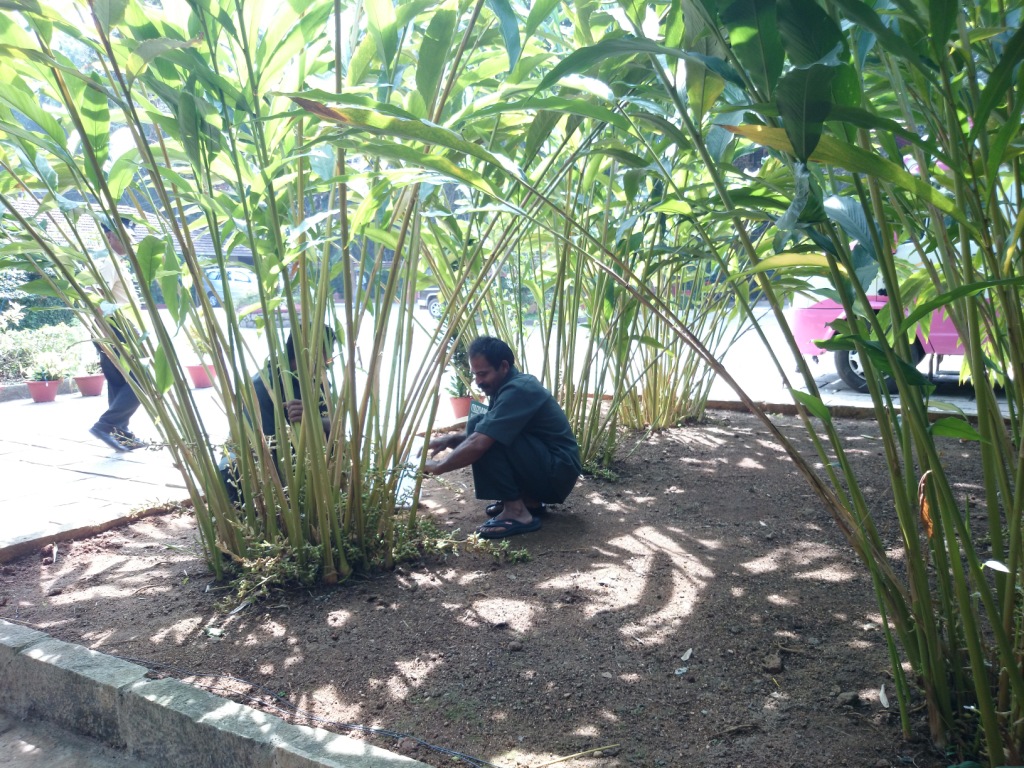
At Cardamom County we believe in organically grown vegetables and spices to provide our guests with the best produce that can be used to make the most sumptuous meals. We grow organic vegetables, fruits, spices and even eggs from our own farm. These pictures show our cardamom being harvested by staff members. Continue reading

Questions About Urban Agriculture

The University of Washington’s magazine, Conservation, has a set of provocative new articles in the food-focused current issue, including this one:

The cultural—and agricultural—quest to reclaim and reform the food system appeals primarily to relatively privileged, mostly white urbanites. Committed to the pulse of city life, these advocates generally view the countryside as a place for weekend getaways. Still, they want to be close to the point of food production and in turn are bringing agriculture into the city, one vacant lot at a time, to close the gap between farm and fork. Continue reading

Farm Fresh From Ghana

Accra Green Market Photo Courtesy of The Guardian

Accra Green Market
Photo Courtesy of The Guardian

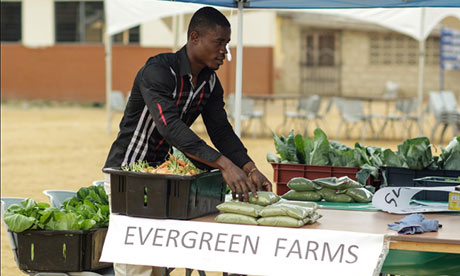
Recently Ghana had its first ever farmer’s market in its capital of Accra, featuring locally grown, sustainable, and organic produce. This is a big step for the organic farmers in the area to expose their products to the local people. According to an article in The Guardian,

The only space we (the farmers) usually get to market our products are at the bazaars of international schools, where we sell to a lot of expats, but we need more markets like this – the best feedback we have had for our products is from Ghanaians.

Continue reading

Is An Organic Diet Better?

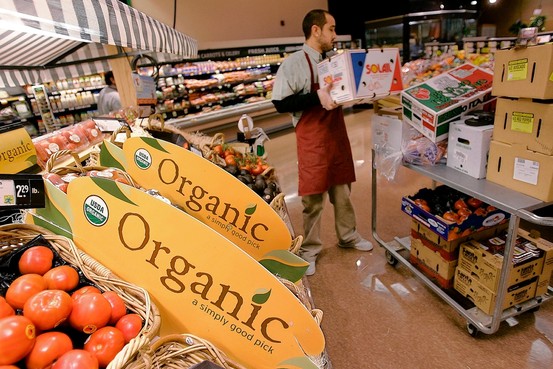
Associated Press photo. Organic foods have made big inroads in supermarkets like this Hannaford store in Quincy, Mass.

Associated Press photo. Organic foods have made big inroads in supermarkets like this Hannaford store in Quincy, Mass.

This question is asked in relation to the diet of a particular nation, but the various answers provided by these experts could apply anywhere:

Sales of organic food have been rising steadily over the past decade, reaching almost $30 billion in 2011, or 4.2% of all U.S. food and beverage sales, according to the Organic Trade Association.

Many of the consumers who purchase these products say paying more for organic produce, milk and meat is a trade-off they are willing to make in order to avoid exposure to chemical pesticides and fertilizers and milk from cows given bovine growth hormone. But other families—especially those whose food budgets may be more limited—wonder if organic food is really worth its hefty price tag.

So far, researchers haven’t been able to provide them with a definitive answer. Continue reading

WED 2013 : Chef Nitin Padwal offers a case study in food waste reduction

WED 2013 - Raxa Collective

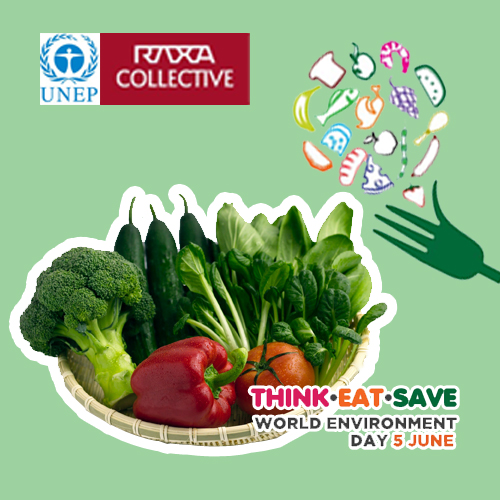
On June 5, we’ll celebrate World Environment Day. This year UNEP focuses on the theme Food waste/Food Loss. At Raxa Collective we’ll be carrying out actions and sharing experience and ideas. Come and join us with your ideas and tips to preserve foods, preserve resources and preserve our planet.

Nitinbanner

Here in India, food waste reduction is considered as mere common sense and rarely even mentioned, that’s why chef Nitin Padwal taking the time to explain his work for a restaurant kitchen with “0% sent to landfill” is precious and we’ll also deliver a case study on our own work here at AllSpice in Cardamom County. Nitin Padwal  used to work at the Taj Hotel in Nashik and the Renaissance Marriot in Mumbai before  he became Head Chef at Petrichor at The Cavendish London. Since his arrival there in 2010, Nitin Padwal championed the idea of a sustainable restaurant, and has made substantial improvements in that area. Watch the interview… Continue reading

Why Organic?

Click the banner above for the press release from Stanford University’s Center for Health Policy on the results of a new meta-analysis published in the Annals of Internal Medicine:

They did not find strong evidence that organic foods are more nutritious or carry fewer health risks than conventional alternatives, though consumption of organic foods can reduce the risk of pesticide exposure. Continue reading

Big Organic

Stephen McGee for The New York Times The founder of Eden Foods, Michael J. Potter, among the organic stock at the Eden headquarters in Clinton, Mich.

Click on the image above to go to the story in The New York Times, which continues that paper’s journalistic investigation of the evolution of organic farming and its byproducts:

Michael J. Potter is one of the last little big men left in organic food.

Continue reading

Am I A WWOOFER?

WWOOF, the network of World Wide Opportunities on Organic Farms, helps link volunteers with organic farmers globally. Although their website is quite navigable and clear for those who want to learn more, I’ll briefly describe some aspects here.

The number of little organic family farms around the world is immense, and the amount of them located in beautiful natural areas is, as one might imagine, also quite staggering. Just think of the expansiveness of the French countryside, or the warm welcomes of Latin American campesinos, and project such elements (and dozens of other great characteristics) on hundreds of thousands of farms around the world that could use a helping hand. WWOOF helps put people interested in growing organic crops and farmers who like to teach or need some additional assistance together; especially those of both groups who want to experience international travel, practice another language in an immersive setting, or learn from other cultures directly. Volunteers bring their skills and labor to a farm, and the host family provides housing and food in return.

Continue reading