The authors of a sweeping United Nations report on species in danger of extinction faced the same question I often do in reporting: Why should anyone care about the loss of nature?
On Monday, I wrote about a sweeping new United Nations report warning that humans were destroying Earth’s natural ecosystems at an “unprecedented” pace.
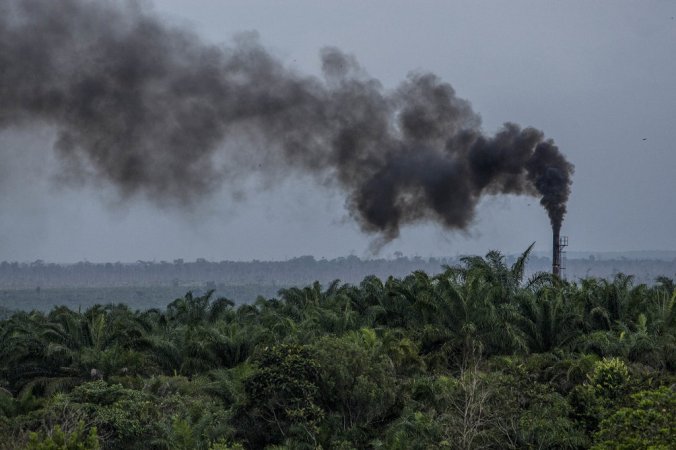
The findings were sobering: Millions of acres of wetlands and rain forests are being cleared away. As many as one million plant and animal species are now threatened with extinction because of farming, poaching, pollution, the transport of invasive species and, increasingly, global warming. Almost everywhere you look, nature is vanishing before our eyes.
But the report, which was written for world leaders and policymakers, also wrestled with some big questions: Why should anyone care about the loss of nature? Why should countries take drastic steps, as the report urges, to halt the decline in biodiversity? Continue reading →
People easily forget “last of” stories about individual species, but the loss of nature also threatens our existence.
The first documented extinction of 2019 occurred on New Year’s Day, with the death of a Hawaiian tree snail named George. George, who was about an inch long, had a grayish body, grayish tentacles, and a conical shell striped in beige and brown. He was born in captivity, in Honolulu, and had spent his unassuming life oozing around his terrarium, consuming fungi. Researchers with Hawaii’s forestry department had tried to find a partner for him—George was a hermaphrodite, but he needed a mate in order to reproduce—and when they couldn’t they concluded that he was the last of his kind, Achatinella apexfulva. A few days after he went, presumably gently, into that good night, the department posted a eulogy under the heading “farewell to a beloved snail . . . and a species.” “Unfortunately, he is survived by none,” it observed. Continue reading →
First I had read the Guardian interview with the author, which was good, and made watching the above worthwhile. But when David Wallace-Wells conducts such an interview, it is something altogether more compelling. He knows how to word a title alarmingly. My reading list just got 320 pages longer:
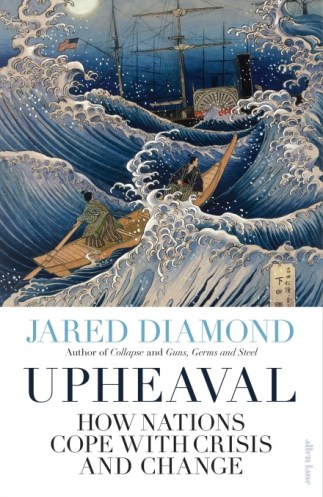
Jared Diamond’s new book, Upheaval, addresses itself to a world very obviously in crisis, and tries to lift some lessons for what do about it from the distant past. In that way, it’s not so different from all the other books that have made the UCLA geographer a sort of don of “big think” history and a perennial favorite of people like Steven Pinker and Bill Gates.
Diamond’s life as a public intellectual began with his 1991 book The Third Chimpanzee, a work of evolutionary psychology, but really took off with Guns, Germs, and Steel, published in 1997, which offered a three-word explanation for the rise of the West to the status of global empire in the modern era — and, even published right at the “end of history,” got no little flak from critics who saw in it both geographic determinism and what they might today call a whiff of Western supremacy. In 2005, he published Collapse, a series of case studies about what made ancient civilizations fall into disarray in the face of environmental challenges — a doorstopper that has become a kind of touchstone work for understanding the crisis of climate change today. In The World Until Yesterday, published in 2012, he asked what we can learn from traditional societies; and in his new book, he asks what we can learn from ones more like our own that have faced upheaval but nevertheless endured.
I obviously want to talk about your new book, but I thought it might be useful to start by asking you how you saw it in the context of your life’s work.
Sure. Here’s my answer, and I think you’ll find it banal and more disappointing than what you might have hoped for. Continue reading →
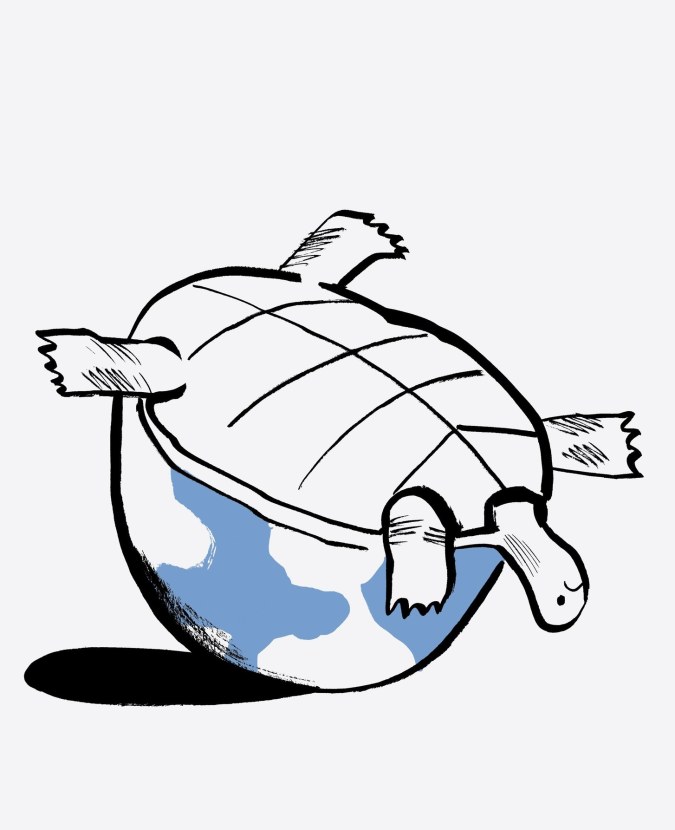
“The problem with climate change is that it’s a timed test,” the writer Bill McKibben says. “If you don’t solve it fast, then you don’t solve it.” Photograph by S. E. Arndt / Picture Press / Redux
I have been reading the reviews, and interviews with the authors of this and two other important recent books covering similar territory. I have stopped worrying about overkill, because this is overkill territory. You cannot get too much perspective on this; the worry is too little, too late:
While the political tide could be turning on climate change, both writers worry that it is too late.
After years of languishing far down the list of voters’ priorities—for Democrats and even more so for Republicans—the desire for action on climate change has brought this issue to the top of many voters’ concerns, according to a CNN poll. Now Presidential candidates are competing to establish themselves as leaders on the issue, while children are making headlines for striking from school.
Bill McKibben, whose book “The End of Nature” brought the idea of global warming to public consciousness thirty years ago, tells David Remnick that the accumulation of weather catastrophes—droughts, wildfires, floods—may have finally made an impact. McKibben joined Elizabeth Kolbert in a conversation about the U.N.’s new report on species extinction. It finds that a million species could become extinct within a few decades, and that human life itself may be imperilled. While the political tide could be turning, both worry that it is too late. Continue reading →
I have recommended episodes of the Longform Podcast plenty of times, because its guests invariably help us appreciate clear explanation, especially for the better understanding of danger. Today’s recommendation is in the spirit of that last consideration, to put it mildly. But it is also a very personal explanation of how he came to this task, and how it sits with him.
When we first became aware of Global Big Day it was just a week in advance of the first such event, and we scrambled to have the properties we managed in India do their part. A total of 253 countries participated that first year and at first glance it would seem dispiriting to realize that many fewer countries have participated since then: in 2016 the count dropped to 159; then in 2017 there were 163; last year there were 171; and this year 168 (recorded so far).
However, by other metrics spirits are easily lifted. I have focused only on one such metric, which is how many checklists were completed. This year’s totals are not in yet, but if you tally each prior year, the number of participants in this event has increased dramatically year on year. Last year there were nearly 30,000 more checklists than there were in 2015. Of course having more countries participate would be better. But having more people participating in all those other countries is a very good sign indeed.
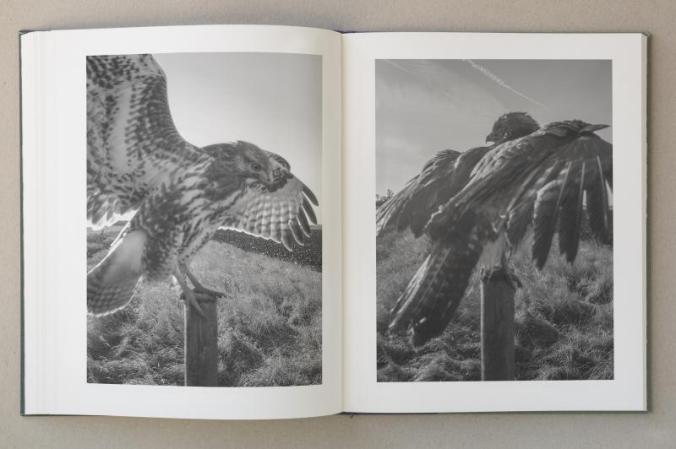
Thanks to Karl Ove Knausgaard, whose books I have read about but never read, this book above came to my attention with the photo below featured under the review’s title on the New Yorker website.
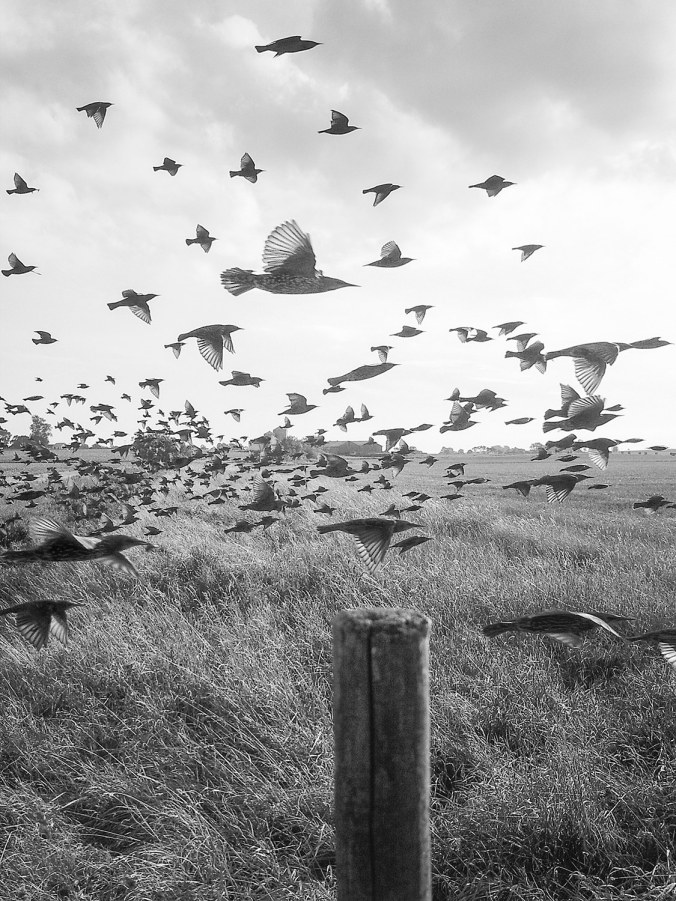
The photographs in Stephen Gill’s “The Pillar” encounter birds on their own terms.
A pillar knocked into the ground next to a stream in a flat, open landscape, trees and houses visible in the distance, beneath a vast sky. That is the backdrop to all the photographs in Stephen Gill’s book “The Pillar.” We see the same landscape in spring and summer, in autumn and winter, we see it in sunshine and rain, in snow and wind. Yet there is not the slightest bit of monotony about these pictures, for in almost every one there is a bird, and each of these birds opens up a unique moment in time. We see something that has never happened before and will never happen again. The first time I looked at the photographs, I was shaken. I’d never seen birds in this way before, as if on their own terms, as independent creatures with independent lives.
The review got me to seek out the book to see what it looks like; the picture at the very top and the ones below are what I found:
I see from these pages what the reviewer describes, and to the right is what appears to be the cover of the book:
What was shocking about it was that I already felt familiar with birds, as I imagine most people do, since we can hardly go anywhere without being surrounded by them in one way or another.Here, where I’m sitting, in London, if I turn my head and look out of the glass doors, two, perhaps three seconds will go by before a bird passes over the trees and rooftops. Continue reading →
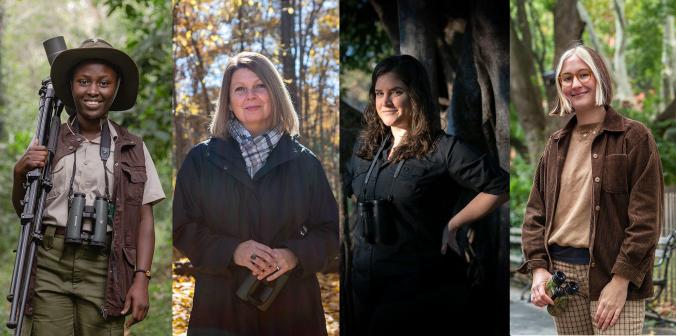
For decades female birders have been the silent majority. Now they’re starting their own movements to transform a privileged culture.
On the surface, birding might seem like neutral ground—an activity that any curious, nature-loving person can enjoy, regardless of age or gender. Go on a hike with your local ornithological club and at least half the attendees will be women. Circle the marsh with your binoculars and you’ll probably see a woman doing the same.
But female birders don’t always feel comfortable in the field, even with the rising awareness around #MeToo. Many of us keep on despite frequent put-downs and hostility, enduring dismissive comments about our knowledge and in the worst cases, sexual harassment. I’ve had men touch my hips to correct my perfectly fine birding stance. A ranger at a national wildlife refuge winked and told me about his “big, loaded gun.” My friends have been propositioned in parks and stalked by drivers along country roads. Not even a 16-year-old can bird in peace without commenters attacking her abilities and life list.
Like most matters of importance, women have been integral to birding from the get-go. Female ornithologists drew attention to avifauna in the late 1800s, and suffragists helped the movement take off in the early 1900s. Today, 42 percent of U.S. birders identify as women. Personally, female birders have run my world ever since I picked up a field guide in college. My ornithology professor was a woman. My boss at Audubon is a woman, as are most of my colleagues throughout the office. My birding circle is mainly members of the Feminist Bird Club.
And yet men have the loudest voices and the most power in the industry. The closer you get to the top of the birding, conservation, and academic ranks, the more the gender balance tips. At Audubon, for instance, the executive staff is 75 percent male, and the organization has never had a female president in its 114 years. This pattern persists industry wide. Men hold the highest positions at the American Birding Association, the Cornell Lab of Ornithology, and the American Bird Conservancy. They dominate bookshelves, festivals, competitions, and gear and travel ads. They build their reputations and livelihoods around the practice and reap the greatest profits…
And the feature immediately after continues the theme with the first of five substories:
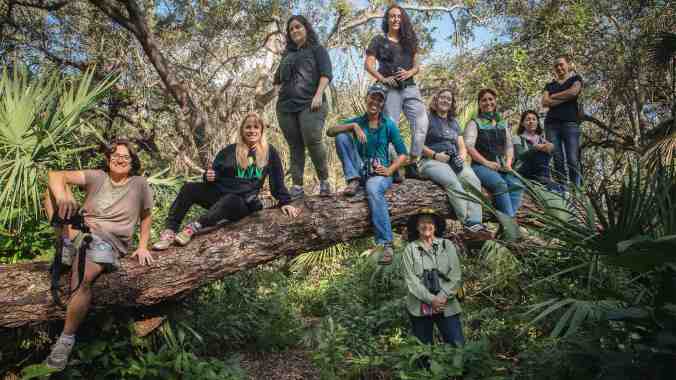
The Phoebes, a female-centric birding group formed by members of the Tropical Audubon Society. Photo: Jayme Gershen
Birding for Solidarity: The Phoebes
Eight women decided they had enough of the sport’s competitiveness, so they created a community to lift their sisters up. Continue reading →
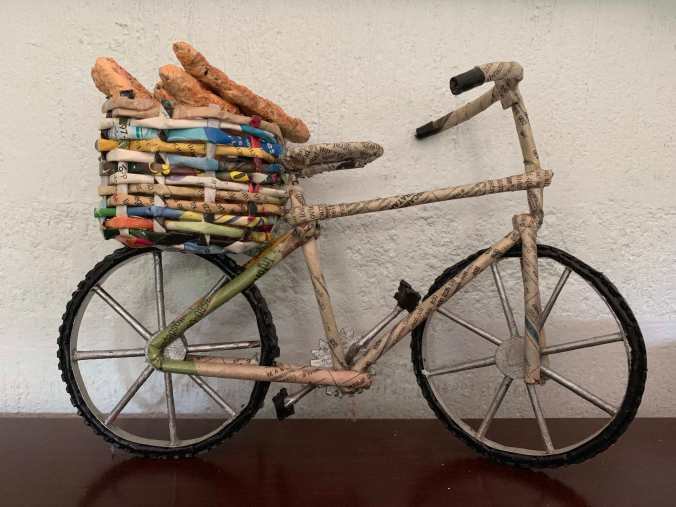
A few years ago, as we were completing work on the final hotel of our work plan in India, we had visitors from Costa Rica. They brought this little thing as a gift. Bicycle as ambassador. Knowing that we had been developing relationships with artisan groups in India, this was a small token of what had been happening in Costa Rica in the many years we had been away. Using recycled materials, one group of artisans were designing and crafting mementos like this for people to take home with them after their vacation in Costa Rica.
During my doctorate years I had mementos from one place in my office. In my office now I have mementos from many different places to inspire the work we will do next. This little thing is in a prized place.
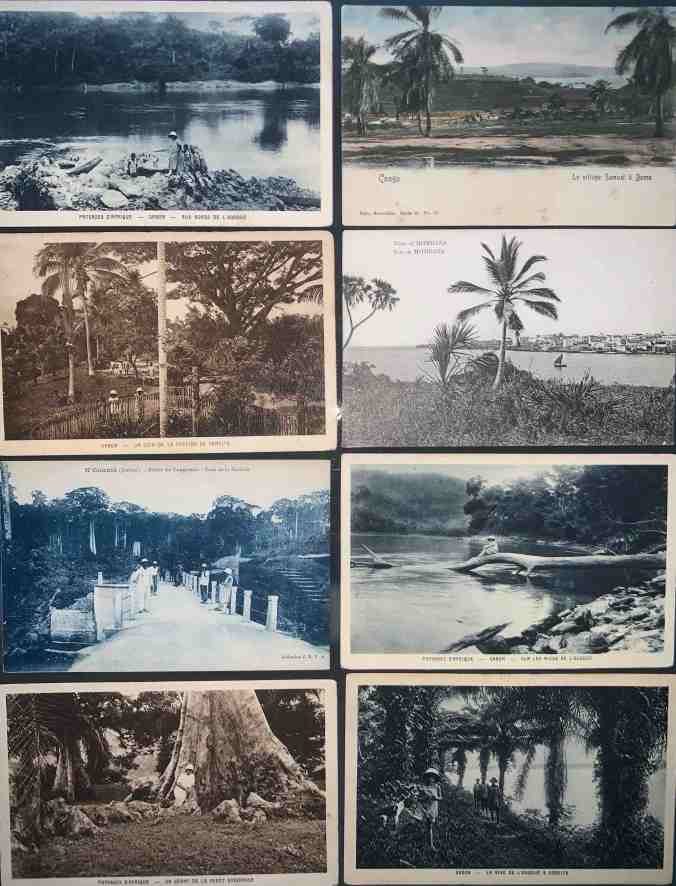
When we lived in Paris, weekend grocery errands inevitably led us through informal markets where people sold all kinds of old things. One favorite distraction was the vendor of postcards. There was at least one person at any given marketplace who had cards like the ones above, mostly from early 1900s, some going back to the previous century. Usually they were in shoe boxes and never were they organized in any way any of us could understand. Most but not all were from French travelers sending mementos back to people in France. In just five minutes flipping through the cards we could be transported.
What made this a favorite distraction was as much professional as anything else. Having spent several years studying a place from which countless postcards had been sent starting in the 1870s, I developed an affinity for the choices made by illustrators and photographers in different eras about how to represent a place.
There is also a personal dimension to this affinity, which is that my father was a photographer who in addition to a portrait studio had a postcard business. From 1972 until 1978 if you sent a postcard from just about anywhere in the Finger Lakes region of New York state, it was probably one of his postcards, which means one of his photographs. Starting when I was 10 years old until I was 16 I would accompany him on road trips through that region when he was restocking postcards at hotels and other venues where they were sold. That might explain my favorite distraction in Paris.
Before moving to Costa Rica in the mid-1990s I was working for a few years at a desk with images like the one above taped to the walls around the desk, and postcards from the previous century, like the one to the right, scattered about for inspiration.
On the desk were drafts of a dissertation whose summary, on page 131, states: “…the results of the first hypothesis suggest that lodging firms in a tourism destination, such as Niagara Falls, should be directly involved with the strengthening and support of the institutional environment in which they operate.”
In other words, if you benefit from nature for your livelihood one of your best investments will be in building and strengthening institutions that protect nature. It may now sound like stating the obvious, but Nobel laureate economists made claims to the contrary that were treated as gospel truth twenty five years ago.
So 132 pages, not including bibliography, were used to make the point. Ever since, members of our team have wondered whether it could be summed up more simply. Meeting recently with graphic designers to discuss how to communicate more effectively about Organikos, we think now maybe the answer is yes.
When we saw this hand and tree side by side in that meeting, we had a reaction that was related to what the graphic designer intended, but not exactly.
Whatever his precise intent was, someone’s mouth opened and blurted out: Yes! Nature is in our hands. And so we have come upon a way to say a little more simply what Organikos means in addition to what Organikos does.
The Atlantic’s website helps me ensure that I do not miss any intriguing episodes of Gastropod, which I listened to more frequently before we moved back to Costa Rica. Especially when we were in the process of developing 51, a restaurant in the colonial spice-trading district of Fort Cochin, in southwest India. This current headline in the Atlantic, which took me back to those years when delicious misunderstandings were the daily fare, was one I had to surrender to:
…According to Lizzie Collingham, food historian and author of Curry: A Tale of Cooks and Conquerors, to trace the origins of curry, we need to go back to when the Portuguese first set up shop in Goa, in the early 1500s. “And they’d say, Oooh, what are you eating?” said Collingham, “And the Indians replied using a word like khari or caril.” At the time, Collingham explained, those words likely referred to a particular spice blend, as well as the finished dish it was used in; the same words are still in use, but they now mean sauce or gravy. Today, that’s Raghavan Iyer’s definition: he authored a doorstop of a cookbook called 660 Curries, and he uses “curry” to refer to “anything that has a sauce or gravy—it can be with or without spices.”…
Summer Rayne Oakes, as a name, is likely to stick in my memory. She was a student at Cornell when I was teaching there, but until now I did not know of her. Thanks to this feature on one of the websites I scan regularly for stories relevant to this platform, I found my way to her website, so now I know a little bit about who she is. I like the causes she supports, and that is enough for today’s post. But the interior greenery throughout the 6+ minutes of video above is refreshing, and that is the real purpose for sharing it.
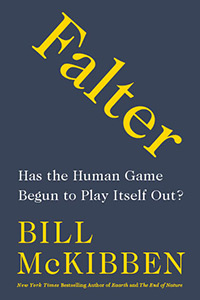
My morning hike yesterday was accompanied by Bill McKibben. We have featured him so frequently in these pages that I was surprised that I had not already known he had a new book. So I found what I could read about the book, starting with Jared Diamond’s review (snippet below), and a book talk by the author himself (above).
A floating island of solar panels in Santiago, Chile.CreditEsteban Felix/Associated Press
Solar panels and nonviolent movements are the two of the causes for hope that McKibben mentions in his podcast interview, and in the book talk in Philadelphia, and according to Diamond’s review those are substantive but not sufficient. Hope and fear are both motivators and getting the balance right is the most important task in perhaps the entire history of mankind. I highlight only this part of the review because it is an echo of what Nathaniel Rich says in an interview about his own book:
…McKibben’s book is much more about grounds for fear, which take up some 18 chapters, than about grounds for hope, which take up five. Fear will motivate some people who are currently undecided, and increase the motivation of others already convinced. But in my experience most people need a strong dose of hope to be spurred to action. Why waste effort on a hopeless cause? One group that has learned this lesson is the cancer lobby, which succeeds at raising funds for research by stressing cures that may be just around the corner more than the grim statistics of the disease’s ongoing toll.
In fact, there are reasons for hope besides those McKibben discusses. One is the change in policies of some powerful multinational corporations. I can already hear the horrified screams of many of my environmentalist friends as I say this. Continue reading →
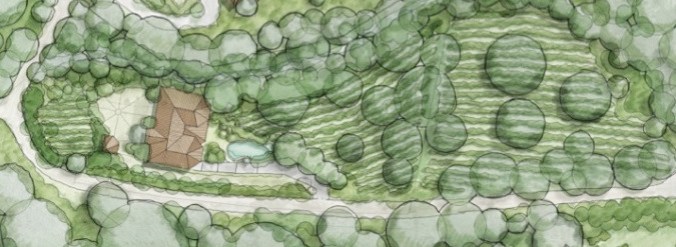
The image above shows where coffee can be planted on land that currently has grass cover. For most of the last century that land had high grade arabica coffee growing on it, but two decades ago the coffee was removed. The residential value of the land was seen to be greater than the agricultural value, and a large plantation was subdivided into parcels between 3 and 10 acres.
That was then, this is now. Coffee is more valuable than grass. And the value of coffee that is as world class as what Seth planted at Xandari and also resistant to the challenges brought on by climate change is even greater. The trees that will be planted to shade the coffee will be of greater value–to birds as well as to the coffee–than the view of undulating hillside. The image above is a first step in the planning process of this restoration initiative. Organikos will start selling coffee in August, and the proceeds of those sales will pay for the restoration and ongoing improvements of this lot. That is an example of what we mean by 100% Forward.
Drawing on advances in social science, evolutionary biology, genetics, neuroscience, and network science, “Blueprint” attempts to show how and why evolution has placed us on a humane path — and how we are united by our common humanity.
For too long, the author contends, scientists have focused on the dark side of our biological heritage: our capacity for aggression, cruelty, prejudice, and self-interest. But natural selection has given us a suite of beneficial social features, including our capacity for love, friendship, cooperation, and learning. Beneath all our inventions — our tools, farms, machines, cities, nations — we carry with us innate proclivities to make a good society.
There are not many reviews available yet, but here is one:
A social scientist looks at the good and bad sides of human character, arguing that we are evolutionarily inclined “to make a particular kind of society—a good one full of love, friendship, cooperation, and learning.”…
…A refreshingly optimistic view of our kind.
If, like me, you had previously only known of him due to this incident, the blurb and the review are catchy enough to warrant further attention. So I found an interview he recently gave (on a podcast I would not normally have sought out, but it was all I could find) and listening to him talk about it has made me want to find this book and have a read.
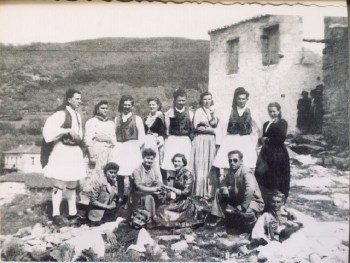
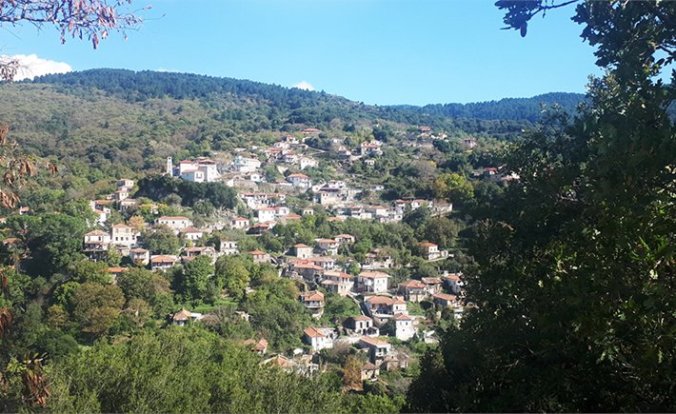
I have shared the photo above on this platform once before. I wrote a series of reflections on the village where that photo was taken, and today I share a riff on all that. That photo was enlarged to take up an entire wall of our office in India, as a reminder to me each day of the purpose behind what I was doing. Our company’s mission includes education. It is mostly about conservation. That building, which I photographed 10+ years ago, after it had recently been abandoned, has been a reminder for me that one of these days I am determined to share whatever I can from our work in that village.
This photo was taken of Bangor Vamvakou immigrants in 1949 as they returned to their village. Top left is Nikos Niarchos, a relative of the Greek shipping tycoon. From Top Left, the others are: Vasso Anglesi; George Limberogiannis; Eleni Markos; Panayiotis Servetis; Vasso Kokini; Katsilis Demetrios and Anna Leakou. Middle Row, from Left: Pota Anglesi; Angeliki Skoufi; Eleni Hatzi and Panos Dialialis. At bottom, Left to Right, are Yiannis Limberogiannis and Harris Belbekis.
Thanks to an online publication I follow for news from Greece I found this story that helps explain why I thought of the photo above just now. It gives me both hope and tangible ideas of what might be done. It starts with a group of immigrants in Bangor, Maine whose life trajectory was like that of so many others from the Lakonia region of Greece, including my mother. And the story leads back to a foundation that has been referenced once before in our pages, but this time the foundation’s work hits closer to home:
The saying goes that it takes a village to raise a young person. But sometimes it takes young people to raise up a village, and this is exactly what’s happening in the Laconian village of Vamvakou.
Vamvakou is a short drive from Vourthonia, my mother’s village. So this video below strikes a chord.
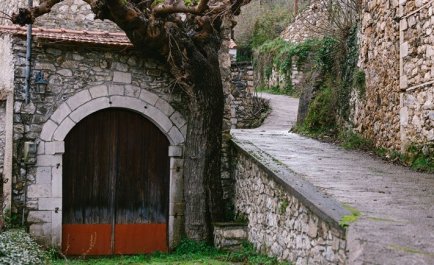
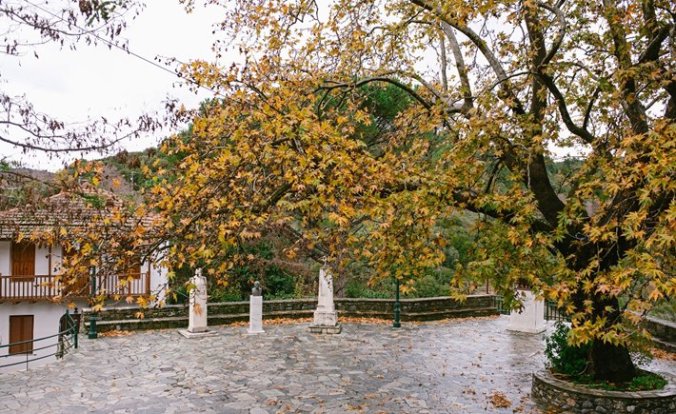
Some of the images from Mamvakou could as easily have been taken in Vourthonia.
Can a once-thriving mountain village, today home to only nine inhabitants, come to life again?
Can it fill with visitors, permanent inhabitants, and model businesses while retaining its traditional character? This is the wager laid by a group of five young people who want to revitalize the village of Vamvakou, 900 meters up the slopes of Mount Parnon in the southeastern Peloponnese.
Source: SNF
To realize this ambitious project, the five friends, Haris Vasilakos, Anargyros Verdilos, Eleni Mami, Tasos Markos, and Panagiotis Soulimiotis established the “Vamvakou Revival” Social Cooperative Enterprise and decided to move to the village. Continue reading →
Authentica, mentioned a couple of times prior to the current series of posts, has the character of a startup but its goal is the opposite of disruption.
A major disruption already happened, and if one of the antonyms of disrupt is organize, then that is what we are doing. Authentica is part of a nascent movement in Costa Rica to provide market opportunities to artisans, farmers, food producers and others who design, craft, grow and cook things that are essentially Costa Rican. The disruption they faced is not the story we want to tell. The reversal of that disruption is the story. One example is Organikos. Continue reading →
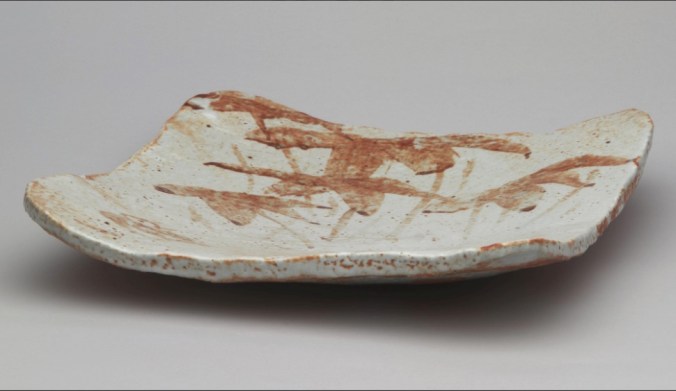
Kitaoji Rosanjin. Square platter with rounded edges. 1954
In preparing to exhibit things we believe represent Costa Rica well enough that we would want travelers to take some such things home with them, MOMA’s The Value of Good Design provides a valuable pause. The image above, from the MOMA show, is an example of good design of a tactile thing. As the video below shows that is what good design means in MOMA’s estimation, namely things that you want to look at as much as you want to touch or use.
Costa Rica, and its visitors, would benefit from an exhibition of things that are useful, inspiring, and/or in good taste. Our contribution to this effort has focused on coffee, so we are inclined to think about taste in the gustatory sense, as in what flavors and aromas please. This type of pleasure is more ephemeral than something you can look at and touch over and over.
Another sense of good taste, which also has value: we do not consider it in good taste to sell things in Costa Rica that are foreign-made replicas of Costa Rican traditional arts and crafts. And that has been very much on our mind. It is a challenge we have signed on to. The MoMA exhibition inspired Nikil Saval to share a few thoughts about How “Good Design” Failed Us and they strike me as relevant to our own current challenge to be tasteful:
In 1958, the American radical sociologist C. Wright Mills was invited to address the International Design Conference, in Aspen. The lecture he gave, “Man in the Middle: The Designer,” criticized a number of its audience members for being willing dupes in the grand illusion that was consumer society. Continue reading →
Last week, we visited producers of various arts and crafts on the eastern side of Costa Rica. Our first stop was in the Central Valley, just before crossing over to the Caribbean slope, in a coffee shop. There, a man showed us his ceramic work, which we had seen one example of previously. All of it was beautiful, but the one below was the one we chose to purchase as a sample. And here it is, in the morning sun.
It brought to mind the old documentary above, which anyone in the USA public school system might have seen in their 7th grade art class. In less than half an hour, that film clinically explains and demonstrates visually what goes into making something the traditional way. This man, here and now in Costa Rica, is hand-crafting these coffee makers. The material is organic, as is the design, which pays tribute to Costa Rican tradition, as well as to pre-Colombian indigenous tradition. The coffee seems to taste the better for it.



 When we first became aware of


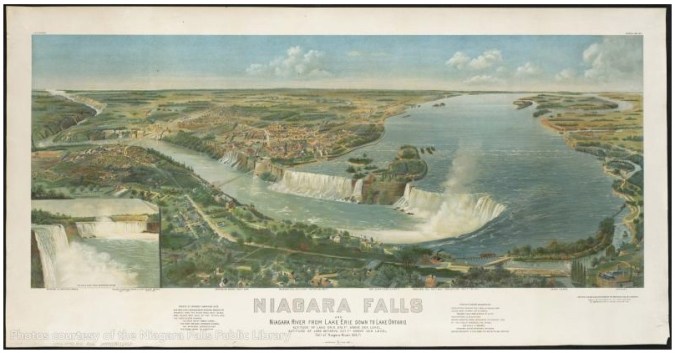
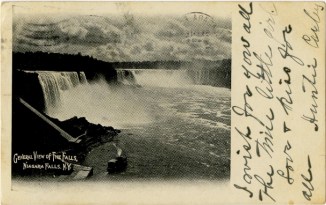 Before moving to Costa Rica in the mid-1990s
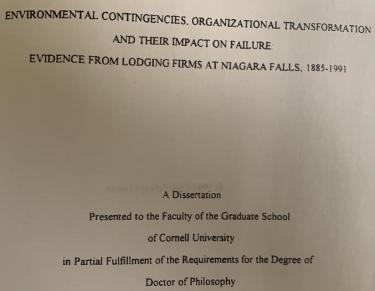 On the desk were drafts of a dissertation whose summary, on page 131, states: “…the results of the first hypothesis suggest that lodging firms in a tourism destination, such as Niagara Falls, should be directly involved with the strengthening and support of the institutional environment in which they operate.”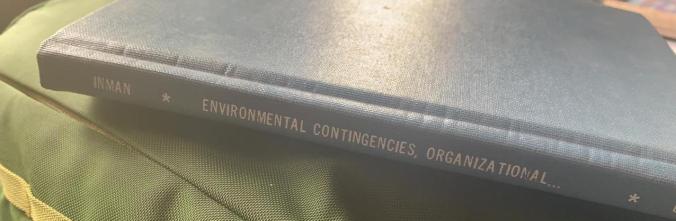
 When we saw this hand and tree side by side in that meeting,




 That was then, this is now. Coffee is more valuable than grass. And the value of coffee that is as



 Organikos