Some Games Foster Trust

4x4 (tagua)

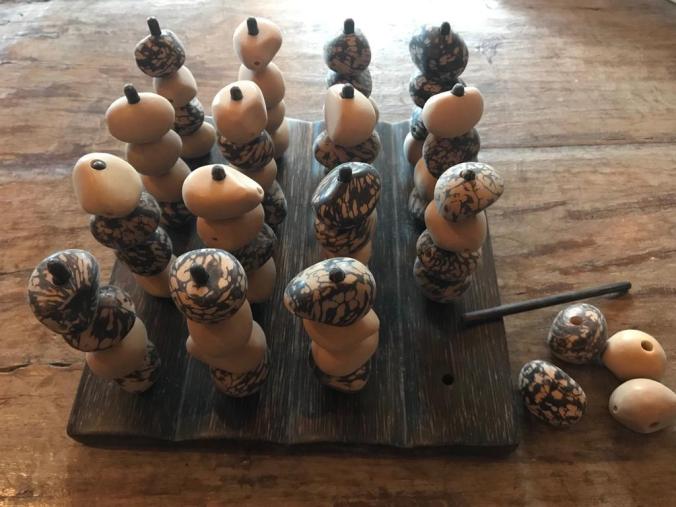
A friend in my early teens had chess skills well-matched with my own. We played constantly, the way some kids today play video games. I switched to backgammon in my late teens and played hundreds of hours over the years. I gave up backgammon when I discovered a new old game 20+ years ago in Ecuador. It is the game in the picture above, and I vaguely referenced it once here. I never stopped to think what drew me to play those games compulsively. Samanth Subramanian, who appeared in our pages once, five years ago, has made my day with this new piece. What We Learn from One of the World’s Oldest Board Games helps me put my love of old games in some kind of historical perspective:

Subramanian-OldestBoardGame-Story

This ivory Fifty-eight Holes board was dug up by Howard Carter, in 1910, out of a pit tomb in Thebes. “We have before us,” Carter wrote, “a simple, but exciting, game of chance.”Photograph Courtesy The Metropolitan Museum of Art

A few years ago, almost by accident, Walter Crist happened upon one of the oldest board games in the world. Crist, who was then working toward a doctorate on ancient Cypriot board games, at Arizona State University, was searching the Internet for images of a game called Fifty-eight Holes. In the second millennium B.C., Fifty-eight Holes was the most popular game of its kind across Egypt, the eastern Mediterranean, and the Middle East, and roughly eighty boards of the game, in various degrees of incompleteness, rest in museum collections around the world. Images of these boards are well known to scholars, but the photo that Crist eventually found, on the Web site of a magazine called Azerbaijan International, was unfamiliar. Taken at an archaeological site near Baku, it showed a rock carving that bore a strong resemblance to the game’s board: two parallel rows of indentations and an outer, horseshoe-shaped run of more holes. It looked like a four-year-old’s sketch of a tree.
Subramanian-OldestBoardGame-Secondary2

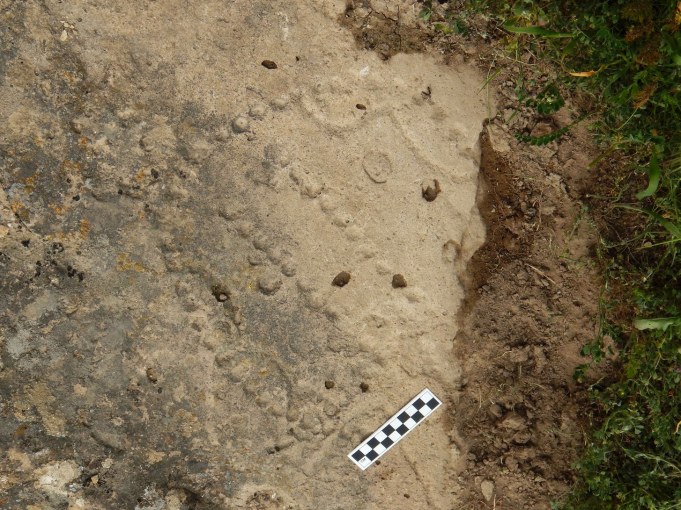
A series of depressions taking the form of the game of Fifty-eight Holes on a horizontal rock surface in Azerbaijan’s Gobustan National Park. Photograph by Walter Crist / Gobustan National Preserve

The site, Crist learned, had been destroyed to make way for a housing development, but he eventually got in touch with an archaeologist in Azerbaijan’s Gobustan National Park, who told him that the park held a similar carving. “I think he knew that it was a game, or that people thought it was,” Crist said. “There were other people arguing that it could be an astronomical chart, or a calendar—but nobody that had studied games in any kind of depth.” So Crist decided to go to Gobustan and find out for himself.
Subramanian-OldestBoardGame-Secondary1

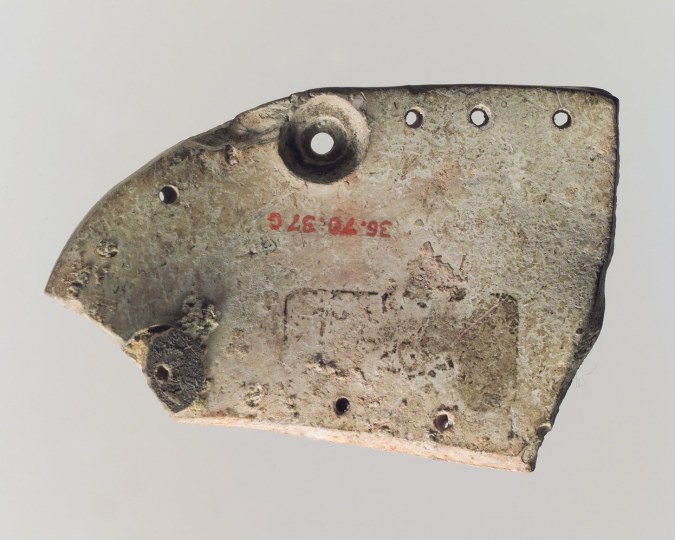
A fragment believed to be part of a Fifty-eight Holes game board, from the eighteenth century B.C. Photograph Courtesy The Metropolitan Museum of Art

Crist, who completed his Ph.D. in 2016, works at the New York Public Library, as a librarian. “I’m on the academic job market, which is terrible and difficult,” he said. When he went to Azerbaijan last spring, he paid for the trip himself, appending it to a visit to Athens to attend the Twenty-first Board Game Studies Colloquium. At Gobustan, near the Caspian coast, he found a vast moonscape of rocks, caves, and mud volcanoes. Archaeologists visit the park for its six thousand petroglyphs: carvings of hunting parties, bulls, boats, and dancing stick men. The glyphs date back at least four thousand years; some might be as old as forty thousand years, reaching back into the Upper Paleolithic age. Not much is known about the artists. Most likely, they were nomadic hunters who lived in rock shelters, charted the heavens, and buried their dead. Continue reading
A Warm Welcome To Birding’s Newer Adherents

birdpunks_mark-makela_34

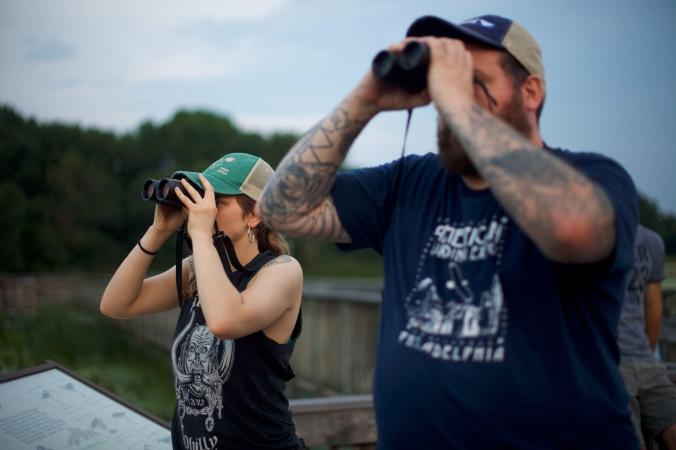
Caleb Hunt (left) and Tony Croasdale at the John Heinz National Wildlife Refuge at Tinicum in Philadelphia. In a city known for its punk underground and avian history, the friends have found an overlap that celebrates both niches. Photo: Mark Makela

I do not have a tattoo. If I did, it may be that a bird would adorn my arm. Our efforts to promote the joys of birdwatching combined with the conservation benefits that come from increased concern for bird habitat all suggest that I would be susceptible. I came of age during the emergence of punk rock, so the possibilities are there:

Welcome to Birdpunk: A Subculture of a Subculture

Punk has always been about embracing different forms of expression. Meet the people who are putting birding on that spectrum.

BirdTattoo1.jpg

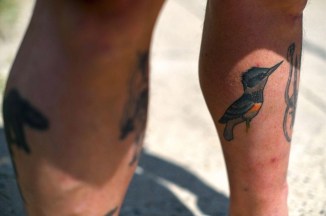
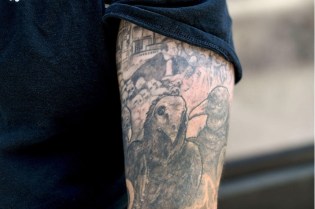
A trio of vultures serve as badges of Croasdale’s birding obsession. Photos: Mark Makela

It’s the evening golden hour at the John Heinz National Wildlife Refuge at Tinicum. A whirlwind of swallows swims through the soft light, chasing midges into a frenzy. Nearby on a platform a handful of birders scans the dimming sky, exposed to the marsh and its blood-thirsty elements.

BirdTattoo2

A trio of vultures. Photo: Mark Makela

In plain T-shirts and khakis, the group blends into the woods-y backdrop—with two exceptions. Caleb Hunt, a bookkeeper for an adult-entertainment boutique, rocks a Philly Punx tank top with a fanged, horned Benjamin Franklin splashed across the front. Next to her, Tony Croasdale, the leader of today’s walk, sports an aviary of skin art. A Swallow-tailed Kite, Belted Kingfisher, Scissor-tailed Flycatcher, Greater Racket-tailed Drongo, Scarlet Tanager, and three types of vultures bedeck his legs, collarbone, and arms.

Croasdale’s tattoos pay homage to two of his biggest life passions: birding and punk rocking. He plunged into the first as a kid when his father took him to Philadelphia’s Pennypack Park to learn about kingfishers. Continue reading
Books Are Things Unlike Other Things

190325_r33967.jpg

My father loved books ravenously, and his always had a devoured look to them. Illustration by Rose Wong

Kathryn Schulz came to my attention four years ago, and we immediately deemed her worthy of an invitation to Kerala. We linked to two more of her articles after that, but re-reading the first essay, it is easy to recall what “ignorance is bliss” means. The world was, as always, facing challenges. But I had no clue then what 2019 would look and feel like, so I enjoyed that essay differently then than I do now.

I am in need of more frequent diversions from the daily news, not to hide but to remember what matters. Times like these call for tangible reminders of what is good and healthy for us, much as comfort foods at certain other times are required to anchor us to better thinking. Food seems the most common thing to turn to for comfort, but books are a better one because ideas that come from books are not just to be remembered, but to renew inspiration, commitment, and determination related to values:

My Father’s Stack of Books

When he was a child, books were gifts. For his daughters, he made sure they were a given.

When I was a child, the grownup books in my house were arranged according to two principles. One of these, which governed the downstairs books, was instituted by my mother, and involved achieving a remarkable harmony—one that anyone who has ever tried to organize a home library would envy—among thematic, alphabetic, and aesthetic demands. The other, which governed the upstairs books, was instituted by my father, and was based on the conviction that it is very nice to have everything you’ve recently read near at hand, in case you get the urge to consult any of it again; and also that it is a pain in the neck to put those books away, especially when the shelves on which they belong are so exquisitely organized that returning one to its appropriate slot requires not only a card catalogue but a crowbar. Continue reading
Bananas, Taught New Tricks, Can Perform Wonders

3024.jpg

Vegan fish and chips from Sutton and Sons. Photograph: Sutton and Sons

The last time I posted on banana blossoms it was because a bunch of bananas outside our kitchen window coincided with an article about vegan fish and chips. Today, a bit more of the same coincidental mixing of kitchen and reading. I just tasted a sample of the fifth batch of banana ceviche made by the kitchen assistant for Organikos, who spent seven years assisting in the kitchen of a Peruvian family. Each time she has made banana ceviche I have wondered whether it was a lucky batch. It is that good. And today’s was as good as each previous batch. Now as I turn to my review of options for what to post about on this platform, I have encountered a story with the photo above, and the photo below, with a headline guaranteed to pull me in:

Banana blossom: the next vegan food star with the texture of fish

Sainsbury’s is to include the flower, which hails from south-east Asia, in its ready meals

Thanks to Anna Berrill and the Guardian for that, and for the several ideas that will guide me at the farmer’s market this morning:

5472 (1).jpg

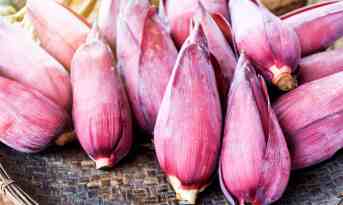
Banana blossom can also be eaten raw and has a chunky, flaky texture. Photograph: Suwatwongkham/Getty Images/iStockphoto

Following on from beetroot burgers and jackfruit curries, the next star of the vegan “meat” world hails from the gardens of south-east Asia and looks somewhat like an artichoke.

Banana blossom, also known as a “banana heart”, is a fleshy, purple-skinned flower, shaped like a tear, which grows at the end of a banana fruit cluster. Traditionally used in south-east Asian and Indian cooking, it can also be eaten raw and its chunky, flaky texture makes it an ideal substitute for fish.

Sainsbury’s, which will be rolling out a series of plant-based meals later this year, is to include banana blossom in its ready meals in the hope the flower will catch on among a burgeoning population of shoppers looking for meat-free alternatives. Continue reading

Citizen Science Goes Far Afield

lr-yalee360-print_websized.jpg

LUISA RIVERA / YALE E360

We have been on watch for citizen science stories since the early days of this platform. Seth had just accepted an offer to work at the Cornell Lab of Ornithology, and typical of him, did his homework on what he had committed to. Since then, dozens of first person and linked-to citizen science stories from other members of our community have appeared in these pages. Thanks to Yale e360 and Jessica Leber for this story about how far and wide the practice has spread, and a few of its more amazing discoveries:

Species Sleuths: Amateur Naturalists Spark a New Wave of Discovery

Scientists have not kept pace with the work of discovering new species. Now, a growing number of committed hobbyists – ranging from a Belgian bus driver to a California cybersecurity expert – are out in the field, igniting a boom in documenting the world’s biodiversity.

Clements_7400192_web.jpg

COURTESY OF TERRI CLEMENTS

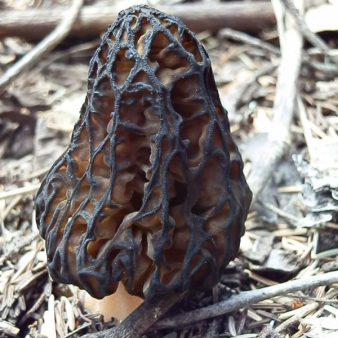
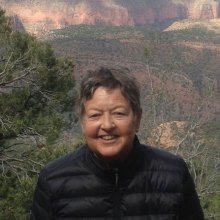
When mushroom hunter Terri Clements found a unique specimen near her home in Arizona, she couldn’t be certain by its appearance that she’d stumbled across a new species. She tracked down a commercial lab that would process DNA from samples she collected and studied the resulting sequences. Only later did she cold email a mycological scientist, who confirmed her work. As a result, this December, she became part of a team publishing a scientific paper describing her new mushroom species, Morchella kaibabensis, along with three others.

Clements_IMG_1300-2_web.jpg

Mushroom hunter Terri Clements used DNA sequencing to confirm a new species of black morel, Morchella kaibabensis, she found near her home in Arizona.

A former restauranteur and real estate executive who retired in 2012, Clements has no formal scientific training beyond her college microbiology minor. But using a combination of traditional taxonomy — the science of describing, naming, and classifying life on earth — and increasingly accessible DNA classification tools, she’s now hooked on documenting fungi either previously unknown in her region, or, just as often, new to science. “I spend hours and hours on it,” she says. “It’s like a full-time job for which I don’t get paid.”

Her work puts her in the ranks of an increasingly vibrant group of hobbyists busy documenting unexplored species on the planet, ranging from a chemical engineer in France, to a cybersecurity specialist in California, to retirees like Clements. Many study organisms from specific groups of fungi, insects, and other invertebrates that are less charismatic and surveyed than the orchids, birds, and butterflies that have long attracted the public’s interest. Continue reading

Organikos 2019 & Beyond

Organikos2019Logo.jpgThe first reference was in 2017, with a brief reverie on tastes associated with places. Organikos next appeared in early 2019, most recently here. And today just a quick further note to clarify that while chocolate and other taste of place items are in testing to be offered by Organikos, specialty coffee from various regions in Costa Rica is the first product. The simple reason is that coffee is in so many ways the most important product of this country, and set the stage for the country’s many remarkable achievements, including those yet to come. Organikos will focus on specialty coffee because it has a following as strong now as any time in history.

CoffeeObsess1

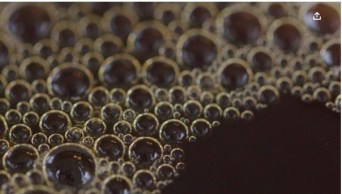
In the new wave of coffee fanaticism, attention to tasting notes and pairings rivals that of the world of wine.

In this short video posted this morning Rachel Lipstein helps define the current intense wave of interest:

Coffee, ambrosia of the capitalist and the creative alike, is many things: a fixture of social ritual, the product of a vast agricultural production steeped in colonialist history, and the most widely used psychoactive drug in the world. Entire economies rest upon its cultivation and its caffeine content…

That is an intense opening statement, and sets the stage for the video’s goal of helping a lay person understand the obsession a bit better:

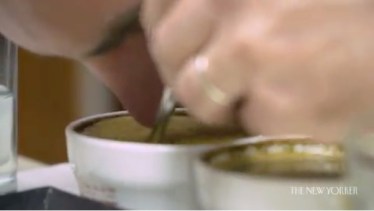
CoffeeObsess…Its modern permutations go far beyond cream and sugar: fair-trade designations, additions of alternative milks such as soy or pea-protein, a preparation with butter and oil (for optimized biohacking), or simply with a piece of shortbread dunked in. It has inspired legal and moral crusades and “love is brewing” theme weddings. The latest installment in The New Yorker’s Annals of Obsession video series features a group of specialty-coffee experts and explores the fringes of the fascination…

Coffee is the taste of many places other than Costa Rica, but this is home, so here we go. We have already roasted, packaged and labeled coffee in trial markets, and have made some important adjustments as we prepare to launch formally in a few months. In earlier posts you could see the font we thought was best with which to write the name Organikos. We have decided otherwise for the time being, in part because with the newer design, as the logotype for Organikos evolves, we hope to have a smaller footprint with a message that fits on one side (versus front and back of package labeling).

Green Is The New Black & Costa Rica Is Evergreen

merlin_151348896_9c4c515c-54c6-4612-a114-deaec4c35159-jumbo

Costa Rican wildlife was the theme of reception in February to formally introduce the government’s decarbonization strategy.

Somini Sengupta and her colleague Alexander Villegas published a story yesterday that resonates with the explanations Amie and I gave friends and family about our original decision to live in Costa Rica. It also resonates with the decision we made recently to return. In 2010 when we moved to Kerala it was not clear when, or even if, we would be back here. But our work in India was intertwined with Costa Rica’s evergreen pioneering role in the global conversation about conservation. So we are back. And the evergreen is appreciated, especially in the way Costa Rica’s president and his wife tell the story within a story.

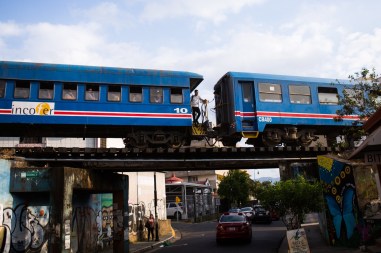
A diesel commuter train in San José. The government plans to replace older trains with electric models.

Despite it’s diminutive size, Costa Rica been at the forefront of the climate change conversation. While the country has only about 0.25% of the world’s landmass, it contains almost 5% of the world’s biodiversity. These statistics give both an added incentive to focus energies on shifting the juggernaut of climate change and the ecological soapbox from which to be heard.

Costa Rica has an infrastructural uphill climb, most specifically with transportation as is illustrated below, but the country has stood its ground successfully in the past. When we think of the country’s road network in the mid-1990s relative to the roads today, it gives one of many reasons to be optimistic:

Tiny Costa Rica Has a Green New Deal, Too. It Matters for the Whole Planet.

SAN JOSÉ, Costa Rica — It’s a green big deal for a tiny sliver of a country. Costa Rica, population 5 million, wants to wean itself from fossil fuels by 2050, and the chief evangelist of the idea is a 38-year-old urban planner named Claudia Dobles who also happens to be the first lady. Continue reading
What My Work Means To Me


A man sleeps inside a securities company in Taiwan

NICKY LOH / REUTERS

Derek Thompson, whose previous appearances in our pages were important but not blockbuster, was due for a home run. And here it is, with a title–Workism Is Making Americans Miserable–that says it all. And the first paragraph will tell you whether it is worth your while to read. I think it is:

For the college-educated elite, work has morphed into a religious identity—promising transcendence and community, but failing to deliver.

In his 1930 essay “Economic Possibilities for Our Grandchildren,” the economist John Maynard Keynes predicted a 15-hour workweek in the 21st century, creating the equivalent of a five-day weekend. “For the first time since his creation man will be faced with his real, his permanent problem,” Keynes wrote, “how to occupy the leisure.”

merlin_149654487_d770c778-e296-4953-b257-c241517b57ca-superJumbo.jpgLikewise, Why Are Young People Pretending to Love Work? is worth a read in part because it scooped the same story by a month and Erin Griffith makes clear we should already have long been following her thinking and writing for its clarity and wit:

I saw the greatest minds of my generation log 18-hour days — and then boast about #hustle on Instagram. When did performative workaholism become a lifestyle?

If I am correct that those are both worth a read, then this podcast is worth a listen because it puts Derek Thompson in direct conversation with two of the most influential researcher/writers on the topic of work and its meaning in our lives:

AP_120616158677-1000x666 (1).jpg

A prayer in a frame hangs on the wall as Patricia Jackson sifts through bank documents in her home Saturday, June 16, 2012, in Marietta, Ga. (David Goldman/AP)

WorkReligion.jpg

I had read the articles when they first were published, but did not put them into much perspective until listening to this conversation. I qualify as a workist. Work is not my religion, but the point is still well taken. This set of ideas is much bigger, and much more important than the experience of individuals; it is about how we organize for the future.

Taking Responsibility For Stuff

GettyImages-1072467826_PR-plastics_web

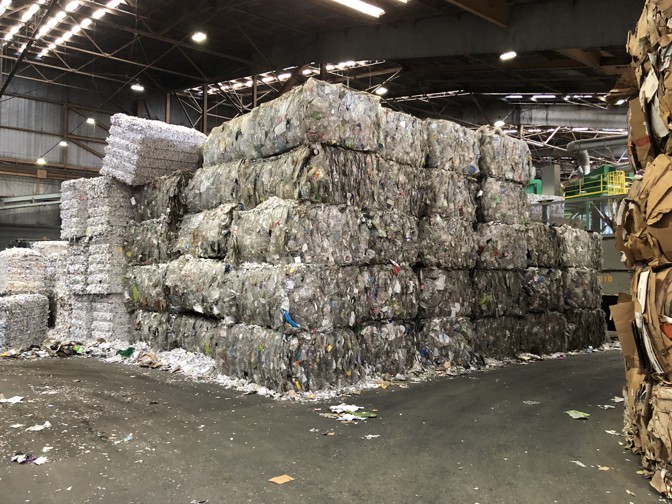
Recycled materials being stacked at facility in Costa Rica last June. EZEQUIEL BECERRA/AFP/GETTY IMAGES

Some time a millennium or so from now, an article like this one, or perhaps like this one, will be written with wonderment about the waste management practices of the early 21st century. They will not be as amazed by how we digitally stored our most prized possessions, but curious what we did with all our unwanted stuff.

GettyImages-1070623890_UK-plastics_web

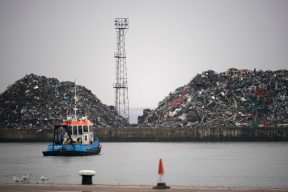
Scrap metal at a dock in Liverpool, England, waiting to be exported. CHRISTOPHER FURLONG/GETTY IMAGES

And we have known for some time now that we have not been so clever. We have mostly been hiding that stuff. Out of sight, out of mind. If it seemed too good to be true, there was a reason for that. The long stretch of time during which China’s labor costs and their resource input equations made importing our unwanted stuff a win-win created a kind of mirage. Thanks to Cheryl Katz, writing in Yale e360, for making that clear in this story:

GettyImages-967157238_VietnamPlastics_web.jpg

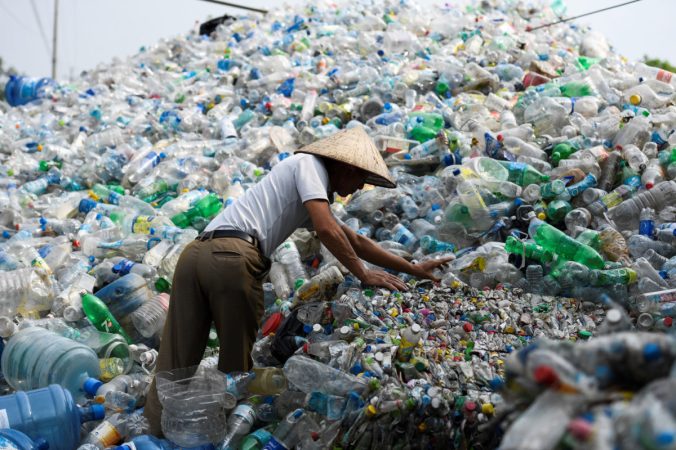
A worker sorts through plastic bottles at a waste facility in Vietnam. Other Asian countries have increased their waste imports in response to China’s ban. NHAC NGUYEN/AFP/GETTY IMAGES

Piling Up: How China’s Ban on Importing Waste Has Stalled Global Recycling

China’s decision to no longer be the dumping ground for the world’s recycled waste has left municipalities and waste companies from Australia to the U.S. scrambling for alternatives. But experts say it offers an opportunity to develop better solutions for a growing throwaway culture.

The story is big, which is why I was not surprised to see Alana Semuel’s story on the same topic. Both are worth reading, but this one takes a starker view, and the disturbance its title question causes provides an effective added prod to reduce how much unwanted stuff gets created in the first place.

8bea8d007

Bales of plastic are piled at a Recology facility in San Francisco. (Alana Semuels / The Atlantic)

Is This the End of Recycling?

Americans are consuming more and more stuff. Now that other countries won’t take our papers and plastics, they’re ending up in the trash.

After decades of earnest public-information campaigns, Americans are finally recycling. Airports, malls, schools, and office buildings across the country have bins for plastic bottles and aluminum cans and newspapers. In some cities, you can be fined if inspectors discover that you haven’t recycled appropriately. Continue reading

Urban Archaeology


We’ve had friends and family members living in Atlanta for close to 30 years, and although I knew it was the hub of important aspects of American history, it never occurred to me to think of it in archaeological terms. At first consideration, I think about archaeology as the study of ancient cultures in far away places. Yet, with family in countries like Greece, I acknowledge that awesome layers of history can be just under the surface, or deeply buried and unearthed as cities grow with constructions of buildings and transit infrastructure.

This piece in the Georgia State University Magazine made that quite clear.

Treasures of Terminus

From its days as a railroad boomtown to Sherman’s tinderbox to one of America’s great cities, Atlanta’s history runs deep. The Phoenix Project, more than 100,000 artifacts collected by a team of Georgia State archaeologist in the 1970s, tells the city’s story through unearthed historical objects.

There is buried treasure at Georgia State University. Stacked high and deep in more than 500 boxes stashed throughout the labyrinths of Kell Hall, more than 100,000 artifacts tell the story of Atlanta’s history.

These boxes contain the lost pieces of a tumultuous past that dates to the city’s earliest days — bullet casings from the Civil War, mystery tonics in antique glass bottles, creepy toys, fashion accessories, ancient grooming tools and much more. Many of them still await examination and haven’t been opened since archaeologists first packed them four decades ago.

This massive array of objects is called the Phoenix Project, and Georgia State professors and students have been methodically studying, cataloging and mapping each item since 2011.

Collected all over the city between 1976 and 1980, the objects belong to the largest archeological collection ever associated with Atlanta. They are the fruit of one of America’s earliest urban archaeological projects — the roving excavation that followed construction crews as the Metropolitan Atlanta Rapid Transit Authority (MARTA) cleared land, leveled blocks and tunneled underground to build the first iteration of its rail system.

Jeffrey Glover, associate professor of anthropology, has curated the Phoenix Project for years in hopes of providing the public with a different kind of city history, a slice of Atlanta’s past through the lens of historical objects.

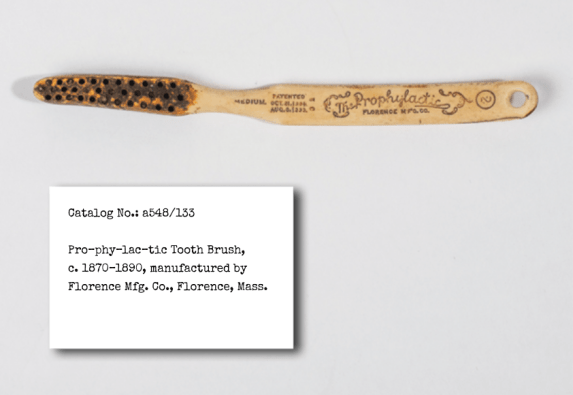
Catalog No.: P1848/170 Swamp Root Kidney, Liver and Bladder Cure, c. 1890, manufactured by Dr. Kilmer & Co., Binghamton, NY.

Choosing one box among hundreds, Glover removes a small amber bottle that once held Valentine’s Meat Juice, a concentrated beef tonic from the 1870s. Advertisements said it could help with gastroenteritis, dysentery and even cholera.

“It was supposed to bring vitality,” Glover says, “like an early energy drink.”

From another box, he takes out the misshapen head of a porcelain doll. Featuring dark, empty eye sockets and covered in burn marks, the scary toy looks hungry for souls. While Glover affectionately calls it the “creepy doll head,” its official artifact ID is “a3161,” written in impeccable script with archival ink across its neck.

That’s because the archaeologists who bagged all this stuff in the 1970s methodically described and organized each item using a numbering system adapted from the Georgia Department of Transportation. For example, the “a” in “a3161” stands for “general artifact” while the number indicates the item was the 3,161st general artifact to be cataloged from that accession. (And there are about 100 accessions.) Containers, such as glass and pottery, begin with “p,” and building materials with “m.” Plant remains use “eb” for “ethnobotanical” while animal bones start with “ez” for “ethnozoological.”

Just one of the standard cardboard bankers boxes can contain dozens, if not hundreds, of artifacts, each wrapped in brown paper and labeled with a unique artifact ID. Though they’ve all been recorded in a logbook alongside a one-line description, unwrapping each one is like opening a birthday present because you don’t know exactly what you’ll get.

“It’s an excavation of boxes,” says Lori Thompson (M.A. ’16), assistant laboratory director at New South Associates.

Continue reading
From Panama, Of Bushwick, Reducing The Impact Of Food Waste

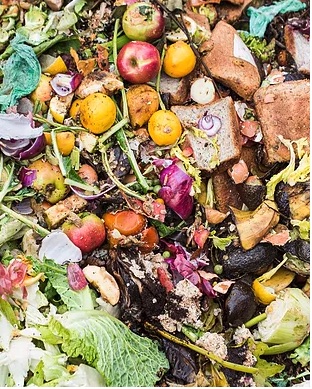
Food waste, a problem whose partial solutions are myriad, has been on my radar since Milo posted about it. Its root seems obviously related to not properly pricing the input resources, like land, water, etc., which paradoxically makes it possible to produce an abundance sufficient to waste. But dealing with the problem at the tail end of the value chain is another partial solution so the video above is worth a few minutes of your time.

BKRotIf, when you finish that, you want to learn more, click the logo to the left. And if you live in Brooklyn you might want to participate in some manner.

BKRot2.jpg

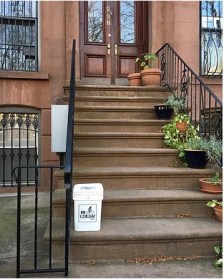
Home Composting.  Rabbit Roots is a home food scraps pick up service. For a monthly rate our bikers will collect straight from your door to our compost site.

If you live nearby, get more information about how to subscribe to their home composting program by clicking here. Sandy and her operation tell me that waiting for someone else to solve the collective action problem is wasted time. David Owen brought her and it to my attention in this short profile:

…BK ROT was founded, in 2013, by Sandy Nurse. She was born in Panama, in 1984—both her parents were in the U.S. Navy—and grew up mainly there and in South Korea and Japan. She studied international affairs at the New School and assumed that she was headed for a diplomatic career. But she changed her mind after working on food assistance in Haiti after the big earthquake there in 2010.

190311_r33860web.jpg

This article appears in the print edition of the March 11, 2019, issue, with the headline “Sacred Rot.”

“I came back to New York and got really excited about urban resiliency and food sovereignty and disaster recovery,” she said recently. BK ROT was one of the results. “We have a very specific mission of environmental and social-justice values, and grassroots accountability to the neighborhood, and transparency, and giving our output, the compost, back into food-growing and soil-building operations.” BK ROT is partly a grant-supported jobs program for young people. (Ibarra and his co-workers, most of whom live in the neighborhood, earn fifteen dollars an hour.) Nurse also teaches community activism and basic construction skills, which she studied as a trainee of the New York City District Council of Carpenters.

BKRot1.jpgAt BK ROT, food waste is mixed with wood chips and sawdust, then moved, over a period of weeks, through a succession of wooden bins the size of washing machines. By the time it reaches the final bin, it’s black and bug-covered and unrecognizable as former food. Then it’s heaped into sloping, loaflike piles, called windrows. “Convection sucks in air from the bottom and pulls it to the top,” Nurse said. “That keeps the microorganisms inside the windrows healthy.” The resulting mass is eventually shovelled into a rotating cylindrical sifter that looks like something you might pull bingo numbers out of; the original version was built by a friend of Nurse’s, who found instructions on YouTube. The compost is sold in local stores and directly to individuals—“Somebody came from Staten Island yesterday and took a bunch,” Nurse said—but most of it goes to nearby urban farms and community gardens, a few of which Nurse herself helped to start.

The New It Crop

0217Mag-Tip-1-jumbo.pngThe first time I heard of hemp was in the 1970s during my teen years. I do not remember what I learned about it then, except for something like this:

…For centuries, American farmers grew hemp for fiber, oil and many other uses. George Washington cultivated it at Mount Vernon to mend fishing nets…

Thanks to Malia Wollan, in her Tip quite straightforwardly titled How to Grow Hemp, I know more today than I did then:

…Practice your explainer, which should go something like this: Marijuana and hemp are varieties of the same species of cannabis plant, but hemp contains less than 0.3 percent of the mind-altering tetrahydrocannabinols, or THC, and will not get you high…

There is more, but not a lot more. Continue reading

Addictions Abound, Solutions Hiding In Plain Sight

3108.jpg

Orangutans rescued near a palm oil plantation in Kalimantan, Indonesia. Photograph: Vier Pfoten/Four Paws/Rex

Thanks to the Guardian for presenting this story by Paul Tullis:

How the world got hooked on palm oil

It’s the miracle ingredient in everything from biscuits to shampoo. But our dependence on palm oil has devastating environmental consequences. Is it too late to break the habit?

3980

A fire at an oil palm plantation in Pekanbaru, Sumatra, due to intensive farming methods and the dry season. Photograph: AFP/Getty

Once upon a time in a land far, far away, there grew a magical fruit. This fruit could be squeezed to produce a very special kind of oil that made cookies more healthy, soap more bubbly and crisps more crispy. The oil could even make lipstick smoother and keep ice-cream from melting. Because of these wondrous qualities, people came from around the world to buy the fruit and its oil.

In the places where the fruit came from, people burned down the forest so they could plant more trees that grew the fruit – making lots of nasty smoke and sending all of the creatures of the forest scurrying away. When the trees were burned, they emitted a gas that heated up the air. Then everybody was upset, because they loved the forest’s creatures and thought the temperature was warm enough already. A few people decided they shouldn’t use the oil any more, but mostly things went on as before, and the forest kept burning.

This is a true story. Except that it is not magic. The fruit of the oil palm tree (Elaeis guineensis), which grows in tropical climates, contains the world’s most versatile vegetable oil. It can handle frying without spoiling, and blends well with other oils. Its combination of different types of fats and its consistency after refining make it a popular ingredient in packaged baked goods. Its low production costs make it cheaper than frying oils such as cottonseed or sunflower. It provides the foaming agent in virtually every shampoo, liquid soap or detergent. Cosmetics manufacturers prefer it to animal tallow for its ease of application and low price. It is increasingly used as a cheap raw material for biofuels, especially in the European Union. It functions as a natural preservative in processed foods, and actually does raise the melting point of ice-cream. Palm oil can be used as an adhesive that binds together the particles in fibreboard. Oil palm trunks and fronds can be made into everything from plywood to the composite body of Malaysia’s national automobile.

Read the whole story here.

What’s The Delay?

Kolhatkar-PGE.jpg

In 2017, seventeen major wildfires in California were connected to P.G. & E. Photograph by George Rose / Getty

Sheelah Kolhatkar has a note, The P.G. & E. Bankruptcy and the Coming Climate-Related Business Failures, that gets me thinking. The standard thinking on why climate change is so difficult to do anything about is how it is seen as a problem we will encounter far off in the future. It obviously is not far off. It has started. Farmers have suffered. Big city folk have suffered. California dreamers have suffered. The immediacy needs to be framed accordingly:

On January 15th, the World Economic Forum issued its annual Global Risks Report, which presents the results of a survey of what policymakers and experts perceive to be the world’s greatest challenges and threats. The report categorizes concerns by color: blue for economic risks, orange for geopolitical risks, purple for technological risks, red for societal risks. This year, green, which denotes environmental hazards, was dominant: the top three risks, listed by the “likelihood” that they would occur, were extreme weather events, failure of climate-change mitigation and adaptation, and natural disasters. (Threats such as data fraud and cyber-attacks appeared lower down on the list). “Is the world sleepwalking into a crisis?” the report’s authors wrote. “Global risks are intensifying but the collective will to tackle them appears to be lacking.” Continue reading

15 Minutes Of Fame For A Good Cause

It takes the full 15 minutes of video above to fully appreciate what happened a few days ago. The soundbite 57 second version had me convinced that the senator was haughty and deserved to be schooled by these kids. But the full picture above, as often happens, provides better perspective, an attribute of little l liberalism. She was not quite the jerk I first thought.

McKibben-Dianne-Feinstein.jpg

In an exchange that went viral, the senator from California demonstrated why climate change exemplifies an issue on which older people should listen to the young. Photograph by Mark Peterson / Redux

There was a moment in time when a political slogan about something very important became a movement with potential; and then it seemed to disappear as quickly as it had appeared. That was my first exposure to political activism, and certainly not my last. But it provided an important lesson. Use the time you have on the stage wisely. I get reminded of this constantly in the last few years. This dispatch by Bill McKibben is what I take away from the moment these kids had in the spotlight:

Anything But Sweet

ScioForest_Better_Cocoa-0689_web2.jpg

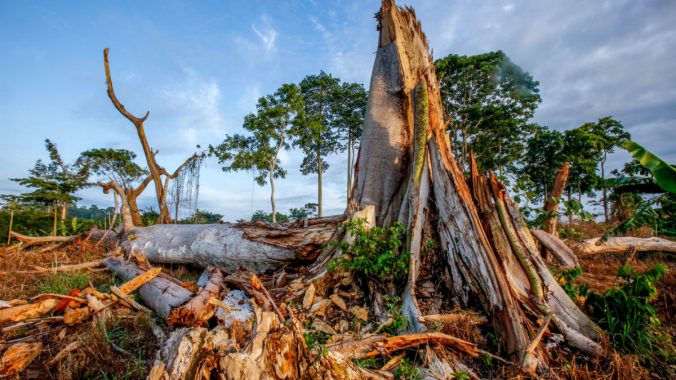
Trees felled for a cocoa plantation inside the Scio Forest Reserve in western Ivory Coast. MIGHTY EARTH

Fred Pearce provides puzzling yet somehow understandable examinations of environmental challenges, that make it impossible to look away with a clear conscience. Since reading this (note the photo above and in that story) I have been paying more attention to chocolate and its origins. I appreciate Mr. Pearce’s deep dive into the dark reality documented in this story:

The Real Price of a Chocolate Bar: West Africa’s Rainforests

Ivory Coast has lost more than 80 percent of its forests in the last 50 years, mainly to cocoa production. The government has a plan to turn over management of former forest to international chocolate manufacturers: Is it a conservation strategy or a land grab?

IvoryCoast_Cocoa_GettyImages-77612143_web.jpg

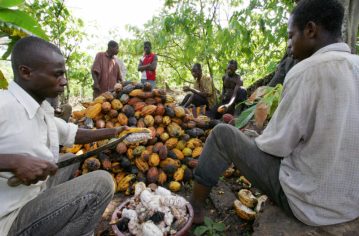
Workers cut cocoa in the Ivory Coast village of Godilehiri. Most of the country’s cocoa is grown by small farmers, on plots of 7 to 10 acres. ISSOUF SANOGO/AFP/GETTY IMAGES

How can you save the last rainforests from rampant deforestation in one of Africa’s most biodiverse countries? A crackdown on those responsible — in this case, chocolate growers and traders? In the Ivory Coast, the government thinks differently. It is unveiling a plan instead to remove protection from most of its remaining forests and hand them over to the world’s chocolate traders. Is this madness, a brutal land grab, or the only way out?

Best-Cocoa-Photos-03_SODEFOR-park-ranger-in-charge-of-Cavally-protected-area-standing-over-illegal-cocoa-found-during-a-patrol_web.jpg

A park ranger stands over illegally harvested cocoa, found during a routine patrol of the Cavally Classified Forest in Ivory Coast. MIGHTY EARTH

In the past half-century, few countries have lost rainforests as fast as the Ivory Coast. More than 80 percent of its forests are gone, most following an illegal invasion by as many as a million landless people into national parks and other supposedly protected forests. The Marahoue National Park alone has 30,000 illegal inhabitants. The invaders are growing cocoa to supply the global chocolate business.

The Ivory Coast, a West African country the size of New Mexico, produces more than a third of the world’s cocoa. The crop contributes around a tenth of the nation’s GDP. But around 40 percent of the country’s cocoa crop — more than a tenth of the world’s chocolate bars — is grown illegally in the country’s national parks and 230 supposedly protected government-owned forests, known as forêts classée, says Etelle Higonnet of Mighty Earth, a United States-based environmental group active in cataloging the footprint of key global commodities.

Most cocoa is grown in monocultures of what is known as the full-sun system, requiring the removal of all surrounding trees. Meeting the world’s insatiable demand for the beans that make chocolate has resulted in many protected areas being “completely converted to farms,” according to Eloi Anderson Bitty of the University Felix Houphouet-Boigny in Abidjan. Continue reading

Preparing For Global Big Day 2019

GBD-world-map_2-1024x624.jpg

Global Big Day artwork by Luke Seitz

The first time we took part in this annual event, we had already had several years of advance prepping. For example, we had this young man as an intern who was something of a birding wunderkind. Ben helped us determine whether our region of the Western Ghats was likely to appeal to birdwatchers. Short answer, yes. That same summer, 2012, Seth was in his second year working for the Lab of Ornithology and we could see that not only our company’s work but our own family was becoming more birdy, if not yet bird-nerdy.

This year will be the best year yet for birding, and to prove it I am starting today to get ready for the next Global Big Day. I do not know where we will be that day, yet, but I am working on plan. May I suggest you do the same?

Global Big Day—4 May 2019

By Team eBird 

Last May, more than 30,000 people took to fields and forests around the world, noting more than 7,000 species in a single day—Global Big Day. In less than 3 months, birding’s biggest day is coming back. Wherever you are in the world, you can be a part of birding’s next world record!

On 4 May, will you join more than 20,000 others and become a part of Global Big Day? You don’t have to commit to birding for 24 hours—an hour or even 10 minutes of watching birds makes you part of the team. Visit your favorite spot or search out someplace new; enjoy a solo walk or get some friends to join in the Global Big Day fun.

How to participate

  • Get an eBird account: eBird is a worldwide bird checklist program used by millions of birders. It’s what allows us to compile everyone’s sightings into a single massive Global Big Day list—while at the same time collecting the data for scientists to use to better understand birds. Sign up here. It’s 100% free. Continue reading

The Power Of Panic

merlin_150201243_6e45f17e-9e07-4df5-96e6-a96f9afa878b-jumbo.jpg

Ms. Cohen favors vendors who don’t use plastic. Credit Adam Amengual for The New York Times

When I started my Saturday morning reading it was just prior to our weekly visit to the farmer’s market and there was visual resonance with our own experience eliminating, or trying to eliminate plastic:
You’re Addicted to Plastic. Can You Go Cold Turkey?

Going plastic free starts with cloth bags and straws. Suddenly, you’re … making your own toothpaste?

merlin_150201240_ff27ccbe-4e4a-4550-81e5-99cbc3e11a81-jumbo.jpg

Reusable cloth bags are a must. Credit Adam Amengual for The New York Times

Like most people, resonance is always welcome in my reading. But like a second cup of coffee to really get the day going, there is nothing like cognitive dissonance. I can think eliminating plastic from our lives is a big deal one moment, and then the next it is clear that it is not enough, that it is like tinkering. Or as the punchy cliche puts it, like arranging deck chairs on the Titanic. David Wallace-Wells is a skilled dissonance artist in this vein. He can make your best efforts suddenly seem pathetic; not in a snarky way and if you listen to him explain his work you will realize resistance is futile; you cannot look away from what he is saying, even if you want to.

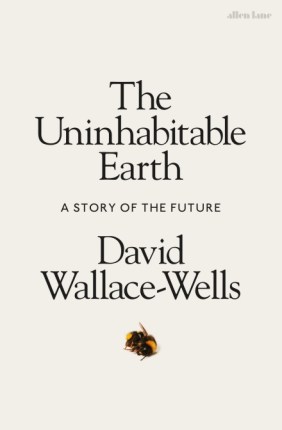
WellsBook.jpg

‘A profound book, which simultaneously makes me terrified and hopeful about the future’ Jonathan Safran Foer
A Times and FT Most Anticipated Book 2019

His book will not likely be damned by faint praise; its look at our future prospects will more likely draw extreme responses in favor of the intensity of his alarm, and claims of alarmism from the usual suspects. He is catching up to Elizabeth Kolbert in balancing our preference for optimism with extreme realism. His op-ed on Saturday tipped the balance for me quite like a second, maybe third cup of coffee:

The age of climate panic is here. Last summer, a heat wave baked the entire Northern Hemisphere, killing dozens from Quebec to Japan. Some of the most destructive wildfires in California history turned more than a million acres to ash, along the way melting the tires and the sneakers of those trying to escape the flames. Pacific hurricanes forced three million people in China to flee and wiped away almost all of Hawaii’s East Island.

We are living today in a world that has warmed by just one degree Celsius (1.8 degrees Fahrenheit) since the late 1800s, when records began on a global scale. We are adding planet-warming carbon dioxide to the atmosphere at a rate faster than at any point in human history since the beginning of industrialization. Continue reading
Home Team Great Backyard Bird Count 2019

It’s been 5 years since we first began highlighting the Great Backyard Bird Count, a citizen science collaboration between the Cornell Lab of Ornithology, the Audubon Society and Bird Studies Canada. Since then, we’ve participated in 3 countries, on 2 continents, primarily in birding hotspots such as the Periyar Tiger Reserve in Kerala, India, a special corridor of avian biodiversity in the foothills of Poas Volcano in Costa Rica, and Baja California Sur, Mexico.
The data that is collected by thousands of individual birders for eBird has long range benefits for monitoring both the health and range of particular species, as well as the state of the planet as species have to adapt to changing climate.
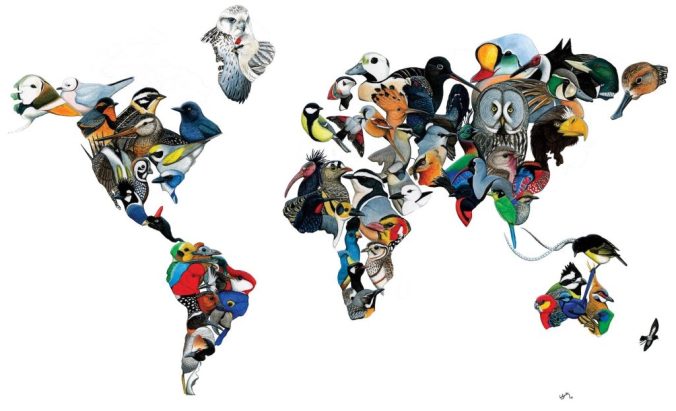
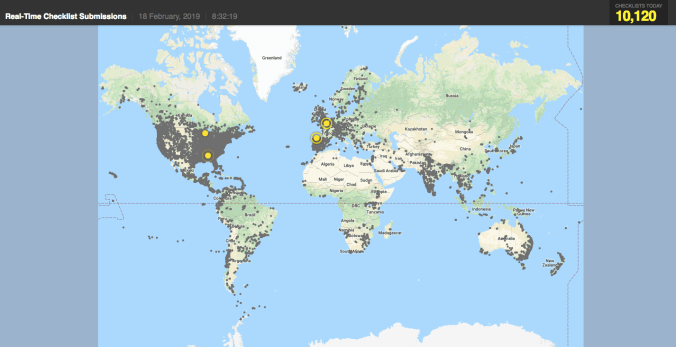
The map above indicates the locations from which checklists have been submitted (each gray dot represents a list, and the larger yellow dots are a moment frozen in time when a list has just been submitted. I highly recommend clicking on the image to view the site and watch the “lists” pop through the map!) Initially the GBBC only took place in North America, and birders worldwide rejoiced when it was expanded into a global event. (We were in India at the time, so I kid you not.) Continue reading
My Thoughts Drift To Colombia

For reasons I will need to write more about another time, Colombia has been on my radar recently. When I first visited that country, the conflict was in full swing and my only task was to give a series of lectures related to the country’s potential for nature-based tourism. And I remember very clearly my sense of responsibility for not creating false expectations: as long as there was conflict, this potential would remain just that.

My most recent visit was as the conflict was nearing formal resolution. At that time I was engaged for some weeks of work to be very specific about the potential, location by location. And I was then able to say, based on my own direct observation, that this country would be a powerhouse in the birdwatching market. And I have to admit, I did not have then the knowledge I have now, thanks to the Lab of Ornithology, about the country’s species count and its ranking in the world. The information was there, but I did not have it. Now I do, and my sense of confidence in the country’s opportunity to leverage this abundance into sustainable development is strong. The film above came to my attention in the last 24 hours from several sources, all of whom I thank. But particularly I thank the sponsors of the film for their vision, and the director of the film for his visual acuity:

The Birders, a documentary film on Colombian bird diversity and birdwatching presented by ProColombia, with support of FONTUR and directed by Gregg Bleakney. The film highlights Colombian local birdwatching guide, Diego Calderon-Franco and National Geographic photographer / videographer Keith Ladzinski as they travel through one of the most diverse bird regions in the world to capture new and rare birds that have never been filmed before. The Birders, also takes people through the Colombian landscape, highlighting several of its’ top locations, culture, birds and music. Continue reading