Pollan’s Defense, Cinematically Presented

Thanks to our friends at Ecowatch for this story:

Michael Pollan: What You Should Eat to Be Healthy

Cole Mellino

A new documentary from Kikim Media based on Michael Pollan’s bestselling book, In Defense of Food, helps consumers navigate a food system complicated by globalization and industrialization.

“I’ve been writing about the food system for a very long time,” Pollan said in the trailer for the new film. “But what I kept hearing from readers was ‘yeah yeah yeah, you told me where the food comes from and how the animals live and everything, but what I want to know is what should I eat.’”

Citizen Science & African Trees

CONGO_19893354282_50ae3e22af_o_605

Courtesy of Jungle Rhythms. Koen Hufkens and colleagues digitized the tables, but quickly realized the marks were simply too faint (image 1). “The notes are basically small pencil lines that overlay a grid on the paper, and the lack of contrast between the two makes it difficult to separate. It needs the human eye to tease them apart,” he said. Image 2 shows what the grid looked like after it was annotated.

The Harvard Gazette’s story on the citizen science project that will put dormant analog data to new use with digital assistance:

Koen Hufkens is trying to solve a scientific mystery, and he’s asking for the public’s help to do it.

Hufkens, a postdoctoral fellow working in the lab of Associate Professor of Organismic and Evolutionary Biology Andrew Richardson, this month launched Jungle Rhythms, a citizen-science project that aims to digitize thousands of pages of detailed observations on the life cycles of African trees. Continue reading

Frogs At Home

We are delighted to have Conservation, one of our longstanding go-to sources for environmental science news, back in business:

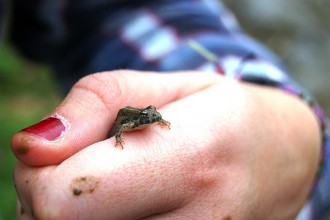
CricketFrog-330x220

A herpetologist holds a Blanchard’s cricket frog (Acris blanchardi). Credit: The Wandering Herpetologist via Flickr.

DEGRADED HABITAT ALTERS FROG MICROBIOMES

Human-caused changes in the environment are linked to differences in the microbiome – the community of bacteria and other microbes that normally inhabit the skin – of a threatened species of frog, according to a new study.

Since the skin microbiome is essentially a major component of a frog’s immune system, the findings suggest that land use change could increase amphibians’ vulnerability to disease. In turn, this could be a clue to why some populations of frogs are more susceptible than others to a chytrid fungus, Batrachochytrium dendrobatidis, that causes a fatal skin infection and has resulted in declines and even extinctions of amphibian species worldwide.

Continue reading

Saluting The Awesomeness

download

We are aware that his work depends on well-protected geological wonders so we are automatically attracted to his activities; we cannot recommend this as a sport, but we cannot help but point out Alex Honnold’s feats as inspiring. From his website:

Alex Honnold is a professional adventure rock climber whose audacious free-solo ascents of America’s biggest cliffs have made him one of the most recognized and followed climbers in the world. A gifted but hard-working athlete, Alex “No Big Deal” Honnold is known as much for his humble, self-effacing attitude as he is for the dizzyingly tall cliffs he has climbed without a rope to protect him if he falls. Honnold has been profiled by 60 Minutes and the Continue reading

A Gift In Chile

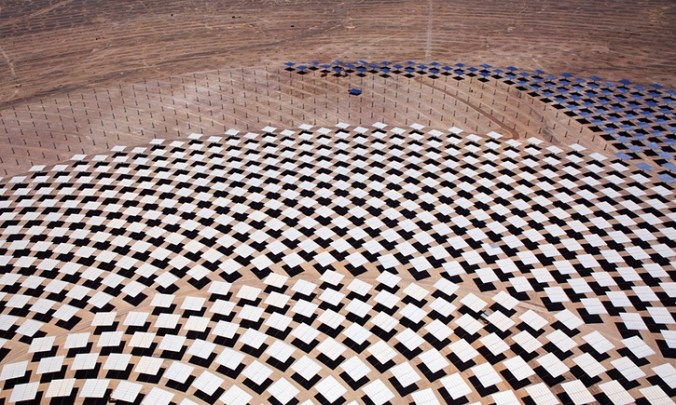
1920

Atacama 1 concentrated solar power plant being built by Spanish firm Abengoa in Chile. Photograph: Jonathan Watts for the Guardian

Not yet guaranteed, but promising nonetheless, we will consider this one of the best pieces of news on this day of gift-giving:

Desert tower raises Chile’s solar power ambition to new heights

Towering 200 metres above the desert, the Atacama 1 will harvest the sun’s energy from a surrounding field of giant mirrors. But the completion of the $1.1bn project, the first of its kind in Latin America, has been thrown into doubt by the financial difficulties of its Spanish owner

Rising more than 200 metres above the vast, deserted plains of the Atacama desert, the second tallest building in Chile sits in such a remote location that it looks, from a distance, like the sanctuary of a reclusive prophet, a temple to ancient gods or the giant folly of a wealthy eccentric.

Instead, this extraordinary structure is a solar power tower that is being built to harvest the energy of the sun via a growing field of giant mirrors that radiate out for more than a kilometre across the ground below with a geometric precision that is reminiscent of contemporary art or the stone circles of the druids.

Continue reading

Speak for the Trees

img_2807_zpspgvnjiddWe have a special place for any citizen science project, no matter what kingdom of natural life it covers, or whether its accomplished at home or in the field. Now we’re learning about a new project covering trees from The Nature Conservancy’s “Cool Green Science” blog:
What Is i-Tree?

i-Tree is a Swiss army-knife collection of tools that people can use to measure the impact individual trees and forests.

In fact, the collection of tools is so comprehensive it can seem overwhelming. But don’t be daunted. Here’s the information you need to get started.

For citizen scientists, i-Tree Streets and i-Tree Pest Detection are two key instruments in the i-Tree arsenal. (Many of the other tools are designed primarily for city officials and forest managers.)

For each tree that you select to inventory, i-Tree Streets can estimate the tree’s effect on greenhouse gasses, air quality, and stormwater overflow. Find a group in your area that is conducting a tree inventory with i-Tree Streets. City governments and conservation organizations can collect the data for use at the local level.

Continue reading

Beijing Looks to ‘Making’ Snow

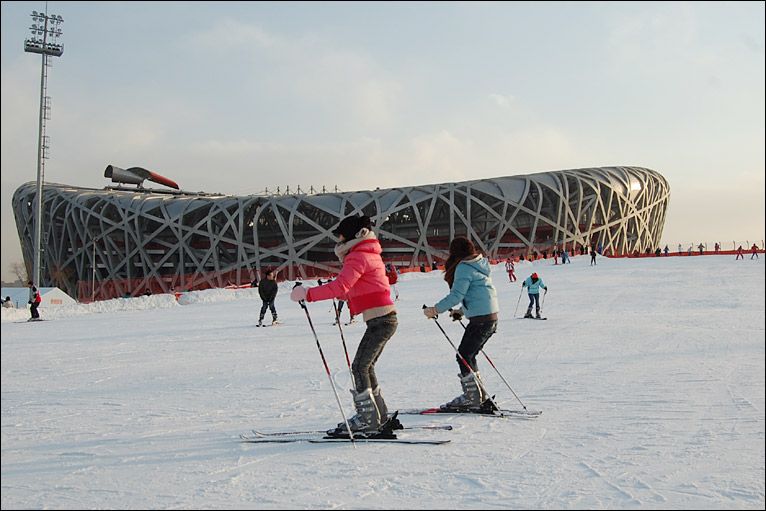
While Beijing has won the bid to host the 2022 Winter Olympics, questions are being raised about the environmental impact of creating artificial snow. PHOTO: BBC

While Beijing has won the bid to host the 2022 Winter Olympics, questions are being raised about the environmental impact of creating artificial snow. PHOTO: BBC

Beijing is still celebrating its chance to host the 2022 Winter Olympics. The International Olympic Committee’s (IOC) decision means China’s capital will become the first city to host the summer and winter events. The candidate cities were down to just Beijing and Almaty, Kazakhstan, after a number of other cities including Krakow, Poland, and Oslo, Norway, dropped out of the bidding, many citing public opposition to the expense of hosting the games. Despite Kazakhstan’s recent oil and gas-driven economic boom, Beijing was considered the safer choice, given that China proved during the 2008 Summer Games that it can put on quite a show. So, think Winter Games, think snow. And where is that going to come from?

Continue reading

Galapagos Airport Goes Off the Grid

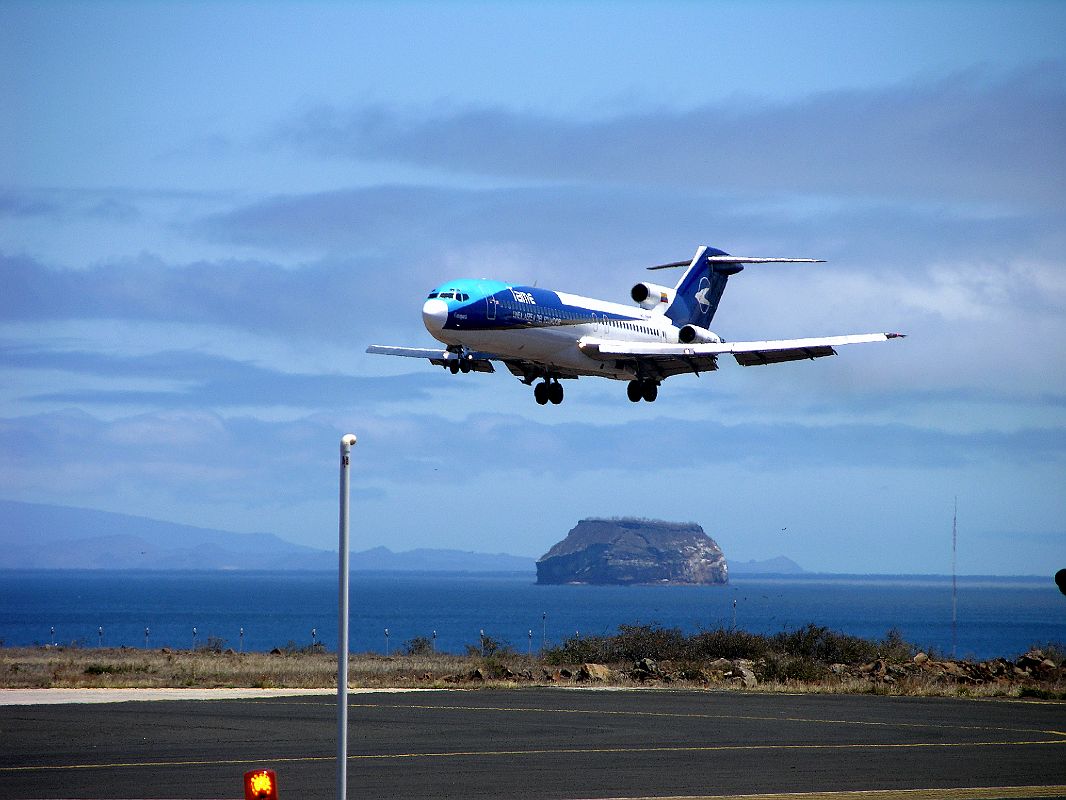
In 2014, the airport won a LEED Gold sustainability certification, an honor given out by the US Green Building Council

In 2014, the airport won a LEED Gold sustainability certification, an honor given out by the US Green Building Council. PHOTO: Mountains of Travel

The Galapagos islands are known for their giant tortoises and as the inspiration for Darwin’s theory of evolution. Now they boast another cool distinction: an airport believed to be the only one in the world working exclusively on wind and solar energy. The metamorphosis to an earth-friendly place serving nature-loving tourists could not be more stark, considering that the airport was actually born of war.

Continue reading

The Hope in Calamity

nepali-baby

This five-month-old boy, rescued 22 hours after a 7.8 magnitude earthquake hit Nepal on April 25, is an entire nation’s miracle. SOURCE: kathmandutoday.com

It is not every afternoon that you hear a mention of the Richter scale and your country’s name in the same breath. Unfamiliar it being, you do what seems natural – seek answers. So a call goes to the friend in the capital (New Delhi), who appears to not have felt the tremors that were otherwise shaking headlines. As two people who spent half of each day in the newsroom and well understood the adage of bad news being good news (talk about occupational hazards), we got to the heart of the matter: tremors in India result of a 7.8 magnitude earthquake in the bordering country of Nepal. For comparison, take the 2010 Haiti earthquake recorded at 7.0; both countries share similar economic conditions and the latter continues on the path to recovery, with international aid. We knew the counters had started ticking, headlines were already screaming numbers.

Continue reading

Art & Food, Food & Art

9781614284321_custom-458a1838430962f2508b82415502232ea5d3b9a8-s400-c85

This book review, on the salt (thanks NPR, USA) covers two books for the foodie/arts-oriented audience we sometimes find lurking here:

…We all need to eat, and our preferences are intensely personal. Yet food is often overlooked in the biographies of anyone who wasn’t a chef or gastronomic icon.

Two new books focusing on the culinary lives of artists — Monet’s Palate Cookbook, by Aileen Bordman and Derek Fell, and Dinner with Jackson Pollock, by Robyn Lea — show this to be an oversight. The artists’ approaches to food provide a new way of thinking about their very different approaches to art, and of understanding the artists themselves.

As Francesca Pollock, the artist’s niece, writes in Dinner‘s introduction, “He painted the same way he cooked: Endlessly using leftovers; keeping and re-using; trying one color or shape and then another. There was never ever any waste. Painting, like cooking, was a way of living.”…

monets-palate_custom-6c7383097b98ea23fd7902df2b0f5ec14718a798-s400-c85

…Food only occasionally appears in Monet’s work, mostly in still-lifes. But though he never painted his private kitchen garden, at 2.5 acres, it was sizable in its own right, and surely at least as much a fixture in his life as its more famous blooming cousin. And Monet himself put a premium on food, according to the authors.

“Almost every franc that he earned, after taking care of his family’s welfare, he would spend on the freshest ingredients for meals and improving the interior and exterior of his house” — originally, a farmhouse and cider press, Bordman and Fell write. Monet, we learn, employed a cook, and his diet included eggs from his own chickens. He was actively involved in directing which vegetables were planted (he liked experimenting with new varieties), and which ones ended up on the dinner table… Continue reading

Sun, Sense, Sensibility

In Hawaii, where 12 percent of the homes have solar panels, handling the surplus power is putting pressure on the state’s biggest utility, which is fighting to reduce what it pays for the energy. By Erik Braund and Eugene Yi on Publish Date April 18, 2015. Photo by Kent Nishimura for The New York Times.

In Hawaii, where 12 percent of the homes have solar panels, handling the surplus power is putting pressure on the state’s biggest utility, which is fighting to reduce what it pays for the energy. By Erik Braund and Eugene Yi on Publish Date April 18, 2015. Photo by Kent Nishimura for The New York Times.

Thanks to the New York Times for their ongoing coverage of how we manage to make do on this planet, including in the various well known gardens of Eden:

Continue reading

What Drives Some Conservationists Some Of The Time Is Simply The Beauty Of Nature

3087c3af6ee01389ba74194f4da920c4


Click on the image above to go to the publisher’s website and their preferred purchase options for this book; the publisher’s blurbists have this to say about it:

An award-winning author’s stirring quest to find and understand an elusive and exceptionally rare species in the heart of Southeast Asia’s jungles.

In 1992, in a remote mountain range, a team of scientists discovered the remains of an unusual animal with beautiful long horns. It turned out to be a living species new to western science — a saola, the first large land mammal discovered in 50 years. Continue reading

Not In Our Kitchens, But Maybe In Yours?

This is a subject that we will be seeing more of, for sure. But for the record, a basic rule we live by at Raxa Collective is that we never have and never will slip such critters into food on the sly. We see the day coming, though we are not confident to predict how soon, when it is taken for granted that some portion of protein in the diets of people in even the most well-developed economies comes from insects. One more story in that vein,from our friends at the EcoWatch website, inspired by the recent TedX talk linked to above:

Maybe you’ve see little cans of chocolate-covered ants or grasshoppers in the exotic food section of your grocery and thought to yourself, “Yuck—who eats that?” Insects may not come to mind when you think of superfoods. But they could be the next hot “alternative” protein. They’re low in fat and loaded with fiber.

You might be surprised to learn you may have been eating insects already. Continue reading

Order of the Falcon

Jason Koski/Cornell University Photography

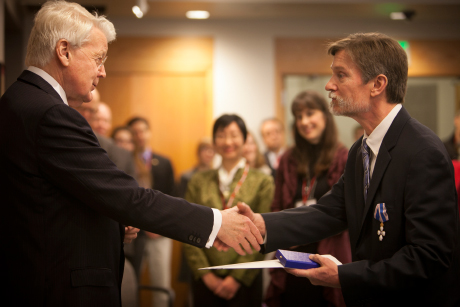
A few weeks ago, while visiting Cornell University for two days, President Ólafur Ragnar Grímsson, in addition to giving the talk I briefly posted about, also bestowed the Icelandic Order of the Falcon upon a librarian I know. Patrick Stevens, curator of the Fiske Icelandic Collection in the Rare and Manuscript Collection of Kroch Library at Cornell, helped me find resources while I conducted research for my honors thesis in history.

Always friendly and offering helpful advice when I came in every day in the summer of 2013 to look at old texts in the RMC reading room, Patrick also read a couple drafts of my work toward the end of my writing process. Continue reading

An Important New Friend For Indonesia’s Peatlands

de6843a8-12cd-4c93-a8c0-99520ebafbac-620x372

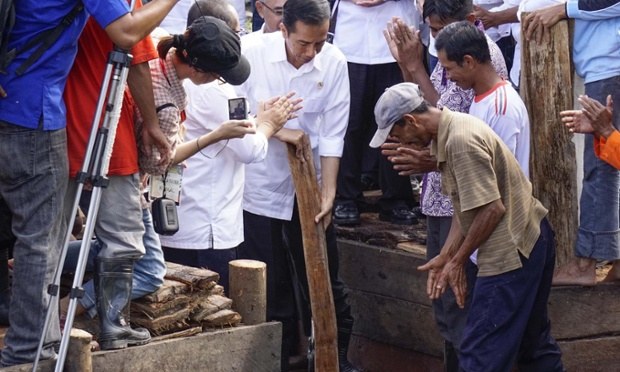
Indonesian President, Joko Widodo joins members of the Sungai Tohor community in damming a canal draining peatlands on Tebing Tinggi island on Thursday. Photograph: Ardiles Rante/Greenpeace

Welcome news, thanks to the Guardian‘s coverage:

Indonesia cracks down on deforestation in symbolic u-turn

Indonesia’s new president announces plans to protect rainforest and peatlands, signalling a new direction for country with worst rate of deforestation in the world

Indonesia’s reforming new president is to crack down on the rampant deforestation and peatland destruction that has made the nation the world’s third largest emitter of climate-warming carbon dioxide.

Joko Widodo signalled the significant change of direction for Indonesia when he joined a local community in Sumatra in damming a canal designed to drain a peat forest. Halting the draining and burning of peatland will also tackle the forest fires which have trebled since 2011 and can pump smoke across the entire region.

Continue reading

Taste Of Karma

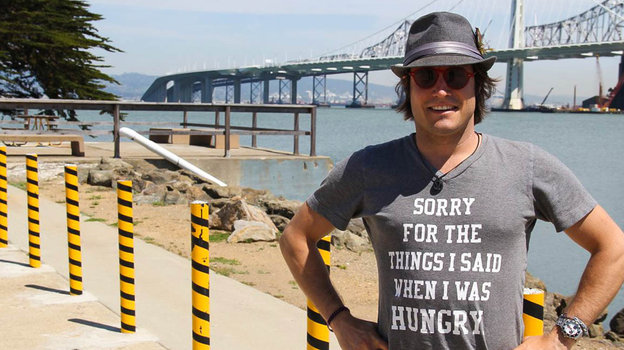
Although food entrepreneur Tim West's family legacy is in Doritos chips, he wants to shake up the food system — with sustainable, healthful food. Vignesh Ramachandran/Ozy

Although food entrepreneur Tim West’s family legacy is in Doritos chips, he wants to shake up the food system — with sustainable, healthful food. Vignesh Ramachandran/Ozy

Thank you, National Public Radio (USA), for carrying The Salt and its occasionally deliciously ironic stories:

Tim West’s grandfather invented Doritos chips and was an executive at the global snack food giant Frito-Lay.

The younger West ate plenty of junk food growing up. But lately, he’s been much more interested in kale, quinoa and tree-ripened fruit.

And the 30-year-old Bay Area food entrepreneur now wants to completely reinvent what we eat and how it’s produced. Continue reading

About Disruption

Disruption is a theory of change founded on panic, anxiety, and shaky evidence. Illustration by Brian Stauffer.

Disruption is a theory of change founded on panic, anxiety, and shaky evidence. Illustration by Brian Stauffer.

In an interview published on Friday, at the very end there is a sentence that caught our attention:

…I could list all kinds of problems that we still need to resolve, because a theory is developed in a process, not an event. [Disruption] has never happened in the hotel industry, for example…

It jumped from the page at us because “disruption” is such a powerful concept in current business strategy thinking, and because Raxa Collective develops and manages hotels; we have every reason to be concerned about disruption (of the normal variety, of course, but especially the strategic variety).

On whether disruption has never happened in the hotel industry: “chain” formation a century ago disrupted the millenia-old universal business model of owner-operated lodging; more recently, online travel agencies have altered the fortunes of the hotel industry sufficiently to force transformation of how hotels distribute their product; and at the same time the internet has enabled segments of the hotel industry that were previously dependent on travel agencies for survival to distribute their product independently of intermediaries, which seems disruptive.

Over the weekend our attention turned from that sentence above to what spurred it. The interview refers to an article from the current issue of the New Yorker magazine that we have now read in entirety.  A historical analysis of one of the driving forces of today’s entrepreneurial culture makes clear how a paradigm can take hold without anyone questioning its underpinnings. When a prominent history professor challenges the fundamental premises of a prominent business school professor (and virtually the entire business world following that professor’s prescriptions) with language and imagery this rich, fireworks were a foregone conclusion:

Continue reading

An App For Greener Gardening

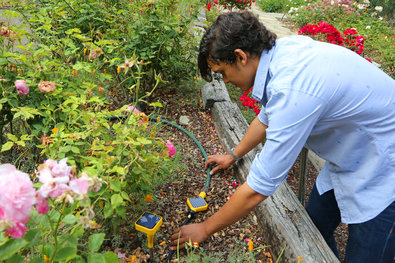
Jim Wilson/The New York Times. Jason Aramburu examining a sensor he developed that monitors the condition of soil in gardens.

Jim Wilson/The New York Times. Jason Aramburu examining a sensor he developed that monitors the condition of soil in gardens.

Thanks to the New York Times Science section for this good news about a smartphone app to monitor plant health and assist their resistance to drought and other challenges:

PROTOTYPE

Planting for Profit, and Greater Good

By CLAIRE MARTIN

Kerala’s Mission 676

676_1923608f

Not all of it is spectacular (zoos are not our cup of tea, generally speaking) but especially the “budding birders” initiative has our attention; we are grateful for the Hindu’s coverage of some the news about several conservation schemes to be established in Kerala:

A primary environment care project with the cooperation of grama panchayats; Rs.259-crore ‘Krishi Raksha’ scheme to protect crops from wild animals; forest academy at Arippa; and ‘Urinunarvu Kadinunarvu’ for the development of Adivasi settlements are among the projects identified by the Forest Department for implementation under Mission 676. A Rs.15-crore project will be launched to conserve water in the catchment areas of rivers and forests during the summer. Continue reading

Steven Pinker Profile

Steven Pinker is a Johnstone Family Professor in the Department of Psychology at Harvard University. He is pictured in his home in Boston. Stephanie Mitchell/Harvard Staff Photographer

Steven Pinker is a Johnstone Family Professor in the Department of Psychology at Harvard University. He is pictured in his home in Boston. Stephanie Mitchell/Harvard Staff Photographer

We have noted his thoughts on the work of others, including unflattering thoughts, but until now we have not had the opportunity to point our attention to the man himself, so thanks to Harvard magazine for the occasion to do so:

‘What could be more interesting than how the mind works?’

Steven Pinker’s history of thought

Steven Pinker follows Sara Lawrence-LightfootMartha Minow, and E.O. Wilson in the Experience series, interviews with Harvard faculty members covering the reasons they became teachers and scholars, and the personal journeys, missteps included, behind their professional success. Interviews with Melissa Franklin, Stephen Greenblatt, Laurel Thatcher Ulrich, Helen Vendler, and Walter Willett will appear in coming weeks. Continue reading