I’ll Just Take The Banjo

RStanley

We have not mentioned the banjo much around here. Shame on that! I am fond of the instrument for some of the same reasons I am fond of, say, an arboretum. The banjo is an instrument akin to other instruments of entrepreneurial conservation: the more it gets played well, the more it keeps alive a tradition, and even can improve on the tradition. An arboretum, well conceived, well kept, helps species survive in isolation that might otherwise have been lost from the planet entirely.

I see a reference here and there, for example mention of the Seeger family, who I have loved for many reasons my whole life. And Bela Fleck is Exhibit A in the case to be made for the banjo entrepreneurship; Steve Martin and Edie Brickell could be said to support that case as well. They all would acknowledge Dr. Ralph Stanley as essential to their craft’s survival and thriving, so it is with that in mind that I highly recommend you listen to or read this brief interview with him:

…GROSS: How did you get your first banjo?

STANLEY: My first banjo? My mother’s sister, my aunt, lived about a mile from where we did, and she raised some hogs. And she had – her – the hog – the mother – they called the mother a sow – of a hog. And she had some pigs. Well, the pigs were real pretty, and I was going to high school and I was taking agriculture in school. And I sort of got a notion that I’d like to do that, raise some hogs. And so my aunt had this old banjo, and my mother told me, said, which do you want, the pig or a banjo? And each one of them’s $5 each. I said, I’ll just take the banjo…
Continue reading →

Gallon Jug, Conservation The Belizean Way

Screen Shot 2016-07-01 at 8.46.22 AM

Two months ago I had the opportunity to visit Chan Chich Lodge in Belize, something I had wanted to do for decades.  Sometime in the 1990s I first heard of it, from various visionaries in Costa Rica who considered it to be a model on which to base development, both at the property level and for the destination as a whole. Chan Chich was mentioned frequently in conversations, in Costa Rica and throughout Mesoamerica, when the notion of sustainable tourism was first being developed. Continue reading →

#12 Of One Dozen Love Letters About Xandari

IMG_0040

After our visit to Cardamom County last weekend to bid farewell to our colleagues there, Amie suggested that I amend my dozen Xandari love letters writing engagement to a baker’s dozen: Cardamom County has been so integral to our time in Kerala that it would not be proper to reflect only on Xandari in this manner. Continue reading →

Queens, NY Entrepeneurial Conservation

Queens

Architecture intersecting with cultural conservation–that is a topic that will always get my attention. When I read this article it reminded me a bit of the early days of scouting out the location that would become Xandari Harbour’s restaurant, 51. Hard to resist reading, based on the title, and the article does not disappoint:

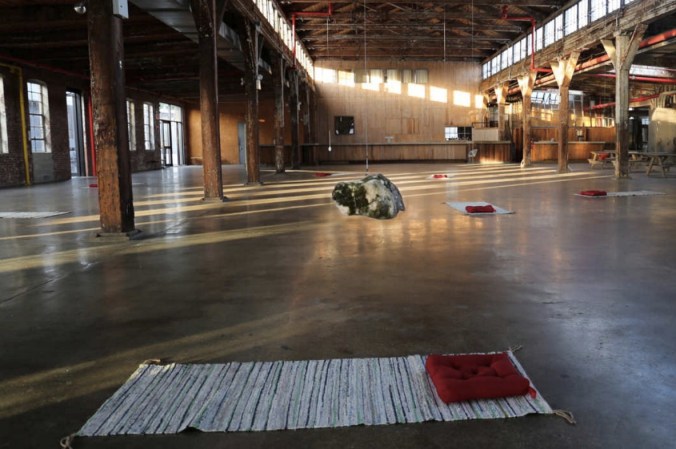
Never Has My Breath Been Taken Away Like It Was at Knockdown Center

By


#11 Of One Dozen Love Letters About Xandari

XWebsite.jpg

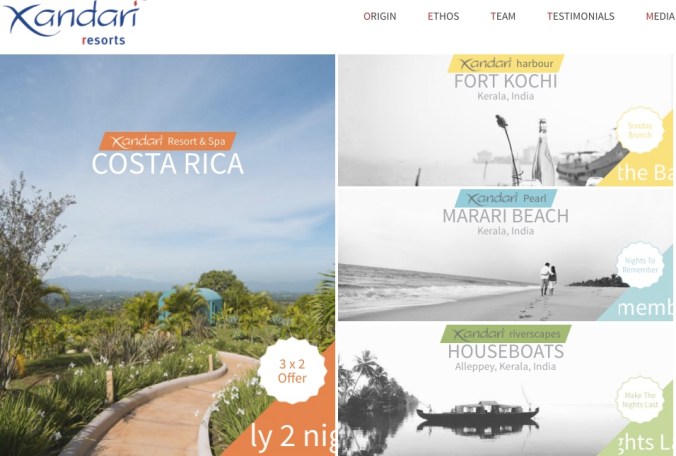
It is that time of year. Monsoon in Kerala, and what we like to call green season in Costa Rica. The rains are delicious, and give the sense of abundance and replenishment, refreshment. It is the ideal time for ayurveda in Kerala. Or just pure relaxation with a book, escaping the news and other distractions–digital detox–and any of the four properties shown above can help you achieve that bliss.

For one more day La Paz Group will be responsible for ensuring that Xandari delivers that bliss. July 1 onward George M George and his team will be in that role. In making the rounds to all the properties this week we have been experiencing a sensation that maps on almost perfectly to the sensation that has come with two decades of nomadic life. Continue reading →

#10 Of One Dozen Love Letters About Xandari

ADXHArchitectural Digest is not the reason we do what we do. But when they take note, in any manner, we feel the love. Xandari Harbour soft-opened, and within a very short time got an inordinate amount of good press even before the formal opening. Yet the AD mention, which was neither a cover story nor even a particularly huge feature, had a different level of impact on those of us on the team that developed it.
George M George, the visionary who saw the potential in the run down property and particularly the crumbling godown (waterfront warehouse) featured on the left above post-restoration, was that team’s source of energy, inspiration, encouragement–this would not have happened without his excellent leadership. Continue reading →

#9 Of One Dozen Love Letters About Xandari

XCRMSN1

Two years ago I had the pleasure of meeting a family at Xandari in Costa Rica who were on their first vacation in Costa Rica and at Xandari. The father in the family was a photographer by avocation and he shared various photographs with me that he had taken on that visit. He captured views from the property that I consider to be classic favorites of the guests who know Xandari the best. I asked permission to use his photographs, which he granted, but this is the first chance (oops) I have had to share them.

Then one year ago I had the good fortune to meet them again on their second vacation at Xandari–good fortune in the sense that I do not spend alot of time at the Costa Rica property, and so meeting them again was just funny good luck. Ray showed me more photographs. I noticed his scope and scale had changed this time around. Continue reading →

Defacing Nature In The Name Of Art

21tmag-holzeribiza-slide-MY3A-master768

It is such an innocuous headline, in the Arts section, that it would be easy to pass it by without notice:

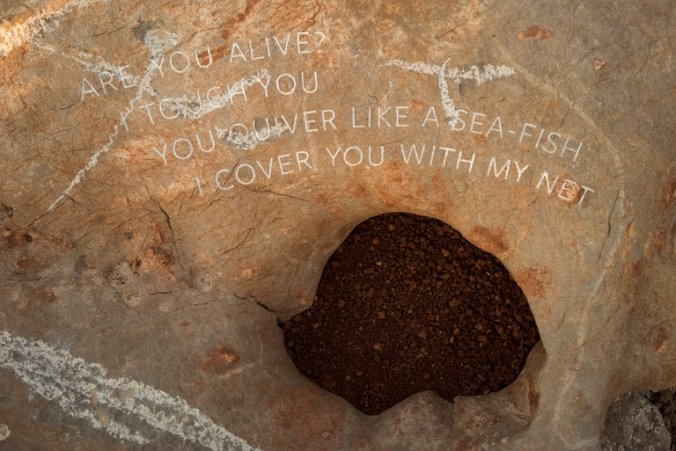
Jenny Holzer’s Unexpected New Canvas: The Boulders of Ibiza

But then, what?!?! Continue reading →

Climate Change And Its Discontents

4493

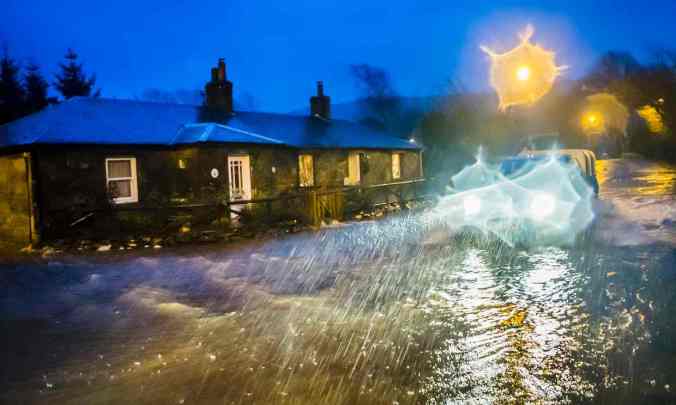
Flooding in Straiton, Scotland, in December. Scientists say it will increase in future. Photograph: Danny Lawson/PA

We have precedent, sufficiently clear by now, to figure out we need to take action:

Shattered records show climate change is an emergency today, scientists warn

Unprecedented temperature levels mean more heatwaves, flooding, wildfires and hurricanes as experts say global warming is here and affecting us now

by Damian Carrington

May was the 13th month in a row to break temperature records according to figures published this week that are the latest in 2016’s string of incredible climate records which scientists have described as a bombshell and an emergency.

Continue reading →

Raxa Collective Migration to La Paz Group

As noted over here, tomorrow we will begin publishing in these pages the type of news and reflections that had been the mainstay of Raxa Collective’s site on WordPress. We will be adding more features here than had been present there, and will trim out some features that were there but that seemed not to go anywhere, so to speak.

La Paz Group’s website has been under renovation recently as well, and will have a fresh appearance soon. These migrations and renovations are in anticipation of completing at the end of this month the tasks we started in 2010-2011 with Raxa Collective; and in anticipation of several exciting new activities that La Paz Group is just starting to work on. Exciting stuff. Stay tuned.

Celebrating Two Decades Of La Paz Group

The exact date of La Paz Group’s founding precedes the date on which the company was formally incorporated; it is fair to say that moving to Costa Rica was the inception. At about this time of year in 1996 our family moved to Costa Rica so that I could begin field work on the initiative I had already accepted responsibility for starting in 1995.

It was an initiative perfectly suited for me, just completing my doctoral dissertation at the same time that Costa Rica’s President, Jose Maria Figueres, was two years into his quest to make Costa Rica a model of sustainable development. My dissertation research provided theoretical foundation for the initiative, and motivation for me to “test it” in the marketplace. I was extremely fortunate to be in the right place at the right time.

Two decades later, the concept of entrepreneurial conservation, which was at the heart of the sustainable development initiative in Costa Rica’s tourism sector starting in the mid-1990s, is thriving. La Paz Group is, as well, as we will begin illustrating on these pages starting today.

Constant Signs In Favor Of Vegetarianism

22cow-web-popup

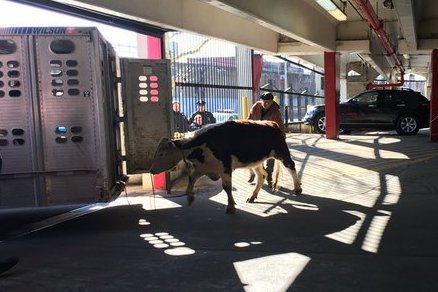
Officers corralled a cow that had escaped a slaughterhouse in Jamaica, Queens, on Thursday. Credit, New York Police Department 103rd Precinct

We are not clear on the meaning of the name given to this cow, but we are sure the story is a sign from the forces of vegetarianism. Anyway, go Freddie, go! As if you needed more reasons, we propose a quick read to get you thinking about giving up meat, from an unexpected angle:

A cow that was captured by the police after escaping a New York City slaughterhouse has been taken in by an animal sanctuary and named for the rock legend Freddie Mercury. Continue reading →

If You Happen To Be Outside Early Morning

19PLANET-superJumbo-v2

All five planets will arrange on an arc across the sky. Mercury will appear the closest to the horizon, followed by Venus, Saturn, Mars and Jupiter. The stars Antares and Spica will make cameos as well, twinkling between Saturn and Mars, and Mars and Jupiter, respectively. Credit Sky & Telescope

For the next six weeks, the sky is calling:

Prepare for a Celestial Spectacle as Five Planets Align

Five planets will parade across the dawn sky early Wednesday in a rare celestial spectacle set to repeat every morning until late next month. Continue reading →

If You Happen To Be In New York City

NYTTS

Come say hello. Amie and I are representing Xandari at the Costa Rica stand in North America’s largest consumer travel show. Today through Sunday they are expecting nearly 30,000 visitors to enter the premises of this show. For $20 you can have a whirlwind tour of the world, and some interesting Event Speakers (for our few recommendations, click the titles to go to the ticket page): Continue reading →

Welcoming Asian Oasis

The Raxa Collective blog caught the attention of colleagues in Thailand a few years ago, and we have been exchanging visits, and ideas, with those colleagues ever since. And now we have taken it from informal mutual admiration to formal collaboration. We have just started a strategic alliance with Asian Oasis, a pioneering sustainable tourism/hospitality company in Thailand.

Raxa Collective will now collaborate with Asian Oasis on the global promotion of their properties, which Amie and I have been getting to know with site visits over the last two years. We will begin introducing those properties on this blog, and look forward to your response.

Wild-Asia-Award-logo-Lanjia-Lodge-300x150One of their lodges in Northern Thailand, Lanjia Lodge, was recognized during 2015 as the Best in Community Engagement & Development in Asia by Wild Asia.

And that was last year, the Year of the Wooden Sheep according to local astrological tradition (search on that term for some interesting discoveries). The Year of the Red Fire Monkey (again, search it: you will find results describing it as the year of strength and determination; setting goals and achieving them; and business flourishing)  begins February 8th, 2016 and ends on January 27, 2017. We look forward to earning the Monkey’s goodwill through our good works.


Beggar Thy Neighbor, By Any Other Name

3345

South America, the EU and south E-east Asia are among the places from which the UK sources its food Photograph: Andre Penner/AP

We know local food is better for many reasons. We tend not to think about the negative impacts on those places where food is sourced from as a reason to source more locally. Thanks to the Guardian for this article:

More than half of the UK’s food and feed now comes from overseas, which is burdening poorer countries with the related environmental impact, a new study says.

More than two-thirds of the land needed to produce the UK’s food and feed is based abroad, researchers said, meaning 64% of the related greenhouse gases are emitted on foreign soil.

Since 1986, the size of this land has grown by 23% to match increasing demand, with associated CO2 emissions rising by 15%, the research published in the Journal  of the Royal Society Interface states. Continue reading →

Unlikely Conservation Story

ferrets2-1260x708

Black-footed ferrets (Mustela nigripes). Photo © Kimberly Fraser/USFWS

The first half of this article is a bit gruesome, due to the particulars of how this species arrived at the brink of extinction. The second half is the “bright horizon” side of the story, and thanks to The Nature Conservancy for sharing it (among all their other good works):

…Until 2013 willing landowners were hard to find. But that year the Fish and Wildlife Service implemented a “Safe Harbor” program by which the agency promises not to prosecute participants for accidental take of ferrets if they agree to protect prairie dogs and allow ferret monitoring and plague management. What’s more, in some states the Natural Resources Conservation Service pays them for hosting ferrets. Without Safe Harbor the Endangered Species Act tends not to work on private land; and without private land ferret recovery can’t happen. Continue reading →

Bees & Elephants, Communities Collaborating for Conservation

3000

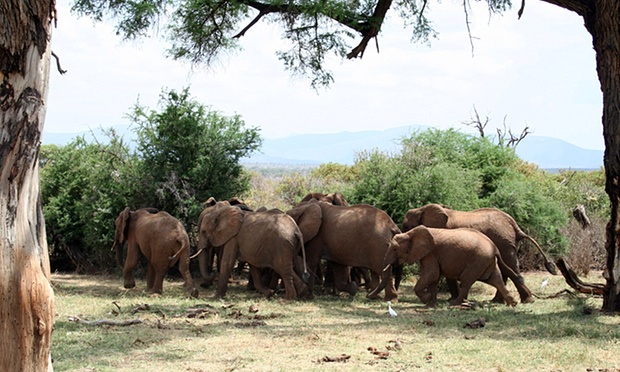
A herd of elephants run from bee sounds in Samburu national park in Kenya. Photograph: Lucy King/AP

This article from today’s Guardian‘s Environment section touches on a trifecta of our core values:

A community near the famed Serengeti national park in Tanzania is enlisting the help of bees to reduce escalating tensions with elephants that enrage locals by trampling upon their crops.

A fence made of beehives is being constructed around a one-acre farm close to the Ngorongoro conservation area as part of the pilot project to see if the buzzing bees will deter elephants that stroll on to cropland.

Continue reading →

The Science of Winged Marathons

sfw_hr_nils_sharp-tailed_sandpiper_yk_delta

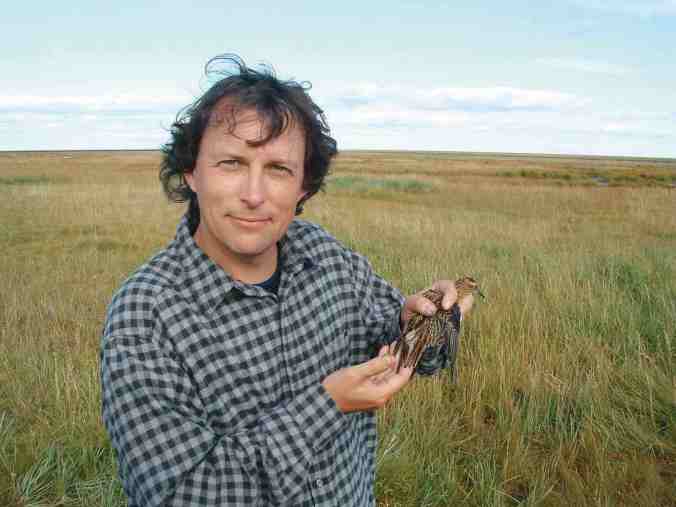
Nils Warnock holding a Sharp-tailed Sandpiper/ Photo: Ake Lindstrom

Thanks to the current issue of Audubon Magazine for bringing to our attention the remarkable work of scientists studying the even more remarkable bird journeys that make up one of North America’s many migration paths:

A decade ago, a group of biologists made an astounding discovery: By tracking Bar-tailed Godwits, they found that the one-pound shorebirds—that have bills longer than their heads—were flying non-stop for up to 7,000 miles over the Pacific Ocean, from their wintering grounds in New Zealand to their breeding grounds in Alaska. Continue reading →

Introductions, 2016 & Onward

saji_alila_goaIn keeping with the resolution made here, to share more in 2016 of what we care about , the buck starts here. No excuses for my recent quietude, but a note of thanks to those I handed off blogging to in 2015 so I could tend to our organization’s growth and development. Rosanna in India, Jocelyn in Costa Rica, Seth in Ithaca & Jamaica & Costa Rica, and a cast of others too numerous to name now, all kept our blog real, lively and on point. Thanks to them for that.

Now it is time for me to share again, and I may as well start with our organization. 2015 was a milestone year, and we have started 2016 with new leaders for both our Asia and our Latin America operations. In the photo to the left you see Saji Joseph, who now oversees La Paz Group’s Asia region from the organization’s home office in Kerala, India. Just one thing to say about him for now.

When we started this organization in 2010 the first thing I did to prepare for what would eventually become La Paz Group was to ask everyone I met in the hospitality business: who do you consider to be the best hotelier in India? The response was consistent, with stories about Saji’s leadership in various stories that sounded far-fetched to me at first, but now I believe completely. Maybe one day he will share some of those stories in these pages…

Continue reading →