Fourth Estate Considerations

the_fourth_estateWhen we started this exercise, aka blogging, we wanted to keep a running tab of “things” we care about as they showed up in various news sources, and to comment on those topics as often as we could share relevant examples from our own daily activities. Community, collaboration and conservation have been the catch-all topical themes.

Depending on the news for this exercise, not surprisingly we care about the state of the news in all its business/profession dimensions. We have a particular fondness for long form written journalism, and a particular loathing for its polar opposite, whatever that might be called. Gossip-mongering, ugh. So when I first saw headlines announcing that a gossip-mongerer had suffered a legal defeat last week, I smiled at the headline but could not otherwise be bothered to read the details. That changed dramatically when I read the short item below:

How Peter Thiel’s Gawker Battle Could Open a War Against the Press

BY NICHOLAS LEMANN

Probably the most important case in American press law is New York Times Co. v. Sullivan (1964), in which the Supreme Court, in a unanimous decision, made it just about impossible for a “public figure” to win a lawsuit against a news organization. Justice William Brennan, in the majority opinion, wrote, “The constitutional guarantees require, we think, a Federal rule that prohibits a public offi­cial from recovering damages for a defamatory falsehood re­lating to his official conduct unless he proves that the state­ment was made with ‘actual malice’—that is, with knowl­edge that it was false or with reckless disregard of whether it was false or not.” This standard, built on in succeeding cases, made this the country with the most pro-free expression, and specifically pro-press, laws in the developed world; post-Sullivan protections extend from publications to individuals, and from libel to invasion of privacy. “Libel tourism” means looking for a pretext to sue an American publication in England or some other friendlier venue, especially if you’re a celebrity. Conversely, the purveyors of recent monster revelations, like Wikileaks, have taken pains to find American publishing partners, because the right to publish is far more substantial here than elsewhere. Continue reading

Lay Folk Lessons

Konnikova-Resilience-690

Perception is key to resilience: Do you conceptualize an event as traumatic, or as a chance to learn and grow? ILLUSTRATION BY GIZEM VURAL

As science writers get better and better at reaching lay audiences–starting with Daniel Goleman’s work three decades ago for the New York Times that led to his eventual blockbuster success with Emotional Intelligence (and its many spinoffs) and expanding to much more than the several superstars we have been highlighting in these pages since 2011–it gets more and more tempting for we lay readers to think we “get it.” Hopefully we do some, if not all of the time, get the science enough not only to understand it but perhaps even act on it.

This science writer has become one of my favorites, and this particular online posting (two samples are drawn from the middle section) is a perfect example of why, in terms of the valuable actionable knowledge it imparts:

How People Learn to Become Resilient

BY MARIA KONNIKOVA

…Whether you can be said to have it or not largely depends not on any particular psychological test but on the way your life unfolds. If you are lucky enough to never experience any sort of adversity, we won’t know how resilient you are. It’s only when you’re faced with obstacles, stress, and other environmental threats that resilience, or the lack of it, emerges: Do you succumb or do you surmount?… Continue reading

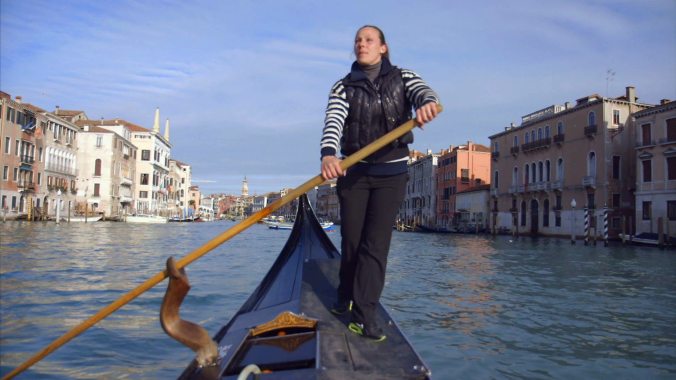
Venice’s First and Only Gondoliera

Venice

In 2009, 23-year-old Giorgia Boscolo overcame one of Italy’s last all-male bastions (for 900 years) to become a certified gondolier. PHOTO: BBC

Travel empowers. Not just the map-toting, lens-faced tourists but also the people who make travel possible. Often, mere faces. Rarely remembered by their names for their service. Giorgia Boscolo is an exception. She’s a rare breed, in a league of her own on Venice’s canals. Should your travel plans point towards this city, do catch a glimpse of this spirit who sails right through 900 years of taboo.

As a little girl in Venice, Giorgia Boscolo was forever bugging her father to let her ride with him in his gondola. While her three sisters played with their dolls, she would beg him for a turn with the remo, or oar. Dante Boscolo, an indulgent Italian father, humored his pint-sized shadow — to a point.

“My father only let me row when it was bad weather,” Giorgia recalled with a laugh.

His retort was swift: “That’s how you learn.”

Continue reading

Mind Over Matter, Consumption, And Findings From Behavioral Economics

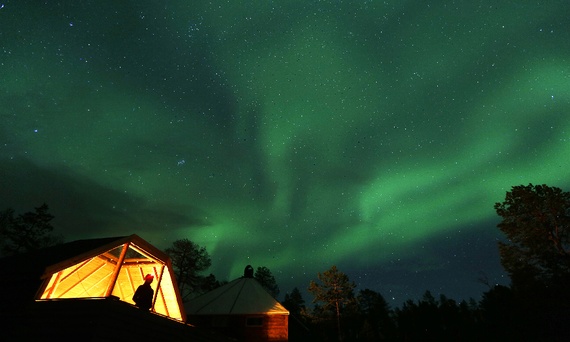
Northern lights over a camp north of the Arctic Circle, October 2014 (Yannis Behrakis/Reuters)

Northern lights over a camp north of the Arctic Circle, October 2014 (Yannis Behrakis/Reuters)

We may be a bit self-interested in declaring so, but this research matches what we believe from daily experience–not to say it is obvious–and so it is good to know science is helping us understand why:

Buy Experiences, Not Things

Live in anticipation, gathering stories and memories. New research builds on the vogue mantra of behavioral economics.

Forty-seven percent of the time, the average mind is wandering. It wanders about a third of the time while a person is reading, talking with other people, or taking care of children. It wanders 10 percent of the time, even, during sex. And that wandering, according to psychologist Matthew Killingsworth, is not good for well-being. A mind belongs in one place. During his training at Harvard, Killingsworth compiled those numbers and built a scientific case for every cliché about living in the moment. In a 2010 Science paper co-authored with psychology professor Daniel Gilbert, the two wrote that “a wandering mind is an unhappy mind.”

Continue reading

Thank You, Oxfam International

Photo courtesy of behindthebrands.org

Photo courtesy of behindthebrands.org

The Oxfam International campaign Behind the Brands aims to address how little is known about supply chains of the top 10 largest food and beverage companies. Listening to the NPR Salt Chat provides a good explanation about how pushing for transparency from these big companies is a catalyst for on-the-ground change. The campaign has only been around for a year and a half and they’ve already seen great progress in terms of land rights for local community, government intervention, and women’s rights.

It’s not always easy to connect the dots between the food we consume and the people who grow it, or the impact of growing and processing that food on the health of our planet.

But a campaign called Behind the Brands, led by Oxfam International, an advocacy organization dedicated to fighting poverty, is trying to make the inner workings of the 10 biggest food companies in the world more visible…

We sat down to talk with Chris Jochnick, one of the architects of this campaign and Oxfam America’s director of private sector development. We touched on how social media is giving activists more power, why big food companies respond to pressure, and whether corporate executives are his friends or his enemies.

We also wanted to know: Will the promises that these companies make really translate into concrete changes on, say, cocoa farms in West Africa?

Continue reading

Masters of Disguise

The green coloration helps this cricket blend into its leafy environment

Members of the animal kingdom have developed an amazing number of ways of defending themselves from predators. Some have highly evolved poisons that can wound or kill animals many times larger than themselves (think venomous snakes and spiders, or poison dart frogs); others have barbs, spines, or just generally prickly parts that render them unappetizing, making would-be-assailants think twice about the hassle of getting the creature into its craw; finally, there are more innocuous methods of self-defense, like cryptic camouflage. Cryptic camouflage makes the creature more Continue reading

That Traveling State of Mind

10437354_10201362789791511_7388278044108926240_n

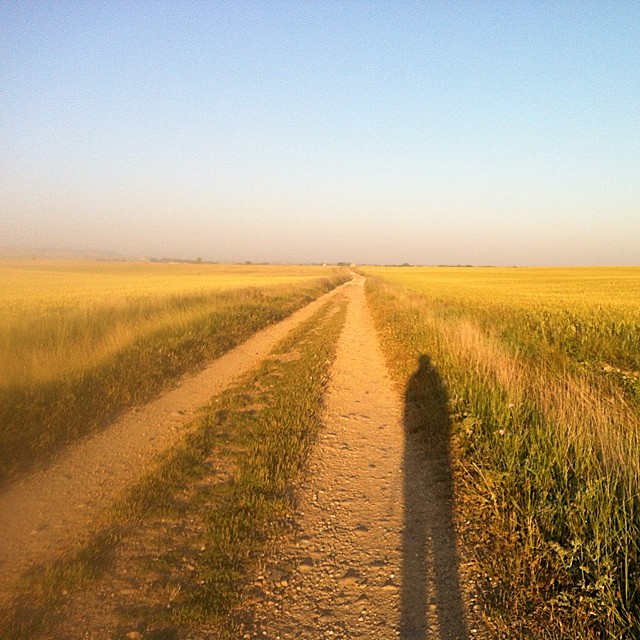
I took this while backpacking across this very empty and flat part of the Camino in Spain called the Meseta.

In my daily life, I flee myself in sneaky ways. I flip on a movie. I hang out with friends. I have habits when I am at home. There are these creature comforts that become little patterns that can give me an easy way out. Since I’ve been traveling, different parts of myself have surfaced. And if I don’t like those parts, tough luck. There is no easy way out, only a way forward. To just be with what I am experiencing, as it is.

The culture of the different places I have been and the range of different things I see activate streams of thought and states of mind I do not find myself in from my experiences at home. I really appreciate this about the traveling state of mind.

I think this is a different kind of tourism. Visiting different parts of myself inspired by different parts of the world.

Continue reading

Notes from the Garden: Quantifying Farm-to-Table

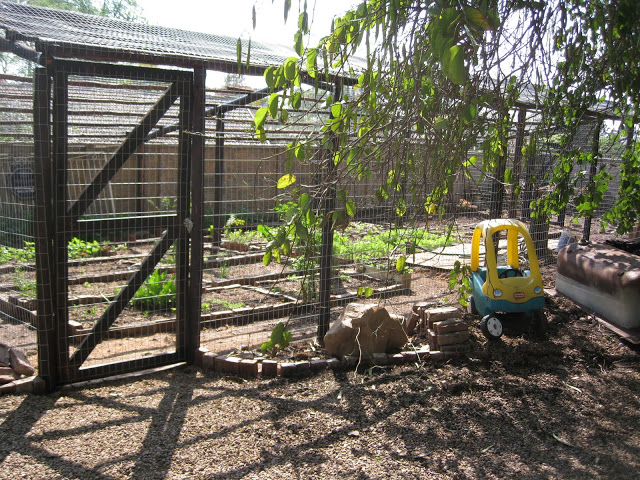
We are in process of building a monkey-proofed area of the garden. You can see my past post to get a feel for the evolution of this idea. The main issue with providing the Cardamom County restaurant with food from the on-site organic farm is monkeys. We were inspired by these subsistence farmers in Ixopo, South Africa, who blogged about building their monkey-proof vegetable cage. They, too, are neighbors with a nature reserve, so their situation is quite similar to Cardamom County! Now, we are on our way to having a truly farm-to-table menu!

Here is the cage we are modeling ours after. Check out their blog: http://foodieschannel.blogspot.com/2011/04/this-isnt-really-recipe-but-its-about.html

Here is the cage we are modeling ours after. Check out their blog: http://foodieschannel.blogspot.com/2011/04/this-isnt-really-recipe-but-its-about.html

You may be wondering, why is there all this buzz these days about farm-to-table? There is more to it than just fresh, delicious food.

Obviously, a lot of nature gets destroyed for agricultural purposes. In the United States, so much land gets wasted on sprawling, inefficient development. In the in-between spaces, you could feed a nation. But we eat up our open, natural spaces for agriculture. Our agriculture is rarely local so it leads to problems of unnecessary carbon emissions from transport and a lot of not-fresh food in grocery stores. When we can use the land we have already developed on to provide the people there with food, why spread ourselves out so thin into nature? Continue reading

Notes from the Garden: Mango Hunting

photo 4

The mango has its ancestral roots in India, so something felt really right about shaking mangoes out of the trees today in Cardamom County. Right now I’m reading this delicious book called The Fruit Hunters, written by Adam Leith Gollner. Since I have started it, I have had a whole new context to put my experience of fruit in! Turns out there are over 1,100 varieties of mangoes. The ones I know and love from supermarkets back in the United States are the Tommy Atkins mangoes, which are more common in international commerce.

photo 2Indian mangoes apparently weren’t allowed into the states for almost thirty years due to “pest concerns.” Actually, it was more like, nuclear trade concerns. India and Canada had a nuclear trade relationship in which Canadian nuclear reactors were being used to build a nuclear arsenal. In 2007 though, India signed a nuclear treaty with the United States, only under the condition that India’s mangoes be allowed back in the states. Later when President Bush flew to India to discuss the deal, he announced, “the U.S. is looking forward to eating Indian mangoes.” Continue reading
Camino de Santiago Part 1

10394480_10201305461438338_2752454523553822119_n

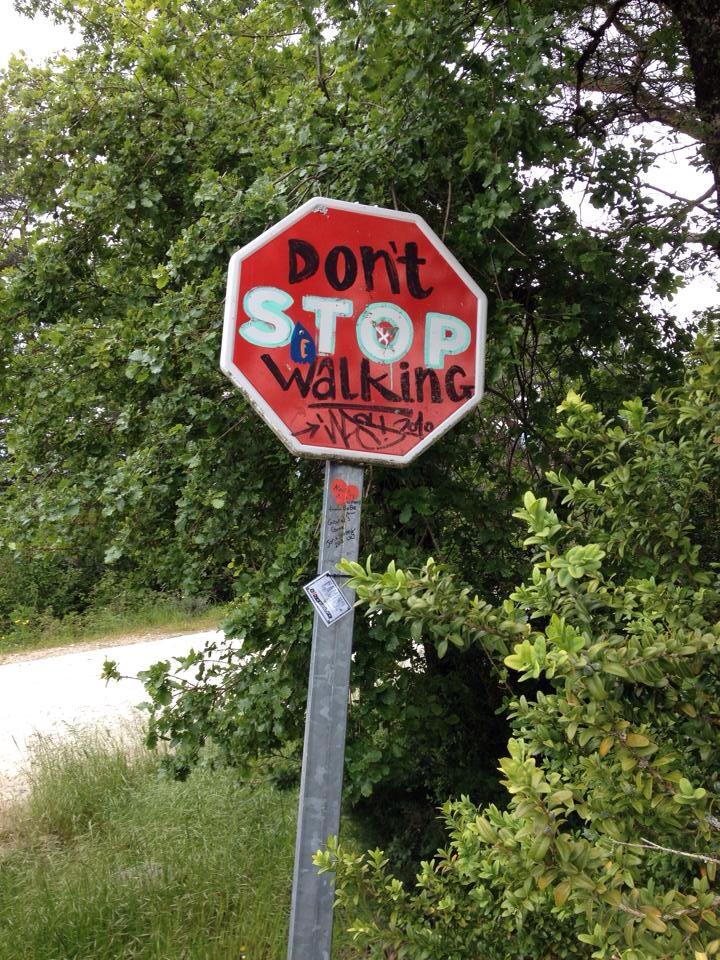
There are good signs everywhere along the Camino. Photo Credit: Kayleigh Levitt

Before coming to India, I was traveling for a month in Spain, walking the Camino de Santiago, an ancient pilgrimage to the cathedral of Santiago, where the apostle Saint James is said to be buried. Nowadays, people walk the Camino for a range of reasons including the traditional Catholic. Everyone I met was walking for a different, personal reason, but many fell into similar and overlapping categories of health, spirituality, personal journey, and cultural experience.

Many of us on the Camino were far from home, but the shared intention of being there was this thread that bound us all together, beyond language barriers and cultural differences. The Camino has its own culture and so we shared that. There were lots of people who were alone, but we were together.

The most popular part of the pilgrimage to walk is the Camino Frances, from St. Jean Pied de Port, France to Santiago de Compostela, Spain. Traditionally, people walked from their house. Although that is less common now, people do still start from their own doorway. There are many places people start the Camino besides St. Jean Pied de Port (as well as many places to end it- there is a walk to Finisterre, the coast of Spain and through Portugual, the Camino Portugués as well). I have been told there are fewer way markers- which are yellow arrows and scallop shells- before the Camino Frances.

Part of the fun of the Camino is hearing about the different ways people have done their journey. I heard of a woman walking alone, starting in Switzerland, with only a compass to guide her (there are fewer albergues too when you start from that far). I met several people who walked 1000 kilometers by the time they reached St. Jean Pied de Port, where I was starting.

I started in St. Jean, which is right at the border of France and Spain. Photo Credit: http://www.caminoguides.com/route.html

At the first albergue I stayed in, which are essentially hostels for pilgrims, our French hospitalera described it something like this: The Camino is not about walking. Walking helps you do the camino, but the camino is an inner camino, when you walk inside yourself.

Continue reading

Maps, More Than A Practical Tool

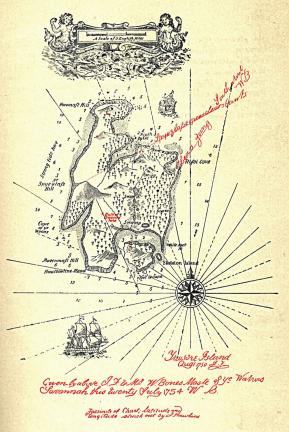
Map of Treasure Island, from Robert Louis Stevenson’s “Treasure Island.”

Map of Treasure Island, from Robert Louis Stevenson’s “Treasure Island.”

Travel without a map can be fun, sometimes, if adventure is the objective; but context and direction helps more than it hurts most of the time. The same is true when maps are there just for the sheer pleasure or comfort, in environmentally sensitive, creative graphic design, or for historical research. This post on the New Yorker‘s website captures the sentiment well:

For years, I carried the same map wherever I went. When I wasn’t travelling, Scotch Tape held it to the back of my bedroom door: it was visible to me when the door was closed, but invisible to almost everyone else. That map moved from dorm rooms to apartments and houses, from the Eastern Shore of Maryland to New England, from New England to the United Kingdom, and back again.

When I felt homesick, I would drag my fingers up and down the map’s paper folds, tracing its shorelines and rivers, wishing they were the real thing. But touching that map only made me more homesick. Continue reading

The Hut of Romulus

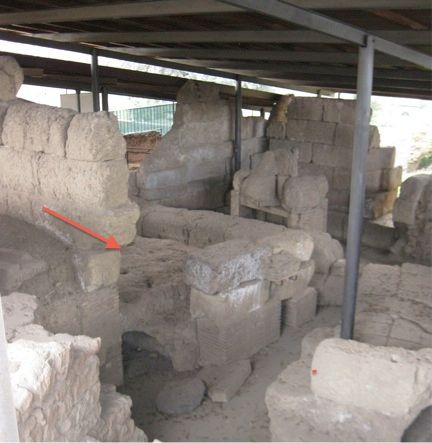
Hut of Romulus (Post holes where arrow is pointing.)

Today, all that remains of the so-called “Hut of Romulus” are the holes you see in the picture above (the slight indentations on the platform where the arrow is pointing). When intact, Romulus’ humble wattle-and-daub dwelling, located in the southwest corner of the Palatine Hill in Rome, might have looked something like this. One might have expected that the passing of nearly three millennia would not have treated well the wood, straw, and twisted bark ties of the hut, but even in its own day the Hut was prone to accidental destruction. One particularly ignominious story has a crow dropping Continue reading

Disconnected

A usual day in States starts out with me waking up to the ear-drillingly loud alarm on my Samsung Galaxy, checking my email and Facebook, surfing the web and reading the news. Then I soullessly get out of bed and proceed to breakfast, during which I also constantly fidget with my phone, jotting down everything I need to do for that day and texting my friends, usually to vent about how tired we are and who has gotten less sleep. Then in class, I take notes on my laptop as I constantly browse through my email and simultaneously type things I don’t understand into the Google search bar. As soon as I get out of class, I go back to staring at my phone, browsing through Instagram and Facebook, walking to my next class or lunch. (I have once literally run into a door because I had my head in my phone and didn’t see the door at all.) Bottom line, I am always connected, always online, and always ready to access everything on the Web. A ridiculous amount of my life is consumed by my phone and my laptop.

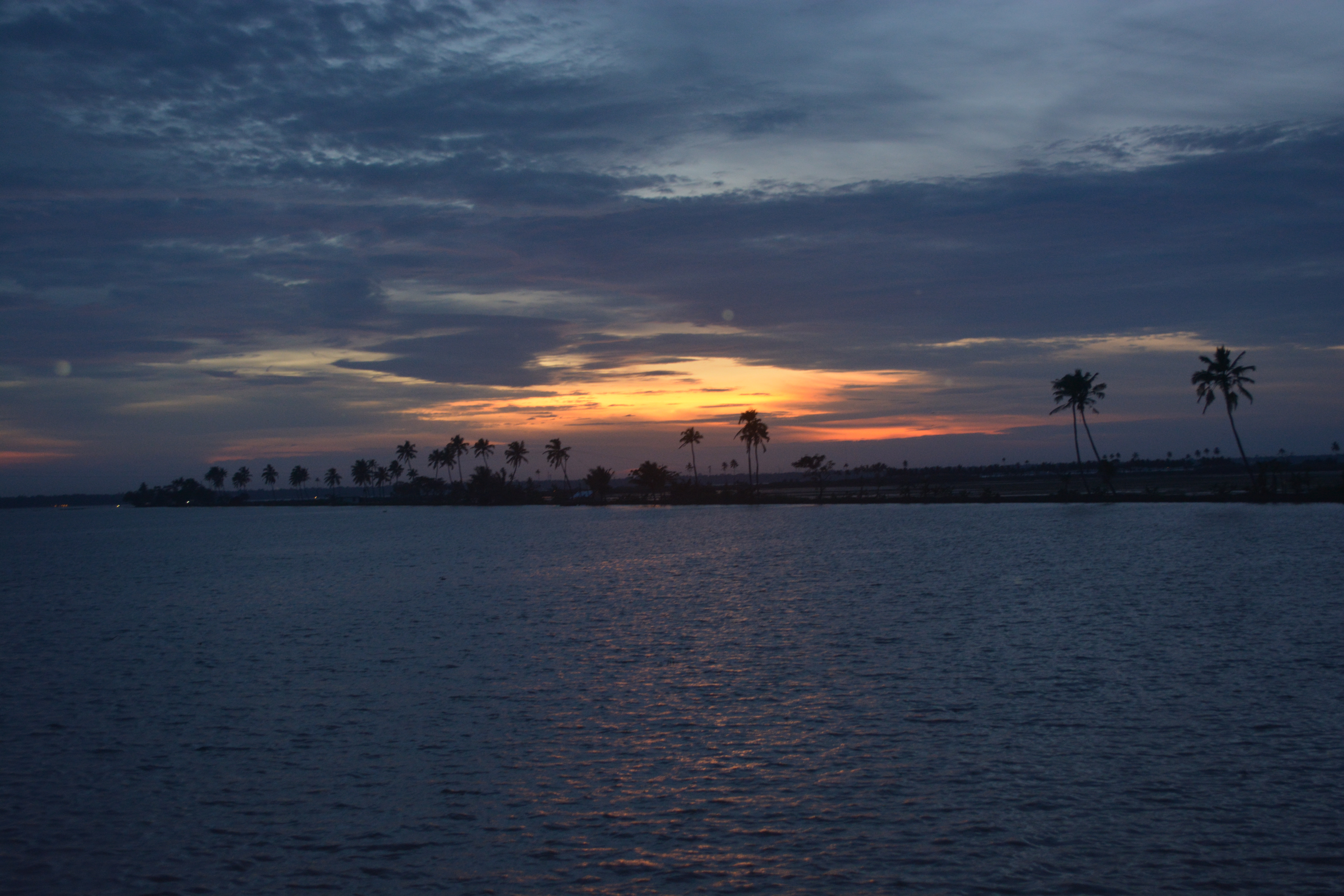
However, on my second day in India, I went on a houseboat—my fellow intern Jake has written about it a few posts back—and it did not have Wifi! I felt disconnected and nervous. I cannot even remember the last time I didn’t have access to Internet or my phone. After a couple of hours, I simply didn’t know what to do with myself. I didn’t even have music to listen to since I always stream it from Spotify or Youtube. In hopelessness, I lay down on the cushioned sun deck, hoping to take a nap, which would kill some time. So I sat there, directionlessly looking into the backwaters, the rice farms, and the tiny villages clustered up in the narrow grounds next to the river. I watched little naked boys taking a bath in the river and running away in embarrassment as they saw me staring at them on the boat. I also watched the birds hover right on top of the river surface, meticulously and gracefully snatch the fish out of the water, and fly away gobbling it down. I watched the sun slowly setting, painting the whole sky orange and pink with its radiance.

Before I knew it, it was pitch black outside and we were called down for dinner. Continue reading

It’s Never Too Late

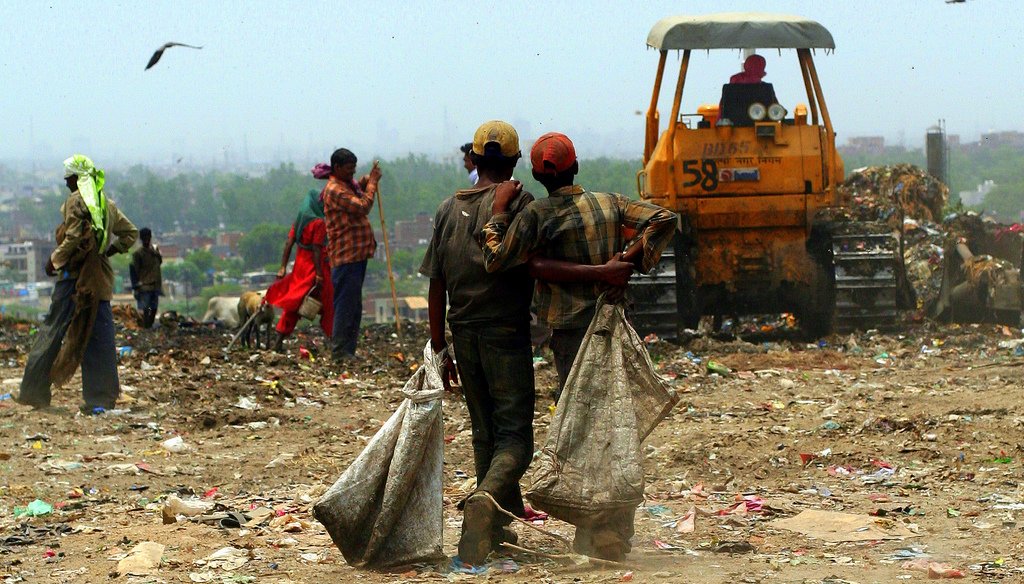
Recycling In India

Photograph Credit: mackenzienicole

To be completely honest, helping the environment had rarely been a crucial concern of mine.  Actually, that’s an understatement: Helping the environment had rarely been a concern of mine at all.  Growing up, my parents tried to nudge me the right way.  For example, they always told me not to waste food – the theme of this year’s World Environment Day.  However, it didn’t actually sunk in.  At buffets I would take more food than I actually needed so I could try everything before it was gone. To me, this was well justified – we were paying the same amount regardless of what we took, right? I even scorned my parents’ initiative to use fluorescent light bulbs in the house; I didn’t see the benefit of using light bulbs that took a while to light up.

This past summer I decided to come to India and intern for Raxa Collective to experience something both culturally and professionally different.  From the moment I arrived I was amazed at the passion with which Amie, Crist, and the rest of the Raxa Collective staff operated.  Cardamom County already had numerous eco-friendly initiatives in place such as their natural farm, composting, and the use of glass water bottles in the restaurant, solar panels to heat the water in the kitchen, and compact fluorescent lighting (CFL).  However, it was evident that the Raxa Collective staff was not willing to settle.  Continue reading

Convocation Power Well Used

Open, N.Y.

Open, N.Y.

We are grateful when people whose name and heritage give them convocation power use their power on behalf of others less fortunate (until they shake our confidence), so we give thanks to the New York Times and to Peter Buffett, both privileged, for sharing this startling opinion piece. We, a small group of moderately privileged people with a small platform for sharing ideas, are particularly interested in the intersection of good and market forces, so Mr. Buffett’s challenge here is germane to our mission and to our practice:

I HAD spent much of my life writing music for commercials, film and television and knew little about the world of philanthropy as practiced by the very wealthy until what I call the big bang happened in 2006. That year, my father, Warren Buffett, made good on his commitment to give nearly all of his accumulated wealth back to society.

Continue reading

Urban Muse

This slideshow requires JavaScript.

It does not matter whether you are a farmer, a geneticist, or whatever you do with your time: you will almost certainly be affected in important, unexpected ways after time spent in Paris.   Continue reading

“Often I am permitted to return to a meadow”

Some places are of no use. They remind us that not everything in life needs to be of use. Take poetry.  The meadows near Cardamom County remind me daily of this poem by Robert Duncan.

Flowers in the meadow credit Ea Marzarte - Raxa Collective

Often I Am Permitted to Return to a Meadow
as if it were a scene made-up by the mind,
that is not mine, but is a made place,

that is mine, it is so near to the heart,
an eternal pasture folded in all thought
so that there is a hall therein Continue reading

A road paved with mixed intentions

Hotel on the lake road Thekkady

The pavement is being rebuilt on the street leading to ‘downtown’ Thekkady. Right now it looks like in many other Indian cities, which is apparently like a constant work in progress according to this article by N N Sachitanand in the New Indian Express:

Once upon a time, roadside pavements were meant for the use of pedestrians so that they could safely traverse the length of the road without being knocked down by traffic. That is why the Americans (as in the US of A) call them sidewalks. Indians have adopted and adapted to this Western concept to suit their own environment and, in the process, mangled its original purpose beyond recognition.

…or an extreme-gardening experimentation : Continue reading

Small Wonders

A Mayfly nymph. Photo by Daniel Stoupin, www.microworldsphotography.com

A Mayfly nymph. Photo by Daniel Stoupin, www.microworldsphotography.com

Yet another fascinating view of the world from Aeon, whose very name conflates the single into the infinite, making everything a matter of perspective.

When the Dutch cloth merchant Antonie van Leeuwenhoek looked at a drop of pond water through his home-made microscope in the 1670s, he didn’t just see tiny ‘animals’ swimming in there. He saw a new world: too small for the eye to register yet teeming with invisible life. The implications were theological as much as they were scientific. Continue reading

Le Macchine E Gli Dei

Machines and Gods: Dionysus at MCCM

The Musei Capitolini Centrale Montemartini is an interesting place, to say the least: it combines Italian machinery of mammoth proportions from the Industrial Revolution with ancient Roman statuary. These statues include the monolithic “Fortuna Huiusce Diei” (“Fortune of This Very Day”), various Greek gods (Venus, Dionysus as pictured above, and others), Roman emperors, famous statesmen, and lesser known wealthy citizens; the machinery, on the other hand, consists in titanic pieces of metal that when whirring generated tens of thousands of horsepower. Continue reading