Model Mad, Markets

01leshy-master768

Leigh Wells

On a day often reserved for gags and laughs, we instead repeat, without much cheer but plenty of conviction, two of our favorite words: entrepreneurial conservation. Two opinion pieces today highlight the role of both government and market forces as vehicles of environmental protection. When government must take action, as John D. Leshy and Mark Squillace point out, there is a law that allows the President of the United States to protect nature in the public interest. That law is endangered, and it is not okay, these model mad legal scholars remind us. They also point out that markets have tended to follow and reward the actions Presidents have taken to protect natural monuments in the last 111 years since that law was enacted.

A former Mayor of New York City, who also has credibility when it comes to market forces, reminds us in another editorial that with or without a President’s leadership we can still make progress on our environmental commitments. But only if all the rest of us are fully on board, and ready to shake things up when needed, providing all the more reason for each of us to keep all these model mad examples fresh in mind. If you only have time for one quick read at the moment, make this the one:

Climate Progress, With or Without Trump

America’s Best Idea Just Got Better

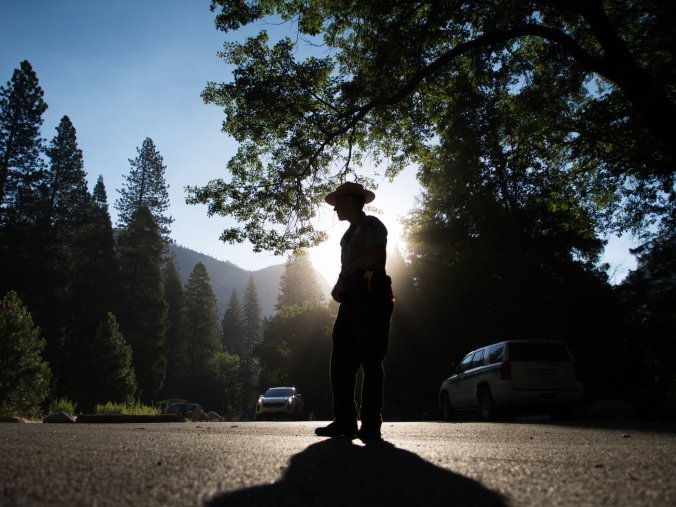
In our current political climate we continue to applaud those who stand up for science, nature and culture. It’s been particularly heartening to watch the steward’s of our national parks create a virtual protective shield around the vision they’re charged to protect.

My personal standing ovation goes to the partially anonymous park ranger who spends his spare time creating downloadable maps of all our country’s national parks, by state, from A to Z. (F, Q, U and X seem to be the only letters missing…) In addition to maps, site visitors find all sorts of experiential tips to prepare for safe exploration.

Glacier Maps

If you’re looking for a Glacier map, you’ve come to the right place; currently I’ve collected 28 free Glacier National Park maps to view and download. (PDF files and external links will open in a new window.) Here you’ll find a bunch of trail maps, along with other maps such as campgrounds and the shuttle bus. You can also browse the best-selling Glacier maps and guidebooks on Amazon. Continue reading

Rethinking Protected Areas In China

daily_news_v2.jpg

Gretchen Daily. COURTESY OF STANFORD UNIVERSITY

We have shared stories from time to time about the challenges and about related opportunities for protected areas in countries around the world. Thanks to Yale360’s Diane Toomey for this interview in which an ecologist describes her work with the Chinese government as they re-conceive their national park system and their other protected areas in a country where little land remains undisturbed:

For Stanford University ecologist Gretchen Daily, nature isn’t only to be preserved for its own sake, but also for the value of the ecological services it provides, such as water filtration, carbon sequestration, and soil retention. Daily helped pioneer the concept of “ecosystem services,” and these days she applies those principles as she works with countries to develop land management strategies and determine which natural areas to prioritize for protection. Continue reading

Please Support Sierra Club On This Initiative

rtaImage

Photo credit: B. Bartel/USFWS

We know that most of our readers on this platform, and most guests we serve at the various properties we have developed and managed over the years, care deeply about primary forests and the ecosystems they support. Here is a chance to vocalize together with one of the influential organizers of vocalization:

Help Protect Tongass National Forest: Stop the Clearcutting

They’re about to start their chainsaws. Timber companies are trying to clearcut one of the most primeval wild places — and this is our last chance to stop them.

Alaska’s Tongass National Forest is nothing short of magical: it contains centuries-old trees and one-of-a-kind wilderness, home to animals like Alexander Archipelago wolves and bald eagles. Your voice is needed to pressure Congress to bring an end to old growth logging and save the Tongass for our children and grandchildren.

Take action today to save the Tongass National Forest.

Borneo Bridge Not Needed, Thank You

6060

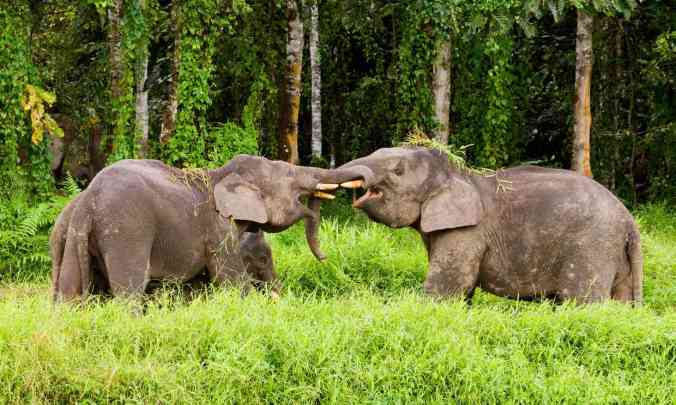
Pygmy elephant males play-fighting near the Kinabatangan river in Borneo. Photograph: Alamy

What he said:

David Attenborough attacks plan for Borneo bridge that threatens orangutans

Endangered pygmy elephants and orangutans threatened by scheme for Kinabatangan Wildlife Sanctuary

David Attenborough and Steve Backshall have joined conservationists and charities asking officials in Borneo to reconsider a bridge that threatens one of the last sanctuaries of the rare pygmy elephant.

Continue reading

Chan Chich Wildlife

CCLBoard.jpg

A couple weeks back, there were a string of remarkable sightings, recorded by guests in a series of photos and then listed on the board by the Chan Chich Lodge reception area. That was a good preview for what happened yesterday, when guests arriving to the Lodge encountered a mature jaguar crossing the road. Continue reading

From Behind the Camera Trap

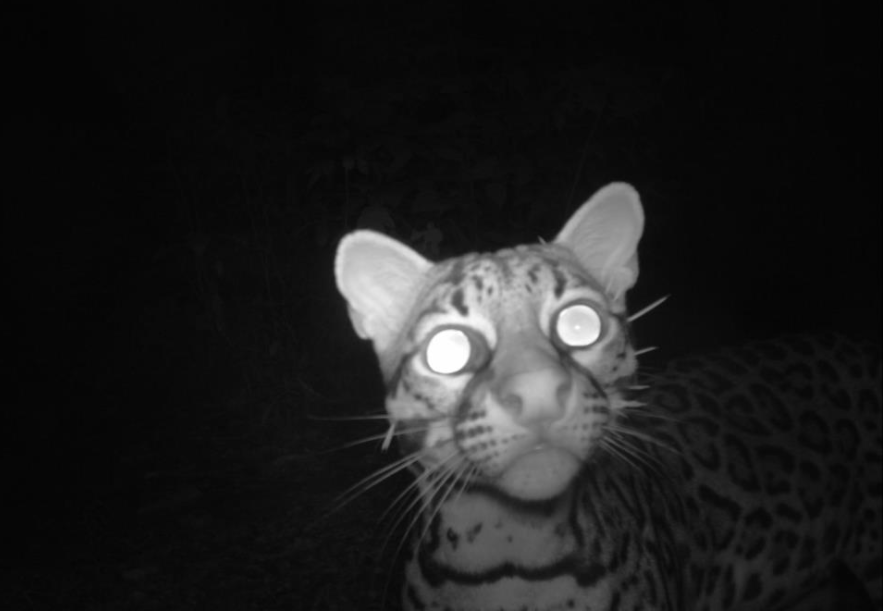
Ocelot curious about the red light of the camera

Ocelot curious about the red light of the camera

For years the camera traps at Chan Chich Reserve have been capturing images of wildlife both day and night. In addition to helping to document the size and health of the population of a specific species within the reserve, the cameras also capture the particular behavior of the species.

Continue reading

Ocean Refuges, Bonus Benefits

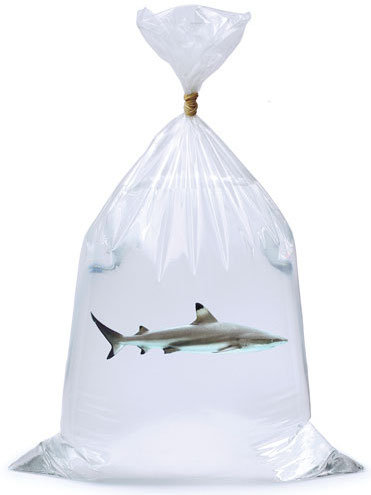
shark-in-bagWe appreciate Anthropocene’s ongoing efforts to summarize important scientific findings related to the environment, conservation and related topics.  Earlier this week Emma Bryce offered “The invisible boundaries of ocean refuges protect even wide-roaming creatures” — a worthy read about these spaces providing more benefit than expected:

In recent years, we’ve preserved several million square kilometers of ocean inside Marine Protected Areas (MPAs), the wildlife reserves of the sea. By cordoning these areas off from commercial fishing, undersea mining, and development, we hope to protect the species within them. But does it actually work? Continue reading

Model Mad, Effective

2900.jpg

Utah’s congressional delegation has vigorously fought to open Ute tribal land, currently partially protected by the Bears Ears National Monument, above, to drilling. Photograph: Francisco Kjolseth/AP

Thanks to the Guardian for first bringing this to our attention, another example of model mad, and a pretty big deal too:

Model Mad, Alt

gettyimages-541079114-270d8a863b14cf1c1d10eee0eaee567e7efe20fd-s1400-c85.jpg

Multiple Twitter accounts claiming to be run by members of the National Park Service and other U.S. agencies have appeared since the Trump administration’s apparent gag order. The account owners are choosing to remain anonymous. David Calvert/Getty Images

Thanks to Wynne Davis at National Public Radio (USA) for It’s Not Just The Park Service: ‘Rogue’ Federal Twitter Accounts Multiply, another example of model mad:

“Rogue” accounts that have the look of those by real federal agencies are spreading like wildfire on Twitter.

The AltUSNatParkService Twitter account has gained more than 1 million followers and inspired the creation of many more “unofficial resistance” accounts for specific national parks and other entities, including accounts like Rogue NASA and AltUSForestService. Continue reading

Model Mad, Corporate

oh418v0r-1Thanks to EcoWatch for identifying these companies for speaking out, as is their right and responsibility as much as their self-interest–a good self-interest in conservation–and providing another example of model mad, corporate style:

The most anticipated outdoor recreation event of the year just finished in Salt Lake City, Utah, where hundreds of outdoor brands from small business outfitters to industry pioneers like Patagonia and Black Diamond Equipment gathered to witness the cutting-edge in outdoor gear. Continue reading

Model Mad, McKibben

McKibben-ABadDayfortheEnvironmentwithManyMoretoCome-1456x750-1485299497.jpg

PHOTOGRAPH BY DOUG MILLS / THE NEW YORK TIMES / REDUX

Bill McKibben is the founder of 350.org and we have posted on him so many times in the past for his environmental and other forms of activism we sometimes forget that he also has a day job, as the Schumann Distinguished Scholar in environmental studies at Middlebury College. Today he posted in a manner that captures well what we meant when we used the word mad, and qualified our intent to remain madly determined:

…There’s not the slightest evidence that Americans want laxer environmental laws. A poll released last week showed that nearly two-thirds of Americans would prefer that the E.P.A.’s powers be preserved or strengthened. Solar power, meanwhile, polls somewhere in the neighborhood of ice cream among Democrats, Independents, and Republicans alike. Continue reading

Montenegro, 2017

5565

Wild and wet … Lake Skadar national park, Montenegro. Photograph: Alamy

It is now ancient history, but it may as well be yesterday, since I can look at the photo above and it has no less of an impact on me. When Montenegro was still part of what remained of ex-Yugoslavia, La Paz Group worked in partnership with UNDP on a project for the Prime Minister of this soon-to-be independent nation. He was visionary, and wanted to replicate what Costa Rica had accomplished as a small ecologically diverse country–harnessing sustainable development to ensure his country would not become the victim of the forces of mass tourism.

Skadar Lake was the crown jewel in the country’s potential attraction of ecologically-oriented travelers, and the perfect complement to the wild beauty of the coast line and the spectacular mountains. Montenegro has done a very good job in the decades since my first visit to Skadar Lake (standing exactly where the photographer above stood, looking at my own photos from that visit), communicating its commitment to those principles. Nonetheless, the challenges never go away, so we wish them continued success in fighting the dark forces:

Montenegro’s pristine Lake Skadar threatened by new resort

Tourism in Montenegro is booming, but the approval of plans for a new ‘eco-resort’ has led to protests from conservationists who fear it will threaten a stunning national park Continue reading

Bear Ears Monuments, Cheering & Detraction

cedar-mesa_custom-427276f5586a9f7a0a22192760db944d7196cb73-s2500-c85.jpg

Photo by Josh Ewing/Bears Ears Inter-Tribal Coalition

The Food & Environment Reporting Network updates our understanding of the added significance of Bear Ears Monument, and its detractors:

Bears Ears Monument Is A Win For Tribal Food Sovereignty. Will Trump Undo It?

By Kristina Johnson

Seven years ago, the Navajo tribal council in southeastern Utah started mapping the secret sites where medicine men and women forage for healing plants and native people source wild foods. They wanted to make a case for protecting the landscape known as Bears Ears, a place not only sacred to their tribe, but to many other tribes in the region, going back thousands of years. In one of his final acts in office, President Obama late last month created the 1.35-million-acre Bears Ears Monument, in a move that proponents say will safeguard the area’s ecology and guarantee food sovereignty for the region’s Native Americans.: Continue reading

Droning Over Wetlands

Thanks to The Nature Conservancy’s Cool Green Science team for helping us realize we almost missed this story:

Flight Over the Bas-Ogooué: Using Drones to Map Gabon’s Wetlands

BY JUSTINE E. HAUSHEER

How do you map a nearly inaccessible 9,000-square-kilometer African wetland that is home to hippos, forest elephants, crocodiles, and the notorious Gaboon viper?

Enter the drones.

Nature Conservancy scientists are using unmanned aerial vehicles to create the first-ever detailed wetlands habitat map of coastal Gabon, in collaboration with scientists from NASA, and other conservation groups working in Gabon. Continue reading

The Gift Of The Camera Trap

3-week-old-male-kitten-at-den-site-Laguna-Atscosa-NWR.jpg

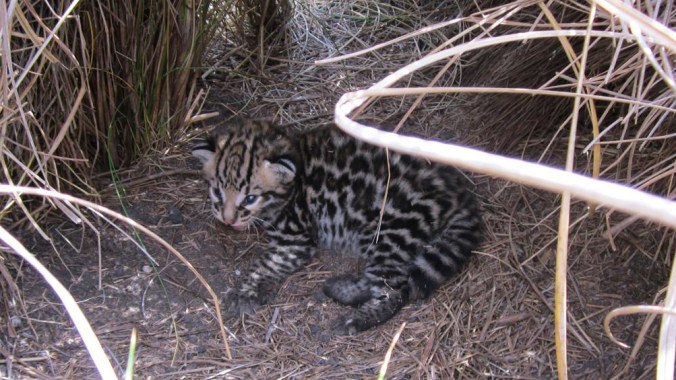
Three week old male ocelot kitten. Photo courtesy of US Fish and Wildlife Service

Thanks to Matt Miller and TNC’s Cool Green Science:

Camera Trap Captures Images of Texas Ocelot Kittens

Great news for ocelots: This year, several females with kittens were documented in South Texas using remote cameras.

The U.S. Fish and Wildlife Service (USFWS) issued a public service announcement brimming with good news, including the first ocelot den documented in 20 years on Laguna Atascosa National Wildlife Refuge, and ocelots with kittens on the Yturria Ranch, a private ranch protected by conservation easements held by The Nature Conservancy and USFWS. Continue reading

Atlantic Canyon Withdrawal, Another Obama Legacy

ap_16281732045464_wide-253ae041d7cf2035c25a21f614330c82b0673230-s400-c15

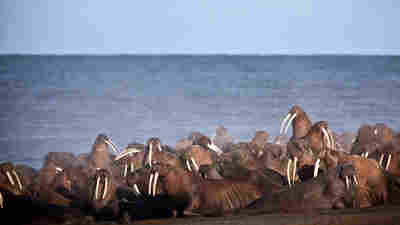
Walruses rest on the shores of the Chukchi Sea, the vast majority of which was designated off-limits to drilling on Tuesday. Ryan Kingsbery/AP

It is impossible to predict what will happen 2017 onward to these final environmental initiatives of the outgoing President of the USA. Nonetheless, we will cheer his efforts on behalf of conservation right to the very end of his term.  Thanks to National Public Radio (USA) for this news:

Obama Designates Atlantic, Arctic Areas Off-Limits To Offshore Drilling

“These actions, and Canada’s parallel actions, protect a sensitive and unique ecosystem that is unlike any other region on earth,” the White House said in a statement. Continue reading

Lessons From Ningaloo Reef

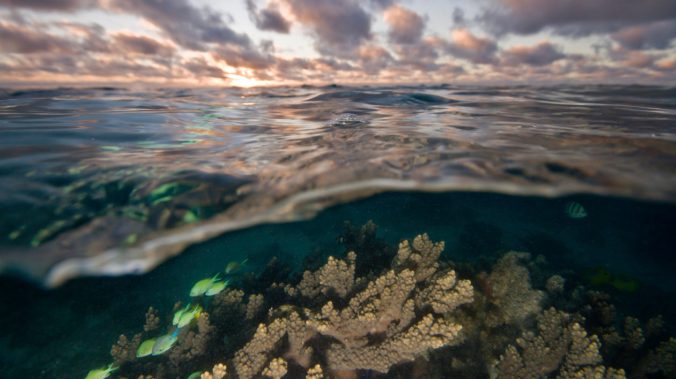
WOPA100627_D105

Acropora coral and blue green chomis on Ningaloo Reef in Western Australia. Photo © Steve Lindfield

Thanks to James Fitzsimons and The Nature Conservancy’s Australia program for this one:

Big, Bold & Blue: Lessons from Australia’s Marine Protected Areas

BY JUSTINE E. HAUSHEER

Australia has one the largest systems of marine protected areas in the world, from the coral-covered Great Barrier Reef to the sub-Antarctic Macquarie Island. Now, a new book details the lessons learned by Australian scientists, policymakers, and communities during more than 130 years of marine conservation.

The book — Big, Bold & Blue: Lessons from Australia’s Marine Protected Areas — gathers lessons learned from academia, government, NGOs, indigenous communities, and the fishing sector. Continue reading

Something’s Wrong With This Picture

3872

Under current legislation, European bioenergy plants do not have to produce evidence that their wood products have been sustainably sourced. Photograph: Wolf Forest Protection Movement

Thanks to the Guardian for this coverage of disturbing news from Europe:

Protected forests in Europe felled to meet EU renewable targets – report

Europe’s bioenergy plants are burning trees felled from protected conservation areas rather than using forest waste, new report shows

Arthur Neslen

Protected forests are being indiscriminately felled across Europe to meet the EU’s renewable energy targets, according to an investigation by the conservation group Birdlife. Continue reading

The Science Of Marine Conservation

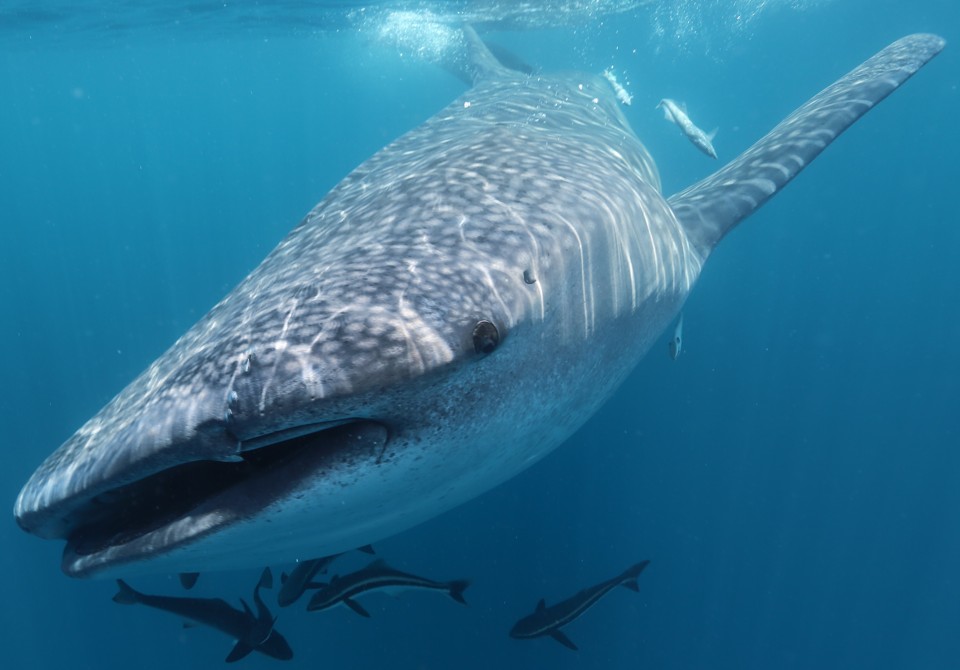
A whale shark in the Persian Gulf. Steffen Sanvig Bach

This is the future of marine ecosystem science (thanks as always to Ed Yong and the Atlantic’s ongoing  commitment to compelling coverage of environmental issues):

The World’s Biggest Fish in a Bucket of Water

Scientists used DNA floating in just 30 liters of seawater to count the endangered whale shark across two oceans.

ED YONG

If you lean over the side of a boat and scoop up some water with a jug, you have just taken a census of the ocean. That water contains traces of the animals that swim below your boat—flecks of skin and scales, fragments of mucus and waste, tiny cells released from their bodies. All of these specks contain DNA. And by sequencing that DNA gathered from the environment—which is known as environmental DNA, or eDNA—scientists can work out exactly what’s living in a patch of water, without ever having to find, spot, or identify a single creature.

And that helps, even when the creature in question is 18 meters long. Continue reading