From Guests At Chan Chich Lodge

cclmonkey

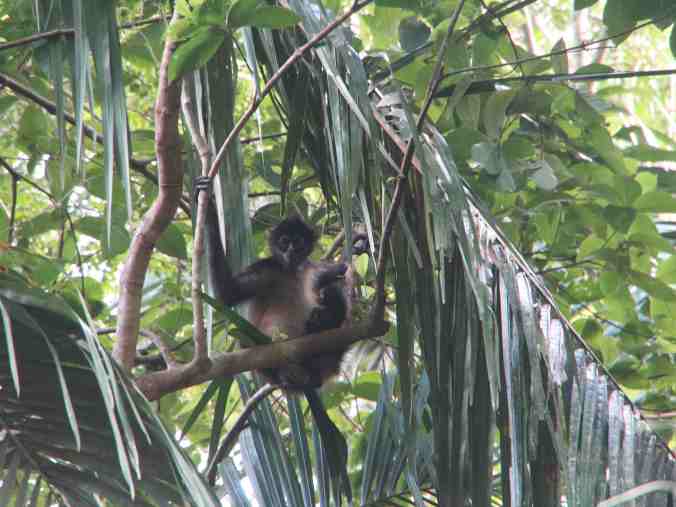
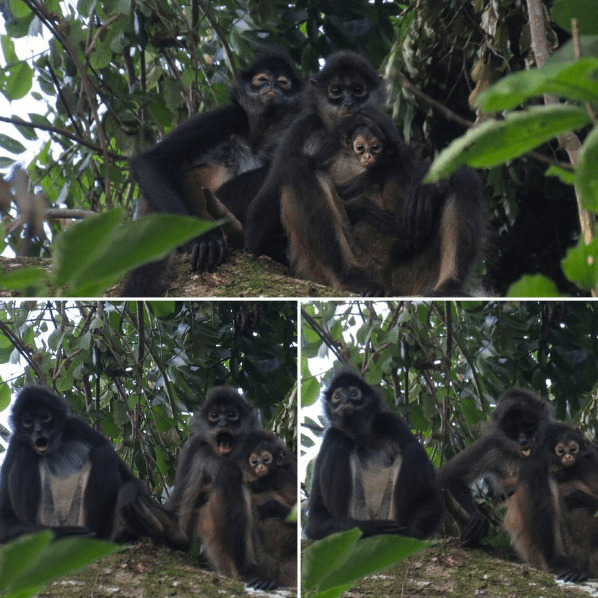
A family from Spain shared with me some photos they took during their first four days in Belize, spent at Chan Chich Lodge. I asked what was their favorite “thing” about Chan Chich and I appreciated the simplicity of their reply: they most enjoyed the simple fact of being in nature. Waking up to the spectacular racket of monkeys claiming territory in the nearby trees Continue reading

Northeastern USA Will Remain Greener, Longer, Thanks To New Protection In Maine’s Backwoods

06maineexplorer4-master1050

Thank you Maine and thank you federal government of the USA:

Touring Maine’s Newest — and Largest — Parcel of Federal Land

By

On an early fall day, with just a hint of red tinting the maples, the view from the summit of Deasey Mountain is spectacular.

To the west stand the rugged, treeless basins and knife-edge spine of Mount Katahdin. Off to the south, you see Wassataquoik Valley in the near distance, the peaks of the 100 Mile Wilderness beyond. To the east and north, more wild Maine woods and hills rolling for miles, to the Canadian border. Continue reading

Dakota Access & Fairness

4500

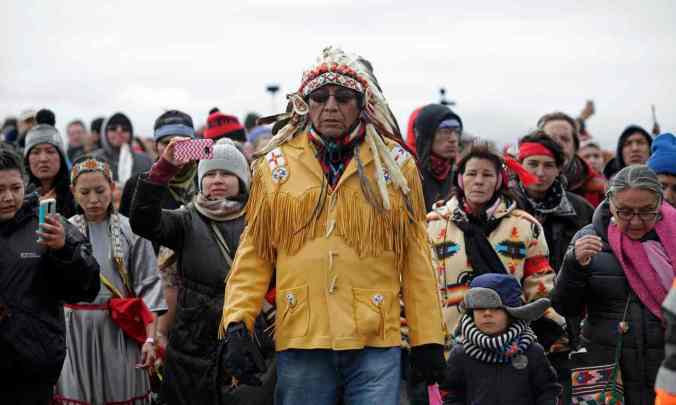
Chief Arvol Looking Horse, spiritual leader of the Sioux nation, leads his people to peacefully pray near a law enforcement barricade just outside of a Dakota Access pipeline construction site. Photograph: Stringer/Reuters

It looks hypocritical from our vantage point:

Dakota Access pipeline protesters see bias after Oregon militia verdict

Activists at the Malheur wildlife refuge were carrying guns – but ‘if native people were armed, we would be killed,’ says an activist at Standing Rock

in Cannon Ball, North Dakota

Johanna Holy Elk Face couldn’t help but chuckle. The 63-year-old Native American was one of hundreds of activists gathered to block construction of the Dakota Access pipeline on Thursday, when police with tanks and riot gear surrounded them and began making mass arrests. Continue reading

Dakota, Keystone & Resistance

29mckibbenWeb-master768.jpg

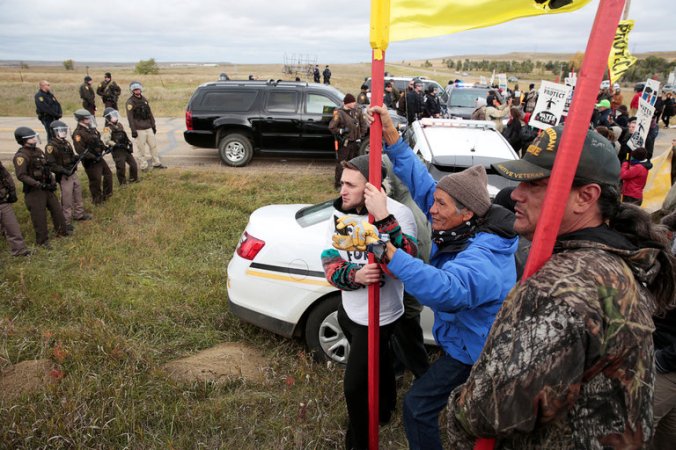
Dakota Access Pipeline protesters facing police officers in North Dakota this month. Credit Terray Sylvester/Reuters

As usual, Mr. McKibben is on the correct side of the debate and urges the rest of us to join that side and resist in solidarity:

Why Dakota Is the New Keystone

By

MIDDLEBURY, Vt. — The Native Americans who have spent the last months in peaceful protest against an oil pipeline along the banks of the Missouri are standing up for tribal rights. They’re also standing up for clean water, environmental justice and a working climate. And it’s time that everyone else joined in.

The shocking images of the National Guard destroying tepees and sweat lodges and arresting elders this week remind us that the battle over the Dakota Access Pipeline is part of the longest-running drama in American history — the United States Army versus Native Americans. In the past, it’s almost always ended horribly, and nothing we can do now will erase a history of massacres, stolen land and broken treaties. But this time, it can end differently. Continue reading

A River Runs Through Amboli Reserve

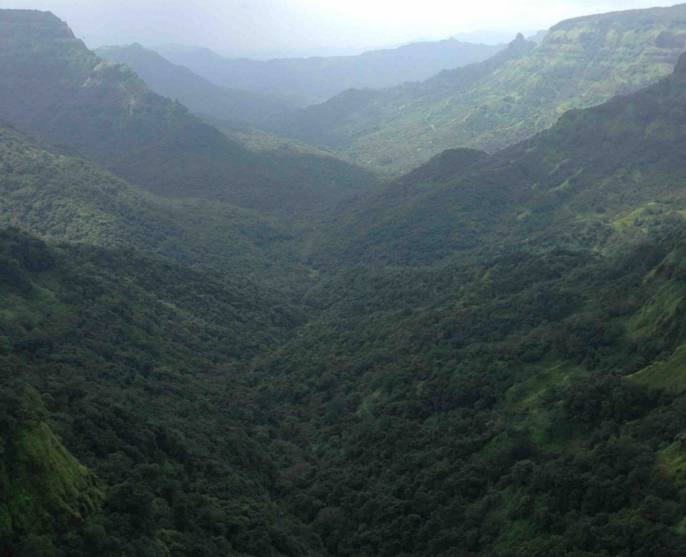
On my Saturday afternoon I followed up a morning of farm visits with a visit to the local agricultural research extension of the state university. More on that tomorrow. For now, I want to share some images from my Sunday exploration about an hour from the farms described, due inland and into the Western Ghats. Specifically, Amboli Reserve, which is in the view above.

Continue reading

Forest Protection By Any Other Name, For Any Other Purpose, Through Any Other Means, Is Just As Sweet

2000

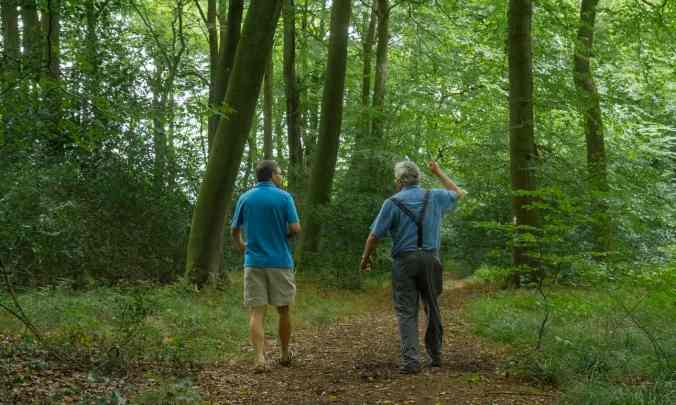
Richard Fortey and Derek Niemann among the beeches in Grim’s Dyke Wood. Photograph: Sarah Niemann

We do not favor private sector conservation efforts over all other options; we favor them over the option of no conservation at all. Governments around the world have rightly done the heaviest lifting on preserving nature, considering their resources, eminent domain, and other factors including the most salient; public lands effectively belong to an entire nation’s citizens. Philanthropies have also done enormous good. We have written plenty on both public and philanthropic conservation schemes. Today, a more modest story, but no less lovely:

A walk in the woods with Richard Fortey

Henley, Oxfordshire The palaeontologist and author offers a tour of Grim’s Dyke Wood, which he bought in 2011

Derek Niemann

Five years after the palaeontologist Richard Fortey bought Grim’s Dyke Wood, a small Chiltern beech wood, he shows no diminution in enthusiasm for his “nature reserve”. He gives me a tour, though in truth we delight in each other’s discoveries. I find him a ring of bright feathers on a pile of rotting pine logs, a raptor’s kill, the buffs and browns speaking of a song thrush forever silenced. He finds bracket fungi that have insinuated themselves into the thin, horizontal lesions on a cherry tree’s trunk. Continue reading

Using Those Final Months Well

midwayatoll_wide-1f160673ec1ed0fd74e6f9d1873a19f4ecc530f8-s1100-c85

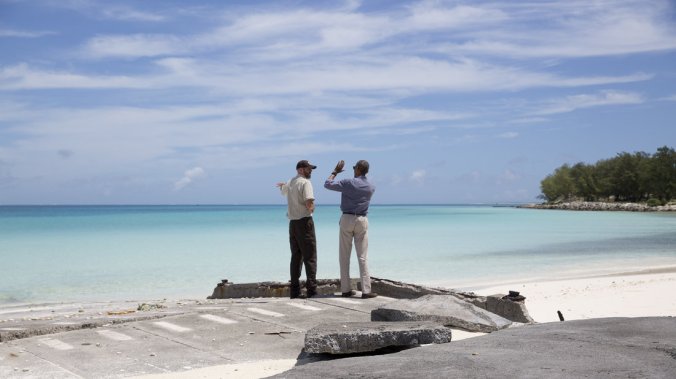
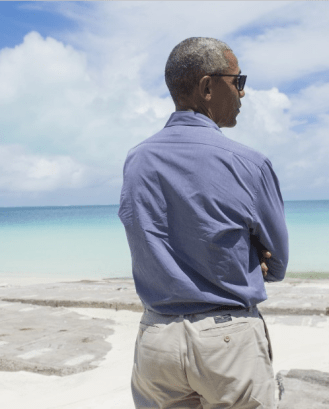
President Barack Obama on Midway Atoll in the Papahānaumokuākea Marine National Monument, Northwestern Hawaiian Islands, earlier this month with Marine National Monuments Superintendent Matt Brown. Obama expanded the monument using his authority under the 1906 Antiquities Act. Carolyn Kaster/AP

We are happy to see the Antiquities Act again proving so useful, so soon (the clock is ticking):

Obama To Designate First Marine National Monument In The Atlantic Ocean

During the Our Ocean conference later this morning in Washington, D.C., President Obama will establish the first national marine monument in the Atlantic Ocean.

The area of the Northeast Canyons and Seamounts Marine National Monument is the size of Connecticut and has been called an “underwater Yellowstone” and “a deep sea Serengeti.” Continue reading

Momentum In Tribal Territory


12tribes-listy9-jumbo.jpg

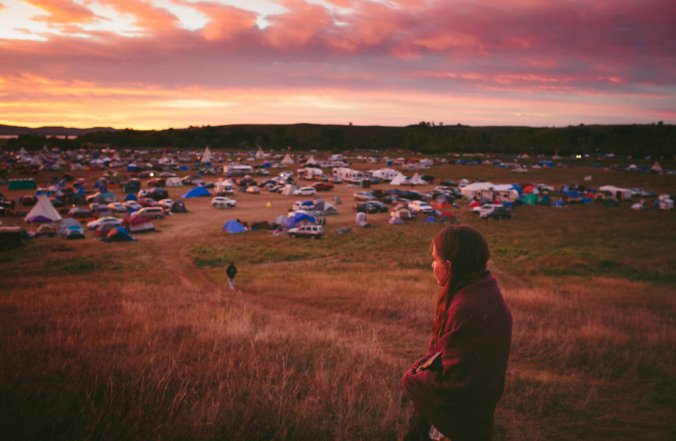
Susan Leopold, a member of the Patawomeck tribe of Virginia, watching the sun rise over an encampment where thousands have come to protest an oil pipeline near Cannon Ball, N.D.   Credit Alyssa Schukar for The New York Times

This is a great follow up to the earlier stories we read on this topic. We appreciate that the New York Times is now giving this as much attention as it deserves, and doing so with the dignity and respect that the protesters deserve:

From 280 Tribes, a Protest on the Plains

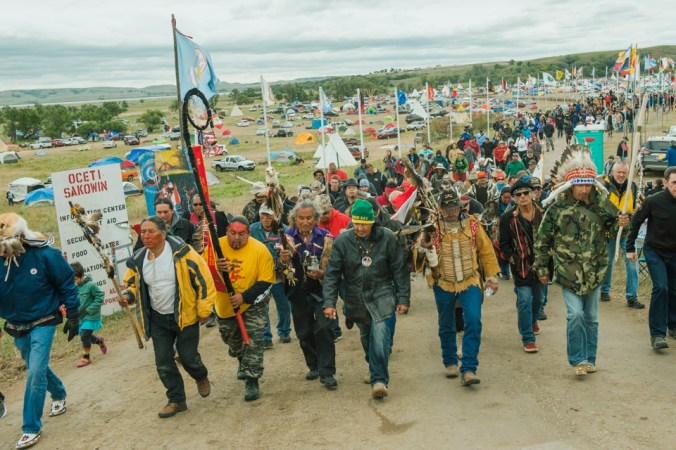
NEAR CANNON BALL, N.D. — When visitors turn off a narrow North Dakota highway and drive into the Sacred Stone Camp, where thousands have come to protest an oil pipeline, they thread through an arcade of flags whipping in the wind. Each represents one of the 280 Native American tribes that have flocked here in what activists are calling the largest, most diverse tribal action in at least a century, perhaps since Little Bighorn. Continue reading

Make Trouble When It Is Needed

lead_960 (1).jpg

Protesters demonstrate against the Energy Transfer Partners’ Dakota Access oil pipeline near the Standing Rock Sioux reservation in Cannon Ball, North Dakota, U.S. September 9, 2016. REUTERS/Andrew Cullen

We are happy that the trouble-maker who brought this to our attention, and those pictured above are heard by the Trouble-Maker-In-Chief of the USA (who we hope uses his remaining four months in that office to similar good effect):

The Obama Administration Temporarily Blocks the Dakota Access Pipeline

The surprise move came after a federal judge declined to stop the 1,100-mile fossil fuel project’s construction.

The Standing Rock Sioux Tribe and the hundreds of Native protestors who have joined them in rural North Dakota won a huge but provisional victory in their quest to stop the Dakota Access pipeline, as the U.S. government announced late on Friday afternoon that it was voluntarily halting work on the project. Continue reading

VLMPAs Face Risks of Becoming Paper Parks

Image © CNN

President Obama at Midway Atoll. Image © CNN

Two definitions are needed here at the outset: VLMPAs are “very large marine protection areas” and “paper parks” is a phrase used by conservationists and researchers to convey the idea of parks designated by governments only on paper – that is, they don’t get appropriate funding or management to create actual conservation within park limits. Most paper parks are found in developing nations where politicians may have good intentions in setting aside land to protect, but then don’t have enough resources to enforce the rules adequately, or in worse-case scenarios turn a blind eye to extraction if it favors them. Last week I discussed a possible race for bigger parks, and both examples happened to be marine in nature. Two researchers have commented in the academic journal Marine Policy to warn against creating ever-larger marine parks in remote areas that might be hard to monitor, unless there’s commitment for real enforcement. John Vidal reports:

“It is not enough to simply cover the remotest parts of our oceans in notional ‘protection’ – we need to focus on seas closer to shore, where most of the fishing and drilling actually happens,” said Peter Jones, a marine researcher at University College London.

Co-author Elizabeth de Santo, an assistant professor at Franklin and Marshall College in Pennsylvania, added that the push for quantity over quality threatens to undermine sustainability.

Continue reading

National Park of the Week: Acadia National Park, Maine, U.S.A

ry400

Source: ouracadia.com

I am happy to introduce Acadia National Park in Maine, U.S. as the first feature on our new weekly segment – shout out to Justin for the recommendation! This park is one of many firsts: it was founded as the first national park east of the Mississippi River by President Woodrow Wilson in 1916 (so yes, it is celebrating its centennial along with the National Park Service). In addition, it is famed for being the first place to see the sunrise in the U.S. when standing at the top of Cadillac Mountain during certain times of the year (part of the fall and winter seasons). Continue reading

Papahānaumokuākea Quadrupled

Humuhumunukunukuāpua`a, the state fish of Hawaii (reef trigger fish) via statesymbolsusa.org

Hot on the heels of the creation of the new Katahdin Woods and Waters National Monument comes the expansion of Papahānaumokuākea Marine National Monument, which was designated by President George W. Bush in 2006 and became a World Heritage site four years later. This growth in the protected area quadruples the conservation monument’s size to 582,578 square miles and has been accomplished under President Barack Obama’s use of the Antiquities Act. Oliver Milman reports:

The monument, which is now double the size of Texas, stretches outward from the north-western Hawaiian islands and includes Midway Atoll, famed for its former military base and eponymous battle that was crucial in the US defeat of Japan in the second world war. The protected area is now larger than the previous largest marine reserve, situated around the Pitcairn Islands and announced by the UK last year.

Continue reading

Chan Chich Spider Monkeys

Pretty much any time you walk out in the woods at Chan Chich Lodge, at some point during your hike you should be able to hear the rocking branches that are a sign of either spider monkeys or howler monkeys moving or eating in the treetops. And if you’re lucky, the swinging simians might stop and watch you with an uncannily familiar curiosity (or boredom), interrupting their normal activity for a minute or two before continuing on their way.
During the period in which we observed the family of three in the video above, the father yawned at least nine times, while the mother did so at least five times. Continue reading

A New Weekly Feature!


inside20sun20over20the20mountains

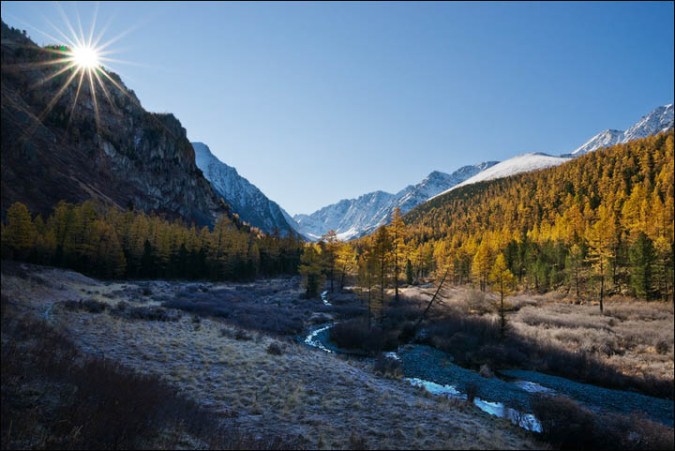
Ergaki National Park. Source: siberiatimes.com

Drawing inspiration from our site’s Bird of the Day, a new weekly feature titled National Park of the Week will publish every Sunday starting on August 28th. We love birds – but other wildlife too! – and we love the environment they (as well as we) live in, so we decided to start this new “column” (if this was a newspaper) to promulgate the protected areas that reflect the range of biodiversity and natural beauty around the globe. Although this weekly article has the words national park in the title, all types of government-protected areas, such as refuges, reserves, sanctuaries, and parks, will be featured in this category.  Continue reading

Op-Ed: US National Protected Lands at Risk

From the New York Times, president of the Wilderness Society Jamie Williams writes an opinion editorial titled “Don’t Give Away Our Wildlife Refuges.” Perhaps given the global crisis I read the final word as refugees accidentally, so I was expecting something else entirely – maybe animals that are displaced by climate change. Instead, I learned that there is a relatively strong segment of the US Congress and state legislatures that are constantly trying to undermine the country’s system of public protected lands, sometimes in ways that could lead to the park or refuge’s destruction:

Tucked into the fiscal relief package for Puerto Rico this spring was a provision to give away a national treasure that belongs to all Americans — 3,100 acres of the Vieques National Wildlife Refuge. The proposal had nothing to do with the economic recovery of Puerto Rico. But it would have handed an important victory to extremists in Congress and state legislatures who want to grab national lands and turn them over to the states to be sold or leased.

Continue reading

USA National Park, Feisty Leadership Outlier

Lake Superior Presque Isle Royale National Park Michigan in USA Great Lakes no not people nobody isolated low angle horizon

Lake Superior Presque Isle Royale National Park Michigan, USA, Great Lakes

We like the idea of a leader of a national park with a “feisty nature,” since sometimes that is exactly what it takes for conservation to succeed, either in the public or the private sector; so this profile from the BBC, in its ongoing appreciation of the National Parks Service’s 100th anniversary, is the kind of story we are especially happy to share:

…Isolated and iconoclastic, Isle Royale National Park is something of an anomaly among US National Parks, with its territory spread over 200 islands and outcroppings emerging from the frigid waters of Lake Superior, part-way between the US state of Michigan and Canada.

Isle Royale’s former Superintendent, Bill Fink (no relation to me), is an iconoclast himself, almost as if the qualities of the archipelago rubbed off on him during his four years running operations there from 1990 to 1993. Continue reading

Palm Oil Problems

By now not many people who are literate and connected to global news can say they did not know that palm oil is problematic; they can only say either that they care, or do not. Knowing where your biodiesel comes from may influence what you can do about this problem:

Leaked figures show spike in palm oil use for biodiesel in Europe

Steep rise between 2010 and 2014 shows link between EU’s renewable energy mandate and deforestation in south-east Asia, say campaigners

3000 (2)

A forest activist inspects land clearing and drainage of peat natural forest Sumatra, Indonesia. Photograph: Ulet Ifansasti/Getty Images

Leaked trade industry figures show a five-fold increase in the use of palm oil for biodiesel in Europe between 2010 and 2014, providing new evidence of links between deforestation in southeast Asia and the EU’s renewable energy mandate. Continue reading

Waste Not, Want Not Tiger Habitat

4047

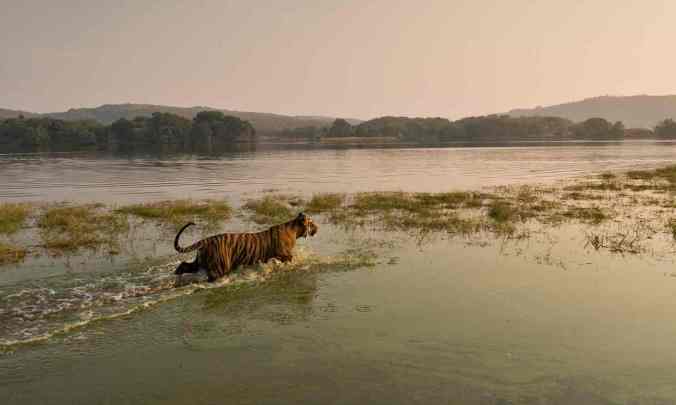
A tiger wades into the waters of Raj Bagh lake in Ranthambhore tiger in Rajasthan, India. Conservationists warn ‘tiger corridors’ connecting habitats across Asia are crucial for the survival of the species. Photograph: Aditya Singh/Alamy

From today’s Guardian in the Environment section, some welcome news on one of our most posted-on topics:

Forests still large enough to double the world’s tiger population, study finds

Satellite maps show tiger habitat is being lost but still adequate for meeting international goal of doubling tiger numbers by 2022

Forests that harbour tigers are being lost but are still large enough to take double the world’s tiger population in the next six years, according to a study using new satellite mapping technology. Continue reading

Warming Climate & Shrinking Bison

12938647293_8441c5bf5f_k-1260x708

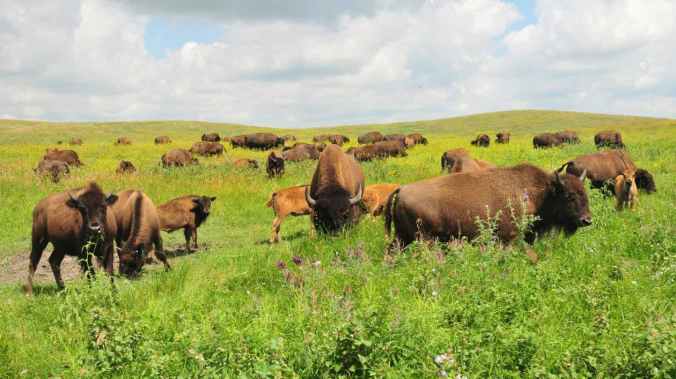
Bison graze on Ordway Prairie, owned and managed by the Nature Conservancy. The site has a USFWS grassland easement protecting it in perpetuity. Photo © USFWS Mountain-Prairie/Flickr

Thanks to science writer Matt Miller, and the Cool Green Science website, we get these stories daily that increase our understanding of the lesser known details of our environment. Are they important? It is a matter of perspective:

Here’s a climate change impact you probably never considered: bison diets.

As the climate warms, bison in North America are likely to shrink, as documented in research published by Joseph Craine and colleagues.

The reason they shrink is because as grasslands warm, grasses and other plants accumulate less protein. Bison are then forced to eat plants that are less nutritious.

This raises a related question: what plants do bison actually eat?

The answer to this question could help conservationists manage for plant species that are higher in protein and preferred by bison – ensuring healthy herds on warming grasslands. Continue reading

The Power of Parks

yosemite

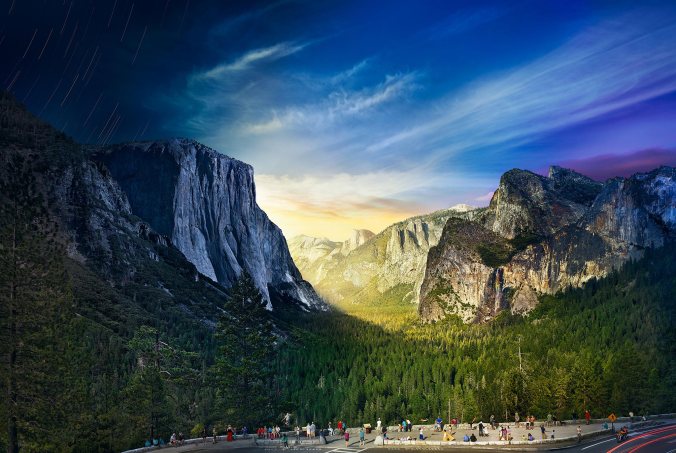
Photographs of Yosemite National Parks composed by Stephen Wilkes. Courtesy: National Geographic

Which side are you on – the one that believes national parks are the past or to the side that sees the future in these stretches? As long as national parks figure on your maps and feature in your scheme of things, you must know that the National Park Service is celebrating its centennial this year.  In commemoration, National Geographic looks at how to preserve these wild spaces:

“In March 1868 a 29-year-old John Muir stopped a passerby in San Francisco to ask for directions out of town. “Where do you wish to go?” the startled man inquired. “Anywhere that is wild,” said Muir. His journey took him to the Yosemite Valley in California’s Sierra Nevada, which became the spiritual home of Muir’s conservation movement and, under his guidance, the country’s third national park. “John the Baptist,” he wrote, “was not more eager to get all his fellow sinners into the Jordan than I to baptize all of mine in the beauty of God’s mountains.” Today around four million people a year follow their own thirst for the wild to Yosemite.”

Continue reading