Looming Line 3 Battle

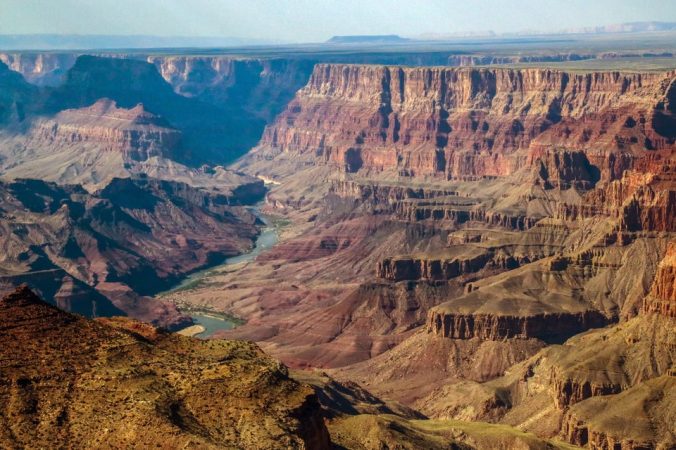
Only a small percentage of Americans visit the Grand Canyon, but its existence, as an ancient place of inestimable value, has a global psychological importance.Photograph by Jim Kidd / Alamy

The Line 3 story started for us last month, and continues today, with another essay by Bill McKibben, this time using the Grand Canyon for context:

Lessons from the Fight for the Grand Canyon

We once saved natural landmarks for their beauty—now it’s for survival, too.

To float down the Colorado River through the Grand Canyon is to meander through geologic time. As you descend, the formations you pass include the Coconino Sandstone, the Redwall Limestone, the Bright Angel Shale—by the time you reach the tortured-looking Vishnu Schist, you’re a couple billion years back in time. Continue reading

Volts, A Panic-Mitigation Option

Volts: a newsletter about clean energy and politics

What with climate change accelerating and US politics falling apart, it’s pretty grim out there. Yet alongside these doom loops, somewhat anomalously, something good is happening: the transition away from fossil fuels to clean, carbon-free energy is underway, and it is accelerating every day

Our reading and listening options are constantly expanding and contracting, and especially with climate change and energy topics in particular it can be challenging to find options that do not simply induce panic. We have our regular go-to sources, like Yale e360, that has been creatively informative without just heaping on the bleak (any more than necessary, which it sometimes is). A recent discovery of an analytical source worth sharing is this newsletter/podcast combo by David Roberts. Below is the most recent podcast:

Volts podcast: rampant environmental rule-breaking and how to fix it, with Cynthia Giles

Designing rules (including climate rules) that are harder to break

The US has hundreds of environmental rules and regulations on the books, meant to achieve various environmental goals — clean up coal plants, reduce toxins in consumer products, limit agricultural waste, and so on.

Once these rules and regulations are put in place, most people don’t give them a lot of thought. To the extent they do, they tend to believe two things: one, that environmental rules are generally followed (maybe, what, 3-5 percent break the rules?), and two, that the answer to noncompliance is increased enforcement.

According to Cynthia Giles, both those assumptions are dead wrong.


Greenland Ends Drilling For Oil

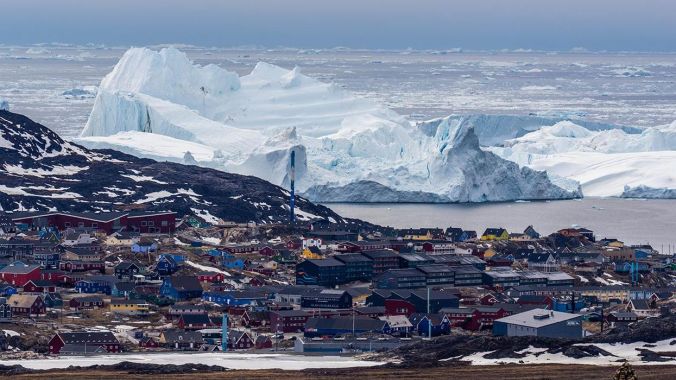
Icebergs near Ilulissat, Greenland. Climate change is having a profound effect in Greenland with glaciers and the Greenland ice cap retreating. Ulrik Pedersen / NurPhoto / Getty Images

Thanks to Ecowatch for publishing this story by Andrea Germanos:

‘Future Belongs to Renewable Energy’: Greenland Ditches All Oil Drilling

Greenland announced Thursday a halt on new oil and gas exploration, citing climate and other environmental impacts.

“Great news!” responded the Center for International Environmental Law.

The government of Greenland, an autonomous Danish dependent territory, framed the move as necessary to transition away from fossil fuels. Continue reading

The Largest Forest In The World

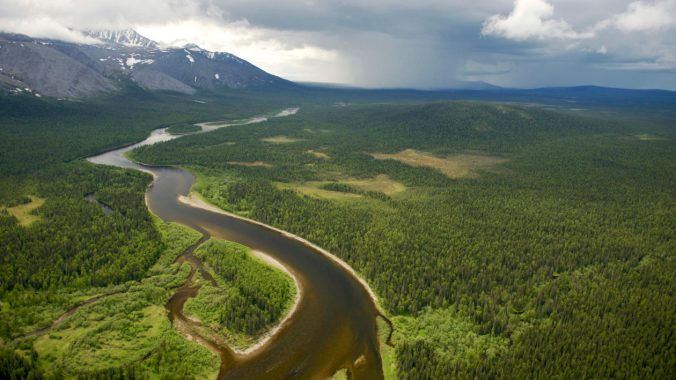
Virgin Komi Forest in the northern Ural Mountains in the Komi Republic, Russia. MARKUS MAUTHE / GREENPEACE

We have not posted many times on the vastness of Russia, and its various natural resources, but they are worthy of more attention. Thanks to Yale e360:

Will Russia’s Forests Be an Asset or an Obstacle in Climate Fight?

New research indicating Russia’s vast forests store more carbon than previously estimated would seem like good news. But scientists are concerned Russia will count this carbon uptake as an offset in its climate commitments, which would allow its emissions to continue unchecked. Continue reading

Really, Australia?

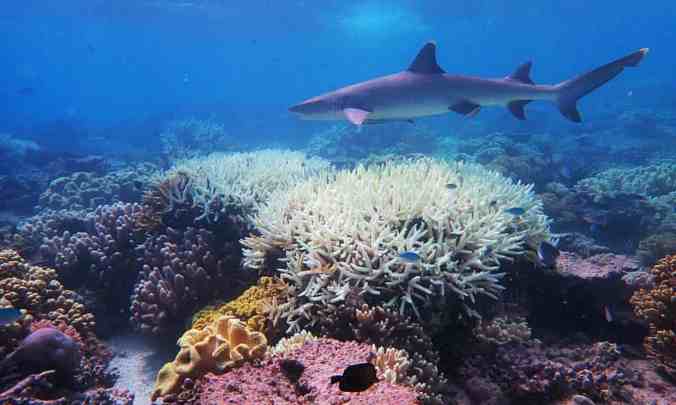
The Unesco world heritage committee’s decision on the Great Barrier Reef’s ‘in danger’ status is currently scheduled for 23 July. Photograph: James Cook University/AFP via Getty Images

It’s been a couple months since we asked anyone the fundamental question. Ok, we acknowledge our not being qualified to make the scientific judgement on whether the Great Barrier Reef is in sufficient danger to be listed as such, officially. But UNESCO has the qualified scientists, so let them do their job without undue influence. It sure seems likely to help the entire world to see how fossil-fueled climate change is impacting such natural wonders. It would raise consciousness in a way that might even be good for Australia–whose government obviously thinks otherwise. Hopefully UNESCO will stick to its principles and resist this lobbying. When oil-based economies come to lend a hand, watch out for conflict of interest:

‘Fossil fuel friends’: Saudi Arabia and Bahrain back Australia’s lobbying on Great Barrier Reef

Exclusive: oil rich nations back push against Unesco recommendation to have reef placed on world heritage ‘in danger’ list Continue reading

Canopy Equity

The number of urban trees is shrinking due to storms, construction and insects: at the moment, the US is facing a projected loss of 8.3% in urban tree cover by 2060. Photograph: Mary Altaffer/AP

Regardless of the viability of tree-planting as a solution to climate change, the need for more trees in some locations is overwhelming:

US needs 30m new trees to combat shade disparity, study finds

First ever nationwide tally of trees reveals how communities of color and poorer neighborhoods lack canopy

With vast swathes of the American west baking under a record-setting heatwave, a new study has revealed how unevenly trees are spread throughout cities in the United States and how much it disadvantages communities of color and the poor. Continue reading

Welcome, France, To The Community Of Like-Minded Countries

A European robin trapped with glue on a stick, in France. Photograph: Courtesy LPO

It took too long to outlaw, but thank goodness it has finally happened:

France’s highest appeals court has ruled that the hunting of songbirds with glue traps is illegal, saying an exemption that had permitted the practice was in breach of European legislation. Continue reading

Heat & Humanity

Last week, researchers at nasa and noaa found that “the earth is warming faster than expected.” Photograph by Kyle Grillot / Bloomberg / Getty

This week’s newsletter ponders how adaptable we are and serves as a reminder that we cannot take for granted that we are sufficiently so for the changes upon us:

It’s Not the Heat—It’s the Humanity

Rising air temperatures remind us that our bodies have real limits.

By Bill McKibben

It’s hard to change the outcome of the climate crisis by individual action: we’re past the point where we can alter the carbon math one electric vehicle at a time, and so activists rightly concentrate on building movements large enough to alter our politics and our economics. But ultimately the climate crisis still affects people as individuals—it comes down, eventually, to bodies. Which is worth remembering. In the end, we’re not collections of constructs or ideas or images or demographics but collections of arteries and organs and muscles, and those are designed to operate within a finite range of temperatures. Continue reading

When Renewables Are Less Expensive Than Coal…

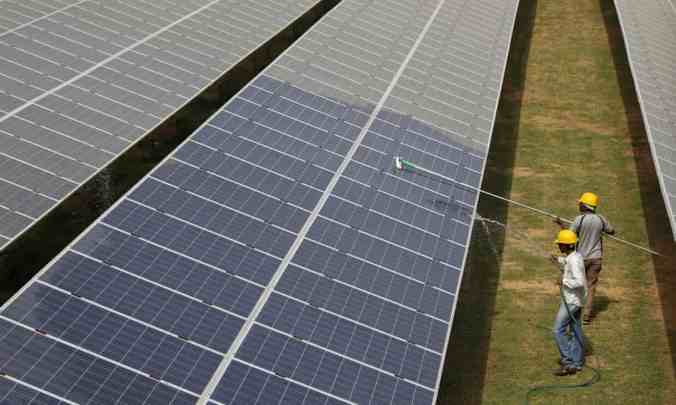
A solar power plant in Gujarat, India. Renewable energy in the country would be cheaper than between 87% and 91% of new coal plants, the report says. Photograph: Amit Dave/Reuters

Looks like we are almost there:

Most new wind and solar projects will be cheaper than coal, report finds

Almost two-thirds of renewable energy schemes built globally last year expected to undercut coal costs

Almost two-thirds of wind and solar projects built globally last year will be able to generate cheaper electricity than even the world’s cheapest new coal plants, according to a report from the International Renewable Energy Agency (Irena). Continue reading

Enbridge Inc.’s Line 3 Pipeline, The Keystone Sequel, Must Not Happen

A section of the Enbridge Line 3 crude oil pipeline in Superior, Wis. Richard Tsong-Taatarii/Star Tribune, via Associated Press

McKibben, always ahead of the curve, has this proposal for us all to consider:

The Keystone XL Pipeline Is Dead. Next Target: Line 3.

Michael Siluk/Education Images — Universal Images Group via Getty Images

The announcement this week from the Canadian company TC Energy that it was pulling the plug on the Keystone XL pipeline project was greeted with jubilation by Indigenous groups, farmers and ranchers, climate scientists and other activists who have spent the last decade fighting its construction.

The question now is whether it will be a one-off victory or a template for action going forward — as it must, if we’re serious about either climate change or human rights. Continue reading

About That Convenience

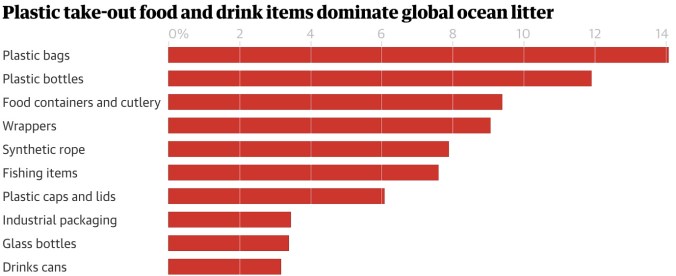
Guardian graphic | Source: Morales-Caselles et al, Nature Sustainability, 2021

Thanks, Damian Carrington, for getting us the data that Morales-Caselles et al compiled making us wonder whether convenience is worth this cost:

Takeaway food and drink litter dominates ocean plastic, study shows

Just 10 plastic products make up 75% of all items and scientists say the pollution must be stopped at source

Plastic items from takeaway food and drink dominate the litter in the world’s oceans, according to the most comprehensive study to date. Continue reading

Planting Trees & Second Thoughts

Way back when, the idea of planting a million trees was set in motion. I missed this Economist film and article at that time, but while pursuing planting I have seen other related concerns, each of which is worthy of consideration (as we continue planting):

The Story Behind
Climate change: the trouble with trees

Why tree planting is not the panacea some had hoped

Here you will find some of the resources used in the production of The Economist’s film “Climate change: the trouble with trees” along with exclusive additional material. It is part of the “The Story Behind”, a film series that reveals the processes that shape our video journalism. Continue reading
Climate Change, Personal Responsibility & Collective Responsibility

ExxonMobil, the owner of this Louisiana oil refinery, has adopted a tobacco-industry strategy to protect its business model. Photograph by Barry Lewis / Getty

This is a question we ask, rhetorically, all the time. But we normally neither seek the actual answer nor come across the answer; but today is different, thanks to Bill McKibben’s weekly newsletter:

The Particular Psychology of Destroying a Planet

What kind of thinking goes into engaging in planetary sabotage?

Two weeks ago, I looked at the question of the anxiety that the climate crisis is causing our psyches. But, if you think about it, there’s an equally interesting question regarding the human mind: How is it that some people, or corporations, can knowingly perpetuate the damage? Or, as people routinely ask me, “Don’t they have grandchildren?” Continue reading

Choices For Mining Lithium

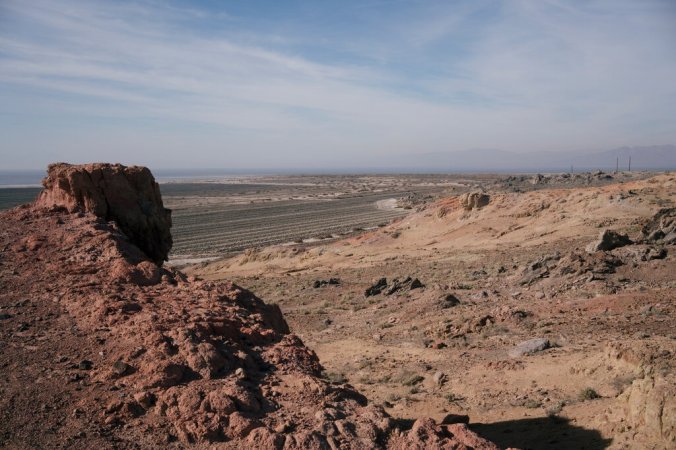
The Salton Sea is one of numerous new mining proposals in a global gold rush to find new sources of metals and minerals needed for electric cars and renewable energy.

Thanks to the New York Times for this coverage of the choices surrounding how and where to mine a key ingredient of more efficient batteries–a consequential environmental question:

The Lithium Gold Rush: Inside the Race to Power Electric Vehicles

A race is on to produce lithium in the United States, but competing projects are taking very different approaches to extracting the vital raw material. Some might not be very green.

“This is the most sustainable lithium in the world, made in America,” Rod Colwell, the chief executive of Controlled Thermal Resources, said. “Who would have thought it? We’ve got this massive opportunity.”

Atop a long-dormant volcano in northern Nevada, workers are preparing to start blasting and digging out a giant pit that will serve as the first new large-scale lithium mine in the United States in more than a decade — a new domestic supply of an essential ingredient in electric car batteries and renewable energy.

The mine, constructed on leased federal lands, could help address the near total reliance by the United States on foreign sources of lithium.

But the project, known as Lithium Americas, has drawn protests from members of a Native American tribe, ranchers and environmental groups because it is expected to use billions of gallons of precious ground water, potentially contaminating some of it for 300 years, while leaving behind a giant mound of waste. Continue reading
Brazil Is The Amazon’s Steward

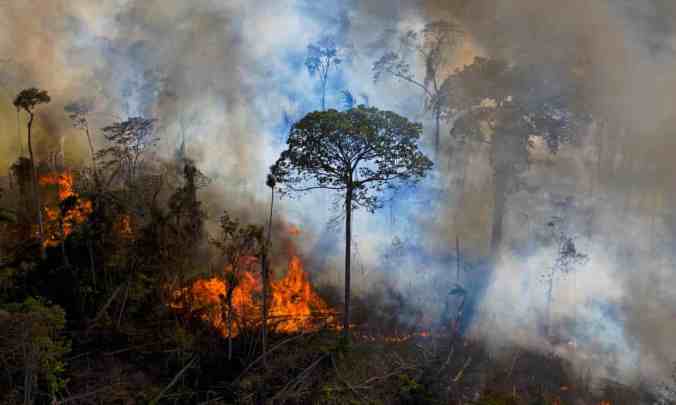
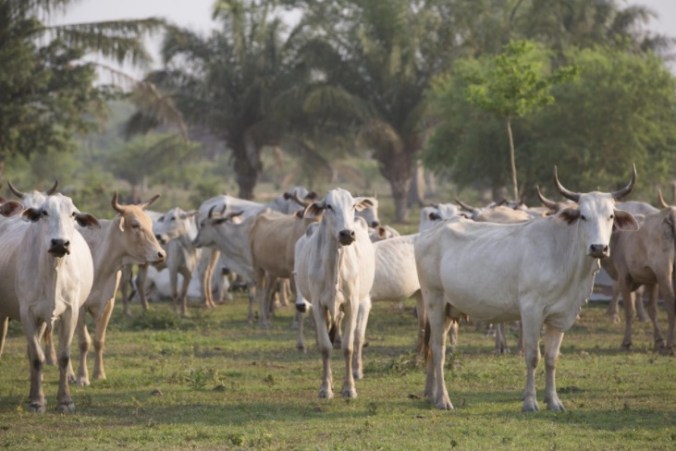
Smoke rises from an illegally lit fire in Amazon rainforest reserve, south of Novo Progresso in Para state, Brazil. Photograph: Carl de Souza/AFP/Getty Images

Stewardship has rights and responsibilities, and we expect better both from and for Brazil in their stewardship of the Amazon region. For our part, among other things, we can all avoid purchasing products that result from this deforestation:

Brazilian Amazon released more carbon than it absorbed over past 10 years

International team of researchers also found that deforestation rose nearly four-fold in 2019

A fallen tree lies in an area of the Amazon jungle that was cleared by loggers and farmers near Porto Velho, Rondonia State. Photograph: Ueslei Marcelino/Reuters

The Brazilian Amazon released nearly 20% more carbon dioxide into the atmosphere over the past decade than it absorbed, according to a startling report that shows humanity can no longer depend on the world’s largest tropical forest to help absorb manmade carbon pollution.

From 2010 through 2019, Brazil’s Amazon basin gave off 16.6bn tonnes of CO2, while drawing down only 13.9bn tonnes, researchers reported Thursday in the journal Nature Climate Change. Continue reading

The Sinking Cost Of Renewable Energy

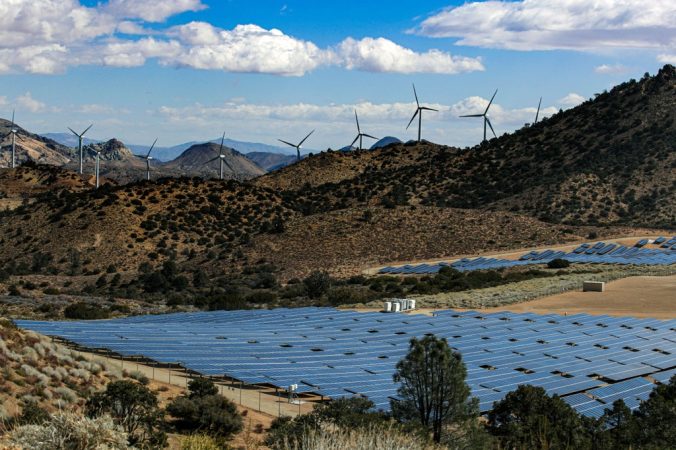
Because its costs continue to slide with every quarter, solar energy will be cheaper than fossil fuels almost everywhere on the planet by the decade’s end. Photograph by Irfan Khan / Los Angeles Times / Getty

Thanks to Bill McKibben, as always, for at least one bit of good news in his weekly newsletter:

Renewable Energy Is Suddenly Startlingly Cheap

Now the biggest barrier to change is the will of our politicians to take serious climate action.

Earth Week has come and gone, leaving behind an ankle-deep and green-tinted drift of reports, press releases, and earnest promises from C.E.O.s and premiers alike that they are planning to become part of the solution. There were contingent signs of real possibility—if some of the heads of state whom John Kerry called on to make Zoom speeches appeared a little strained, at least they appeared. (Scott Morrison, the Prime Minister of Australia, the most carbon-emitting developed nation per capita, struggled to make his technology work.) But, if you want real hope, the best place to look may be a little noted report from the London-based think tank Carbon Tracker Initiative. Continue reading

Moonshot To Meatless

Peter Prato for The New York Times

Last month I learned enough from Ezra Klein’s food-related conversation with Mark Bittman to share the podcast episode. I listen to his podcast for the quality of his discussions with knowledgeable guests. But he is also a great essayist and yesterday he published an op-ed essay that is worth a read on a topic we have linked to many times:

Let’s Launch a Moonshot for Meatless Meat

It wouldn’t actually take that much of an investment for Biden to get us headed in the right direction.

I’m a vegan, but I’m also a realist. There’s no chance humanity is going to give up meat, en masse, anytime soon. That said, we can’t just wish away the risks of industrial animal agriculture. If we don’t end this system, soon, terrible things will happen to us and to the planet. Terrible things are already happening. Continue reading

The Climate Crisis, Earth Day Edition

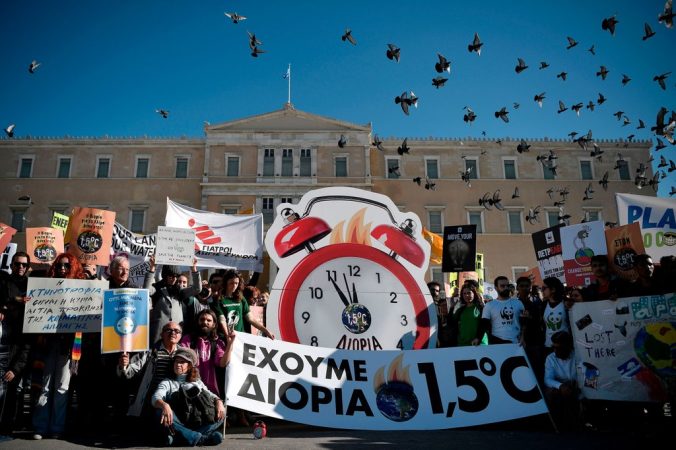
Climate activists at a rally in Athens, Greece, in late 2018, hold up banners warning that time is running out on efforts to contain the earth’s warming to a rise of 1.5 degrees Celsius. Photograph by Louisa Gouliamaki / AFP / Getty

Thanks to Bill McKibben for this Earth Day edition of his newsletter, The Climate Crisis, which we sample from regularly:

How 1.5 Degrees Became the Key to Climate Progress

The number has dramatically reorganized global thinking around the climate.

It’s Earth Day +51, as we near the end of President Biden’s first hundred days, and forty world leaders are scheduled to join him for a virtual summit on climate change. “For those of you who are excited about climate, we will have a lot more to say next week,” the White House press secretary, Jen Psaki, said last Thursday, which is a sweet way to think about it—better than “for those of you who are existentially depressed about climate.” Continue reading

Urban Power Shifts

Center City Philadelphia, viewed from the Schuylkill River. ZOONAR GMBH / ALAMY STOCK PHOTO

Thanks to Jonathan Mingle  and Yale e360 for this analysis:

Cities Confront Climate Challenge: How to Move from Gas to Electricity?

Ending the use of fossil fuels to heat homes and buildings is a key challenge for cities hoping to achieve net-zero emissions. Nowhere is that more evident than in Philadelphia, where technical and financial hurdles and a reluctant gas company stand in the way of decarbonization.

In 1836, Philadelphians mostly used whale oil and candles to light their homes and businesses. That year, the newly formed Philadelphia Gas Works caused a stir when it lit 46 downtown street lamps with gas made from coal in its plant on the Schuylkill River. Continue reading

If You Are Not Already Vegetarian, Know Your Beef Source

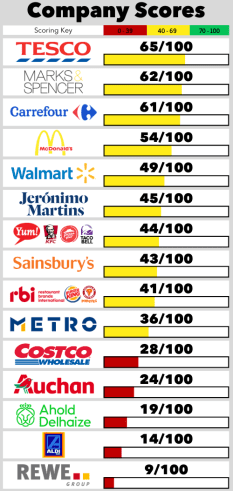
logoProgress is slow on the route to vegetarianism, so we monitor what we can about the meat we continue to consume. Thanks to Mighty Earth for this scorecard:

Beef Scorecard: Global Food Brands Failing to Address Largest Driver of Deforestation

WASHINGTON, DC – The world’s top supermarket and fast-food companies are largely ignoring the environmental and human rights abuses caused by their beef products, a new scorecard by Mighty Earth finds. The scorecard evaluates the beef sourcing practices of fifteen of the world’s largest grocery and fast-food companies that have pledged to end deforestation across their supply chains. Despite beef’s role as the top driver of global deforestation, only four companies- Tesco, Marks & Spencer, Carrefour, and McDonald’s – have taken some action to stop sourcing beef from destructive suppliers. Continue reading