Connecting the Dots Between Technology & Nature Conservation

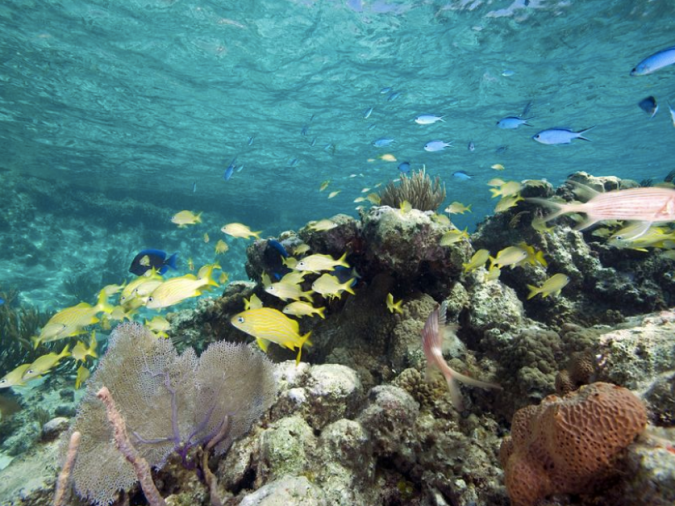
REEF FISH, BAHAMAS Fish congregate near a shallow reef in Exuma Cays Land and Sea Park. © Jeff Yonover

Those familiar with our work will recognize the word valorization, which is an essential element of what we write about and what we do. It’s increasingly important to note that Nature, made more fragile with each passing year by human impact climate change, requires human efforts to protect and hopefully, turn back the clock on damage already done; and it appears to be human nature that maintain a direct  correlation between how something is valued and the amount of attention it gets.

We’re particularly impressed by this example of tech collaboration. Thanks to the Nature Conservancy for highlighting these stories…

The Caribbean Needs Tourism, and Tourism Needs Healthy Coral Reefs

AI and social media are helping quantify the economic value of coral reefs

The Caribbean region is more dependent on tourism than any other region in the world—the sector accounts for over 15 percent of GDP and 13 percent of jobs in the region. And almost all visitors to the Caribbean take part in some activity that relates to coral reefs—either directly, like snorkeling and scuba diving, or indirectly, like enjoying sandy beaches, eating fresh seafood and swimming in crystal waters. That means the health of the Caribbean’s tourism industry—and thus the whole regional economy—is dependent on the health of its coral reefs.

But just how much value do reefs produce? After all, “what gets measured gets managed and improved.” The Nature Conservancy (TNC) recently released the results of a study that focused on reef-adjacent activities and the value they generate for the tourism industry, island governments and Caribbean communities. This study, which builds on an earlier body of globally focused research produced by TNC, found that reef-adjacent activities alone generate an estimated $5.7 billion per year in the Caribbean from roughly 7.4 million visitors. When combined with reef-dependent tourism activities, they generate $7.9 billion total from roughly 11 million visitors.

In other words, a major draw for people traveling to the Caribbean are activities related to coral reef ecosystems, and both the tourism industry and other aspects of the local economies depend on healthy coral reefs to keep this relationship afloat. This evidence offers a pivotal opportunity for advancing coral conservation initiatives not only in the Caribbean but around the world, as it can catalyze both the tourism industry and local governments and communities to invest in protecting and restoring coral reefs for the benefit of economies and incomes.

We now know that these natural wonders are responsible for generating billions of dollars, sustaining livelihoods and anchoring economies in the Caribbean as well as other tropical destinations across the globe. And that should translate into a major incentive to conserve them.   Continue reading

Consumerism’s Up(cycled) Side

Sustainability in both concept and practice has a long history in Scandinavian cultures in general, and Sweden in particular. As consumers become more conscious of the finite nature of materials, upcycling has to eventually be considered more mainstream. We applaud this type of public and private sector leadership that is the very definition of entrepreneurial conservation.

Thanks to the BBC for this story.

‘Welcome to my high-fashion, trash shopping mall’

Anna Bergstrom had a dilemma. She loved the glitzy world of high fashion, but had also come to feel that it was unsustainable and bad for the planet. She’s now found peace of mind by running a stylish shopping mall in Sweden, where everything is second-hand.

“Do you notice the smell?” Anna Bergstrom says, as she surveys her mall from the mezzanine level. “It smells nice here, doesn’t it?”

It’s very important to Anna that this place is enticing, because she feels it is making a statement. Everything for sale here, in 14 specialist shops covering everything from clothes to DIY tools, is recycled.

She is usually turned off by the smell of second-hand stores, she explains, even though she adores vintage fashion. For most people flea-markets and charity shops carry a stigma, she thinks – a mark left by countless bad experiences. Too often they are worthy but depressing, Anna says. Her mission is to bring second-hand shopping into the mainstream.

The mall itself is spacious and appealing, almost Ikea-like. An art installation – a tree and circular bench all fashioned from recycled materials – greets customers at the entrance. There is even a coffee shop and gift-wrapping service.

The mall is called ReTuna. “Tuna” because that’s the nickname for the city where it is based – Eskilstuna, an hour’s train journey west of Stockholm – and “Re” because the goods on sale have been recycled or repurposed.

It was set up by Eskilstuna’s local government in 2015, in a warehouse which used to house trucks for a logistics company. Continue reading

Nutrition & Conservation

gettyimages-900239716-1-_custom-91eba6942a1b903ffe500292ec1a25080078f636-s1200-c85.jpg

To help protect the planet and promote good health, people should eat less than 1 ounce of red meat a day and limit poultry and milk, too. That’s according to a new report from some of the top names in nutrition science. People should instead consume more nuts, fruits and vegetables, legumes, and whole grains, the report says. The strict recommended limits on meat are getting pushback. Westend61/Getty Images/Westend61

Preparing ahead for a meal to be cooked today, I was reading this recipe, whose image (below) was competing for my attention with the image above. The picture above is eye-catching, at least to me, a visual cue leading me to the type of meal I should be thinking about more often. It is a big picture picture. I have red lentils in the cupboard, and I intend to prepare them today, so the recipe won the race for my attention.

merlin_146234352_d7bc8486-b067-4cff-a4c0-7741f166fb60-jumbo.jpg

Melissa Clark’s red lentil soup.CreditJoseph De Leo for The New York Times. Food Stylist: Monica Pierini.

The story by National Public Radio (USA) waited. It is about diet, with the kind of explanatory information that motivates me to find lentils more appealing, and to understand why meals like this should dominate the weekly menu:

What we eat – and how our food is produced – is becoming increasingly politicized.

Why? More people are connecting the dots between diet and health – not just personal health, but also the health of the planet. And the central thesis that has emerged is this: If we eat less meat, it’s better for both.

So, how much less? A new, headline-grabbing report — compiled by some of the top names in nutrition science — has come up with a recommended target: Eat less than half an ounce of red meat per day. That works out to about 3.5 ounces — or a single serving of red meat — per week. And it’s far less red meat than Americans currently consume on average: between an estimated 2 and 3 ounces per day. Continue reading

The Future Runs Through It

CORiver-111118-0482_HooverAerial_web.jpg

After two decades of drought, Lake Mead in Nevada is just 40 percent full. TED WOOD

Thanks to Jim Robbins and Yale e360 for this second installment, and especially to Ted Wood for photography as visually compelling as the implication of the story:

CRISIS ON THE COLORADO: PART II

On the Water-Starved Colorado River, Drought Is the New Normal

With the Southwest locked in a 19-year drought and climate change making the region increasingly drier, water managers and users along the Colorado River are facing a troubling question: Are we in a new, more arid era when there will never be enough water?


corivermx-101118-0063_treeringlab_web

Scientists at the University of Arizona are using tree rings to study centuries of drought conditions in the Colorado River Basin.

In the basement of the University of Arizona’s Laboratory of Tree-Ring Research, the fragrant smell of pine hangs in the air as researchers comb through the stacks of tree slabs to find a round, 2-inch-thick piece of Douglas fir.

They point out an anomaly in the slab — an unusually wide set of rings that represent the years 1905 to 1922. Those rings mean it was a pluvial period — precipitation was well above average — and so the trees grew far more than other years.

“In 1905, the gates opened and it was very wet and stayed very wet until the 1920s,” said David Meko, a hydrologist at the lab who studies past climate and stream flow based on tree rings. “It guided their planning and how much water they thought was available.”

CORiver-0906-0037_MarkHarris_web.jpg

Mark Harris, a water manager in Grand Junction, Colorado.

The planning was that of the states that share the water of the Colorado River. Worried that a burgeoning California would take most of the water before it was fairly divvied up, representatives from the other Colorado River Basin states, presided over by U.S. Secretary of Commerce Herbert Hoover, came together in 1922 to develop an equitable apportionment. They looked at flow measurements and figured that the river contained an average of 15 million acre-feet. They divided the Colorado River states into two divisions – the upper basin and the lower basin, with the dividing line in northern Arizona near the Utah border. The upper basin states — Utah, Wyoming, Colorado, and New Mexico — agreed not to take more than a total of 7.5 million acre-feet and to allow the other half to flow south to the lower basin. The agreement they signed was called the 1922 Colorado River Compact, also known as the Law of the River. Continue reading

99% Success, A How-To Reminder


2438

The ban on chlorofluorocarbon (CFC) gases has been an incredible success story. Composite: Alamy/Guardian Design

Thanks to Jonathan Watts for this reminder:

How to stop the climate crisis: six lessons from the campaign that saved the ozone

Thirty years ago, all 197 countries got together to ban the gases damaging the Earth’s ozone layer. Now we need to unite to combat an even greater threat. What can we learn from 1989?

Amid the anti-globalist chest-thumping of Brexit, Donald Trump, and the Brazilian president, Jair Bolsonaro, it may sound like the stuff of folklore. But there was a time in the recent past when all the countries of the world moved quickly to discuss a common threat, agreed an ambitious plan of action and made it work.

The Montreal protocol, which came into effect 30 years ago, was drawn up to address the alarming thinning of the ozone layer in the Earth’s stratosphere. It was the first agreement in the history of the United Nations to be ratified by all 197 countries. Since it came into effect on 1 January 1989, more than 99% of the gases responsible for the problem have been eradicated and the “ozone hole” – which, in the late 80s, vied for headline space with the cold war, Diana, Princess of Wales, and Madonna – is receding in the sky and the memory. Continue reading

Urban Tree-Huggers

IndiaDehli_Trees_GettyImages-984331388_web.jpg

Women demonstrators protest a plan to to cut down more than 14,000 trees for a redevelopment project in New Delhi in June 2018. CHANDAN KHANNA/AFP/GETTY IMAGES

Thanks to Yale e360’s Mumbai-based Vaishnavi Chandrashekhar:

In India’s Fast-Growing Cities, a Grassroots Effort to Save the Trees

In India’s burgeoning urban areas, residents are rallying against the widespread destruction of trees to make way for development. The recent protests highlight a global issue: densely populated megacities in the developing world, which are most in need of tree cover, often have the least.

ZB_MumbaiTreesStreet_2017.jpg

Thousands of trees have been cut down in Mumbai in recent years to make way for new housing, wider roads, and a $3.3 billion subway line. COURTESY OF ZORU BHATHENA

The funeral cortege was small. Six people shouldered the bier and others followed, clad in the traditional Indian white. As the group filed past the state assembly building, the armed guards did not give it a second glance. In a few minutes, however, the security forces caught on. The procession winding its way through Mumbai’s government district was not a real funeral: It was a protest. The shrouded body held aloft was not a human — it was the trunk of a tree, one of many, including grand old banyans, cut down for the construction of a $3.3 billion subway line.

urbantrees2.jpg

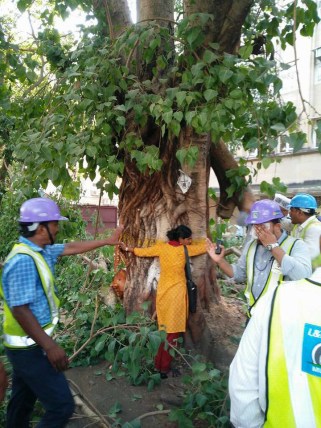
A protester hugs an old tree in Mumbai to prevent it from being cut down for a subway project. COURTESY OF ZORU BHATHENA

Mumbai’s old trees have borne the brunt of new development in the booming city, including road widening, transport projects, and housing construction. The new subway alone is destroying or damaging 5,000 trees, from hundreds of old street trees in the dense parts of the historic island city to more than 2,000 trees in a mini-forest in suburban Aarey Colony, where a rail car shed is to be built. A less visible loss lies in defunct industrial areas, where large plots with old trees and ponds are being redeveloped into residential and commercial towers. “Developers are supposed to replace the trees but no one really checks,” says Stalin D., head of local environmental group, Vanashakti. Continue reading

Electrical Generation Can Look Like Sausage When Visualized Just So

Electric.jpg

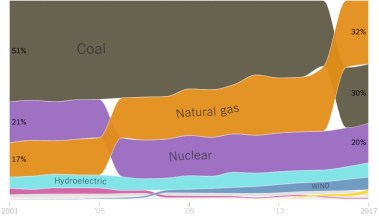
How the United States generated electricity from 2001 to 2017. Percentage of power produced from each energy source

America isn’t making electricity the way it did two decades ago: Natural gas has edged out coal as the country’s leading generation source … and renewables like wind and solar have made small yet speedy gains. But, each state has its own story.

Electric2

Nadja Popovich an explainer of complicated things with visualization techniques that have impressed us so far, now has this.

In Nevada, natural gas surpassed coal as the top source of electricity generation in 2005, earlier than in many other states. Coal’s role in the state’s power mix has continued to decline since then.

We cannot do justice to it, other than suggest you go see it for yourself. A state by state graphic representation of electrical generation methods:

How Does Your State Make Electricity?

Overall, fossil fuels still dominate electricity generation in the United States. But the shift from coal to natural gas has helped to lower carbon dioxide emissions and other pollution. Last year, coal was the main source of electricity generation for 18 states, down from 32 states in 2001.

Paul Watson Speaks

merlin_81011591_6f2b6bd7-4d1d-4c32-8d90-471604eed16a-jumbo.jpg

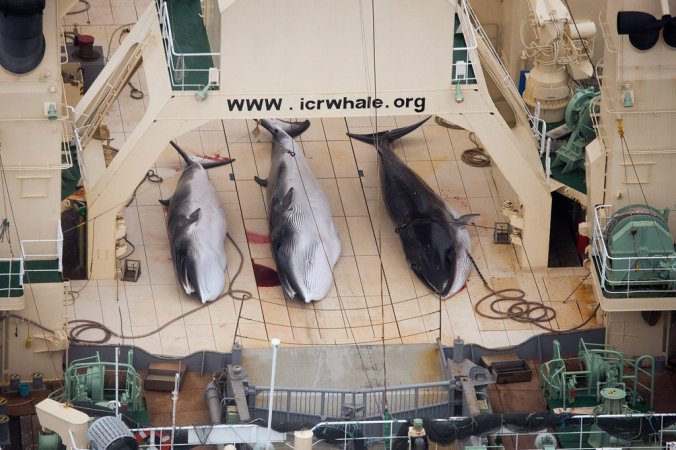
A photo from 2013, released by the environmentalist group Sea Shepherd, showing minke whales on the deck of a Japanese ship in the Antarctic. Japan says it will restrict whalers to its own waters as it resumes commercial whaling. Credit Tim Watters/Sea Shepherd Australia, via EPA, via Shutterstock

I had to read to the end to see Paul Watson’s name, and more importantly his proclamation on the significance of Japan’s withdrawal. It has been a long time since we have seen him or Sea Shepherd in our pages. My thanks to Daniel Victor and his employer for this important story:

Japan to Resume Commercial Whaling, Defying International Ban

Japan said on Wednesday that it would withdraw from an international agreement and resume commercial whaling, a defiant move to prop up an industry that still has cultural significance there, despite plummeting demand for whale meat.

Yoshihide Suga, Japan’s chief cabinet secretary, said the country would leave the International Whaling Commission, which established a moratorium on hunting whales that took effect in 1986.

The international agreement never stopped Japanese whaling, because it allowed the country to continue killing whales for scientific research while selling the meat. Critics considered the research a sham, little more than a cover for commercial whaling. Continue reading

Taking Stock Of Animal Futures


Our cohabitation with animals on this planet is imperiled. There is no choice but to keep track of these things as best we can with art, with essays, with whatever it takes. Thanks to Rachel Riederer (again) for adding her words and links to images and videos on this topic:

The Not-So-Uplifting Year in the Animal Kingdom

During a year that saw the stripping away of environmental protections, the most resonant stories served as sombre warnings rather than warm-fuzzy generators.

Racoon.jpg

The skyscraper-climbing raccoon made it to the top of UBS tower in St Paul, Minnesota, where officials were waiting for it.

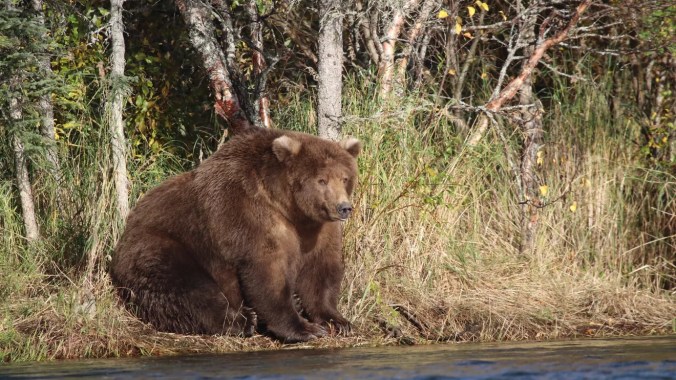
I can’t count the number of animal stories that appeared in my timelines this year with comments like, “Everything is garbage, so here’s this.” There was the cat who was reunited with her family after the Camp Fire, in California, and the parrot who was adopted after getting kicked out of an animal shelter for swearing too saltily. Among the bears preparing for hibernation at Katmai National Park, a female named Beadnose became famous for being the most gloriously round. There was the baby raccoon who scaled a skyscraper in St. Paul, “Mission Impossible” style, stopping occasionally for naps in window ledges along the way. (It was trapped, released, and promptly made the subject of a children’s book.) Stories from the animal world offer reliable moments of escapism—the ones we see in viral videos are usually cute, or tame, or strange and majestic, and glimpsed from a safe distance. But the animal stories that resonated most with me this year were the ones that hinted at a more ominous trend: that we humans are encroaching on nature in ways both glaring and subtle, putting the human and animal worlds into ever more intimate, and ever more fraught, contact.

44382577324_a5fb622fab_o.0

Katmai National Park’s bear 409 (aka “Beadnose”) won the 2018 competition for fattest bear. According to the park, when “she is not raising cubs, this bear is usually one of the fattest females.” NPS Photo/A. Ramos

The most influential animal of the year might be the unfortunate sea turtle who got a straw stuck—really, deeply, seriously stuck—up his nose. In an uncomfortable ten-minute video posted to YouTube, a marine biologist slowly extracts the straw, which is brown and crumpled and disgusting. The turtle’s nose bleeds, and throughout the ordeal, it opens its mouth as if to bite the biologist’s hand—or howl in pain. The video, filmed in 2015, in Costa Rica, became part of this year’s debate over plastic straws and was used by proponents of straw bans to show how such a small object, used and disposed of without a thought, can cause substantial suffering down the line.

BBPqucq

© Twitter Screengrab from the viral video

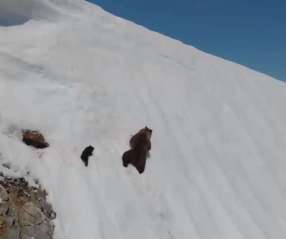
baby bear became an overnight Internet star when it was captured in a video that looked, at first, like a sweet inspirational tale. In aerial drone footage, the cub was shown repeatedly slipping down the side of a snowy ledge and trying mightily to make its way to the top, where its mother waited. Ultimately, the cub prevailed, and the video was embraced on social media as a tribute to the power of perseverance. But then drone operators and ecologists began weighing in: the drone that took the video had likely alarmed the bears; you can see the mother bear swatting the air as the drone flies closer. The machine’s operator, in chasing the bears for footage, had potentially driven them into a dangerous situation. Suddenly, the viral cub was transformed from a feel-good fable into a cautionary tale about how humans can imperil animals just by trying to get a good look at them. Continue reading

Resist Screaming

Today’s absurd news of a government shutdown in the USA provided me an important indicator that nothing much shocks me anymore. And that seems as dangerous as the shocking things that now fail to shock. In the last week I resolved to take care with words. And I stand by that. But still, watch the video above and see if you can resist the headline’s claim:

Americans Should Be ‘Screaming Mad’ About Amazon’s Free Money

You may have heard by now that Amazon’s new headquarters will soon call the New York and Washington, D.C., metropolitan areas home. Continue reading
All We Are Saying

1600 (1)

‘Eco-warriors’ and ‘climate hawks’: is it time to ease up on the war metaphors? Photograph: Amelia Bates/Grist

We connected a series of dots that we felt told a story. Get mad. I know I sure have felt mad in the midst of such alarming inaction. Maybe there is a better way to motivate and get something tangible done. Considering the stakes, I am willing to listen to and try just about anything. And in this essay Kate Yoder reminds me that when we launched this platform in 2011 we felt sure that wordsmithing was part of the solution we wanted to highlight. All that we have been saying since then, and how we have been saying it, was meant to be about a better future–so back to the words for inspiration:

To take on climate change, we need to change our vocabulary

When we talk about saving the planet, we employ the narrative of war. Does it only deepen our divisions?

4298

 A study found the language of war was effective in conveying urgency to participants. But does it work for everyone? Photograph: Damian Klamka/Zuma Wire/Rex/Shutterstock

Each dead house fly was worth a quarter, my mom told us kids, but I never earned any money. Every time I cornered a fly, I pictured goo marks left on the wall – spots splayed with tiny black guts and twisted legs. My halfhearted swats gave even the most sluggish fly time to escape.

That I genuinely couldn’t hurt a fly might have been something I picked up in church. I grew up attending a Mennonite congregation in Indiana. We weren’t the bonnet-wearing, buggy-riding sort, but we embraced some traditions, like the Anabaptist teaching of nonviolence. This sometimes expressed itself in an instinct for conflict avoidance.

So I was surprised when violence crept into my speech three years ago when I started working as a journalist covering climate change. Some ancient spirit took hold of me, and I found myself deploying the narrative of war. Carbon tax proposals were “battles” to be fought. Greenhouse gas emissions had to be “slashed”. “Eco-warriors” and “climate hawks” were leading the charge. Continue reading

Is Neutrality The Best Option?

lead_720_405A.jpg

A rending of Powerhouse Brattørkaia, an “energy-positive” building that will open to the public next year in Norway SNØHETTA

Thank you Norway, for demonstrating that we can do better than neutrality:

Norway Is Entering a New Era of Climate-Conscious Architecture

The country now has a suite of buildings that generate more energy than they use.

The European Union has a target of making all new buildings zero-energy by 2020, but in Norway, carbon neutrality isn’t enough.

A consortium in Oslo made up of architects, engineers, environmentalists, and designers is creating energy-positive buildings in a country with some of the coldest and darkest winters on Earth. “If you can make it in Norway, you can make it anywhere,” says Peter Bernhard, a consultant with Asplan Viak, one of the Powerhouse alliance members. Continue reading

Enough Is Not Enough

181217_r33437web.jpg

Illustration by João Fazenda

Tired as we may be of reading about, talking about, posting about it, enough is not enough on this topic, so here goes (thanks as always to Elizabeth Kolbert):

Coal for Christmas at the U.N. Climate Conference

As negotiators from around the world gathered in Poland to discuss how to lower carbon emissions, the Trump Administration unveiled two schemes promoting fossil fuels.

Last week, representatives from around the world gathered to begin another round of climate negotiations in Katowice, a city in the heart of Poland’s coal-mining country. Delegates arriving at the meeting, known in United Nations-speak as a Conference of the Parties, or cop, were treated to an outdoor performance by a Polish coal miners’ band. Inside the convention pavilions, they found mounds of coal displayed behind glass, like objets d’art, as well as arrangements of coal-based cosmetics and coal-encrusted jewelry. Poland gets about eighty per cent of its electricity from coal, the most carbon-intensive of carbon-based fuels, and the Polish President, Andrzej Duda, noted in his opening remarks that the country had enough as yet unmined supplies to last another two centuries. “It would be hard not to use them,” he said.

Depending on how you look at things, a coal-stuffed climate summit is either completely absurd—“beyond parody,” as one commentator put it—or merely appropriate. With each passing month, the threat posed by global warming grows clearer. And so, too, does the world’s failure to take that threat seriously. “We are in trouble,” the United Nations’ Secretary-General, António Guterres, said at the cop’s opening session. “It is hard to comprehend why we are collectively still moving too slowly—and even in the wrong direction.” Continue reading

Graphics For Better Comprehension

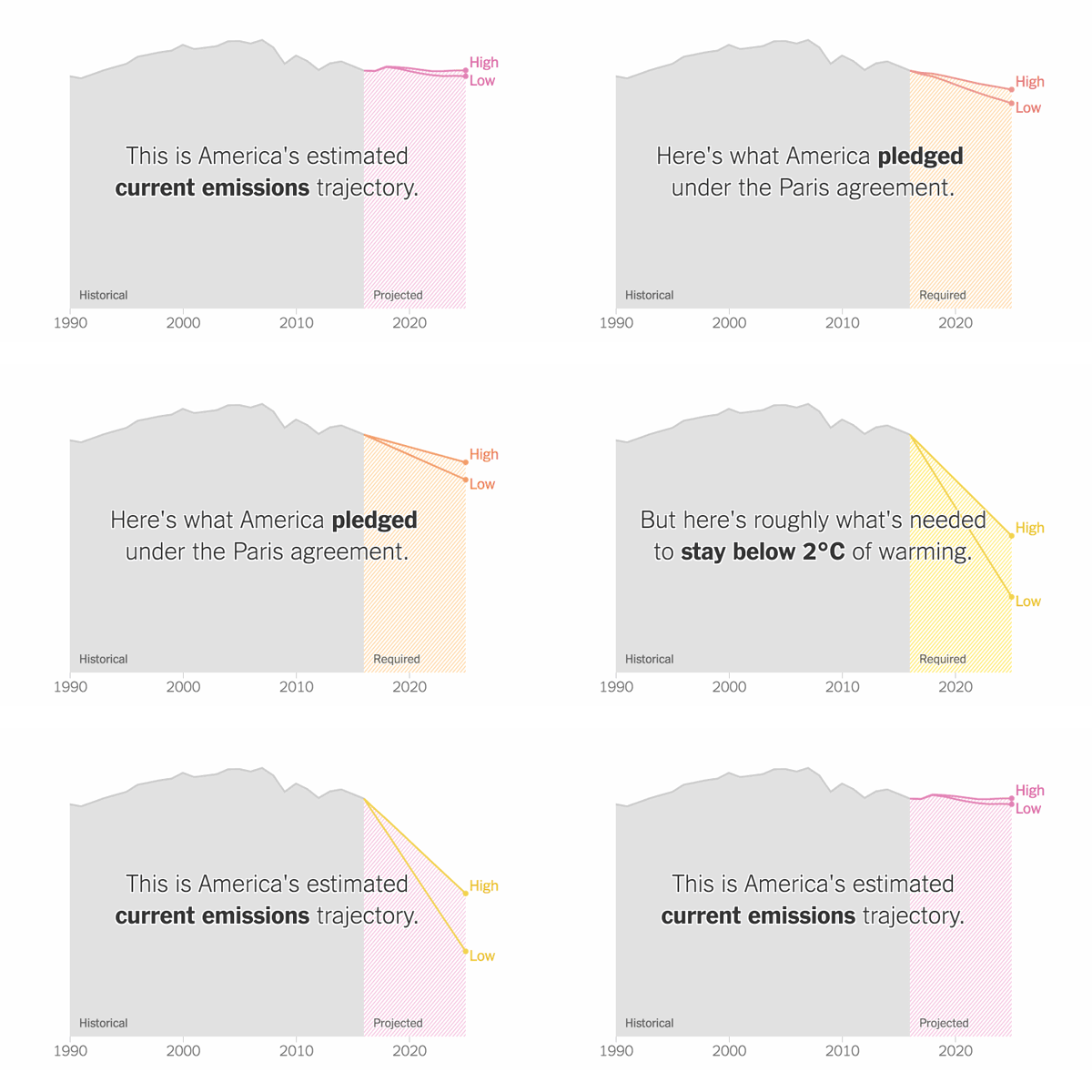
world-emissions-paris-goals-not-on-track-promo-1544191333747-threeByTwoSmallAt2X-v18.gif

Yesterday I was struck by a set of graphics that helped me see an old story in a new light. That was not a particularly important old story, as history of the planet goes; but it gave the manufacturing consent theme a new shine–in technicolor, black and white, and finer shades of gray. Today, on a story that is definitely of historic proportions related to the planet, my thanks again to Brad Plumer and his occasional writing partner Nadja Popovich, especially for its accompanying graphics:

Naughty Behavior Will Not Be Tolerated

Thanks to the Guardian for the latest story in this series. We have avoided adding our voice to the many rightly concerned about the radically pro-extraction, carbon-freewheeling policies of the United States since early 2017. The concern is loud and widespread. We have listened. Today, reading this story, I pictured a naughty boy, a bully, getting away with bad behavior for an extended period. Any period of bad boy behavior is intolerable but it happens. Until it is no longer tolerated. Which eventually always happens. And that may be the best stand-in for optimism these days:

Lost lands? The American wilderness at risk in the Trump era

Exclusive: a new study reveals the vast extent of public lands being opened up to the energy industry. The Guardian heard from three communities on the frontlines

by Charlotte Simmonds, Gloria Dickie and Jen Byers

3872 (2).jpg

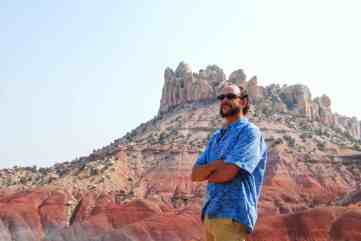
Colter Hoyt, an outdoors guide and conservationist, at Grand Staircase-Escalante. Photograph: Charlotte Simmonds for the Guardian

In the great expanses of the Grand Staircase-Escalante national monument, the silence hits you first. Minutes pass, smooth and unbroken as glass. The smallest sound – a breath of wind, a falling rock – can seem as loud as passing traffic.

Colter Hoyt knows this landscape well. As an outdoor guide, he walks the monument almost daily. Yet these days he is full of fear. This remote paradise of red rocks, slot canyons and towering plateaus faces an uncertain future, following a controversial presidential proclamation that removed 800,000 acres from the monument and opened land up for potential energy development.

When Trump took office in 2016, he promised the energy industry a new era of “American energy dominance”. This would only be possible by exploiting America’s 640m acres of public land: mountains, deserts, forests and sites of Native American history that cover more than a quarter of the country. Continue reading

What Can We Learn From Above About Our Urbanization?

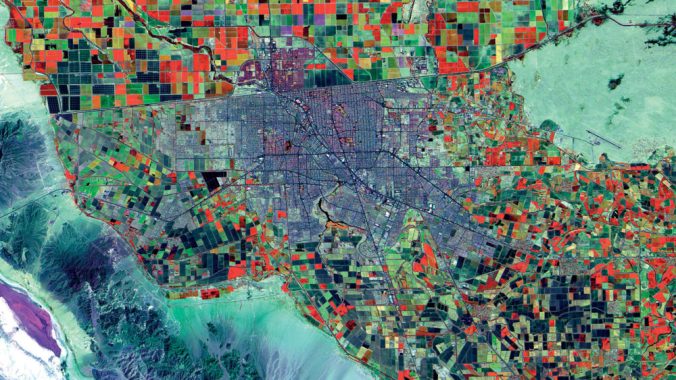
01_Seto_Reba_borders_MEXICALI-CALEXICO_web.jpg

The U.S.-Mexico border separating Calexico, California, and Mexicali, Mexico.

Katherine Bagley, Managing Editor at Yale Environment 360 (Yale e360, one of our go-to sources on this platform), has this to say:

From High Above, A New Way of Seeing Our Urban Planet

The world’s cities are expected to grow by another 2.5 billion people by 2050. A new collection of satellite images starkly illustrates the sheer size and imprint of the world’s urban centers and their vulnerability in the face of population growth and climate change.

08_Seto_Reba_Expansion_SHENZHEN-AFTER_web.jpg

February 10, 1977. Population 43,000. LANDSAT OLI/TIRS

Driven by rapid economic expansion and global trade, the world’s urban population has more than quintupled since the mid-20th century, from 751 million people in 1950 to 4.2 billion today. Centuries-old cities have pushed upward and outward to accommodate the influx of people, and entirely new megacities, home to tens of millions, have sprung up.

08_Seto_Reba_Expansion_SHENZHEN-AFTER_web (1).jpg

February 7, 2016. Population 10.8 million. LANDSAT OLI/TIRS

Nowhere can this swift urban growth be seen as vividly as from space. In their new book City Unseen, geographers Karen C. Seto and Meredith Reba, experts in urbanization and global change, offer a collection of satellite images from all seven continents that exhibit the massive imprint these cities have on the landscapes around them.

“If you look at images of Las Vegas and Lagos and Shenzhen, you see how much land it takes to house billions people, and it’s astonishing,” Seto, a professor of geography and urbanization science at the Yale School of Forestry & Environmental Studies, says. “But the impact of urbanization is not only the direct land these people live on. It’s all these other non-urban places where we need to extract resources to house and electrify, to operate these cities. That’s part of the story too.” Continue reading

The Technology Of Negative Emissions

ClimeWorks_20170510DSC_6501_PhotosbyJuliaDunlop_web2.jpg

A direct air capture facility in Zurich, created by the Swiss-based technology company ClimeWorks. JULIA DUNLOP / CLIMEWORKS

I was not aware that Elizabeth Kolbert has been writing for Yale e360 for the entire time we have been linking to her New Yorker work on this platform. And then some, because she started publishing there ten years ago. This is her 17th publication for Yale e360 and it can help a layperson understand in a relatively short read whether technology has any chance of accelerating our progress on climate change mitigation:

Climate Solutions: Is It Feasible to Remove Enough CO2 from the Air?

A U.S. scientific panel reports that technologies that take CO2 out of the atmosphere could be a significant part of a strategy to mitigate global warming. In an e360 interview, Stephen Pacala, the panel’s chairman, discusses how these fast-developing technologies are becoming increasingly viable.

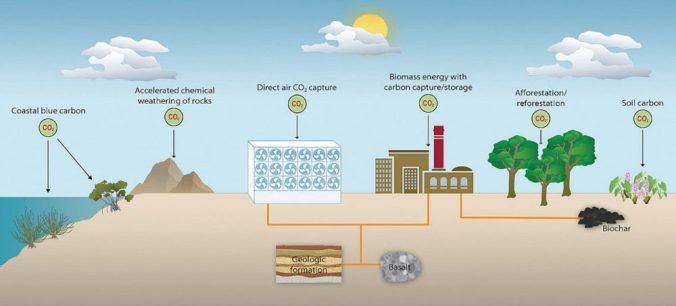
Is there still time to avoid runaway climate change? To a large degree, the answer depends on the feasibility of “negative emissions” — techniques or technologies that suck CO2 out of the air. In the latest report from the Intergovernmental Panel on Climate Change (IPCC), all scenarios for limiting warming to 1.5 degrees Celsius depend on negative emissions technologies, or NETs. Most 2-degree scenarios also rely on negative emissions; many call for removing billions of tons of CO2 per year by mid-century.

NETs_NationalAcademies_web.jpg

Negative Emissions Technologies (NETs) range from low-tech, such as planting more trees, to more high-tech options, such as developing machines to scrub CO2 from the air. NATIONAL ACADEMY OF SCIENCES, 2018

Yet most NETs remain either untested or unproved. To help bridge this gap, the National Academies convened a panel of scientists and asked it to propose a research agenda. The panel considered several possible techniques, ranging from the low-tech — planting more trees — to the high-tech — developing machines to scrub CO2 from the sky. It also looked at a hybrid technology that has become known as bioenergy with carbon capture and storage, or BECCS. The panel recommended several billion dollars be directed to research on NETs. Such technologies, it suggested, ought to be viewed as a “component of the mitigation portfolio,” rather than as a futuristic, last-ditch effort to reduce atmospheric CO2.

Pacala_IsometricStudios_web.jpg

Stephen Pacala. CREDIT: ISOMETRIC STUDIOS

Stephen Pacala, a professor of ecology and evolutionary biology at Princeton University, chaired the panel. In an interview with Yale Environment 360, he talks about why NETs are needed, what should be done to advance them, and why he believes that “direct air capture” technologies could come into widespread use within the next decade. Continue reading

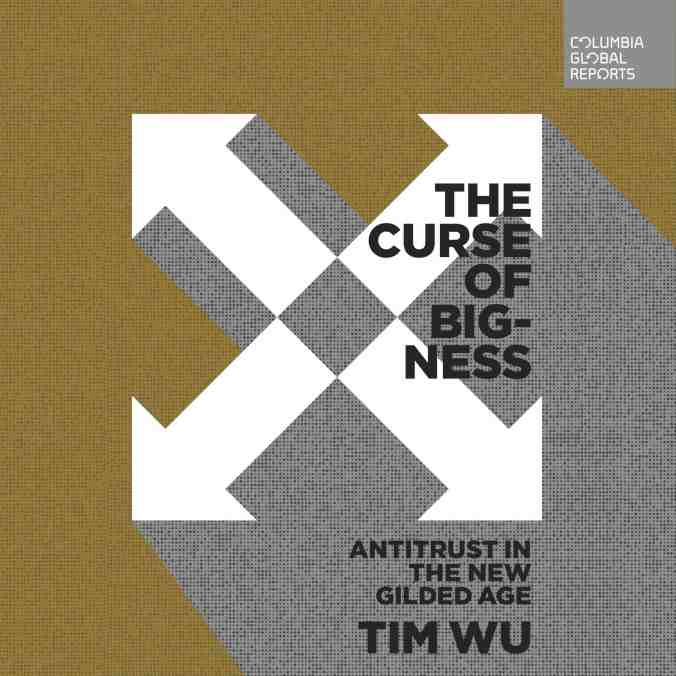
Tim Wu’s New Book, The Curse Of Bigness

WuBig.jpg

In my occasional posts about Amazon over the past few years, it is becoming clear to me that I am concerned about the dangers that come from some of the foundational principles of business management, such as excellent customer service, and scale. I have not read his new book yet, but I listen to and read Tim Wu whenever I see an opportunity. His publisher has this to say:

So, I look forward to learning more about it. Today’s episode of The Daily has useful commentary on Amazon-related topics. Thanks to David Leonhardt for bringing Tim Wu’s new book to my attention:

The Monopolization of America

In one industry after another, big companies have become more dominant over the past 15 years, new data show.

The popular telling of the Boston Tea Party gets something wrong. The colonists were not responding to a tax increase. They were responding to the Tea Act of 1773, which granted a tea monopoly in the colonies to the well-connected East India Company. Merchants based in the Americas would be shut out of the market.

Many colonists, already upset about taxation without representation and other indignities, were enraged. In response, dozens of them stormed three ships in Boston Harbor on the night of Dec. 16, 1773, and tossed chests of East India tea — “that worst of plagues, the detested tea,” as one pamphlet put it — into the water.

A major spark for the American Revolution, then, was a protest against monopoly. Continue reading

News & Perspective

lead_720_405 (4).jpg

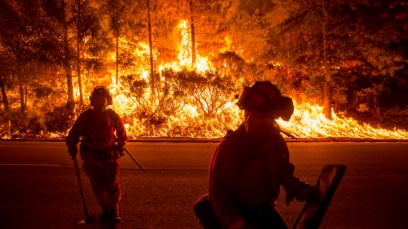
Firefighters battle the King Fire near Fresh Pond, California, in September 2014. NOAH BERGER / REUTERS

Posts like this one tend to not fare as well with readers visiting our platform. Whoever makes their way here is normally looking for what we normally offer, stories about entrepreneurial conservation. Which we believe can be a winning formula for the challenges at hand. But from time to time, we must acknowledge that the odds look grim.

merlin_146590158_372cbff0-acb2-4bf5-8308-f9b1c200405d-jumbo.jpg

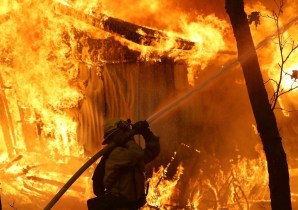
Fighting the Camp Fire this month in Magalia, Calif. Credit Justin Sullivan/Getty Images

Two articles, both very well written, about the report warning of the dangers of climate change to the US economy, note that the report is not likely to have much impact. Because of Black Friday? No, because the forces behind willful ignorance have been at it for a long time, with plentiful resources to strengthen their game. This cartoon says more in fewer words than either article on why. Nathaniel Rich’s short essay, dark and stark and alarming, is akin. Bill McKibben, though, once again hits the nail squarely and firmly, and more effectively than news, because of his trench-based perspective:

181126_r33282.jpg

California is currently ablaze, after a record hot summer and a dry fall set the stage for the most destructive fires in the state’s history. Above: The Woolsey fire, near Los Angeles, seen from the West Hills. Photograph by Kevin Cooley for The New Yorker

How Extreme Weather Is Shrinking the Planet

With wildfires, heat waves, and rising sea levels, large tracts of the earth are at risk of becoming uninhabitable. But the fossil-fuel industry continues its assault on the facts.

Thirty years ago, this magazine published “The End of Nature,” a long article about what we then called the greenhouse effect. I was in my twenties when I wrote it, and out on an intellectual limb: climate science was still young. But the data were persuasive, and freighted with sadness. We were spewing so much carbon into the atmosphere that nature was no longer a force beyond our influence—and humanity, with its capacity for industry and heedlessness, had come to affect every cubic metre of the planet’s air, every inch of its surface, every drop of its water. Scientists underlined this notion a decade later when they began referring to our era as the Anthropocene, the world made by man.

I was frightened by my reporting, but, at the time, it seemed likely that we’d try as a society to prevent the worst from happening. Continue reading

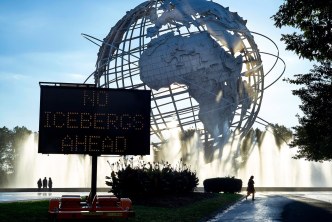
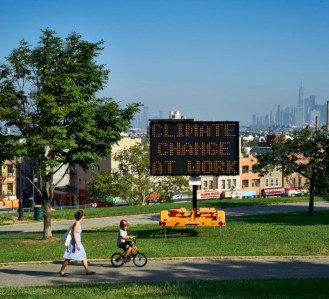
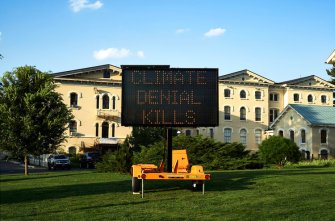
The Climate Museum’s Climate Signals


My only wish is to have been able to share this earlier, during the exhibition’s run. But better late than never.

Kormann-Queens-Climate-Signals.jpg

The “Ask a Scientist” event gives curious passerby the chance to pose their climate-related questions to scientists stationed around New York City. Photograph by Justin Brice Guariglia

Thanks to Carolyn Kormann for another fresh dose of creative rational thinking, with her short piece Ask a Scientist: How to Deal with a Climate-Change Skeptic: