Testing Animal Intelligence

ParrottScience.jpg

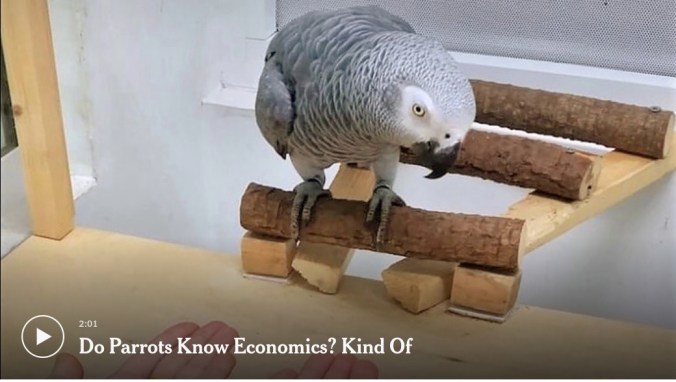
A test of four different species shows they can accurately assign value to food and tokens, swapping lower value items for higher value food. Credit Image by Comparative Cognition Research Group (CCRG)

Thanks to James Gorman for the latest examination of animal intelligence:

Chalk up another achievement for parrots, with an odd twist that raises questions about whether the experimenters or the birds know best.

Anastasia Krasheninnikova and colleagues at the Max Planck Institute for Ornithology in Germany tested four species of parrots in an experiment that required trading tokens for food and recently reported their findings in the journal Scientific Reports.

Would the birds resist an immediate reward to trade for something better? Many species have shown the ability to hold off on an immediate treat — like a dry corn kernel — for something tastier later on, like a bit of walnut. Continue reading

Omnivore’s Dilemma In A Shark Species

07tb-sharks-jumbo.jpg

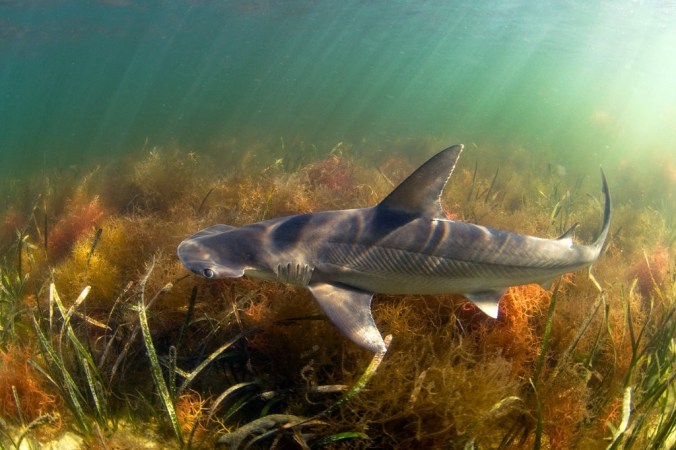
A bonnethead shark in the shallows of Florida’s Pine Island Sound. Credit Getty Images

I do not know why it has been so long since we last linked to a story by her, and I will remain on the lookout for more excellent science writing by her, but for now a quick thanks to Veronique Greenwood for this:

The Omnivorous Sharks That Eat Grass

Diminutive bonnethead sharks are the first omnivorous sharks known to science, which could change our understanding of what some sharks eat.

merlin_143308854_1e868ce5-fc07-4d7f-b6cb-4bf4d92684b8-jumbo.jpg

After researchers caught bonnethead sharks for study, they received a daily meal consisting of a wad of seagrass wrapped in a piece of squid, resembling a large inside-out sushi roll. Credit Samantha Leigh

Sharks are not known for their taste for greenery. But at least one species of shark enjoys a salad of sea grass as well as the prey it hunts.

The bonnethead shark, a diminutive species that reaches up to 3 feet in length, lives in the shallow sea grass meadows off both coasts of the Americas. It eats small squid and crustaceans ferreted from the swaying underwater fronds. But, researchers who have carefully monitored everything going in and out of captive bonnetheads say in a study published in Proceedings of the Royal Society B that they also eat large quantities of seagrass. The grass isn’t just passing inertly through the sharks’ guts. They extract nutrition from it just as they do from the meaty portion of their diet. These sharks must, therefore, be reclassified as omnivores — the first omnivorous sharks known to science. Continue reading

Color Conservation

The hues in the Forbes Collection include the esoteric, the expensive, and the toxic. Photograph by Jason Fulford for The New Yorker

Color is such a constant in our lives that it seems odd to consider any need for it’s conservation. How it exists in nature, how we humans perceive it, and how we’ve use the technology of the time to preserve it, has been relevant for tens of thousands of years. The Forbes Collection archives in the Harvard University’s Fogg Art Museum highlights the work of it’s founder, Edward Waldo Forbes, for whom “pigment hunting and gathering was not just a matter of creating an archive of lost or languishing color. It was about the union of art and science.”

Treasures from the Color Archive

The historic pigments in the Forbes Collection include the esoteric, the expensive, and the toxic

How blue can it get? How deep can it be? Some years ago, at the Guggenheim Bilbao, I thought I’d hit on the ultimate blue, displayed on the gallery floor. Yves Klein, who died at thirty-four, was obsessed with purging color of any external associations. Gestural abstraction, he felt, was clotted with sentimental extraneousness. But, in search of chromatic purity, Klein realized that even the purest pigments’ intensity dulled when combined with a binder such as oil, egg, or acrylic. In 1960, he commissioned a synthetic binder that would resist the absorption of light waves, delivering maximum reflectiveness. Until that day in Bilbao, I’d thought Klein a bit of a monomaniacal bore, but Klein International Blue, as he named the pigment—rolled out flat or pimpled, with saturated sponges embedded in the paint surface—turned my eyeballs inside out, rods and cones jiving with joy. This is it, I thought. It can’t get any bluer.

Until YInMn came along: the fortuitous product of an experiment in the materials chemistry lab at Oregon State University in 2009. Intending to discover something useful for the electronics industry, Mas Subramanian and his team heated together oxides of manganese, yttrium, and indium at two thousand degrees Fahrenheit. What emerged was a new inorganic pigment, one that absorbed red and green light waves, leaving as reflected light the bluest blue to date. Subramanian sent a sample to the Forbes Collection in the Straus Center for Conservation and Technical Studies, at Harvard University, where it sits with twenty-five hundred other specimens that document the history of our craving for color.

Among the other blues on the Forbes’s shelves is Egyptian Blue, a modern approximation of the first synthetic pigment, engineered five millennia ago, probably from the rare mineral cuprorivaite, a soft mid-blue used for the decoration of royal tomb sculpture and the wall paintings of temples. Later, blues strong enough to render sea and sky were made from weathered copper-carbonate azurite—crystalline bright but sometimes darkening in an oil binder. In 1271, Marco Polo saw lapis lazuli quarried from a mountain at Badakhshan, in what is now Afghanistan. Laboriously prepared by removing impure specks of glinting iron pyrite, it became ultramarine—as expensive, ounce for ounce, as gold, and so precious that it was initially reserved for depictions of the costume of the Virgin. In addition to these, the Forbes Collection has a poor man’s blue—smalt made from crushed cobalt containing potassium glass, which weakens, eventually, to a thin greeny-brown gray.

The Forbes Collection owes its existence to a belief in the interdependence of art and science, but it is also an exhaustive archive of cultural passion. A display features Vantablack, which absorbs 99.96 per cent of light, and has to be grown on surfaces as a crop of microscopic nanorods. In 2016, the sculptor Anish Kapoor saw the pigment’s potential for collapsing light, turning any surface into what appears to be a fathomless black hole, and he acquired the exclusive rights to it. An outcry from artists, who objected to the copyright, prompted the Massachusetts manufacturer NanoLab to release Singularity Black, created as part of the company’s ongoing research with nasa, to the public, and the artist Stuart Semple to make the World’s Pinkest Pink available to any online buyer willing to declare himself “not Anish Kapoor.” But Kapoor obtained a sample of the pink pigment, and used it to coat his middle digit, which he photographed and posted online for Semple.

Narayan Khandekar, the head of the Straus Center for Conservation and Technical Studies, takes pleasure in such skirmishes, secure in the knowledge that he presides over something weightier: a priceless resource for understanding how works of art are made, and how they should be preserved. The Department of Conservation and Technical Research was founded, in 1928, by Edward Waldo Forbes, the director of Harvard’s Fogg Museum from 1909 to 1944. Today, the Forbes’s vast library of color and its technical laboratories are housed in the museum’s steel-and-filtered-glass rebuild, designed by Renzo Piano. Rows of pigments in tubes, jars, and bowls are visible through the doors of floor-to-ceiling cabinets. Khandekar had the winning idea of displaying them as if unspooled from a color wheel: reds at one end, blues at the other. There are the products of nineteenth-century chemical innovation—viridian green, cadmium orange, and the chrome yellow with which van Gogh was infatuated but which, over time, has begun to darken his sunflowers. But at the heart of the Forbes Collection are the natural pigments that were the staples of painters’ inventories before chemically synthesized paints replaced the impossibly esoteric, the dangerously toxic, the prohibitively expensive, and the perilously fugitive. Continue reading

A Time and Place for the Public Service Announcement

One of the many Advocacy Priorities of the National Association of Clean Water Agencies (NACWA)

While indoor plumbing is more or less taken for granted, not everything that can flush, should. Thanks to the NYTimes for clarifying the basics.

Should I Flush It? Most Often, the Answer Is No

It might seem harmless at first: a thread of dental floss tossed in the toilet, a contact lens swirling down the drain of the bathroom sink. But even the tiniest of items can contaminate waterways.

The small fragments of plastic contact lenses are believed to be contributing to the growing problem of microplastic pollution. Pharmaceuticals, which are also frequently flushed down the drain, have been found in our drinking water, and the consequences are not fully known.

Larger products like wipes and tampons are also clogging sewer systems, resulting in billions of dollars in maintenance and repair costs.

Wondering what’s safe to flush or wash down the drain? We spoke with several wastewater management experts who explained why many frequently disposed items belong in a garbage can, not the toilet. Continue reading

Local Knowledge Aids Scientific Understanding

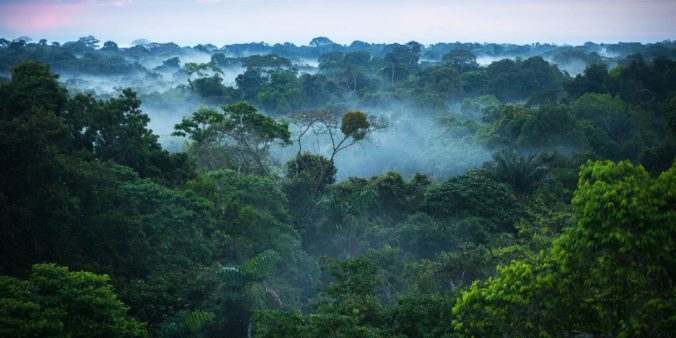
Brazilian_amazon_rainforest_web

WIKIMEDIA COMMONS

In a perfect dovetail with yesterday’s nod to one science writer, today we nod to the contributions of ancestral ways in helping scientists better understand the life cycles of forests. Thanks to Richard Schiffman for this interview:

Lessons Learned from Centuries of Indigenous Forest Management

CMPeters_web.jpgIn an interview with Yale Environment 360, botanist Charles M. Peters discusses how, in an era of runaway destruction of tropical forests, the centuries-old ecological understanding of indigenous woodland residents can help point the way to the restoration of damaged rainforests.

Over centuries, even millennia, indigenous communities have developed interdependent systems of agriculture and forestry that are uniquely suited to the ecological requirements of the land they inhabit. Yet even today, says Charles M. Peters, the Curator of Botany at the New York Botanical Gardens, that skill and knowledge often remain unacknowledged, with some government officials and conservationists arguing that indigenous communities should sometimes be excluded from protected lands that are part of their historical territory.

Field-crews.002_web

Members of the Kenyah Dayak indigenous group conducting forest surveys in Western Borneo in the early 1990s. CHARLES PETERS

In an interview with Yale Environment 360, Peters — author of the recently published bookManaging the Wild: Stories of People and Plants and Tropical Forests — discusses what he has learned from 35 years of working with indigenous forest communities; explains how indigenous farming, even slash-and-burn agriculture, can actually improve forest health; and reflects on the need to enlist indigenous groups as allies in the struggle to preserve and restore tropical forests. Continue reading

Better Science Writing, Better Societal Decision-Making?

Zimmer Longform

9781509818532she has her mother-s laugh_11_jpg_262_400.jpgScience writing has been one of our favorite themes since we started this platform. The quality with which science is explained in clear language is good for the planet, we think. Carl Zimmer is probably the most cited science writer during these eight years, for good reason. The interview above from late 2016, if you are convinced about the importance of science writing, is about as good as it gets for hearing a master explain his craft in very personal terms. It was recorded just weeks after the most fateful (with regard to science) presidential election in recent USA history. Zimmer takes a “just the facts” approach to the interview, and neither punches, nor pulls punches, with regard to the environmental and other science policy mess-making that had just begun. He just shares his craft.

5088.jpg

Carl Zimmer: ‘Heredity is central to our existence… but it’s not what we think it is.’ Photograph: Mistina Hanscom/Lotta Studio

He has a new book out, which we have not read, but we are glad that it has brought him out on book tour. In the interview below, from just a couple weeks ago, we get a quick read on what he is saying now:

Carl Zimmer is a rarity among professional science writers in being influential among the scientists on whose work he writes and comments – to the extent that he has been appointed as professor adjunct in the department of molecular biophysics and biochemistry at Yale University. Zimmer has just published his 13th book, She Has Her Mother’s Laughsurvey of “the power, perversions and potential of heredity”. Continue reading

A Science Advisor At Long Last, Yay

ScienceAdvisor

SUE OGROCKI / AP / THE ATLANTIC

If Ed Yong is happy, then we too are happy about this. Really. Even if it has a bit of fiddling while Rome burns feel to it. Let’s hope he can talk some sense, even if it is too late, into the powers that be:

Trump Finally Picks a Science Adviser—And People Are Delighted

His nominee, Kelvin Droegemeier, is an accomplished meteorologist who studies storms and other extreme weather.

For decades, the meteorologist Kelvin Droegemeier has been immersed in the study of thunderstorms, tornadoes, and other extreme weather. Now he looks set to enter the unpredictable and stormy world of the Trump administration as its top scientific consigliere. Continue reading

Avian Adaptation in the Face of Climate Change


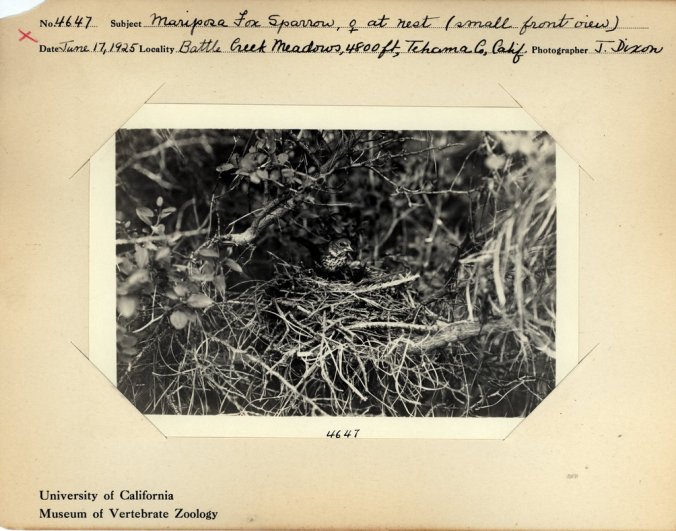
A Mariposa fox sparrow in its nest in 1925, observed during Dr. Joseph Grinnell’s surveys of California fauna. Credit Museum of Vertebrate Zoology, University of California, Berkeley

Accentuate the positive…

California’s Birds Are Testing New Survival Tactics on a Vast Scale

Retracing the steps of a century-old wildlife survey, ecologists find that birds are making remarkable adaptations to climate change.

More than a century ago, zoologist Joseph Grinnell launched a pioneering survey of animal life in California, a decades-long quest — at first by Model T or, failing that, mule — to all corners and habitats of the state, from Death Valley to the High Sierra.

Ultimately Grinnell, founding director of the Museum of Vertebrate Zoology at the University of California, Berkeley, and his colleagues produced one of the richest ecological records in the world: 74,000 pages of meticulously detailed field notes, recording the numbers, habits and habitats of all vertebrate species that the team encountered.

In 2003, museum scientists decided to retrace Grinnell’s steps throughout the state to learn what changes a century had wrought. And that’s why Morgan Tingley, then an ecology graduate student at the university, found himself trekking through the Sierra for four summers.

Dr. Tingley wanted to know how birds had fared since Grinnell last took a census. Years later, the answer turned out to be a bit of a shock. Continue reading

When & Where & How Should Crops Be Genetically Modified?

merlin_139523913_5fd65f9c-fc91-48ef-b875-12d5d327301a-jumbo

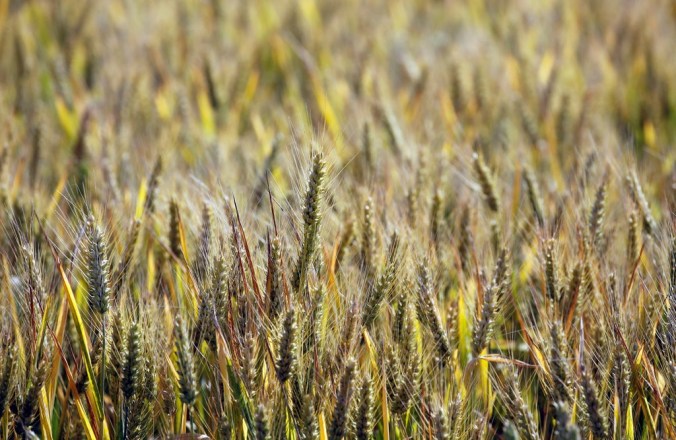
A wheat field in Mouchamps, France. There are very few genetically modified crops grown in Europe compared to the United States. Credit Regis Duvignau/Reuters

Thanks for this GMO primer by Carl Zimmer:

What Is a Genetically Modified Crop? A European Ruling Sows Confusion

In Europe, plants created with gene-editing technologies will be stringently regulated as G.M.O.’s. But older crops whose DNA has been altered will be left alone.

Mushrooms that don’t brown. Wheat that fights off disease. Tomatoes with a longer growing season.

All of these crops are made possible by a gene-editing technology called Crispr-cas9. But now its future has been clouded by the European Union’s top court.

This week, the court ruled that gene-edited crops are genetically modified organisms, and therefore must comply with the tough regulations that apply to plants made with genes from other species.

Many scientists responded to the decision with dismay, predicting that countries in the developing world would follow Europe’s lead, blocking useful gene-edited crops from reaching farms and marketplaces. The ruling may also curtail exports from the United States, which has taken a more lenient view of gene-edited foods.

“You’re not just affecting Europe, you’re affecting the world with this decision,” said Matthew Willmann, the director of the Plant Transformation Facility at Cornell University. Continue reading

The Science Of Nature, Exhibited

27folkart2-jumbo.jpg

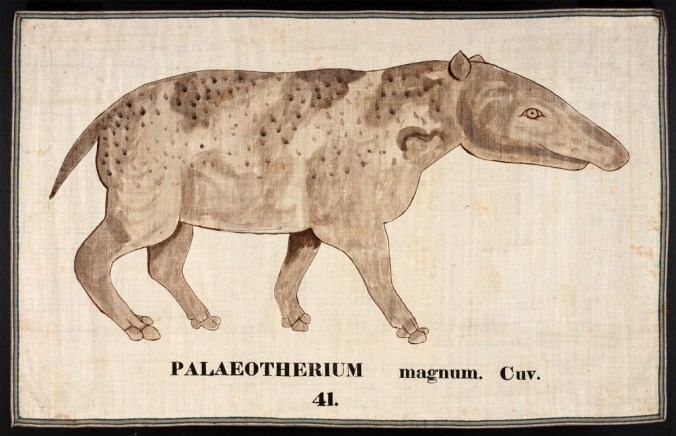
Classroom chart on linen drawn by Orra White Hitchcock, 1828–1840. Credit Amherst College Archives & Special Collections

Thanks to Jason Farago for this review of  Charting the Divine Plan: The Art of Orra White Hitchcock at the American Folk Art Museum:

Mushrooms, Magma and Love in a Time of Science

27folkart1-superJumbo.jpg

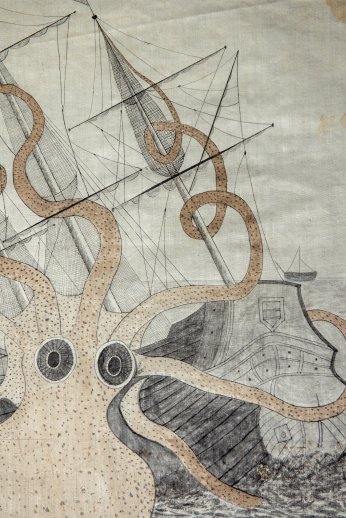
“Colossal Octopus,” 1828–1840, by Orra White Hitchcock, one of America’s first female scientific illustrators, on view at the American Folk Art Museum. Credit George Etheredge for The New York Times

Women remain grossly underrepresented at the highest echelons of American science, and continue to face absurd claims of “innate” inferiority, whether from former Harvard presidents or senior engineers at Google. But until the mid-19th century — when the sciences became professionalized, and when Charles Darwin and others put Christian doctrine under pressure — a woman’s place was in the laboratory, or among the geology and zoology specimens.

Back then the humanities (classics and philosophy, especially) were understood as masculine academic pursuits. It was the more genteel disciplines of natural science, astronomy, chemistry, botany and anatomy, to which women of a certain class gravitated.

merlin_141627540_d42f254c-e955-4d3d-9751-733e1d3723eb-superJumbo.jpg

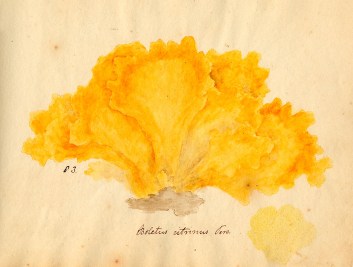
Orra White Hitchcock’s “Fungi Selecti Picti, Vicinity of Conway, Massachusetts” (1821), watercolor, pencil, pen and ink, and ink wash on paper in sewn album. Credit Smith College Special Collections

Orra White Hitchcock (1796-1863) was one of the most remarkable women from this more egalitarian age of scientific study. She had a deep knowledge of botany, zoology and paleontology, and she was also an artist — though that “also” would have seemed unnecessary to her. She produced two albums of botanical illustrations, and later, as introductory materials for her husband’s classes, she diagramed volcanoes, sketched the skeletons of extinct fish and mammals, and drew undulant squids and octopuses on large cotton sheets.

They’re all united at the American Folk Art Museum in “Charting the Divine Plan: The Art of Orra White Hitchcock,” a handsome and unexpectedly passionate exhibition on art, science and education in the early American republic. More than 100 watercolors and classroom charts are here, from painstakingly accurate paintings of reeds and mushrooms to boldly colored abstractions of the earth’s crust and core, and they share space with a splendid array of diaries and correspondence, redolent with the Hitchcocks’ intertwined loves for science, God and each other. Continue reading

Decades Of Awareness, But Not Enough Action

Kolbert-HansenAnniversary

Thirty years ago, James Hansen, a scientist at nasa, issued a warning about the dangers of climate change. The predictions he and other scientists made at the time have proved spectacularly accurate. Photograph by Charles Ommanney / The Washington Post / Getty

I have always been appropriately alarmed by Elizabeth Kolbert’s articles and her comment pieces in the New Yorker. This brief comment below is alarming enough, but with a twist. Science has done its job, but we as citizens, business people, civic leaders have not acted with sufficient urgency considering the clear scientific evidence.

IMG_7014It may be true that scientists have not been the most compelling communicators, but that is no excuse for our inaction. As someone who left a scientific career developing a theoretical framework for entrepreneurial conservation in favor of opportunities to apply those ideas in the real world, I am in the same boat as a climate scientist. I look around today, after decades of best effort and I conclude that we have not accomplished enough in our practice. In our efforts to offer alternatives to messier forms of tourism, we have not accomplished enough. That is discouraging. But discouragement is not an option. We must find a better way to communicate that generates the required action for a less messy planet:
Listening to James Hansen on Climate Change, Thirty Years Ago and Now

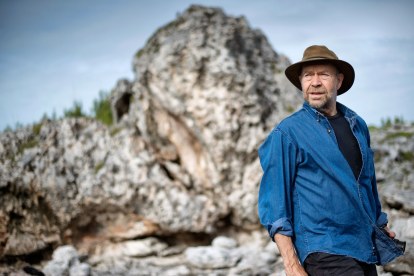
On June 23, 1988—a blisteringly hot day in Washington, D.C.—James Hansen told a Senate committee that “the greenhouse effect has been detected and is changing our climate now.” At the time, Hansen was the head of nasa’s Goddard Institute for Space Studies, and though his testimony was certainly not the first official warning about the “greenhouse effect”—a report to President Lyndon Johnson, in 1965, predicted “measurable and perhaps marked changes in climate” in the decades to follow—it was the first to receive national news coverage. The Times ran the story at the top of the front page, with a graph showing a long-term rise in average global temperatures. Continue reading

Bess, Honey & Nothing

merlin_139147827_59aa1ad7-2e69-4dd7-8bc2-8ee31aa76222-jumbo.jpg

Not only can a honey bee count, it understands the concept of zero, according to researchers. CreditFrank Bienewald/LightRocket, via Getty Images

Thanks as always to James Gorman, one of the best illuminators of any variety of natural mysteries who we never tire of citing in these pages. He tells funny stories sometimes, about beautiful as well as awesome phenomena that we want to know. And he knows how to tell it:

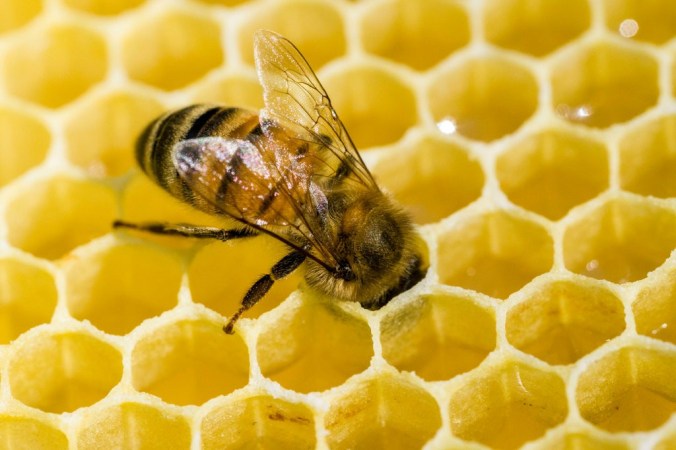
Do Bees Know Nothing?

Researchers say bees understand the concept of nothing, or zero. But do we understand what that means?

What would it mean if bees could understand the concept of nothing?

That would be really something.

merlin_139147956_3b91262b-cb30-4eb9-9279-465935577f13-jumbo.jpg

Bees were rewarded when they landed on cards with more shapes.CreditScarlett R. Howard et al.

Yet that is what scientists reported Thursday in the journal Science. Bees had already demonstrated they could count. Now, the researchers wrote, bees have shown that they understand the absence of things — shapes on a display in this experiment — as a numerical quantity: none or zero.

This is a big leap. Some past civilizations had trouble with the idea of zero. And the only nonhuman animals so far to pass the kind of test bees did are primates and one bird. Not one species, one bird, the famed African gray parrot, Alex, who knew not only words, but numbers. Continue reading

Conservation Aided By Lowliest Of Creatures

merlin_136489011_2126accc-97cc-4224-813c-e09bb5e980a0-jumbo.jpg

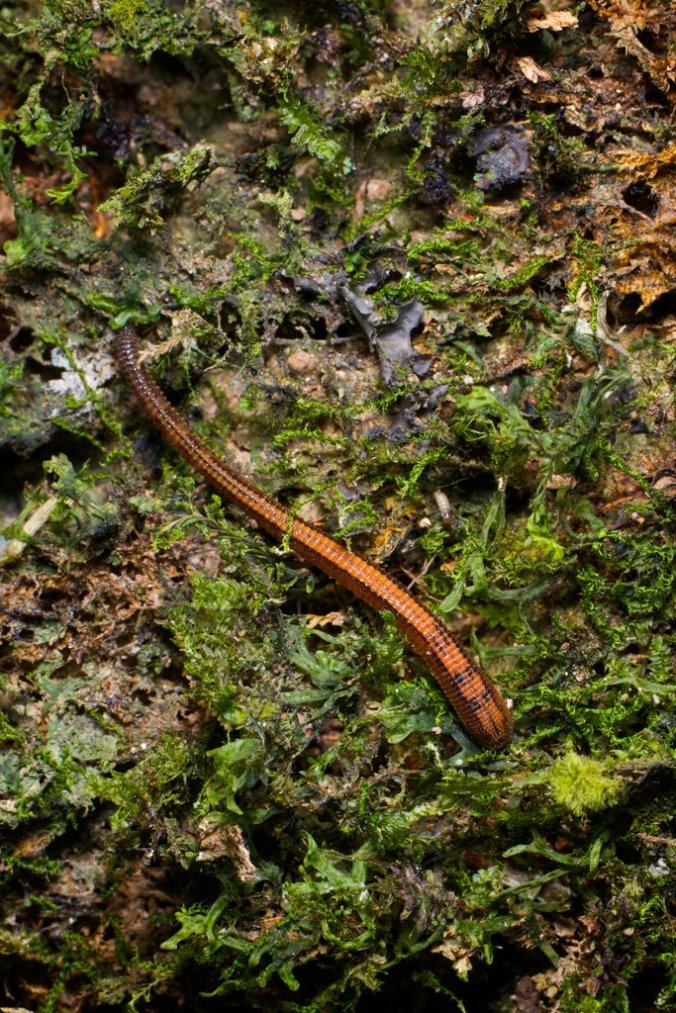
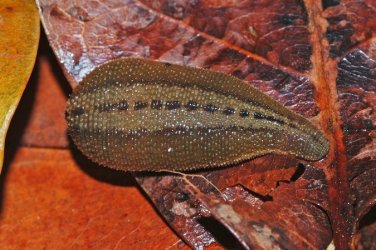
A leech, Haemadipsa zeylanica, in Thailand. Scientists have found they can survey the biodiversity of a forest with DNA analysis of leeches’ last blood meals. Credit Thailand Wildlife/Alamy

Victorious Bananas

physed-banana-master768.jpg

iStock

We are already big fans of this fruit, for all kinds of reasons, so this is like icing on the cake:

Bananas vs. Sports Drinks? Bananas Win in Study

A banana might reasonably replace sports drinks for those of us who rely on carbohydrates to fuel exercise and speed recovery, according to a new study comparing the cellular effects of carbohydrates consumed during sports.

It found that a banana, with its all-natural package, provides comparable or greater anti-inflammatory and other benefits for athletes than sports drinks. But there may be a downside, and it involves bloating.

For decades, athletes and their advisers have believed, and studies have confirmed, that eating or drinking carbohydrates during prolonged exertion can enable someone to continue for longer or at higher intensities and recover more quickly afterward than if he or she does not eat during the workout. Continue reading

Thermal Imaging For Species-Level Learning

merlin_136343916_184e67ea-b2c7-4c2d-8cf5-2dbc257b126a-superJumbo.jpg

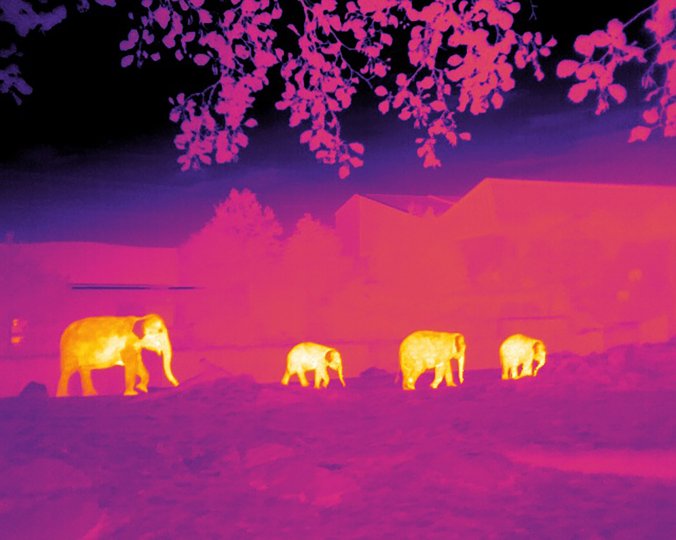
A thermal image of elephants, part of an effort to apply tools from astronomy to help conservationists and fight poaching. Credit Endangered Wildlife Trust/LJMU

We have noted this technology more than once in recent years, and who can resist the images? But Joanna Klein’s story here is a bit different from our earlier notes:

How Do You Count Endangered Species? Look to the Stars

06TB-INFRARED2-superJumbo.jpg

The research team has been working with a local safari park and zoo to film and photograph animals, like these chimpanzees, to build up a reference library of different animals. Credit Endangered Wildlife Trust/LJMU

The conversation started over a fence dividing two backyards. On one side, an ecologist remarked that surveying animals is a pain. His neighbor, an astronomer, said he could see objects in space billions of light years away.

And so began an unusual partnership to adapt tools originally developed to detect stars in the sky to monitor animals on the ground. Continue reading

Respecting Our Oceans, And Our Fellow Beings

Holloway-Whales

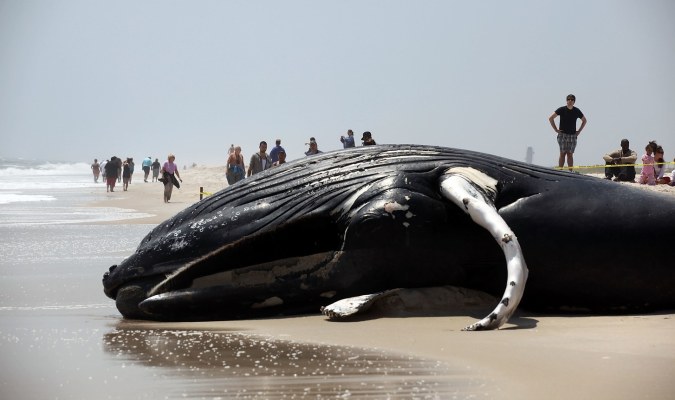
A humpback whale calf that washed ashore in Wantagh, New York. A series of “unusual mortality events” among whales has scientists worried that the ocean is more dangerous than ever. Photograph by Mario Tama / Getty

Thanks to Marguerite Holloway, who we have appreciated a couple times earlier, for this:

One foggy morning last April, a dead humpback whale washed up on New York’s Rockaway Beach. It was a young male, thirty-one feet long, and had extensive bruising—the result of contact with “something very large,” according to Kimberly Durham, of the Atlantic Marine Conservation Society, who performed the necropsy. The Rockaway whale was one of sixty-eight humpbacks that have died between North Carolina and Maine since 2016, casualties in what the National Oceanic and Atmospheric Administration is calling an “unusual mortality event.” And humpbacks, it turns out, are not the only species suffering. Continue reading

Why Did The Robot Swim Like A Fish?

Thanks to for this story about how a Robotic Fish Moves Like The Real Thing — So It Can Observe The Real Thing:

1sofi-swimming-close-up_wide-6a470eed915278147d38a60afa055d7ac8c1e5a0-s1600-c85

SoFi, the robotic fish, swims in for its close-up. MIT computer scientists hope SoFi will help marine biologists get a closer (and less obtrusive) look at their subjects than ever before. MIT CSAIL

Scientific advancement: It’s all in the wiggle.

OK, it’s a lot more complicated than that. But when a team of researchers at MIT unveiled their robotic fish Wednesday, one of the keys they emphasized was the graceful undulation of the prototype’s tail — which, besides being rather eye-catching, serves a crucial role in the robot’s ultimate mission: giving scientists the ability to unobtrusively observe marine wildlife remotely.

robot-fish.gif“Because the fish moves through undulating movement rather than thrusters, the impact it has on how the water moves around it is much more like what is expected of physical fish,” Daniela Rus, director of the school’s Computer Science and Artificial Intelligence Lab, tells NPR. Continue reading

Spying on Birds

“So, like, what do you do every day?”

I get asked this often and I’m not always sure how to explain it to people without pictures at hand or infinite patience for follow-up questions. So, in this blog post, with the benefit of time to pick the right words and theoretically infinite space to write them out, I figured I would try to provide an adequate answer.

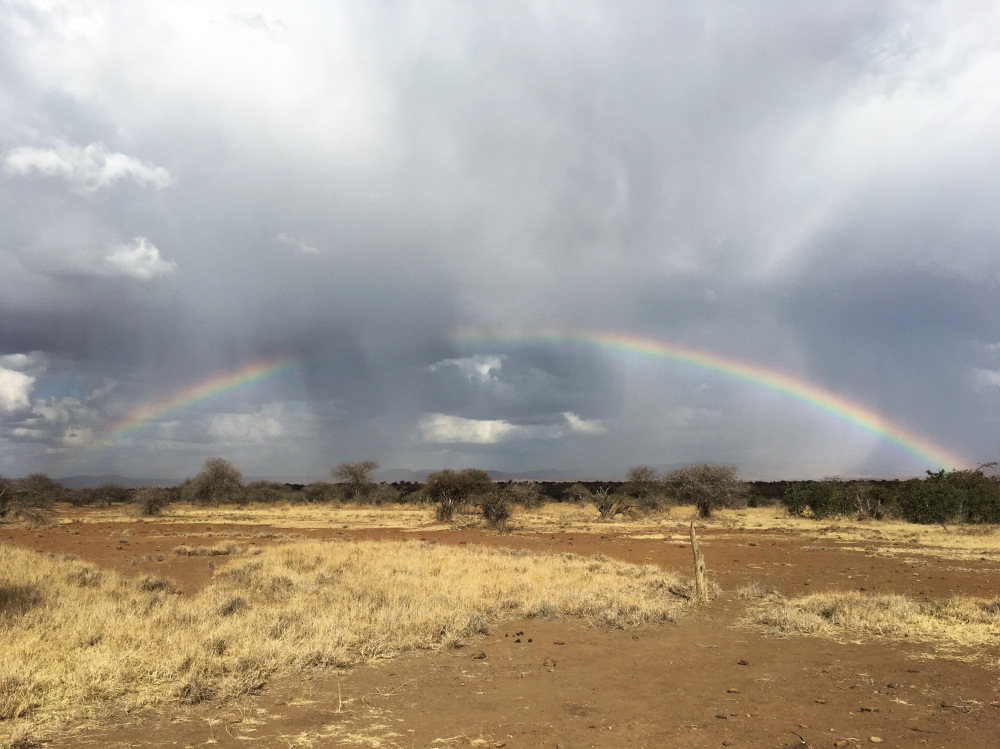
View from the field, a week or so ago

Why fieldwork?

This, I feel, is the question at the crux of the what-do-you-do-every-day question. Why do you have to go to Kenya to do your work? Right, the bird you study is only found there, but why do you have to be out on the savanna everyday – can’t you just bring the birds back to the lab or study them in a zoo?

Of course, you can (nowadays, only with the right permits) and that is precisely what early zoologists did, collecting specimens – alive or dead – from around the world and bringing them back to examine them under microscopes or in aviaries in a rainy British country garden. While this may be convenient, it inevitably renders your conclusions about a bird’s diet or the adaptive nature of its plumage coloration suspect, because they are arrived at out of context. Without the bird having been examined in the environment it’s found in, with different factors that might affect its behavior and morphology in play, it is impossible to understand why it acts the way it does and why it is the way it is. Hence, fieldwork: observing and sampling critters in the wild. Continue reading

Enlightenment & Optimism

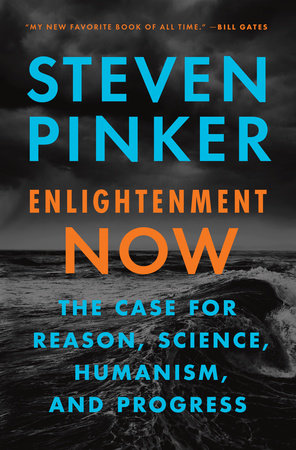
9780525427575.jpegSteven Pinker has featured in these pages plenty of times for the quality of his writing. Recently he was featured in a joint interview with Bill Gates that we meant to link to, but never did. And meanwhile we linked to this story about optimism; now this:

…If you think the world is coming to an end, think again: people are living longer, healthier, freer, and happier lives, and while our problems are formidable, the solutions lie in the Enlightenment ideal of using reason and science.

Is the world really falling apart? Is the ideal of progress obsolete? In this elegant assessment of the human condition in the third millennium, cognitive scientist and public intellectual Steven Pinker urges us to step back from the gory headlines and prophecies of doom, which play to our psychological biases…[continue reading on the book’s website]

The book came to our attention thanks to a smart op-ed:

merlin_132531638_bf5b1cdd-75e4-4b98-96d1-b77255ff8edd-master768

Steven Pinker, a psychology professor at Harvard, calls himself an Enlightenment man. Credit Chona Kasinger for The New York Times

…Pinker’s philosophical lens prevents him from seeing where the real problems lie. He calls himself an Enlightenment man, but he’s really a scientific rationalist. He puts tremendous emphasis on the value of individual reason. The key to progress is information — making ourselves better informed. The key sin in the world is a result either of entropy, the randomness that is built into any system, or faith — dogma clouding reason. Continue reading

Interpreting Climate News

ArcticTemps.jpg

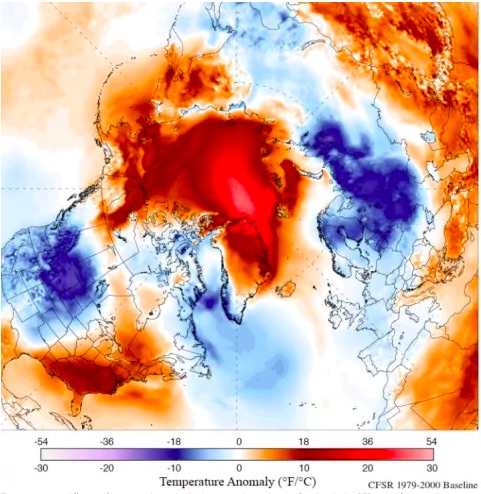
The temperature difference from normal over the Arctic averaged over the next five days in the GFS model forecast. (University of Maine Climate Reanalyzer)

Is it cataclysm or is it a rendering of what we already thought we knew? In case you missed it, there was some startling news that came with this image to the left, that does not look like anything we have ever seen. And the article starts like this:

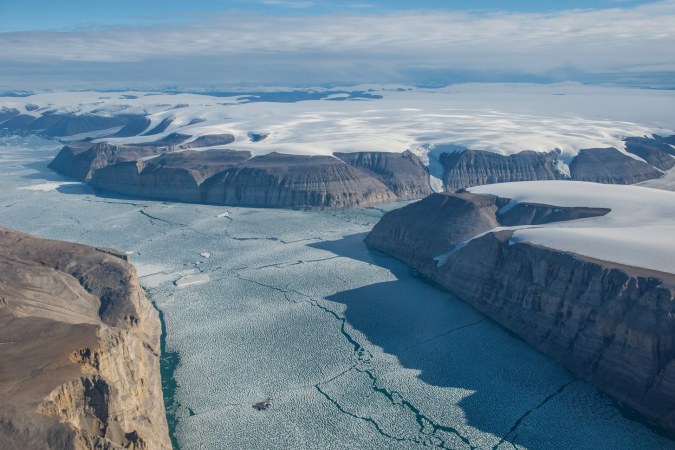
While the Eastern United States simmers in some of its warmest February weather ever recorded, the Arctic is also stewing in temperatures more than 45 degrees above normal. This latest huge temperature spike in the Arctic is another striking indicator of its rapidly transforming climate.

On Monday and Tuesday, the northernmost weather station in the world, Cape Morris Jesup at the northern tip of Greenland, experienced more than 24 hours of temperatures above freezing according to the Danish Meteorological Institute. “How weird is that?” tweeted Robert Rohde, a physicist at the University of California at Berkeley. “Well it’s Arctic winter. The sun set in October and won’t be seen again until March. Perpetual night, but still above freezing.”

This thaw occurred as a pulse of extremely mild air shot through the Greenland Sea.

Warm air is spilling into the Arctic from all sides. On the opposite end of North America, abnormally mild air also poured over northern Alaska on Tuesday, where the temperature in Utqiaġvik, previously known as Barrow, soared to a record high of 31 degrees (minus-1 Celsius), 40 degrees (22 Celsius) above normal. [continue to the article]

Alarming? We think so. Clear? We do not think so. Eric Lach, Deputy News Editor at The New Yorker, has this brief helpful interpretation, with a much easier to understand illustration:

The-Current-Today-Big-Climate-Change.jpg

Many media outlets now regularly cover instances of extreme weather in remote corners of the world. How should readers understand these reports? Photograph by Esther Horvath / Redux

How to Read Today’s Big Climate-Change Headline

This week brought news from the Arctic. “Arctic temperatures soar 45 degrees above normal, flooded by extremely mild air on all sides,” the Washington Post declared, in a headline. The article below that headline detailed how, on Monday and Tuesday, at the northern tip of Greenland, temperatures rose above freezing for a full twenty-four-hour period—extremely unusual for this time of year—while temperatures across “the entire Arctic north of 80 degrees latitude have averaged about 10 degrees (6 Celsius) above normal since the beginning of the calendar year.”

All sorts of media outlets now regularly cover instances of extreme weather in remote corners of the world. And yet how should readers understand these reports? Are the ups and downs of climate change something to follow in the newspaper, like the Mets or the Yankees? [continue to the post]