Walden Pond’s Enduring Lessons

08stager-master768.jpg

Kevin Hooyman

When a professor does years of research and teaching on a topic related to this particular pond, and then takes the additional effort to share his observations in cogent form as an op-ed, we believe it is worth at least 5-10 minutes of reading time:

What the Muck of Walden Pond Tells Us About Our Planet

By

In 1845, Henry David Thoreau repaired to a cabin in the woods beside Walden Pond “to front only the essential facts of life, and see if I could not learn what it had to teach.” During the last two years, my students and I have come to that same pond to see what we could learn from the sediments beneath it. Continue reading

Urban Environments & Evolution


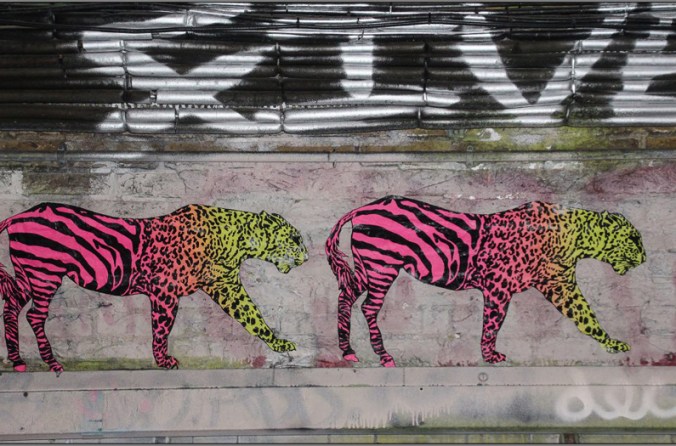
streetartevolution

Header image: Street art in London by Aida. Credit: Maureen Barlin via Flickr.

Anthropocene is back, after a brief holiday break, with a good summary of findings on urban-influenced evolution:

Cities are the new laboratories of evolution

Keeping The Science Moving Forward, Rather Than Sideways or Backwards

00syngenta1-jumbo

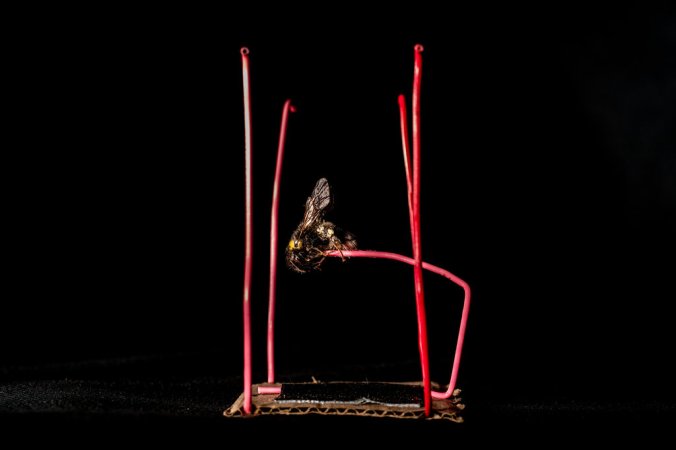
James Cresswell, a professor at the University of Exeter in England, has turned to less controversial areas of research on bees. Here, a bee is mounted on a wire in a wind tunnel, for research designed to estimate normal bee density. CreditAndrew Testa for The New York Times

It is a bit of a mystery story, worthy of the time if you care about bees (a minor character here) and especially if you care about the moral character of scientists while under pressure:

Scientists Loved and Loathed by an Agrochemical Giant

With corporate funding of research, “There’s no scientist who comes out of this unscathed.”

By

EXETER, England — The bee findings were not what Syngenta expected to hear. Continue reading

The State Of Great

29brown-hp-master768

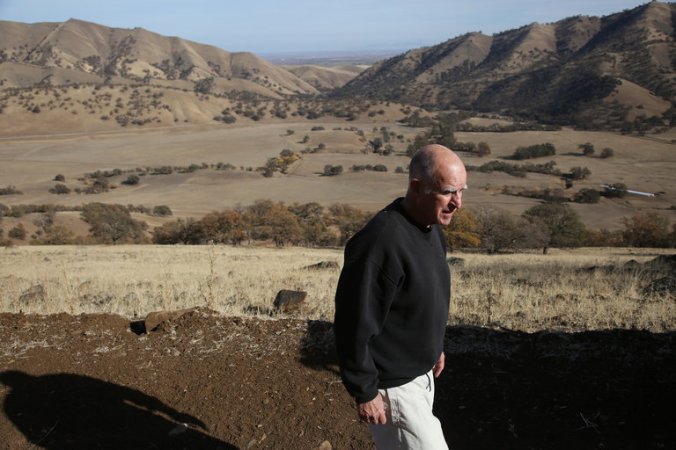
Gov. Jerry Brown at his 2,514-acre family ranch in Colusa County, Calif. “I wouldn’t underestimate California’s resolve if everything moves in this extreme climate denial direction,” he said. “Yes, we will take action.” Credit Jim Wilson/The New York Times

This article, by Adam Nagourney and science writer Henry Fountain, gives climate-concerned citizens everywhere hope that recent tectonic shifts on the political landscape in the USA will not result in complete abandonment of reason within all the states of that union:

LOS ANGELES — Foreign governments concerned about climate change may soon be spending more time dealing with Sacramento than Washington.” Continue reading

For the Birds: a Message to North American Policymakers


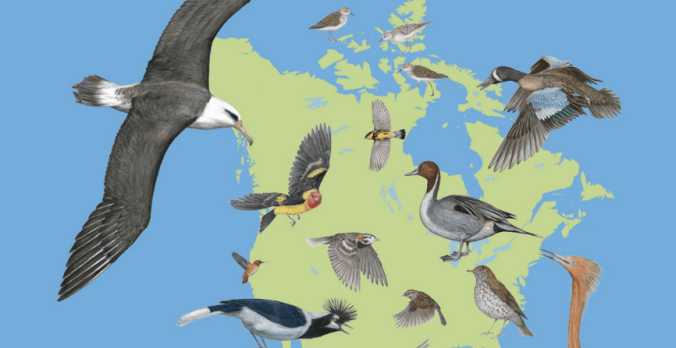
The State of North America’s Birds 2016

The State of North America’s Birds 2016

We continue to laud the importance of eBird on this site, gaining special importance as it becomes more and more clear that wildlife doesn’t acknowledge political borders. The data gleaned from tens of thousands of Canadian, Mexican and U.S. citizen scientists who contribute to eBird indicate that more than 350 species in North America migrate up and down Canada, the U.S.A, and Mexico over the course of a calendar year.

And according to the recently released State of North America’s Birds 2016 report, those three countries—their governments, and their societies—need to step up and do more to preserve our continent’s spectacular and shared natural heritage of birdlife. This report is the first-ever scientific conservation assessment of all 1,154 bird species in North America, and it was only possible because of the tremendous scale and big-data capabilities of citizen-science….

Among the many takeaways from eBird maps and models includes one of relevance to our property, Chan Chich Lodge, located on 30,000 acres of Belizean forest in the Yucatan peninsula.
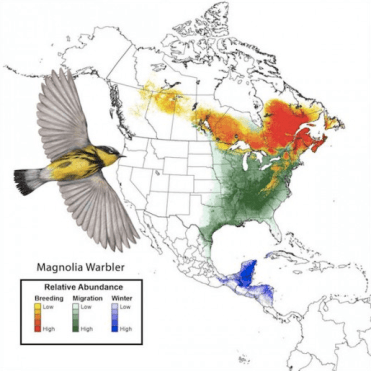
The Yucatan Peninsula is one of North America’s most vital bird habitat regions

The Yucatan Peninsula is one of North America’s most vital bird habitat regions

Not only is the Yucatan rich with endemic birdlife, it’s a critical wintering area for more than 120 birds species that migrate from Canada and the U.S.A. In winter, the entire population of Magnolia Warblers relies on an area of tropical forest in Mexico only 1/10 the size of its boreal forest breeding range, with the Yucatan as the bull’s-eye of their wintering range.

Continue reading

Top Shelf Infographics For 128 Years

phpthumb_generated_thumbnailjpg

Thanks to the fancy-fine publisher, Taschen, for collecting this particularly powerful informative art form into one book:

A History of Knowledge

The best infographics from the National Geographic archives

Back in the days when the information age was a distant dream and the world a more mysterious place, National Geographic began its mission to reveal the wonders of history, popular science, and culture to eager audiences around the globe. Since that 1888 launch, the world has changed; empires have risen and crumbled and a galaxy of information is today only a click away. But National Geographic endures; its calm, authoritative voice is as respected as ever amid the surfeit of data in our daily lives. Continue reading

Better Nets, Better Fishing

ulotrawlproject_2016_069-55_wide-588bf1471991f6a62169e87318536f0a627efb4f-s1100-c85

Portland’s Gulf of Maine Research Institute has designed a trawl net that aims to target species that can still be profitable while avoiding cod. Courtesy of Gulf of Maine Research Institute

Thanks to the salt folks at National Public Radio (USA):

Fishermen Team Up With Scientists To Make A More Selective Net

FRED BEVER

Some New England fishermen are pinning their hopes on a new kind of trawl net being used in the Gulf of Maine, one that scoops up abundant flatfish such as flounder and sole while avoiding species such as cod, which are in severe decline.

For centuries, cod were plentiful and a prime target for the Gulf of Maine fleet. But in recent years, catch quotas have been drastically reduced as the number of cod of reproductive age have dropped perilously low. Continue reading

Bees In Need Get Boost

3000b

Honeybees alone are responsible for boosting the production of fruits, nuts and vegetables. But bee and other pollinator populations in the US have been in decline in recent years. Photograph: Klas Stolpe/AP

Thanks to the Guardian:

Bee’s knees: a new $4m effort aims to stop the death spiral of honeybees

General Mills is co-funding a project with the federal government to restore the habitat of pollinators such as bees and butterflies on North American farms Continue reading

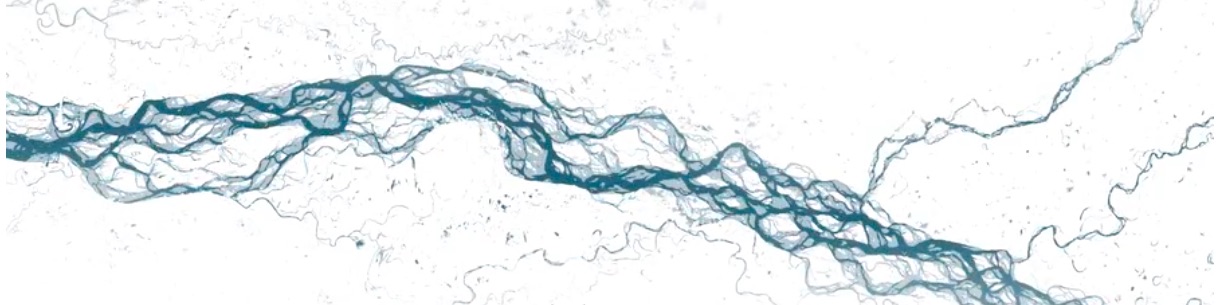
Flow Chart

water

This excellent interactive story, Mapping Three Decades of Global Water Change, b

The Undoing Project, Reviewed

9780393254594_198.jpegWe are happy to see that the book mentioned last month is now available and has been reviewed in the New York Times, among other places, in addition to author interviews that are worth a look:

In the fall of 1969, behind the closed door of an otherwise empty seminar room at Hebrew University, two psychologists began a collaboration that would upend the understanding of human behavior. Those first conversations were filled with uproarious laughter and occasional shouting, in a jumble of Hebrew and English, which could sometimes be heard from the hallway. Continue reading

Conservation Swan

3135

Sacha Dench, the ‘human swan’, in her paramotor as she follows migrating birds from the Russian tundra to the UK. Photograph: WWT/PA

We wish Sacha Dench all the best on this one:

Sacha Dench is first woman to cross the Channel in a motorised paraglider, as part of her journey following migrating birds from Russia to Britain

Patrick Barkham

The conservationist and “human swan” Sacha Dench has become the first woman to cross the English Channel in a motorised paraglider during her epic 4,500-mile journey following migrating birds from the Russian tundra to Britain.

Continue reading

Sound-Recognition Software Advances

MIT-SoundRec-1_0.jpg

The researchers’ neural network was fed video from 26 terabytes of video data downloaded from the photo-sharing site Flickr. Researchers found the network can interpret natural sounds in terms of image categories. For instance, the network might determine that the sound of birdsong tends to be associated with forest scenes and pictures of trees, birds, birdhouses, and bird feeders. Image: Jose-Luis Olivares/MIT

From Larry Hardesty at the news office of the Massachusetts Institute of Technology an interesting article on machine-learning, which we thought was going to be about a new app for birders but it is a much broader finding:

Computer learns to recognize sounds by watching video

Machine-learning system doesn’t require costly hand-annotated data.

Watch Video

In recent years, computers have gotten remarkably good at recognizing speech and images: Think of the dictation software on most cellphones, or the algorithms that automatically identify people in photos posted to Facebook. Continue reading

Be The Bee

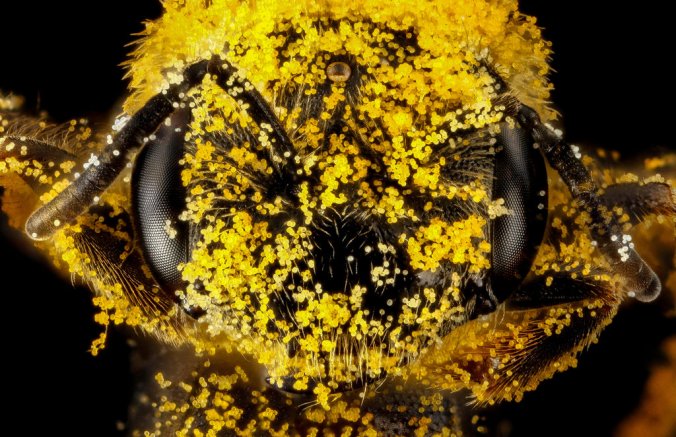
02beesproject-pollen-jumbo.jpg

SAM DROEGE/UNITED STATES GEOLOGICAL SURVEY

Science, as a section of the daily newspaper of old, was geek-out territory. In the modernizing news organization, it has every bit of that old intensity, magnified by the wonders of technology. This little item demonstrates the point:

You’re a Bee. This Is What It Feels Like.

We’re taking you on a journey to help you understand how bees, while hunting for pollen, use all of their senses — taste, touch, smell and more — to decide what to pick up and bring home.

By JOANNA KLEIN

Set your meetings, phone calls and emails aside, at least for the next several minutes. That’s because today you’re a bee.

Anthropocene Urban Wonder

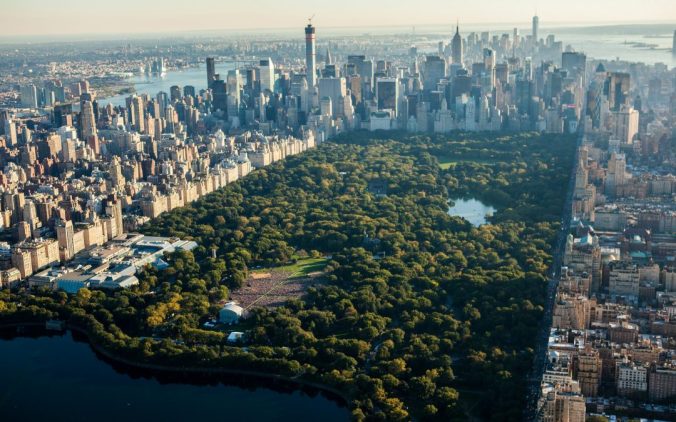
CentralPark-1080x675.jpg

Central Park, New York City. Credit: Anthony Quintano via Flickr.

Thanks to Anthropocene:

Looking for the next miracle drug? Try searching city soils

Sarah DeWeerdt

Many drugs are based on molecules produced by bacteria. Previously, the search for such drugs has mostly focused on “pristine” environments in far-flung locales. But a new study shows that many useful molecules could already be, quite literally, at our feet. Continue reading

Birdsong, Beauty & Beholder

gettyimages-584502287-2f5c9a0e7238bdb537e001579aa364e2b708aad2-s1100-c85

Getty Images

Thanks as always to Barbara King, who we link to from time to time on topics of simple, natural beauty:

What Do Birds Hear When They Sing Beautiful Songs?

Birdsong is music to human ears.

It has inspired famous composers. For the rest of us, it may uplift the spirit and improve attention or simply be a source of delight, fun and learning.

But have you ever wondered what birds themselves hear when they sing? Continue reading

Photosynthetic Solutions

wilerson-s-andrade

Wilerson S. Andrade/Flickr.com

Thanks to Anthropocene:

Could more efficient photosynthesis help feed the world?

Finding A Mate In The Camargue

29OBSFLAMINGOS-superJumbo (1).jpg

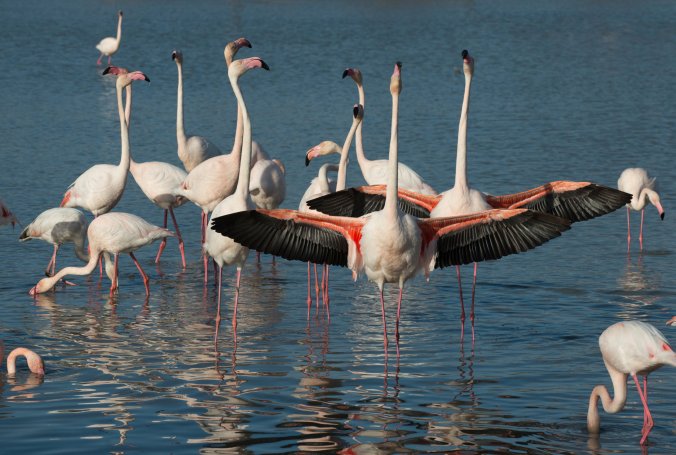
Flamingos strutting their stuff at a park in the Camargue region of southern France. Credit Jean E. Roche/Minden Pictures

Thanks to Tuesday’s Science section in the New York Times:

Flamingo Mating Rules: 1. Learn the Funky Chicken

By

Flamingos are very good dancers. They twist and preen, they scratch their heads, they march in unison. They poke a wing in one direction and a leg in another. Continue reading

Agricultural Origin Story

leaf-cutter-ants_wide-6b7093087f0ce34d72d51f5eebb34ebc9db81df7-s1100-c85

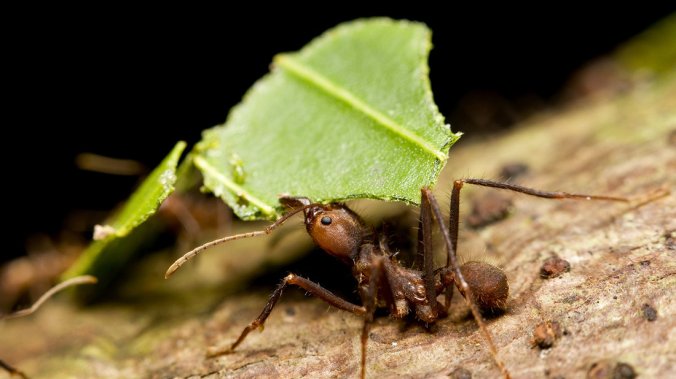
Various species of ants engage in some kind of agriculture. Here, a leaf-cutter ant gathers food for its fungus farm. Mark Bowler/Science Source

Thanks to National Public Radio (USA):

Who Invented Agriculture First? It Sure Wasn’t Humans

Ants in Fiji farm plants and fertilize them with their poop. And they’ve been doing this for 3 million years, much longer than humans, who began experimenting with farming about 12,000 years ago. Continue reading

Salmon, Scientifically Superb

salmon3

If you are a salmon-eater, you will want to spend the 101 seconds to see (click above for a short video), and perhaps a couple minutes more to read, this multimedia explanation of how to improve your prep of this fish. Thanks to Wired for this one:

Master the Chemistry of Juicy, Tender Salmon

JENNIFER CHAUSSEE

salmon1IF YOUR PAN-SEARED salmon didn’t quite turn out right, you may be tempted to blame it on the type of salmon you bought—maybe it was farm-raised instead of wild—but none of that should matter if you understand the chemistry of how this colorful fish cooks. For another episode of Edible Science, salmon2Dan Souza, ultra chef-nerd and co-author of the new Cook’s Science by America’s Test Kitchen, shows us how brining and low temperatures can help enhance the flavor and retain the moisture of salmon, no matter what kind you buy. Continue reading