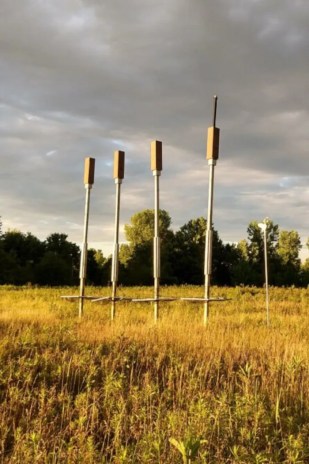
Phototropism Better Understood

Illustration by Matteo Giuseppe Pani

Our thanks to Asher Elbein, writing in The Atlantic, for this:

Scientists have discovered that a mysterious behavior might come down to air.

On a shelf lined with terra-cotta pots, herbs bend their stems toward the nearest window. In a field of golden wildflowers, leaves rotate with the path of the sun. In a dappled forest, vines twine up trees, reaching ever upward and away from the dark. Continue reading

A Century’s Evidence On The Benefits Of Planting Trees

People work to reforest Allegheny National Forest in Pennsylvania circa 1934.
Photograph: Universal History Archive/Universal Images Group via Getty Images

Planting trees, we have noted, is smart policy.  Some campaigns may have stretched beyond scientific evidence, but science has given us plenty to go on:

Very cool: trees stalling effects of global heating in eastern US, study finds

Vast reforestation a major reason for ‘warming hole’ across parts of US where temperatures have flatlined or cooled

Civilian Conservation Corps workers plant 15,000,000 trees across the wastelands of southern Mississippi on 11 April 1940. They are part of the United Forest Service which will re-establish forests destroyed by logging and lumbering operations decades ago. Photograph: AP

Trees provide innumerable benefits to the world, from food to shelter to oxygen, but researchers have now found their dramatic rebound in the eastern US has delivered a further, stunning feat – the curtailing of the soaring temperatures caused by the climate crisis.

While the US, like the rest of the world, has heated up since industrial times due to the burning of fossil fuels, scientists have long been puzzled by a so-called “warming hole” over parts of the US south-east where temperatures have flatlined, or even cooled, despite the unmistakable broader warming trend. Continue reading

How Birds See Color

Forget cerulean — a bright, clear sky is actually dominated by ultraviolet light. Humans can’t see ultraviolet light, but many birds can. “Their sky will be essentially an ultraviolet sky,” said Daniel Hanley, a sensory ecologist at George Mason University.

Birds have gotten more attention in our pages than any other person, place or thing since we first started. Today that attention is focused on their sight:

A Bird’s-Eye View of a Technicolor World

Scientists have devised a new video system that reveals how animals see color, and us.

Is the sky truly blue?

Katherine J. Wu On Grizzlies

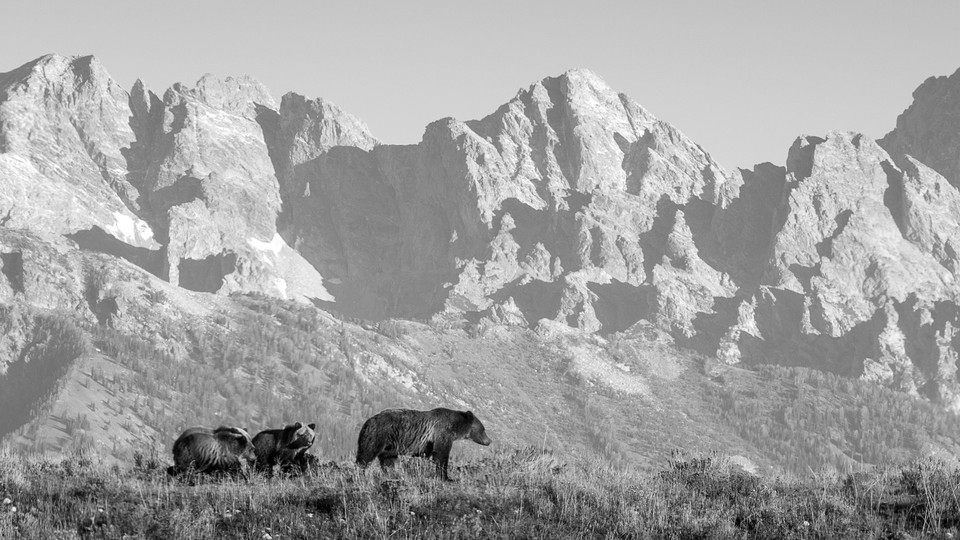
a black-and-white photo of several brown bears walking across a grassy plain, in front of mountains

Getty

We always appreciate Katherine J. Wu‘s writings on nature, especially her use of archival material to make a point:

Grizzly Bears Are Mostly Vegan

But humans made them more carnivorous.

On the subject of grizzly bears, the San Francisco Call—a short-lived newspaper that went out of print in 1913—wasn’t what you’d call kind. Continue reading

Nature’s Choice, Best Science Images

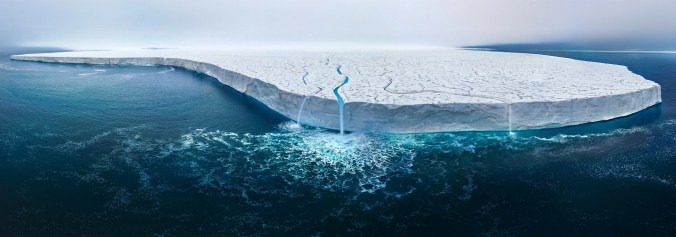
Credit: Thomas Vijayan

We encourage you to go to Nature to see the entire selection, if you think this one is amazing:

Melt warning. This shot of melt water pouring through the Austfonna ice cap on the Arctic island of Nordaustlandet, Norway, won the Nature category in the 2023 Drone Photo Awards. “I have visited this place several times before, but last year it was disheartening to witness the sea ice melting as early as June,” said photographer Thomas Vijayan.

The Warped Side Of Our Universe, Demystified

Harvard staff writer Anne J. Manning writes about an event with the author and illustrator of this new book, discussing their remarkable collaboration:

CalTech’s Kip Thorne and Chapman University’s Lia Halloran visit Harvard to discuss their collaboration. Kris Snibbe/Harvard Staff Photographer

Nobel-winning physicist, artist illustrate universe’s ‘warped side’

New book seeks to demystify complex science from black holes to time travel

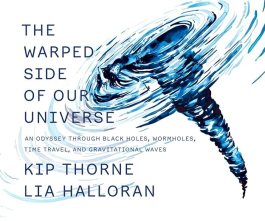
Nobel Prize-winning astrophysicist Kip Thorne has spent his career describing, through mathematics, some of the deepest mysteries of the universe. His latest project takes on similar material, but through poetry and paintings.

© 2023 by Lia Halloran

A nearly two-decade collaboration with artist Lia Halloran has extracted from Thorne’s brain the pictures that accompany those highly technical descriptions and brought them to life in their new book, “The Warped Side of the Universe: An Odyssey Through Black Holes, Wormholes, Time Travel, and Gravitational Waves.” The weighty tome blends complex science with whimsical art and features more than 300 ink-on-film paintings by Halloran alongside poetry by Thorne.

Paintings that accompany the poems “A Black Hole is Made from Tendices/of Stretching and Squeezing Space and/ a Chaotic Singularity” and “When Orbiting Black Holes Collide:/Spiraling Vortices/ Morph into Gravity Waves.” © 2023 by Lia Halloran

Thorne, the 2017 Nobel laureate in physics and emeritus theoretical physics professor at the California Institute of Technology, and Halloran, associate professor at Chapman University, shared the story behind their partnership at a Harvard Science Book Talk last week, moderated by MIT physicist and humanities Professor Alan Lightman (one of Thorne’s former students at CalTech).

The book, said Thorne, is not meant to teach the particulars of astrophysical concepts, but rather to “convey the essence of the ideas, the feeling, the experience of the ideas, without going into the technical details — like I do in my other life.” Continue reading

Climate Scientist Wields Words Well

Carl Recine/Reuters

Kate Marvel is a climate scientist at the environmental nonprofit Project Drawdown, and was a lead author on the Fifth National Climate Assessment. She has well-informed opinions and as we have noted before, she knows how to express them clearly:

I’m a Climate Scientist. I’m Not Screaming Into the Void Anymore.

Two and a half years ago, when I was asked to help write the most authoritative report on climate change in the United States, I hesitated. Did we really need another warning of the dire consequences of climate change in this country? Continue reading

Species-Specific Safe Spaces

O’Keefe’s team designed bat boxes that offer a wide range of interior temperatures. Joy O’Keefe

We have pointed to stories about activism and entrepreneurship in the interest of protecting animal habitat plenty of times, but not so much on the science of the field work. As part of its Climate Desk collaboration Mother Jones shares this article originally published by Undark, written by Marta Zaraska, that addresses some of the science of species-specific safe spaces:

Inside Scientists’ Race to Create Safe Refuges for Animals

Climate crisis is destroying habitats. Can technology help create new ones?

Conservation ecologist Ox Lennon simulated stacks of rocks that would create crevices big enough for skinks, but too small for mice. Courtesy Ox Lennon

In 2016, Ox Lennon was trying to peek in the crevices inside a pile of rocks. They considered everything from injecting builders’ foam into the tiny spaces to create a mold to dumping a heap of stones into a CT scanner. Still, they couldn’t get the data they were after: how to stack rocks so that a mouse wouldn’t squeeze through, but a small lizard could hide safely inside. Continue reading

The Coming Wave, Reviewed

The primary author of this book is one of the pioneers of AI, so what he has to say about it as a dilemma is relevant. From a recent conversation he had with Sam Harris my takeaway was that while I do not have much agency in the dilemma, it is better for me to understand it than ignore it. Containment is not, apparently, an option. So what can I do? In this book review, a quicker version of the same message, and the only option may be to ponder it:

The Coming Wave by Mustafa Suleyman review – a tech tsunami

The co-founder of DeepMind issues a terrifying warning about AI and synthetic biology – but how seriously should we take it?

On 22 February 1946, George Kennan, an American diplomat stationed in Moscow, dictated a 5,000-word cable to Washington. In this famous telegram, Kennan warned that the Soviet Union’s commitment to communism meant that it was inherently expansionist, and urged the US government to resist any attempts by the Soviets to increase their influence. This strategy quickly became known as “containment” – and defined American foreign policy for the next 40 years. Continue reading

ChatGPT & Whale Chat

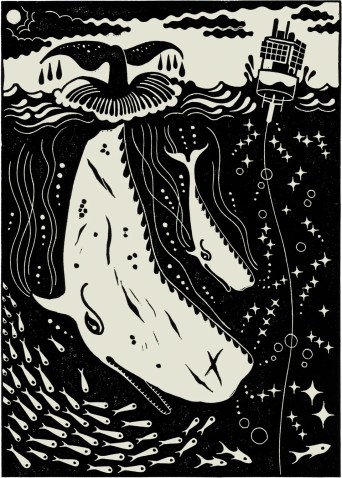
Sperm whales communicate via clicks, which they also use to locate prey in the dark. Illustration by Sophy Hollington

Thanks to Elizabeth Kolbert for this:

Can We Talk to Whales?

Researchers believe that artificial intelligence may allow us to speak to other species.

Ah, the world! Oh, the world!

—“Moby-Dick.”

David Gruber began his almost impossibly varied career studying bluestriped grunt fish off the coast of Belize. He was an undergraduate, and his job was to track the fish at night. He navigated by the stars and slept in a tent on the beach. “It was a dream,” he recalled recently. “I didn’t know what I was doing, but I was performing what I thought a marine biologist would do.” Continue reading

The Price Is Not Right For Groundwater

Not all natural resource utilization problems are simply a matter of pricing the resource correctly. But clearly it matters. Water hogging is apparently more widespread than we thought, and the price is clearly not right on this resource. This first in a series on the causes and consequences of disappearing water, by Mira Rojanasakul, Christopher Flavelle, Blacki Migliozzi and Eli Murray, has excellent interactive features to help understand these challenges:

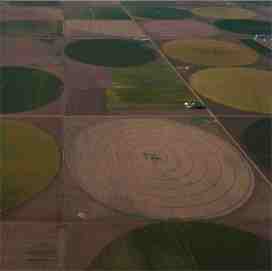
Center-pivot irrigation. Farming is a major groundwater user. Loren Elliott for The New York Times

America Is Using Up Its Groundwater Like There’s No Tomorrow

Overuse is draining and damaging aquifers nationwide, a New York Times data investigation revealed.

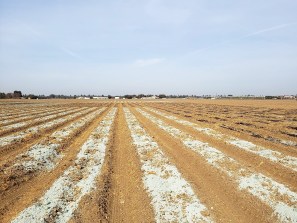
GLOBAL WARMING HAS FOCUSED concern on land and sky as soaring temperatures intensify hurricanes, droughts and wildfires. But another climate crisis is unfolding, underfoot and out of view.

Most American communities also rely on wells for tap water. Rebecca Noble for The New York Times

Many of the aquifers that supply 90 percent of the nation’s water systems, and which have transformed vast stretches of America into some of the world’s most bountiful farmland, are being severely depleted. These declines are threatening irreversible harm to the American economy and society as a whole.

The New York Times conducted a months-long examination of groundwater depletion, interviewing more than 100 experts, traveling the country and creating a comprehensive database using millions of readings from monitoring sites. Continue reading

Insect Oases

A small patch of native plants in Melbourne, Australia, draws native insects. MATA, ET AL.

Thanks to Yale e360 for this short story on small wonders:

Even a Small Patch of Native Greenery Can Give a Big Boost to Local Insects

In cities, a little native greenery can go a long way. Australian scientists found that, after adding native shrubs to a planting in Melbourne, the number of insect species at the site increased sevenfold. Continue reading

August Reading, Science For Nonscientists

Clea Simon, correspondent for the Harvard Gazette, has these book recommendations from professors around campus:

Climate change, global hunger: What to do?

Black holes, warming seas, new treatments for disease: No matter how you approach it, the news is full of science-based stories. For those of us who aren’t scientists, however, understanding the context — not to mention the technical jargon — can be a challenge. With that in mind, we asked Harvard science faculty in various fields to recommend their favorite science book for nonscientists. Ideally these accessible reads will give the rest of us a leg up on understanding our changing world. Continue reading

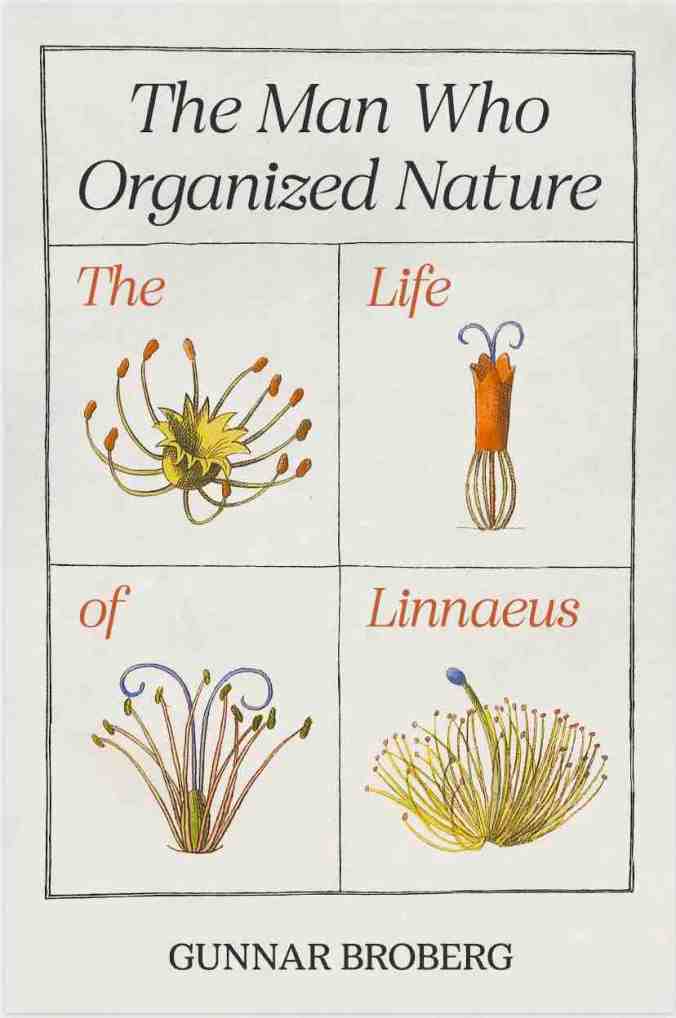
Carl Linnaeus, The Man Who Organized Nature

Thanks to Kathryn Schulz for this review:

The sexual system Linnaeus favored for classifying plants brought a whiff of scandal, which helped spread his name. Illustration by Karlotta Freier

How Carl Linnaeus Set Out to Label All of Life

He sorted and systematized and coined names for more than twelve thousand species. What do you call someone like that?

For the Tyrannosaurus rex, as for Elvis and Jesus, being extremely dead has proved no obstacle to ongoing fame. Last seen some sixty-six million years ago, before an asteroid wiped out three-quarters of the life-forms on earth, it is nonetheless flourishing these days, thanks in large part to Michael Crichton, Steven Spielberg, and elementary-school children all over the world. Continue reading

We Are Stardust, Spreading Rock Dust

Rock dust applied to farmland in California. IRIS HOLZER

It is a concept we have heard about a couple of times previously and the science is catching up. Our thanks to Yale e360 for sharing news of it:

Spreading Rock Dust on Farmland Has Potential to Draw Down Huge Sums of Carbon Dioxide

Adding volcanic rock dust to cropland could help the world reach a key carbon removal goal, a new study finds. Continue reading

Dream Of The Octopus

The topic of octopus spiked last year for various reasons, but we have been interested in these creatures for much longer. Thanks to Benjamin Thompson and Shamini Bundell for this podcast on Nature’s website:

Do octopuses dream? Neural activity resembles human sleep stages

Brain probes reveal complexities of octopus sleep, and a hormone that could help make calorie-restricted diets more effective.

00:46 Inside the brains of sleeping octopuses

Researchers have probed the brains of octopuses and confirmed previous reports suggesting that these invertebrates have a two-stage sleep cycle similar to that seen in many vertebrates. The team suggests this system may have evolved independently in the two groups, as there are millions of years of evolutionary history between them. However, despite its presumed importance, it is a mystery why this system exists at all.

Research article: Pophale et al.

Nature Video: Do octopuses dream? Brain recordings provide the first clues

Why Are We Not More Afraid Of The Heat?

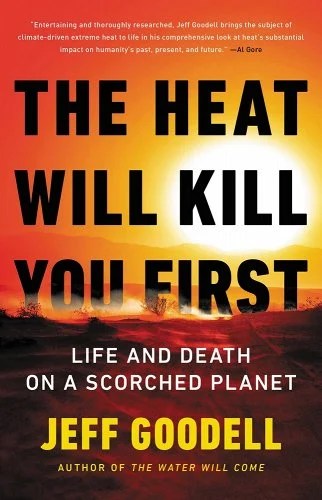
Jeff Goodell shares his opinion in the newspaper of record in the USA. It will serve as a preview of his book to the right, reviewed here. He has also spoken about this topic. There is no pleasure to be had here. Only awareness, and the question why we are not doing more:

In Texas, Dead Fish and Red-Faced Desperation Are Signs of Things to Come

In 2019, I happened to be visiting Phoenix on a 115-degree day. I had a meeting one afternoon about 10 blocks from the hotel where I was staying downtown. I gamely thought I’d brave the heat and walk to it. How bad could the heat really be? I grew up in California, not the Arctic. I thought I knew heat. I was wrong. After walking three blocks, I felt dizzy. After seven blocks, my heart was pounding. After 10 blocks, I thought I was a goner. Continue reading

Reviving Plants Lost To Time

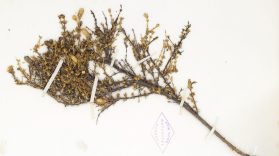
A branch of Blutaparon rigidum, collected on a 1905-1906 expedition to the Galapagos Islands, contains hundreds of potentially viable seeds. NEW YORK BOTANICAL GARDEN

We have touched on the topic of reviving extinct species only a few times previously, and as obvious as it seems we must mention that reviving plant species sounds like a more sound ambition. So, thanks to Janet Marinelli and Yale e360 for this story:

Back from the Dead: New Hope for Resurrecting Extinct Plants

Armed with new technology, botanists are proposing what was once thought impractical: reviving long-lost plant species by using seeds from dried specimens in collections. The challenges remain daunting, but researchers are now searching for the best de-extinction candidates.

In January 1769, botanists Joseph Banks and Daniel Solander found a daisy in Tierra del Fuego, at the southern tip of South America. Continue reading

Paint It Very White

In one green-gloved hand, a man wearing goggles holds a paint brush dripping with bright white paint. His other hand holds a plastic container of the white paint under the brush to catch the drops.

Xiulin Ruan, a professor of mechanical engineering at Purdue University, has created the whitest paint on record with his students. John Underwood/Purdue University

We once again have Cara Buckley to thank:

Scientists at Purdue have created a white paint that, when applied, can reduce the surface temperature on a roof and cool the building beneath it.

Xiulin Ruan, a professor of mechanical engineering at Purdue University, didn’t set out to make it into the Guinness World Records when he began trying to make a new type of paint. He had a loftier goal: to cool down buildings without torching the Earth. Continue reading

Stop Digging

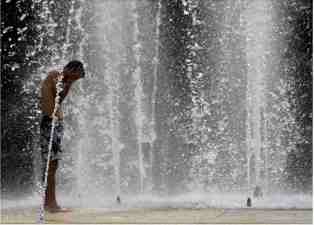
A man cools off by a fountain during a heat wave in Seville, Spain, on July 10th. Photograph by Cristina Quicler / AFP / Getty

It is difficult to imagine, from where I sit in cool weather in the mountains of Costa Rica’s central valley, what that heat would feel like. But it is not difficult to imagine all the possibilities for doing something about it. When you are in a hole that you do not want to be in, stop digging:

Is It Hot Enough Yet for Politicians to Take Real Action?

The latest record temperatures are driving, again precisely as scientists have predicted, a cascading series of disasters around the world.

We’ve crushed so many temperature records recently—the hottest day ever measured by average global temperature, the hottest week, the hottest June, the highest ocean temperatures, the lowest sea-ice levels—that it would be easy to overlook a couple of additional data points from this past weekend. But they’re important, because they help illuminate not just the size of our predicament but the political weaknesses that make it so hard to confront. Continue reading