Interview with a Jurassic Park Paleobiologist

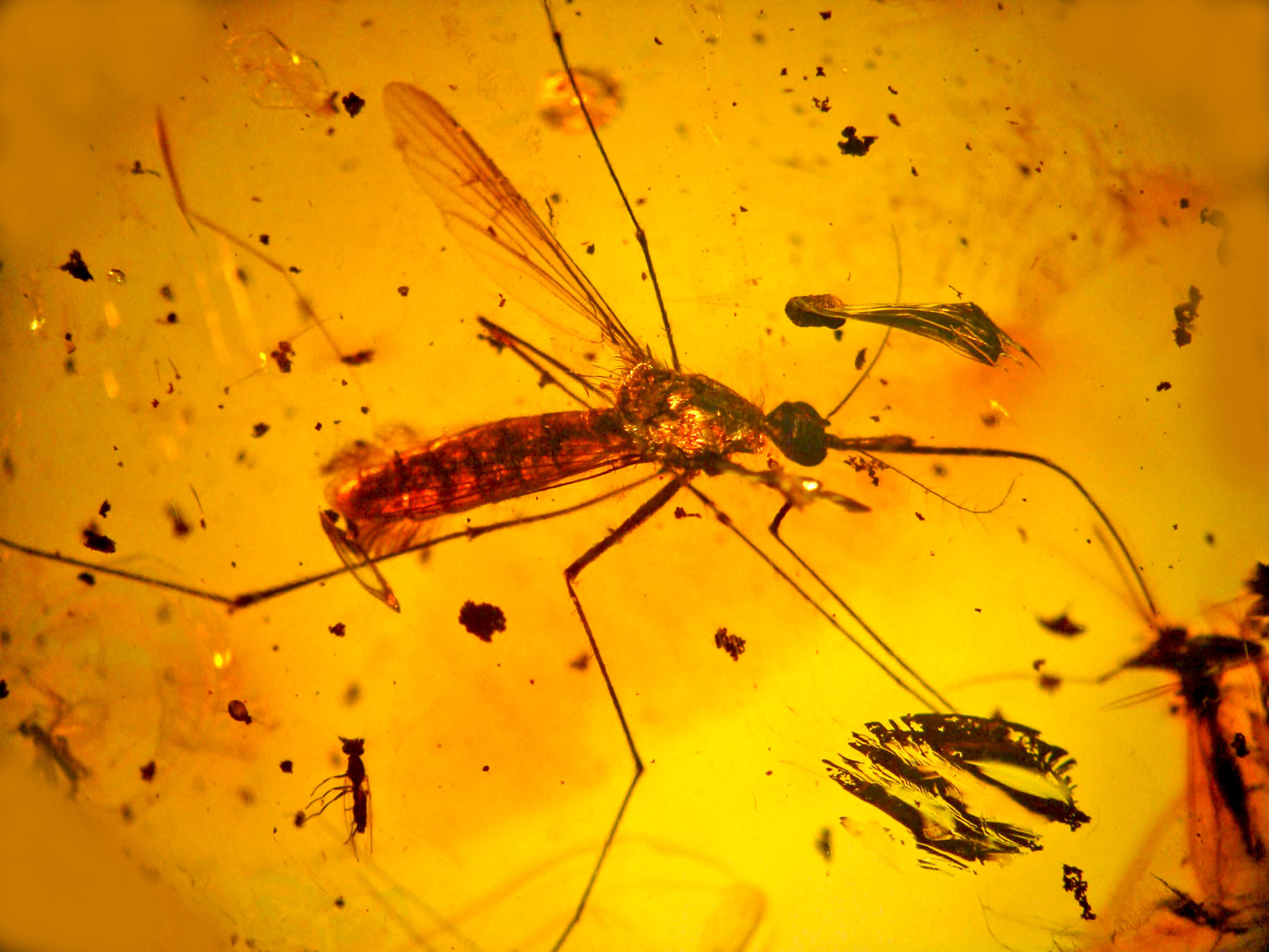
An elephant mosquito from Poinar’s collection. Photo by George Poinar, Jr. via Science Friday.

Many of our readers have likely read or watched Jurassic Park, or one of the sequels of the film, and know that the DNA for the fictionally first-recreated dinosaur came from the blood sample within a giant mosquito trapped inside prehistoric amber. Well, Michael Crichton actually got this idea from a true scientific discovery, although it didn’t revolve around dinosaurs. We’ve discussed de-extinction on the blog before, and actually featured the paleobiologist referred to in this post’s title a couple months ago. Now, Chau Tu at Science Friday has interviewed the scientist, George Poinar, Jr., regarding his experience working with amber-clad specimens from millions of years ago, his thoughts on de-extinction, and more:

Poinar would find, among other specimens, the oldest known bee, the first known bat fly fossil, and the most complete flower from the Cretaceous Period. And just this past February, he co-authored a paper in Nature Plants describing a new species of neotropical flower found in amber from the mid-Tertiary Period.

Science Friday recently spoke with Poinar, 79, now a courtesy professor in the Department of Integrative Biology at Oregon State University, about what led him to investigate specimens trapped in amber, his thoughts on de-extinction, and his inspirations.

Continue reading

Visualize Pi (and Happy Birthday Albert!)

Both a transcendental and an irrational number, Pi (π) is the ratio of a circle’s circumference to its diameter. And both in definition and actuality it epitomizes coolness, inspiring musical homages, from rap to fugue. Albert Einstein, master of the time-space continuum, was born on this day. Makes sense, right?

But what about visual inspiration?

Artist Ellie Balk collaborates with students from The Green School in East Williamsburg, Brooklyn to combine mathematics and art to VISUALIZE Pi as murals in their community. 

Starting in 2011 the artist/student/educator teams graphed Pi in colorful, creative and innovative ways: a histogram of emotions; a weather mural, a reflective line graph that resembles a sound wave and the relationship between the golden ratio and Pi.

For example:

In 2012, students constructed an image of the golden spiral based on the Fibonacci Sequence and began to explore the relationship between the golden ratio and Pi. The number Pi was represented in a color-coded graph within the golden spiral. In this, the numbers are seen as color blocks that vary in size proportionately within the shrinking space of the spiral, allowing us to visualize the shape of Pi and its negative space to look for “patterns”.  The students soon realized that the irrational number of Pi created no patterns at all, resulting in a space that resembles “noise”. 

In response to that, in 2013 students worked to visualize the number Pi as a reflective line graph that resembles a sound wave. The colors of the mural change at each prime number in Pi so that the viewer can visualize a pattern of prime numbers within Pi. Located on a busy corner in East Williamsburg, Brooklyn, the sounds of the bustling traffic and rhythmic commuter passing creates the perfect backdrop for our visualization.   Continue reading

When Collaboration Is Everything, It Can Be Awesome

06MIT1-master1050-v3

“Sandcastle No. 3,” drawn on a single grain of sand, part of a Vik Muniz series from 2013.CreditVik Muniz, via Sikkema, Jenkins & Co.

We like it, for what should be obvious reasons:

At M.I.T., Science Embraces a New Chaos Theory: Art

Continue reading

Sea Butterfly Motion Recorded at GA Tech

Recording by David Murphy at the Georgia Institute of Technology, via NPR.

We know from previous posts how important plankton is to the health of the world’s oceans, and now we’re learning about a species of zooplankton that is an example of convergent evolution in the form of “flight” motion. The gif to the left displays the watery “wingbeats” of the near-microscopic sea snail Limacina helicina, which is the same type of movement that a fruit fly’s wings make to move through the air. Merrit Kennedy reports for NPR:

It’s “a remarkable example of convergent evolution,” the researchers write. They say the ancestors of zooplankton (such as L. helicina) and those of flying insects diverged some 550 million years ago.

This sea snail’s movements are more like a fruit fly’s than other zooplankton, the study found.

L. helicina, which lives in cold Pacific waters, has two smooth swimming appendages “that flap in a complex three-dimensional stroke pattern resembling the wingbeat kinematics of flying insects.”

Other types of zooplankton typically “paddle through the water with drag-based propulsion” rather than fly, the researchers say.

Study co-author David Murphy tells the Journal of Experimental Biology that the sea snail and fruit fly both “clap their wings together at the top of a wing beat before peeling them apart, sucking fluid into the V-shaped gap between the wings to create low-pressure vortices at the wing tips that generate lift.”

Continue reading

The Whole Picture

Did you take these for just some stunning water colors? Well, these are hard data on climate change. An artistic expression of an ugly, oft overlooked truth. Jill Pelto, the artist, who graduated in December from the University of Maine with a degree in earth science and studio art, created these paintings based on graphs of data on the environmental effects of climate change.

Continue reading

NatureNet Science Fellows

WOPA050824_D120

Giant clam in Pacific, Asia Pacific. (ALL RIGHTS GRANTED TNC)

The Nature Conservancy is, among the philanthropic conservation organizations we are aware of, uniquely entrepreneurial beyond their core competency in land conservation. Their communications outreach is among these excellent extensions of their mission.  This article, about one of the NatureNet Science Fellows, is a good case in point:

Adventures in Alternative Energy: Giant Clam Edition

When most people think about alternative energy sources, Pacific giant clams probably do not spring readily to mind. Within their iridescent tissues, however, the world’s largest clams may well hold the missing link to finally enable the efficient (read: commercially viable) large-scale production of clean biofuels from algae.

Giant clams as alternative energy powerhouses. Who knew? Continue reading

Double Major

tigerweb_750

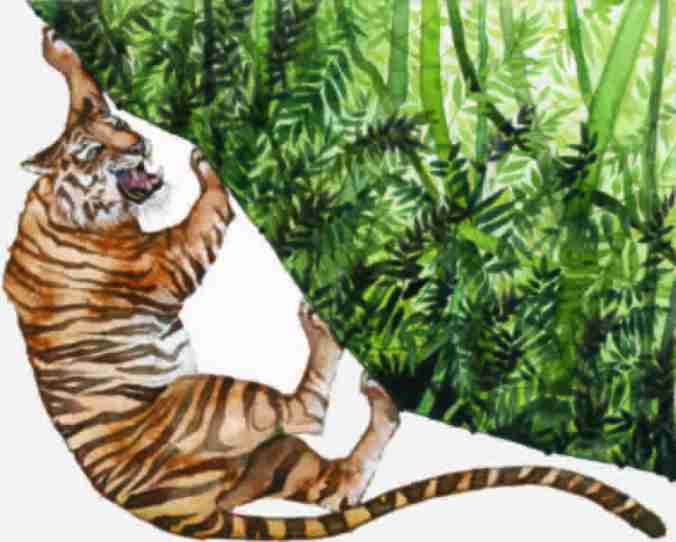
Endangered tiger and rainforest habitat decline. Image credit: Jill Pelto

In the years since Raxa Collective has been operational in India, we have welcomed several dozen interns to Kerala from a dozen or more countries around the world, most but not all from university programs that have some attention to sustainable development. The majority of those interns have been graduate students preparing for a career in international business. Most of our interns will not work full time in sustainable development after graduating. But they want this experience to ensure that their work has a kind of “double major” effect so their exposure to sustainability programming is embedded in their more mainstream functional business activities.

Those interns not from university programs are typically taking a sabbatical from their regular work life. They also are typically looking to add the equivalent of a second major to their regular professional life.  Thanks to Clara Chaisson at EcoWatch for this pointer over to an scientist/artist who is doing the same, in her own way:

Scientists are notorious for struggling to communicate the importance of their work in compelling ways. Continue reading

Wild Tomatoes Reduce Need for Pesticides

Cherry tomatoes growing at Xandari Resort © J.L. Zainaldin

We’re always on the lookout for non-chemical ways to deter pests from agricultural areas, and researchers in the UK are finding yet another method that doesn’t involve spraying plants with poisons that can adversely affect local wildlife (i.e., bees) or the people eating them. It may seem like a no-brainer, but here it is: breed commercial tomatoes with wild ones to increase pest resistance! Sindya Bhanoo summarizes the research for the New York Times:

Whiteflies are the scourge of many farms, damaging tomatoes, peppers, eggplants and other crops. Now, researchers in Britain report that a species of wild tomato is more resistant to the pest than its commercial counterparts.

The wild type, the currant tomato, is closely related to domestic varieties, “so we could crossbreed to introduce the resistance,” said Thomas McDaniel, a biologist and doctoral student at Newcastle University in England and a co-author of the study, published in the journal Agronomy for Sustainable Development. “Another method would be genetic engineering, if we identified the genes.”

The researchers studied Trialeurodes vaporariorum, a species of whitefly that often attacks tomatoes grown in greenhouses. Whiteflies damage tomato plants by extracting the plant’s sap, which contains vital nutrients; by leaving a sticky substance on the plant’s surface that attracts mold; and by transmitting viruses through their saliva.

Continue reading

Lay Folk Lessons

Konnikova-Resilience-690

Perception is key to resilience: Do you conceptualize an event as traumatic, or as a chance to learn and grow? ILLUSTRATION BY GIZEM VURAL

As science writers get better and better at reaching lay audiences–starting with Daniel Goleman’s work three decades ago for the New York Times that led to his eventual blockbuster success with Emotional Intelligence (and its many spinoffs) and expanding to much more than the several superstars we have been highlighting in these pages since 2011–it gets more and more tempting for we lay readers to think we “get it.” Hopefully we do some, if not all of the time, get the science enough not only to understand it but perhaps even act on it.

This science writer has become one of my favorites, and this particular online posting (two samples are drawn from the middle section) is a perfect example of why, in terms of the valuable actionable knowledge it imparts:

How People Learn to Become Resilient

BY MARIA KONNIKOVA

…Whether you can be said to have it or not largely depends not on any particular psychological test but on the way your life unfolds. If you are lucky enough to never experience any sort of adversity, we won’t know how resilient you are. It’s only when you’re faced with obstacles, stress, and other environmental threats that resilience, or the lack of it, emerges: Do you succumb or do you surmount?… Continue reading

Unintentional Conservation

Twilley-Ancient-Flower-Amber3-690

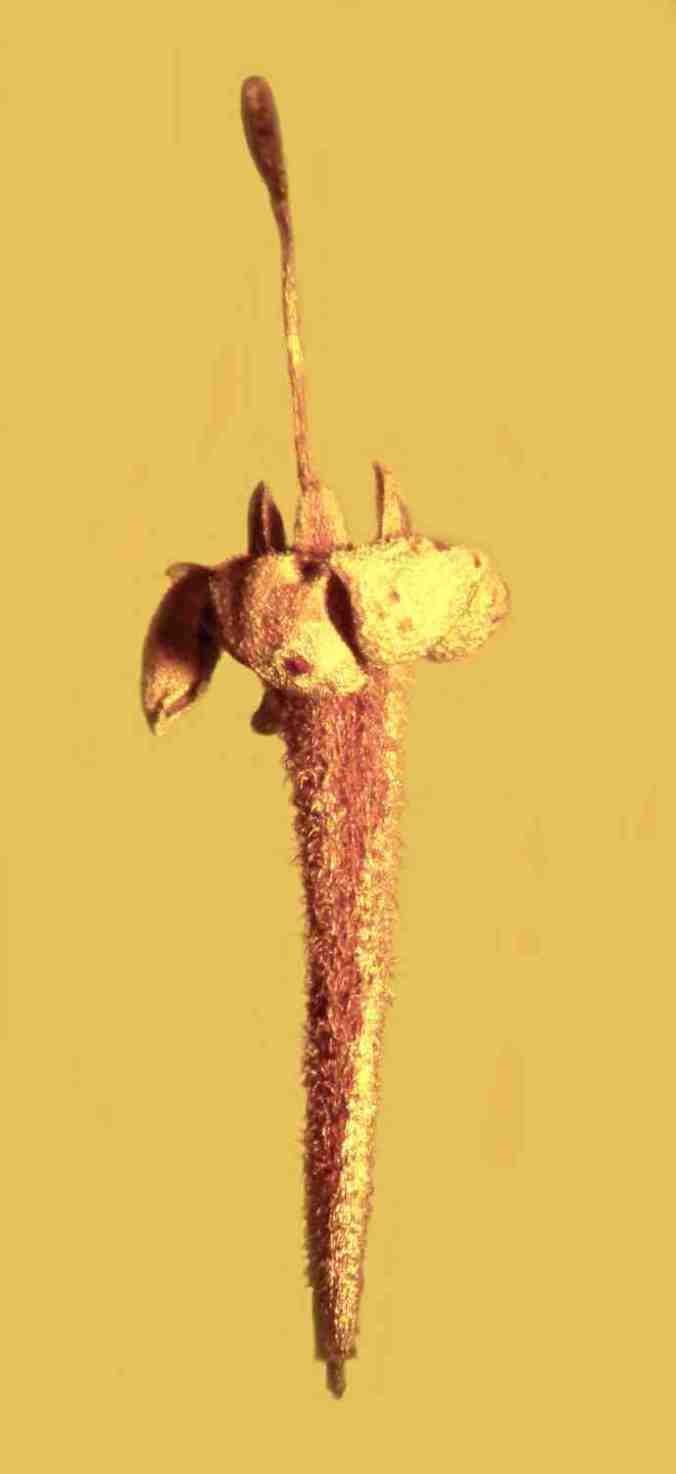
S. electri. COURTESY GEORGE POINAR / OREGON STATE UNIVERSITY

Amber is awesome. In so many ways, it is the definition of a natural wonder. One of those definitions might be its role as unintentional conservator of ancient natural history. This collection of images, from an amber-trapped flower to an prehistoric stingless bee, make the case for this definition:

The flowers of Strychnos electri are slim and small and trumpet-shaped. Their petals flare out at the tip to form a star, out of which a single spindly pollen tube protrudes. They look as if they might have fallen from the stalk yesterday, but they are ancient. At least fifteen million years ago, and possibly as many as forty-five million, they landed in the sticky sap of a tree that is now extinct, in a kind of forest that no longer exists on Earth. The sap hardened into amber, the tree died, and eventually geology took over. The fossilized flowers were submerged in water, buried under layers of gravel and limestone, and finally thrust upward into the foggy hills of the modern-day Dominican Republic. There, in 1986, an American entomologist named George Poinar, Jr., unearthed them. Continue reading

Bringing Nature-Oriented Science To An Urban Audience

Screen Shot 2016-02-16 at 10.04.40 AM

Wild monkeys can learn from a demonstration video set up in the forest. Video by David Frank and James Gorman on September 29, 2014

Several of the videos in this series have been featured on our pages over the last few years, but not all of them (for an example of one we neglected to link to previously, check out this one above). Today the series is crossing round number landmark, so we join in their celebration in hope that the series continues:

Fire Ants, Goshawks and Dog Tongues, Oh My: The Best of Science Take

Continue reading

Undiscovered Species in Natural History Museums

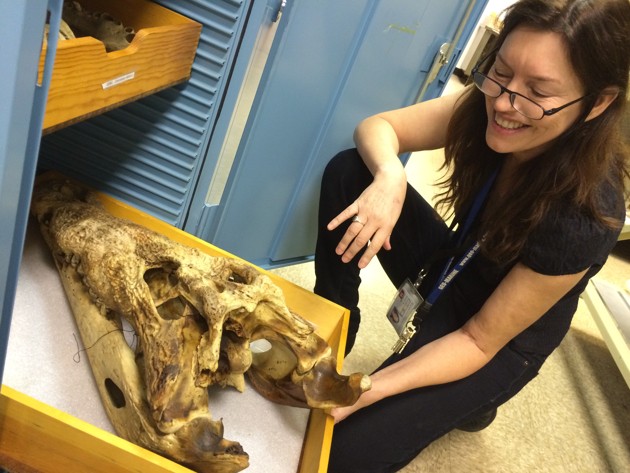
Evon Hekkala and a crocodile skull at the AMNH. Photo by Ed Yong.

We’re big fans of museums, especially those of natural history with specimens of life in the world that are invaluable to science. Now, in a piece for the Atlantic, Ed Yong (previously here) writes about the dozens of new species being identified many years–or in the case of some Egyptian mummified crocodiles, millennia–after their collection. These specimens, Yong reports, can inform us further on the evolution of animal body types, on cycles of diversity, and on the origins of epidemics, among other things:

In the darkness of the Akeley Hall of Mammals, swarms of kids gawk at beautifully staged dioramas of Africa’s wildlife. The stuffed safari, nestled in the American Museum of Natural History (AMNH) in New York, includes taxidermied leopards stalking a bush pig, preserved ostriches strutting in front of warthogs, and long-dead baboons cautiously considering a viper. In one corner, in a display marked “Upper Nile Region,” a lone hippo grazes next to a herd of lechwe, roan antelope, and a comically stern shoebill stork.

“This is my favorite one,” says Evon Hekkala, pointing to the display. “There’s a taxidermied crocodile tucked away down there.”

Continue reading

Hatching the ‘Third Eye’

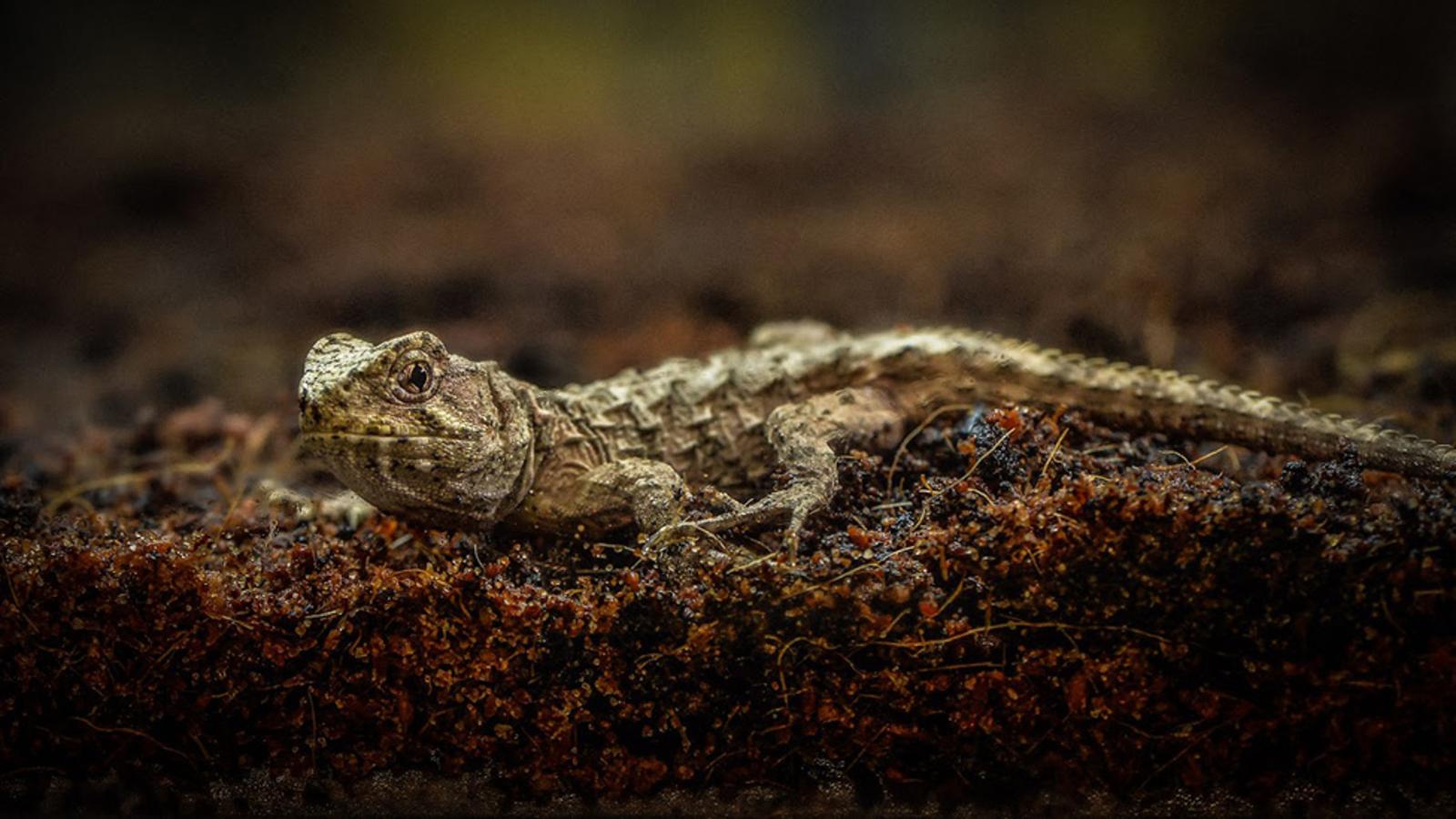
The first tuatara hatchling has been born outside of its native New Zealand. photo: Chester Zoo

The first tuatara hatchling has been born outside of its native New Zealand. PHOTO: Chester Zoo

Discoveries excite us, an event that defies all odds even more so. Like the hatching of this tuatara outside its native of New Zealand.

After decades of work by a dedicated team at Chester Zoo in England, the first tuatara hatchling has been born outside of its native New Zealand.

“Breeding tuatara is an incredible achievement,” says Isolde McGeorge, the zoo’s tuatara keeper since 1977. “They are notoriously difficult to breed and it’s probably fair to say that I know that better than most as it has taken me 38 years to get here.”

Continue reading

Understanding Coal

20160123_STP501_3.jpg

From the current issue of Economist, a bit of readable geological science to help make sense of the splashier headlines:

The origin of coal

The rock that rocked the world

More than any other substance, coal created modern society. But what created coal?

FOR 60m years of Earth’s history, a period known to geologists as the Carboniferous, dead plants seemed unwilling to rot. When trees expired and fell to the ground, much of which was swampy in those days, instead of being consumed by agents of decay they remained more or less intact. In due course, more trees fell on them. And more, and yet more. The buried wood, pressed by layers of overburden and heated from below by the Earth’s interior, gradually lost its volatile components and was transformed into a substance closer and closer to pure carbon. Continue reading

Inside the Eye

eyes_zpstq8hccww

Photo credit: David Liittschwager for National Geographic

Congratulations to science writer Ed Yong, who we know from his blogging in National Geographic‘s “Phenomena” Science Salon (which we’ve been sharing for a while now), for his first full feature story in the magazine he writes for on the web! It’s a fascinating piece on the eye, “nature’s most exquisite creation,” as his subtitle affirms. And indeed, we learned a lot about vision in the animal world thanks to Yong’s story:

Some see only in black and white; others perceive the full rainbow and beyond, to forms of light invisible to our eyes. Some can’t even gauge the direction of incoming light; others can spot running prey miles away. The smallest animal eyes, adorning the heads of fairy wasps, are barely bigger than an amoeba; the biggest are the size of dinner plates, and belong to gigantic squid species. The squid’s eye, like ours, works as a camera does, with a single lens focusing light onto a single retina, full of photoreceptors—cells that absorb photons and convert their energy into an electrical signal. By contrast, a fly’s compound eye divides incoming light among thousands of separate units, each with its own lens and photoreceptors. Human, fly, and squid eyes are mounted in pairs on their owners’ heads. But scallops have rows of eyes along their mantles, sea stars have eyes on the tips of their arms, and the purple sea urchin’s entire body acts as one big eye. There are eyes with bifocal lenses, eyes with mirrors, and eyes that look up, down, and sideways all at the same time.

Continue reading

What The Age Of Humans Looks Like

Screen Shot 2016-01-14 at 6.25.23 PM

Soybeans harvested at a farm in Tangara da Serra, in western Brazil. CreditPaulo Whitaker/Reuters

The Science section this week in the New York Times takes a very big picture look at human impact on the earth, putting in terms of geological time:

Welcome to the “Anthropocene” — a new epoch in our planet’s 4.5 billion year history. Thanks to the colossal changes humans have made since the mid-20th century, Earth has now entered a distinct age from the Holocene epoch, which started 11,700 years ago as the ice age thawed. That’s according to an argument made by a team of scientistsfrom the Anthropocene Working Group. Scientists say an epoch ends following an event – like the asteroid that demolished the dinosaurs and ended the late Cretaceous Epoch 66 million years ago – that altered the underlying rock and sedimentary layers so significantly that its remnants can be observed across the globe. In a paper published Thursday in Science, the researchers presented evidence for why they think mankind’s marks over the past 65 years ushered in a new geological time period. Here are a few examples: Continue reading

Hello Again, Robert Krulwich

D95MNR

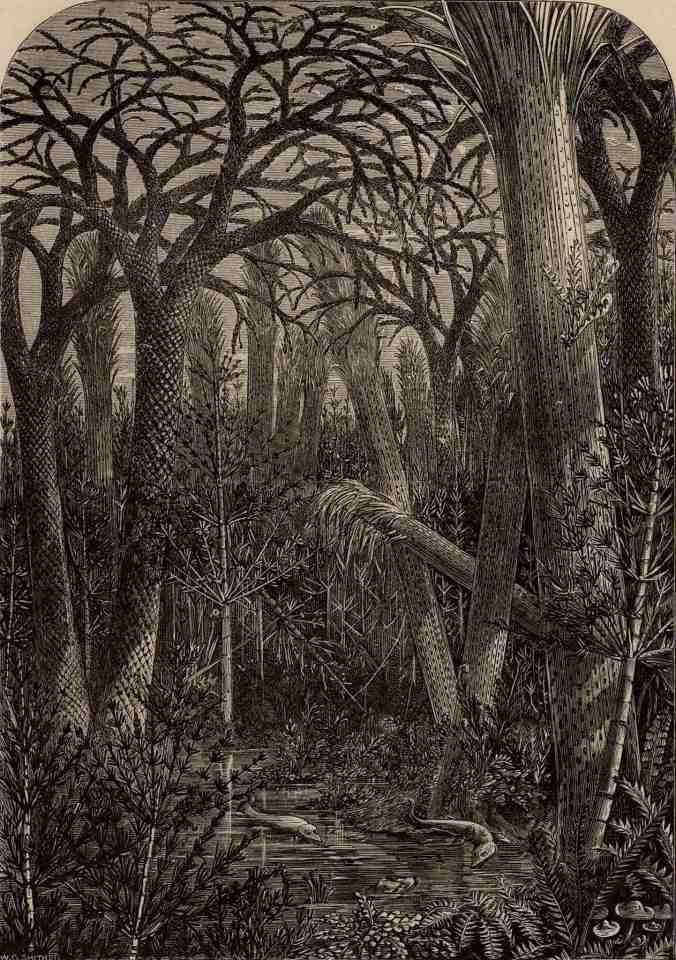
Artist’s reconstruction of a forest during the Carboniferous period. From ‘Science for All’ by Robert Brown (London, c1880). Illustration by World History Archive, Alamy

National Geographic‘s website has enlisted one of our favorite science communicators for its Phenomena section, and we are suddenly aware of how long it has been since we featured one of his ponderings (and excellent illustrations):

… whose trees “would appear fantastic to us in their strangeness,” write Peter Ward and Joseph Kirschvink in their book A New History of Life.

Some of them were giants: 160 feet tall, with delicate fernlike leaves that sat on top of pencil-thin trunks. This was the age when plants were evolving, climbing higher and higher, using cellulose and a tough fiber called lignin to stay upright. Had you been there, you would have felt mouse-sized.

Continue reading

Cranberries Covered by Science Friday

cranberry6

Four mature cranberry cultivars (clockwise, from upper left): early black, a Massachusetts native; DeMoranville, a hybrid developed at Rutgers University (named for Carolyn DeMoranville’s father); Stevens, a hybrid from the first USDA cranberry breeding program, released in 1960, and the most widely planted hybrid in the U.S. today; bugle, an unusually shaped Massachusetts native (not widely planted). Photo by Carolyn DeMoranville, UMass Cranberry Station

We’ve featured a post solely dedicated to cranberry bogs in the past, and have also seen some of the classic holiday sauce as part of a Thanksgiving art celebration. Now, with Thanksgiving Day coming up in the United States on Thursday, we’re learning even more about the North American fruit from Science Friday’s Thanksgiving Science Spotlight:

There are certain things that might come to mind when thinking about cranberries: A certain shade of red, a certain small size, and a certain kind of tartness. But these characteristics can differ among cranberry varieties—of which there are more than 100, according to Carolyn DeMoranville, an associate extension professor and station director at the University of Massachusetts-Amherst Cranberry Station.

Continue reading

A Hairy-looking Future

Scanning electron microscope image of hairs on a honeybee’s eye. Image © Georgia Tech, CC BY

Last week a pair of scientists writing for The Conversation (a news source with what they call “academic rigor, journalistic flair”) and also Discover Magazine’s science blog discussed the merits of hair in keeping animals clean. We found it pretty interesting, and hope you will too:

Watch a fly land on the kitchen table, and the first thing it does is clean itself, very, very carefully. Although we can’t see it, the animal’s surface is covered with dust, pollen and even insidious mites that could burrow into its body if not removed.

Staying clean can be a matter of life and death. All animals, including us human beings, take cleaning just as seriously. Each year, we spend an entire day bathing, and another two weeks cleaning our houses. Cleaning may be as fundamental to life as eating, breathing and mating.

Yet somehow, cleaning has gotten little attention.

In our new review article in the Journal of Experimental Biology, we discuss how cleaning happens in nature and whether animals indeed have principles for getting clean. We looked at microscope images to count the number and sizes of hairs across hundreds of animals. We read nearly a hundred articles on cleaning in nature, trying to put numbers onto the cleaning process.

Continue reading

What Lies Beneath Your Feet

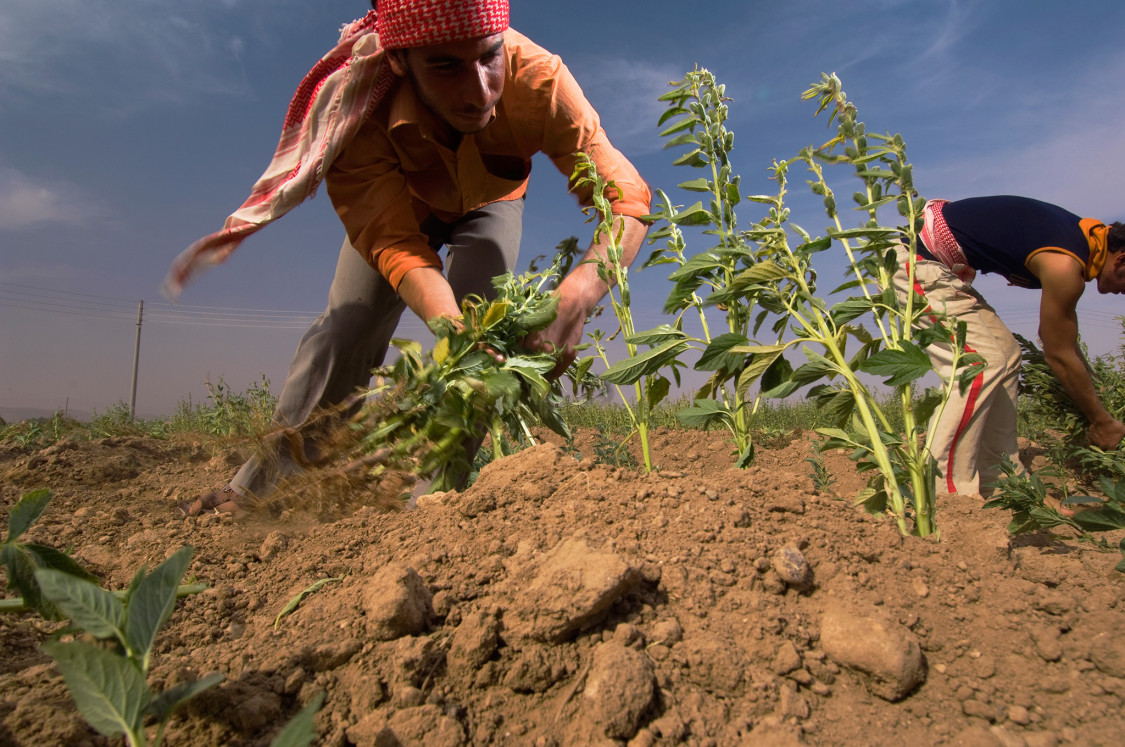
Farmers harvest sesame in Syria. PHOTO: JIM RICHARDSON

Farmers harvest sesame in Syria. PHOTO: JIM RICHARDSON

The 68th UN General Assembly declared 2015 the International Year of Soils. It aims to increase awareness and understanding of the importance of soil for food security and essential ecosystem functions. According to scientists, soil is being eroded faster than that the Earth can replace it. So the next time the words ‘dirt cheap’ come up, think again and take not the soil below your feet for granted.

Dirt is not only rare, but it’s complicated. To the uninitiated, dirt may look like grubby generic mush, but actually it has character, individuality, and a taxonomy all its own. Soil scientists recognize twelve major orders of dirt, each divided into suborders, groups, subgroups, families, and series, according to its various allotments of minerals and organic matter. Each dirt has a pedigree. Furthermore, dirt is proactive. It’s not an inert blanket; it’s a dynamic entity.

Continue reading