Sustainable Cities Index 2015

Screen Shot 2015-02-11 at 7.15.47 PM

We have not had as many posts on sustainable cities as we should, but aim to begin making up for that with this link to the current state of the art:

…The purpose of this report, our first Sustainable Cities Index, is to take 50 of the world’s most prominent cities and look at how viable they are as places to live, their environmental impact, their financial stability, and how these elements complement one another. All 50 of these brilliantly different cities – many of which I have been fortunate enough to visit – are in various stages of evolution – some being further along the sustainability journey than others. Each possesses its own geolocation and cultural distinctions but shares common urban challenges in the areas of job creation, mobility, resiliency and improving the quality of life of its residents.

Continue reading

Fixed-Dome Bio Gas

Bio-

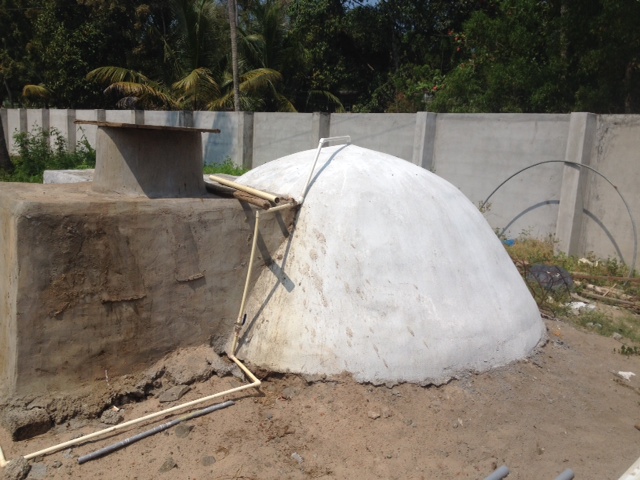
Bio-Gas Plant

In my opinion sustainable tourism/practices, if done correctly and efficiently, will both benefit the environment and a company or individual. Although today, we are still trying to accomplish the previous with as much at hand as possible. Ideally, sustainability will come hand in hand with positive environmental outcomes and social and economic benefits.
However, some practices are more beneficial (in both instances) than others. Take recycling paper for example: the margin in producing new paper vs. recycling is much lower so incentives are likely lower. Aluminum cans on the other hand are much more cost effective to recycle, bringing higher benefits to both the producer (by reusing material) and for the environment (aluminum has a longer decomposition time). Continue reading

Wet Future, Sustainable Cities

city-sponge

Thanks to Conservation for this counterintuitive explanation of the sustainable city of the future, with the water-related effects of climate change taken into account:

THE FUTURE WILL NOT BE DRY

In a world of melting ice caps, storm surges, and tropical cyclones, the most resilient cities aren’t the ones that fight the water back—but the ones that absorb it.

By Fred Pearce

The ramshackle river port of Khulna in southwest Bangladesh is one of the most flood-prone urban areas on Earth. The third-largest city in one of the world’s poorest and most populous nations is at constant risk of inundation. It lies 125 kilometers inland from the shores of the Indian Ocean. And yet a tenth of this city of 2 million people is flooded at least ten times a year on average.

Continue reading

If You Happen To Be In New York City

website-header1

It is the sort of conference we are happy to see hosted by an MBA program:

MILLENNIALS RISING: WHAT’S NEXT FOR SUSTAINABILITY?

Friday, October 31, 2014

We are living in promising but turbulent times. Never before has there been such interest in harnessing innovation to find sustainable solutions for communities and the environment, but never have the problems been more urgent, complex or challenging.

While more business leaders are pursuing sustainable strategies, what can be done to accelerate this change and harness the talents of millennials as future sustainable leaders to ensure they realize this potential? What can be done to sustain interest in solving social and environmental issues, sustain funding for these efforts, and sustain the pipeline of social entrepreneurs leading these changes?

Join us at the 2014 Social Enterprise Conference by Columbia Business School and help spark the conversation on driving sustainable change beyond the new millennium:

Continue reading

Sustainable Development Oddball

Mark Peterson and Greta Pratt for The New York Times. The Tamatea Nui Lana’i Polynesian dance group. All of Lanai’s owners have sought, in one way or another, to refashion the island into a paradise on earth. Larry Ellison hopes to transform it into the “first economically viable, 100 percent green community.”

Mark Peterson and Greta Pratt for The New York Times. The Tamatea Nui Lana’i Polynesian dance group. All of Lanai’s owners have sought, in one way or another, to refashion the island into a paradise on earth. Larry Ellison hopes to transform it into the “first economically viable, 100 percent green community.”

This Times Sunday Magazine article attempts to help us understand the challenges inherent in one of the more unusual sustainable development stories we have heard of in recent years:

Henry Jolicoeur is a retired French Canadian hypnotherapist and a glass-products importer who enjoys making very low-budget documentary films. In the summer of 2012, Jolicoeur read that Larry Ellison, a founder of the Silicon Valley giant Oracle and the fifth-richest man in the world, had bought 97 percent of the Hawaiian island of Lanai — not a 97 percent stake in some kind of company, but 97 percent of the physical place. Jolicoeur was curious, so he booked a flight and packed his camera. Continue reading

Thank You, Oxfam International

Photo courtesy of behindthebrands.org

Photo courtesy of behindthebrands.org

The Oxfam International campaign Behind the Brands aims to address how little is known about supply chains of the top 10 largest food and beverage companies. Listening to the NPR Salt Chat provides a good explanation about how pushing for transparency from these big companies is a catalyst for on-the-ground change. The campaign has only been around for a year and a half and they’ve already seen great progress in terms of land rights for local community, government intervention, and women’s rights.

It’s not always easy to connect the dots between the food we consume and the people who grow it, or the impact of growing and processing that food on the health of our planet.

But a campaign called Behind the Brands, led by Oxfam International, an advocacy organization dedicated to fighting poverty, is trying to make the inner workings of the 10 biggest food companies in the world more visible…

We sat down to talk with Chris Jochnick, one of the architects of this campaign and Oxfam America’s director of private sector development. We touched on how social media is giving activists more power, why big food companies respond to pressure, and whether corporate executives are his friends or his enemies.

We also wanted to know: Will the promises that these companies make really translate into concrete changes on, say, cocoa farms in West Africa?

Continue reading

The Sense in Sustainability

adak-fish-farm-krishnankotta-mala

Today we went to  a 68 acre fish farm in Thrissur called ‘Haya Poya’. They were using a traditional box system (the local name is petty para) to collect fish and manage the water level. We went to learn about implementing aquaculture at Kayal Villa, a newer property.

By using this traditional method, they do not have to introduce new varieties of fish in order to farm. They do this mainly because it is less costly to collect the fish naturally than to artificially introduce fish. Also, since it is all local varieties, it limits the possibility of messing up the natural ecosystem with foreign invasive species.

During our ride home, the agronomist, Mr. Deyal, and I continued the conversation about doing what’s ecologically beneficial is actually easier and more cost-efficient. He said

“Only an ecologically viable system will be economically viable. When we fight against the environment, the environment will go against us and we will have to invest more money to protect against it.”

This reminds me of a conversation I had with an oil driller recently. When I asked him what the most challenging thing about his job was, he said ‘going against nature,’ and then proceeded to tell me how rebellious nature was to the oil drilling process and how costly it is. I found it interesting that although their career choices were the antithesis of each other, the conversations I had with them had parallel messages: going against nature is costly.  Continue reading

A Biodiversity Triumph at Marari

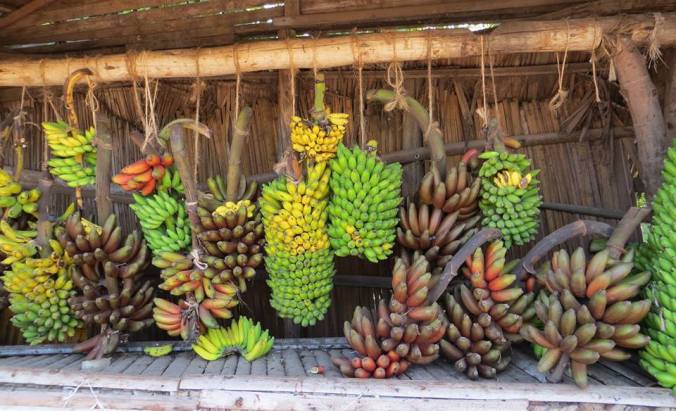
As I mentioned in my last post, the new property, Marari Pearl, could easily be called the Beach Banana Genome Project because it has 30 varieties of bananas being grown on it. When Amie and I saw the list of everything being grown on the property, our joy was akin to kids on christmas.

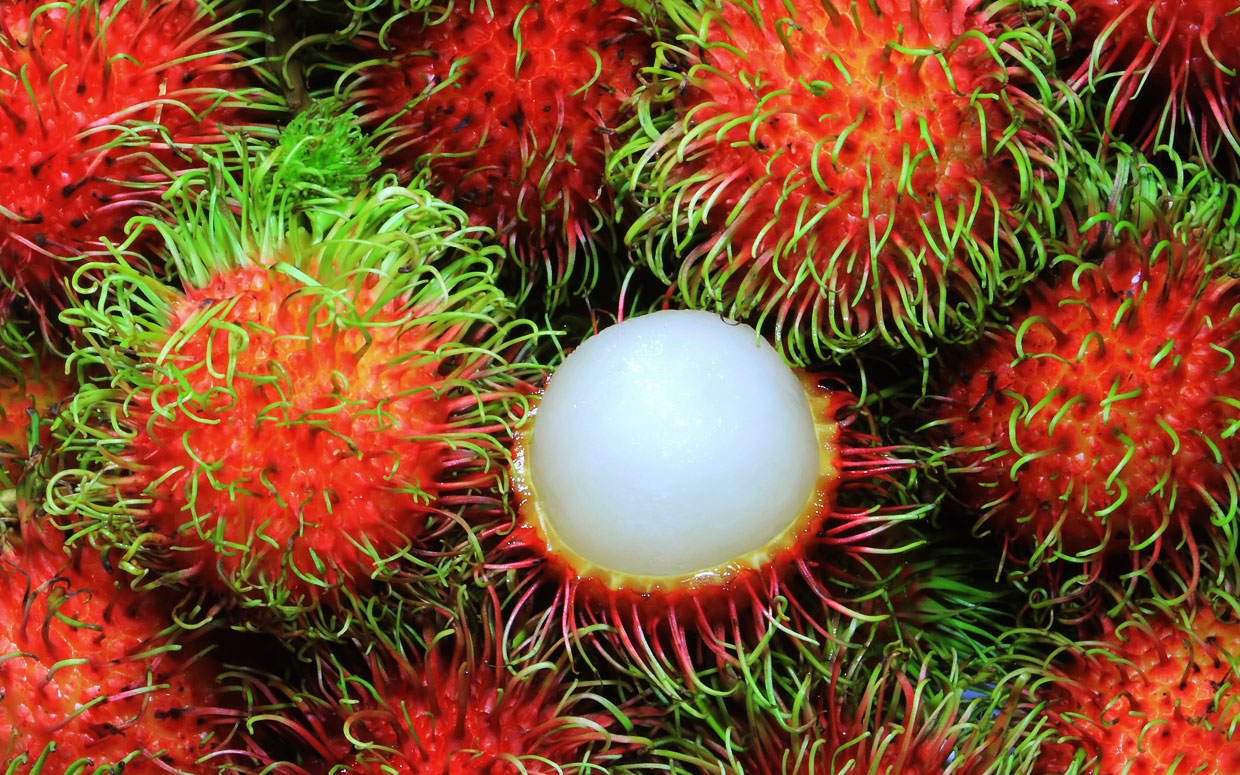
Have you ever seen a rambutan?

Have you ever seen a rambutan?

Since I’ve been reading The Fruit Hunters by Adam Leith Gollner, I’ve realized the role variety awareness plays in conserving biodiversity. Simply not knowing about all the varieties allows agribusiness to monopolize the market with one or two varieties that best suit global trade. For example, when people only saw red and yellow apples in the supermarket, they did not know what they were missing out on, so they weren’t as picky. Once Fujis and Galas became known, customers began to demand more. Knowledge of varieties is seen as a threat to supermarket because customers focused on varieties become less easy to please with subpar, out-of-season fruits.

So with that being said, simple awareness of varieties is a method of raising the bar. It helps promote biodiversity because people are less willing to accept generic and standardized fruit.

On the Marari Pearl property, there are pomelos, rambutans, and tamarinds. There are several types of jackfruit,  lovi-lovis, mangos, and oranges. I was particularly excited to see the miracle fruit on the list. Continue reading

Tourism, Conservation, Whale Sharks

shark-shutterstock_127906316-680x450

shutterstock.com

Thanks to Conservation for this item about entrepreneurial conservation of the ecosystems where one of the greatest of sea creatures dwell:

HOW CAN WHALE SHARK TOURISM BE KEPT SUSTAINABLE?

August 22, 2014

When the revenue generated by wildlife-related tourism is higher than that generated by the consumption of that wildlife, then the animals in question are worth more alive than dead. This seems intuitive, but the economics of wildlife tourism aren’t always easy to work out.

Over the last couple decades, one form of wildlife-based tourism that has quickly become popular is diving alongside free-swimming whale sharks. While they’re the largest fishes in the sea, whale sharks are actually quite docile and have highly predictable seasonal movement patterns. That makes them particularly attractive to dive operators. While whale shark tourism has operated in Western Australia’s Ningaloo Reef since the late 1980s or early 1990s, most whale shark tourism outfits have sprung up more recently, in the eastern Gulf of Mexico, Honduras, Belize, the Philippines, Mozambique, Seychelles, and the Maldives. While some attempts have been made to quantify the economic impacts of whale shark tourism in Ningaloo, Belize, and the Seychelles, nobody has done so for the Maldives. Measuring the economic value of the industry is especially important because it is difficult for local governments, with limited powers especially when it comes to environmental protection, to prioritize conservation without that information. Continue reading

Beach Banana Genome Project

The next Xandari property that La Paz Group is developing is at Marari beach, and in my mind it could easily be called the “Beach Banana Genome Project” due to the 30 varieties of bananas being planted on site.

banana wonders

There are actually over 1000 varieties of bananas in the world, which is pretty crazy to think about since the main variety in global commerce is the Cavendish. There are red bananas, dwarf bananas, sugared-fig bananas, pregnant bananas, ice cream bananas, Popoulou bananas, the golden aromatic bananas, Macaboos, Thousand-Fingered bananas, and the list goes on. Out of the 1000+ types of bananas, grocery stores in the United States only offer one main type? Why?

That’s because our grocery stores are in a permanent global summertime, as Adam Gollner puts it in his book “The Fruit Hunters”. Because our fruits aren’t sourced locally in the United States, they must be able to endure the rigorous journey of international trade. If I hadn’t traveled to India for the summer, I would’ve probably never been offered the range of varieties I’ve gotten to taste here.

Most people in the United States won’t get exposed to a diverse range of options and therefore do not demand them. Big banana agribusiness makes is buck with monoculture. They can reliably deliver the same subpar banana. 

It’s not as reliable though in the long run because monoculture invites disease. Thats why before the Cavendish banana was the world’s top banana, there was the Gros Michel banana. It was struck by a fungus called the Panama Disease, and now a mutation of that disease is threatening the Cavendish. Biodiversity acts as a natural buffer to disease but biodiversity isn’t conducive to agrarian capitalism. Continue reading

Thank You, General Mills

cheerios

Photo Credit: Grist Article

I came across this article on Grist.com about General Mills’s new action plan to reduce their contribution to climate change. After being called out by Oxfam International,  Oxfam says that General Mills will be, “the first major food and beverage company to promise to implement long-term science-based targets to cut emissions.”

With both a mitigation and adaptation plan, I am pretty impressed by this corporations efforts to take responsibility of their role. On the official page of their website describing this policy, they cite the 2014 Intergovernmental Panel on Climate Change (IPCC) Working Group II Summary for Policy Makers, which suggests to me that they have people on their team helping them make really informed decisions grounded in scientific evidence. I appreciate in the report the full acknowledgement of the IPCC’s call to action:

“Science based evidence suggests we must limit the global mean temperature rise to less than 2 degrees Celsius above preindustrial levels in order to avoid permanently altering the atmosphere and negatively impacting the environmental, social and economic systems that sustain us – both today and in the future.”

I haven’t seen a big corporation like this that would normally be considered a “dirty business” so blatantly speak to the environmental reality we face. To see a corporation cite this gives me hope that mainstream conversations around climate change are moving towards what we can do and away from whether or not its real. I hope more corporations follow their lead just for the sake of drumming the beat of awareness.

The true colors of this policy will show in how effectively it is implemented, because that will determine whether it is a fluffy ‘greenwashing’ tactic with loopholes built in.

Here are a few of the main points of the policy:

  • Set global targets and track progress related to reductions in GHG emissions, energy, water, transportation, packaging and solid waste.
  • Support the Innovation Center for U.S. Dairy commitment to reduce fluid milk GHG emissions by 25 percent by 2020.  Work with smallholder and conventional farmers to strengthen globally sustainable farming practices.
  • Address GHG emissions due to land use change through sustainable sourcing efforts in key supply chains and growing regions.  Our aim is to achieve zero net deforestation in high-risk supply chains by 2020. We will regularly report progress towards the zero net deforestation goal.
  • Ensure responsible governance and oversight of all sustainability efforts, including climate mitigation and adaptation.  Convene the General Mills Sustainability Governance Committee 3 times per year to review and approve strategies, programs and key investments.
  • Report progress against goals – our own as well as those in our broader supply chain – on an annual basis via our Global Responsibility Report, available on the General Mills website

For a more extensive look at the report, click here.

While I raise my eyebrows at some of the vague wording in their initiatives, like “support”, “work with”, and “ensure” that are less concrete objectives, I also see timelines and checkpoints to keep themselves more accountable to this than they had to. I have learned to appreciate initiatives that move in the direction of the ideal, rather than criticizing anything that doesn’t model the most perfect action. While it is good to remain skeptical, I think it is important to acknowledge leadership in the right direction when we see it.

 

Notes from the Garden: Building a house or a vegetable cage?

photo 2

Measuring the length of our new monkey-protected area in the organic farm at Cardamom County

Building a 15 meter x 20 meter vegetable cage is no small feat. The last estimate we had was that it would cost about 4 lakhs, which is apparently the cost of a small house. A lakh is a unit in the South Asian numbering system equivalent to 100,000. So, is 400,000 rupees worth it for a vegetable cage? I think spending energy to get a smarter design would be more worth it.

With the help of Raxa Collective’s head engineer, it is very likely we will be able to lower that cost significantly. As I talked about in my post about quantifying farm-to-table, I think that with a combination of lowering the cost and then taking advantage of the monkey-protected area as vigorously as possible with efficient use of the space, it will be worth it. There are elements of farm-to-table that are not quantifiable but can be seen in the overall conservation story of supporting smart land-use practices.

At the end of the day, at least the food here is locally sourced mostly from the Cumbum vegetable market in Tamil Nadu. This market is only about 25 km away and the farmers in that market are relatively close. This is far better then the way most food is sourced in the United States.

In the United States, eating local is a challenge. Most agriculture in the states is for corn and soybeans, rather than vegetables. And “local” is difficult when the local environment has few green spaces left, let alone farmland. So even though we don’t have “monkey-challenges” to growing our food locally in the states, we have monocultures and rapid suburbanization keeping us farther and farther away from fresh food.  Continue reading

A Story About Patagonia, A Company We Believe In, And Relate To

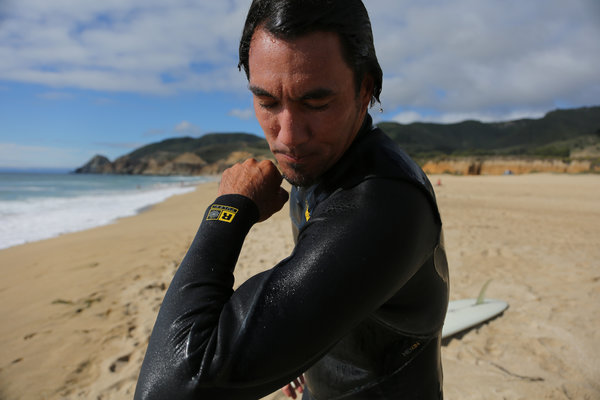
Jon Kitamura in a Patagonia wet suit at Montara State Beach, California. Credit Jim Wilson/The New York Times

Jon Kitamura in a Patagonia wet suit at Montara State Beach, California. Credit Jim Wilson/The New York Times

We hope one day to have as many participant observers like Jake, saying things like this about some of our group’s initiatives, as Patagonia has admirers. The company gets alot of good press, and for all the right reasons. We have not tired of it yet. Fans of the founder already, we also believe in his company, and (as if anyone needed to be convinced) this New York Times profile helps to understand why:

…“We had customers looking for safe alternatives for those with latex allergy, and then we had customers looking for alternatives to petroleum-based products,” Mr. Martin said, “so a number of companies had been approaching us.” Continue reading

Notes from the Garden: Monsoon Season

photo (8)

Burying the garden waste to prepare the land for planting

As it is monsoon season here in Kerala, we gardeners have to take into consideration the way it affects the soil. Today we did land preparation for the heavy rains. We dug holes in the new beds and took garden waste from old banana plants and buried it. The top of the soil had been mulched with manure and weeds were growing on them. We mixed the manure and weeds into the soil. I like the idea of just mixing the weeds in because then the nutrients that the weeds took from the soil can break down back into the soil again. When the heavy rains come, they would have washed the nutrients from the mulch away so this is to help with nutrient erosion. Continue reading

Notes from the Garden: A Harvest for Everyone

10491215_10201551076698566_8417073961388965292_n (1)

Green beans at Cardamom County

When we see an abundant harvest overflowing from a wheelbarrow, maybe it’s primal, but I think there is a sense of never going hungry. There is a sense of the aliveness of freshly picked food.

Remember how we used to share our food? Remember the connection to food we had before it came from chain grocery stores? I think something in us does. Or something in us wants to remember.

By simply putting out our hand, the food passes into our possession, but it’s a different kind of possession than picking up something in a supermarket and putting it in a cart. A possession isn’t really yours, which happened without the exchange of money. I think that the natural givingness of the land makes us feel like it is not really ours and that it is for everyone, meant to be shared. When I harvest, I remember this gift. I like sharing it with other people.


Since I have been here as an intern, I haven’t done all that much field work. This is probably the first day I’ve been able to help just by providing extra hands. I felt like it was a way to connect with the people I am working with as language barrier has stopped us. I appreciate the togetherness that can be felt by simply harvesting something together. They are teaching me Malayalam words and using the English words they know.

Continue reading

Notes from the Garden: Experimenting with Square Foot Gardening

10500557_10201531219202141_6893957344646617811_n

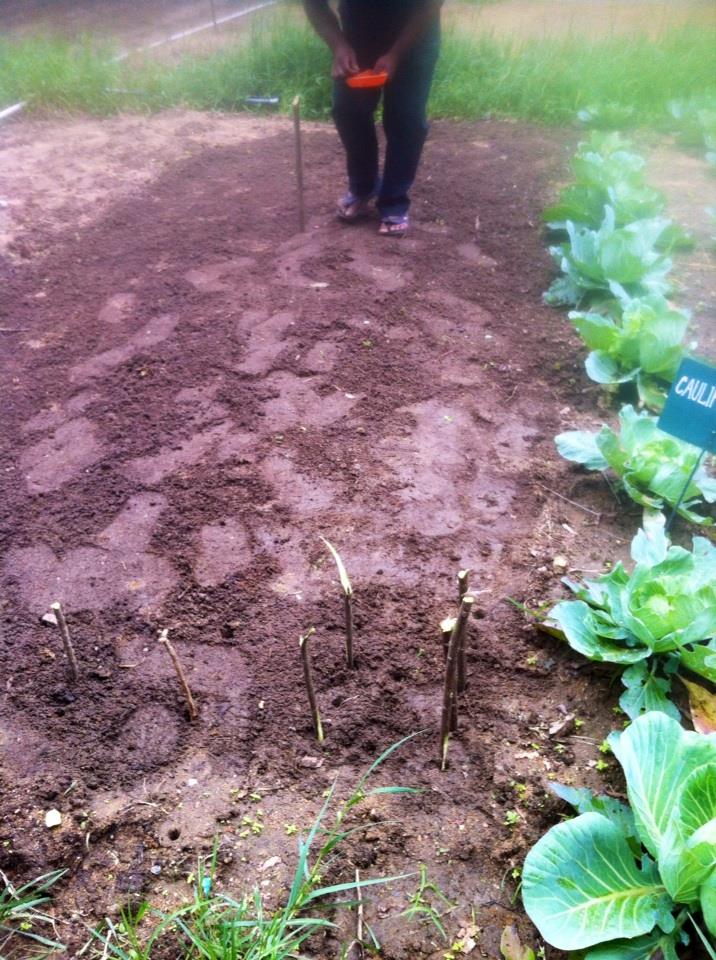
Sticks always help with communication across language barriers. Here we are marking the spacing of our radishes in Cardamom County.

Today, we tried a little experiment. I have mentioned my passion for efficient agriculture techniques and square foot gardening is one we are experimenting with in the garden here in Cardamom County. The vision is to grow as much food as we can to supplement the kitchen’s needs. Space is a luxury not to be wasted when it comes to growing food! Using elements of the square foot gardening method taught by Mel Bartholomew, it is amazing how much food you can fit on a 4 ft x 4 ft plot. Although he teaches that you should make raised beds, I think if you have good soil, as we do here, then there is no need. I think the audience his method appeals to is the urban and suburban dwellers, so making raised beds is usually the fastest way to good soil in their case. The part I take from his method is the dense plant spacing and not using single rows:

Continue reading

Notes from the Garden: Quantifying Farm-to-Table

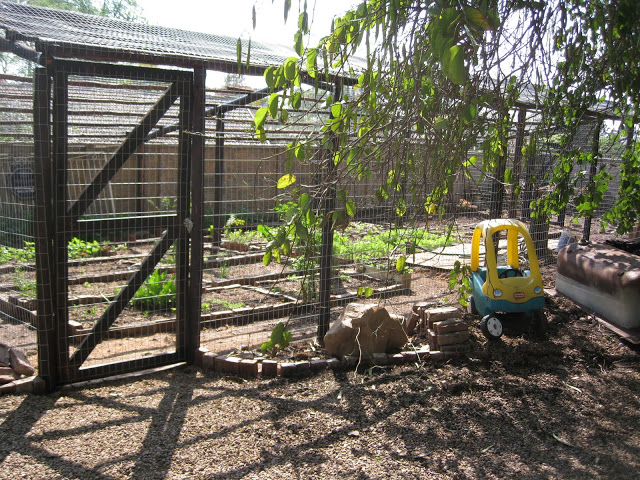
We are in process of building a monkey-proofed area of the garden. You can see my past post to get a feel for the evolution of this idea. The main issue with providing the Cardamom County restaurant with food from the on-site organic farm is monkeys. We were inspired by these subsistence farmers in Ixopo, South Africa, who blogged about building their monkey-proof vegetable cage. They, too, are neighbors with a nature reserve, so their situation is quite similar to Cardamom County! Now, we are on our way to having a truly farm-to-table menu!

Here is the cage we are modeling ours after. Check out their blog: http://foodieschannel.blogspot.com/2011/04/this-isnt-really-recipe-but-its-about.html

Here is the cage we are modeling ours after. Check out their blog: http://foodieschannel.blogspot.com/2011/04/this-isnt-really-recipe-but-its-about.html

You may be wondering, why is there all this buzz these days about farm-to-table? There is more to it than just fresh, delicious food.

Obviously, a lot of nature gets destroyed for agricultural purposes. In the United States, so much land gets wasted on sprawling, inefficient development. In the in-between spaces, you could feed a nation. But we eat up our open, natural spaces for agriculture. Our agriculture is rarely local so it leads to problems of unnecessary carbon emissions from transport and a lot of not-fresh food in grocery stores. When we can use the land we have already developed on to provide the people there with food, why spread ourselves out so thin into nature? Continue reading

Notes from the Garden: Tropical Composting

10366090_10152547906815712_3231564213131287158_n

Soka Instructional Garden, Soka University of America. Photo credit: Leia Marasovich

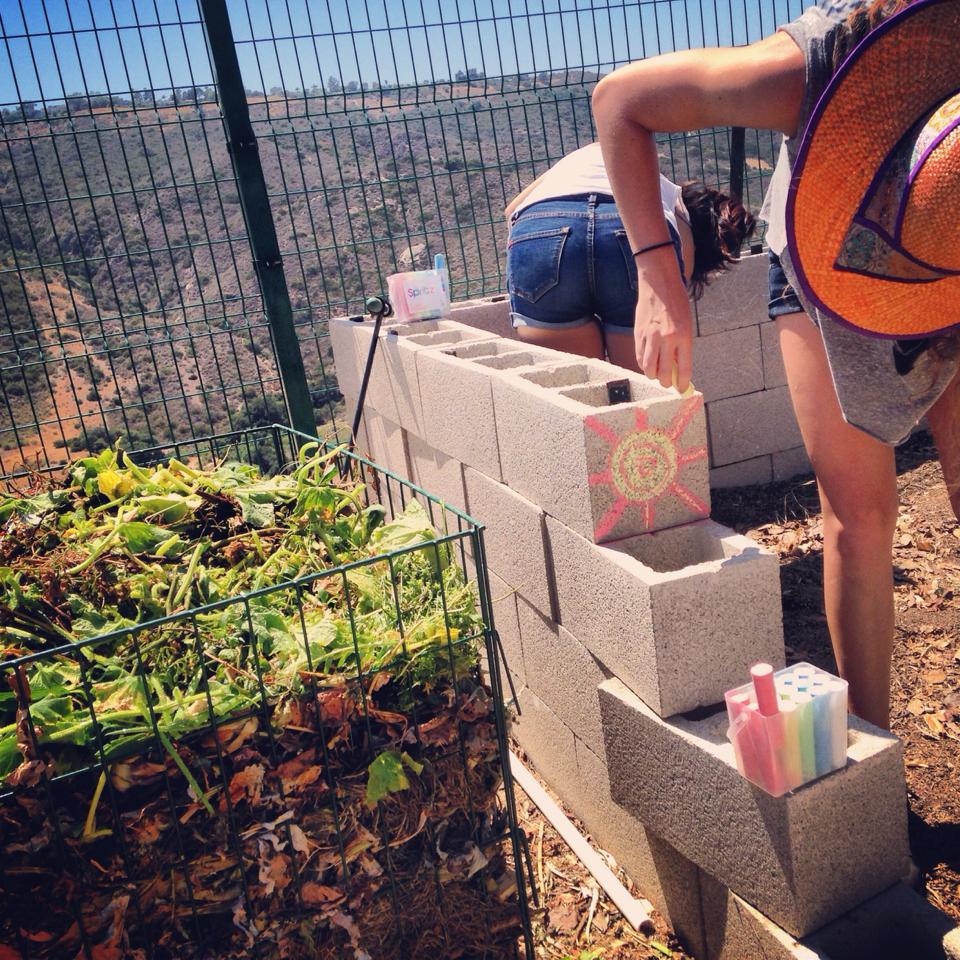
Composting where I live in a sunny Southern California desert climate is very different than the composting we have done since I have been here in tropical Thekkady, India. Here are some pictures of our composting at my university garden I work at. We do ‘hot composting’ above ground. At Cardamom County they’ve been doing a type of vermicomposting, or worm composting. As a gardener, I have always considered earthworms to be a little magical. When there are worms in our garden beds, we always take it as a good omen that our soil is healthy, and healthy soil is the only path to healthy plants. They speed up the decomposition process and essentially create compost gold. They add really beneficial microorganisms to the soil and their castings, or poop, is extremely nutrient rich with the essential ingredients of good soil: nitrogen, phosphorous, and potassium! Where I work in the Soka Instructional Garden (SIG), we make compost tea from the worm castings, and any time a crop is struggling, we can usually nurse it back to life within weeks of adding worm compost tea.

So here, I was happy to see, not only are the worms already dancing happily in the soil, but they have a thriving worm composting bed.There is a hole dug in the ground, maybe 6 feet deep and a good 10 feet across. They fill the hole with any garden waste, add several wheelbarrows of dirt dug up from the poultry area, which is already rich in nitrogen from their poop (therefore speeding up the decomposition process and helping the pile heat up) and then just let the worms feast. Continue reading

Straw Bale Construction: Part 3/3

Guest Author: Virginia Carabelli

For Part 2, click here, or if you’re new to the post this is Part 1.

You might wonder at this point, what about permits? All materials used for building in the US have to be tested in a federally approved lab. Straw bales not only passed the required standards, but exceeded them in many tests. Federal building codes supersede state building codes, meaning that no state can legally forbid its use. Most people, including many building departments, are unaware of this fact. Each state, has slightly different requirements. For example, if you live in a seismologically active area, your building code will reflect that (by the way, straw bales perform exceedingly well in earthquakes).

So if you want to build a post and beam structure with straw bale insulation (which is the basic building technique), you should have no problem. However, if you want to build a load-bearing structure (no post and beam to support your roof), you will have to restrict yourself to a small building, following a given formula depending on the size of your straw bales. You might run into some resistance in certain states, although load-bearing was one of the required tests passed by this material. Here in New York, several lovely load-bearing straw bale structures have been legally built. Continue reading

Straw Bale Construction: Part 2/3

Guest Author: Virginia Carabelli

Before

Before

In case you missed the first part of this post, click here.

At this point, let me get the three things that may be on your mind out of the way, before I move to introduce the building technique, without getting too technical.

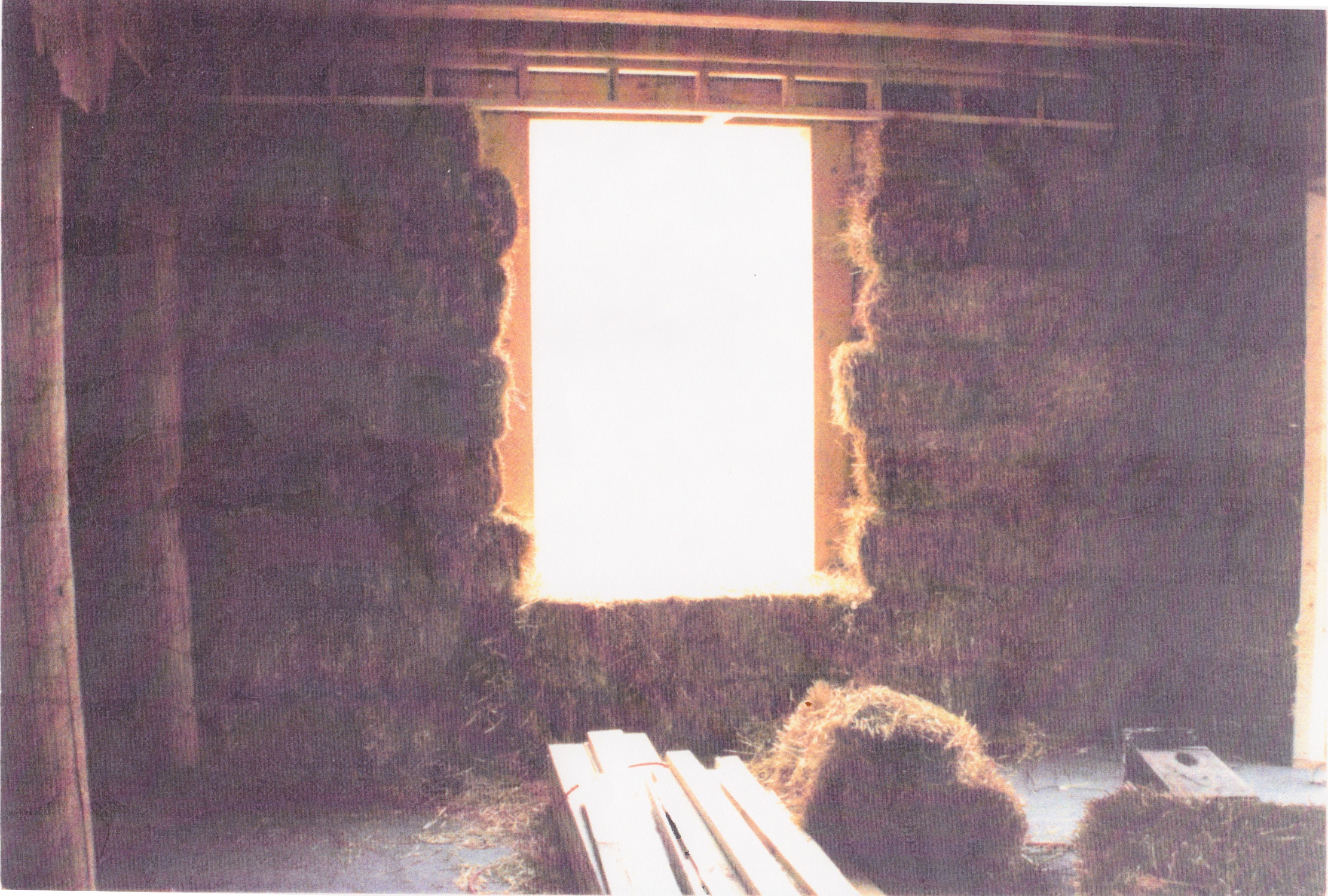
1. Fire – Fire needs oxygen to burn, a compacted straw bale + encasing in cement or mud plaster offers no oxygen for fire to take hold. Try and burn your phone book as is (do they still make them?) and you’ll see what I mean. At worse, it will smolder.

2. Pests – Straw is like a little stalk of bamboo, in a way. It is the stem of grains whose function is to carry nutrients to the head. It has no nutritional value, protein, etc., so bugs are not very interested in it—they prefer hay or alfalfa. In fact, Continue reading