Straw Bale Construction: Part 1/3

Guest Author: Virginia Carabelli

Hello everyone, I am delighted to be invited by RAXA Collective to participate in such a wonderful community! My name is Virginia Carabelli. I was born in Italy and raised both there and in France. I moved to the US in my late teens to attend college and fell in love with this beautiful country. I have always been more comfortable in nature and silence and have never been very interested in the rat race and busi-ness. I would much rather be than do.

I’ve always found our human ways mostly destructive and superficial, and had a plan since childhood to live life on my own terms as much as possible. In 1989 I achieved one of my childhood dreams: I bought a beautiful piece of property in a verdant valley in New Mexico, where I could live at least partially off the land. The community was mixed Spanish/Pueblo Indian, and many families lived in trailers (by that I do not mean a nice double-wide, but rather a large shipping container on cement blocks). Ecologically speaking, the valley was a fragile environment. With those two things in mind I said a simple prayer asking for guidance to build a home that would be in harmony with nature and also provide some good affordable housing for those in need. I had no idea how to do this, but I had only to wait a couple of weeks for Matts Myhrman to coincidentally walk into my life. Continue reading
Throwback Thursday: IPM

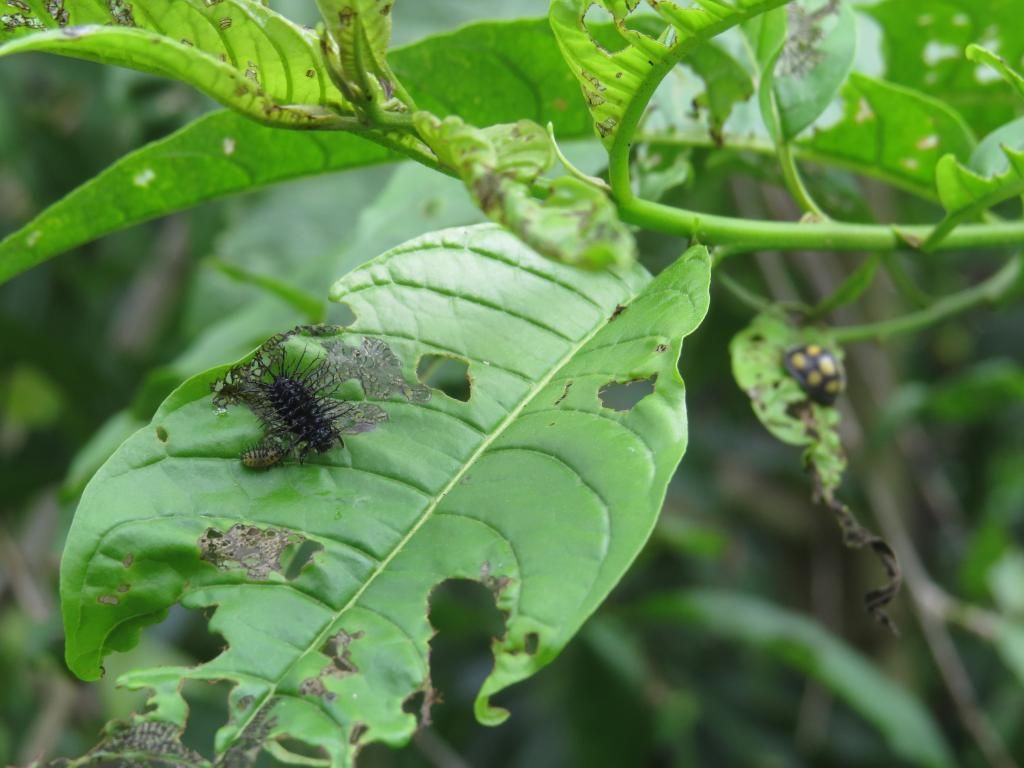
A ladybug relative nymph in the foreground and a mature individual in the background. The tiny thing next to the nymph might be a larvae.

Yesterday, as James and I were on one of our birding walks around Xandari, we ran into José Luis, who had a couple new things to show us about the gardens and orchard that he runs. At first, it looked like a ragged young tree, its leaves half-devoured and its trunk stained black. But we quickly learned Continue reading

Coffee in the Ground at Xandari

Screen Shot 2022-07-22 at 9.49.50 AM

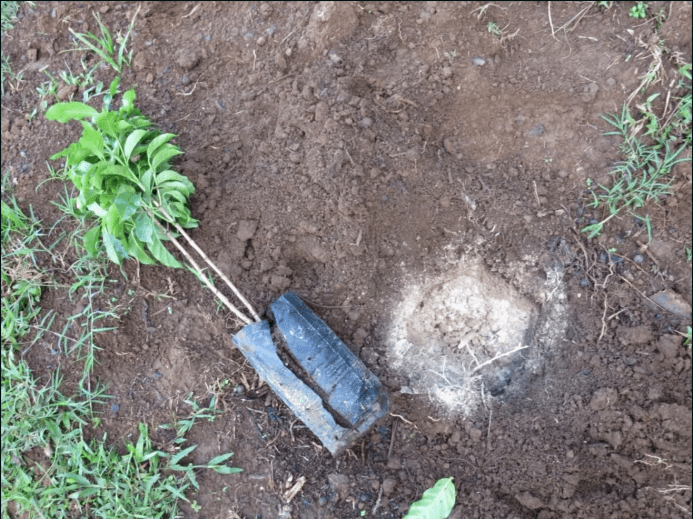
Coffee ready to be planted, next to its hole

On Monday, we began planting coffee and made great headway on getting the shrubs in the ground. Fortunately, José Luis, Xandari’s head gardener, and his team (or should we say “coffee crew” in this case?) had already done significant work in preparing the soil to receive the plants. Continue reading

Coffee in Xandari

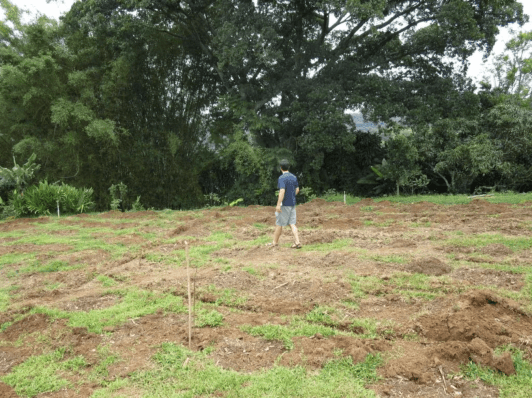
Here at Xandari (Alajuela, Costa Rica) everything is ready for coffee’s big return. The resort’s land was once dedicated to growing and harvesting the finest estate coffee this country offers (you can visit the Doka Estate, to which Xandari’s land once belonged, in one of our guests’ favorite day tours), but for the last 18 years more attention was given to the organic vegetables, orchards and gardens that now dot the verdant grounds. Plans are in motion, however, to bring the crop back to this area long celebrated for the quality of its coffee.

The ground is tilled:

Screen Shot 2022-07-22 at 10.58.04 AM

Continue reading

Mythology of Waste

This slideshow requires JavaScript.

It’s been several months since Chinese conceptual artist Xu Bing orchestrated the monumental task of suspending a pair of 12 ton birds into the nave of one of New York City’s most famous cathedrals. Fashioned from salvaged construction debris from Beijing’s World Financial Center, the phoenix pair is reminiscent of the more 2-dimensional work of Brazilian artist Vik Muniz in both philosophy and meticulously layered execution.

Throughout China’s history, every dynasty has had its form of phoenixes. Representing luck, unity, power and prosperity, these mythological birds have, for the most part, been benevolent, gentle creatures. But this pair, fashioned from the materials of commercial development, reflect the grimmer and grittier face of China today.

“They bear countless scars,” Mr. Xu explained, having “lived through great hardship, but still have self-respect. In general, the phoenix expresses unrealized hopes and dreams.” Continue reading

Visualizing Carbon


Carbon, and what to do about it, has been a constant topic of interest to our readers since we began this site. The single most-read post, Carbon Emissions Series: Vacationers’ Diets is on this very topic. But how can we visualize carbon such that we care more about it? Thanks to the website of the magazine Conservation for this link, whose title says it all:

CARBON VISUALS: ANIMATING THE WORLD’S CARS

A short animated film from Carbon Visuals is being used to engage managers around the world about the fundamentals of sustainability, how sustainability is relevant to their role and its importance to business success.

Continue reading

Controlling Invasive Lionfish – Update on Market Solutions: Part 2/2 — Lionfish Art

spines and tails-photo3

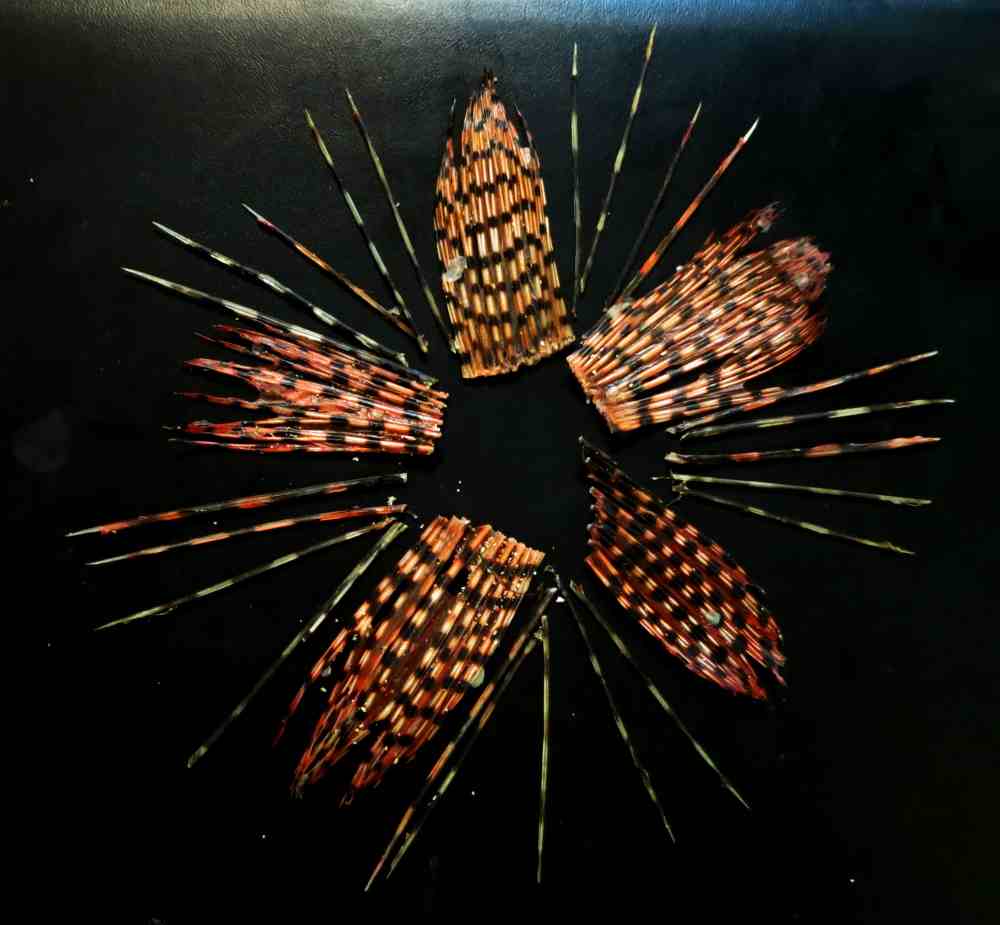
Array of dried lionfish spines and tails -ready for jewelry use Credit: ReefCI

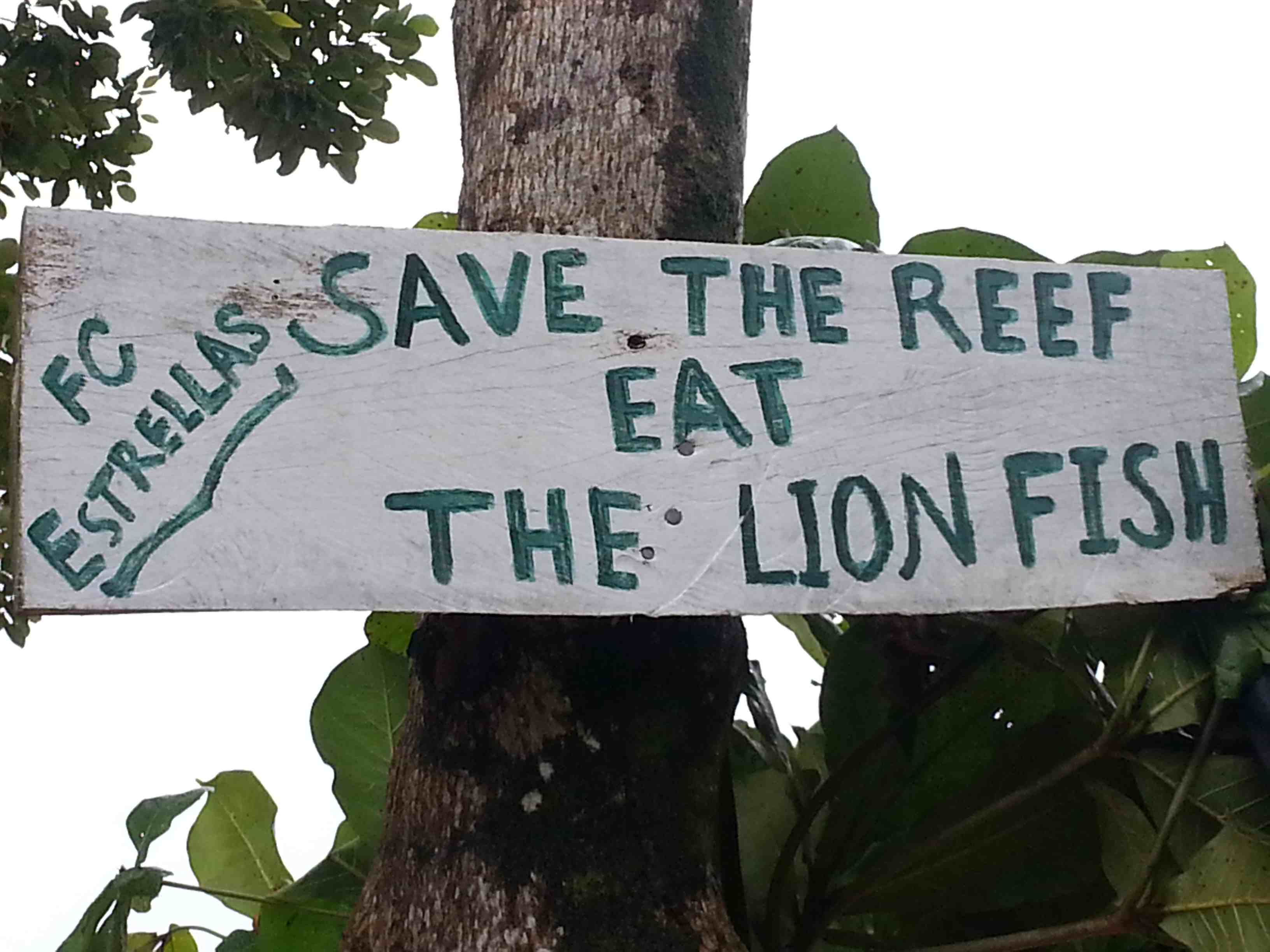
In Part 1 of this post regarding market-based solutions to fighting the lionfish invasion that is threatening coral reef and other marine ecosystems throughout the Caribbean, Gulf of Mexico, and Southern Atlantic Seaboard of the United States, I wrote about the challenge of developing commercially sustainable strategies for undertaking the systematic removals that are needed to keep lionfish populations under control. I discussed the need to develop a series of vertical markets, pointing to promotion of lionfish as a seafood choice as the most obvious of these. Capture of juvenile lionfish for the aquarium trade as another.  A third market, and one in which I’m personally involved, is use of lionfish spines and tails for jewelry and other decorative items.  Continue reading

Green Economy Realism

There’s no way toward a sustainable future without tackling environmentalism’s old stumbling blocks: consumption and jobs. And the way to do that is through a universal basic income.

Illustration by Edward Carvalho-Monaghan

Illustration by Edward Carvalho-Monaghan

There is nothing wrong, per se, with wishful thinking. It is when those wishful thoughts are left in dream state that they can become tedious, even dangerous. Action matters. It is where dreams meet reality. Reality matters at least as much as dreams in getting to a desired outcome. This is true with regard to environmental issues as with any other. We appreciate reminders whenever, wherever we find them:

For as long as the environment has existed, it’s been in crisis. Nature has always been a focus of human thought and action, of course, but it wasn’t until pesticides and pollution started clouding the horizon that something called “the environment” emerged as a matter of public concern.

In 1960s and 1970s America, dystopian images provoked anxiety about the costs of unprecedented prosperity: smog thick enough to hide skylines from view, waste seeping into suburban backyards, rivers so polluted they burst into flames, cars lined up at gas stations amid shortages, chemical weapons that could defoliate entire forests. Economists and ecologists alike forecasted doom, warning that humanity was running up against natural limits to growth, extinction crises, and population explosions.

But the apocalypse didn’t happen. The threat that the environment seemingly posed to economic growth and human well-being faded from view; relieved to have vanquished the environmental foe, many rushed to declare themselves its friends instead. Continue reading

Controlling Invasive Lionfish – Update on Market Solutions: Part 1/2


I’ve posted previously about the lionfish invasion that is threatening coral reef and other marine ecosystems throughout the Caribbean, Gulf of Mexico, and Southern Atlantic Seaboard of the United States. As I noted in earlier posts, it is the general consensus of the scientific and conservation community that eradication of lionfish from the Atlantic is impossible. There have been some anecdotal reports that native predators such as groupers and snapper are beginning to recognize lionfish as prey, but there is no systematic evidence, as of yet, of widespread predation. So the conclusion remains that human intervention is the only way to keep lionfish populations in check. The good news is that there is growing evidence that systematic removal efforts can indeed be effective in controlling lionfish populations and in reversing their negative impact on reef health. A study published earlier this year found that populations of snapper and grouper rebound by 50-70 percent once lionfish are removed. And it isn’t necessary to remove 100 percent of lionfish for recovery of native fish populations to take place; the study found that reduction of lionfish populations by as little as 75 percent will do the trick. This is important, given difficulties in reaching lionfish at depths beyond the limits of divers.  Also, removal efforts may become more difficult over time, as lionfish on reefs where regular culling takes place begin to wise up and hide from divers (click here for a cute poetic rendition of findings of a study on this behavioral adaptation).

Thus the challenge is to find a sustainable basis on which to undertake the systematic removals that are needed to keep lionfish populations under control. Continue reading

Energy, Development and the Global Environment

Bosch is testing the viability of electric cars in Singapore. Photograph: Samuel He/Bosch

Bosch is testing the viability of electric cars in Singapore. Photograph: Samuel He/Bosch

Normally we avoid articles that look strictly like press releases promoting a PR firm’s client.  However, in this case, a couple of exceptions were allowed.  First, we like the storyline because of its relevance to three years’ worth of posts on our site.  Second, there is not one iota of obnoxious flimflam, which is what normally forces us to avoid press releases.

But, an additional component to this one really made the difference. Nearly one year ago two of Raxa Collective’s contributors had the opportunity to visit Duke University and sit in the office of the founder and director of their Center for Energy, Development and the Global Environment. A conversation that was meant to last 15 minutes continued for hours that day, because of the credible commitment that Center and its leadership are making to ensure that future business leaders see sustainability as serious business. So, we gladly pass this newsworthy article on:

When it comes to sustainability ambitions, Singapore might take the prize. The island nation, which currently relies on neighboring Malaysia for its water, is aiming for water self-sufficiency by 2050, with 55% of its water needs met via recycled water and 25% from seawater desalination. Continue reading

A Classic Sustainable Tourism Development Story

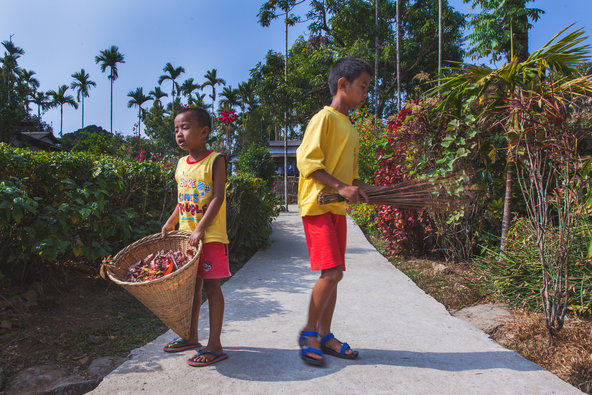
Himanshu Khagta. Children in Mawlynnong working to clean the village, where a reputation for tidiness has been both a blessing and a curse.

There is no such thing as “typical” when it comes to sustainable tourism development. By definition, each story is about that particular place.  But this one, courtesy of India Ink, provides a textbook case study example of sustainable tourism development being about community self-determination.  As for the notion that this comes with a built-in curse, we tend to believe that such curses are a function of and prevented by the same strategic planning, decision-making and action that blessings come from:

MAWLYNNONG, India — Anshuman Sen was barely a year out of college when, in 2005, he traveled to Meghalaya, a hilly northeastern state distant both in miles and cultural resemblance from what the locals call “mainland India.”

Mr. Sen was shooting pictures of the state’s bountiful natural wonders for Discover India, a travel magazine, when an acquaintance suggested visiting Mawlynnong, a remote village in the jungle along the border with Bangladesh that had acquired minor local renown for its fastidious cleanliness and a nearby bridge made entirely of living tree roots.

“I was only there for four or five hours,” said Mr. Sen, “but I couldn’t believe how beautiful it was, and neither could anyone at the magazine.” He had to write about it, even if he hadn’t spent a full day there. Continue reading

Brown, Crickets, Entrepreneurship And Kickstarter

This slideshow requires JavaScript.

We have been following both Kickstarter and Brown University for some time, with interest in how this generation of graduating entrepreneurs from universities are pursuing careers in sustainability-related fields. And now, a word about alternative sources of nutrition that intersects these interests:

10g bioavailable protein. All-natural. Gluten/grain/soy/dairy free. Made in America.

Exo will introduce to the West one of the most nutritious and sustainable protein sources in the world: insects. Through combining cricket flour (slow roasted and milled crickets) with organic and all-natural ingredients such as raw cacao, dates, almond butter and coconut, we have created a bar that is high in protein, low in sugar, incredibly nutritionally dense, and packed with omega 3 fatty acids, iron and calcium. Our bars are free of: unnatural sugars, gluten, grains, dairy, soy, artificial preservatives and anything processed. Continue reading
Self-Sufficiency Taken To The Outer Extremes

Before the lights go out on the last New Yorker issue of 2013, one more of several articles we found worth the read, and relevant to our common themes of interest–community-building, innovation, environmentalism, farming, etc.–on this blog, even if we tend to incremental change rather than the radicalism on display here:

Marcin Jakubowski, the owner of a small farm in northwestern Missouri, is an agrarian romantic for high-tech times. A forty-one-year-old Polish-American, he has spent the past five years building industrial machines from scratch, in a demonstration of radical self-sufficiency that he intends as a model for human society everywhere. He believes that freedom and prosperity lie within the reach of anyone willing to return to the land and make the tools necessary to erect civilization on top of it. His project, the Global Village Construction Set, has attracted a following, but among the obstacles he has faced is a dearth of skilled acolytes: the people who show up at his farm typically display more enthusiasm for his ideas than expertise with a lathe or a band saw. Continue reading

Massachusetts, A Relevant Kerala Benchmark

David Foster, director of the Harvard Forest, speaking at a news conference to announce the launch of a new Harvard Forest Study on future scenarios for the Massachusetts Landscape, looking as forests as infrastructure.   Rose Lincoln/Harvard Staff Photographer

David Foster, director of the Harvard Forest, speaking at a news conference to announce the launch of a new Harvard Forest Study on future scenarios for the Massachusetts Landscape, looking as forests as infrastructure. Rose Lincoln/Harvard Staff Photographer

An article in the Harvard Gazette illustrates one kind of collaboration we hope to see more of in our home state of Kerala, India.  The state of Massachusetts, USA is fortunate to be home to Harvard University and a wealth of resources–financial, yes, but more importantly ideational–that Harvard generates. Kerala has its own wealth of resources, and we hope to see here more collaboration between the public and private sectors, as well as academic institutions, such as we see in this article:

For the last two years, researchers, nonprofit representatives, and state officials have put their heads together to figure out how to maintain Massachusetts’ status as one of the nation’s most densely populated yet most heavily forested states.

Massachusetts’ forests expanded for 150 years as people abandoned farms for urban life and reached a high-water mark in the 1970s, when they covered nearly 70 percent of the state. In the face of expanding development, however, forest cover has since declined, down to 60 percent, with further declines likely.

The result of the collaboration is a report by the Harvard Forest and the Smithsonian Institution. It lays out four possible futures for the state’s forests and highlights one, called “forests as infrastructure,” that would dramatically increase both logging and land conservation, while also encouraging clustered development to minimize forest loss. Continue reading

Drink the Wild Air

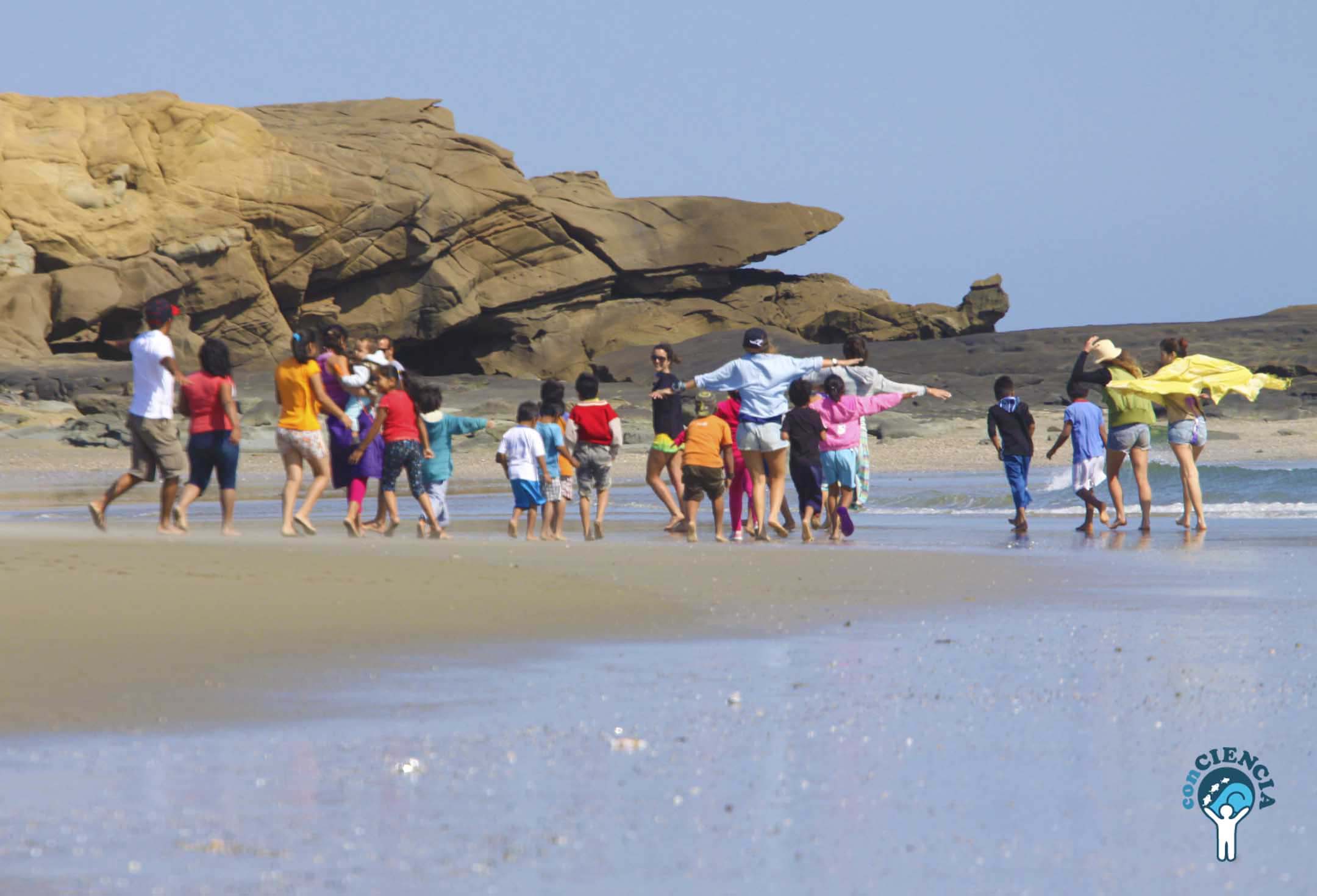
“Live in the sunshine, swim the sea, drink the wild air.” Alejandra Benavides/conCIENCIA

Working for the balance and health of nature as a conservation biologist brought me to understand the importance of nature in the balance and health of communities. The great gap between the two inspired me to establish conCIENCIA, a nature-based education design program. We build environmental identity in fishing villages across Peru through nature-based integrated learning guided by play, creativity, curiosity and the senses.
As First Mermaid in conCIENCIA, I work with an amazing group of artists and scientist, to connect coastal children to the natural wonderland, since 2010.

Lobitos has some of the most beautiful beaches on the Peruvian coast. Its world-class surfing draws hundreds of surfers from all over the planet and is known far and wide. A lesser-known fact is that it also has 153 children enrolled in its elementary school. Walking down the beach we wonder where these kids are. We walk from point to point with not one in sight. There’s no laughter or splashing on the shores. Surfers and fishermen dominate our view. No mothers and children sharing the democratic fun the beach offers: a place with more attractions than we could ever finish exploring.

In Latin American cities like Rio de Janeiro it is on the beach that rich and poor meet, crossing the giant social chasm that separates them, virtually identical in their bathing suits, covered in sand, sweat and salt. Surprisingly, this doesn’t seem to be the case in many of Peru’s coastal towns. Exactly why is hard to say. Our NGO conCIENCIA helps coastal communities develop an environmental identity and engagement through outdoor science-based learning. We hope to be able to answer the question ‘why’ through surveys, conversation and appreciation.

On the surface one could say it is cultural.  Fishermen don’t bathe in the sea or lounge on the beach. This is their place of work, as for a New Yorker her office would be–of course, with greater hardships and demands. The sea is treacherous and fish stock is dwindling. Continue reading

Kerala’s Brainy Cuisine

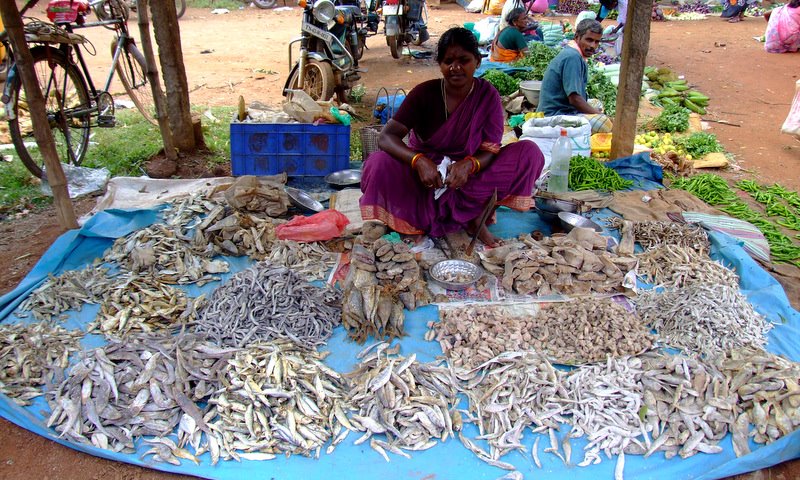
Dry Fish

Dry Fish

The state of Kerala is known to be the most literate state in India and one is able to understand why after noting the Malayali’s profound love for fish.

Fish is an integral part of Kerala cuisine, including breakfast, indicating the vast diversity of recipes that are available considering it is often eaten  twice or thrice a day. The benefits of fish are well publicized, specifically that the Omega 3 fatty acids help in brain development. Continue reading

India’s Recycling Communities

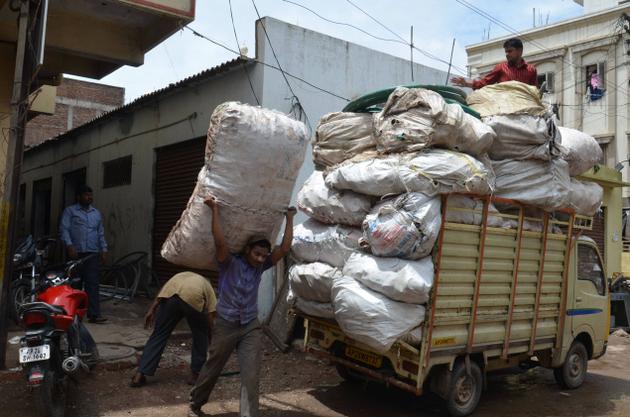
Scrap waste collected in Bholakpur Photo Courtesy of The Hindu

Scrap waste collected in Bholakpur
Photo Courtesy of The Hindu

What happens to obsolete computer or the animal skins from meat factories?

The majority of people couldn’t answer whether these items are recycled or landfilled. A recent article in The Hindu gives some insight into what happens to these items in Bholakpur, a small area of Hyderabad, and it is a surprisingly important industry. Much of what might be considered trash in the Hyderabad area plays an important role in in the community being recycled by families, and resold on the secondary market.

Once inside (Bholakpur), the animal skins go to one of the 200 skin processing units and the plastic and iron scrap to one of the 500-odd plastic or 300-odd iron scrap dealers. There it is sorted and either cleaned up and resold, or ground, melted and transformed into raw material for industrial use. Thus giving new life to waste and also earning a living for the people involved in the process. This includes over 60 per cent of the ward’s 36,000 voter population.

These recycling communities don’t just exist in the Hyderabad area, but also in many of the large metropolitan areas in India. Continue reading

170 Million Year Old Barometer For River Water Quality

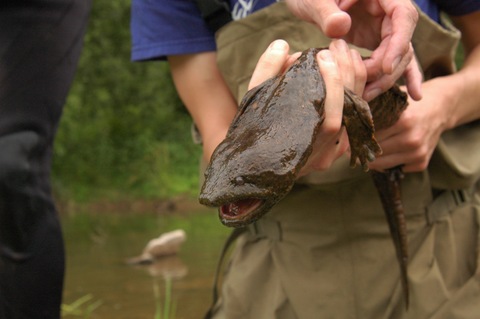
Matt Neff from the Smithsonian’s National Zoo holds a hellbender salamander that he caught in the Blue Ridge mountains of Virginia. Scientists hope to learn how healthy and viable the population is. Photo by Rebecca Jacobson

Thanks to the Public Broadcasting System of the USA for this story segment as their Science Wednesday feature this week:

…At the end of a long day snorkeling in the clear streams of southwestern Virginia’s Blue Ridge Mountains, Terrell and her team assumed their positions. As three scientists lifted a flat, heavy rock, Terrell groped underneath the stone, let out a muffled cry through her snorkel mask and popped out of the water.

“Where did it go? Did you see it?”

The biologists checked their nets and scoured the water. Sarah Colletti from the Aquatic Wildlife Conservation Center pointed at the slick rocks under the water. “Right there, he’s looking right at you.” One of the biologists lunged, secured a firm grasp, and triumphantly pulled it out: a nearly two-foot long hellbender. Continue reading

Trashy bags : social and environmental entrepreneurship inspiration from Ghana

How we do business and perceive the world has been informed for many years by the concepts of Recycling and Upcycling. So our first introduction to Trashy Bags during a trip to Accra was exciting to say the least.

Trashy Bags is a social enterprise that makes recycled eco-friendly bags and gifts from plastic trash. They employ over sixty local people to collect, clean and stitch plastic trash into bags and other products. Packaging and “billboard flex film” waste is a huge problem worldwide, not just in Ghana. But a growing issue in parts of world where clean drinking water isn’t readily available is the build-up of spent “water sachets”—non biodegradable plastic water pouches.

It is estimated that in Ghana, waste produced from plastic packaging amounts to 270 tonnes per day; most of it non-biodegradable.  That adds up to over 22,000 tons of plastic in one year.

This figure has risen in just ten years by about 70%. Despite this rise, it is estimated that only 2% of plastic waste is recycled. You may ask what happens to the remaining 98%.   Continue reading

Plant Collaboration, Productivity, And Waste Minimization

Alex Koeberle

Alex Koeberle. Plant science students Sarah Nechamen ’15 and Celine Jennison ’14 helped create a garden outside Kennedy Hall to demonstrate permaculture.

An item from Cornell University’s newspaper, the Chronicle, highlights a topic we want to know more about:

Diners at Trillium need not look farther than out the window to see where part of their meal originates.

The basil in their pasta or cilantro in their quesadilla may have been plucked from the new garden adjacent to Kennedy Hall, constructed by students last week.

The site will also enable staff and students to stroll around and learn about permaculture – a self-sustaining agricultural system in which herbs, fruits and vegetables are strategically planted so that they work together in mutual benefit. Some plants provide shade, for instance, while others offer pest resistance.

A permaculture garden is essentially a network, with each plant working together, explained plant sciences major Sarah Nechamen ’15, past president of the Cornell Permaculture Club. This increases garden productivity while minimizing waste and human interference. Continue reading