MycoHab & Other Namibian Wonders

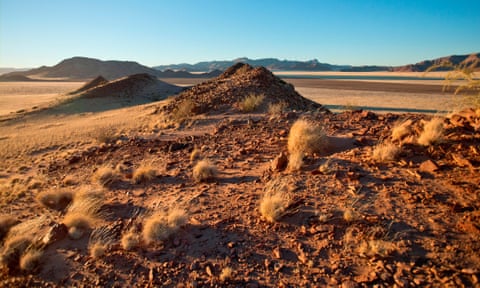
Desert in Namibia

Namibia has a severe housing shortage, with woody encroacher bush reducing the amount of land available for building. Photograph: Hoberman Collection/Universal Images Group/Getty

Mycological options for solving problems are abundant. We had not considered odor as a key potential obstacle, so thanks to Ester Mbathera for this reporting from Namibia:

‘People think they’ll smell but they don’t’: building homes from mushroom waste and weeds

A sustainable project aims to repurpose encroacher bush to create building blocks to solve Namibia’s housing crisis

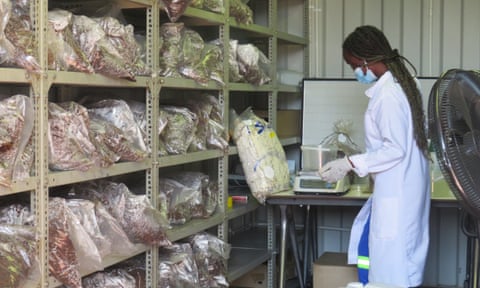
Oyster mushrooms in bags on a shelf with a woman using weighing scales

The remnants of the oyster mushrooms grown on weeds of encroacher bush will be used to create building blocks. Photograph: Ester Mbathera

People think the house would smell because the blocks are made of all-natural products, but it doesn’t smell,” says Kristine Haukongo. “Sometimes, there is a small touch of wood, but otherwise it’s completely odourless.”

Haukongo is the senior cultivator at the research group MycoHab and her job is pretty unusual. She grows oyster mushrooms on chopped-down invasive weeds before the waste is turned into large, solid brown slabs – mycoblocks – that will be used, it’s hoped, to build Namibian homes. Continue reading
Options For Human Waste Management

An illustration of a toilet. Its black lid is open and water is splashing out. An oversize roll of toilet paper is unrolling, seemingly out of control, just above the toilet. The background is pink.

Naomi Anderson-Subryan

Waste has been a regular topic in our pages in the decade+ since we started sharing stories here. Human bodily waste has not been featured, but deserves attention. If you can, consider these options:

What’s Greenest and Cleanest When Nature Calls?

Conventional toilet paper has a big environmental impact. We’ve got the lowdown on alternatives, from bamboo tissue to bidets.

These days, the toilet paper aisle is crowded with products that claim to be more sustainable, from bamboo and recycled material to products with “forest-safe” labels. But are they really better for the environment? And can you cast aside the paper altogether?

Today, we’ll try to get to the bottom of it. Continue reading

Coffee Bags On Other Second Shift Duties

More ways to re-use coffee bags

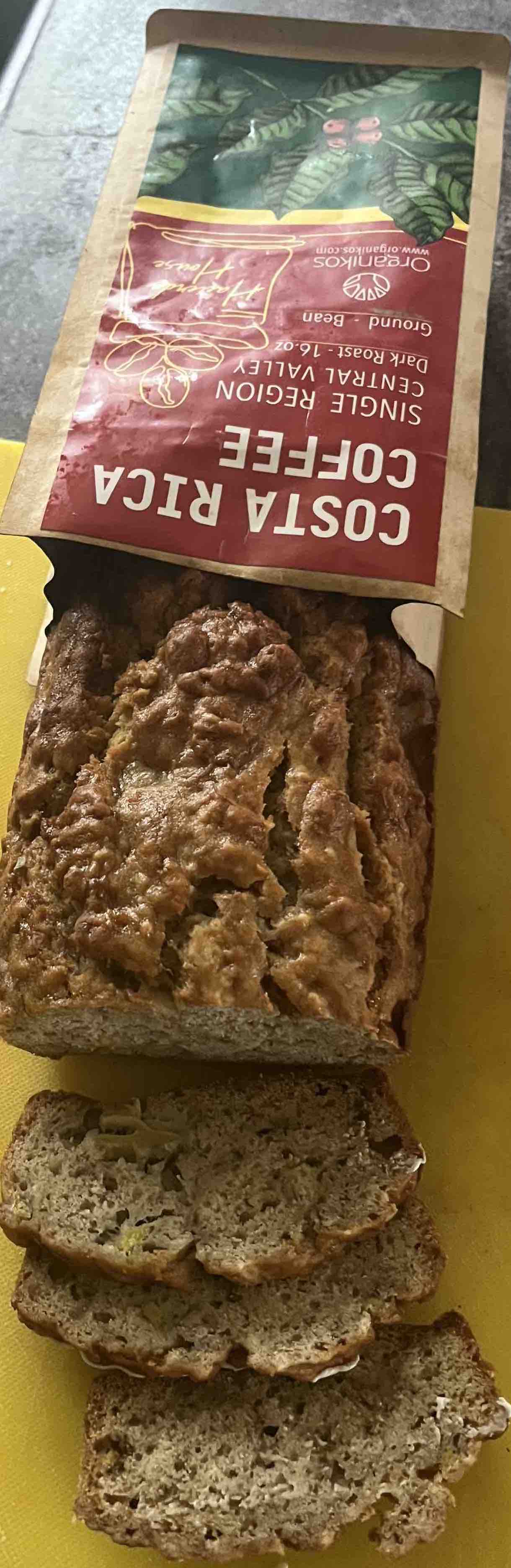
We have changed our coffee labels, but continue to use kraft bags, and continue to find ways to re-use those with the old style labels. Above, and below, case in point. Continue reading

Does Recycling Matter In 2024?

Thanks to Yale Climate Connections for this primer:

Does recycling actually do anything? What about carbon offsets? Did you know that the average person’s carbon footprint is about 6.5 tons but the average American’s footprint is double that? Meteorologist Alexandra Steele talks to the experts to get answers about what actually helps the planet, and what doesn’t. You can calculate you carbon footprint by using the links below:

https://coolclimate.berkeley.edu/calc…

https://www.nature.org/en-us/get-invo…

Credits Script, research, interviews, camera: Alexandra Steele Script Editors: Sara Peach, Pearl Marvell Edit Producers: Iain Moss, Sam Lucas Production support: Anthony Leiserowitz, Lisa Fernandez Production Editor: Iain Moss Graphics: Screen Stories Production Manager: Ellie Aitken Social Media Manager: Ellie Phillips Director of Production: Hal Arnold Production Company: Little Dot Studios

Replanting With Edibles

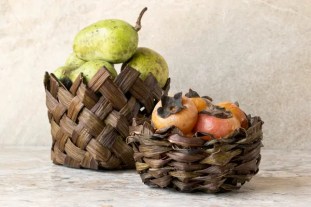
Your first taste of a ripe pawpaw, left, or American persimmon, right, may convince you to plant the trees, which can serve as the centerpiece of a permaculture food forest. J.B. Douglas

It is a relief, always, to read a Margaret Roach article when given the choice between her advice and any given news of the world:

Or just start by planting a few pawpaw or persimmon trees. Chances are, you’ll want more.

A long view of a food forest, with fruit trees growing in beds of companion plants.

At a permaculture site planted by Michael Judd, an edible landscape designer, each fruit tree is underplanted with beneficial companion plants, so “you’re not leaving your poor little fruit tree in a sea of grass,” he said. Michael Judd

Your first taste of a ripe pawpaw or persimmon can leave you hungry for more. That’s why Michael Judd is confident that he can persuade you to make room for several of these trees in your front yard — or even to surrender your lawn altogether.

Turning your yard into a meadow or blanketing it in an expanse of alternative ground covers aren’t the only ecologically viable options for replacing conventional grass. Continue reading
About The Food Waste Known As Diversion

Photograph by Grant Cornett

As still life compositions go, the photo to the right is classic in style and weirdly perfect for the essay it accompanies.  Helen Rosner frequently writes about food, including a review that convinced me to watch The Bear, and this is the best of her work that I have read:

The Promises of the Home “Composting” Machine

A new crop of techy appliances wants to help fight the food-waste crisis. How virtuous should we feel using them?

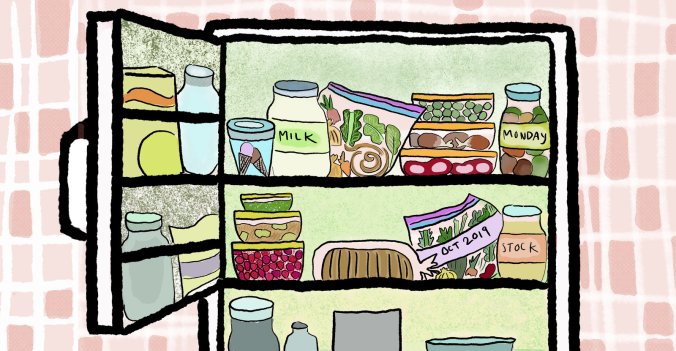
In the course of a week, my kitchen produces a shocking quantity of what we might think of as edible trash: apple peels, garlic nubs, a bit of gristle from a steak, Dorito dust, tea bags, the iron-hard heel of a loaf of bread that’s been sitting out overnight. The meat scraps I feed to my dog. The bones and vegetable scraps I store in the freezer in gallon-size ziplock bags and periodically bung into a pot and simmer into stock. But even then, once the stock is made, and the chicken bones or onion ends are leached of all their flavor, I’m left again with edible trash—only now it’s soggy. And then there are the times when the strawberries aren’t sealed right and become fuzzy with mold, or the delivery sandwich turns out to be gross, or the refrigerator’s compressor breaks and somehow we don’t notice, or I’m just exhausted and overwhelmed and want everything gone. Continue reading
Greenhouse By Joost

We have not heard news of Joost Bakker in over a decade, so Max Veenhuyzen’s profile and introduction to the documentary previewed above is most welcome:

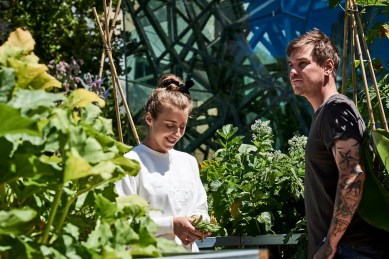
‘We can have houses covered with biology, plants, ecosystems and waterfalls’: Greenhouse by Joost documents the green-thinking initiatives of Future Food System. Photograph: Dean Bradley/Madman Entertainment

Mushroom walls and waste-fuelled stoves: inside the self-sufficient home of tomorrow

Joost Bakker believes a house can be more than a place to live: it can be a self-sustaining weapon against the climate crisis. A new Australian documentary explores his bold blueprint

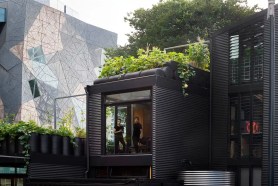
Future Food System is anchored by self-watering garden beds filled with 35 tonnes of soil. Photograph: Earl Carter Images

“The most destructive things we humans do,” says Joost Bakker, “is eat.”

In terms of sentences that grab your attention, the introduction to new Australian documentary Greenhouse by Joost is right up there. Then again, Bakker – a multi-disciplinary designer, no-waste advocate and the film’s eponymous protagonist – has long been something of a provocateur. Continue reading
Reducing Emissions & Living Well

Gauchos at the Pintado wind farm in Corral de Piedra, Uruguay.

Gauchos at the Pintado wind farm in Corral de Piedra, Uruguay. Alessandro Cinque for The New York Times

We normally think of Costa Rica to answer this question, but it is in good company:

No greater challenge faces humanity than reducing emissions without backsliding into preindustrial poverty. One tiny country is leading the way.

Let’s say you live in the typical American household. It doesn’t exist, not in any sense except in a data set, but it’s easy enough to imagine.

“We learn to live with less here,” says a former bank analyst, Ignacio Estrada, who had decided to take a 75 percent pay cut to return home. “And it’s made my life better.”

“We learn to live with less here,” says a former bank analyst, Ignacio Estrada, who had decided to take a 75 percent pay cut to return home. “And it’s made my life better.” Alessandro Cinque for The New York Times

Maybe it’s your aunt’s, or your neighbor’s, or a bit like your own. Since more than half of us live outside big cities, it’s probably in a middle-class suburb, like Fox Lake, north of Chicago.

Uruguay’s national director of energy, Ramón Méndez, at home in Montevideo.

Uruguay’s national director of energy, Ramón Méndez, at home in Montevideo. Alessandro Cinque for The New York Times

You picked it because it’s affordable and not a terrible commute to your job. Your house is about 2,200 square feet — a split-level ranch, perhaps. You’re in your mid-30s and just welcomed your first child. Together with your partner you make about $70,000 a year, some of which goes toward the 11,000 kilowatts of electricity and 37,000 cubic feet of natural gas you use to heat the house, play video games and dry your clothes. You take six or seven plane flights a year, to visit your mom after her surgery or attend a conference, and drive about 25,000 miles, most of which you barely register anymore, as you listen to Joe Rogan or Bad Bunny. Maybe twice a month you stop at Target and pick up six or seven things: double-sided tape, an extra toothbrush, an inflatable mattress. Continue reading

Smart Cities, Japan Edition

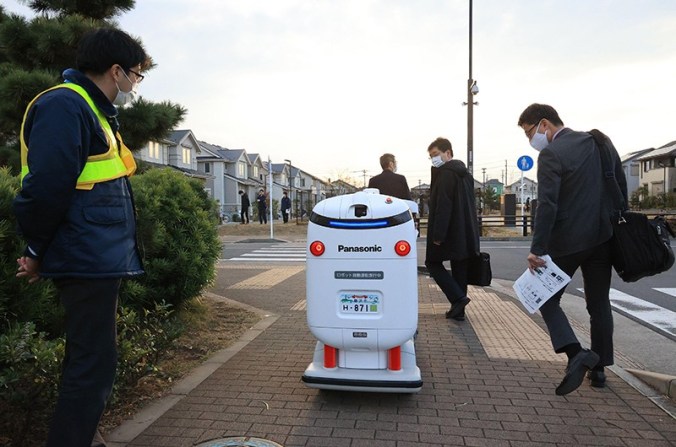
A delivery robot makes its rounds at Fujisawa Sustainable Smart Town in Japan.Credit: Yoshio Tsunoda/AFLO/Alamy

Frustrated but determined leadership on environmental challenges facing urban constituencies is worthy of our attention and even admiration, even if “smart cities” can be problematic terminology. Nature magazine offers this snapshot from Japan:

Houses equipped with solar panels in Fujisawa Sustainable Smart Town.Credit: Tomohiro Ohsumi/Bloomberg via Getty

Why Japan is building smart cities from scratch

Purpose-built sustainable communities can boost energy efficiency and support an ageing population.

By 2050, nearly 7 out of 10 people in the world will live in cities, up from just over half in 2020. Urbanization is nothing new, but an effort is under way across many high-income countries to make their cities smarter, using data, instrumentation and more efficient resource management. Continue reading
82 Leading Scientists Agree

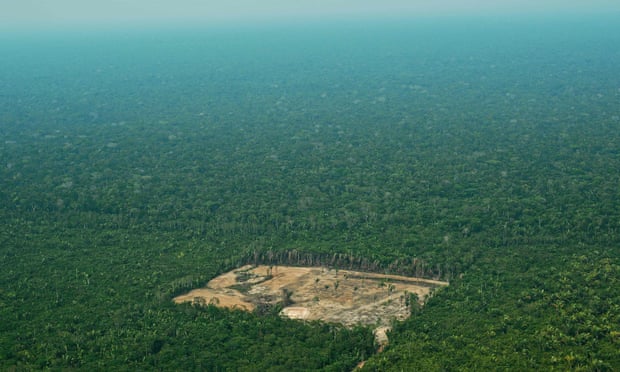
Aerial view of deforestation in the Western Amazon region of Brazil.

Aerial view of deforestation in the Western Amazon region of Brazil. Photograph: Carl de Souza/AFP/Getty Images

To state the obvious, yes:

Humans need to value nature as well as profits to survive, UN report finds

Focus on market has led to climate crises, with spiritual, cultural and emotional benefits of nature ignored

Taking into account all the benefits nature provides to humans and redefining what it means to have a “good quality of life” is key to living sustainably on Earth, a four-year assessment by 82 leading scientists has found. Continue reading
Personal Approaches To Carbon Footprint Reduction

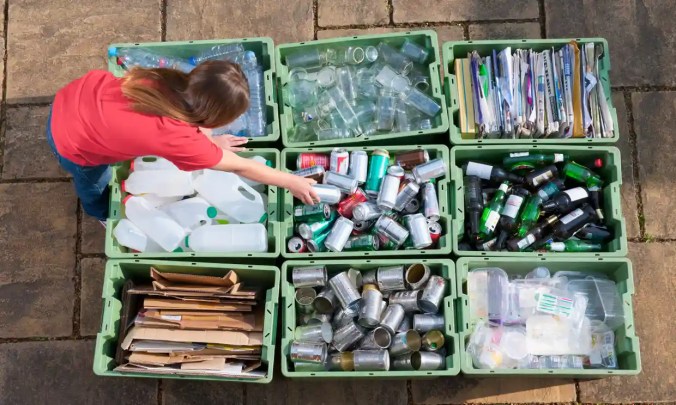
Recycle to save the planet? Photograph: Jacobs Stock Photography Ltd/Getty Images

A public service request for your input, from the Guardian:

What is the single most effective thing I could do to reduce my carbon footprint?

The long-running series in which readers answer other readers’ questions on subjects ranging from trivial flights of fancy to profound scientific and philosophical concepts

What is the single most effective thing I could do to reduce my carbon footprint? Without dying, preferably. Andrew Hufnagel, Caithness

Post your answers (and new questions) below or send them to nq@theguardian.com. A selection will be published on Sunday.

Rethinking What Comes Next

shutterstock_308990846_FloridaHouses_web

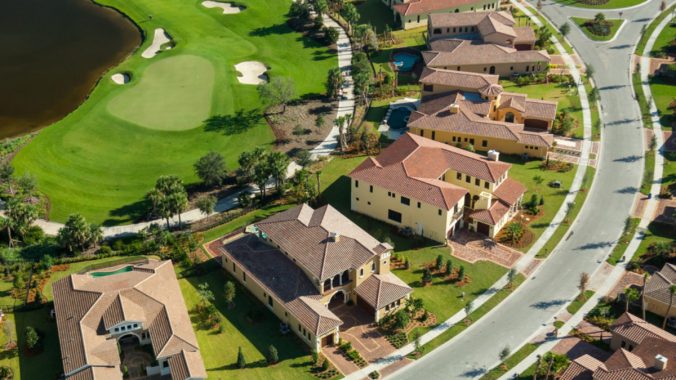
The average size of a new house in the U.S. has doubled since 1970. SHUTTERSTOCK

Thanks as always to Bill McKibben for his view on ways of thinking differently about our shared future:

When Social Distancing Ends, Will We Rethink the World We Want?

Long before the virus, Americans had become socially isolated, retreating into sprawling suburbs and an online world of screens. When we emerge from our pandemic-mandated separation, can we reconnect with each other and reconsider how the way we live impacts the natural world?

2BCWX7G_alamy-central-park_web

Patterns are notoriously hard to break, even when you have to. Studies find that more than half of smokers diagnosed with lung cancer keep on smoking, even though their odds of survival would go way up if they stopped. Nicotine is powerfully addictive, of course — but we’re beginning to suspect that’s true of lots of other human behaviors too: checking your phone, for instance, which seems strongly linked to the supply of dopamine (which is what nicotine affects as well). One tells oneself that one will change — but change is hard. Continue reading
Darn Charm

merlin_170001618_4a8316e7-9a76-4c7f-aba8-42af449f76e4-jumbo

Amy Lombard for The New York Times

Thanks to Steven Kurutz, whose first two appearances in our pages (6 and 4 years ago, respectively) prepared us well for this charming news:

Now Is When We All Learn to Darn Our Socks Again

“Visible mending” has been taken up by those who want to protest fast fashion and disposable culture. It’s also thrifty.

merlin_170001855_ff560039-51a4-4526-8ce1-c22fdbaab296-superJumbo

Amy Lombard for The New York Times

Only a few generations ago, socks were routinely darned, sweaters mended and pants patched. You could buy a sewing kit at any drugstore. Knowing how to use it was a mark of good housekeeping.

Kate Sekules, 58, remembers that world, in which the act of repairing clothes was integral to wearing them. “My mother was a dressmaker to the end of her life,” said Ms. Sekules, who grew up in England. “My mother just mended as a matter of course.”

Ms. Sekules has kept up that thrifty tradition. She started one of the earliest secondhand online clothing exchanges, Refashioner. She buys all of her clothes vintage and mends them all, including her husband’s moth-eaten sweaters. Continue reading

Prepping For Less Food Waste

fridge-guy-_custom-2da5185f9372fc1aa92a1c55cffedfeb4544f8f4-s1600-c85.jpg

Clare Schneider/NPR

End of year stories about what to do differently in the new year may seem overdone, but we find them worth sharing when they touch on a theme we cover regularly. This column has the added value of some funny, some even bizarre suggestions:

Food waste is a big problem in the United States, where a typical household of four tosses out about $1,600 worth of food annually. So, Life Kit did a deep dive on how how to reduce food waste.

In planning that episode, the office was abuzz with conversations about our own tricks and tips to save food — from recipes to compost tips. This made us wonder what other wisdom was out there. So we asked you!

We were overwhelmed by your collective knowledge and thriftiness. Our roundup is by no means an exhaustive list, but below are a few tips we felt inspired by. (If you want to join the conversations, you can find them here on Instagram and Facebook.)

Your tips from Instagram

1. Used coffee grounds can be dried and used in a steak rub or mixed with coconut oil and sugar and used as a body scrub. — @Chefanniecarroll Continue reading
Orlando Is The New Walden

Every day begins with a search for a story to share here, something evocative, sometimes provocative, hopefully useful in some manner. When my own name will go on the post there is some personal connection to the story being linked to, or it is a story of my own. When the there is an important story or an essay that fits our framework but does not require my own personal reflection, I will post using the La Paz Group name instead of my own.

1734.jpg

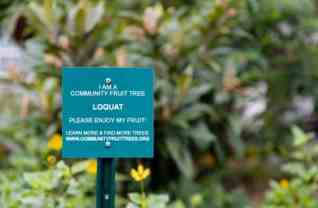
Community fruit trees provide for everyone. Photograph: http://www.livewonderful.com

Today’s linked story is personal in a very simple way. Since a teenage visit to Walden Pond I have celebrated Thoreau unthinkingly, even considered his exemplary life as a kind of compass relevant to all of us all of the time. I do not retract any of that, but the story below challenges the isolation of Thoreau’s example, and turns our attention to how important community is for many of the same self-reliance outcomes I have celebrated in relation to life on Walden Pond. Thanks to the Guardian for bringing this to my attention:

I didn’t buy any food for a year – and I’m healthier than I’ve ever been

Rob Greenfield gardened, fished and foraged to eat more sustainably and encourage others to do the same. But to succeed, he needed the community

2000 (3).jpg

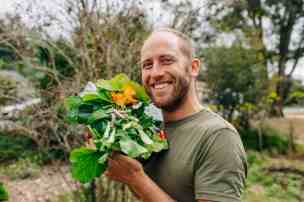
Rob Greenfield with greens grown in his garden. Photograph: Sierra Ford Photography

For the last year I grew and foraged 100% of my food. No grocery stores, no restaurants, not even a drink at a bar. Nature was my garden, my pantry and my pharmacy.

Most people would imagine I live in the countryside on a farm, but actually I live in a city; Orlando, Florida, a few miles from the centre. When I arrived here, I didn’t own any land, so in order to grow my food I met people in the neighbourhood and turned their lawns into gardens and shared the bounty of food with them. I’m a big believer in the philosophy “grow food, not lawns”.

2000 (2).jpg

Rob Greenfield in his tiny house in Orlando, Florida. Photograph: Sierra Ford Photography

I also needed a place to live for my two-year stay in Orlando and I also found this through the local community. I put the message out that I was looking for someone with an unused backyard who could benefit from my being on the property. After a short search I found Lisa, a woman in her early 60’s with a lifelong dream of living more sustainably. I built a 100 sq ft tiny house in her backyard and in exchange I turned her entire front yard into a garden, set up rainwater harvesting, composting and grew her fresh produce. Together, we helped meet each other’s basic needs through an exchange, rather than using money. Continue reading

Urban Farming Meets Upmarket Retail

merlin_144673629_88cac911-5145-4958-a6d9-886fabf52da5-jumbo.jpg

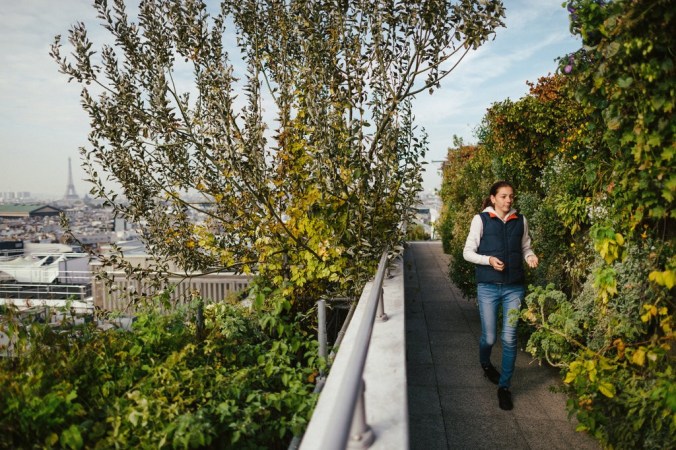
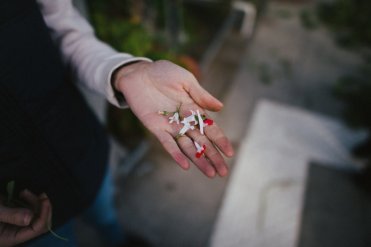
Delia Danciu, 24, a gardener, works at the Galeries Lafayette department store rooftop in Paris. Credit Dmitry Kostyukov for The New York Times

In our quest to brighten up each day with a story, a picture, or personal observation that helps us better understand the world around us, Doreen Carvajal is our source for this story in the New York Times from the former hometown of several of our long-time contributors:

Rooftop Gardens Are Turning the Urban Shopping Scene Green

merlin_144673632_dfabac81-c188-4367-b046-3873ebcf1817-jumbo

Galeries Lafayette rooftop garden is part of a plan to transform city farming into a deluxe shopping attraction. Credit Dmitry Kostyukov for The New York Times

PARIS — It’s a swift ride by elevator from Galeries Lafayette’s perfume section to the grand department store’s 10th-floor luxury farm with its signature scent of sage, rosemary and compost.

The rooftop garden, lush with climbing plants, tomatoes, marigolds and strawberries, is part of a plan to transform city farming into a deluxe shopping attraction for customers yearning for an exclusive green refuge — and perhaps a taste of beer brewed from the store’s homegrown hops. Continue reading
Europe And The Race To Car Electrification

ElectricCars.jpg

Thanks to Adam Vaughan and the Guardian for this update on this race:

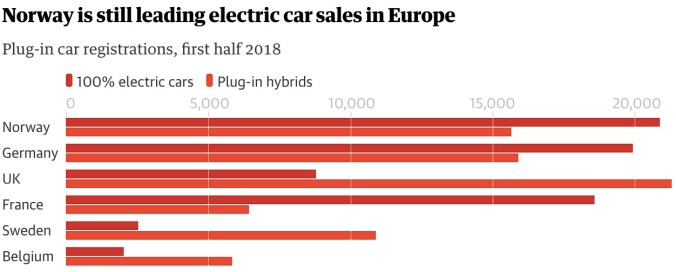
Electric cars exceed 1m in Europe as sales soar by more than 40%

Milestone reached nearly a year after China but ahead of the US

3963.jpg

Between January and June around 195,000 plug-in cars were sold across the EU, Iceland, Liechtenstein, Norway and Switzerland. Photograph: Miles Willis/Getty Images for Go Ultra Low

There are now more than a million electric cars in Europe after sales soared by more than 40% in the first half of the year, new figures reveal.

Europe hit the milestone nearly a year after China, which has a much larger car market, but ahead of the US, which is expected to reach the landmark later this year driven by the appetite for Tesla’s latest model.

Between January and June around 195,000 plug-in cars were sold across the EU, Iceland, Liechtenstein, Norway and Switzerland, a 42% increase on the same period a year before. Continue reading
The Aha Moment Explaining One Challenge To Recycling

15Fixes-jumbo.jpg

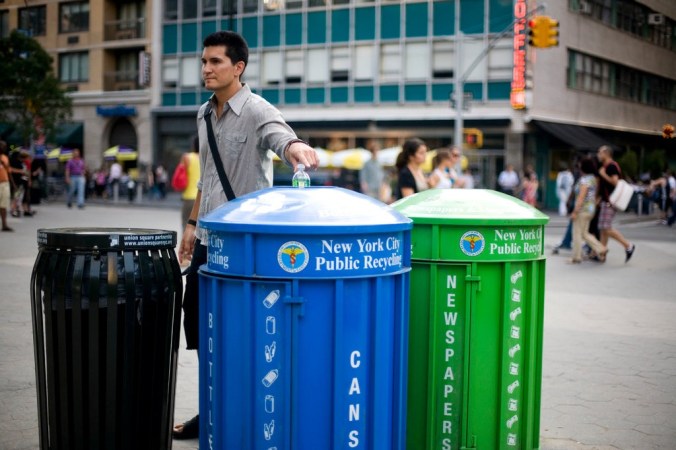
Color-coordinated waste baskets for waste recycling in New York City. Credit Ramin Talaie/Corbis, via Getty Images

Thanks for this interview full of incisive interview quetions by David Bornstein, who is co-founder of the Solutions Journalism Network, which supports rigorous reporting about responses to social problems. Thanks to Mitch Hedlund, executive director of Recycle Across America, for the explanatory answers in the interview that follows:

The Conflict of Interest That Is Killing Recycling

Some of the biggest recycling operations are owned by landfill companies whose profits improve when recycling doesn’t work well.

15fixes2-articleLarge.jpg

Mitch Hedlund, executive director of Recycle Across America. Credit Shelly Mosman/Recycle Across America

In the past few years, one of the core pillars of the environmental movement — recycling — has fallen on hard times. News dispatches reveal hundreds of cities and counties scaling back their recycling programs because of the high costs associated with processing recyclables and the lack of demand for the materials. A new conventional wisdom is gaining ground suggesting that recycling may not be worth the effort.

But is that true? And has recycling ever gotten a fair shake? After decades, less than a third of municipal solid waste is recycled — and much of that is contaminated with garbage, which diminishes or destroys its value. Almost 50 years after the first Earth Day, are we really ready to admit defeat and return to the “Mad Men”-era ethos of the “throwaway society”?

There may be another way. For most of the past decade, Recycle Across America, a nonprofit organization I covered in this column six years ago, has been demonstrating that it’s quite possible to get people to recycle properly, just as it’s possible to get most people to wear seatbelts, quit smoking and stop driving drunk. But the recycling industry has never taken the logical steps needed to create a successful societywide recycling habit — and today it may not be in the economic interest of some of the big recycling companies to build it. Recently, I spoke with Mitch Hedlund, the founder of Recycle Across America, about this dilemma and the possibility that a recycling collapse can be avoided. Continue reading

Latinovegan

gettyimages-932406182-db3ad2e5b465008ac099992638ce546d7e2c4c6a-s1400-c85.jpg

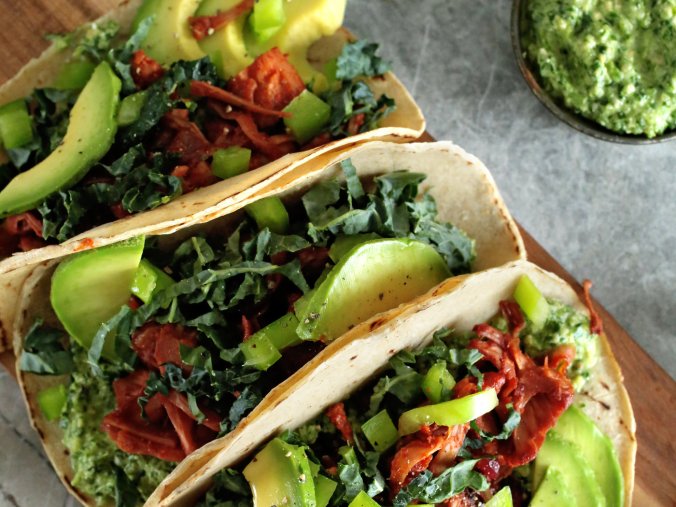
Pesto and pulled jackfruit tacos. In Southern California, working-class Mexican-American chefs are giving traditionally meaty dishes a vegan spin. Evi Oravecz/Green Evi/Picture Press/Getty Images

We are happy to see another story posted by Gustavo Arellano in the salt files at National Public Radio (USA):

Carne Asada, Hold The Meat: Why Latinos Are Embracing Vegan-Mexican Cuisine

vegana_mexicana_family-7ecccab3787805dac706d2b4e23d2b64e8c97b73-s1400-c85.jpg

Loreta Ruiz (center) runs La Vegana Mexicana, a food pop-up based in Southern California, with her children, Loreta Sierra (left) and Luis Sierra. Gustavo Arellano/for NPR

Tall, dreadlocked Josh Scheper knew he was out of place as he surveyed the scene at a Santa Ana, Calif., parking lot on a Sunday morning this past April. And the 46-year-old loved it.

Hundreds of people waited in line at stalls for vegan food, but few people looked like the Los Angeles resident. Nearly everyone in the crowd was young and Latino, as were the chefs. The food on sale was Mexican — but not hippie-dippy cafe standbys like cauliflower tacos, or tempeh-stuffed burritos. Instead, chefs reimagined meaty classics that were honest-to-goodness bueno. Continue reading

Agroecology, A Guiding Principle For Food Entrepreneurship

Ryan Donnell for The New York Times

Our attention has been on food entrepreneurship recently, and here we continue the thread. With agroecology, a new word and robust concept, we have new food for thought. And for that we thank one of our favorite food writers, who we have relied since the first year of this platform. Many of the food stories we have linked to over the years have been authored by him. A year ago we linked to this story, which marked the first time we noted him as an activist. We expect, after reading Bringing Farming Back to Nature, which he co-authored with Daniel Moss, that he has found his new calling:

Workers in a paddy field in the state of Andhra Pradesh, India. Credit Noah Seelam/Agence France-Presse — Getty Images

Farming the land as if nature doesn’t matter has been the model for much of the Western world’s food production system for at least the past 75 years. The results haven’t been pretty: depleted soil, chemically fouled waters, true family farms all but eliminated, a worsening of public health and more. But an approach that combines innovation and tradition has emerged, one that could transform the way we grow food. It’s called agroecology, and it places ecological science at the center of agriculture. It’s a scrappy movement that’s taking off globally. Continue reading