Adapting Maple Syrup Making

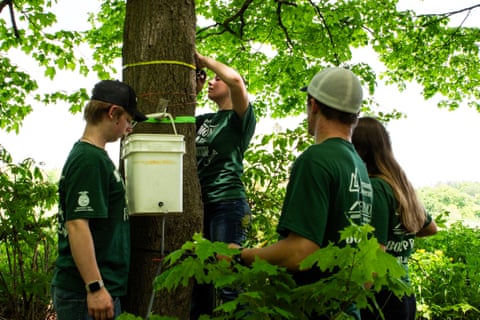
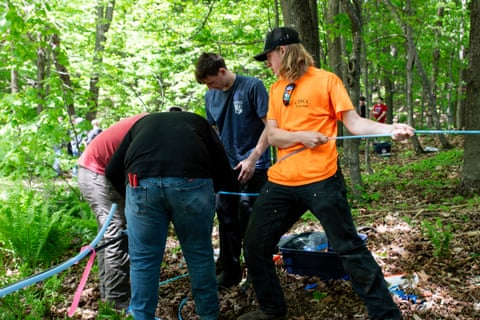
Students tap a tree for maple syrup in Randolph, Vermont, on 20 May 2024.

Students tap a tree for maple syrup in Randolph, Vermont, on 20 May 2024. Photograph: Olivia Gieger/The Guardian

Maple syrup is a good example of what we call taste of place products, and we are happy to see the next generation in Vermont adapting the making of this one for the future:

‘It’s the future of sugar’: new technology feeds Vermont maple syrup boom amid climate crisis

With tools as seemingly simple as these blue tubes, it’s easier than ever to extract sap from maple trees, as these young people demonstrated during a May Future Farmers of America convention on 20 May.

With tools as seemingly simple as these blue tubes, it’s easier than ever to extract sap from maple trees, as these young people demonstrated during a Future Farmers of America convention on 20 May. Photograph: Olivia Gieger/The Guardian

The season to tap trees is now earlier and longer, but new processes and generations are helping the industry thrive

On a warm May Monday, more than three dozen high school students took to the forest behind a former dairy barn at Vermont State University in Randolph.

In teams of four, they ran blue plastic tubing from tree to tree, racing to connect the tubes across three trees in 30 minutes. One student leaned back and pulled it taut with his body weight while another secured tube to tree. Quickly, they dashed to the next in what appears to be a twisted tug-of-war. Continue reading
Upgrading Electrical Power Lines

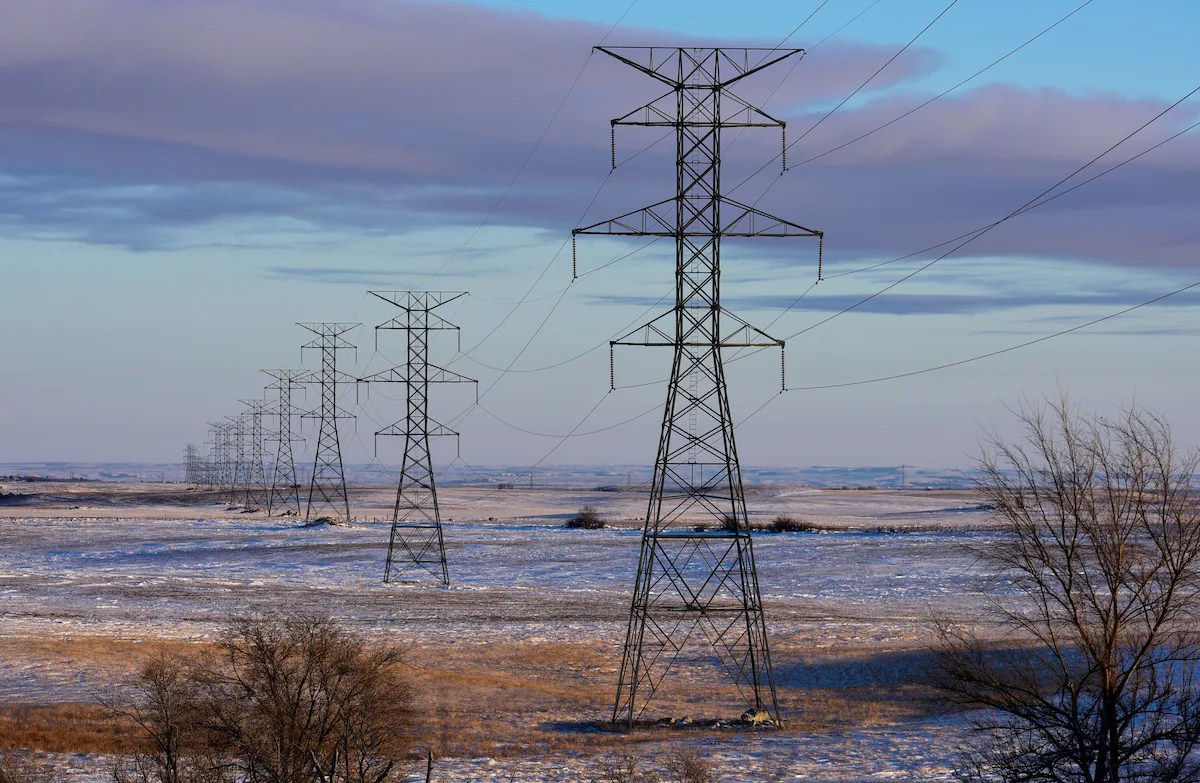
High voltage power transmission lines near Underwood, N.D. Installing new wires on the high-voltage lines that already carry power hundreds of miles across America could double the amount of power those lines carry. (Dan Koeck for The Washington Post)

Shannon Osaka, writing in The Washington Post, offers an unglamorous but effective-sounding story about the role that electrical transmission lines may play in upgrading our energy infrastructure:

How a simple fix could double the size of the U.S. electricity grid

Rewiring miles of power lines could make space for data centers, AI and a boom in renewables.

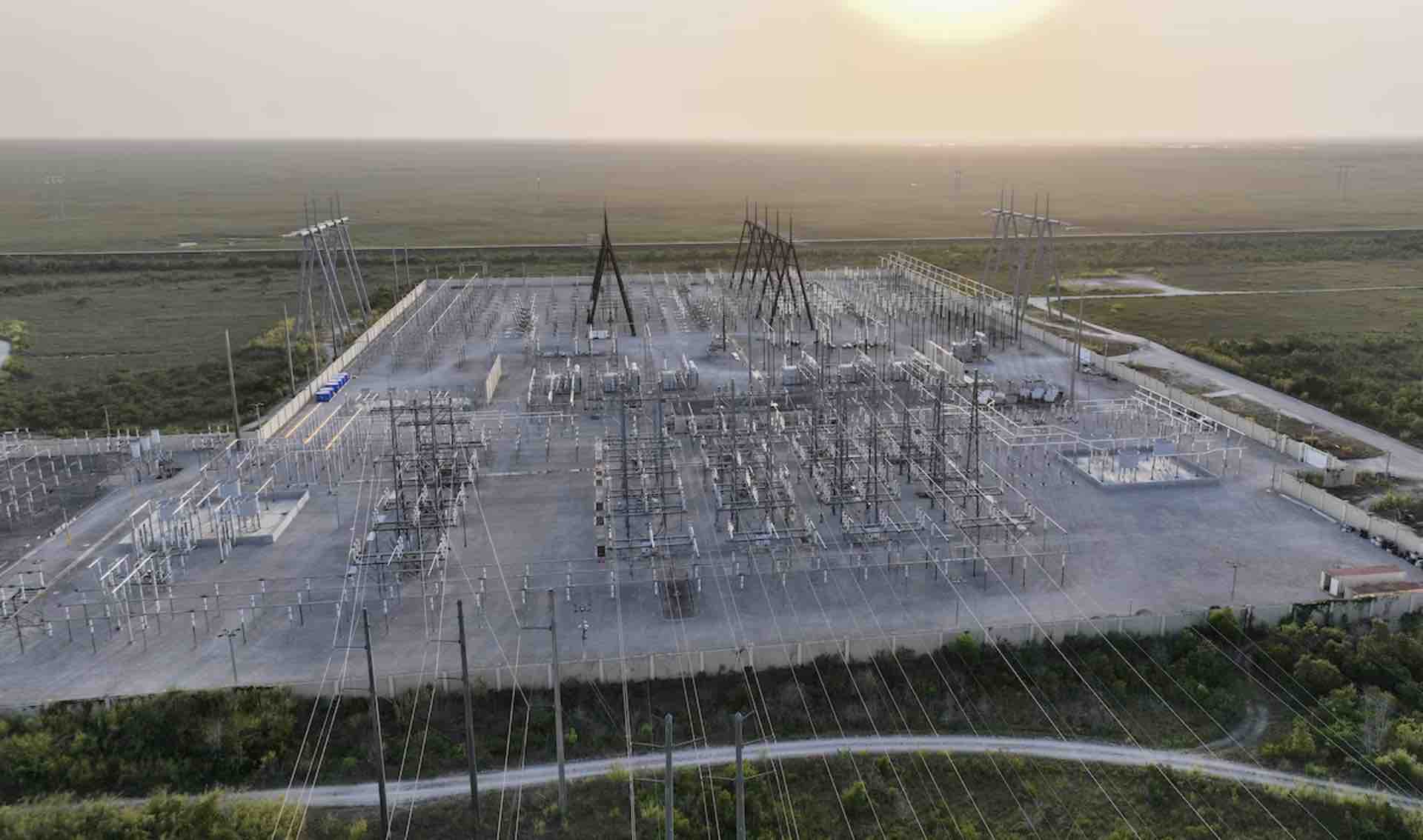
High voltage power lines run through a substation along the electrical power grid in Pembroke Pines, Florida. The grid is strained by increasing demand from electricity-hungry data centers and electric vehicles, as well as extreme weather events. (Joe Raedle/Getty Images)

There is one big thing holding the United States back from a pollution-free electricity grid running on wind, solar and battery power: not enough power lines.

As developers rush to install wind farms and solar plants to power data centers, artificial intelligence systems and electric vehicles, the nation’s sagging, out-of-date power lines are being overwhelmed — slowing the transition to clean energy and the fight against climate change. Continue reading

Implementing The Inflation Reduction Act

A windmill getting tangled by an electrical cord

Illustration by Ben Kothe / The Atlantic

We celebrate when a law is passed that moves the USA in the right direction, but the biggest  such law ever still is in the process of implementation. So, creativity and vigilance are still key ingredients to making the best of the law:

The Next Front in the War Against Climate Change

Clean-energy investment in America is off the charts—but it still isn’t translating into enough electricity that people can actually use.

On august 2022, the U.S. passed the most ambitious climate legislation of any country, ever. As the director of President Joe Biden’s National Economic Council at the time, I helped design the law. Continue reading

Seaweed Mining Explained

Scientists still have a lot to figure out, but the idea of sourcing critical minerals from seaweed is too tantalizing not to look into. Photo by Upix Photography/Alamy Stock Photo

Plenty of links to articles about the importance of various types of seaweed in our pages, but in Hakai Magazine  the environmental journalist Moira Donovan asks and provides a cogent answer to the most basic question:

What the Heck Is Seaweed Mining?

Preliminary research suggests seaweed can trap and store valuable minerals. Is this the beginning of a new type of mining?

Seaweed is versatile; it provides habitat for marine life, shelters coastlines, and absorbs carbon dioxide. Continue reading

Drone Cowboys

Daniel Anderson holds a drone on his family’s ranch in Montana’s Paradise Valley. Louise Johns/High Country News

High Country News is where a story like this gets assigned, and since they are a hyper-niche publication we thank The Atlantic for broadcasting it. If drones can unite these two constituencies, they are worth a moment of your time:

Illustration by Matteo Giuseppe Pani. Source: Getty.

Drones Could Unite Ranchers and Conservationists

Flying robots could offer a nonlethal way to keep wolves away from cattle.

In the summer of 2022, several researchers with USDA Wildlife Services held their breath as a drone pilot flew a large drone, equipped with a camera, toward a wolf standing in a pasture in southwestern Oregon. Continue reading

An Oil Company Funding Carbon Capture?

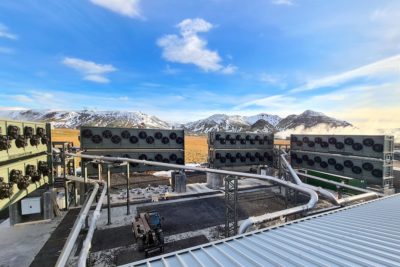
The plant will be powered by geothermal energy. Francesca Jones for The New York Times

David Gelles in the New York Times furthers our understanding of the expanding use of carbon capture, and the motives of the key actors utilizing this technology:

On a windswept Icelandic plateau, an international team of engineers and executives is powering up an innovative machine designed to alter the very composition of Earth’s atmosphere.

“Collector containers” where air is pulled in. Francesca Jones for The New York Times

If all goes as planned, the enormous vacuum will soon be sucking up vast quantities of air, stripping out carbon dioxide and then locking away those greenhouse gases deep underground in ancient stone — greenhouse gases that would otherwise continue heating up the globe.

Just a few years ago, technologies like these, that attempt to re-engineer the natural environment, were on the scientific fringe. They were too expensive, too impractical, too sci-fi. Continue reading

Children, Phones & Futures

Photographs by Maggie Shannon

It has been our belief since starting that getting outdoors is a very good preventative medicine, but maybe that was too simple a focus. Phones have disrupted life, especially for our young ones, more than we appreciated. Our thanks to Jonathan Haidt and The Atlantic for this (podcast discussion of the research here):

The environment in which kids grow up today is hostile to human development.

Something went suddenly and horribly wrong for adolescents in the early 2010s. Continue reading

AI’s Energy Appetite

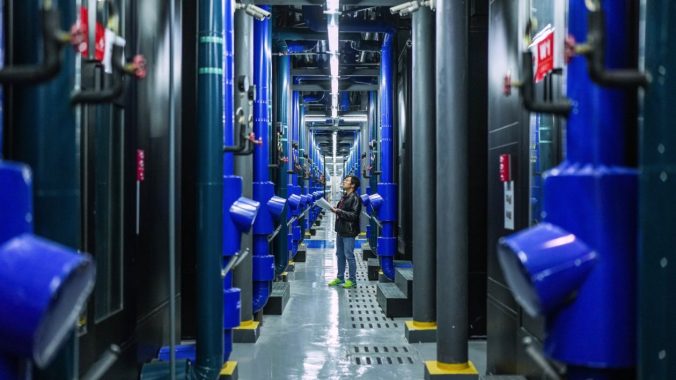
Inside the Guian Data Center of China Unicom, which uses artificial intelligence in its operations. TAO LIANG / XINHUA VIA GETTY IMAGES

For all of technology’s contributions to conservation, energy consumption is one of the downsides. Thanks to David Berreby and Yale e360 for this:

As Use of A.I. Soars, So Does the Energy and Water It Requires

Generative artificial intelligence uses massive amounts of energy for computation and data storage and billions of gallons of water to cool the equipment at data centers. Now, legislators and regulators — in the U.S. and the EU — are starting to demand accountability.

Two months after its release in November 2022, OpenAI’s ChatGPT had 100 million active users, and suddenly tech corporations were racing to offer the public more “generative A.I.” Pundits compared the new technology’s impact to the Internet, or electrification, or the Industrial Revolution — or the discovery of fire.

Time will sort hype from reality, but one consequence of the explosion of artificial intelligence is clear: this technology’s environmental footprint is large and growing. Continue reading

Bitcoin Keeps Getting Dirtier & Cheerleaders Keep On Cheering

Chart: Matthew SparkesSource: Cambridge Centre for Alternative Finance Created with Datawrapper

We already knew it was dirty. But it keeps getting dirtier and the guys who cheerlead unfettered “innovation” come across as celebrating the dirty as the unavoidable cost of progress. Something’s gotta give:

Skull of Satoshi, a sculpture by Benjamin Von Wong highlighting the environmental impact of bitcoin. VonWong/Skull Of Satoshi/Greenpeace blog.vonwong.com/skull/

Should nations try to ban bitcoin because of its environmental impact?

Bitcoin miners seem unwilling to take action to curb the cryptocurrency’s energy and water use – so some campaigners argue that it is time for governments to intervene

The amount of electricity used to mine and trade bitcoin climbed to 121 terawatt-hours in 2023, 27 per cent more than the previous year. Continue reading

Nature, Peer-Reviewed Science Since 1869

The scientific journal Nature shows up in exactly one search result among thousands of posts here. And that one, because photos have such a wide audience. We have not linked to their articles because, since 1869, they are written by and oriented to highly credentialed scientists. A look at ten influential articles makes the point. And we can only respect what they do, even if we wish more of us could digest more of the science. Now that they offer some articles in audio version, this may make the science more accessible to those who hear better than they read. Judge for yourself, if you want to pay to play. The audio version of the article below (available on YouTube above) is free, but unless you have a subscription the written version is available for a small charge:

Rooftop solar panels in China. Tandem cells could boost power density in crowded urban areas. Credit: VCG/Getty

A new kind of solar cell is coming: is it the future of green energy?

Firms commercializing perovskite–silicon ‘tandem’ photovoltaics say that the panels will be more efficient and could lead to cheaper electricity.

On the outskirts of Brandenburg an der Havel, Germany, nestled among car dealerships and hardware shops, sits a two-storey factory stuffed with solar-power secrets. It’s here where UK firm Oxford PV is producing commercial solar cells using perovskites: cheap, abundant photovoltaic (PV) materials that some have hailed as the future of green energy. Surrounded by unkempt grass and a weed-strewn car park, the factory is a modest cradle for such a potentially transformative technology, but the firm’s chief technology officer Chris Case is clearly in love with the place. “This is the culmination of my dreams,” he says.

Responsibility For Technology

Illustration by Ricardo Tomás

Cal Newport’s essay is an important declaration of our responsibility with regard to regulating technology:

It’s Time to Dismantle the Technopoly

As technology accelerates, we need to stop accepting the bad consequences along with the good ones.

In the fall of 2016—the year in which the proportion of online adults using social media reached eighty per cent—I published an Op-Ed in the Times that questioned the popular conception that you need to cultivate a strong social-media brand to succeed in the job market. “I think this behavior is misguided,” Continue reading

Carbon Capture Question

Photo Illustration by The New York Times

We have Brad Plumer and Nadja Popovich to thank for the answer to this question:

Can Carbon Capture Live Up to the Hype?

The technology to capture and bury carbon dioxide has struggled to ramp up and has real limits. But experts say it could play a valuable role.

World leaders at the annual United Nations climate talks have battled for years over whether they should “phase out” fossil fuels like coal or just phase them “down.” Continue reading

Prioritizing Carbon Capture Versus Emissions Reduction

A carbon capture plant near Reykjavik, Iceland.

A carbon capture plant near Reykjavik, Iceland. CLIMEWORKS

Since we first heard of it we have been enthusiastic about the upside potential of this technology, but until now had not considered the tradeoffs:

Climate Plans That Rely Too Much on Carbon Removal Could Breach International Law

Countries that rely too heavily on carbon removal in their climate plans could violate international law, warns a new paper. Continue reading

Photosynthesis Mimicry Out Of Cambridge

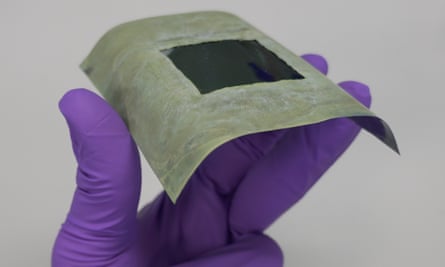
Researchers from the University of Cambridge designed ultra-thin, flexible devices, which take their inspiration from photosynthesis – the process by which plants convert sunlight into food.

Researchers from the University of Cambridge designed ultra-thin, flexible devices, which take their inspiration from photosynthesis – the process by which plants convert sunlight and CO2 into food. Photograph: Virgil Andrei

Photsynthesis comes in handy on this planet. This invention leverages the natural process into a technology to tackle a large scale challenge. We can only hope that it is not too little, too late:

Floating factories of artificial leaves could make green fuel for jets and ships

Cambridge University scientists develop a device to ‘defossilise’ the economy using sunlight, water and carbon dioxide

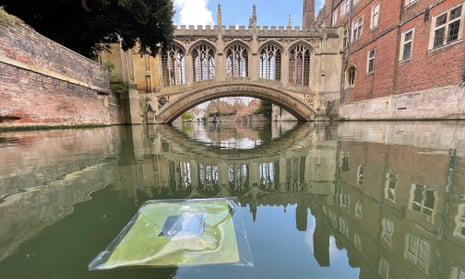
The artificial leaves were tested on the River Cam in and around Cambridge including sites such as the Bridge of Sighs.

The artificial leaves were tested on the River Cam in and around Cambridge including sites such as the Bridge of Sighs. Photograph: Virgil Andrei

Automated floating factories that manufacture green versions of petrol or diesel could soon be in operation thanks to pioneering work at the University of Cambridge. The revolutionary system would produce a net-zero fuel that would burn without creating fossil-derived emissions of carbon dioxide, say researchers. Continue reading
The Slow Ways App, For Right Of Way Walkers

The Slow Ways founder, Daniel Raven-Ellison (right) walks with the Guardian’s Patrick Barkham as they verify a route between Congleton and Macclesfield. Photograph: Fabio De Paola/The Guardian

The right of way is a theme we love, and now there is a technology to assist our pursuit of those rights, at least in one country.

Our thanks to and the Guardian for their coverage of this development:

Walk the walk: the app mapping 140,000 miles of public right of way

Slow Ways was set up during the pandemic when frustrated locked-down walkers drew up more than 9,000 walking routes across Great Britain. Photograph: Fabio De Paola/The Guardian

Community-based, Slow Ways has verified 60% of a network of pedestrian-friendly routes across Great Britain

I meet up with Daniel Raven-Ellison, the brains behind the Slow Ways walking network, in the darkness of a drizzly dawn at Kidsgrove railway station in Staffordshire. Our mission? To walk and verify the final 17-mile (27km) link in the route between Birmingham and Manchester. Continue reading

Heirloom Captures Carbon

Heirloom’s plant in Tracy, Calif., pulls carbon dioxide from the air so it can be sealed permanently in concrete. Jim Wilson/The New York Times

We have been waiting for this day to arrive:

In a U.S. First, a Commercial Plant Starts Pulling Carbon From the Air

The technique is expensive but it could help fight climate change. Backers hope fast growth can bring down costs.

In an open-air warehouse in California’s Central Valley, 40-foot-tall racks hold hundreds of trays filled with a white powder that turns crusty as it absorbs carbon dioxide from the sky.

The start-up that built the facility, Heirloom Carbon Technologies, calls it the first commercial plant in the United States to use direct air capture, which involves vacuuming greenhouse gases from the atmosphere. Continue reading
Trust, The Most Essential Technology

Eric Risberg/Associated Press

On occasion, Ezra Klein’s work overlaps with themes of interest to us in these pages. Today is one of those days:

In July, Marc Andreessen — the godfather of the web browser, one of the founders of the venture capital firm Andreessen Horowitz and arguably the chief ideologist of the Silicon Valley elite — published a Substack piece that struck me as unusually revealing.

This was back when Mark Zuckerberg and Elon Musk were considering whether to settle their differences once and for all by beating on each other in a cage. Continue reading

Dear AI Overlords, Reviewed

Virginia Heffernan has appeared in our pages only once before, also reviewing a book. She is one of the great writers in the English language, but often on topics not connected to our themes here. While we mostly are interested in topics related to the natural world, and we know that this topic is a whole other realm, we can guess that AI’s impact on the natural world is part of what the title of this issue of Wired will mean to us pretty soon:

What If the Robots Were Very Nice While They Took Over the World?

First it was chess and Go. Now AI can beat us at Diplomacy, the most human of board games. The way it wins offers hope that maybe AI will be a delight.

THE MORRISSEY HAD the right melodrama in his limbs, and his voice was strong and pained. I was at Gramercy Theatre in Manhattan to see a Smiths tribute band. I tried to get Morrissey’s acid yodel in my throat, to sing along. I am human and I need to be loved / just like everybody else does. But it didn’t feel right to copy a copy. Continue reading
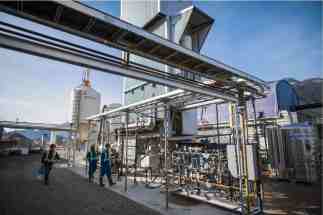
Carbon Capture, Scaled To Texas

A direct air capture system at the Carbon Engineering pilot facility in Squamish, British Columbia, Canada. Photograph: Bloomberg/Getty Images

Carbon capture technology has its skeptics, but it has steadily improved and is closer to proof of concept. Next step, scaling to Texas:

The world’s biggest carbon capture facility is being built in Texas. Will it work?

The plant will inject 500,000 tons of carbon dioxide into the ground each year – but is it just greenwashing from big oil?

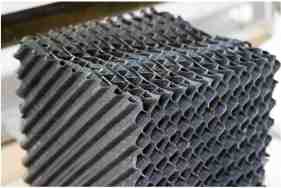
Plastic membrane used in the direct air capture system. Photograph: Bloomberg/Getty Images

Rising out of the arid scrubland of western Texas is the world’s largest project yet to remove excess carbon dioxide (CO2) from the atmosphere, a quest that has been lauded as essential to help avert climate catastrophe. The project has now been awarded funding from the Biden administration, even as critics attack it as a fossil fuel industry-backed distraction. Continue reading
The Coming Wave, Reviewed

The primary author of this book is one of the pioneers of AI, so what he has to say about it as a dilemma is relevant. From a recent conversation he had with Sam Harris my takeaway was that while I do not have much agency in the dilemma, it is better for me to understand it than ignore it. Containment is not, apparently, an option. So what can I do? In this book review, a quicker version of the same message, and the only option may be to ponder it:

The Coming Wave by Mustafa Suleyman review – a tech tsunami

The co-founder of DeepMind issues a terrifying warning about AI and synthetic biology – but how seriously should we take it?

On 22 February 1946, George Kennan, an American diplomat stationed in Moscow, dictated a 5,000-word cable to Washington. In this famous telegram, Kennan warned that the Soviet Union’s commitment to communism meant that it was inherently expansionist, and urged the US government to resist any attempts by the Soviets to increase their influence. This strategy quickly became known as “containment” – and defined American foreign policy for the next 40 years. Continue reading