Denser, Faster, Greener

Click the image above to go to the article in which Alex Steffens, of Worldchanging (and TED, and plenty of other deserved) fame gives a synopsis on how to ramp up urban greening most efficiently:

If we’re talking about transportation, the best thing a city can do is densify as quickly as it can. That needs to be said every time this issue comes up, because it’s the only universal strategy that works. That’s the best-documented finding in urban planning—that as density goes up, trip length goes down and transportation energy use goes down.

Continue reading

Canopy Capture

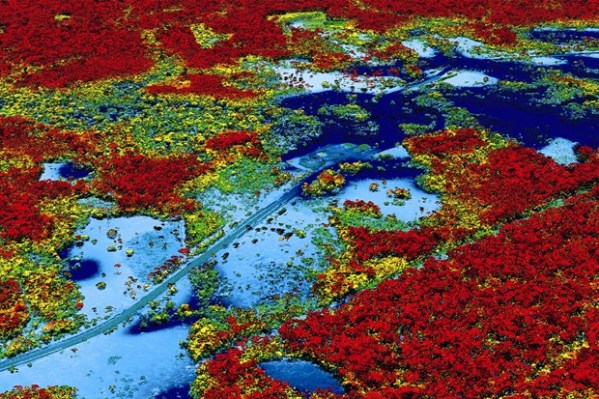
Click the image above to go to a story covered in Wired about a novel approach to mapping threatened rainforest, using existing technology in an innovative manner:

A small, twin-propeller plane flies over the Amazon rainforest in eastern Peru. The scale of the vegetation is extraordinary. The tree canopy stretches as far as the eye can see — an endless array of broccoli florets bounded only by haze and horizon. Greg Asner, 43, has seen the rainforest from this vantage point many times before, but he still stares out of the window in rapt fascination.

Continue reading

Travel, Writing & Games

This series has always been worth reading, whether you are an American looking through the eyes of a fellow American, or otherwise intrigued by a niche of American perspective that is not quite representative of that culture as a whole.

First things first: sometimes a book, a music recording or other item is only available from the mainstream online retailers such as Amazon or iTunes, but whenever possible we promote the purchase from independent sellers.  So click the image to the right if you want a link to independent booksellers in the USA, provided by the ever-entrepreneurial American Booksellers Association.

Now, the side show: the series editor Jason Wilson is also a contributor to a site we refer to on occasion, and he wrote an interesting item a couple of years ago that began:

Continue reading

Temporal Mapping

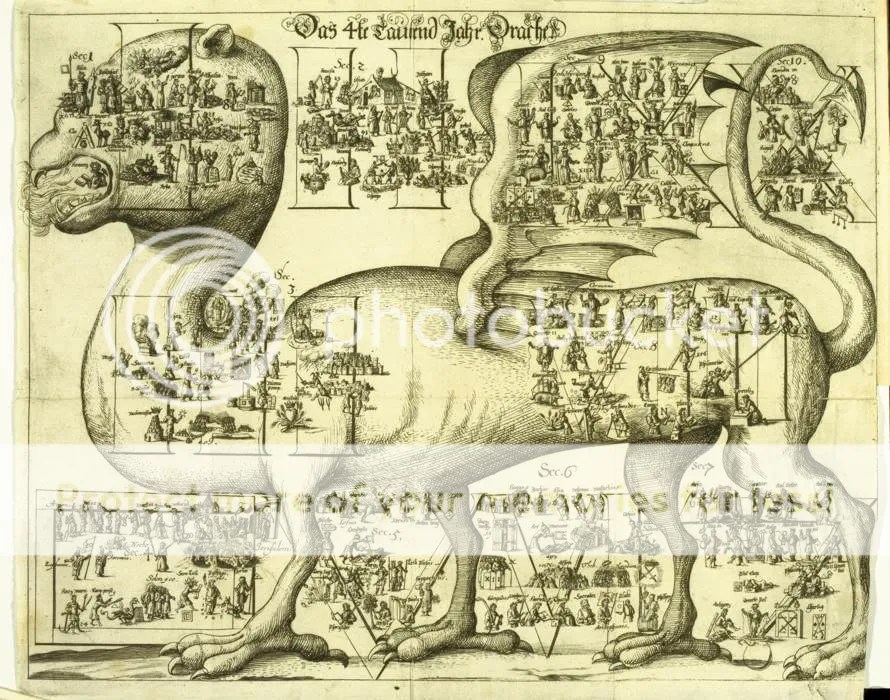
Thanks to The Morning News, and Rosecrans Baldwin in particular, for bringing this book out of the specialty section and to our attention:

Selections from a captivating history of timelines—from time circles to time dragons, to a history of the world drawn on a single piece of paper.

Continue reading

Consumption Matters

Either take 63 seconds to view Mr. Clay’s ideas in video form, or read this summary:

Healthy information consumption habits are about more than productivity and efficiency. They’re about your personal health, and the health of society. Just as junk food can lead to obesity, junk information can lead to new forms of ignorance. The Information Diet provides a framework for consuming information in a healthy way, by showing you what to look for, what to avoid, and how to be selective. In the process, author Clay Johnson explains the role information has played throughout history, and why following his prescribed diet is essential in today’s information age.

Continue reading

Europe’s Green Capital

So I’ve left behind the wild, lush landscape of the Costa Rican rainforest and arrived in Strasbourg, France, to find a completely different kind of green.

Costa Rica is one of those countries the climate change debate focuses on – it’s the epitome of natural diversity and everywhere you turn there is some species or habitat that could be gone in 20 years’ time. Or 10 years’ time. From the rainforests I hiked through to the sloth sanctuary my mum and I visited, everything there seems at once so wild and so fragile. The conservation efforts we see there are direct, tackling the specific problems the land faces: protected areas are being designated, turtle-watching programmes are being set up to monitor and protect the species, and the people at Aviarios sloth sanctuary provide education for locals as well as caring for the animals.

Places like the Manuel Antonio National Park have to concentrate on the effects of climate change.

Continue reading

The Cyberspace Jungle

Today, we are bombarded with information. Millions of bits–photos, text, video–stream by us every second we’re on the web. And we’re always on the web. Mobile devices on 3G (and now “4G”) and lightweight laptops able to access nearly ubiquitous WiFi hotspots mean that the modern age is certainly the information age. And the Internet continues to grow riotously; like a tropical rain forest, millions of unique niches exist, but they are inhabited here instead by users and data. And much like a natural ecosystem, the internet is also inextricably interlinked and interdependent: hyperlinks, reference pointers, and social media make the Internet a pseudo-organic entity that has its gaze turned not only outward (towards expansion) but also inward (towards connections). In its own way, the internet is an oddly beautiful thing. The freewheeling, ever-shifting topography of the web means that from second-to-second it’s never quite the same place.

But for all its seductive beauty and facile utility Continue reading

You’ve Seen This

Too many times.  1,239,927 views of this particular clip, but that is not the point.  This could be either another example of invasive product placement, in which Nokia thinks we will love this clever response to their insidious noise; or another example of how easily we laugh at “foibles.” Continue reading

Alberta Tar Sands: 1984 – 2011

Try as we may to accentuate the positive, from time to time there seems to be a hot hand of unpleasantries reported in the news.  Rather than hide our head in the sand, we thank Scientific American yet again:

This slideshow requires JavaScript.

As they used to say in New England: Continue reading

Tools Of The Trade

Click the image to the left for context.  As we learn more on this complex issue, the enlightened position must be literally that–enlightened by fact.  Sometimes sarcasm is an easier position, especially when the facts seem outrageous.  But thankfully there are more and more facts to tone down sarcasm to a chiseled tool.   Our ever-appreciated investigator shares some this week in her usual venue and as always her balanced-yet-urgent perspective probably is appreciated:

Every kind of energy extraction, of course, poses risks. Mountaintop-removal mining, as the name suggests, involves “removing” entire mountaintops, usually with explosives, to get at a layer of coal. Coal plants, meanwhile, produce almost twice the volume of greenhouse gases as natural-gas plants per unit of energy generated. In the end, the best case to be made for fracking is that much of what is already being done is probably even worse. Continue reading

The Meaning(s) Of Organic

At first glance, this article and others on this website appeared to be of the “denier” variety, but on close read of this particular item (click the banner below to go to the article) it seems clearly of the educational clarification variety.

According to Rodale and his acolytes, products created by—and processes carried out by—living things are fundamentally different from lab-based processes and lab-created products. The resurrection of this prescientific, vitalistic notion of organic essentialism did not make sense to scientists who understood that every biological process is fundamentally a chemical process. In fact, all food, by definition, is composed of organic chemicals.

Continue reading

Kolbert, Kerala & Clouds

Reading this post from Elizabeth Kolbert, a familiar cloud of doom came over me.  Read almost anything she writes, and you will know what I mean.  She writes most frequently about seemingly intractable environmental problems, and those about climate change have the most intense effect on me.  But ignorance is not an option, so I read.  The cloud lasted about seven hours, and parted just now in a most interesting manner. As if my head were just lifted out of the sand.  First, the portion that stuck with me:

Since we can’t know the future, it is possible to imagine that, either through better technology or more creativity or sheer necessity, our children will be able to find a solution that currently eludes us. Somehow or other, they will figure out a way to avoid “a 4°C world.” But to suppose that an answer to global warming can be found by waiting is to misunderstand the nature of the problem.

Continue reading

Revisiting The Tiger Trail

When I send emails to friends, colleagues, and others about this website, and the objectives of Raxa Collective, I normally add links to a few posts that I think are representative.
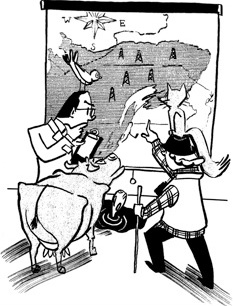
Almost always, this one is included.  Michael captured the moment well.

As we continue adding contributors to this site, and the diversity of topics and locations we pay attention to expands, for some reason I still come back to the Tiger Trail as a favored topic because it is such a good example of what we care about.

That tendency to return, at least in thought, led me to reconnect with a “lost” member of our Tiger Trail entourage. Continue reading

Music of the Spheres

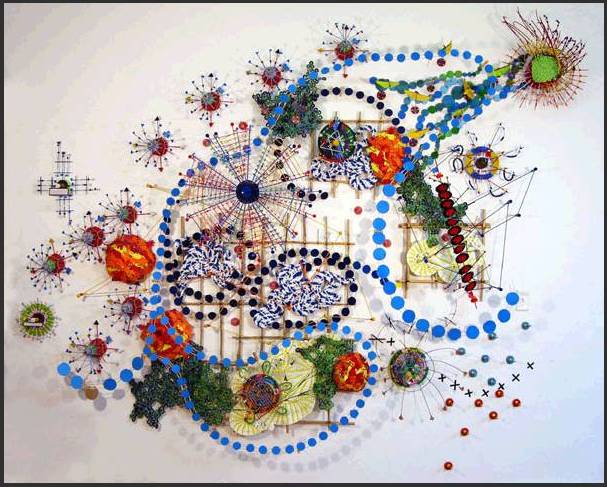
Changing Water – Gulf of Maine, 2011, Nathalie Miebach

Tones sound, and roar and storm about me until I have set them down in notes                                                              —Ludwig van Beethoven

Boston artist Nathalie Miebach found the seemingly unlikely intersection between astronomy, meteorology, ecology and basket weaving, essentially translating data into 3 dimensions… then she adds the plane of music.  For her work, Miebach was selected as a 2011 TEDGlobal Fellow.

Initially focusing her woven sculptures on data from the stars, her work was rerouted by a call from two weather scientists at Tufts University.  Intrigued by her work and it’s possible applications, they asked her to collect weather data on Cape Cod.  From that point on, winds, temperature, barometric pressures, and rainfall became part of the raw material for her artistic work. Continue reading

Such Stuff As Dreams Are Made On

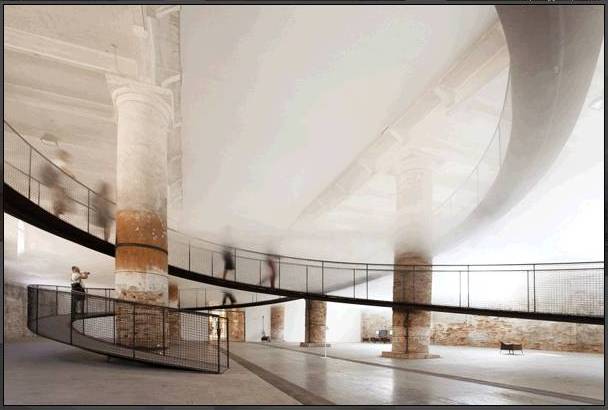
Cloudscapes (2010), Transsolar and Tetsuo Konda Architects

The Venice Architectural Bienale has a long history of showcasing innovative, thought provoking design and the Arsenale is a ideal venue to experience it.  Once the largest industrial complex before the Industrial Revolution, in the 16th century the assembly line system was so efficient that it is said they could complete the manufacture of a ship in one day. (I won’t go into the number of trees required to feed this system throughout the centuries…)

The exhibition space of the Corderie, built in 1303 and then rebuilt between 1576 and 1585, covers a 6400 square meter surface that includes nearly 10 meter high ceilings, a magnitude that allows for a range of installations in the 2010 Bienale themed “People Meet in Architecture”.

Cloudscapes is an aerie (and slightly eerie) example of the possibilities.   Continue reading

Breaking News! Prices of Old Newspapers Soar!

Guest Author: Diwia Thomas

While asking around for newspaper donations, I often meet with reluctance and wondered why?  Ten years ago a kilo of old newspaper fetched only a meagre Rs 3/- , today the raddi-wala (the guy down the road who buys scrap) pays an enticing and irresistible Rs 7/- per kg.  I promptly made a trip down there to broker a deal with him for a steady supply of newspaper for our paper bags. He tells me that newsprint companies in India have begun to recycle old newspaper into newsprint. In the past newspaper was recycled into boards or brown coloured paper for packaging and boxes because recycled newsprint turns a dull greyish colour unsuitable for printing. Indian newspaper companies have found ways to deink newsprint pulp and retain its brightness for printing purposes. Mammoth deinking machines do this job. Featured here is a small one, just to demonstrate the process. Continue reading

Le Vélo Bambou? Le Wow!

Bicycles are ubiquitous forms of transportation in my part of the world.  Previously I’ve posted how they can mean more than the sum of their parts, or in the urban art example, they can represent only their parts!

So what happens when form and function converge with sustainability, balance and simplicity? Continue reading

Preventing Invasive Fire

In general, species adapt to ecosystems in which they have greater chances of prospering, and abandon areas that are not conductive to survival and reproduction. Arctic species, for example, have specialized for harshly cold conditions and thereby made it very hard for themselves to live in desert or even temperate biomes. These are common trade-offs that occur with natural selection, and somewhat to be expected. But there are species in certain areas of the world that are not indigenous and still survive in those ecosystems. In many cases, these species have advantages over native ones and flourish. Termed “invasive species,” these organisms often replace autochthonous populations to the point of extermination (one could argue that humans are the ultimate invasive species), causing irrevocable damage to the original habitats.

John Dryzek defines the Promethean discourse in his book “The Politics of the Earth.” The metaphorical name comes from the ancient Greek myth of Prometheus, who stole fire from the gods; fire represents technology and the potential it gives for humans’ improvement. Prometheans are those who approve of a free market that unleashes human ingenuity on the world’s “unlimited” resources, propose liberalization, decentralization, and growth to improve human livelihood around the planet. Every one of these prescriptions, however helpful to humans, is practically a different form of poison for ecosystems in that they tend to greatly increase the numbers of invasive species around the world, contributing to rampant biodiversity loss and environmental degradation.

On the topic of invasive species, I consider myself a Survivalist, or one who believes that Continue reading