I got another impression of the country and as we entered into Panama City we crossed a huge bridge over the Panama canal with a prime view of the big ships. Nice!

I got another impression of the country and as we entered into Panama City we crossed a huge bridge over the Panama canal with a prime view of the big ships. Nice!
In two previous posts I mentioned this show that would be broadcast on the National Geographic channel. Continue reading
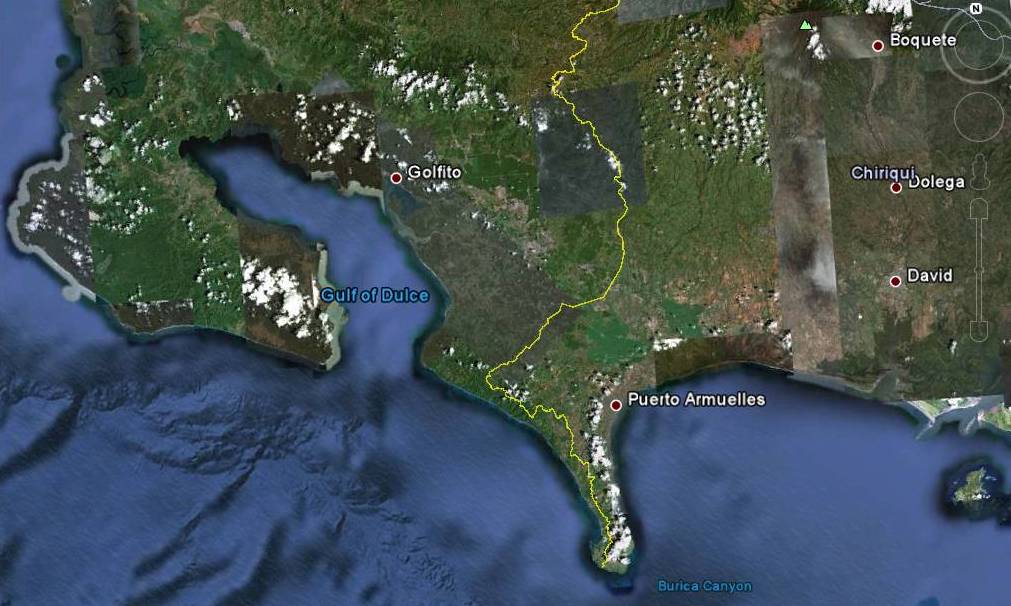
It has been quite a trip from the Osa Peninsula in Costa Rica to David in Panama. It took most of one day to travel here with the 4WD to Puerto Jimenez and then by boat, taxi and bus to my destination for two nights. Continue reading
 News came today from the film production company mentioned a while back. Editing is complete. The travelers are still friends. And more.
But the main point was: this Sunday night (India time) we finally get to watch the episode that features Kerala’s backwaters and our houseboats. Thank you for the notification, Vivek!
To the right is a luggage tag. Not a non sequitur: we were working on these while the film crew mentioned above was with us. Our tags had been, quite frankly, boring. We thought the crew deserved a reminder of where they had been with us. So our friends at Thought Factory Design came up with a simple reminder.
I hope Vivek, his production crew, and those four dashing stars of the show are all still carrying around trunks, duffel bags, suit cases and carry-ons with these little reminders of their friends in Kerala…
That reminds me. Before the end of 2011 you will be able to see some of the handiwork of Thought Factory Design if you happen to be traveling in Kerala. Continue reading
 The transfer from Manuel Antonio to San Jose was a short one. During the one evening in San Jose, I visited a huge shopping center, called Multiplaza. I lost my rain jacket somewhere in Costa Rica, so I needed a replacement. This shopping center could be anywhere in the world, it looks and feels like its counterparts in the US, Switzerland or even Russia. All the global and expensive brands are there, they even had an Audi and a Swatch shop.
Early next morning I took a bus to the airport, where I boarded a 12 seat Cessna to fly to the Osa Peninsula. It was a nice flight in that small aircraft, and for once I could observe the pilots doing their job. Continue reading
A few weeks ago, I attended a Rotary Club meeting on tourism development in South Sudan. Bishop Lanogwa and Mr. Olindo Perez of South Sudan’s Ministry of Wildlife Conservation and Tourism led an exciting conversation and inspired all of us in the room to think of South Sudan’s tourism potential. As a new nation reliant on oil as its main economic engine, the ministry believes tourism can be South Sudan’s second economic pillar. South Sudan boasts six national parks and thirteen reserves. The nation has arguably the largest wildlife migration in Africa. Although the second Civil War (which lasted over two decades) negatively affected wildlife, South Sudan is still home to large populations of beautiful kobs, giraffes, elephants, chimpanzees, and other wildlife.
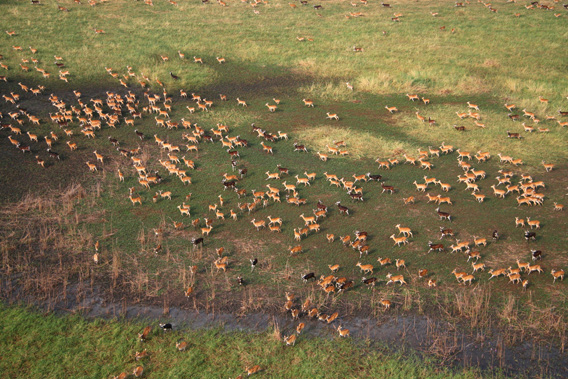
Kob Migration in South Sudan
I believe tourism is a very powerful economic tool; however, its social and environmental consequences can be both negative and positive. Continue reading

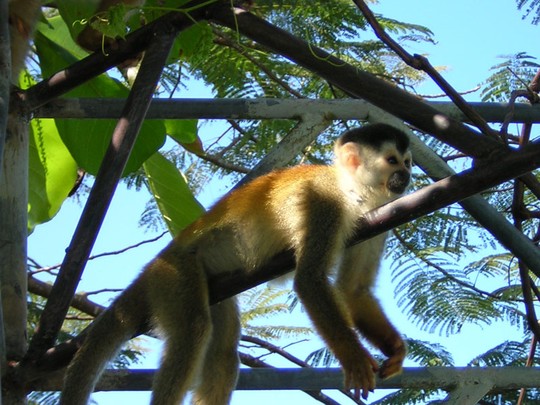
Have you ever heard a Howler Monkey make noise? If not, imagine the noise coming from an animal that is (sonically) a mix between a cow and a lion–mostly lethargic, but fierce when it wants–that is about to die and screams out all the pain and agony. To me that’s how it sounds. Continue reading
 When I send emails to friends, colleagues, and others about this website, and the objectives of Raxa Collective, I normally add links to a few posts that I think are representative.
Almost always, this one is included. Michael captured the moment well.
As we continue adding contributors to this site, and the diversity of topics and locations we pay attention to expands, for some reason I still come back to the Tiger Trail as a favored topic because it is such a good example of what we care about.
That tendency to return, at least in thought, led me to reconnect with a “lost” member of our Tiger Trail entourage. Continue reading
 We have noted before the intriguing coincidences that link the “old world” to the “new world”–not least the desire to establish trade with what is now Kerala and the accidental discovery of somewhere else; and other links in both directions. “Old” and “new” become fuzzy qualifiers when considering “modern” European travelers of the 15th century sailing to “ancient” India and instead encountering people we now call Pre-Columbians. Seth has posted on the environmental impacts of people from that so-called old world as they settled in the new world and brought their definitions of progress with them. Now, thanks to an article in Smithsonian Magazine our attention is brought to a book and a man who broaden our horizons back to the old world from which those people came. Continue reading
For approximately 90o years now, according to OED, those of us with wanderlust might properly be defined as a person
on a journey, a person who travels from place to place; a traveller, a wanderer, an itinerant…
…in short, a pilgrim. That, according to the first entry defining the word according to its oldest usage. The second definition gives the now more familiar context of journeying to a sacred place as an act of religious devotion, but qualifies that by adding that a pilgrim makes a journey as an act of respect, or homage to a place of particular significance or interest (without necessarily any religious context). Getting the utility of this word into more widespread practice would be progress, indeed.
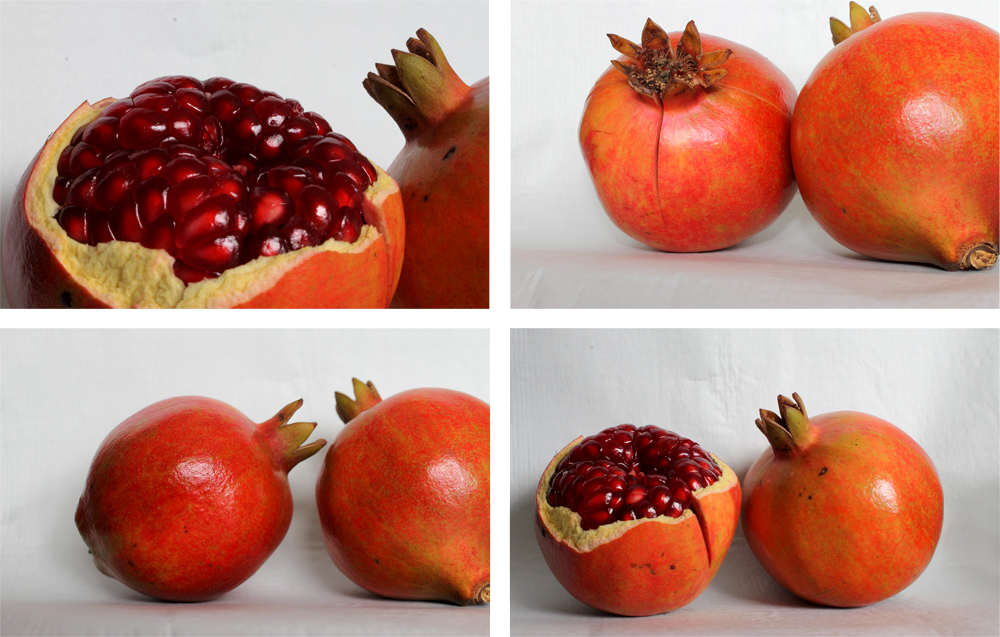
The color red defines the current fruit season in India. (Bananas don’t count because they are always in season, and yes there are indeed red bananas…) The fruit stalls are piled with apples and pomegranates. What lacks in variety is made up in abundance, as well as the flair for display.
But this season pomegranates reign. Native to Iran (culturally Persia), the fruit traveled through India, mostly in the north of the country (Pune is famous for pomegranate production), but also in our southern state of Kerala. The Middle East, Mediterranean and southern Europe were also fertile ground for the Punica granatum, and when the Spanish brought it to the “New World” it completed the global circuit nicely. Continue reading

But how is it? It’s certainly not a beauty compared to other bigger cities. The Google Earth image above provides a kind of accurate representation of the first impression–not much to feel at first glance. But this city has its own very charming sides, and I enjoy being here. Continue reading
 Horace Kephart is, or should be, in the pantheon of anyone working on entrepreneurial conservation initiatives in or near wilderness areas. Particularly if you have ever been lucky enough to camp in the Great Smoky Mountains National Park. Even more so if you have also walked through Cornell Plantations. The book that Kephart wrote, Camping and Woodcraft, has supported both of those amazing places financially. You could take a look at the contents of this book here or here for a free ride. But according to this article the royalties from the book were originally donated by Kephart’s descendants, several of whom attended Cornell, to the Plantations. The article (from which the photos here are rendered) also states that proceeds…
…from the new edition benefit the Great Smoky Mountains National Park.
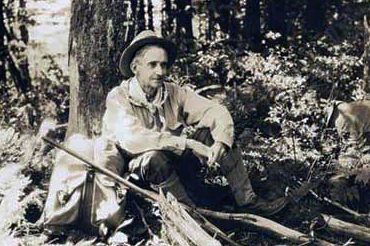 We will have to investigate further how that works, since Amazon offers a new edition that does not look like the one mentioned in that article. If you have any information to share on this, please post a comment here. Meanwhile, anyone who would aptly describe their life as biophilia-driven might understand why this man spent his Continue reading
Guest Author: Nicole Kravec
I woke up smiling and drenched in sweat. It took me a moment to remember exactly where I was, as my exuberance to investigate Colombia’s diversity resulted in new accommodations nightly. But as I peeped my head out of the hammock and became further enveloped by the Caribbean humidity, I was content with the decision to spend a few days in one place. I spied a horse grazing near the backpacker tents, heard gentle ocean waves rolling, and smelled fried plantain patacones patties. Continue reading
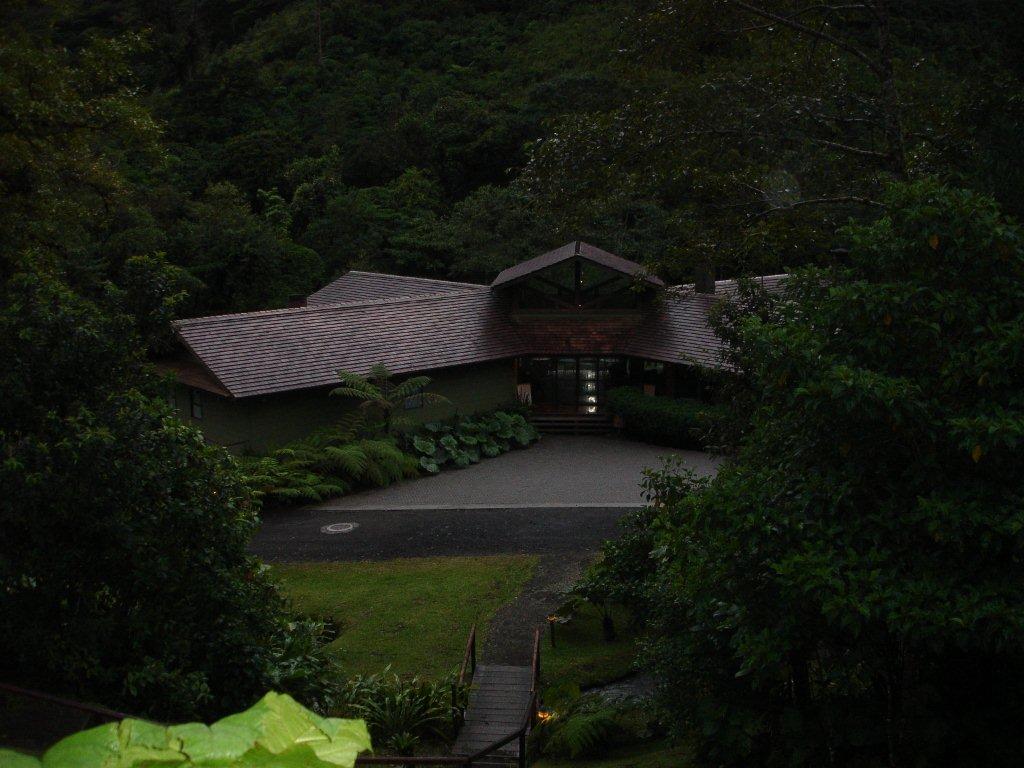
I have spent the last two days at a lodge called El Silencio. And it does full justice to it’s name. This is a beautiful spot!! Very secluded, just 16 bungalows, with a very strong focus on conservation, sustainability and community development. The food is all organic and very, very good! Actually the best I’ve had so far in Central America. Continue reading

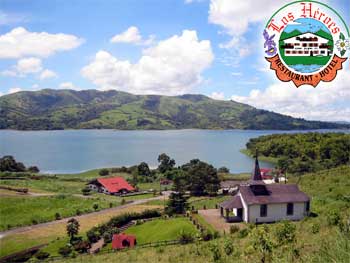 The trip from Islita to La Fortuna was very nice, especially the very scenic drive alongside the Laguna de Arenal. The only weird thing during the drive was to spot ‘little Switzerland’. A Swiss guy has built his version of Switzerland at the shore of the lake: several chalets, a church and even a small railway system – it does look very Swiss indeed.
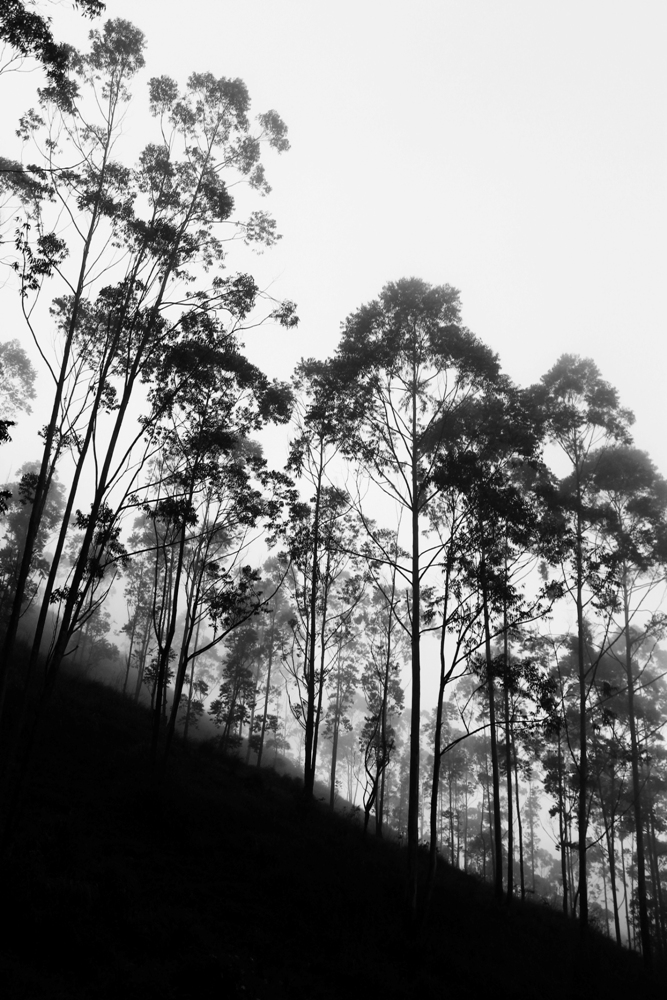 “Mists, ah, very problem!”
I glanced sideways at the boisterous Mallu man driving the jeep along the winding mountain road. Like his passengers, he was peering out of the vehicle at the steep slopes around us, scanning them for wildlife, abetted by the pre-dawn lighting and the heavy mists.
If any elephants or bison were grazing upon the high hills we drove through, they were impossible to see thanks to the cotton-thick mists blanketing the tall grass and trees that covered the terrain. As the vehicle banged and clunked over potholes at high speeds, I held determinedly onto the railing for dear life, occasionally risking freeing my hands for a photograph of the scenery speeding past.
Some ways down the road, once the sun had risen above the horizon, the jeep rolled to a stop under a densely canopied corridor. My eyes began to search the trees for the reason of our stop to no avail – the driver pointed to what I had previously taken for a pile of rocks, proclaiming it to be a tribal temple. Upon a second look, I realized that the blocks of granite were hewn into rough rectangles, and while in no particular order, they were indeed surrounding a small garlanded icon. Continue reading
 A recent trip to Thekkady showed me that the North East Monsoon will soon be upon us. The state’s equatorial tropical climate is dictated by its privileged position between the Arabian Sea and the Western Ghats, with the South West Monsoon providing respite from the summer heat and the North East Monsoon providing displays of lightning worthy of the Diwali season.
As the winds pick up it made me think about our time in Croatia, a country where the winds have mysterious names that don’t appear to coincide with points on the compass. Like eddies, one of those inanimate natural phenomena that seem to take on animated characteristics, the named winds seem to possess characteristics far greater than the mere direction of their source. Continue reading
The lovely finch tells a story, aesthetic and scientific, that most of us accept as the gospel truth, about adaptation and evolution. A good interpretive guide can help the average lay person understand the story. Charles Darwin penciled out some of the first notes that guides use to explain why finches vary in color, beak size, behaviors, etc. and plenty of very smart people have contributed to the evolution of those explanations. So we continue to learn.
A visit to the Galapagos Islands should include attention to the finch, considering the role they played in the ability we now have to understand some of the mysteries of the natural world. Continue reading
When I described, a couple weeks ago, the echo of hope emanating from the Gulf of California it is fair to say I was pleasantly surprised. That may be putting it too mildly, especially in hindsight now that I have seen a major new entrepreneurial initiative come to life there. I will be writing more about that in the coming days.
But for now, I am in the Galapagos Islands and another echo is resonating. In this case, for me, the echo is an eight year feedback. As mentioned in this earlier post I had worked here on and off over several years, and the last time I was here there were some challenges that seemed intractable. Today, upon arrival and for the remainder of the day, I had the opposite feeling of the last time I was here. The photos below show the first thing I did with Reyna and Roberto after leaving the airport. In the first photo you can see, as I did, just a simple conversation between them and one of the workers; then slowly a parade of otherworldly creatures crept into the photos…
 Organikos