The Sound of the Forest

A few years ago the Ministry of Environment included the Sagano Bamboo Forest on its list of "100 Soundscapes of Japan" -- a selection of everyday noises intended to encourage locals to stop and enjoy nature's music. PHOTO: CNN

A few years ago the Ministry of Environment included the Sagano Bamboo Forest on its list of “100 Soundscapes of Japan” — a selection of everyday noises intended to encourage locals to stop and enjoy nature’s music. PHOTO: CNN

What does it take for a government to officially recognize a natural soundscape? The bamboo forests of Kyoto. Growing tall on the edges of Kyoto, the Sagano Bamboo Forest is a once tranquil nature spot that is now a series of tourist-packed pathways, but if one can escape the sounds of camera shutters and boorish visitors, they can hear the rustling, creaking, and swaying of one of Japan’s governmentally recognized soundscapes.

Continue reading

Jerusalem’s 800-year-old Indian Connect

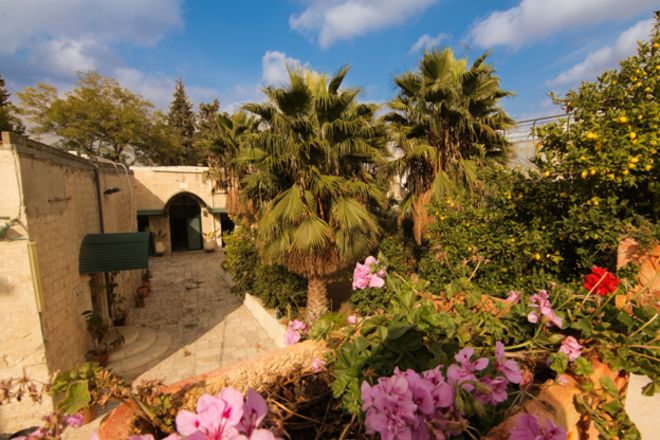
There is a little corner of Jerusalem that is forever India. At least, it has been for more than 800 years and its current custodian has plans for his family to keep the Indian flag flying for generations to come. PHOTO: BBC

There is a little corner of Jerusalem that is forever India. At least, it has been for more than 800 years and its current custodian has plans for his family to keep the Indian flag flying for generations to come. PHOTO: BBC

For close to a century, many generations of an Indian family have been looking after the Indian Hospice, a symbol of India’s heritage, in the old city of Jerusalem.The Indian Hospice was born in 1924, with Sheikh Nazir Ansari, a police inspector’s son from Saharanpur in Uttar Pradesh, becoming the first Indian to look after the hospice, situated opposite Herod’s Gate in the old city. Since then generations of the Ansari family have kept the Indian flag flying in a situation which is “politically fraught where every inch of territory is claimed or counter-claimed”.

From the roof he flies an Indian flag, its saffron and green visible over a city that remains as volatile as ever. Sheikh Munir, though, is not easily intimidated. “I am not afraid. I am satisfied for the future, that we, the Ansari family, are serving. After me, my elder son, Nazer, should replace me as Sheikh of the zawiyya [lodge].”

I ask if Nazer, who works overseas, is interested in taking over. Sheikh Munir hesitates. From a frame on the wall, his father looks down silently. The old man raises his hands, palms up.

“It’s not a question of interested.”

Continue reading

Nature and Her Surprises

photo credit: Ms. Barbara Block
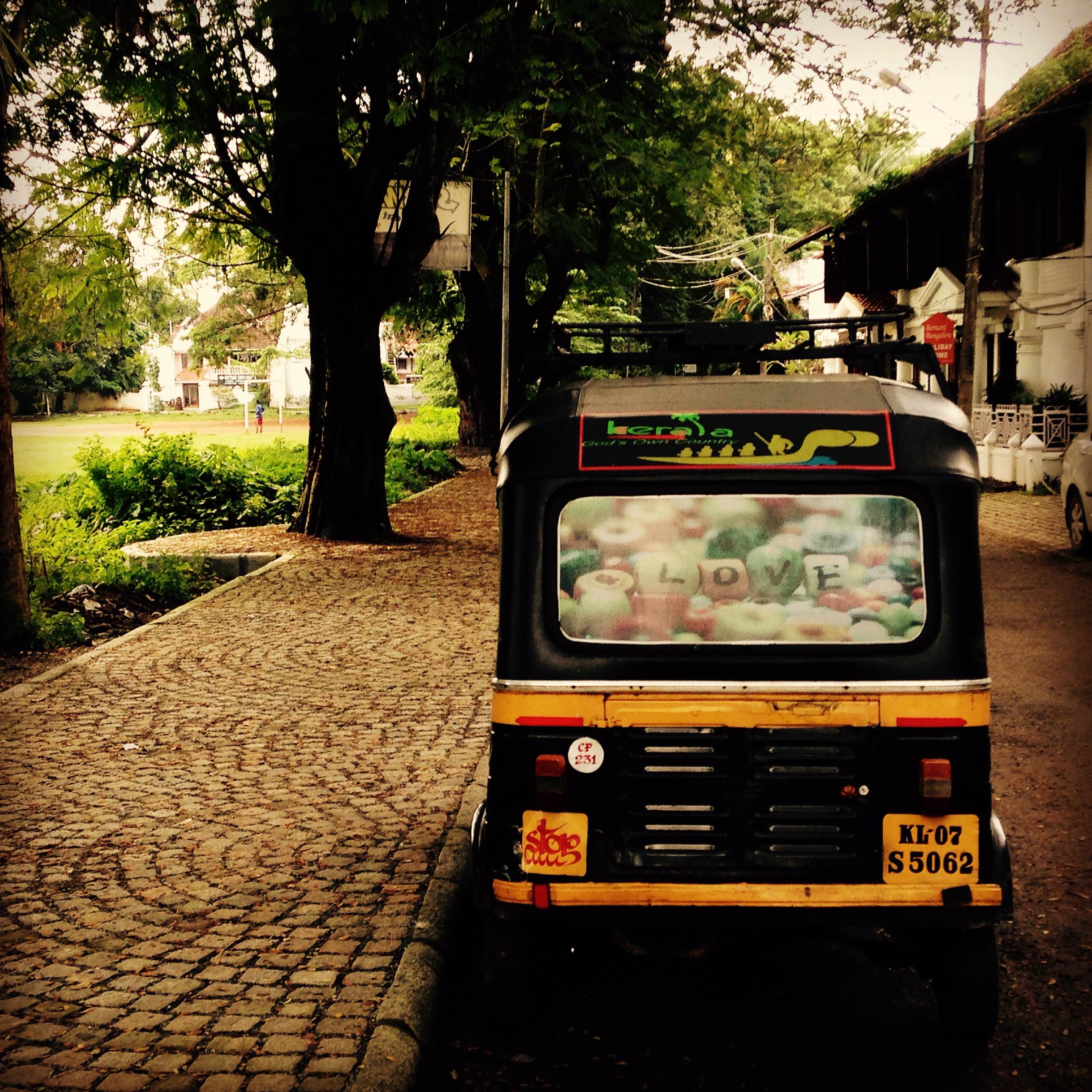
The last time I wrote was about my experience working in Nigeria, where I enjoyed the challenge of balancing the familiar and the new in culture, people, landscape and even weather. I’m now back in India and am happy to explore nature in my own country again.

I am based in the beautiful hill-station Kodaikanal in Tamil Nadu and everytime I look up at the sky and the mountains and the beautiful valley, it takes my breath away! Then I stop to wonder – why do my fellow Indians long to go to Switzerland and other places, when we can experience so many similar things somewhere in our own country? Continue reading

The Lamp at the Taj Mahal

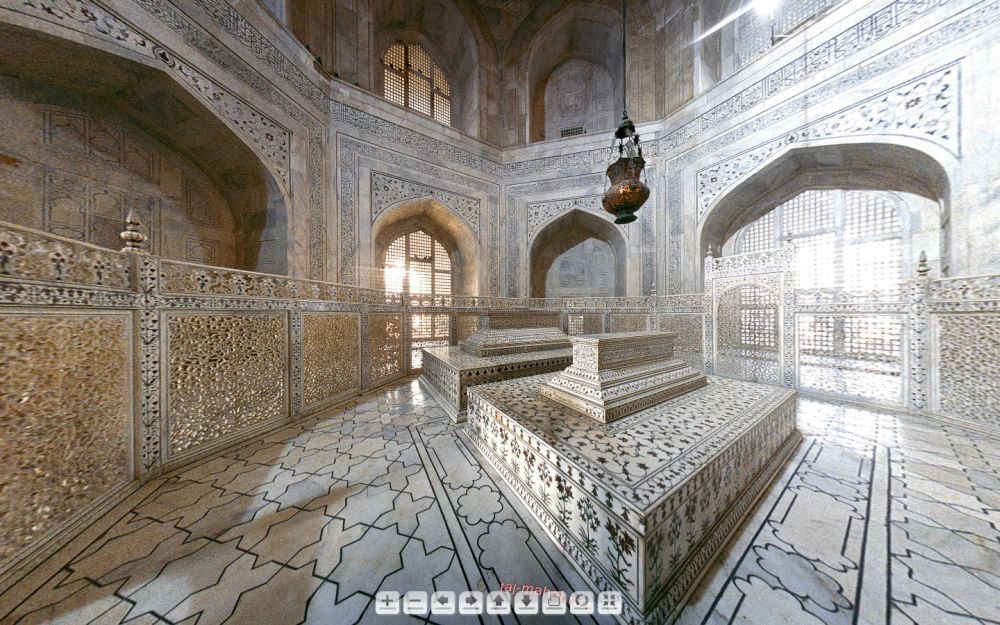
Curzon’s dedication in Persian – Presented to the Tomb of Mumtaz Mahal by Lord Curzon, Viceroy 1906 – was also inscribed on it, after a careful process of revision to ensure it matched the script used by calligraphers for the Taj Mahal. PHOTO: taj-mahal.net

Curzon’s dedication in Persian – Presented to the Tomb of Mumtaz Mahal by Lord Curzon, Viceroy 1906 – was also inscribed on it, after a careful process of revision to ensure it matched the script used by calligraphers for the Taj Mahal. PHOTO: taj-mahal.net

The Taj Mahal at Agra, India, is one of the most visited monuments in the world. Beyond it being a labour of love and a story of a dynasty, it’s a timekeeper. Of people who’ve come and gone, of men and powers that have left a mark. Like Lord CurzonScroll brings you a story:

Curzon, who became India’s Viceroy in 1899, was a man on several missions. To secure India’s northern frontiers from the advancing threat of Russia, Curzon encouraged Francis Younghusband’s 1903 Tibet expedition. His move to preserve India’s heritage was part of his own “civilising mission”.

Continue reading

India’s Forgotten Stepwells

All across India, elaborate subterranean temples are hidden in plain site. Constructed between the 2nd century and 4th century AD, these massive and ornate stepwells were built both for spiritual bathing and as a way to access water tables during monsoon season and drought seasons. Many stepwells have been abandoned and are in disrepair since the introduction of modern waterworks, plumbing and village taps. Some have been destroyed. Because the water table is even lower in recent years, many are now dry. Victoria Lautman, a freelance journalist in Chicago, has been traveling around India documenting stepwells before more fall into dereliction are destroyed by neglect or outright demolition.

Continue reading

The Grave History of Ocean Beach

In order to build a new, swimmer-friendly waterfront on the bay, San Francisco looked to an unusual building supply they just happened to have lying around: Gold Rush era tombstones. PHOTO: Photo by Annetta Black/Atlas Obscura

In order to build a new, swimmer-friendly waterfront on the bay, San Francisco looked to an unusual building supply they just happened to have lying around: Gold Rush era tombstones. PHOTO: Photo by Annetta Black/Atlas Obscura

The town of Colma in San Mateo County, California, has a rather peculiar distinction: over 73% of it is covered with cemeteries. Simply put, the dead outnumber the living here. And the city of San Francisco has much to do with this. Before San Francisco voted to stop burials within city limits in 1900, there were at least 30 cemeteries in use or abandoned with bodies. Post the restriction, most of the deceased non-native residents previously buried in SF were moved to cemeteries in Colma in 1900-40s. But some of the tombstones returned to the city. You’ll see why at Ocean Beach.

Continue reading

History Underground

The tunnel system must be one of the most mysterious engineering projects in Liverpool’s history. One entrance into the tunnels was found in the basement of their patron’s former house (Credit: Chris Iles/Friends of Williamson’s Tunnel)

The Williamson’s tunnel system must be one of the most mysterious engineering projects in Liverpool’s history. One entrance into the tunnels was found in the basement of their patron’s former house PHOTO: Chris Iles

The Williamson Tunnels are a labyrinth of tunnels and underground caverns under the Edge Hill district of Liverpool in north-west England. They were built in the first few decades of the 1800s under the control of a retired tobacco merchant called Joseph Williamson.The purpose of their construction is not known with any certainty. Theories range from pure philanthropy, offering work to the unemployed of the district, to religious extremism. Although some of the tunnels have been lost over the years, a lot of them still exist today, under what is now a residential area. One section of the tunnels has been cleared and renovated and is open to the public. The remaining parts of the labyrinth are closed, with many suspected tunnels yet to be rediscovered.

Continue reading

The World’s Lone Weaver of Sea Silk

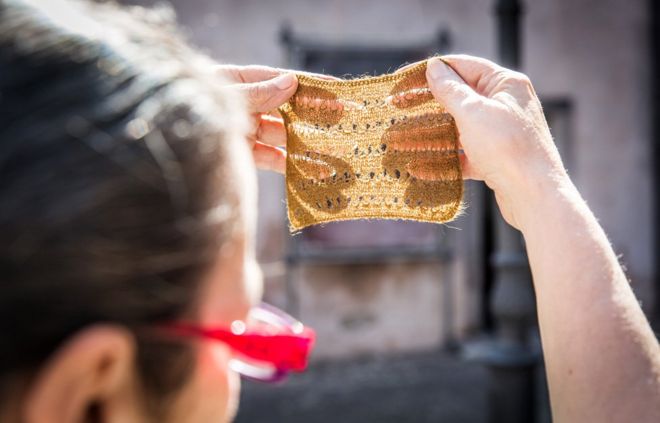
Chiara Vigo is the only woman in the world who still works the byssus, better known as the silk of the sea, the same way women in ancient Mesopotamia used to weave it in order to make clothes for their kings. PHOTO: BBC

Chiara Vigo is the only woman in the world who still works the byssus, better known as the silk of the sea, the same way women in ancient Mesopotamia used to weave it in order to make clothes for their kings. PHOTO: BBC

The Italian island of Sardinia. A place where coastal drives thrill, prehistory puzzles, endearing eccentricities exist. As DH Lawrence so succinctly put it: ‘Sardinia is different.’ The island has been polished like a pebble by the waves of its history and heritage. And an indispensable part of it is Chiara Vigo, who is thought to be the only women left who can harvest sea silk, spin it and make it shine like gold. By her own admission, Vigo is neither an artist nor an artisan. She is a master. While an artist creates over inspiration and an artisan produces and sells, masters pass their art on. Like she hopes to.

Continue reading

Solar Comes Home!

Kerala, India, has the world’s first solar-powered airport. PHOTO:  CIAL

Kerala, India, has the world’s first solar-powered airport. PHOTO: CIAL

For five years now, RAXA Collective has called the state of Kerala, India, its home. Over the years, the ‘three magic words’ – community, collaboration, conservation – have guided our work here. And every story in these three spaces has us glad for finding another believer. Now we’ve found a believer who puts his thoughts into action in the Cochin International Airport. Welcome to our land and the world’s first solar-powered, power-neutral airport.

Continue reading

Of Books and Travel

What might be the perfect holiday retreat has just been listed on AirBnB: the opportunity to become a bookseller for a week or two. PHOTO: Colin Tennant

What might be the perfect holiday retreat has just been listed on AirBnB: the opportunity to become a bookseller for a week or two. PHOTO: Colin Tennant

Quotes on travel abound. And chances are you’ve read this some time: The world is a book and those who do not travel read only page. St. Augustine immortalized those words and now, AirBnB has literally taken it to heart. Always believed in the many worlds that exist between two ends of a book? Then, imagine a library. One that you run for a week. Or maybe two, too.

Continue reading

First feelings in Kerala

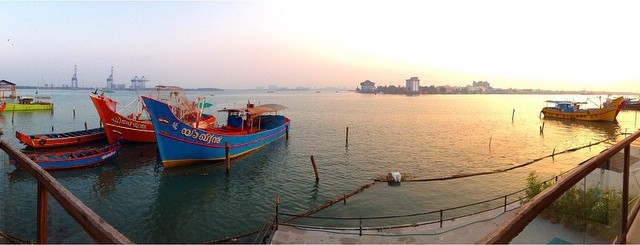
View from Xandari Harbour; Photo credit: Derek Spier

This weekend I arrived in India for the first time. My name is Lucie and I’m currently studying business at Audencia School of Management in Nantes, France. I’ll spend four months here in an internship with Raxa Collective.

My first “home” with Raxa Collective is Xandari Harbour, in Fort Kochi. When I arrived the first thing that astonished me was the warm welcome from the team of co-workers, also named the “Raxa Collective Family”. To be honest, as a French girl I am not used to this kind of welcome. Right away they gave me everything I would need to be comfortable with them and my new surroundings. They definitely know how to welcome a foreigner! ​From the moment I arrived the team helped me forget my 31 hours of travel, replacing it with the knowledge of how lucky I am to be here.

If you have already read some articles on this blog, you probably will agree with my assessment regarding the link between nature and the company. Now that I know a little more about Raxa Collective it’s clear to me that we can’t talk about it without talking about nature, too. So, as much as the warm welcome, I was also really impressed by the place and the amazing landscape.

The sunset was for me the best moment.  Continue reading

Help in the Time of Crisis

Migrants from Iraq, Syria and other Middle Eastern nations are fleeing to Europe, a continent whose migrant camps are struggling to keep up with the growing numbers. PHOTO: SBS

Migrants from Iraq, Syria and other Middle Eastern nations are fleeing to Europe, a continent whose migrant camps are struggling to keep up with the growing numbers. PHOTO: SBS

Greece has agreed a deal in principle with its lenders about a third bailout, worth around €85bn and allowing some €10bn to be disbursed to the country’s struggling banks almost immediately. There is a long list of reforms the country has to carry out in return for the cash. While governments do the talking in terms of numbers, there is a group of people doing the talking – in deeds of compassion and kindness towards multitudes of refugees who wash up on the country’s already struggling shores. They come for travel, they stay back for humanity.

Continue reading

The Tradition of a Most Dangerous Game

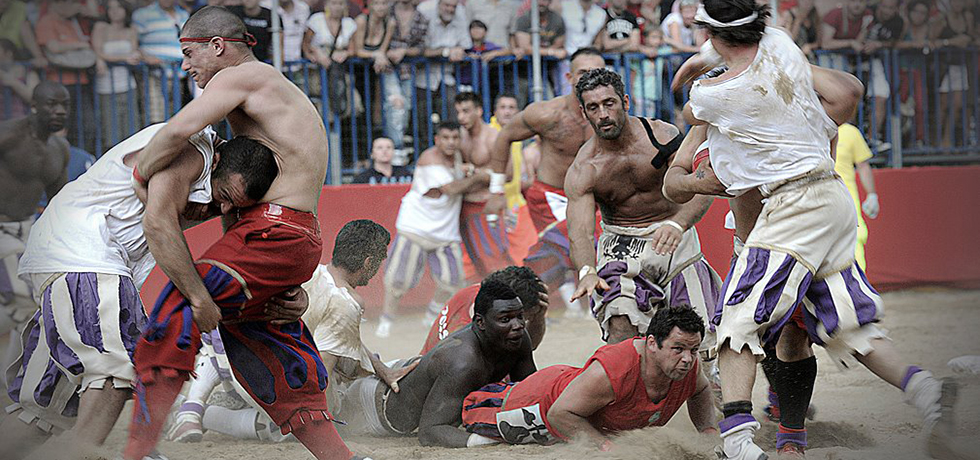
The Calcio Storico is an ancient form of football from 16th century Italy, which originated from the ancient Roman ‘harpastum’, and is played in teams of 27, using both feet and hands. Sucker-punches and kicks to the head are prohibited but headbutting, punching, elbowing, and choking are all allowed

Welcome to Calcio Storico, a centuries-old competition in Florence with very few rules and the sort of human wreckage generally associated with the gladiators. Dating back to 16th century Italy, today’s calcio storico (see photos from The Guardian here), or historic soccer, may be both the most violent form of soccer in the world. It is played only in Florence, Italy, where four 27-man teams representing four historic Florentine neighborhoods—Santa Croce, Santa Maria Novella, Santo Spirito, and San Giovanni—face off to beat each other to a pulp, every June. Kicks to the head are forbidden. So are fights of two or more against one. Everything else goes, making the goal of moving a leather ball from one end of the field to another seem like a side note to the bloody proceedings.

Continue reading

Travel Made Easy Through Air

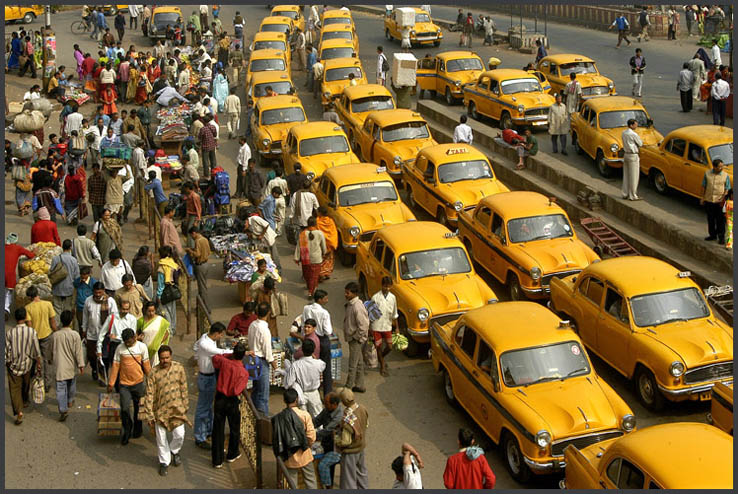
An upcoming aerial ropeway might be the solution to Kolkata's traffic congestion issues

An upcoming aerial ropeway might be the solution to Kolkata’s traffic congestion issues

No, we are not talking flying here. But the Curvo, the world’s first non-linear aerial ropeway for second tier urban commutation. Pollution and traffic-free, the service, operational on electricity, would be on steel frames spreading at a distance of around 90-100 m running through the existing arterial and other roads to avoid congested streets of the city. There will be elevated stops at every distance of 750 m and the cars would be able to gain speed of about 4.25 m per second (12.5 km/hour) with the ability to carry an estimated 2,000 people every hour. Curvo is expected to be introduced in 18-24 months. The cabins will have an accommodation capacity of 8-10 persons.

Continue reading

For the Love of the Beautiful Game

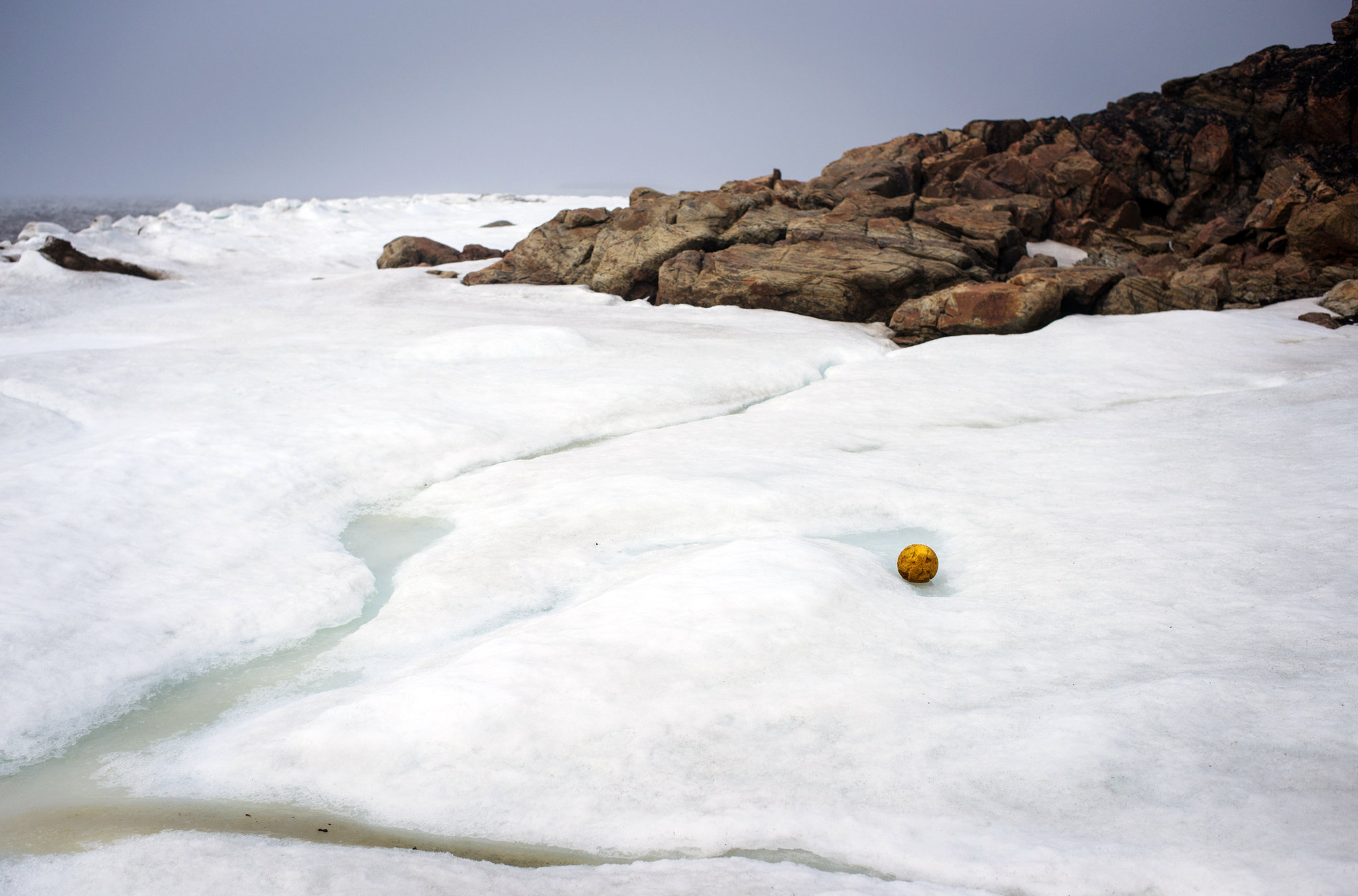
Even in late June, ice clotted Frobisher Bay in Iqaluit, where teams from across Nunavut met to compete in a soccer tournament.PHOTO: Ian Willms for The New York Times

Even in late June, ice clotted Frobisher Bay in Iqaluit, where teams from across Nunavut met to compete in a soccer tournament.PHOTO: Ian Willms for The New York Times

Sports, like most aspects of life, are not easy in the Canadian Arctic. But a major youth tournament recently revealed soccer’s importance to the area. Sports, like everything in the Arctic, demand constant, patient improvisation. Nunavut makes up about 20 percent of Canada’s land mass and is more than twice the size of Texas, but it has only an estimated 36,000 inhabitants, predominantly Inuit. There are no roads connecting the 25 communities in this vast territory. Every trip requires a snowmobile, a dogsled, an all-terrain vehicle, a boat or an airplane. Contingencies must be made for immense distance, mercurial weather, extravagant costs and geographic paradox. Soccer is best played on plush grass, but nearly all of Nunavut is tundra. So the sport has adapted.

Continue reading

A Picture Perfect World

PHOTO: Raghu Rai

PHOTO: Raghu Rai

When is the last time you saw someone sans a camera? No device in their hands and none dangling around their necks? Well, “we can’t seem to recollect” is our answer, too. And, may be there are reasons for it. More than the power to immortalize fragments of time, a photograph brings together all the pictures you’ve seen, the books you’ve read, the music you’e heard, the people you’ve loved. To take a photograph is to participate in another person’s (or thing’s) mortality, vulnerability, mutability. Precisely by slicing out this moment and freezing it, all photographs testify to time’s relentless melt, say others. And ace Indian photographer, Raghu Rai, protégé of Henri Cartier-Bresson, pens his own take in Nat Geo Traveler.

I am called a photographer, and my dharma is photography but I think of myself as an explorer. To me, the best way to explore life is through photography. Life changes constantly, so the more you explore the more you are enriched.

Continue reading

Putting the Horse Before the Cart

For better or worse – the Indian city of Mumbai is preparing to bid goodbye to one of its icons. The city’s ornate horse-drawn carriages are nearing the end of the road after a court in the Indian city ruled them illegal. The silver-colored Victorias – styled on open carriages used during Queen Victoria’s reign – have been plying Mumbai’s streets since British colonial times, and for years have been a tourist attraction. But recently, the Bombay High Court agreed with animal welfare groups, who had petitioned for a ban citing poor treatment of the horses, that the practice was cruel.

Continue reading

Wind Powered Race Goes To Team Elsie Piddock

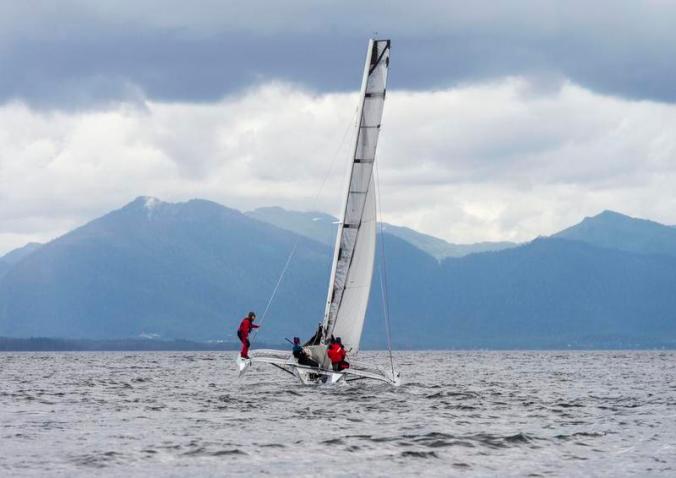
Team Elsie Piddock sails up Nichols Passage south of Ketchikan on the way to winning the Race to Alaska. TAYLOR BALKOM / KETCHIKAN DAILY NEWS

Team Elsie Piddock sails up Nichols Passage south of Ketchikan on the way to winning the Race to Alaska. TAYLOR BALKOM / KETCHIKAN DAILY NEWS

Fishermen gonna fish, sometimes pushed to do remarkable things under extreme challenge. Sailors gonna sail, sometimes pushed to do remarkable things under extreme challenge. We thank Seattle radio station KUOW for sharing the news of the conclusion of this race that has had our attention for the last week:

Screen Shot 2015-06-15 at 4.36.40 AM

Ross Reynolds talks to Jake Beattie the director of the Northwest Maritime Center in Port Townsend and the organizer of the first ever Race to Alaska contest about how Team Elsie Piddock managed to defy expectations and win the race in one week and a day.

See more at the Ketchikan Daily News.

10,000 km in a Tuk-tuk and With the Sun

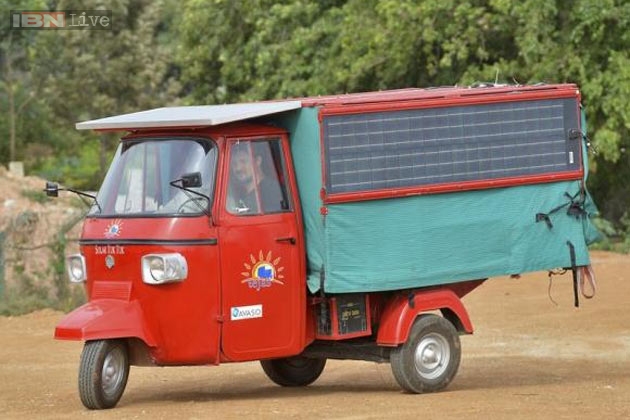
Tejas is a renovated Piaggio Ape  with a 13-kilo-watt prototype engine, lithium-ion batteries and six solar panels. PHOTO: IBN

Tejas is a renovated Piaggio Ape with a 13-kilo-watt prototype engine, lithium-ion batteries and six solar panels. PHOTO: IBN

Our itinerary has been filled with travel all week. And we almost gave The New Indian Express article on the travel plans of Indian engineer Naveen Rabelli and Austrian filmmaker Raoul Kopacka a miss. That was only until we read the details: a 10,000 km journey from India to London on a self-built solar-powered tuk-tuk/autorickshaw to Britain to promote a sustainable low-cost alternative-transport solution and check air pollution in towns and cities across their journey. Talk about going the extra mile.

Continue reading