Emma Marris On Urban Shade

A man wipes his forehead under the hot sun as he walks under shade sail.

Matt McClain / The Washington Post / Getty

The science writer Emma Marris, here featured in The Atlantic, first came to our attention in a passing mention ten years ago, then again in full force six years ago. Whether or not you live in an urban area, you likely depend on urban areas for some part of your livelihood so her essay may be of interest:

Trees are nice and all, but they’re not enough.

On a 92-degree Saturday afternoon in Portland, Oregon, I went looking for shade in Cully Park, which was built on top of an old landfill and opened in 2018. The city included plenty of trees in the design—I mean, this is Oregon. Continue reading

A Cleaner Seine Is A More Inspiring Seine

A photo of people swimming in the Seine in Paris on July 17 2024.

People swimming in the Seine, in July of 2024.Photograph by Raphael Lafargue / Sipa / AP

Skip the first half if you are short on time, but in the second half of this article you will find the fruition of imagination and courage we always hope to see more of:

The Unexpectedly Hopeful Paris Olympics

The Games have never lived up to all their ideals—some of which were dubious to begin with. And yet this year’s iteration, for all its flaws, has already inspired some positive change.

…Which brings me to the Seine. When the Olympics returned to Paris, in 1924, the swimming took place not in the Seine but in a pool, the Piscine des Tourelles. Swimming in the Seine was banned altogether one year prior. It was, after all, not merely a river but a road through Paris, crowded with barges. It was also a sewer, filled with refuse from houseboats and the untreated sewage that overflowed the city’s nineteenth-century system when it rained. Various attempts to clean up the Seine failed. When Paris was selected to host the 2024 Games, seven years ago, it was still illegal to swim in the river. Continue reading

The Garden Against Time, Reviewed

It always comes back to the commons. Thanks to Naomi Huffman at The Atlantic for bringing this book to our attention:

What Gardens of the Future Should Look Like

In her new book, Olivia Laing argues that the lives of all people are enriched with access to land they can use freely.

On a Sunday afternoon in May, the Elizabeth Street Garden, a serene public park wedged between Manhattan’s SoHo and Little Italy neighborhoods, was filled with people undeterred by the gray sky and spitting rain. Visitors sat at tables among fuchsia azaleas and yellow irises, and in the shade of loping old trees, talking, eating pizza, and drinking iced coffee. A painter faced an easel at the back of the garden and composed a watercolor. Continue reading

Brutalist Plants, Reviewed

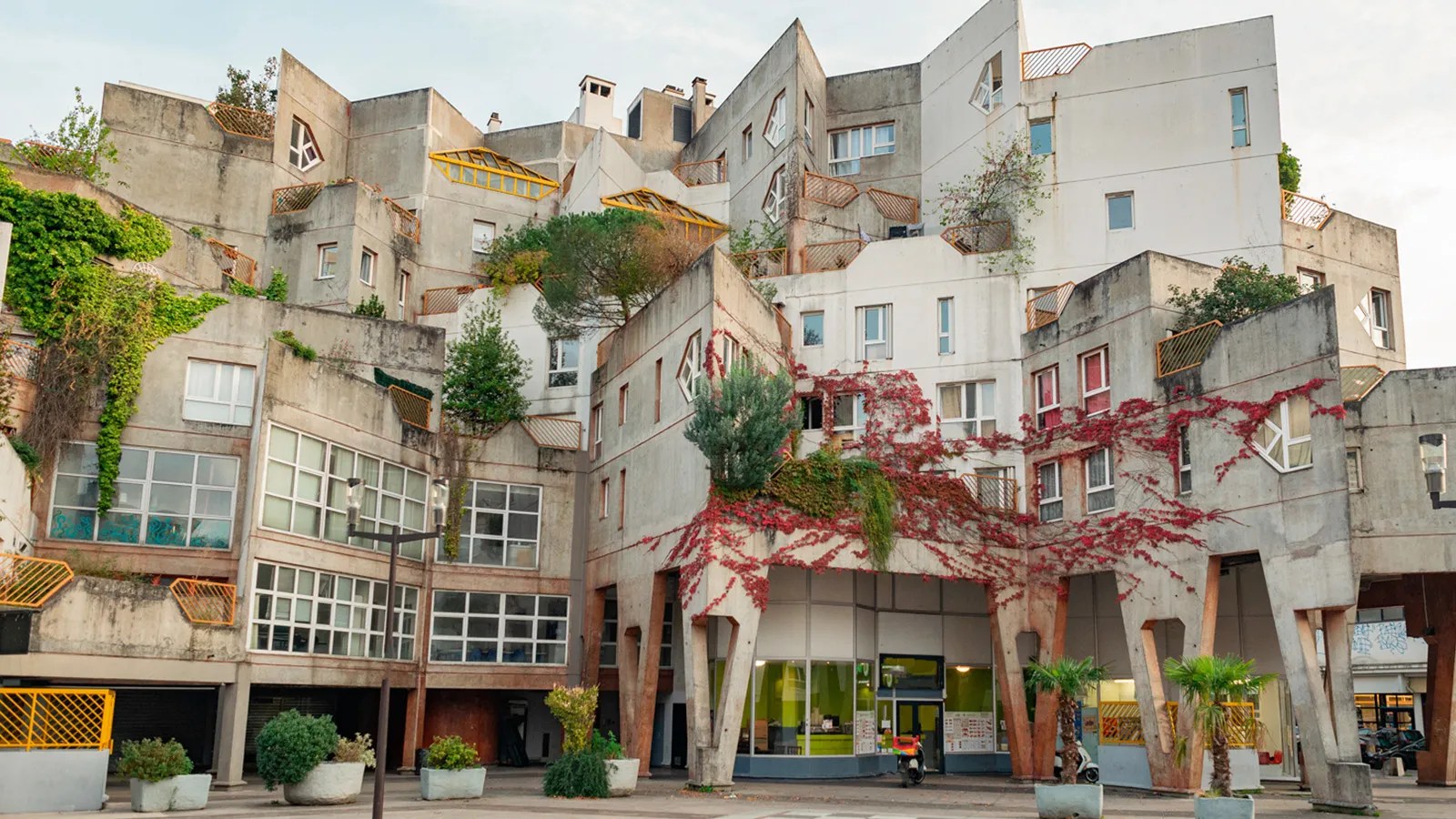
Les Étoiles d’Ivry, Paris, France. Architect: Jean Renaudie (Image credit: pp1 / Shuterstock)

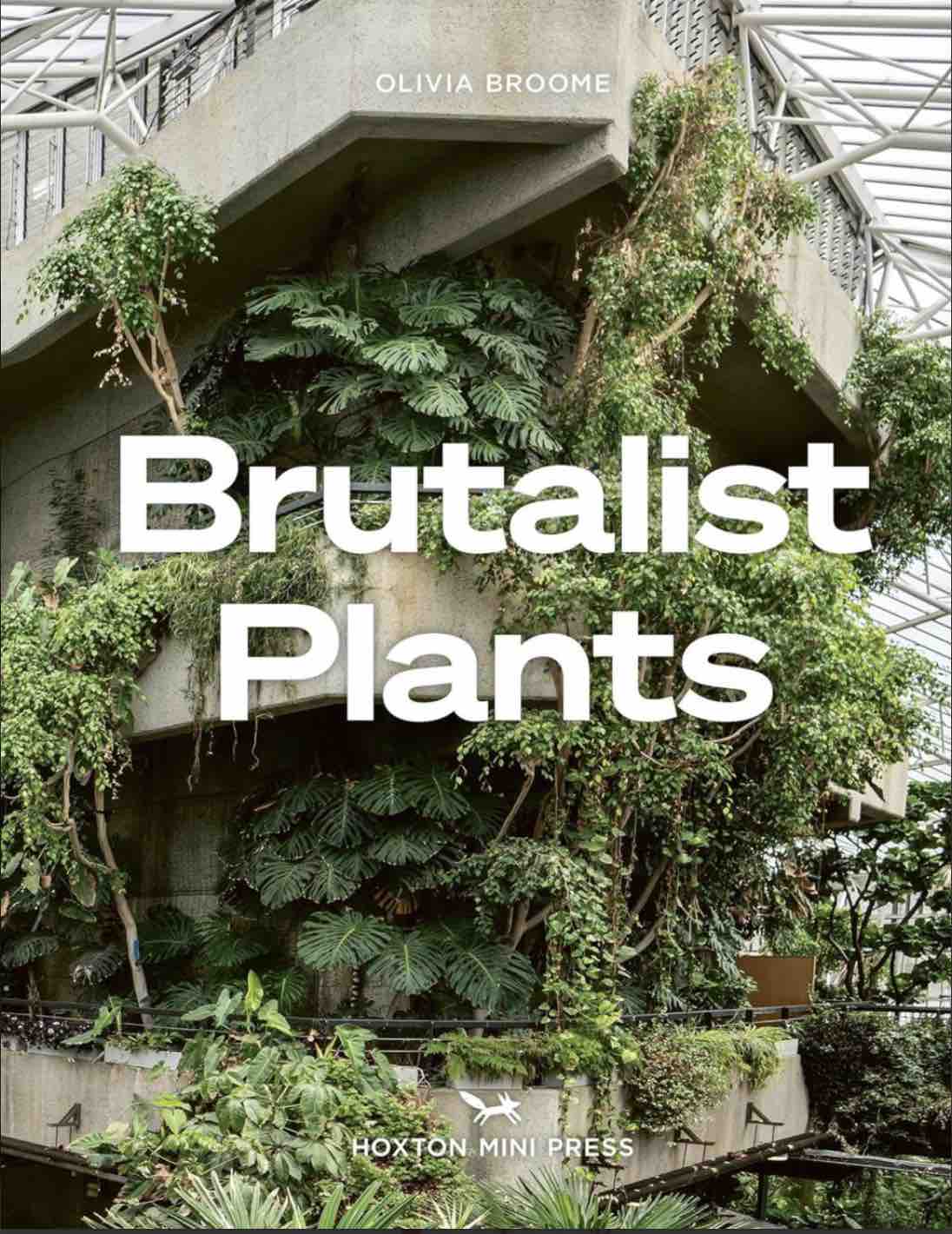
Olivia Broome’s new book is reviewed in Wallpaper:

‘Brutalist Plants’ is a new monograph capturing the best of eco-brutalism

‘Brutalist Plants,’ the new book by Olivia Broome, captures concrete architecture engulfed with nature

‘Brutalist Plants’ is a new book featuring an impressive selection of imagery that captures the very best of the trend of ‘eco-brutalism’. This texture-rich movement has been gathering attention recently, focusing on brutalist architecture that has been – to varying degrees – embraced by flora, as planting engulfs entire structures, creating a calming concrete jungle for urban living. Continue reading

A Tiny Forest For Roosevelt Island

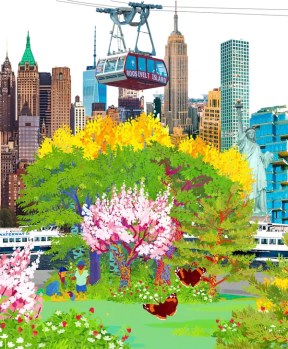
An artist’s rendering of the Manhattan Healing Forest. Courtesy of SUGi

Thanks to Cara Buckley for another in her long line of tree stories:

Coming Soon to Manhattan, a Brand-New Tiny Forest

Pocket-size forests filled with native plants have been embraced worldwide for their environmental benefits. Now one is planned for New York City.

A trend that’s gaining momentum around the world is set to finally arrive in Manhattan. It’s a tiny forest, to be planted on the southern end of Roosevelt Island, in the East River, this spring. According to its creators, it would be the first of its kind in the city and would consist of 1,000 native plants, trees and shrubs, covering just 2,700 square feet. Continue reading

Dickson D. Despommier Discussing The New City Concept

The vertical farming part of this concept is one we have linked to many times. The appeal is not difficult to grasp even if sometimes the concept is stretched. This is different and worth hearing him out:

Dickson Despommier Wants Our Cities to Be Like Forests

A leading proponent of vertical farming discusses how urban areas should adapt to a perilous environmental future.

Illustration by Daniele Castellano

In 2000, Dickson D. Despommier, then a professor of public health and microbiology at Columbia University, was teaching a class on medical ecology in which he asked his students, “What will the world be like in 2050?,” and a follow-up, “What would you like the world to be like in 2050?” As Despommier told The New Yorker’s Ian Frazier in 2017, his students “decided that by 2050 the planet will be really crowded, with eight or nine billion people, and they wanted New York City to be able to feed its population entirely on crops grown within its own geographic limit.” Continue reading

Franzen, In The Interest Of Birds, Debunks A Myth

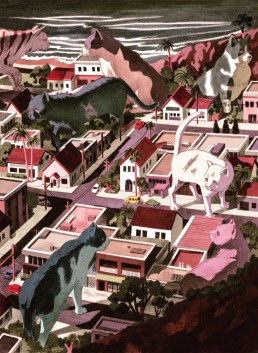
A long-serving animal-control officer described a system intensely pressured to keep animals moving through it. “No Kill sounds great,” the officer said. “But it’s a myth.”Illustration by Antoine Maillard

We have Jonathan Franzen to thank for some of the best writing on caring more about birds, and he helps close out 2023 with a detailed look at the implications and complications of a cat population explosion:

How the “No Kill” Movement Betrays Its Name

By keeping cats outdoors, trap-neuter-release policies have troubling consequences for city residents, local wildlife—and even the cats themselves.

This past June, at the height of kitten season in Los Angeles, Gail Raff got a call for help from the neighborhood of Valley Glen, where a young woman had trapped a cat that needed fixing. Although the City of Los Angeles subsidizes the sterilization of unowned cats, appointments at clinics are hard to come by, and Raff was known in the animal-rescue world as a trapper who secures as many appointments as she can. Continue reading

Bird-Friendly Architecture

The New York Times building uses fritted glass clad with rods, which make its facade more visible to birds. Photograph: Daniel Slim/AFP/Getty Images

Birds fall victim to carelessly designed buildings. Bravo to the New York Times for building a bird-friendly HQ. Also to the Guardian for reporting on their competitor’s leadership, and on the architects leading the way with careful design:

Buildings kill a billion US birds a year. These architects want to save them

Highly transparent glass can lead to devastating collisions. But innovations in design are creating safer skylines – without sacrificing beauty

Chicago’s Aqua Tower was designed with birds in mind. Photograph: Radomir Rezny/Alamy

Chicago’s 82-story Aqua Tower appears to flutter with the wind. Its unusual, undulating facade has made it one of the most unique features of Chicago’s skyline, distinct from the many right-angled glass towers that surround it.

In designing it, the architect Jeanne Gang thought not only about how humans would see it, dancing against the sky, but also how it would look to the birds who fly past. The irregularity of the building’s face allows birds to see it more clearly and avoid fatal collisions. “It’s kind of designed to work for both humans and birds,” she said.

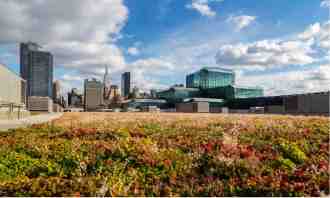
A green roof on the Javits Convention Center serves as a sanctuary for birds. Photograph: David Sundberg/Courtesy of Dan Piselli

As many as 1 billion birds in the US die in building collisions each year. And Chicago, which sits along the Mississippi Flyway, one of the four major north-south migration routes, is among the riskiest places for birds. This year, at least 1,000 birds died in one day from colliding with a single glass-covered building. Continue reading

New York Noise

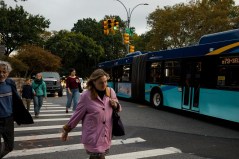
A particularly loud intersection on Manhattan’s Upper West Side. The neighborhood is home to at least one of the noise cameras the city is testing. Sara Naomi Lewkowicz for The New York Times

When we lived in India we used to post frequently on this topic, but it has been a while. Happy to see (thanks to Erin Nolan and the New York Times) that another onetime hometown of ours is taking up the issue:

New York City, not exactly known for its peace and quiet, is expanding its use of technology to fine the drivers of loud cars and motorcycles.

New York City is known for its noise. A cacophony of sounds bombards residents every time they step outside — screeching subway cars, jackhammers drilling away, late-night revelers leaving bars and clubs. Continue reading

Insect Oases

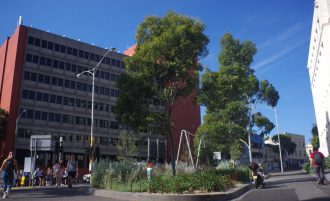
A small patch of native plants in Melbourne, Australia, draws native insects. MATA, ET AL.

Thanks to Yale e360 for this short story on small wonders:

Even a Small Patch of Native Greenery Can Give a Big Boost to Local Insects

In cities, a little native greenery can go a long way. Australian scientists found that, after adding native shrubs to a planting in Melbourne, the number of insect species at the site increased sevenfold. Continue reading

Planting Trees In New Haven

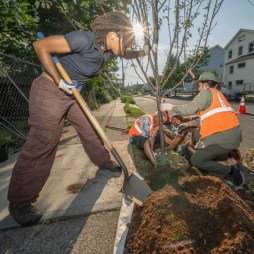
From left, Jess Jones, Ed Rodriguez, Zach Herring and Joshua De-Anda, planting a crab apple tree at 10 Wolcott Street in the Fair Haven neighborhood of New Haven, Conn. Tony Cenicola/The New York Times

Ed Rodriguez has a few years on me, but we have comparable tree counts. The caption of the second photo below captures my my own preference of activity on any given day. Having grown up in Connecticut and moved to Costa Rica decades ago, I note our reverse patterns of migration.

Colbi Edmonds, a member of the 2023-24 New York Times Fellowship class, reports from Seth’s previous hometown New Haven on an initiative I love reading about as much as I enjoy my own versions of the same kind of activity:
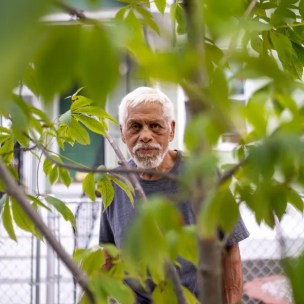
“I love to dig and mess around in the soil,” said Ed Rodriguez, who grew up in Puerto Rico but moved to Connecticut in the 1960s. Christopher Capozziello for The New York Times

One Neighborhood, 90 Trees and an 82-Year-Old Crusader

Ed Rodriguez is on a mission to convince his neighbors that they need trees to help combat summer heat — and to make the world a better place. It’s not always so easy.

Maria Gonzalez, who lives in New Haven, Conn., was envious of the other side of her street. It was lined with trees, offering some beauty as well as a shield from this summer’s unusual heat. But the sidewalk directly in front of her residence was bare, with trash littering patches of grass. Continue reading

Driverless Taxi, Anyone?

A Waymo self-driving car in San Francisco. Shutterstock/Iv-olga

Apparently there is a market for this service in San Francisco, according to Jeremy Hsu at New Scientist, in spite of the objections:

California approves driverless taxi expansion in San Francisco

Waymo and Cruise can now charge for ride-hailing services throughout San Francisco despite objections that driverless cars interfere with traffic and first responders

Driverless cars have the green light to operate as paid ride-hailing services in San Francisco after the companies Waymo and Cruise won approval from California state regulators. Continue reading

New Roots Garden, Urban Oasis

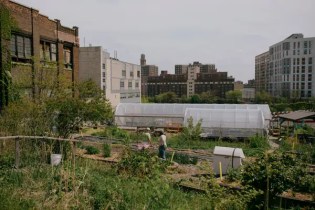
Sheryll Durrant has managed the New Roots Garden, which sits between the Grand Concourse and the Metro North railroad tracks in the Bronx, with volunteers for eight years.

We have linked out to stories about urban farming plenty of times; it never gets old:

Vital Places of Refuge in the Bronx, Community Gardens Gain Recognition

Lawmakers in Albany voted to designate community gardens statewide as crucial to the urban environment, especially in the fight against climate change. The bill awaits the governor’s signature but the role of these gardens stretches back decades.

The Morning Glory garden in the West Farms section of the Bronx is among more than 500 community gardens in New York City.

Sheryll Durrant left her family farm in Jamaica in 1989 and embarked on a career in corporate marketing. But after the 2008 financial meltdown, she reconsidered her life.

She returned to her roots.

Now she runs a thriving urban farm wedged into a triangular plot in the Bronx, between the Grand Concourse and the Metro North railroad tracks. At her farm, New Roots Garden, membership consists of refugees and migrants, resettled by the International Rescue Committee, whose herbs and vegetables sustain their memories of home.

“Just putting your hands in soil is a form of healing,” Ms. Durrant, 63, said. Continue reading

Paris & Continuous Greening

Paris’ iconic zinc roofs can heat up to 194 degrees F on a hot summer day. JAN WOITAS / PICTURE-ALLIANCE VIA GETTY IMAGES

We have celebrated the many greening efforts made in Paris over the last decade, and today is a small but important addition to our knowledge of those commitments. Our thanks to Jeff Goodell in Yale e360:

A rendering of a rooftop terrace installed by the Parisian startup Roofscapes. ROOFSCAPES

Paris When It Sizzles: The City of Light Aims to Get Smart on Heat

With its zinc roofs and minimal tree cover, Paris was not built to handle the new era of extreme heat. Now, like other cities worldwide, it is looking at ways to adapt to rising temperatures — planting rooftop terraces, rethinking its pavements, and greening its boulevards.

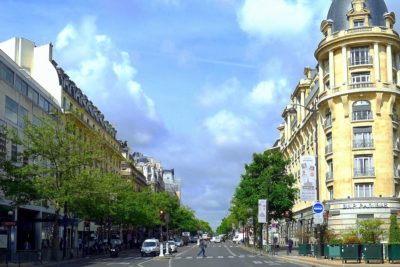
The tree-lined Boulevard des Italiens is much cooler than nearby streets that lack trees.

The tree-lined Boulevard des Italiens is much cooler than nearby streets that lack trees. MBZT VIA WIKIPEDIA

There’s a long tradition in France of taking August off for holiday. Paris virtually shuts down as the temperature drifts around in the seventies, and people go to the beach or the mountains to cool off and relax. Think of it as an old‑fashioned adaptation to heat. People who stick around during August are often older or have jobs that require them to stay and keep the city functioning. Continue reading

Crop Swap LA & Other Microfarm Advances

Illustration: Julia Louise Pereira/The Guardian

Our thanks to Victoria Namkung for this reporting in the Guardian, from Los Angeles:

‘Everything is natural and tastes so good’: microfarms push back against ‘food apartheid’

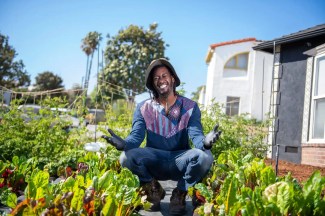
Crop Swap LA founder Jamiah Hargins in the Asante microfarm in Los Angeles, California. Photograph: Valérie Macon/AFP/Getty Images

Bipoc-led local farms in unconventional spaces decentralize systems that have produced food deserts and create food equity

On a recent Sunday morning in South Los Angeles, Crop Swap LA volunteers and staffers harvested bags of freshly picked produce from the front yard of a residence. Located just steps from Leimert Park Plaza, the Asante microfarm is the first of what will be numerous microfarms created by the organization, which is dedicated to growing hyperlocal food on unused spaces “in the neighborhood, exclusively for the neighborhood”. Continue reading

When In A Hole, Stop Digging

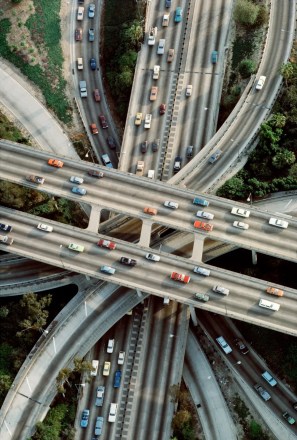
For many Americans, cars are as potent a symbol of freedom as guns are, even if they have similarly destructive consequences. Photograph by René Burri / Magnum

An interview with the author of one of the books reviewed in the linked essay below is effective motivation to read the entire review of both books:

How to Quit Cars

They crowd streets, belch carbon, bifurcate communities, and destroy the urban fabric. Will we ever overcome our addiction?

The Honeymooners” (1955-56), the greatest American television comedy, is—to a degree more evident now than then—essentially a series about public transportation in New York. Ralph Kramden (Jackie Gleason) is a New York City bus driver, deeply proud to be so and drawing a salary sufficient to support a nonworking wife in a Brooklyn apartment, not to mention a place in a thriving bowling league and membership in the Loyal Order of Raccoon Lodge. Continue reading

Urban Jungle, Covered In Literary Review

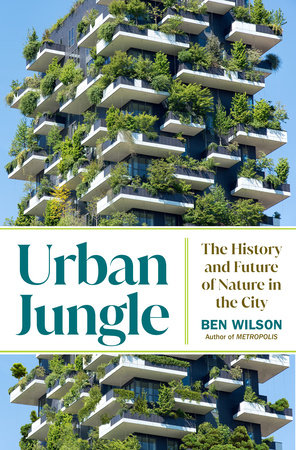
We look forward to Ben Wilson’s new book, as reviewed here:

Where the Streets are Paved with Goldenrod

No one, you would think, aspires to be a night-soil man. Yet in the late 1950s, Shi Chuangxiang’s labours in the latrines of Beijing briefly won him national praise. He was proclaimed a socialist hero and met the head of state. Back then, human excreta mattered, so much so that gangs fought for the plummest spots. Why? Because cities, until relatively recently in human history, were a part of healthy ecosystems that operated according to the principles of nutrient exchange: take, use, return, all in neat equilibrium. The spoils of Mr Shi (who was nicknamed ‘Stinky Shit Egg’), collected at a time when synthetic plant food was not widely available in China, became the organic fertiliser that was intended to power the country’s Great Leap Forward in agriculture. Continue reading

Like Seeing Santa Claus On A Beach

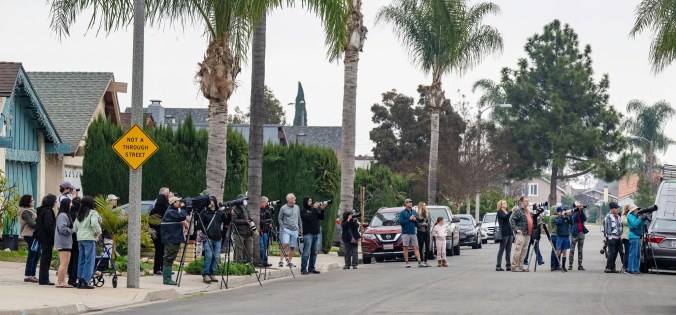
Bird-watchers and photographers on the lookout for the snowy owl. Mark Rightmire/The Orange County Register.

Closing out 2022 with a story that all in our bird-centric community will enjoy, I know from firsthand experience what unexpected encounters with birds can do:

Neighbors have come to notice a pattern with the bird, which seems to take off in the evenings before reappearing sometime later. Mark Rightmire/The Orange County Register

‘Extremely Rare’ Snowy Owl Sighting Transfixes a California Suburb

What brought the owl to the city of Cypress, in Orange County, remains a mystery.

The forbidding frozen wilderness of the high Arctic tundra is the natural home of the snowy owl, a great predator perfectly adapted to hunting its primary food source, lemmings. Continue reading

The Bronx & Greener Pastures

Van Cortlandt Lake, one of the many places popular with birds — and those who watch them.

Early in our life together, in the early/mid-1980s, Amie and I lived in two of the five boroughs that make up New York City. We never lived in the one that today, we learn, has had the most nature all along (we thank David Gonzalez for both the photographs and text of this article).

While we are not giving up the greener pastures we chose decades ago to be our home base, we are happy to know that The Bronx is so green, and can even picture making a special trip to visit this often unheralded part of New York City:

The lagoon at Pelham Bay Park.

Soundview Park

If you said Brooklyn, Manhattan, Staten Island or Queens, guess again.

From hidden coves tucked along the Orchard Beach marshes to wide promenades covered by regal arches of trees in Soundview, there is a lot more green to the Bronx than the zoo or the infield at Yankee Stadium. The pastoral vibe might make you think you’re upstate, but as they said in the classic ’80s hip-hop movie “Beat Street,” this is the Bronx. Continue reading

Prairie Revival

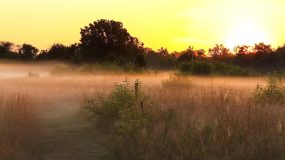
Sunrise at the Hempstead Plains on Long Island, New York. STEVE PFOST / NEWSDAY RM VIA GETTY IMAGES

Thanks to Yale e360’s Janet Martinelli:

Amid the Sprawl, a Long Island Prairie Makes a Quiet Comeback

Tucked into quintessential suburbia, the Hempstead Plains Preserve is a small sliver of the grassland that once covered a vast area of Long Island. New research shows that thoughtfully planted yards and gardens can bolster the biodiversity in such urban wildland fragments.

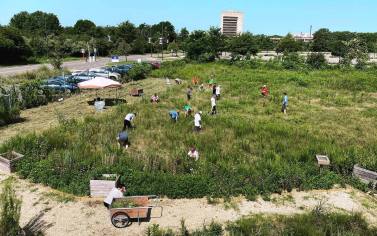
Volunteers remove invasive Chinese bushclover from the Hempstead Plains Preserve at Nassau Community College. FRIENDS OF HEMPSTEAD PLAINS

The Hempstead Plains Preserve is a place where you can imagine the presence of creatures past. Birdfoot violets, now gone, once colored the landscape with a wash of purple in spring. The heath hen, a large grouse that went extinct 90 years ago, performed its elaborate courtship dances on the Plains.

On a late afternoon in October, the slanting autumn sun lit up in a blaze of gold the grasses and wildflowers on this narrow, 19-acre sliver of land — almost all that is left of the tallgrass prairie that once covered more than 50 square miles at the heart of Long Island, New York, a fish-shaped island that stretches east into the Atlantic Ocean. Continue reading