5 Reasons I See India’s Potential to Produce A Stararchitect

Stararchitect” conjures up a cloud of thoughts (Star architecture. Star power. Architecture as a symbol. The North Star for architectural design. Brand. Design. Fame. Architecture prowess. Household name.), but above all, I think of The Pritzker Prize. I feel like the weather channel for  announcing the next “big thing” in architecture is The Pritzker Prize. The weather channel is telling you “you better keep this in mind ’cause you’ll need that umbrella!” The Pritzker Prize is telling you “you better keep this name in mind ’cause you’ll need that knowledge to understand the state of the world you live in.”
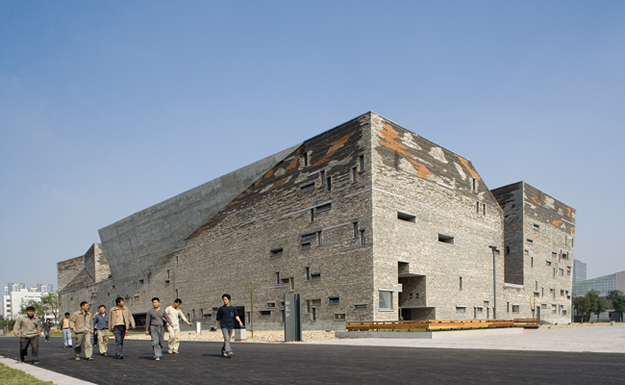
Ningbo History Museum by architect Wang Shu

Ningbo History Museum by architect Wang Shu

2012’s Pritzker Prize Laureate was Wang Shu, a Chinese architect famed for his re-use of building rubble in his designs. Expansive facades feature roof tiles and bricks from the demolished village that previously existed on that very site. The Pritzker Prize choice of Wang Shu tells us:

1.) Sustainability is important. The reappropriated construction refuse reminds us of the Three Four Rs: Refuse, Reduce, Reuse, and Recycle. It also reminds us that sustaining heritage and history is important.

2.) China is a powerful country with a powerful new identity. This is the first time a Chinese architect has been named. The closest the Pritzker has ever gone to a Chinese architect before was when I.M. Pei was recognized as a Chinese-American architect.
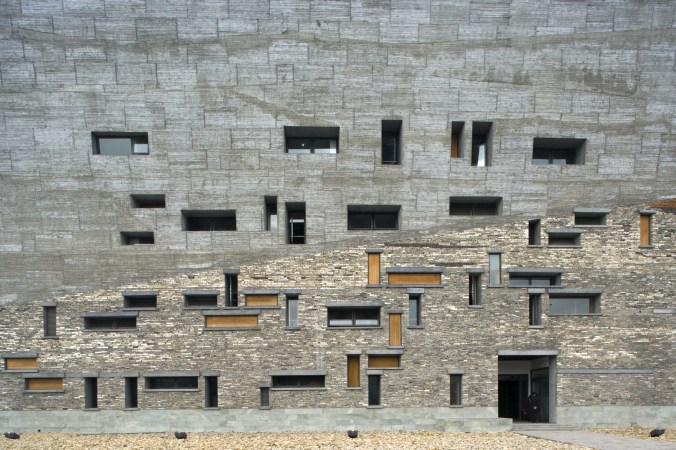
Detail of reused rubble in the facade of the Ningbo History Museum by architect Wang Shu

Detail of reused rubble in the facade of the Ningbo History Museum by architect Wang Shu

It’s rare to see a non-western architect. So I thought, has there been an Indian Pritzker Prize winner before?

The answer is no. (But I wouldn’t be surprised if Indian architecte Charles Correa is a nominee soon!)

While it may still be a long time before we see an Indian Pritzker Prize winner, I feel that India has the potential will definitely produce a stararchitect in the future. Here are 5 reasons why I see India’s potential to produce a starachitect.
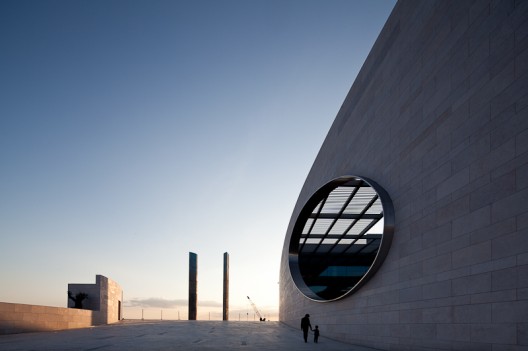
Champalimaud Centre for the Unknown in Lisbon, Portugal by Charles Correa Architects, photographed by José Campos of arqf architectural photography

Champalimaud Centre for the Unknown in Lisbon, Portugal by Charles Correa Architects, photographed by José Campos of arqf architectural photography

5 Reasons I See India’s Potential to Produce A Stararchitect
Continue reading

Balanced Man

One of the world’s great business leaders, whose commitment to core values we admire, prepares to hand over the reins and talks about India and its prospects:

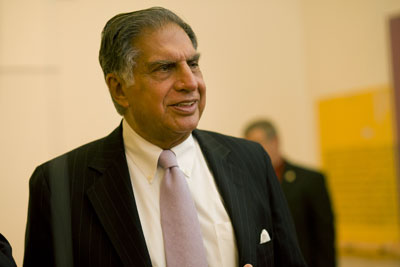
…I take a bite of my plum cake. Tata hasn’t touched his but sips tea quietly as I ask for his views on India and its rapid recent changes. “I feel India is a country that really has an enormous amount of potential, has the human capital to succeed. But if you sit down and say, ‘Will it succeed?’, you see imbalances.”He mentions various policy problems that hamper businesses, from energy shortages to land acquisition. Such things have been part of the reason his group has sought growth overseas, initially in Europe but, he says, Continue reading

Top 3 Words to Avoid When Talking Shop with Architects

We are working in Cochin and sometimes I feel like I am speaking two different languages. I’m not talking about struggling with mixing English and Malayalam. I’m not talking about scratching my head each time I encounter an Indian head shake/nod (“Wait- was that a yes or a no?”). I’m talking about the client’s language vs. the architect’s language.

This internship really is a “living laboratory.” I am getting a chance to sit on the client side and discuss ideas with the architects that will push Raxa Collective’s vision forward. Crist and Amie have worked with the design team side by side on each project and I am starting to understand how they think, how to make sure my drawings, renderings, and presentations can be clearer, and more. Sitting in on these design meetings in which the architect and clients discuss, propose, discuss, present, discuss, discuss, and discuss some more, I realize…

It’s like talking shop at an auto repair.

Continue reading

Rockefellers Honoring Tatas

Cornell University Photography file photo

If you have been to India, you recognize the name. In fact, you might be forgiven for thinking they own the place. But the gentleman to the right was honored recently precisely because of the means by which the company’s business interests intersect with national interests, which is largely through its commitment to the communities within which they operate.  We (the many Cornellians among us but especially the 150 or so who staff and manage Raxa Collective’s base in south India, where these values of Tata are well known) join in applause and awe.  Click the image to the right for the story:

Since the Tata Group’s founding in 1868, the company’s mission has included returning wealth to the communities in which it operates. Two-thirds of Tata Sons is owned by philanthropic trusts that were founded more than 120 years ago.

At Cornell, the Tata Group has established the Tata Scholarship for Students from India to make Cornell accessible for talented Indian students with limited means, as well as the Tata-Cornell Initiative in Agriculture and Nutrition to create programs in India to increase crop yields, introduce new agricultural technologies and improve livelihoods.

Being Full of It: A Meaningful Word

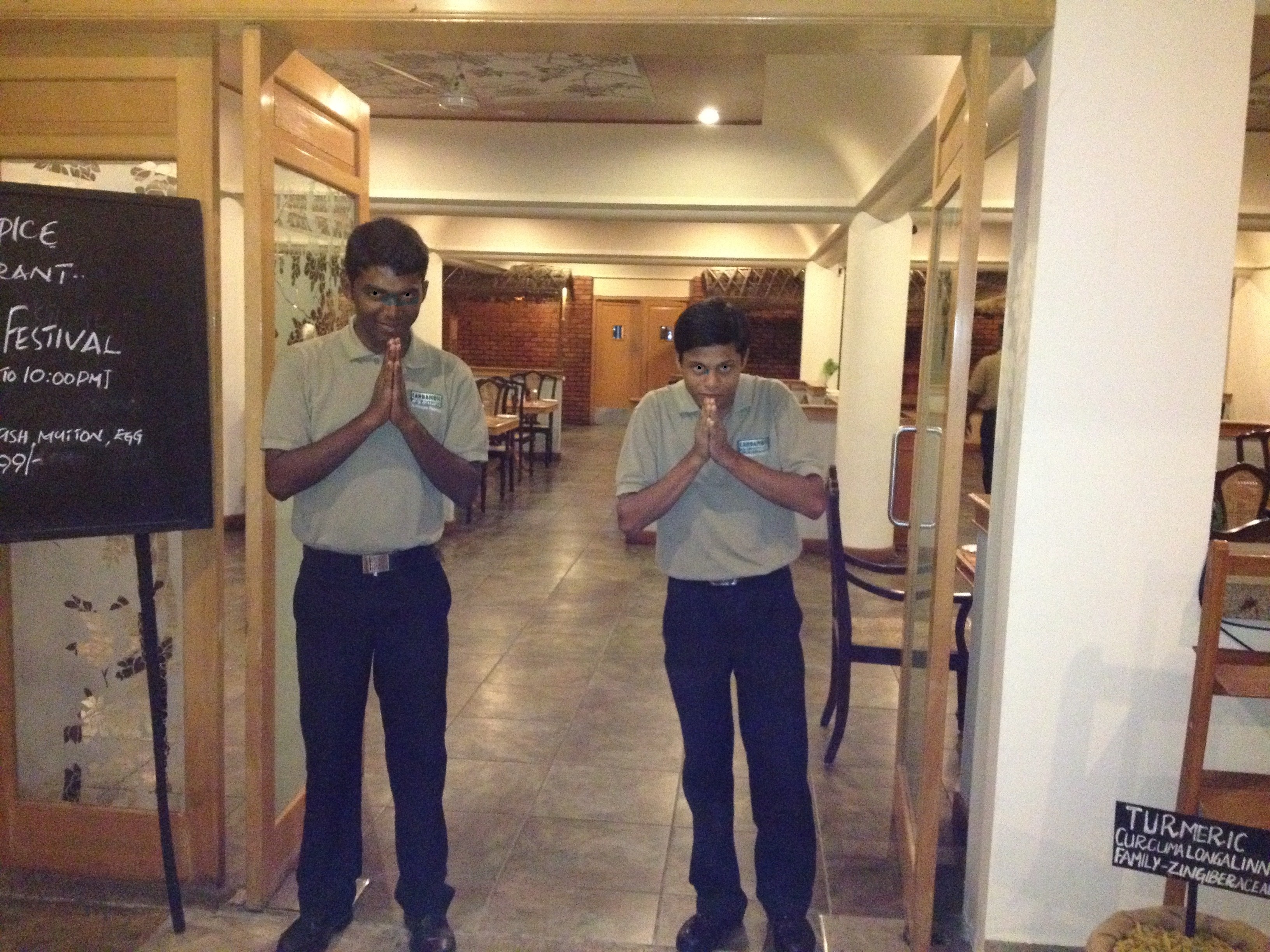
Since arriving in Kerala, I have been greeted many ways.  I have exchanged many smiles and hellos, and I have been veiled with jasmine garland and pressed with traditional dika.  However, the greeting I find most profound lies in a single word: Namaskaram.

Two people, worlds apart, meet with this word.  Each of their hands draws together in a prayerful pose in the nest of their individual chests.  With a bow of their heads, they utter, “Namaskaram.”  At first, it seemed like a simple interaction, yet when I asked the native people for the meaning, I learned that it has a much deeper connotation.

A signal of respect.  A promise of hospitality.  A notion of putting aside one’s ego.  All of these meanings are understood with Namaskaram.  I witness and experience them with nearly every interaction among the people here at Cardamom County, but the latter meaning, putting aside one’s ego, has struck a powerful chord in me. Continue reading

Report To Greco

Man reading, Chania, Crete, 1962 (Costa Manos/Magnum Photos)

Click the photo to go to the recent post titled “Do We Need Stories?” in the blog site of the New York Review of Books.  It starts out:

Let’s tackle one of the literary set’s favorite orthodoxies head on: that the world “needs stories.” There is an enormous need,” Jonathan Franzen declares in an interview with Corriere della Sera (there’s no escape these days), “for long, elaborate, complex stories, such as can only be written by an author concentrating alone, free from the deafening chatter of Twitter.”

Continue reading

Really, Nike?

Quinn O’Neill, someone we have never encountered in writing (or otherwise) before, posted that ad and some reflections about it on the dependably superb 3 Quarks Daily.  Reading those reflections is worth a lot more than the five minutes it will take.  On this site we very rarely engage in outrage for reasons we have not fully articulated (yet); but a well-crafted second thought on what might otherwise seem harmless entertainment begs the question: Continue reading

Holier Than Holi?

This slideshow requires JavaScript.

After noting several reasons, big and small, that we trust The Guardian, I kept looking at those photos.  When I showed Milo, as usual he already knew much more about the topic of Holi than I (not a major feat in this case because until seeing those photos in The Guardian I knew precisely zero about Holi), so today when those photos caught my eye again it occurred to me that The Guardian might just have some more.  Continue reading