From Waste to Gourmet Mushrooms

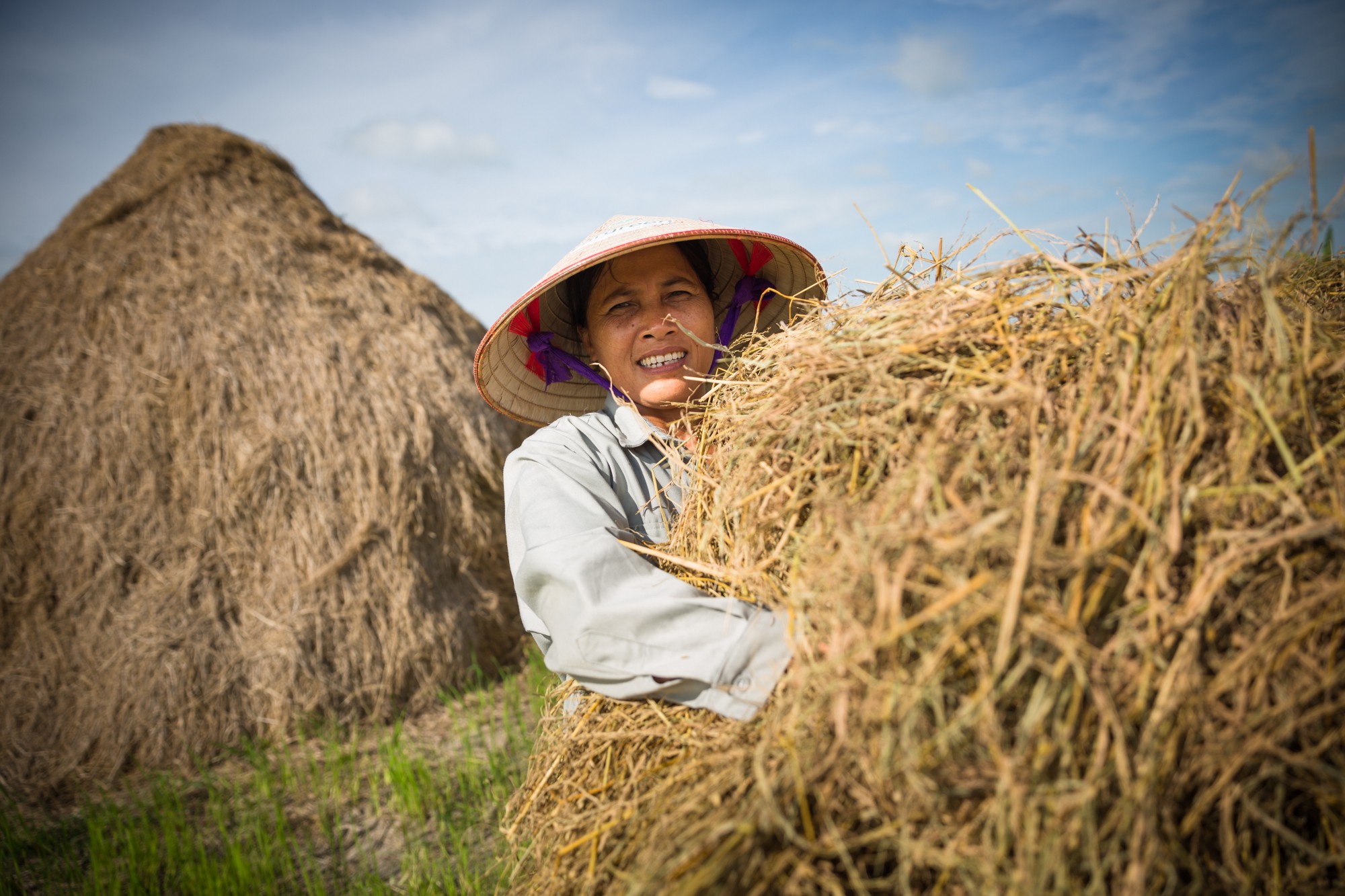
Social entrepreneur Trang Tran is teaching Vietnamese farmers how to use rice straw as a substrate to grow gourmet mushrooms, helping to reduce greenhouse gas emissions and give farmers a new source of income. PHOTO: Medium

Social entrepreneur Trang Tran is teaching Vietnamese farmers how to use rice straw as a substrate to grow gourmet mushrooms, helping to reduce greenhouse gas emissions and give farmers a new source of income. PHOTO: TED

Rice straw burning is something that happens every harvest season, and it happens all around us. It’s been done for many years, and it’s considered the most convenient way of getting rid of waste. Straw is perceived as having no value — farmers just want to get it out of the way as soon as possible in order to prepare for the next crop. In Vietnam, 20 to 50 million tons of rice straw are burned annually, releasing greenhouse gases into the atmosphere. Obviously this contributes to climate change, but the more immediate problem is that local people inhale the matter, causing serious health problems in communities — particularly in babies. Poor communities are most affected, and of course they have the least money for health care.

Continue reading

Put a Face to Litter

Every day in Hong Kong, more than 16,000 tons of waste is dumped in the streets and public spaces. PHOTO: hkcleanup.org

Every day in Hong Kong, more than 16,000 tons of waste is dumped in the streets and public spaces. PHOTO: hkcleanup.org

Going by Hong Kong’s Cleanup Challenge, your DNA can rat you out the next time you toss as little as a candy wrapper on the beach or in the park. The country is taking its trash problem seriously, with an entire week in June dedicated to cleaning urban spaces and its coastline. In fact it generates 6 million tonnes of trash a year – the weight of 350 blue whales. Clearly, this is not sustainable. And that’s precisely why one of the country’s NGOs and the advertising firm Ogilvy & Mather came up with the Face of Litter campaign.

Continue reading

Beer, Craftily Crafted

Water samples at the Clean Water Services brewing competition last year used to compare their high-purity water to other local sources of water. /Courtesy of Clean Water Services

Water samples at the Clean Water Services brewing competition last year used to compare their high-purity water to other local sources of water.
/Courtesy of Clean Water Services

When we previously wrote about artisanal beer and it’s most precious ingredient, water, we thought that the New Belgium Brewery was an outlier of alchemy. But thanks to the NPR team at the Salt, we hear this forward thinking form of recycling is more common than we thought.

Clean Water Services of Hillsboro says it has an advanced treatment process that can turn sewage into drinking water. The company, which runs four wastewater treatment plants in the Portland metro area, wants to show off its “high-purity” system by turning recycled wastewater into beer.

Clean Water Services has asked the state for permission to give its water to a group of home brewers. The Oregon Brew Crew would make small batches of beer to be served at events – not sold at a brewery.

But as of now, the state of Oregon doesn’t technically allow anyone to drink wastewater, no matter how pure it is.

The Oregon Health Authority has approved the company’s request for the beer project. But the Oregon Environmental Quality Commission will also have to sign off on it before anyone serves a beer made from recycled sewage.

Continue reading

Algae Could Turn Toxic Water Into Metal and Biofuel

Contaminated water at Wheal Jane, where the Department for Environment is spending £2m a year on combating pollution. Photograph: Rex Features. Via The Guardian.

We’ve featured pieces on different biofuels before, though probably not enough of them. We’ve also recently seen an example of how science can help clean up the messes that other scientifically informed — but less environmentally scrupulous — activities create, like the new carbon-scrubbing structures that might be used in coal plants. The topic of bioremediation is one of great interest and which we plan on sharing more about, especially in the mycological realm. For now we’ll start with this story of algal bioremediation and resource recuperation in Cornwall, one of England’s most historically important mining regions. Jamie Doward reports for The Guardian:

A groundbreaking research project to clean up a flooded Cornish tin mine is using algae to harvest the precious heavy metals in its toxic water, while simultaneously producing biofuel.

If the project, which is at a very early stage, is proven to work, it could have huge environmental benefits around the world.

Continue reading

National Clean-up Day in Costa Rica

This Sunday, while thousands of people were marching in NYC and other major cities around the world, Costa Rica had its national clean-up day in communities, rivers, lakes, beaches, and oceans. Designed to collect recyclable material as well as trash, the program was organized in part by the Ocean Conservancy and Terra Nostra, and sponsored by relevant government agencies. Xandari invited community members to join in to work around the roads in Tacacorí and the neighboring town of Tambor, and including four hotel employees and myself we had forty-five people come out from 7am-11am to pick up and sort trash. Many of these individuals were young children and teenagers, which was an encouraging sight!

Part of the street before trash pick-up

On Saturday, a team of thirteen hotel employees had also gone out along the Tacacorí river, and they collected a total of twenty-two pounds of plastic, forty-four pounds of glass, ninety pounds of scrap metal (tins, car parts, etc.), two-hundred pounds worth of car tires, and four-hundred and sixty-two pounds of just trash (clothing and other non-recyclable waste). The next day, the group of forty-five combing the streets found a hundred and twenty-seven pounds of plastic, a hundred and nineteen pounds of glass, sixty-six pounds of paper and cardboard, and six-hundred and six pounds Continue reading

Lost At Sea

From the Drifters Project by Pam Longobardi

From the Drifters Project by Pam Longobardi

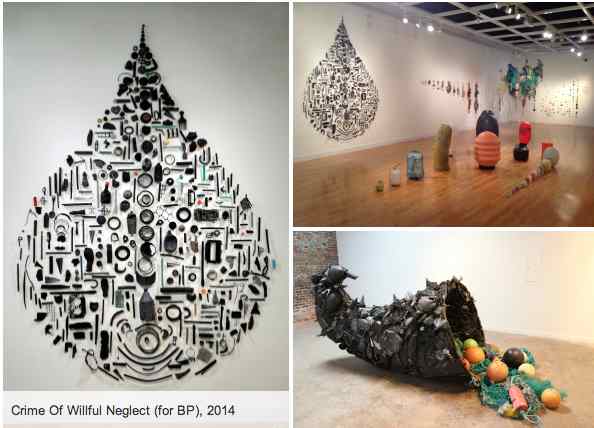
The world’s oceans effect all life on earth and it’s no longer news that even the most pristine places on earth are impacted by our “toxic legacy,” as artist Pam Longobardi puts it. The project statement for her Drifters project is really worth reading. Here is an excerpt I found particularly poignant:

Plastic objects are the cultural archeology of our time.  These objects I see as a portrait of global late-capitalist consumer society, mirroring our desires, wishes, hubris and ingenuity.  These are objects with unintended consequences that become transformed as they leave the quotidian world and collide with nature to be transformed, transported and regurgitated out of the shifting oceans.  The ocean is communicating with us through the materials of our own making.  The plastic elements initially seem attractive and innocuous, like toys, some with an eerie familiarity and some totally alien.  At first, the plastic seems innocent and fun, but it is not.  It is dangerous.   We are remaking the world in plastic, in our own image, this toxic legacy, this surrogate, this imposter.

By doing this Drifters project, she has removed thousands of pounds of material that would be considered trash and then presenting it within a cultural context. Amie wrote a previous post about artists using ocean trash as materials for art. They too found themselves telling the story of global consumerism using plastic.   Continue reading

Water Through The Lens

This slideshow requires JavaScript.

This set of photographs, noted on the New Yorker‘s website, are a collection related to water that, in the artist’s words, deserves our attention:

“While trying to accommodate the growing needs of an expanding, and very thirsty civilization, we are reshaping the Earth in colossal ways. In this new and powerful role over the planet, we are also capable of engineering our own demise. We have to learn to think more long-term about the consequences of what we are doing, while we are doing it. My hope is that these pictures will stimulate a process of thinking about something essential to our survival; something we often take for granted—until it’s gone.” Continue reading

Lexicon of Sustainability

Thanks to the Public Broadcasting Service of the USA for the video above and these links to sustainability-focused terminology, in this case related to Food Waste:

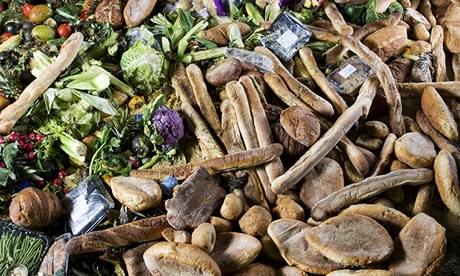
Nearly 40 percent of the food we grow, distribute, put on store shelves then ultimately buy as consumers never gets eaten. It’s called food waste and people are doing something about it by gleaning, composting, and learning to eat from head to tail to eliminate waste.

Food Terms

Food waste
“Forty. That’s the percentage of food in this country that never gets eaten, or that’s grown and never comes to market. It’s the food we distribute that never reaches a destination or sits on grocery store shelves without finding a consumer. And it’s food consumers buy but never eat. “
– Douglas Gayeton, LOCAL: The New Face of Food and Farming in America Continue reading

Stop The Rot

One-fifth of what households buy ends up as waste, and around 60% of that could have been eaten, according to a report from the government’s waste advisory group, Wrap. Photograph: Murdo MacLeod

One-fifth of what households buy ends up as waste, and around 60% of that could have been eaten, according to a report from the government’s waste advisory group, Wrap. Photograph: Murdo MacLeod

The Guardian carried a story recently about how in the UK food producers, sellers and consumers are being urged to support a ban on food waste going to landfills by 2020 to which we add our hurrah:

…Compulsory collections of food waste from all homes and businesses by local councils are among a series of measures recommended in a new report to enable food waste to be harnessed as a valuable resource to provide energy, heat and benefits for agriculture.

The ambition is to save the UK economy over £17bn a year through the reduction of food wasted by households, businesses and the public sector, preventing 27m tonnes of greenhouse gases a year from entering into the atmosphere.

The new study, Vision 2020: UK Roadmap to Zero Food Waste to Landfill is the culmination of more than two years’ work and has the backing and input of local authority and industry experts. It sets the framework for a food waste-free UK by 2020. Continue reading

Waste Not, Want Less

The Atlantic‘s Senior Editor, James Hamblin, MD, has advice we are compelled to share:

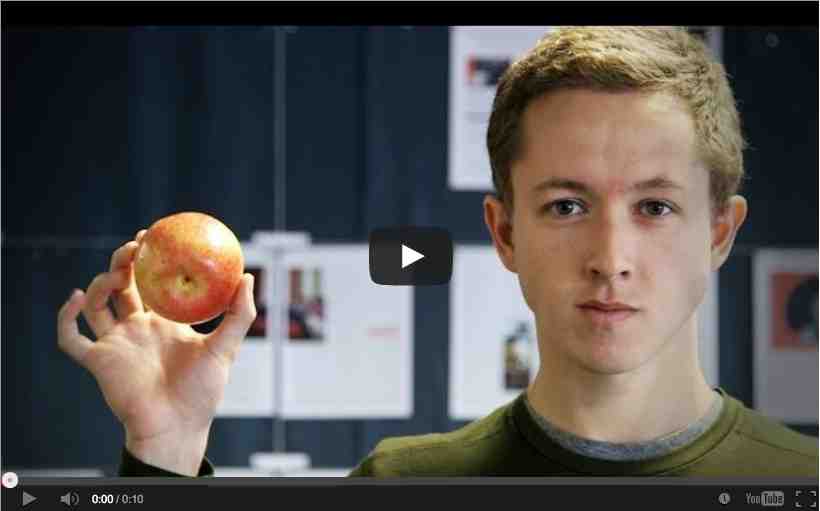
What do you think an apple core is? What’s the thing we throw away?

It is a ghost. If you eat your apples whole, you are a hero to this ghost. If you do not, you are barely alive. Come experience vitality.

Earlier this year, in “How to Eat Apples Like a Boss,” a video by Foodbeast, the Internet was promised the gift of confidence in apple-eating. Elie Ayrouth ate an apple starting at the bottom, proceeding to up to the top, and finishing with a wink to the camera, as bosses do. Eating as such, Foodbeast said, the core “disappears.”

Continue reading

India’s Recycling Communities

Scrap waste collected in Bholakpur Photo Courtesy of The Hindu

Scrap waste collected in Bholakpur
Photo Courtesy of The Hindu

What happens to obsolete computer or the animal skins from meat factories?

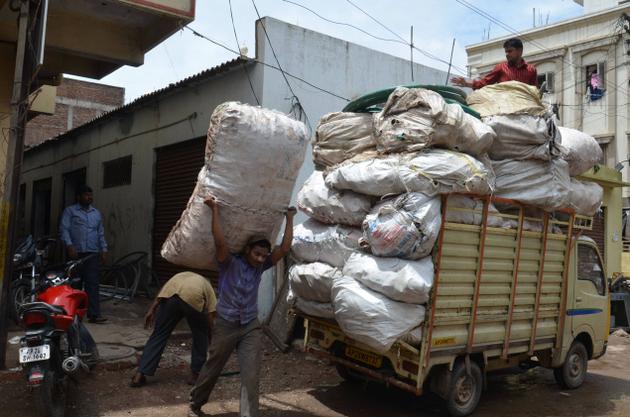
The majority of people couldn’t answer whether these items are recycled or landfilled. A recent article in The Hindu gives some insight into what happens to these items in Bholakpur, a small area of Hyderabad, and it is a surprisingly important industry. Much of what might be considered trash in the Hyderabad area plays an important role in in the community being recycled by families, and resold on the secondary market.

Once inside (Bholakpur), the animal skins go to one of the 200 skin processing units and the plastic and iron scrap to one of the 500-odd plastic or 300-odd iron scrap dealers. There it is sorted and either cleaned up and resold, or ground, melted and transformed into raw material for industrial use. Thus giving new life to waste and also earning a living for the people involved in the process. This includes over 60 per cent of the ward’s 36,000 voter population.

These recycling communities don’t just exist in the Hyderabad area, but also in many of the large metropolitan areas in India. Continue reading

Sleek, sustainable alternatives to disposable tableware

Single-use tableware create increasing, massive amounts of waste. We eat out more than our parents ever did and our lunches are more and more wasteful. The best way to minimize lunch waste is to pack a lunch and pack only what you can eat, and to keep the restaurant option for that special occasion. The bento-box for lunch is a huge trend right now in Europe, mine is a shiny round box. When I happened to eat at my company’s canteen I noticed the invasion of the shelves by disposable packaging. And when my colleagues and I ate out at any of the pricey parisian eateries, it was more and more difficult to find non-disposable tableware. Here in rural South India, I never once had to say “I’d rather have a real cup please”.  When I go to the staff cafeteria, I pick up my large steel tray and my steel cup from the drainer wash it, fill them up and afterwards I wash ’em put ’em back, so someone else can do the same. Easy peasy. Nothing worth adding to the landfill about.   Continue reading

Food, Waste, Change

While we are on the subject of looking at food differently, as well as depending on others for new perspective, we can wrap all that around last week’s emphasis on food waste.  We will not let that topic go until we see the dial turning. We will keep a spotlight on the need for change, and share whatever we find from our good neighbors on this topic. WRI shares a thorough examination that is worth a click and read:

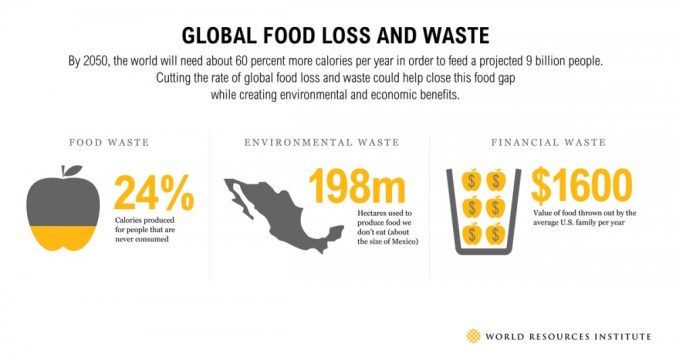
The Food and Agriculture Organization of the United Nations (FAO) estimates that 32 percent of all food produced in the world was lost or wasted in 2009. This estimate is based on weight. When converted into calories, global food loss and waste amounts to approximately 24 percent of all food produced. Essentially, one out of every four food calories intended for people is not ultimately consumed by them. Continue reading

Community At The Heart Of Our World Environment Day 2013

This slideshow requires JavaScript.

Sharing a meal is the best way to make good use of food. The UNEP initiative Think.Eat.Save encouraged us to become more aware of the environmental impact of the food choices we make and empowered us to make informed decisions. It also gave us extra energy to continue the donations to Kumily Sneshashram that have been part of our routine for over a decade.

WED 2013: Happy World Environment Day

WED 2013 - Raxa Collective

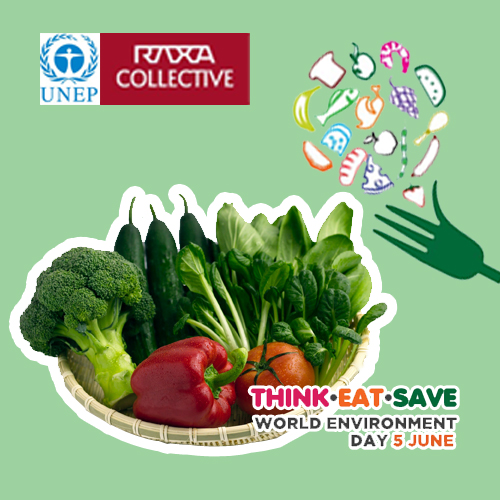
On June 5, we’ll celebrate World Environment Day. This year UNEP focuses on the theme Food waste/Food Loss. At Raxa Collective we’ll be carrying out actions and sharing experience and ideas. Come and join us with your ideas and tips to preserve foods, preserve resources and preserve our planet.

Here is a video which explains how we save the food we produce at our restaurant All Spice at Cardamom County from wastage. Our process includes a dedicated team, talented suppliers, our farm animals and organic garden and a local pig farm. It also explains how we give back.

International Environmental Film Festival of Paris: Prize List and Small Gems

The 30th edition of the International Environmental Film Festival closed in Paris a few weeks ago. The selection of rare, beautiful and eye-opening films was a treat so I wanted to share some of the goodness with you.

Grand Prix: The Fruit hunters by Yung Chang

Inspired by Adam Leith Gollner’s book of the same name -that also inspired a post in these pages – Canadian director Yung Chang (Up the Yangtze) enters the world of fans of rare varieties of fruits.  As he follows fruit hunters’ travels and meet-ups, he finds the tree of an almost extinct mango, comes across actor Bill Pullman and interviews many of these unsung heroes of biodiversity. The aesthetics of the cinematography makes those fruits and those characters irresistible. Continue reading

If You Happen To Be In Brooklyn

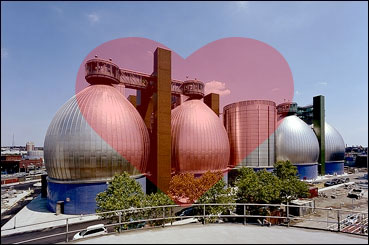
Your public servants are hard at work, innovating at the intersection of waste, love and water.  Make a Valentine’s Day reservation with your romantic counterpart to visit this spot in the Greenpoint section of Brooklyn, as per the press release:

Department of Environmental Protection Announces Second Annual Valentine’s Day Tours of the Newtown Creek Wastewater Treatment Plant

For Those Seeking an Alternative Valentine’s Day Experience, a Tour of the Greenpoint Plant Will Both Educate Visitors on the Essential Wastewater Treatment Process and Provide Breathtaking Views of the City from Atop the Famous Digester Eggs

Continue reading

Our Gang, Thevara (About The Clever One)

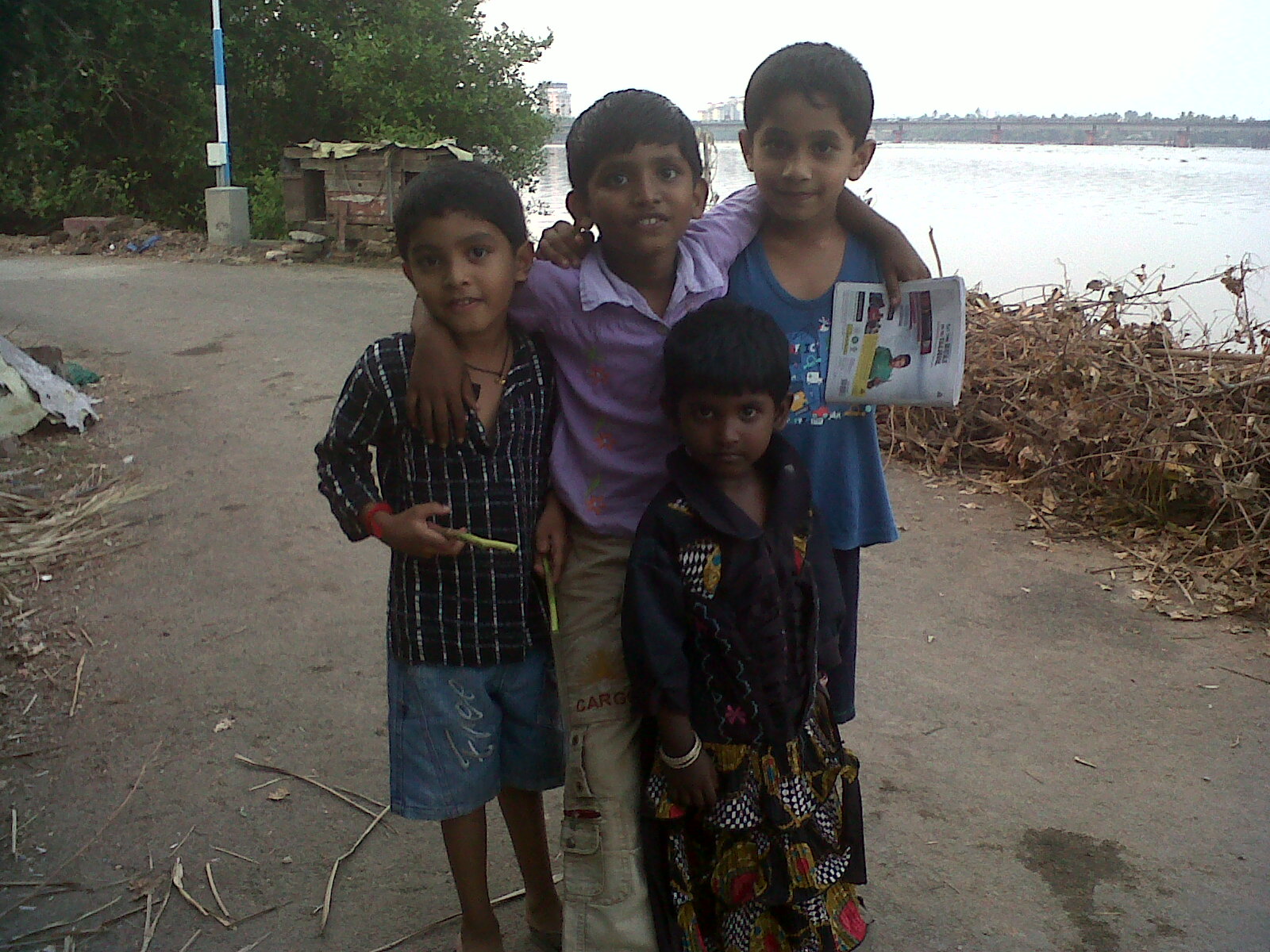
This young lady in the foreground of the photo above is special.  She has already broken an unspoken, unwritten, and increasingly irrelevant gender barrier in which girls play with girls and boys with boys: her brother has welcomed her into the fellowship that used to be strictly a fraternity.  It helps that she is clever.

Continue reading

Don’t Blink

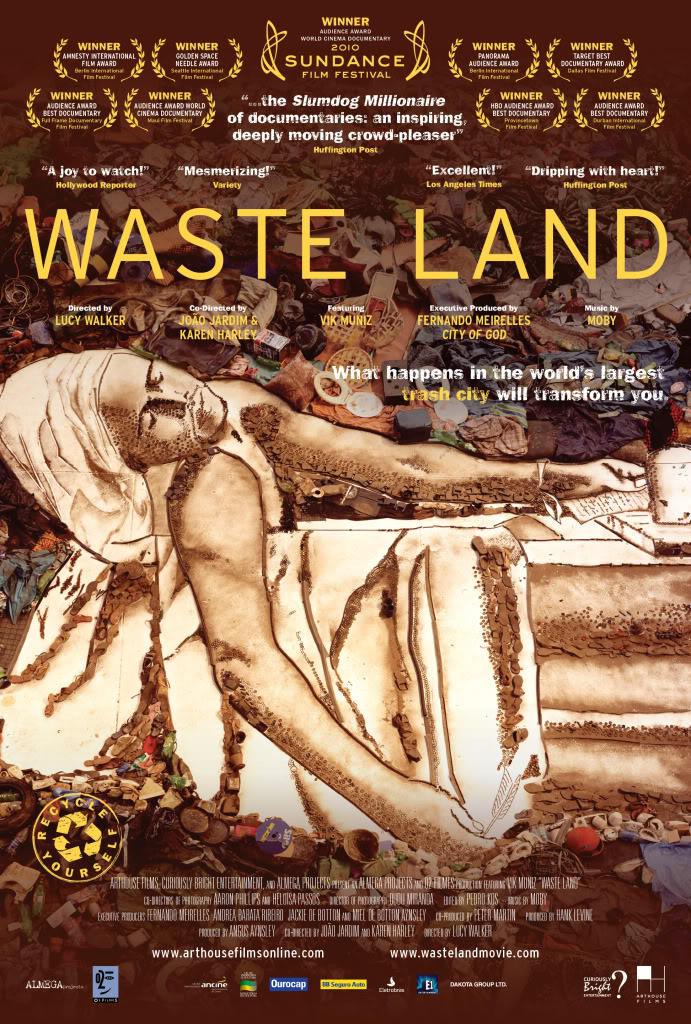
The beautiful thing about garbage is that it’s negative; it’s something that you don’t use anymore; it’s what you don’t want to see. So, if you are a visual artist, it becomes a very interesting material to work with because it’s the most nonvisual of materials.  You are working with something that you usually try to hide. –Vik Muniz

Brazilian artist Vik Muniz is known for his visual wit using either the world’s detritus or the generally unexpected as the medium for his portraits and landscapes.  Each piece, formed by ink drops, chocolate drips, dust motes, thread swirls or garbage itself, is temporary by nature, achieving permanence via a camera’s lens. Continue reading

The Eye of the Beholder

Chris Jordan, Caps Seurat, 2011

Seattle based photographer Chris Jordan has been making visual statements about mass consumption for over ten years. Using the “artist’s eye” to be able to step back from the overwhelming truths of societies’ excesses, he simultaneously breaks down that mass consumption into its smallest part and its incomprehensible whole.

Jordan uses  commodities  that are discarded daily–plastic and paper cups, newspapers, electronics–as the “brushstrokes” to illustrate the wastefulness  in cultures of consumerism. His photographs place both conscious and unconscious behaviors under a microscope, which is often unsettling, and always thought provoking. Continue reading