Ask Whole Foods About Wonderful

oilag-reaction_teenfriends_2

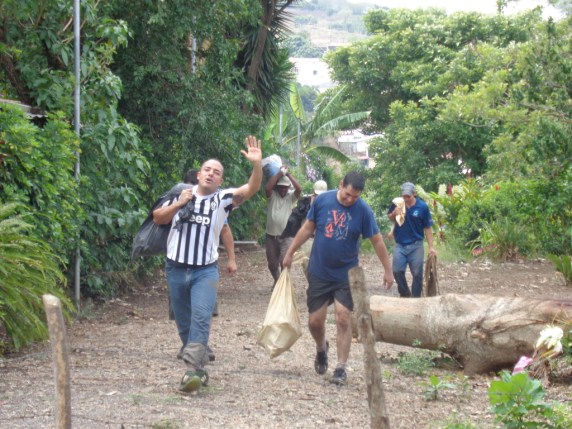
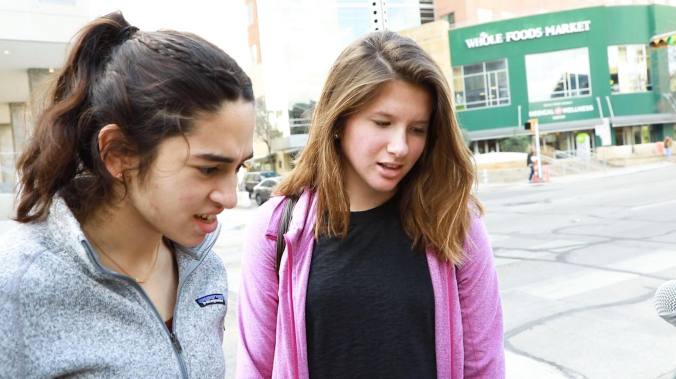
How wonderful is that?!? An organization that has been digging into the question of where all that fracking water is going in recent years. Thanks to Food & Water Watch, one of the most vigilant watchdogs helping the public become aware of fracking’s potential dangers, for asking questions that we all have reason to care about. And since the answers are not so wonderful, they are choosing perfect market-based locations to ask regular folks whether they are aware of the very cozy relationship between fracking waste water and the food we eat. Even some certified organic foods, it turns out. The image above is from their current press release:

PomWashington, D.C. — Are families around the country—and around the globe—eating California produce grown with toxic water from oil drilling? If they consume Halos Mandarins, POM Wonderful pomegranate juice, Wonderful pistachios, Sunview Raisins, Bee Sweet citrus or Sutter Home wine, they almonds_bottommay well be. Those companies grow some of their products in four water districts in California’s Central Valley that buy wastewater from Chevron and other oil companies’ drill sites. Now, Food & Water Watch is announcing a campaign to ban the practice, which threatens our food, farm workers and the environment, with a new documentary by noted filmmaker Jon Bowermaster and a campaign video capturing shocked reactions from people who previewed the video last week in front of Whole Foods’ headquarters in Austin, Texas. [continued below]

Thanks to WNYC for this half hour in which we learned about the study. For a decade-old but still profile of the wonderful couple who we hope will come clean on this, take a look here:

fiji_bottle_top…Lynda and her creative team immediately set to work promoting the water’s “untainted” origins. (Fiji Water comes from an aquifer on the island of Viti Levu.) The bottle’s label was retooled: the image of a waterfall (Lynda: “Surface water? Yuck!”) was replaced with a bright-pink tropical flower and palm fronds, and the company’s slogan was changed from the ho-hum “Taste of Paradise” to the more direct “Untouched by man. Until you drink it.” Since the makeover, sales have improved by three hundred per cent…

Rich, as the saying goes. Continue reading

Water Independence, A Trend Worth Watching In 2018

03Water8-master675.jpg

At Opal Springs Water Company in Oregon, raw water is prepared for shipping to the company Live Water. Credit Leah Nash for The New York Times

Closing out 2017, a note on water. Nellie Bowles wrote this story, Unfiltered Fervor: The Rush to Get Off the Water Grid, for the Food section of the New York Times. It could just as well have been in either the Science or the Tech section.

One new technology allows anyone, in dry or humid climates, to produce and store their own drinking water. The story is in the Food section presumably because it is a luxury for the improvement of your drinking pleasure; but the implications for natural resource management are interesting. And what about the projects that societies have embarked upon, forever, to determine ever-better ways to distribute necessities like water?

SOURCE: a HydropanelTM that makes drinking water from sunlight and air

main-image

A standard residential SOURCE array is made up of two panels: one primary panel and one additional panel with array sizes designed to meet your drinking water needs.

  • Daily Production

    A standard array averages 4-10 liters each day or 8-20 16.9oz standard water bottles, depending on sunshine and humidity.

  • Footprint

    Each panel is 4 feet x 8 feet (1.2m x 2.4m) and a standard array contains 2 panels.

  • Water Storage

    Each panel holds 30 liters in a reservoir where it is mineralized and kept clean for optimal taste and health. Standard arrays have 60 liters of water storage capacity.

  • Power

    SOURCE utilizes solar power and a small battery to enable water production when the sun shines and water delivery on cloudy days or at night.

The story includes several technologies that seem worth knowing about:

Continue reading

What’s Wrong With This Picture?

4500Nestle

Thanks to Jessica Glenza and the Guardian for this update on the story of water in Michigan, a topic that seemed to come and go as quickly the political landscape shifted in the last year. Nestle, the Moriarti of so many stories, makes this one too easy to believe:

While Flint battles a water crisis, just two hours away the beverage giant pumps almost 100,000 times what an average Michigan resident uses into plastic bottles

Gina Luster bathed her child in lukewarm bottled water, emptied bottle by bottle into the tub, for months. It became a game for her seven-year-old daughter. Pop the top off a bottle, and pour it into the tub. It takes about 30 minutes for a child to fill a tub this way. Pop the top, pour it in; pop the top, pour it in. Maybe less if you can get gallon jugs.

Luster lives in Flint, Michigan, and here, residents believe tap water is good for one thing: to flush the toilet.

“I don’t even water my plants with it,” she said. Continue reading

Stanford Earth’s Rosemary Knight

Thanks to Stanford News for this short video on important innovation related to ensuring we all stay hydrated well into the future:

Mapping groundwater from the air

Stanford Earth’s Rosemary Knight recently spearheaded a project to map underground freshwater resources and forecast the intrusion of saltwater into aquifers beneath the California coastal town of Marina. The project, a collaboration between Stanford, the Marina Coastal Water District, and Aqua Geo Frameworks, involved a low-flying helicopter towing a giant, instrument-laden fiberglass hoop that generated ground-probing magnetic fields that penetrated 1,000 feet beneath the surface.

New Study on How Boobies Dive Safely

Replicas of gannet skulls from the collection at the Smithsonian Institution allowed researchers to measure the forces a bird’s skill experiences during a dive. (Photo by Sunny Jung/Virginia Tech via Smithsonian)

Replicas of gannet skulls from the collection at the Smithsonian Institution allowed researchers to measure the forces a bird’s skill experiences during a dive. (Photo by Sunny Jung/Virginia Tech)

The title may seem silly, but I can’t help that a whole family of birds are alternatingly called boobies or gannets – most of us have heard of the Blue-footed Booby, but there are several other species, all of which hunt for fish by diving, head first, at extremely high speeds from many meters above the water. For a human entering water at fifty miles an hour, a neck injury would be a certainty, and even organ damage could occur, but boobies/gannets accomplish the dives plenty of times during a day’s hunting, with no apparent problem. It seems that their physiology, as well as the way they contract their muscles during the plunge, save them from harm. From the Smithsonian Insider:

New research from Virginia Tech, the Smithsonian’s National Museum of Natural History, the National Museum of Rio de Janeiro and the North Carolina Museum of Natural Sciences helps explain how the birds manage these high-speed dives.

“We were interested in what happens when objects plunge into water, so we looked for examples in nature; the gannets are incredible,” said Sunny Jung, an associate professor of biomedical engineering and mechanics in the College of Engineering and an expert in fluid biomechanics; he has also studied dogs’ unusual drinking technique and how shrimp use microscopic bubbles to hunt.

Continue reading

Boca del Tule, Kayak & Surf

img_9395_zpsmfqybqon

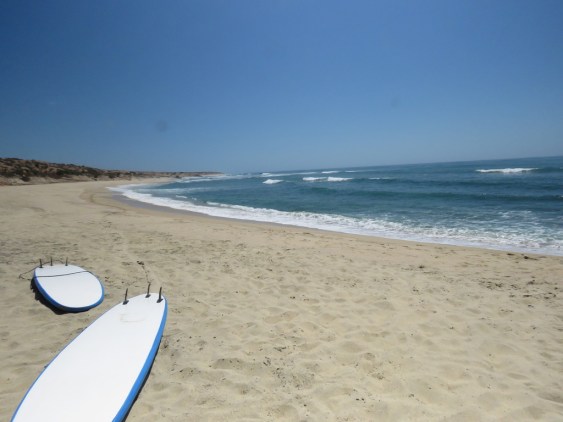
The shore down below Villa del Faro is known as Boca del Tule, since the Tule arroyo –– a seasonal river in the desert –– runs into the ocean at that point (boca means mouth in Spanish). The beach is public but very few people are ever on it, partly because we’re an hour away from the closest city, San José del Cabo, via dirt road. Now and then you’ll see a couple fishermen, or if the waves are good, some surfers. Last week, Jocelyn and I tried surfing both here at Boca del Tule and also at a better-known surfing beach just twenty minutes south called Nine Palms.

Both spots offered fair surfing for either experienced or newbie surfers, since Continue reading

Out of Sight, Out of Water

acquifer_zpsl4jzg8aa

Source: National Geographic

As a person who’s had the privilege to live her entire life in areas that have access to potable municipal water, I view water as an environmental commodity that only involves the twist of a faucet knob to obtain it (as I think most people who have enjoyed the same privilege do). Even when the water supply was cut off for some unknown reason, getting usable water was as simple as going to the closest convenience store and purchasing a five gallon jug or waiting for the daily Costa Rican downpour in the rainy season to collect some rainwater in large bins.

I have read, studied, and heard of the diminishing freshwater reserves on our planet and it is always on the back of my mind whenever I turn on a faucet to wash dishes, take a shower, brush my teeth, etc. I am frugal with my water consumption, but that is not enough. The fact that it is so easily accessible leads to the classic conundrum of  ‘out of sight, out of mind.’   Continue reading

Drink Maple? Sure

squam-swamp-run-maple--3781_wide-e793fcc0e7e7afb2f5f94466ffbbc47899d9fbae-s1400-c85

Courtesy of Drinkmaple

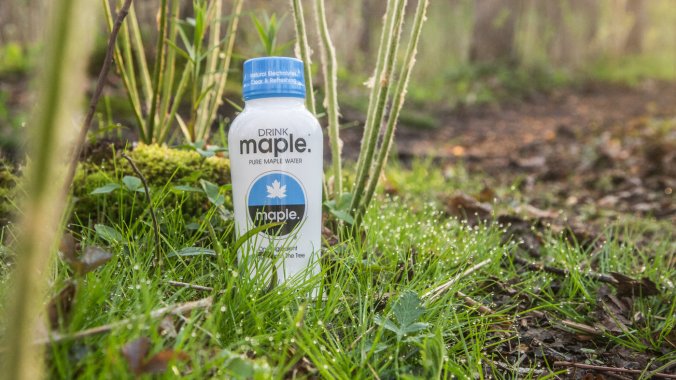
 Those of us who grew up in maple territory can easily relate to this, and even place palm on forehead and ask–why didn’t I think of that?–so thanks to the Salt over at National Public Radio (USA) for this:

From Tree To Tap: Maple Water Makes A Splash

Unlike syrup, which is boiled down into a thick, sticky liquid, maple water is made from unprocessed sap that is 98 percent water. Its growing popularity is a boon for local farmers. Continue reading

Environment, Rights & Responsibilities

Okeowo-Rebecca-Martin-Fights-Niagara-Bottling-1200.jpg

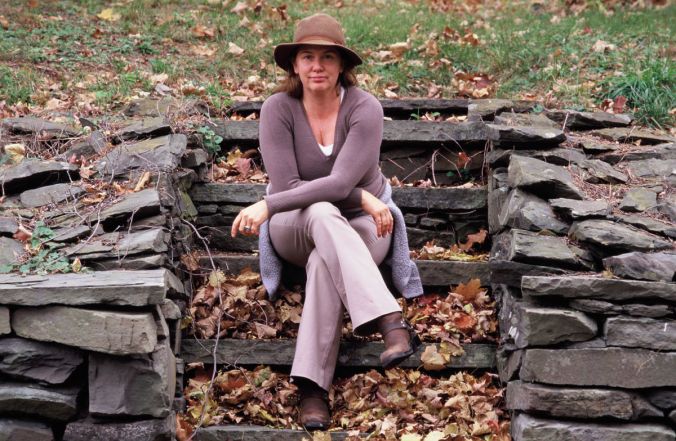
The singer Rebecca Martin helped keep Niagara, a water-bottling company, from tapping a reservoir near her adopted home, in upstate New York. “What’s more important than drinking water? Nothing,” she says. PHOTOGRAPH BY PAT KEPIC

Thanks to Alexis Okeowo for this note about actions our fellow citizens take, a reminder of our rights and responsibilities:

A JAZZ SINGER FIGHTS NIAGARA BOTTLING

By Alexis Okeowo

For years, Rebecca Martin was used to being transient, without a permanent home or commitments. As a jazz musician who performed both solo and with a band named Once Blue, Martin spent much of her time on the road touring and performing, while being loosely based in New York City. When she decided, almost fifteen years ago, to move to Kingston, ninety miles north of the city on the Hudson River, she felt a sense of relief. She had “really lost touch with the idea of community and responsibility to one another,” she said, and took the chance to grow her family and settle down. She started noticing ways that her new town could improve. There was a shop in her neighborhood that was selling large knives, big enough to be called swords, near two schools. Continue reading

TNC Building Beaver Dams

View of a series of existing beaver dams downstream of beaver dam analogue restoration reach. Photo © The Nature Conservancy (Kristen Podolak)

Beavers can be highly destructive in the wrong environment, but are keystone species wherever they’ve been around for long enough to have designed their ecosystem. And in areas where for a number of reasons beaver populations have dwindled so much as to see deterioration in the habitat, The Nature Conservancy thinks that adding artificial dams can help restore the land by affecting sedimentation, creating floodplains, and storing water. Kristen Podolak, Rodd Kelsey, Sierra Harris, and Nathan Korb report:

The Nature Conservancy is working like a beaver (Castor canadensis) by mimicking beaver dam building to restore streams and floodplain habitat in Montana and California.

No kidding. Last year we built twelve instream structures that look and act like beaver dams on two streams in Montana and we plan to build six more in a small creek in Childs Meadow, California this fall.

Why try to act like beavers? Beavers are not a panacea and can be a nuisance when they block water diversions or chew down people’s favorite trees, which is why they have been persistently trapped and killed or relocated in many areas across North America.

Continue reading

Soaked Boots and River Squirms

dsc01733_zps0mvho6g0

In the spirit of Earth Day, Xandari held a river clean-up last week along the Tacacorí River, which not only is the hotel’s primary supply for irrigation but also the local town’s. Similar to the community street clean-up we led last September and years prior, the purpose of this event was to remove any garbage along the river starting from the river spring and through the length of the property, which amounts to about 1km. Unlike the last clean-up, however, this one was of a smaller, and damper, scale. Continue reading

Traveling by Water

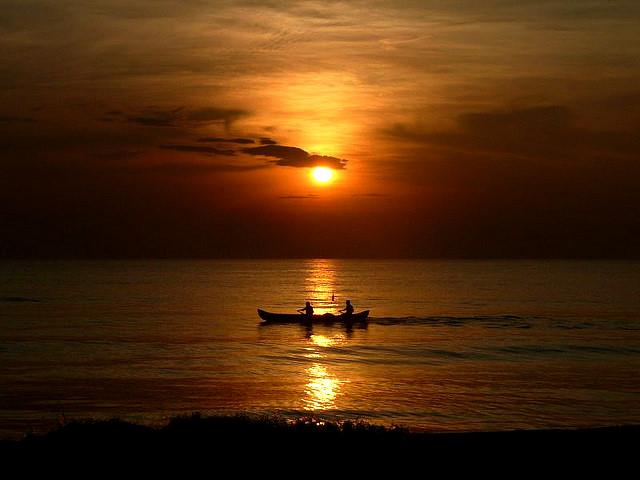
Many are the memories created on the banks of rivers, in the middle of the sea, and along ocean tides. PHOTO: Abrachan Pudussery

Many are the memories created on the banks of rivers, in the middle of the sea, and along ocean tides. PHOTO: Abrachan Pudussery

At Xandari Riverscapes, water is everything. Sharing the Kerala backwaters with all those who choose to travel with us has always been about sharing stories of the waters. Of the paddy fields that hug the river banks, canoes that transport groceries and construction material to the hinterlands, women and children fishing and splashing around near their waterfront homes, fishing boats, and more. And so this soulful piece on water’s incredible power to flow by memories resonates with us all through:

Water is great. We tune ourselves to it, to its murmured song of ebb and flow, of wave and ripple, in seas, rivers, streams, lakes, wetlands, ponds, snows. We drink it, we bathe in it, we stare at dark clouds praying for their sudden moment of release of it. “Take me somewhere magical,” my favorite cousin once said. So I did, to sail the sea. By the third day our ship was completely out of sight of land, nothing but water curving with the horizon.

“Oh,” she said. “Oh. That’s exactly what I needed.”

Below us, the swells rolled, allowing us to dance with them until our very steps were full of the lift of waves. In our own small way, our steps lifting with the waves, we were tuning the ocean as we sailed—and it, in turn, was tuning us.

Continue reading

Sorry, Bolivia!

bolivia

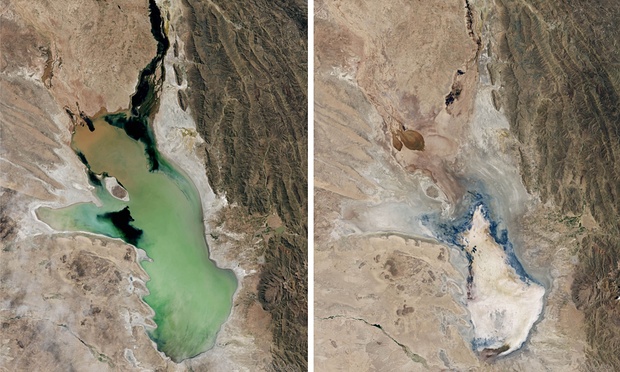
NASA satellite images show Bolivia’s Lake Poopo filled with water in April 2013 (left), and almost dry in January 2016. PHOTO: NASA/AP

Drying rivers, lakes, and reservoirs. Fancy a list? Here and here, you go. The world’s waters are rapidly running dry, threatening wild habitats and human civilization, exacerbating climate change. In turn, livelihoods, ecosystems, energy generation are all affected. Like in Bolivia, which just lost its second largest lake.

Continue reading

Rain Scents

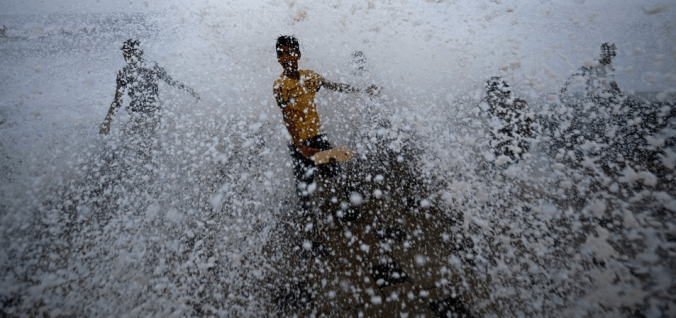
Vivek Prakash/Reuters

Vivek Prakash/Reuters

Smell is one of the most evocative of the five senses, allowing us to relive memories that span our entire lives. Scents from the kitchen make our mouths water. Scents from nature make us long to be outdoors. Considering that on average our bodies consist of 60% water, it isn’t surprising that we’re so attuned to the range of smells associated with H2O.

Many of the RAXA Collective team long for the refreshing monsoon rains in Kerala, never imagining that exhilaration could be captured in a bottle.

Once again we thank The Guardian for this intoxicating story.

Every storm blows in on a scent, or leaves one behind. The metallic zing that can fill the air before a summer thunderstorm is from ozone, a molecule formed from the interaction of electrical discharges—in this case from lightning—with oxygen molecules. Likewise, the familiar, musty odor that rises from streets and storm ponds during a deluge comes from a compound called geosmin. A byproduct of bacteria, geosmin is what gives beets their earthy flavor. Rain also picks up odors from the molecules it meets. So its essence can come off as differently as all the flowers on all the continents—rose-obvious, barely there like a carnation, fleeting as a whiff of orange blossom as your car speeds past the grove. It depends on the type of storm, the part of the world where it falls, and the subjective memory of the nose behind the sniff… Continue reading

Drinkwell: A Pioneer of Potable Water

Photo credit: Drinkwell

Water is the essence of all life on Earth, and access to potable water is an absolute human right. To resolve the global arsenic water crisis that affects over 200 million people across 70 countries, Drinkwell is pioneering an alternative method for providing potable water to affected communities by transforming existing arsenic-affected tube wells into local profitable water enterprises. The organization provides affected villagers with water filtration technology and business tools, and in turn, the villagers become entrepreneurs of these mirco-water businesses.

Drinkwell filtration systems extract the arsenic and do it efficiently. “Whereas current solutions use Reverse Osmosis technology that wastes 40%-60% of input water, Drinkwell wastes only 1% of water,” their website explains. The polymers, or resin beads, are infused with nanoparticles which extract arsenic from water flowing through them. These polymers are regenerable and can filter water for years.

Continue reading

Where’s The Snow?

In 500 years, the Sierra's stores of snow have never ben this low. PHOTO: François B. Lanoë/Nature Climate Change

In 500 years, the Sierra’s stores of snow have never ben this low. PHOTO: François B. Lanoë/Nature Climate Change

Yet another ironical evidence of climate change. One in the mountains of Sierra Nevada, which coincidentally mean ‘snowy’ range. A new study has found that the snowpack in the Sierra Nevadas is the lowest it’s been in the past 500 years. Definitely not good news for California which depends on this snowpack for water. A debilitating drought, fierce wildfires, and now a declining snowpack, things sure are not looking good for the city.

Continue reading

The Wettest Place on Earth

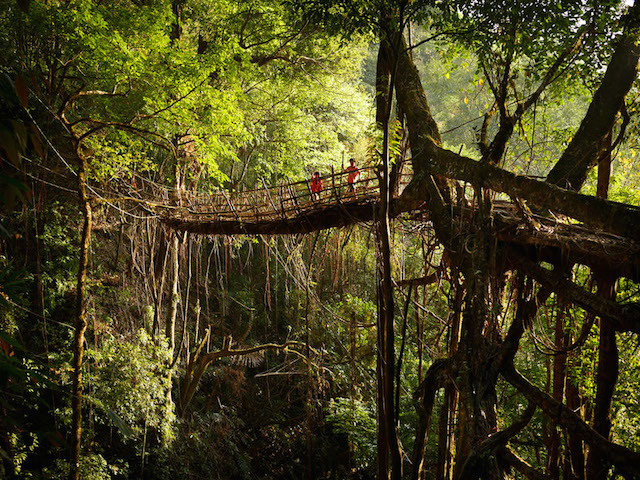
New Zealand-based photographer Amos Chapple captures a "living bridge" deep in the forests of Meghalaya, India.

New Zealand-based photographer Amos Chapple captures a “living bridge” deep in the forests of Meghalaya, India.

Perched atop a ridge in the Khasi Hills of India’s north-east, Mawsynram has the highest average rainfall – 467in (11.86 metres) of rain per year – thanks to summer air currents gathering moisture over the floodplains of Bangladesh. When the clouds hit the steep hills of Meghalaya they are compressed to the point where they can no longer hold their moisture. The end result is near constant rain. Even the world’s biggest statue, Rio de Janeiro’s 30m tall Christ the Redeemer, would be up to his knees in that volume of water.

Continue reading

Watching the Waters

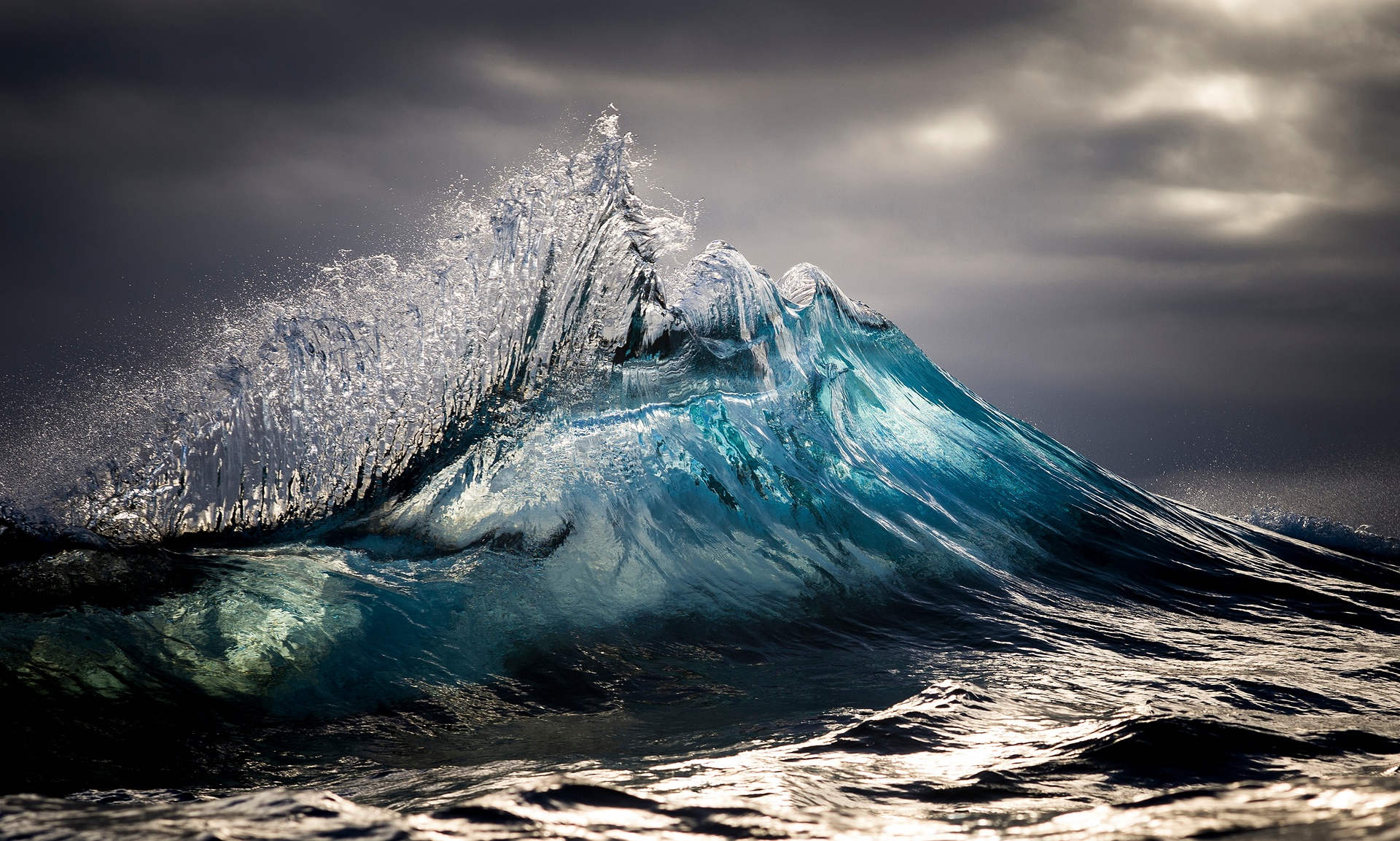
 Scientists believe ocean currents and natural cycles are temporarily offsetting a sea level rise in the Pacific Ocean. Photograph: Ray Collins/Barcroft Media

Scientists believe ocean currents and natural cycles are temporarily offsetting a sea level rise in the Pacific Ocean. Photograph: Ray Collins/Barcroft Media

Over the past century, the burning of fossil fuels and other human and natural activities has released enormous amounts of heat-trapping gases into the atmosphere. These emissions have caused the Earth’s surface temperature to rise, and the oceans absorb about 80 percent of this additional heat. As per a recent update from a panel of NASA scientists, sea levels worldwide rose an average of nearly 3 inches (8 cm) since 1992, the result of warming waters and melting ice.

Continue reading

When It Takes Plastic Balls to Fight Drought

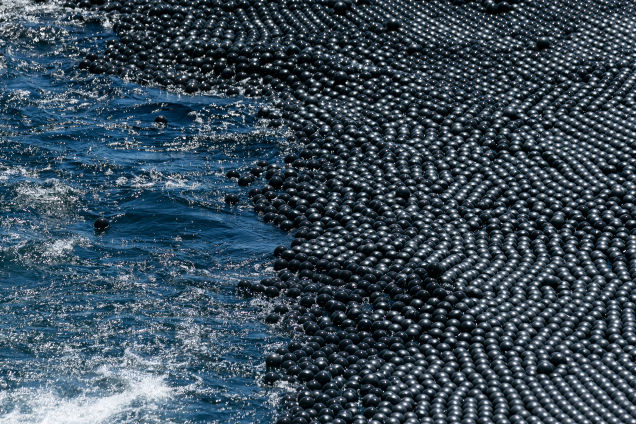
A small portion of the 90 million black plastic balls added to the Los Angeles Reservoir on August 12, 2015. Image credit: AP/Damian Dovarganes

A small portion of the 90 million black plastic balls added to the Los Angeles Reservoir on August 12, 2015.  Image credit: AP/Damian Dovarganes

In a drought, every drop of water is precious, including those lost to evaporation in the hot summer. But in a massive open reservoir, how do you prevent that from happening? Facing a long-term water crisis, officials concerned with preserving a reservoir in Los Angeles hatched a plan: They would combat four years of drought with 96 million plastic balls. On Monday, the 175-acre Los Angeles Reservoir saw the final installment of the project: 20,000 small black orbs that would float atop the water.

Continue reading

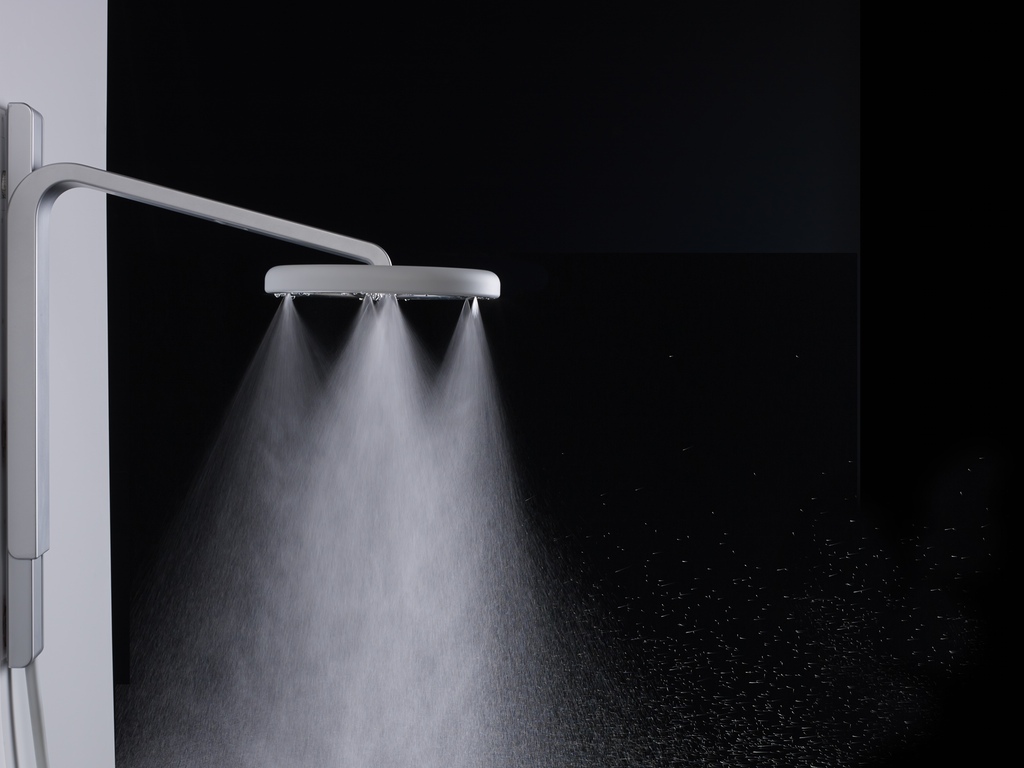
The Showerhead That’s Ruling the Internet

This shower head Is blowing up on Kickstarter thanks in part to Apple's Tim Cook and Alphabet's Eric Schmidt. PHOTO: Nebia

This shower head Is blowing up on Kickstarter thanks in part to Apple’s Tim Cook and Alphabet’s Eric Schmidt. PHOTO: Nebia

What does it take to have the World Wide Web interested in you? And interested is putting it lightly, when we are talking a Kickstarter project that crossed its goal of $100,000 and how, in less than 8 hours. Not to forget having Tim Cook of Apple and Eric Schmidt of Alphabet back you.Well, it takes a showerhead. An extraordinary one at that. One that promises to reduce wastage of water in the shower by 70%, is iconic in design, and has its heart set on revolutionizing the use of water in developing markets. Nebia is here.

Continue reading