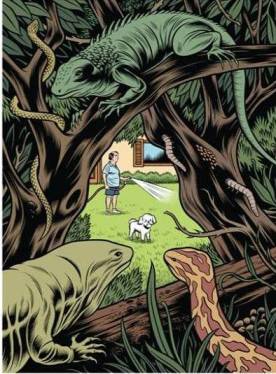
Wild Things Gone Wild

Click the image to go to the article, which examines what happens when exotic animals are bought as pets, then released into ecosystems where they have no predators or other population-regulating mechanisms. Yikes:

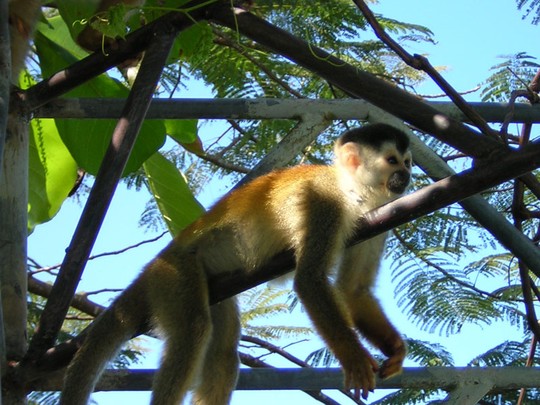
…As Magill was driving to the Miami Metrozoo, where he is the communications director, he passed a troop of rhesus macaques scampering up the road, as if on the plains of Kashmir. Later, the monkeys were spotted wandering through nearby farm fields, gorging themselves on tomatoes. Elsewhere, a small antelope was found wandering the halls of an administration building, a group of juvenile baboons broke into the weight room of a private home, and a python was found dead on the beach in Miami, with two full-grown raccoons in its belly. It was as if all Florida had turned, for a moment, into Disney’s Animal Kingdom. Continue reading
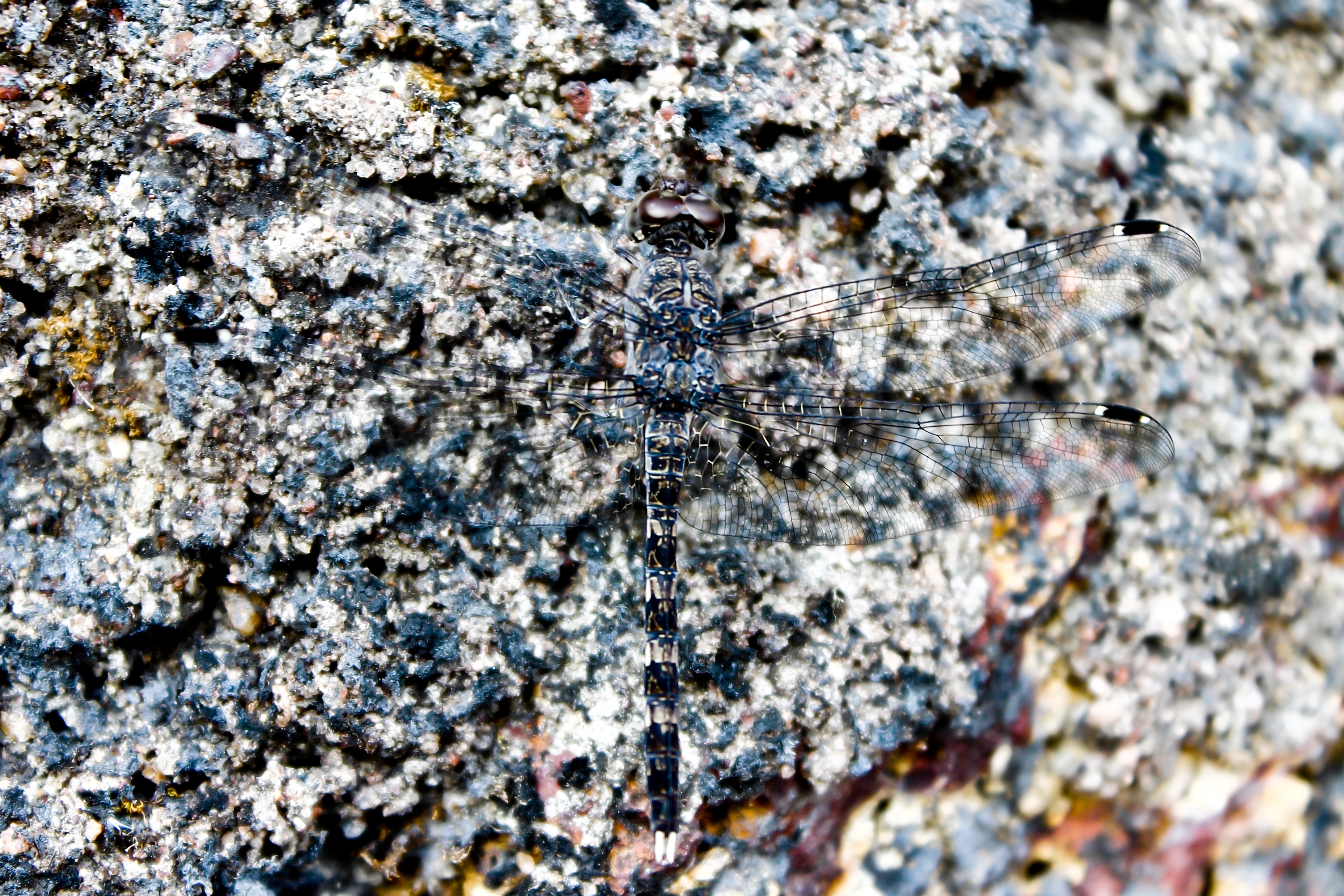
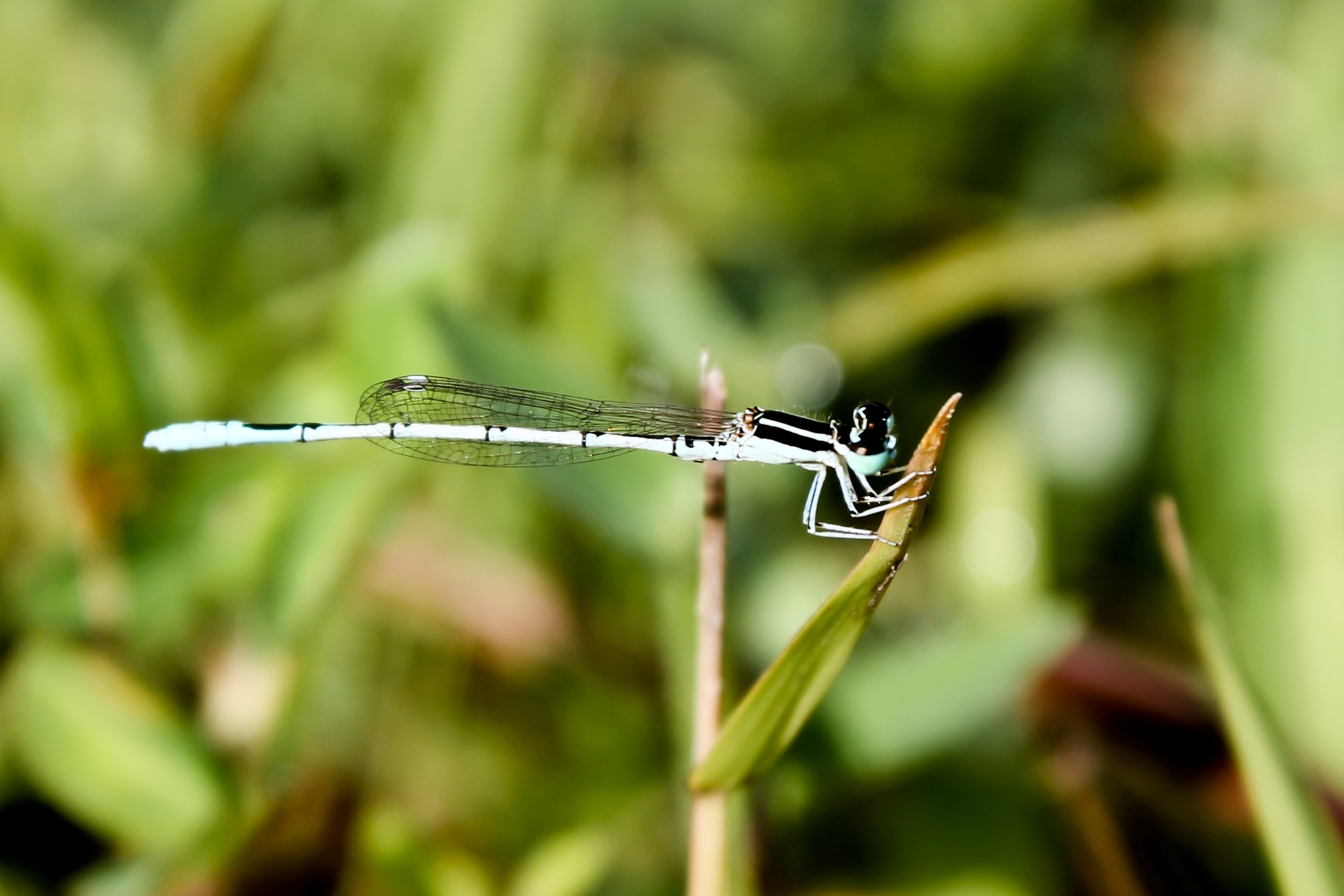
Granite Ghost

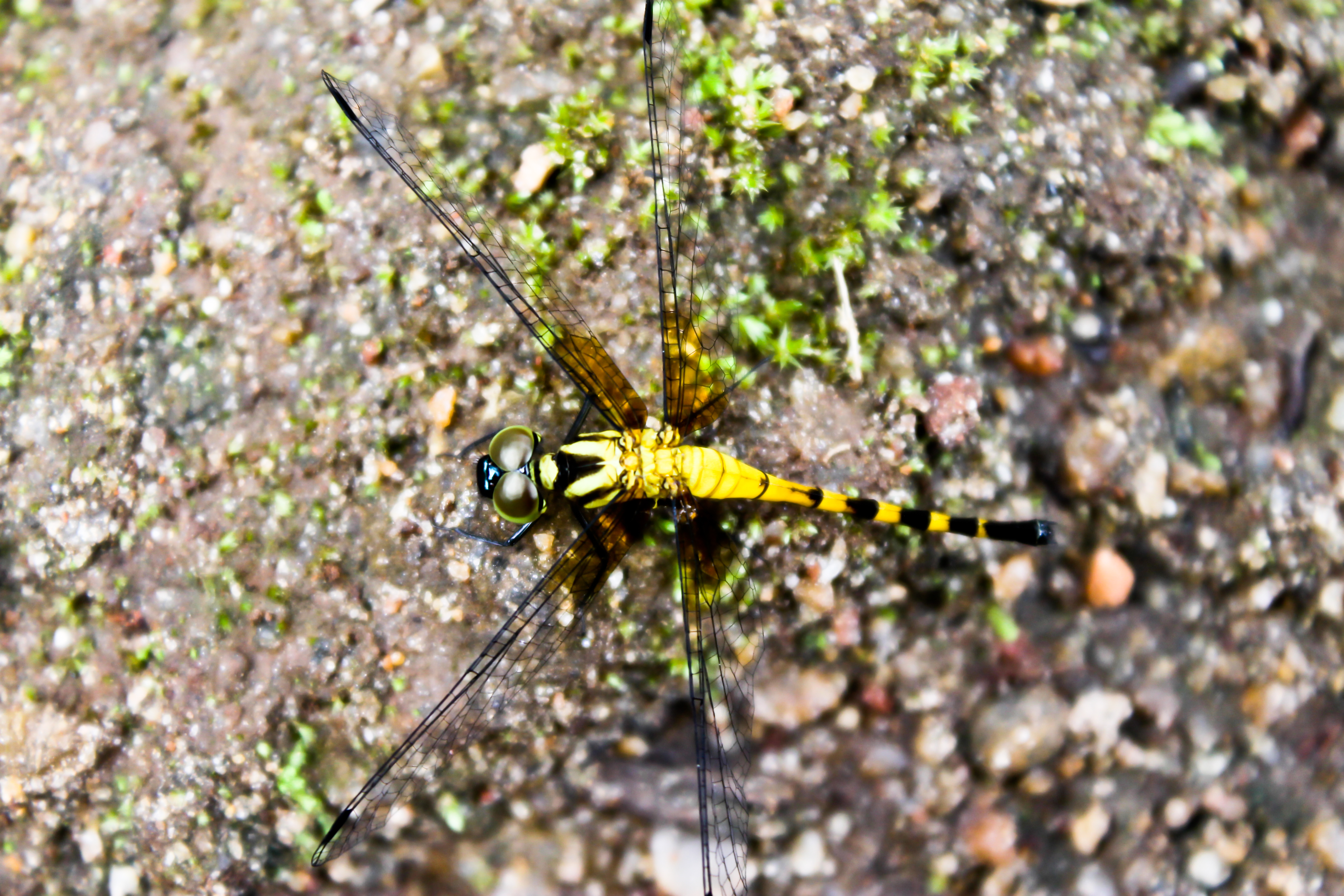
Bradinopyga geminata (male)

I’m still a student of Indian dragonflies (of the world, for that matter), but one species that has captivated me since I read about it is the Granite Ghost – Bradinopyga geminata. Typically an urban dweller, the species has adapted itself to city life – breeding in water tanks, feeder ponds, and all other pools of water that can be found in a metropolis. The species is so well suited to concrete jungles not only because of its extreme agility and keen hunting senses, but because of its remarkable ability to remain unseen. Continue reading

Using Small Mammal Remains for Environmental Archaeology

Credit: Bresson Thomas

Archaeological remains of small mammals generally weighing under 1kg, or micromammals, are important as environmental indicators, partly because they tend to specialize in certain habitats and are sensitive to change. Many factors affect their ranges of distribution, including predators, food requirements, competition, fire, shifts in precipitation patterns, and shelter availability. Micromammals such as voles and mice also tend to live in dense populations and have evolved rapidly through high fecundity. Due to these diverse and interrelated factors, the interpretation of micromammal remains—bones and middens, mostly—requires a deep understanding of the rodents’ relationship with its environment. In other words, ecological information is imperative to accurate assessment of archaeological data on micromammals.

But sometimes micromammal remains have answered modern ecological questions. For example, packrat middens in arid North America offer relatively high temporal, spatial, and taxonomic resolution (i.e., small intervals with which to measure time, space, or species range), and contain what is possibly the “richest archive of dated, identified, and well-preserved plant and animal remains in the world” (Pearson & Betancourt 2002, p500). Continue reading

God’s Cow

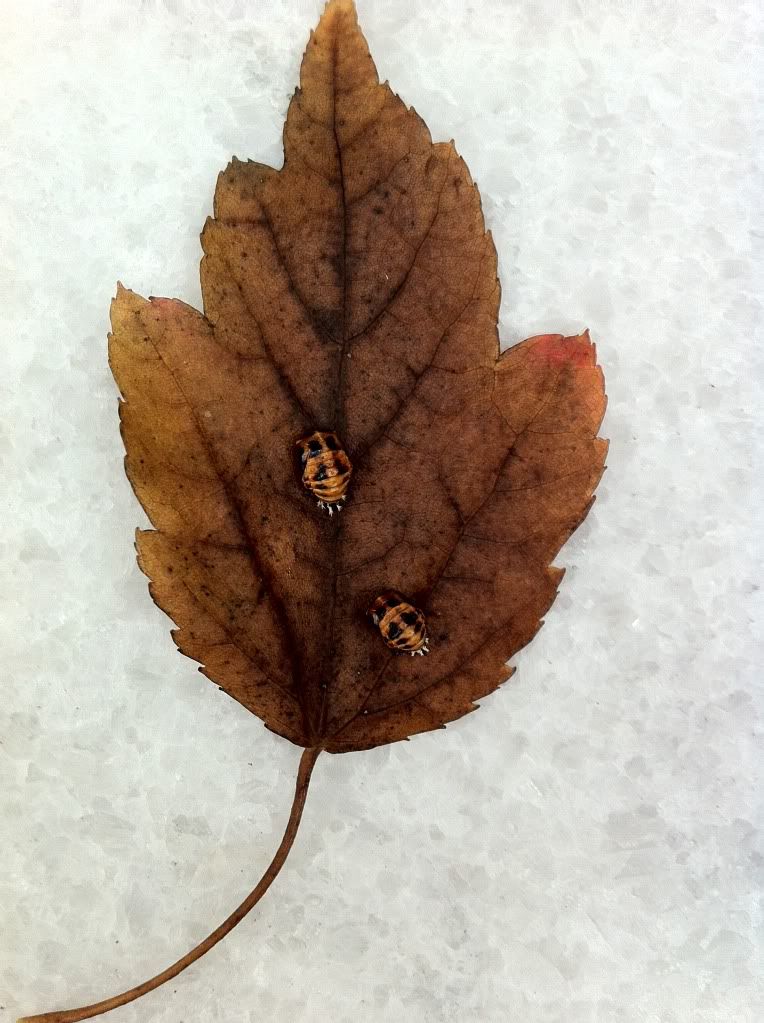
Today I saw something very odd: dozens of ladybugs crawling along the top of a recycling bin. Some were the dark red that we normally associate with ladybugs, while others were a pale orange verging on yellow. Strange looking half-formed ladybugs, seemingly crouched in tight balls, adhered themselves along the surface as well. In the midst of it all swarmed long, fat black bugs with orange spotting along their backs. What was going on here? And what was this panoply of ladybug life occurring on a recycling bin in the middle of a college campus?

Two ladybug pupae

When I afterwards looked up ladybugs, I found that I had actually witnessed something pretty cool: the full life cycle of Coccinellidae, known as the ‘ladybug’ in America but the ‘ladybird’ elsewhere in the world. It’s also known as ‘God’s cow,’ the ‘ladyclock,’ or the ‘lady fly.’ There are over five thousand species worldwide, but the name ‘ladybug’ is perhaps most readily synonymous with the image of a small, round red bug with black spots.

The ladybug, as I had seen, has four distinct phases in its life cycle. The life of the ladybug begins in an egg; small clutches hatch after three or four days at which point the larval form of the bug emerges. It may molt three to four times over a period of about twelve days before pupation (i.e., the beetle creates a pupa). Continue reading

Rubytailed Hawklet

Another stark contrast between male and female specimens, Epithemis mariae is a small species of dragonfly found in and out of the Western Ghats. The female pictured above was sighted in the organic garden of Cardamom County, and the male pictured below  Continue reading

Onward To Osa

The transfer from Manuel Antonio to San Jose was a short one. During the one evening in San Jose, I visited a huge shopping center, called Multiplaza. I lost my rain jacket somewhere in Costa Rica, so I needed a replacement. This shopping center could be anywhere in the world, it looks and feels like its counterparts in the US, Switzerland or even Russia. All the global and expensive brands are there, they even had an Audi and a Swatch shop.

Early next morning I took a bus to the airport, where I boarded a 12 seat Cessna to fly to the Osa Peninsula. It was a nice flight in that small aircraft, and for once I could observe the pilots doing their job.  Continue reading

When Rhinos Fly…

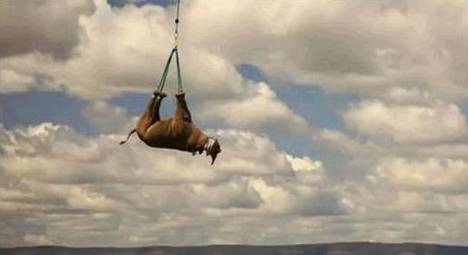
It’s a staggering realization that something that tips a scale upwards of 2 tons, can run up to 40 mph and appears as powerful as ordnance is considered vulnerable in any way.  Yet the confirmation that the Black Rhinoceros is officially extinct in West Africa says just that.

Continue reading

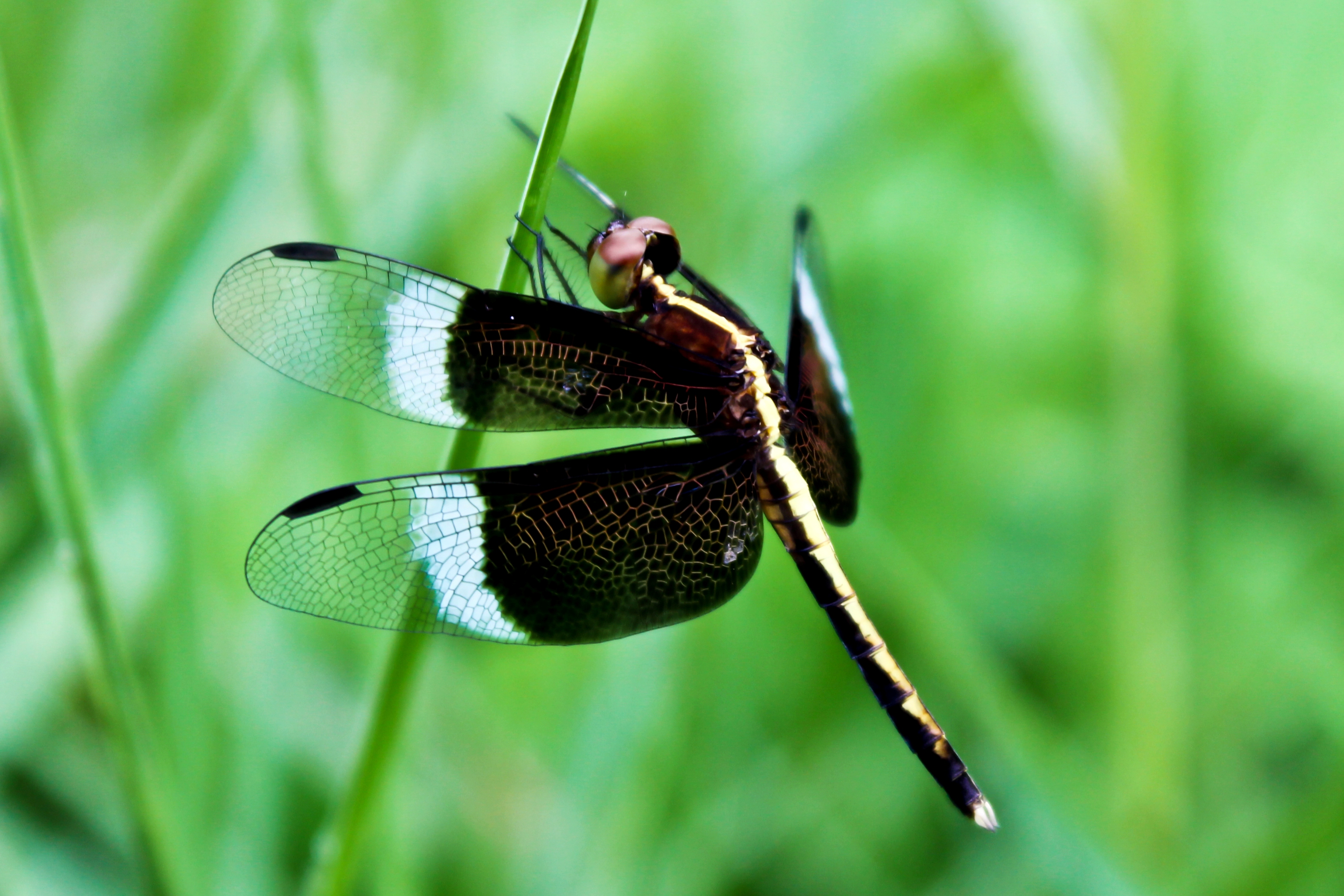
Pied Paddy Skimmer

The Paddy Skimmer is one of the smaller species of dragonfly that can be seen in the Western Ghats. Measuring about an inch long, their flight range is very limited, although apparently their breeding capabilities are unhindered, as they are without a doubt one of the most numerous species to be seen in fields, both wild and cultivated. The teneral (young) male has a black and gold body, green and red eyes, and would be difficult to distinguish from the female if it weren’t for the differences in their wings – the male’s (both in youth and maturity) are about half black, with the other half equally divided between a white strip and a transparent tip. The female’s wings are more complicatedly patterned, although mainly transparent. Continue reading

From Reliable Sources

Today major news organizations are reporting that, according to the IUCN, the Western Black Rhino is officially extinct.  The BBC, CNN and others must have received a press release that is not yet available on the IUCN website (as of my writing and posting this), but if you search on the terms IUCN and rhino you will find a link to the following video that provides a good visual definition of melancholic beauty:

When I see news like this, I fight the natural inclination toward depression and channel the emotional energy as best I can, using the news as a reminder of how slowly we are working at the various tasks mentioned in a string of earlier posts.  It is another example of the feeling I seem to have with increasing frequency: being late.

Continue reading

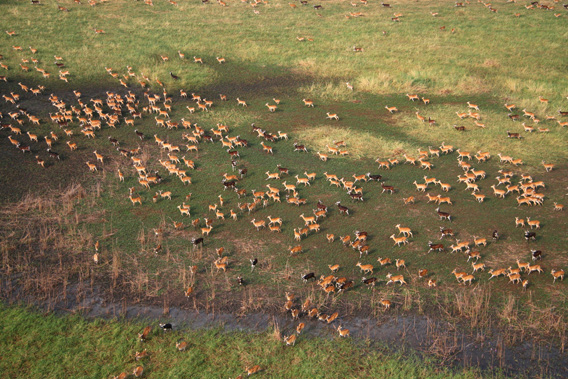
Tourism: A Potential Economic Pillar for South Sudan?

A few weeks ago, I attended a Rotary Club meeting on tourism development in South Sudan. Bishop Lanogwa and Mr. Olindo Perez of South Sudan’s Ministry of Wildlife Conservation and Tourism led an exciting conversation and inspired all of us in the room to think of South Sudan’s tourism potential. As a new nation reliant on oil as its main economic engine, the ministry believes tourism can be South Sudan’s second economic pillar. South Sudan boasts six national parks and thirteen reserves. The nation has arguably the largest wildlife migration in Africa. Although the second Civil War (which lasted over two decades) negatively affected wildlife, South Sudan is still home to large populations of beautiful kobs, giraffes, elephants, chimpanzees, and other wildlife.

Kob Migration in South Sudan

I believe tourism is a very powerful economic tool; however, its social and environmental consequences can be both negative and positive. Continue reading

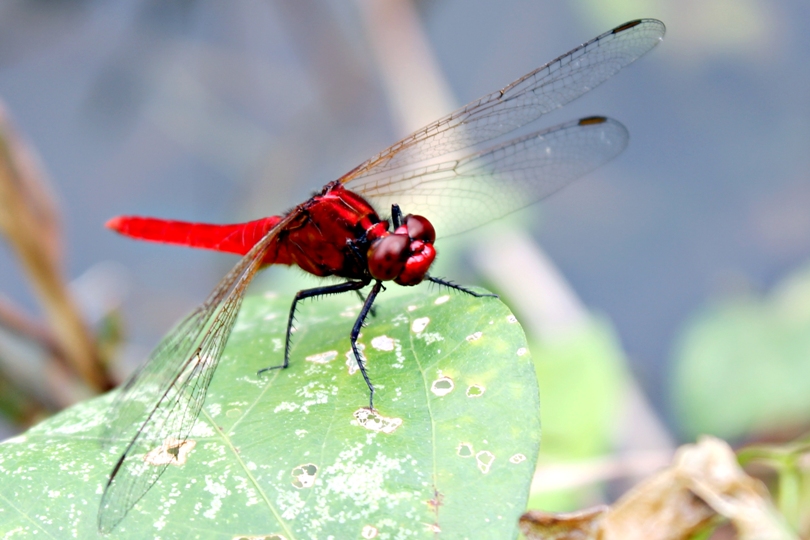
Scarlet Skimmer

One of the fastest and most agile dragonflies I’ve seen, this red male was sighted on a riverbank in Alleppey, Kerala. Although not unusually large, this insect stands out due to its bright red body and head. Most of the red dragonflies I have seen (in the genus Orthetrum for the most part) have some combination of colors – azure eyes, black face, blue thorax and red abdomen (O. pruinosum); black eyes, red face, brown thorax and red abdomen (O. chrysis), etc.

Continue reading

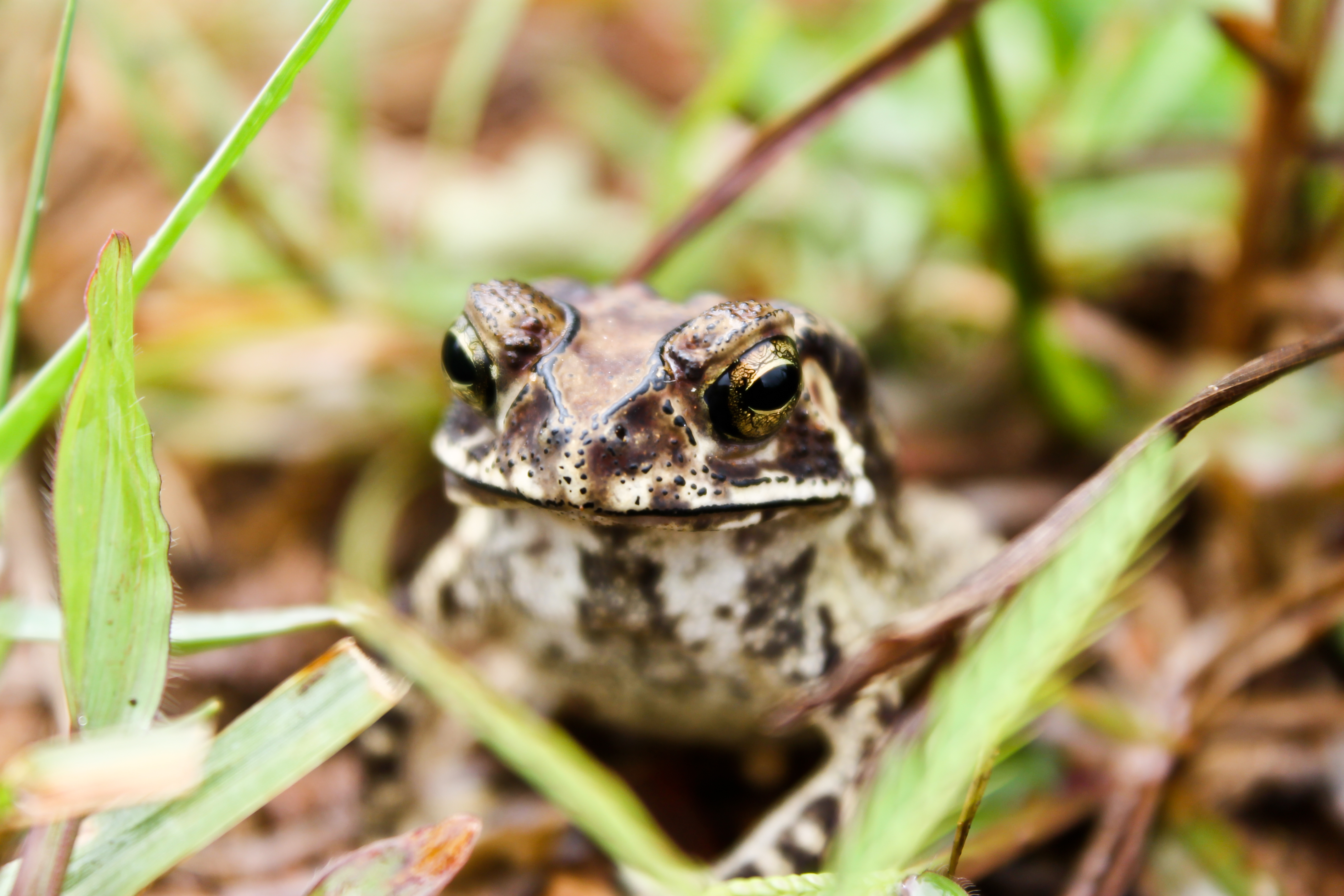
Amphibians of Periyar

So far, my treks in the Periyar Tiger Reserve have yielded a generally consistent array of wildlife sightings. Insects and spiders are a constant, birds of some sort or other are common, boar and gaur are to be expected, deer are a pleasant (but not huge) surprise. Elephants are not uncommon to see, but don’t stand around modelling for pictures, and are usually sighted from a great distance. Tigers are out of the question to see, except for the extremely fortunate. Of course, this leaves out dozens of categories of creatures, and hundreds (possibly thousands) of species. Amphibians are a pretty constant sighting, mainly in the form of frogs and toads. To be honest, I don’t really know the difference, but I do have a definite ID on one species: the Common Indian Toad (Duttaphrynus melanostictus).

Continue reading

Eye of the Beholder

Being a macro photographer without a macro lens is complicated. There are plenty of corners that can be cut, and crutches to lean on, but in the end, the best way to get a high-quality macro image is using the right equipment. The trick I use most often is cropping – my 18-55mm lens can focus on relatively close subjects, although not nearly close enough to get the desired macro effect. If the focus falls upon the right points, the final image can be cropped, and the subject’s size increased without distortion. These three images are all created from the same one – the one on the left. To see the increased detail, click the picture for a full-size version.  Continue reading

“Lord God Birds”

Left: Ivory Billed Woodpecker by John James Audubon;

Right: Imperial Woodpecker by John Livzey Ridgway

In the world of ornithology and bird watching, scale is as important as plentiful plumage, vivid color or song style.  From Cuba’s Mellisuga helenae (bee hummingbird) to the Andean Condor, life lists are often based on superlatives.  The Campephilus (woodpecker) family has its own followers, especially the larger species that have eluded scientists and amateurs alike for decades.

While in Chaihuín, part of the Nature Conservancy’s Valdivian Coastal Reserve in Chilean Patagonia, we saw the Magellanic Woodpecker, a sighting that preceded a “Stop the Jeep!” moment of excitement.  Part of that excitement was based on the memory of a Cornell Lab of Ornithology film we’d recently seen about the Ivory Billed Woodpecker. Continue reading

Revisiting The Tiger Trail

When I send emails to friends, colleagues, and others about this website, and the objectives of Raxa Collective, I normally add links to a few posts that I think are representative.

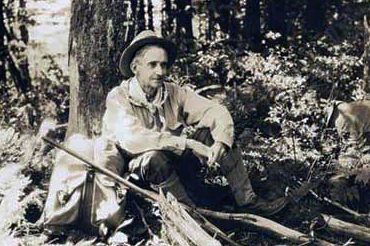
Almost always, this one is included.  Michael captured the moment well.

As we continue adding contributors to this site, and the diversity of topics and locations we pay attention to expands, for some reason I still come back to the Tiger Trail as a favored topic because it is such a good example of what we care about.

That tendency to return, at least in thought, led me to reconnect with a “lost” member of our Tiger Trail entourage. Continue reading

Urbanature

Yes, spotting wild elephants on a mountainside is exciting. Agreed, a field full of flowers that blooms once every dozen years is a heart-warming sight. But not everyone who loves and appreciates nature has the time or money to travel to places where such phenomena can be experienced. Many people who live in cities – myself included – complain about not being able to connect with nature the way they would if they weren’t urbanites. However, I recently had an eye-opening (or re-eye-opening, rather) experience in Chennai, a city proportionally larger and less vegetated than Cochin, where I live, which showed me that nature is never far away.  Continue reading

Supporting Great Smoky Mountains National Park

Horace Kephart is, or should be, in the pantheon of anyone working on entrepreneurial conservation initiatives in or near wilderness areas.  Particularly if you have ever been lucky enough to camp in the Great Smoky Mountains National Park.  Even more so if you have also walked through Cornell Plantations.  The book that Kephart wrote, Camping and Woodcraft, has supported both of those amazing places financially.  You could take a look at the contents of this book here or here for a free ride.  But according to this article the royalties from the book were originally donated by Kephart’s descendants, several of whom attended Cornell, to the Plantations.  The article (from which the photos here are rendered) also states that proceeds…

…from the new edition benefit the Great Smoky Mountains National Park.

We will have to investigate further how that works, since Amazon offers a new edition that does not look like the one mentioned in that article.   If you have any information to share on this, please post a comment here.  Meanwhile, anyone who would aptly describe their life as biophilia-driven might understand why this man spent his Continue reading