Wildlife
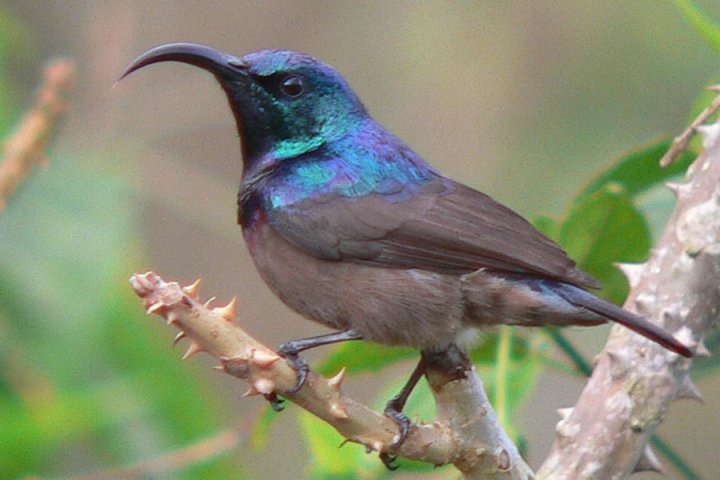
Biodiversity Buffers
Private reserves have been established in many countries around the world, dramatically expanding the conservation provided to biodiversity in public parks by voluntarily protecting buffer zones. Despite their smaller size (relative to public parks) on an individual basis, in aggregation these private reserves are significant providers of environmental services.
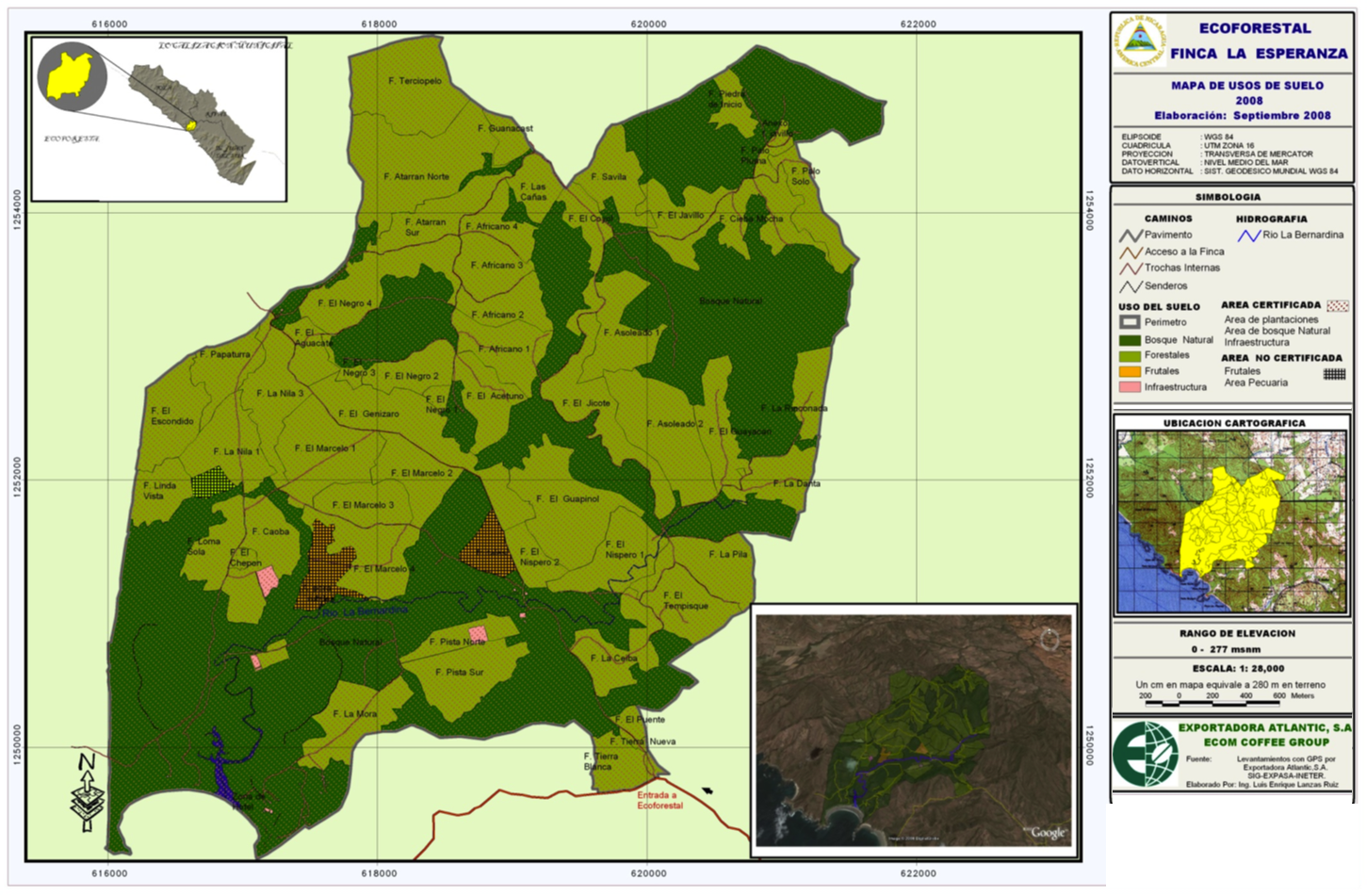
So far the Nicaraguan Red de Reservas Silvestres Privadas includes 50 private reserves that protect 7,467 hectares—18,453 acres—of various ecosystems. Each one has renewable status as a reserve for ten years at a time, and is exempted from income taxes for ten years, property taxes for whatever amount of time the land is a private wildlife reserve, and retail sales taxes on goods that contribute to the reserve.
The Nicaraguan Ministry of Environment and Natural Resources (MARENA) supports certification of conservation activities, includes the private reserves in sustainability workshops, and helps bring teams of scientist investigators to the reserves to conduct studies like the one done at Morgan’s Rock/El Aguacate. Among other things, the reserve owners must make a yearly management plan, comply with environmental norms, and protect the wildlife inside their property. Some of the required contents of a management plan include Continue reading
Post-Estuarial Paddling +
In “Kayak Surfing with a Friend,” I described the surfing in words and included a short video. Here is some longer and better footage of the experience, this time including Pierre (brown hair), me (black hair), and Bismar (green shirt). We have concluded, after experimentation with the paddles and waves, that this activity would be a great post-estuary kayak experience if the tide is right. Since I had mentioned this to Bismar (a Morgan’s Rock guide) he decided to join Pierre and me after completing his estuary tour with some guests, so that he could see for himself.
Reserve @ Morgan’s Rock
El Aguacate, the protected forest at Morgan’s Rock, is part of the Nicaraguan network of private reserves, or La Red de Reservas Silvestres Privadas. Over the past two days, a team of three biologists (one botanist in this forties and two zoologists in their twenties) has been walking through the reserve, photographing and documenting the wildlife they encounter in order to perform a sort of valuation study of the natural resources at El Aguacate. For the past week this team has been in the Rivas/San Juan del Sur area qualitatively assessing the floral and faunal density and diversity at around thirteen different private reserves; similar teams around the country are doing the same according to region.
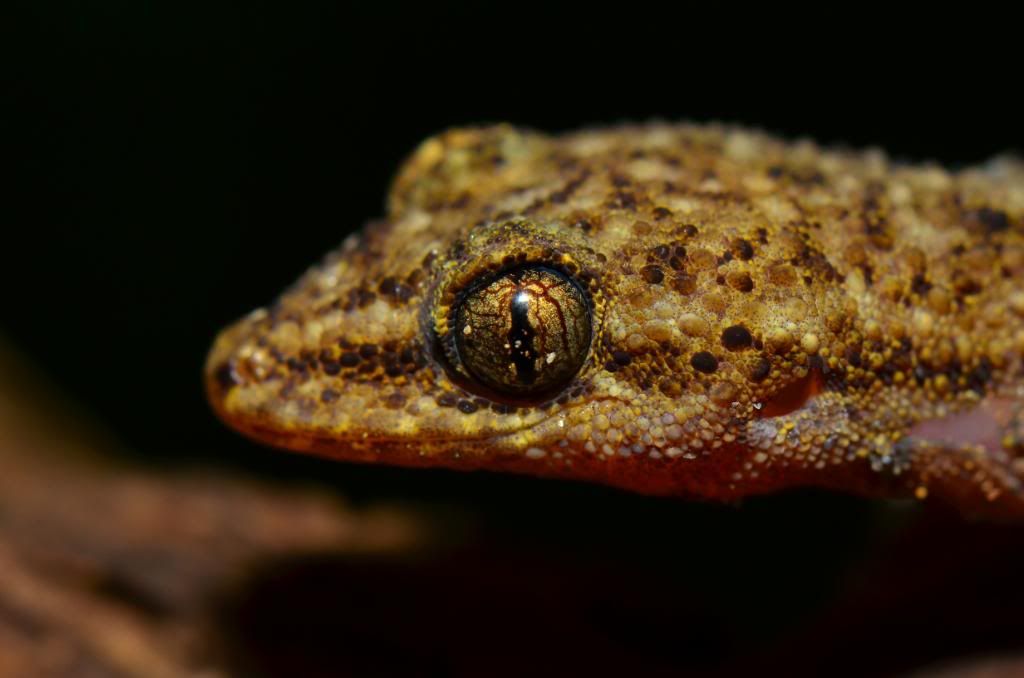
Gecko; species to be identified
José Gabriel Martínez Fonseca, one of the zoologists who also sports a Nikon camera that seems to have a telephoto lens (it looks almost a foot long), calls his photography enterprise Svaldvard Ink., after watching a show on the Svalbard archipelago in Norway on the Discovery Channel as a kid. Interested in the polar bears, he wrote down what he heard and years later preferred his own spelling of the word, adopting it as a username/alias for business. With his camera and skill as a biologist whose job it is to document species of reptiles, amphibians, birds, and mammals, José was able to photograph animals that have evaded my lens during my time at Morgan’s Rock. He was happy to share his images with me, so now I can share some of the best of them: all the photos in this post are his. Continue reading
Wordsmithing: Luxury
Luxury is another word we avoid. Odd since we often eat like epicureans, sleep on fine linens when we can, and comfort is generally a creature we adore. But not odd, considering the work we do, and where we do it. Not all things can or should be available in all places, especially if conservation is the point, and collaborating with communities is the means to the end. Our friend and future Contributor Reyna hints that she will have a thing or two to say about this in the future. With regard to rethinking luxury, the Galapagos Islands provide a superb vantage point.
Why rethink it? That is, why do we avoid this ubiquitous word? OED tells us that this noun refers first and foremost to “lasciviousness, lust”. That is a good enough reason, for starters. By the third entry the definition eases up a bit, to “the habitual use of, or indulgence in what is choice or costly…” but still not much to write home about. The first ray of light is in the fourth entry, depending on a snippet of Dryden to poetically license us to re-visualize luxury: “Hard was their Lodging, homely was their Food; For all their Luxury was doing Good.”
But we do not need to go back 300 years, get too poetic, nor be preachy about it. Liberating this word may start with the therapeutic effects of pristine wilderness areas; the opportunity to disconnect on occasion from our normal, wired modern lives; the privilege of getting to know communities of people whose lives are different from our own. In short, some of the reasons why people travel. And if we can consider this lust for life, luxury is inevitable.
Anteating Howler Butterflies
While walking to Morgan’s Rock’s lobby yesterday morning, Pierre heard some rustling in the bushes on our right. We looked for the source and were stunned to see an anteater standing on its hind legs, spreading its arms and swaying about like a drunkard but in fact trying to dissuade us from attacking it by trying to appear larger (it was bigger than a very fat house cat, but not by much). I immediately pulled my video camera from my pocket and started filming, and although the anteater had ceased his humorous movements and started climbing a very thin sapling, the footage was incredibly fortunate and very entertaining.
Since the tree he decided to grasp was so young, it started to bend as he climbed higher, reminding me of cartoons where characters are catapulted out of the branches after a certain point. The anteater was less than a meter away and at times looked like a teddy bear, but as a wild animal—and one with claws in full display at that—we refrained from touching him and were satisfied with a video. Eventually, the formicary raider descended the sapling and chose a better escape tree (in a pose reminiscent of the boa’s in a previous post), and we left happy with the sighting of what I thought I’d only be able to see in the summer when foliage was less dense. Continue reading
Careful What You Fish For
A recent article in TIME Magazine alerted me to how easy it is for us as consumers to shrug off the warnings of a changing world. I am guilty of it and I have caught myself, and hope that with this change I pledge to make, you might think about it too…
I’m humbled by the cognitive dissonance of knowing how sensitive the planet’s oceans are while hungrily indulging in sushi and fish filets with a comfortable negligence regarding their origins. Food choices like these, the effects of which are typically underestimated as a mere drop in the ocean, are proving to have a bigger ripple effect than we’d like to think. And it’s high time we all thought about the fish on our dish and just how it got there.
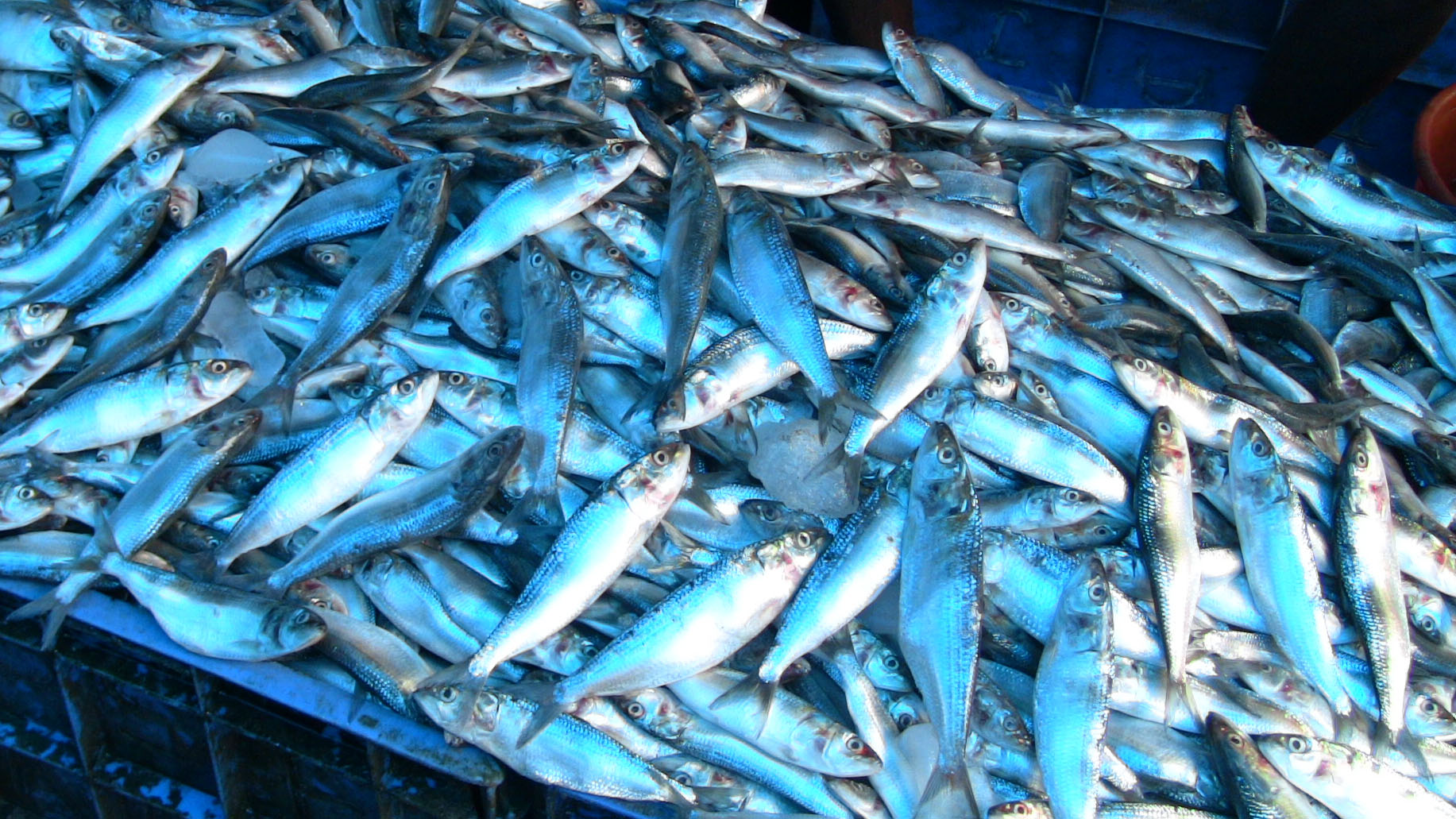
The article in TIME by Bryan Walsh reminded me of a memorable excerpt from a conversation between some friends of mine:
Q: “So what did porcupine taste like? Does it taste like chicken?”
A: “It tastes like… have you ever eaten donkey?”
As hysterical as it was for me at the time, it made me think, is the sometimes absurd variety of the human palate an evolutionary response to a scarcity of resources?
Ok so there’s no imminent extinction of livestock; there is many a happy cow in California, the UK alone consumes nearly 30 million eggs per day, and just look at New Zealand’s sheep-to-people ratio. But what about the animals we still hunt for sustenance? Continue reading
A Lesson on Conservation Tourism- the Case of Nairobi’s Animal Orphanages
Yesterday morning, I attempted to visit the David Sheldrick Wildlife Trust, but thanks to Tripadvisor, my taxi driver couldn’t find the location of the elephant orphanage. Instead, I found myself at the Nairobi National Park’s animal orphanage. Surrounded by a swarm of Kenyan school children (who seemed to be more interested in me than in the wild monkeys), I observed the establishment with slight disappointment. The orphanage seemed more like a mediocre zoo than a safe haven for its animals. I was disappointed with the lack of educational materials, tour guides, or remotely enthusiastic staff. Even as I paid my $15 entry fee (which is quite expensive for Nairobi standards), the clerk was rude and could not provide me with any information; he just scurried me along so he could attract more tourists to the booth.
I proceeded and moseyed around, reading the “Educational” signs that hung on the cages and learning a bit more about some of the animals, like the zedonk (zebra/donkey hybrid) or the cheetah. I was curious as to why some of the animals had been there for so long and why they hadn’t been brought back to the wild. Although I know the Nairobi National Park’s Animal Orphanage must do a lot of good for wildlife rehabilitation, I had trouble seeing tangible evidence of it. Unfortunately, the profitability of tourism had clouded the conservation vision and potential education opportunities that Nairobi Animal Orphanage could offer. Sustainable and nature tourism should educate the tourists not hustle and ostracize them.
Laying aside my disappointment from yesterday, I was able to find the David Sheldrick Wildlife Trust today! Since 1987, The David Sheldrick Wildlife Trust has hand-reared more than 90 newborn elephants and released 150 elephants back into the wild at Tsavo National Park. The charity was founded by Continue reading
Mombo Jombo
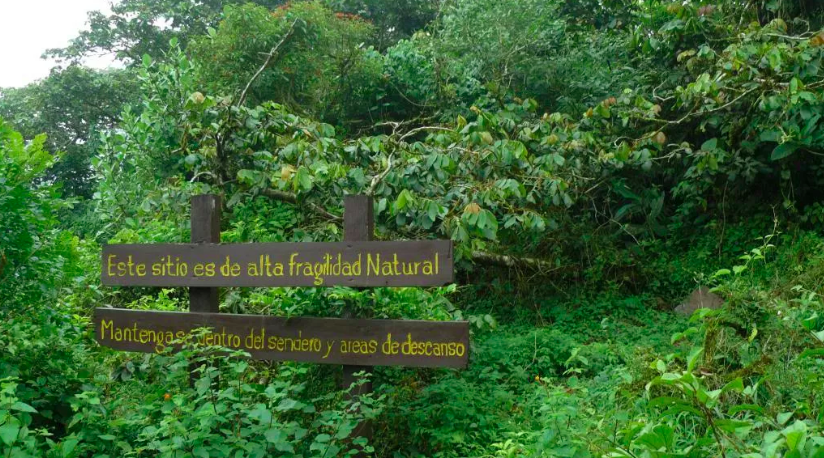
Early this morning Pierre and I set out from Morgan’s Rock towards Granada, which is maybe two and a half hours away. Before reaching the city, we turned onto a road that led to Mombacho Volcano, an inactive peak with several extinct (and some fully collapsed) craters. The volcano is protected by the Mombacho Volcano Nature Reserve, created in 1996 by the several local fincas on the volcano’s foothills that comprise the NGO Cocibolca Foundation. Our time at Mombacho, described in the rest of this post, is part of the exploratory trip that Pierre and I are taking over the next three days, assessing the possibility of connecting Morgan’s Rock’s tour offerings with other operators in the area.
The day’s activities started at the Mombacho Volcano Nature Reserve (MVNR), where we met our guide Jennifer. We decided to take the longest trek, called the Puma Trail, so named because there are some big rocks and even caves that pumas are said to live in, although none have been sighted in a decade. Prior to starting this four-hour hike we stopped by an area called Los Fumalores where Jennifer had fun by daring us to put our hands in a small hole next to the trail, reassuring us that no snakes would be inside. As we placed our hands near the opening in the ground, we could immediately feel a stunning temperature difference. The place is called Los Fumaroles because sulfuric gases rise from volcanic holes and crevasses in hot gushes, heating the surrounding stone to a surprising degree. This area also provides a nice view of Las Isletas, which are known as children of Mombacho because they are islands initially created from a volcanic eruption. I mentioned Las Isletas very briefly here.
The Puma Trail’s path is very well maintained, Continue reading
(Un)expected Visitors, Redux
Normally I would apologize. Writing again about monkeys, considering the abundance of posts we already have on the topic, may seem repetitive. However, after debating it with myself, and looking over my photos, I decided I just have to share these amazing, close-up shots of the Nilgiri langur. Nilgiri langurs, compared to the macaques, are a rare species, and not often sighted outside the official boundaries of the forest. Michael provided a bit more information about them in his earlier post, Unexpected Visitors.
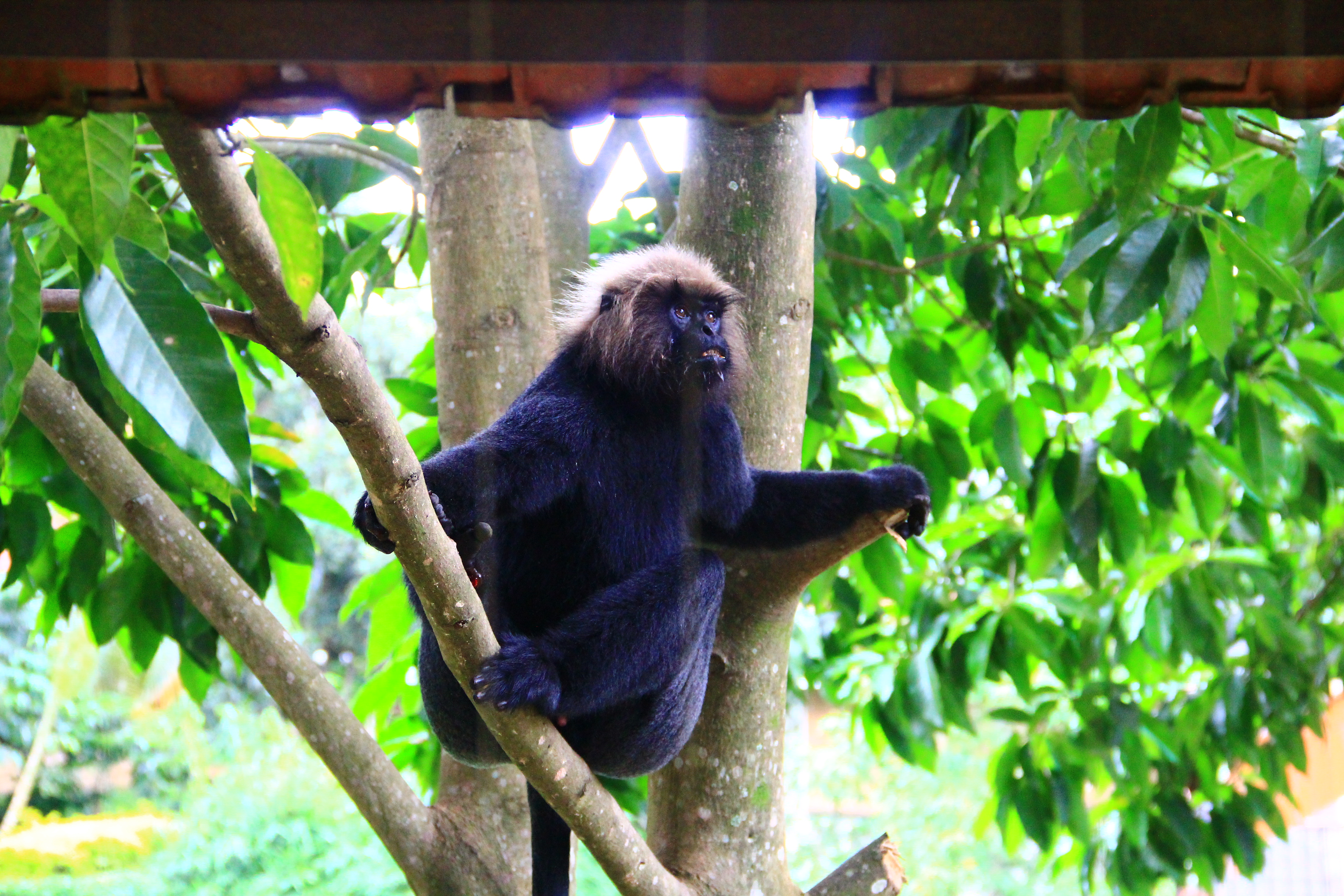
In his post, Michael predicted that we would not see this species again at Cardamom County. Surprisingly, they have returned twice since that post. Their visit during which I took these photos was not so different from the prior one, except that in contrast to their previous avoidance of a scene, this time they cried loudly, and jumped and ran around unusually. One of them even ran right through a gathering group of human admirers! This is remarkable because they are usually very shy and markedly wary of human interaction. But within a few moments, we found out why they were acting so out of character. Continue reading
Unveiling Fungi
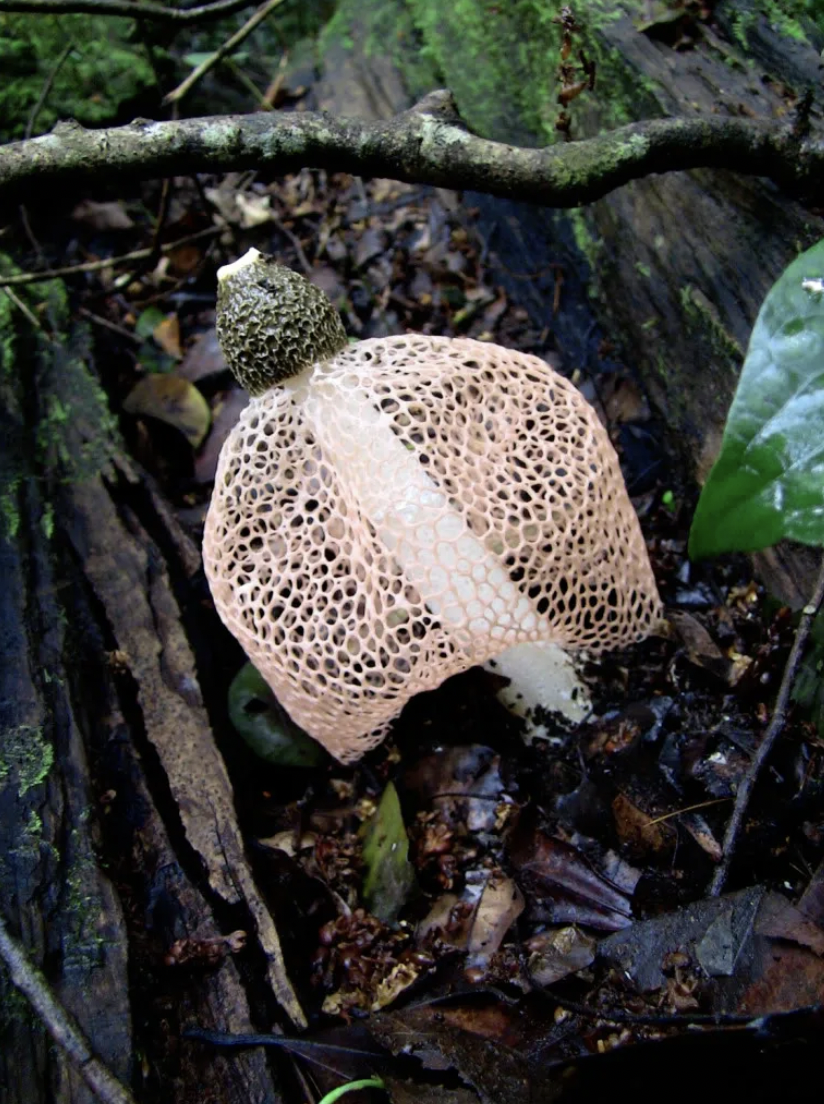
Fungi are some of the most under-appreciated organisms on the planet, and even the most simple forms can be fascinating and capable of enthralling all but the most listless eyes. Most people associate the word ‘mushroom’ with the button-shaped, styrofoam-flavored Agaricus bisporus, also known as Portabella, Crimini, baby bella, et cetera, ad nauseam. The marketing ploys for peddling this poor excuse for a mushroom are legion, and no matter what name comes on the package, it’s always the same. In that light, the purpose of this post is to unveil the magnificent beauty of the Fifth Kingdom.
Soggy Elysian Dreams
Note: this is Part 2 of what will hopefully be a series of posts on the guides of the Tiger Trail, who are former poachers. Part 1 can be found here. Beware: this post is sorta self-serious.
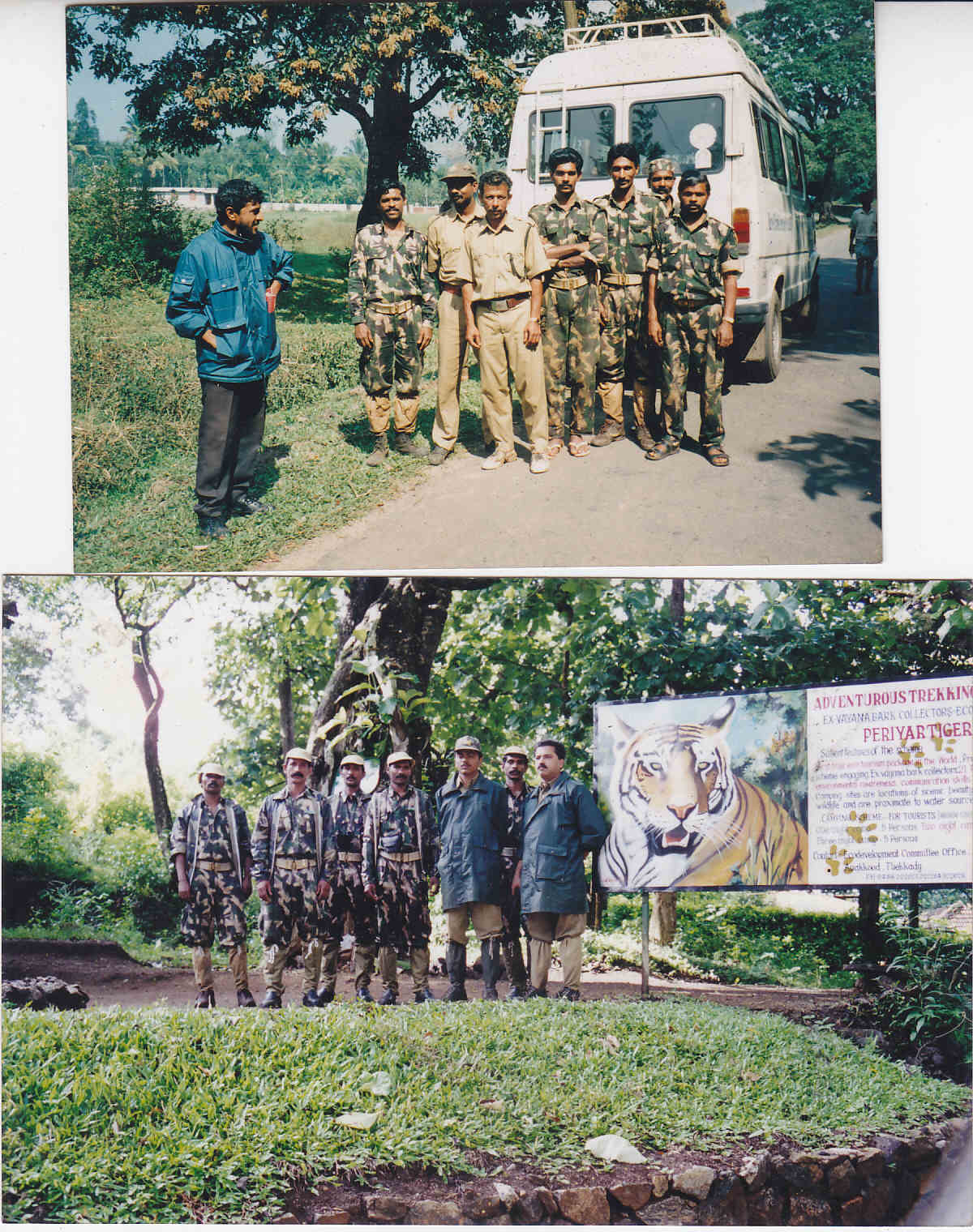
One of the most familiar, persistent, and pervasive myths in the collective-(un)conscious of the ‘West’ is the myth of the ‘noble savage.’ Writers who perpetuate this myth typically structure it along the lines drawn in Genesis: a formerly Edenic, perfectly-ordered society meets a corrupting influence that sullies irrevocably this society’s purity and harmony to the detriment of our current situation. Whatever the devil, be it private property, human temptation, television, the Federal Reserve, etc., the story has one function: it causes us to pine for the good old days—the beginning—before the advent of all this nastiness, which just stinks in comparison.
But if there’s one thing history teaches us, it’s that origins are rarely pretty. Progressions, regressions, and transgressions can happen all at once, and often they coincide in the same event. After all, we can’t get back to how it was then, not because we don’t have a suitably equipped Delorean, but because there was no then. Pardon the Liberal Arts 101, but I think some of us are more duped by this myth than we know. It is more difficult than is fair to exorcise ‘Eden.’ Continue reading
When Foxes Fly
Cardamom County faces onto the Periyar Reserve. From much of the property, including most guest rooms, the view is clear onto a huge stand of bamboo. In the upper reaches you can always see dark bundles dangling during the day time. By late afternoon, the bundles start moving. When will they transform into something recognizable?


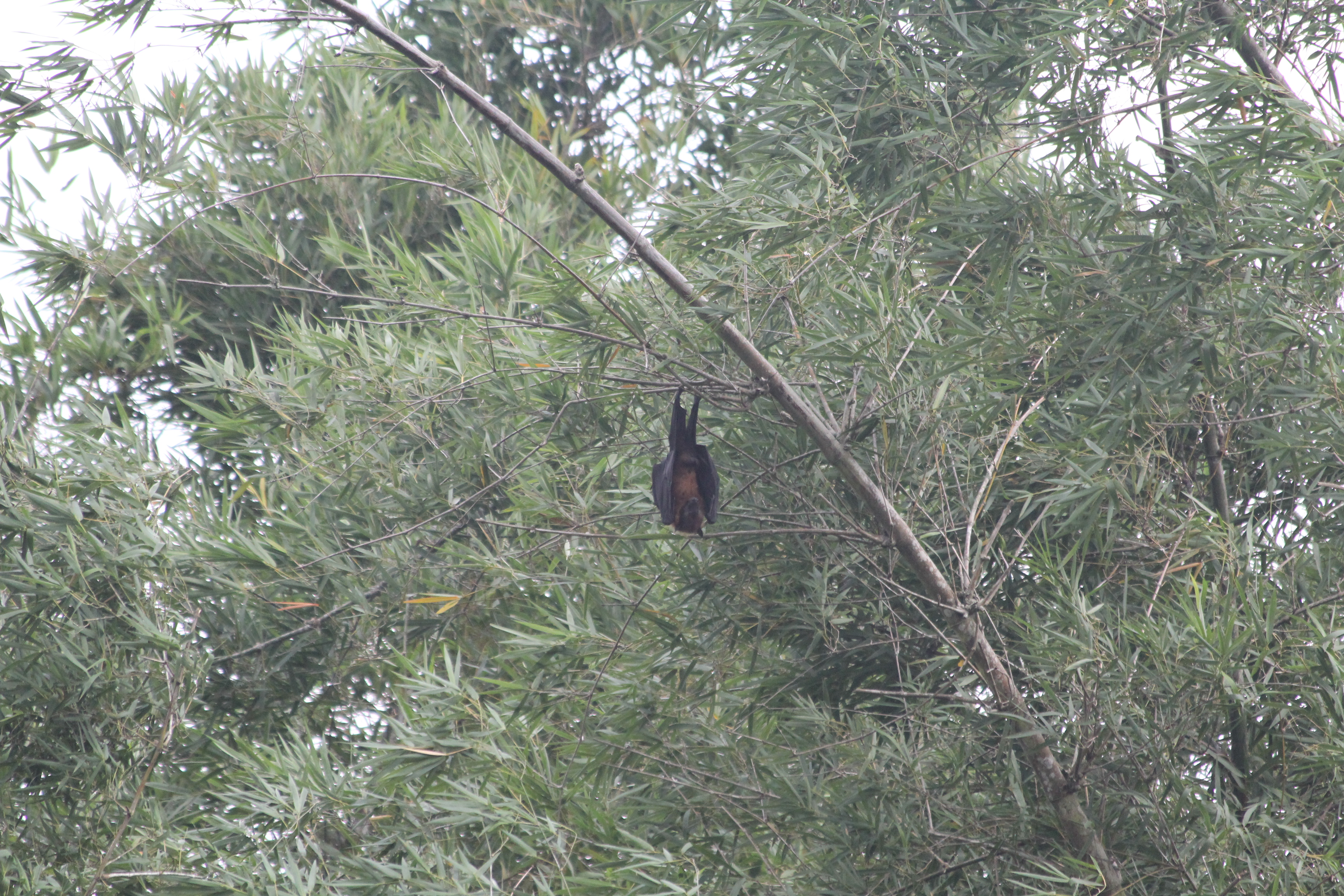
When foxes fly. That’s when. And it is best when it happens before sundown because with a wingspan of up to three feet, it looks like a prehistoric raptor at first glance. It is difficult to take good quality photos of these creatures in flight because lighting is not usually right. Around 2:30 p.m. recently, on an extremely windy day the motion woke them and they took flight. Annoying to them, probably, but very fortunate for me. Continue reading
Defensive Insects
My younger brother Milo has posted about Entomotography, sharing his excellent “macro” pictures of dragonflies in India. Yesterday I was walking in the woods at Morgan’s Rock when I remembered that I had promised to describe in more detail the cornizuelo tree, which fronts fierce fire ants and sports sharp spines on its branches. Since these trees are all over the place, I set my camera to macro mode and looked for a good specimen. Below is a video that shows just how diligently the ants patrol their home, both when no imminent danger is present and also when a threat is detected. At the end of the video I’ve included footage of a caterpillar.
When I first saw the little balls on the caterpillar’s back, I wasn’t all that surprised. Many insect species (and other animals like fish and crustaceans, for that matter) cover themselves with debris to disguise themselves from predators. What struck me as odd, however, was that this caterpillar, clearly a poisonous species (or at the very least an example of Batesian mimicry), felt the need to cover itself with crap (which, as the video shows, I discovered to literally be true) and thereby potentially avoid predation. Of course, it may be Continue reading
What They Do Not Teach You At Cornell Hotel School
A couple of days ago, Michael wrote the post “Monkey Business…”. The post illustrated my surprise seeing 20-ish monkeys, which to Michael was not an unusual event. Over the last week I too realized that a sudden appearance of the Macaque was just a part of daily life here. However, I definitely enjoyed my first encounter of a Macaque family outing. I hope you enjoyed as well.
As I was enjoying the post by Michael, something in the second picture caught my attention after a while. In case like me you did not notice it in Michael’s post, it seems like the Macaques are observing something on the lower right. If you click the picture you will see a larger view.
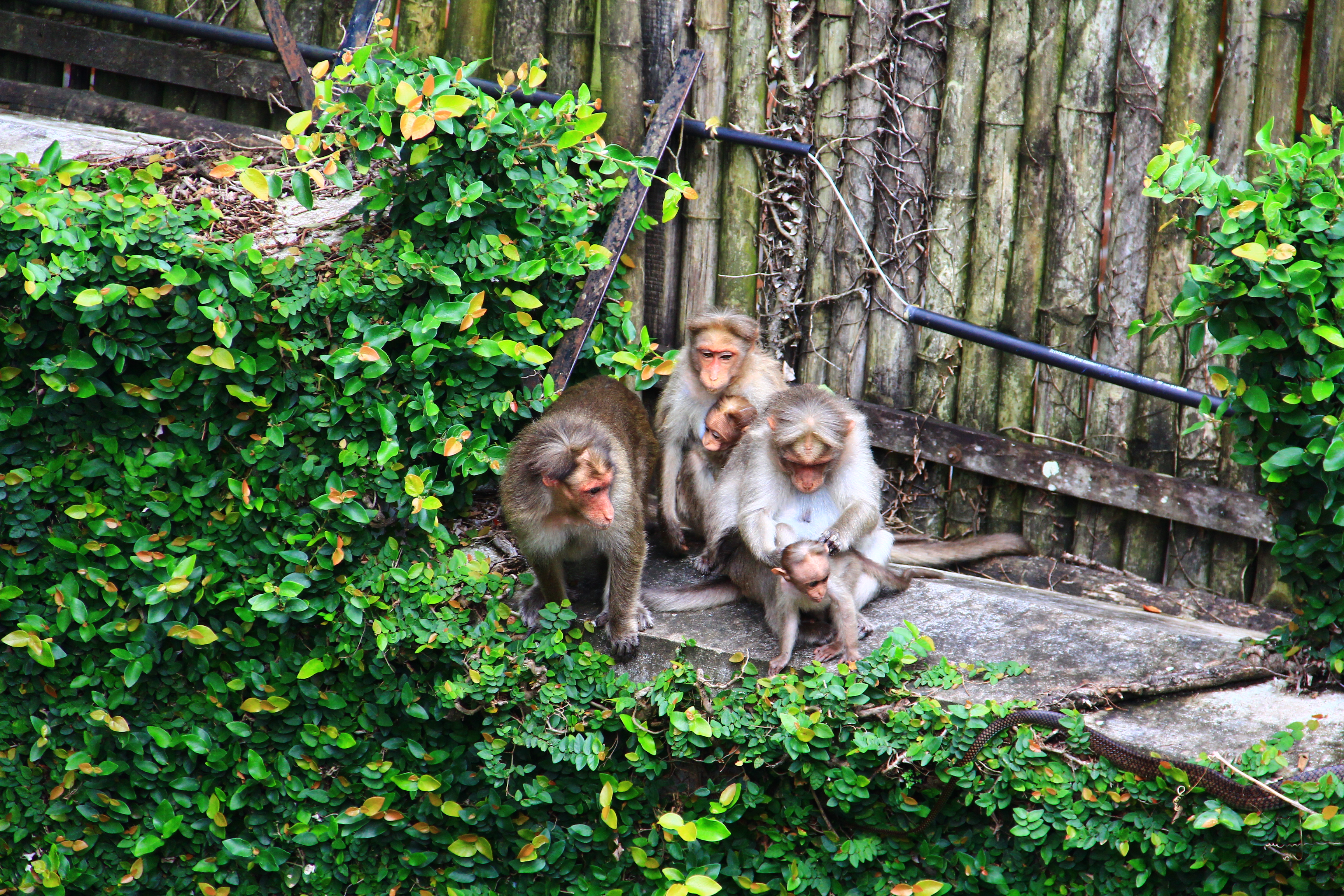
Did you see the dark ribbon (or it may look to you like a leather belt, if you read Seth’s post on a similar topic)? Continue reading
By the Fire (or, How I Learned to Stop Worrying and Love the Tiger Trail)
We had reached an impasse, and I was becoming frustrated.
“I understand he’s gained a new awareness,” I said. “What I don’t understand is what exactly that awareness is.”
I had slipped into fact-collecting—or, more precisely, ‘attitude-collecting’—mode, a sort-of aggressive pose I sometimes assume when given the attention of a person whose life has been distinctly different from mine. I admit that this happens more often when I’m in the midst of a culture I think I don’t adequately understand. There’s no judgment inherent to this culling, but there is something predatory about it; if I want your words, to add your Weltanschauung to my reserves, I will work hard to procure them. And if I don’t get what I’m looking for, I can get testy. Continue reading
La Cumplida’s Private Reserve
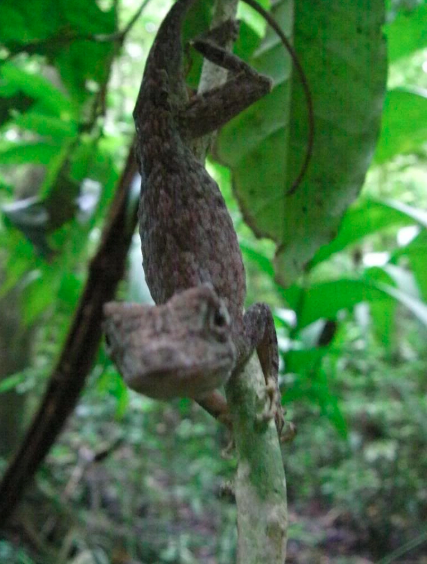
Author’s Note 19/7/11: The lizard pictured at the beginning of the post has been identified as a pug-nosed anole. The first group of stinkhorn pictures (paragraph 2) are of the species Phallus duplicatus, and the second group of pictures (last paragraph) are of Phallus indusiatus. The green mushroom linked to by the word “others” (paragraph 4) is Hygrocybe sp. and the grey/white ones are Psathyrella candolleana. Credit and thanks for mushroom identification goes to Milo Inman.
*
The untouched forest of the reserve at La Cumplida is a hilly cloud forest with few trails and many streams that served as much of our path through the trees. My guide, a local named Santos, and I started in the foothills outside of the reserve and entered the forest by climbing up some steep, muddy inclines.
The protected area amounts to 600 hectares, or 1,482 acres. Santos and I had walked for only about twenty minutes when I spotted the first attraction of the day: some stinkhorn mushrooms. Two were just a white line of pulp, but one was still not fully decomposed and looked as phallic as ever, having lost its veil.
Only around half an hour of hills later, Santos stopped me and pointed out a sapling in front of us. He said some words that I didn’t understand, so I tried looking more closely to decipher his meaning. At last I saw the outline of a faint figure sticking out of the tree’s trunk. I slowly approached and saw that a lizard, perhaps the length of my hand, was grasping the sapling and facing downwards, its scales a mottled variety of wood colors, like a camouflaged chameleon but clearly not of that species based on its head shape. The poor lighting in the forest didn’t allow for the best pictures, but I was glad to get a couple, especially these ones of the lizard curiously raising its head at the closely approaching camera lens.
We advanced further into the forest and saw only the dense and variegated foliage around us
Damsel in Distress
Although I was slightly disappointed at not having been able to track any of the more sought-out fauna of the reserve, I was content with the numerous photographs of a wide variety of bizarre and alien-like insects I was able to take during the Cloud Walk. I know that I am one of few who appreciate the seemingly unpretentious and trivial organisms of the class Insecta, and it is my hope and objective to arouse both interest and awareness of the mind-boggling diversity that reside not only in protected areas, but literally in our backyards.
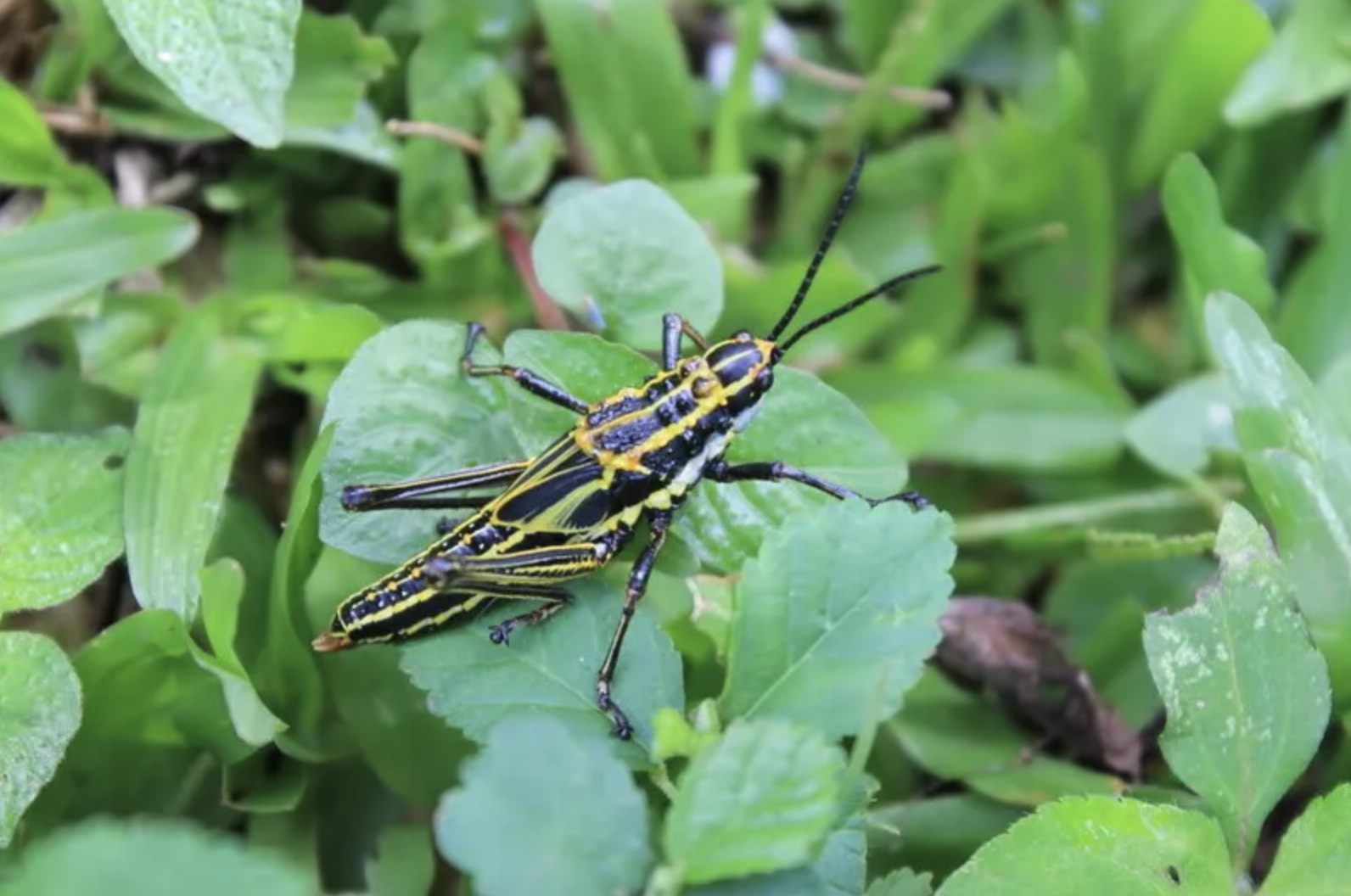
Insects compose well over three quarters of all animal species – there are well over a million species, and the number of new species discovered each year isn’t decreasing despite rapid deforestation. Continue reading
Monkey Business, if you will
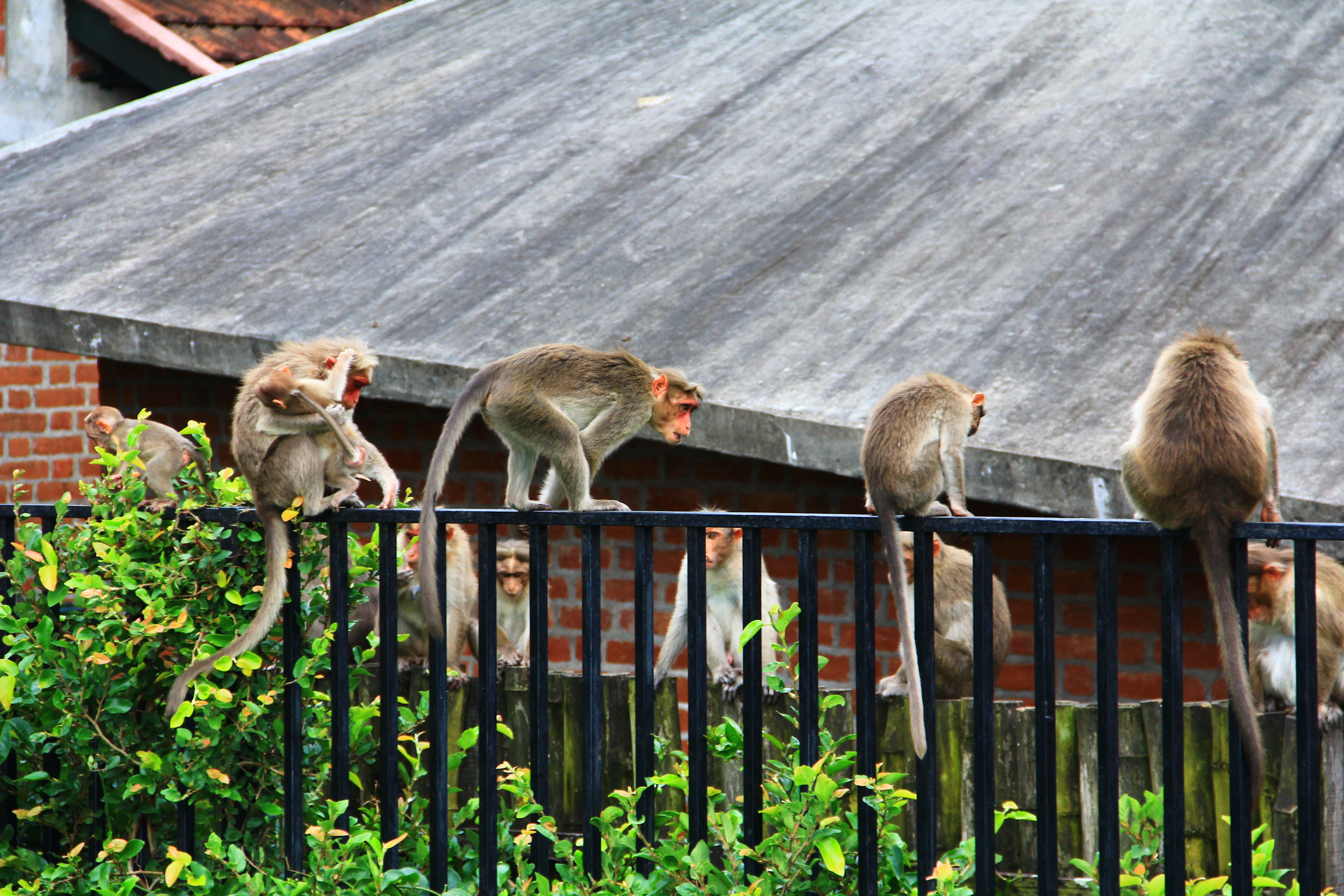
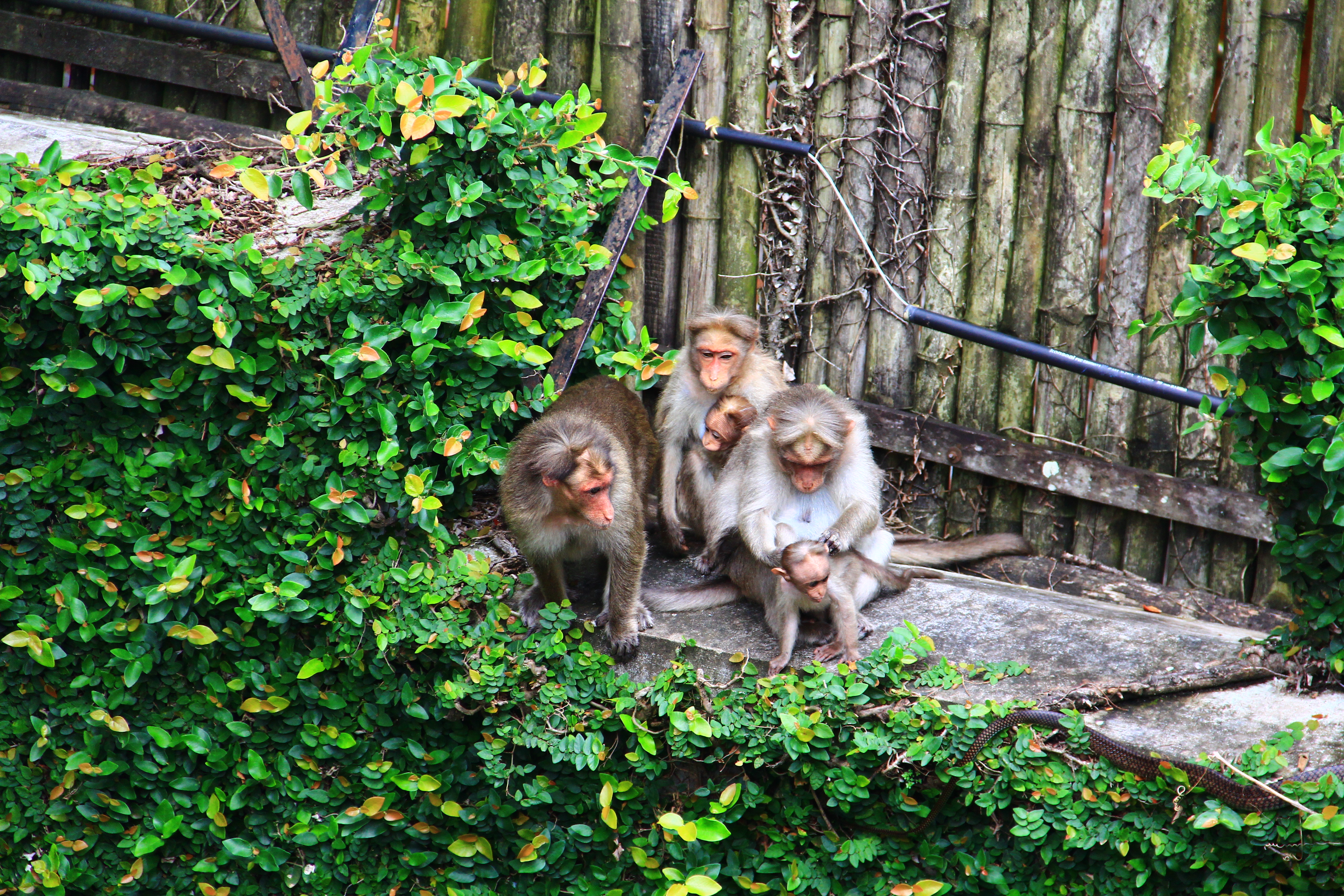
If only to illustrate the contrast between the cool, sleek Nilgiri langur and the pesky, marauding band of bonnet macaque, I offer this beautiful photographic evidence captured by the one and only Sung, whose telephoto abilities far outstrip my own. Sung was (un)fortunate enough to meet this savvy bunch on the roof of the resort restaurant where he had been pleasantly snapping pics of the local bat population (more on them later, I can assure you, esp. now that Sung is on the case). He called to me from across the property, gesturing wildly, and shouting something along the lines of: ‘There are like a thousand monkeys up here!’ Credulous as ever, I thought perhaps there were in fact a thousand monkeys and sprinted from my seat to witness the fracas. (Un)fortunately, I found a mere twenty-ish, a far more manageable pack than the thousand-strong throng promised me. I looked on rather unimpressed. But the high-pitched excitement in Sung’s voice revealed his fundamental anxiety in the face of his first, true encounter with the MACAQUE.
I’ll let these photos tell the story and you, Dear Reader, can be the judge of mine and Sung’s sanity. After all, I do hate to over-dramatize (can’t you tell?). Still, I feel it is my duty as intern, resident, and world-citizen to present the truth as I see it. I should say, however, that about two nights ago I caught the tail-end of a rather tragic Discovery Channel program about the forced re-location of the macaque from one Indian town. I watched these macaque as they were dragged and tricked into tiny cages where they were slammed one on top of another, and it was all deeply disquieting, and just about made me re-think my position towards these struggling sons and daughters of our Planet Earth. I would sincerely regret my paranoia regarding my grey-haired distant cousins engendering an honest fear. Therefore, I hope that, perhaps, their better qualities will also shine through in these photos.
But besides all that garbage, Sung really took some beautiful photos.
Unexpected Visitors
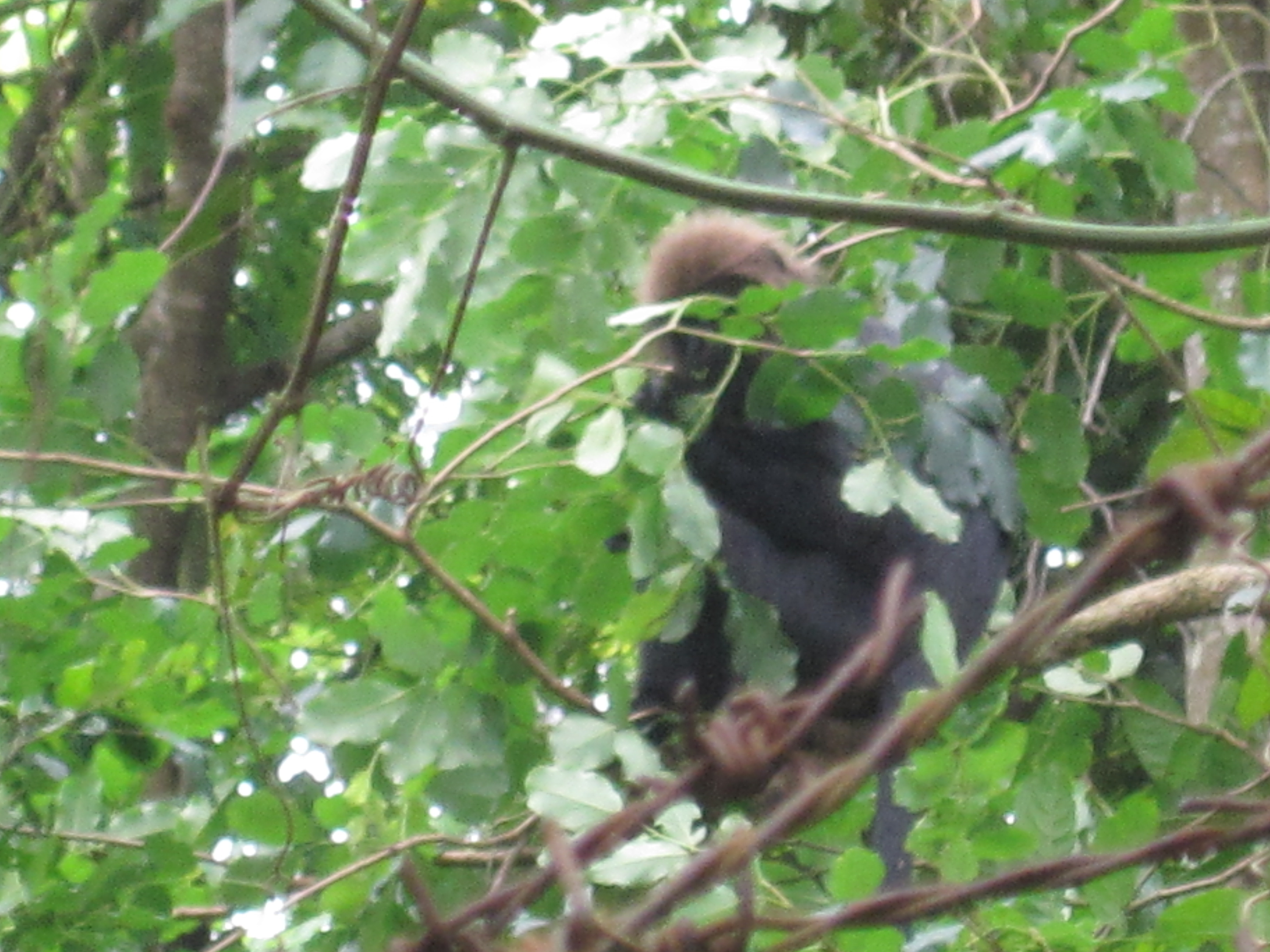
This afternoon, just after lunchtime, the staff and guests of Cardamom County were greeted with a thrilling surprise: the unannounced arrival of three Nilgiri Langur, the haunting, strong and motile black monkey endemic to the Western Ghats. I ran into Gourvjit and the resort’s driver, Baburaj, watching from the parking lot as they jumped from tree to tree, and as we lingered they took the bold step of running and leaping from roof to roof through the resort– over the lobby, over the open-air bar, past porches and rooms and into the back of the property, where they perched in a jack fruit tree. I followed after them, was hissed at by one, and managed to catch this video of another from an appropriate distance.
The thick, shiny black of its fur and the shock of bronze colored hair that haloes its head lend the Nilgiri langur a mysterious and dramatic appearance, especially when bounding through the otherwise calm resort grounds (though I couldn’t help but, at times, think that they looked as if they were each wearing Donald Trump’s tupee). It is by habit a shy, tree-dwelling monkey (in stark comparison to the brazen macaque) and markedly wary of human interaction. Nilgiri langur have been hunted in this area for their flesh, which is considered to have medicinal properties, and for their fur, which is used to cover drums. Baburaj said they have not been on property for two years and that this threesome was likely a reconnaissance team of sorts, so it seems we’re likely not to run into them again outside of the Reserve. But to get so close to them, to watch them interact and find their way in this environment, which is wholly different from their usual station 60m up in the thick of the Periyar, was a truly rare experience. (And they scare the macaque away to boot!)
 Organikos

