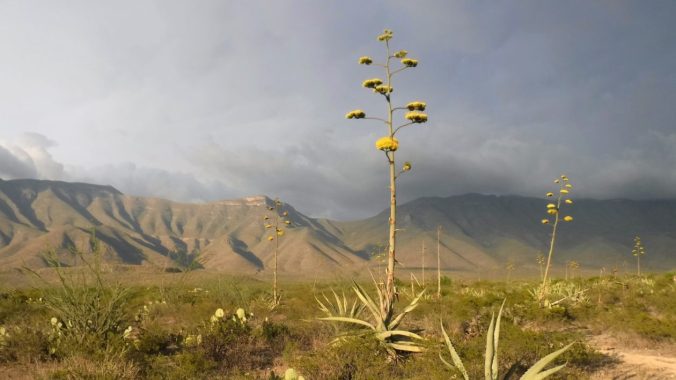
A Question Worth Asking, Again And Again

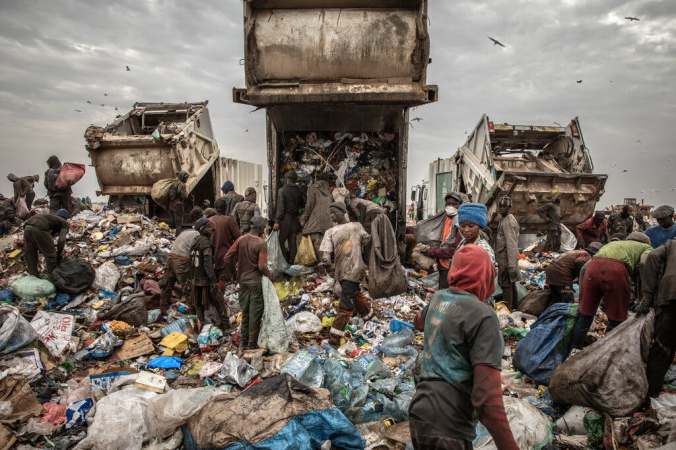
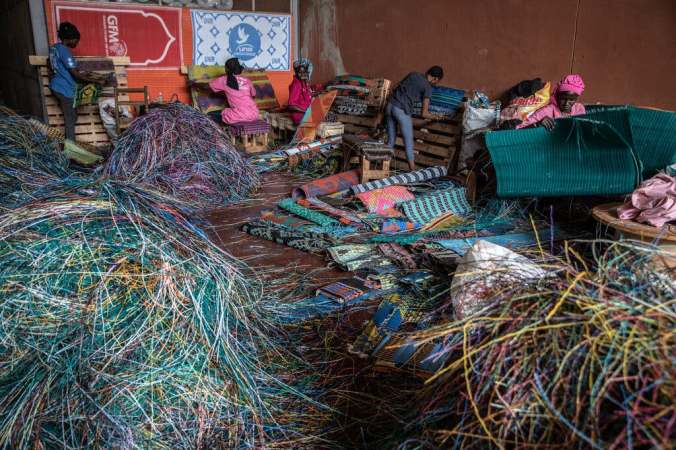
Photograph by Matthew Porter for The Atlantic

Surprising the question needs asking, but after reading HOW BAD ARE PLASTICS, REALLY? you will understand the rhetorical purpose. The author, Rebecca Altman, has written plenty on the topic, and here in the Atlantic her perspective is clear:

They’re harmful to health, environment, and human rights—and now poised to dominate this century as an unchecked cause of climate change.

This is hardly the time to talk about plastics is what I think when Dad, hovering over the waste bin at a post-funeral potluck, waves me over, his gesture discreet but emphatic. He has retrieved from the trash a crystalline plastic cup, with fluted, rigid sides. “Polystyrene,” he grins, inverting the cup to reveal its resin code (a 6 stamped inside the recycling symbol). “But not my kind.” Continue reading

The Great Bamboozle

Bill McKibben’s newsletter on Substack asks the question:

What happens if you greenwash greenwash?

It’s hard to go lower than net zero….

Greenwashing began, as it name implies, as a gentle, barely perceptible rain of fibs. Back at the start, it was mostly pictures; it was pretty easy to gauge how much environmental damage a company did by the number of penguin photographs it felt it needed to include in its annual report. Continue reading

Yakutia’s Outsized Impact

“The problem is, you can’t just turn off, let alone reverse, permafrost thaw,” one scientist said. “It won’t be possible to refreeze the ground and have it go back to how it was.” Photographs by Alexander Gronsky for The New Yorker

Joshua Yaffa reminds me, vividly, that my work in Yakutia 16 years ago was an exercise in futility:

The Great Siberian Thaw

Permafrost contains microbes, mammoths, and twice as much carbon as Earth’s atmosphere. What happens when it starts to melt?

Flying over Yakutia, in northeastern Russia, I watched the dark shades of the boreal forest blend with patches of soft, lightly colored grass. Continue reading

Schoonschip’s Floating Homes

Schoonschip, a floating home development in Amsterdam. ISABEL NABUURS

Shira Rubin, writing in Yale e360, offers a view of Holland’s innovative housing approach to a future where the increase in waterscape can become an advantage. And she illustrates how this might be of use in other parts of the world facing the same challenges from rising seas:

Embracing a Wetter Future, the Dutch Turn to Floating Homes

Faced with worsening floods and a shortage of housing, the Netherlands is seeing growing interest in floating homes. These floating communities are inspiring more ambitious Dutch-led projects in flood-prone nations as far-flung as French Polynesia and the Maldives.

When a heavy storm hit in October, residents of the floating community of Schoonschip in Amsterdam had little doubt they could ride it out. They tied up their bikes and outdoor benches, checked in with neighbors to ensure everyone had enough food and water, and hunkered down as their neighborhood slid up and down its steel foundational pillars, rising along with the water and descending to its original position after the rain subsided. Continue reading

The New Forestry In Germany

KOENIGSHAIN, GERMANY – MAY 19: Aerial photograph of dead conifers in a mixed forest on May 19, 2020 in Koenigshain, Germany. Because of the last years of drought needleleaf forests are infested by bark beetles. Many trees are felled to stop spreading these beetles. (Photo by Florian Gaertner/Photothek via Getty Images)

Gabriel Popkin offers this overview of the history of, and the new German approach to forest management in his article titled FOREST FIGHT, in Science:

Forest researchers Pierre Ibisch (left) and Jeanette Blumröder check a data logger in a pine forest that burned in 2018 and is now being allowed to naturally regenerate. LENA MUCHA

Germany invented “scientific” forestry. But a huge dieback triggered by climate change has ignited a fierce debate over how the nation should manage its trees

SCHWENDA, GERMANY—Last summer, Friederike and Jörg von Beyme stood on a bramble-covered, Sun-blasted slope outside this small town in eastern Germany. Just 4 years ago, the hillside, part of a nearly 500-hectare forest the couple bought in 2002, was green and shady, covered in tall, neatly arranged Norway spruce trees the couple planned to cut and sell. Continue reading
Postscript On Leaky

Over the decades, Leakey inspired countless scientists and activists through his books and talks. Photograph by William Campbell / Getty

We do not normally link to obituaries, but since I felt compelled to recently, this one seems a must also. Nearly two years ago we linked to a profile of Richard Leakey and the author of that profile has written a moving postscript:

On the night of January 2nd, I got a text from Paula Kahumbu, the Kenyan conservationist. “Dear friends, sad news,” she wrote. “Richard Leakey just passed away at his home in Kona Baridi.” Leakey, the renowned paleoanthropologist and wildlife conservationist, had been her mentor—a mercurial, controversial advocate for African wildlife, whose tumultuous career was central to Kenya’s history in the past half century. Continue reading
Tiles, Heritage & Conservation

Joan Moliner with some of the 1,600 tiles he has found in builders’ skips. Photograph: Stephen Burgen/The Guardian

When we were working on the project that became Xandari Harbour, articles like the one below, or any about architectural preservation, were the type we most enjoyed sharing. It has been too long, so here goes:

A man on a mission to preserve Barcelona’s decorative floor tiles

As 19th-century apartment blocks become luxury flats, Joan Moliner is saving part of the city’s heritage

A tile display with Moliner’s Brompton bicycle. Photograph: Joan Moliner

Each morning, from the moment when Joan Moliner unfolds his bicycle for the ride to work to Barcelona city centre, he is on a mission, one eye on the road, the other on builders’ skips. His quarry, if that’s the word, is cement floor tiles.

All over the city, 19th-century apartment blocks are being made over into luxury flats. In the process, a vital part of Barcelona’s heritage – its decorative tiled floors – is ending up in a dump.

Conservation of the architectural heritage rarely extends beyond listing the facade, despite the wealth of interior detail in buildings erected at a time when Barcelona was a mecca for artists and artisans. Continue reading
2022 Harvest Is Upon Us

January is harvest time for most edibles growing on our property, mangos being the exception that comes mid-year. Near the top center of the image above there is a cluster of bananas. Roughly a hundred on that bunch. Bananas come in many varieties, I learned while living in India. To my surprise, just in recent months I learned that while banana is a fruit, it is botanically in the berry family. Large herbaceous flowering plants that have served as shade for coffee on this property for most of the last century, just a few feet to the right of those few banana trees are a few coffee trees. Continue reading

With All Due Respect To Taylor Swift

An album made entirely of endangered bird sounds beat Taylor Swift on a top 50 chart, which is as it should be:

A red-tailed black cockatoo is seen sitting on a branch with the moon behind it. The bird is one of more than 50 featured on the album Songs of Disappearance that features the sounds of many of Australia’s endangered birds. Byron Hakanson/Birdlife Australia

For most of December, Adele had the top-selling album in Australia, followed by Ed Sheeran, and then there was a collection of absolute bangers that took everyone by surprise.

Songs Of Disappearance is an entire album of calls from endangered Australian birds. Last month, it briefly perched at No. 3 on the country’s top 50 albums chart – ahead of Taylor Swift. Continue reading
Juliet Eilperin’s Sprawling, Soaring Sitka Story

The trunk of the Sitka spruce marked to be cut down.

The soaring, centuries-old Sitka spruce with its blue spray-paint blaze is spared, for now.

A story about a tree, its history intertwined with five centuries of human history, this article earns your time. And it earns respect for the Washington Post, which assigned a star reporter to oversee its climate change coverage.

Juliet Eilperin features this tree’s significance from multiple angles, and accompanied by the stunning photography and video of Salwan Georges, her words are leveraged artfully with images and dramatic arc into a question you want the answer to: This tree has stood here for 500 years. Will it be sold for $17,500? Definitely worth reading on a large monitor rather than a phone screen. It may get you thinking about graduate school:

The Tongass National Forest in Alaska.

TONGASS NATIONAL FOREST, Alaska — The Sitka spruce soaring more than 180 feet skyward has stood on this spot on Prince of Wales Island for centuries. While fierce winds have contorted the towering trunks of its neighbors, the spruce’s trunk is ramrod straight. Standing apart from the rest of the canopy, it ascends to the height of a 17-story building.

This tree’s erect bearing — a 1917 publication called the Sitka species “the autocrat of timbers” — is what helps give it such extraordinary commercial value. Musical instrument makers covet its fine grain, as do builders whose clients want old-growth wood that’s increasingly scarce. In a world whose ancient forests have largely disappeared, this grove holds a sliver of what remains. Continue reading