Hargila


“Hargila” Film Documents India’s Grassroots Effort to Save the Endangered Greater Adjutant Stork

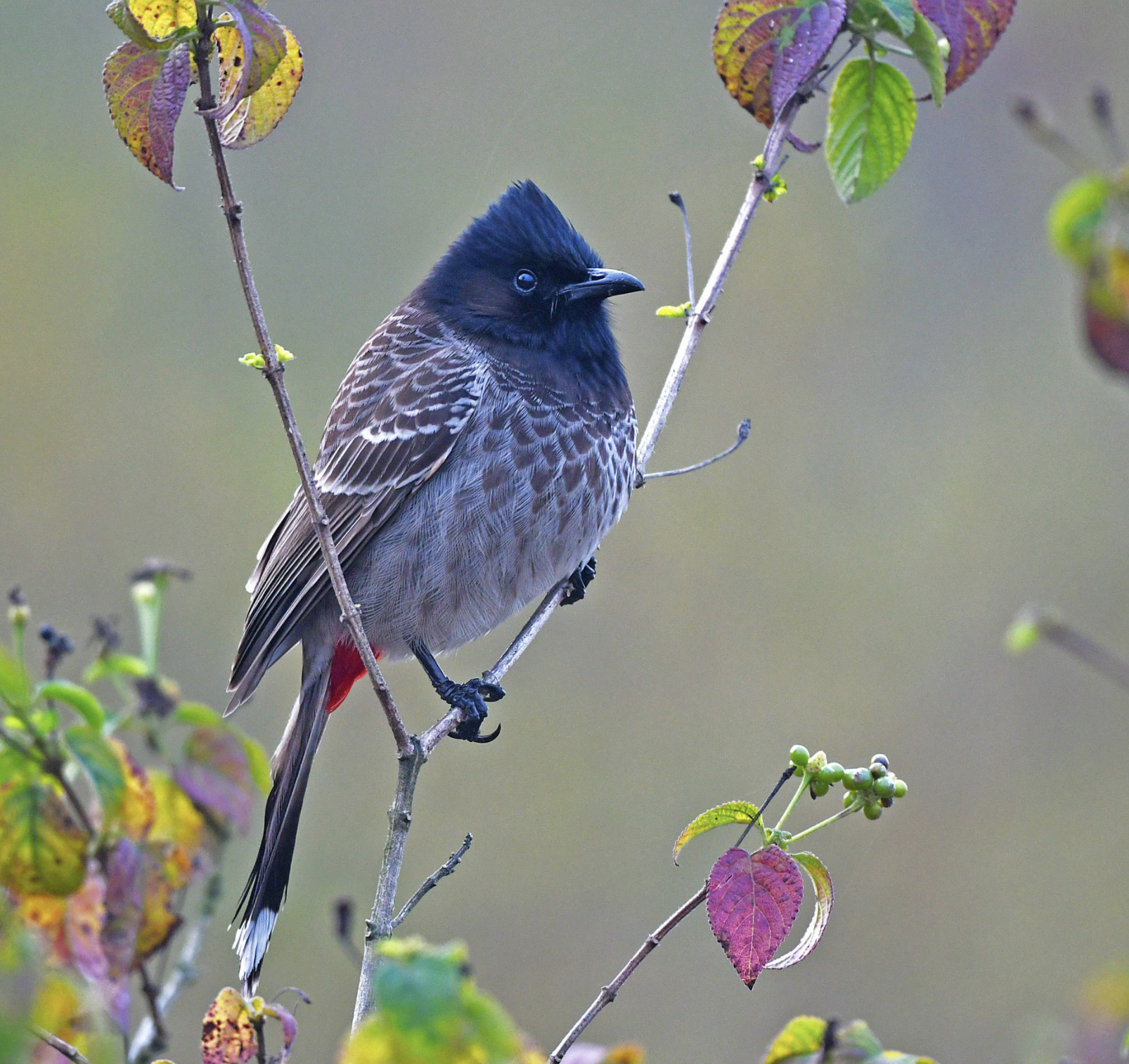
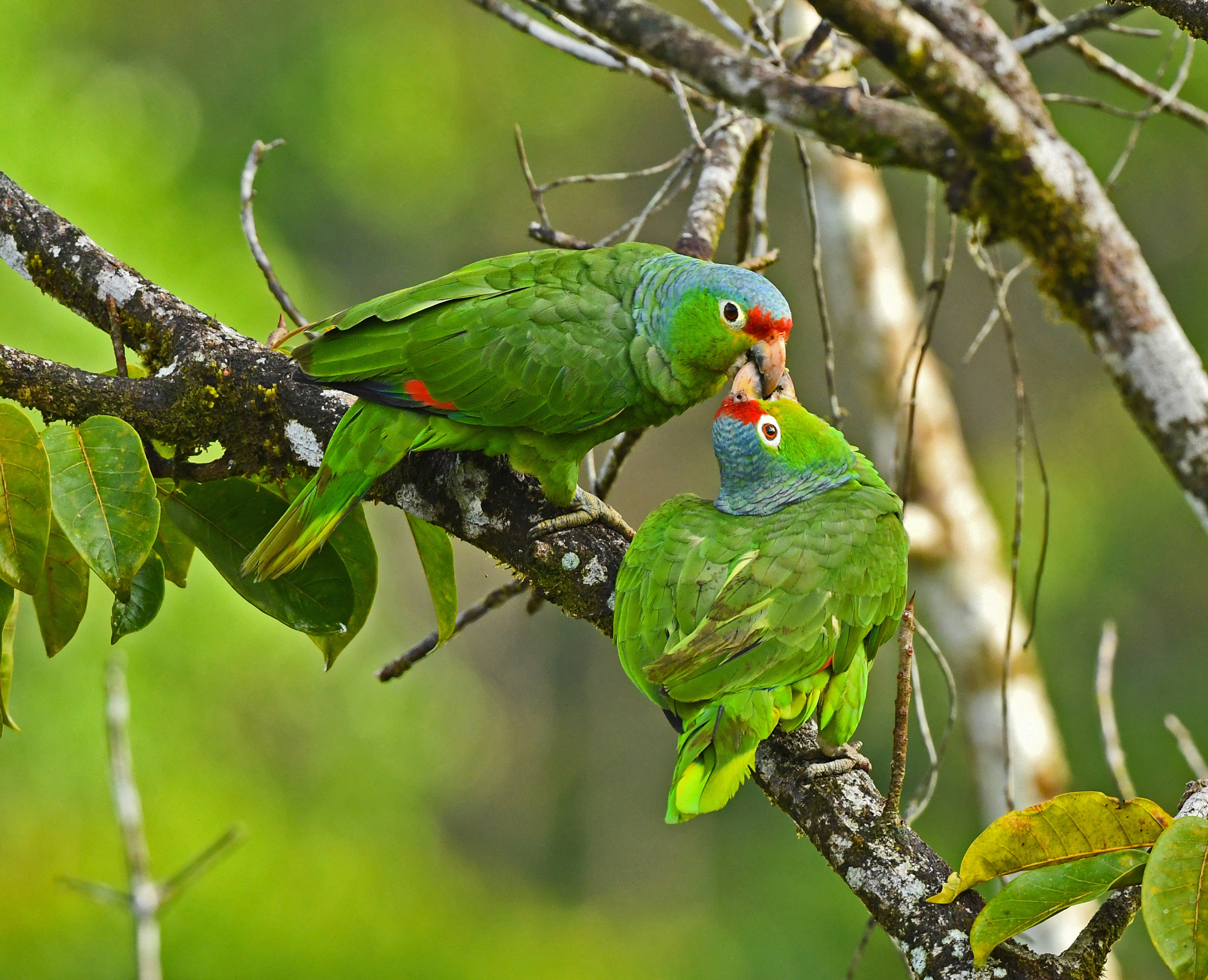
A new film by the Cornell Lab of Ornithology’s Center for Conservation Media tells the story of a wildlife photographer who travels to India intent on documenting the rarest stork on earth, but soon discovers a conservation hero and her inspiring efforts to rally a community to save it. Hargila documents the Greater Adjutant, a huge scavenging stork that was once widely distributed across India and Southeast Asia but is now mostly confined to a last stronghold in Assam, with small populations persisting in Cambodia’s northern plains region. Greater Adjutants are called “hargila” in the Assamese language, which literally translates as “bone swallower.” Continue reading

Turbines Replacing Rigs In Scotland’s Waters

The Aberdeen Bay Wind Farm, an offshore wind demonstration facility off the coast of Aberdeenshire, in the North Sea, Scotland. ZANASZANAS VIA WIKIPEDIA

When big oil companies dismantle rigs and switch to building new turbines, it has the ring of something good. Our thanks to Yale E360 for this news brief:

North Sea Fossil Fuel Companies Plan to Invest More in Wind than Oil Drilling

Having won rights to develop wind farms off the coast of Scotland, Shell, Total, and BP are set to invest more in wind power than in oil and gas drilling in the North Sea in the years ahead, the latest evidence of oil majors changing tack on renewables to better navigate the energy transition. Continue reading
Bananas, Maturity & Gravity

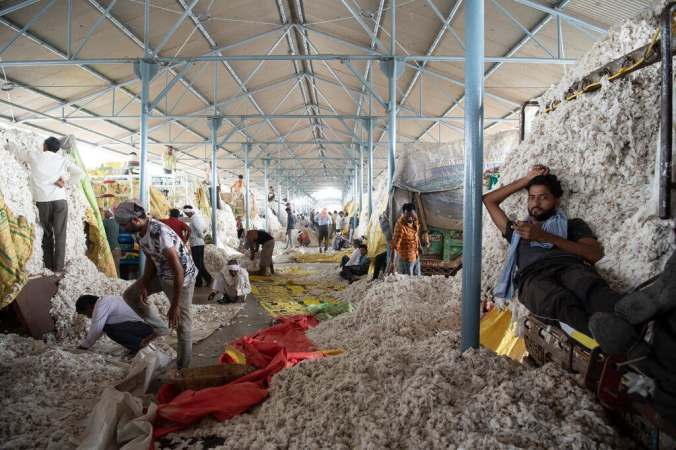
I had the intuition: if I do not harvest these bananas on my schedule, they would do it on their own. And so they did. I came home, looked out the kitchen window, and there was the entire story laid out. Maturity. Gravity pulled them down.

In these two images you can see what maturity means to a banana plant. The bananas are not ripe, but they are heavy enough to pull the entire plant down to the ground.

Normally I would have supported the bunch of bananas with a bamboo pole, then carefully chop the bottom of the trunk so the entire structure slowly makes its way down. Even then, no matter how careful I might be, the structure might come crashing down. And thankfully the bananas are still firm enough that almost no damage is done to them. A few got knocked off, but even those will be fine in a couple weeks when they all start turning yellow. Until then, that entire bunch sits in the dark of a tool shed.

Good Fences Make Good Neighbors

Land acquisition, for the purpose of conservation, is a subject that we touch upon from time to time. The bigger arc of land acquisition’s history, as well as its future, helps with perspective. The book to the right (linked to an independent bookseller’s website), potentially important for such perspective, is reviewed by Francisco Cantú in Human History and the Hunger for Land, as excerpted below (you can listen to the review by clicking the start button here):

From Bronze Age farmers to New World colonialists, the stories of struggle to claim more ground have shaped where and how we live.

Territorial expansion once meant conquest, but other modes are being explored. Illustration by Vincent Mahé

The final piece of terrain to be incorporated into the contiguous United States was an oddly shaped strip stretching from Las Cruces, New Mexico, to Yuma, Arizona. Known as the Gadsden Purchase, the area was obtained from Mexico in 1854 for ten million dollars, adding nearly thirty thousand square miles to a nation still drunk with Manifest Destiny expansionism. The motivations for acquiring the land were many—it contained huge deposits of ore and precious metals, held vast agricultural potential in the soils of its fertile river valleys, and, most important, had an arid climate that could allow a rail route to connect the coasts while remaining free from snowpack year-round. Continue reading

Carless Berlin

A cyclist in Berlin, Germany.

A cyclist in Berlin, Germany. HENDRIK WIEDUWILT VIA FLICKR

Thanks to Yale E360 for Berlin Looks to Create Car-Free Zone Larger Than Manhattan, a snapshot of the city’s fewer cars campaign, with links to further details in related stories by the Guardian and Fast Company:

Berlin’s regional parliament is considering creating a car-free zone in the German capital in response to a concerted push from a local advocacy group. Continue reading
Blacksmithing The Zero Waste Knife

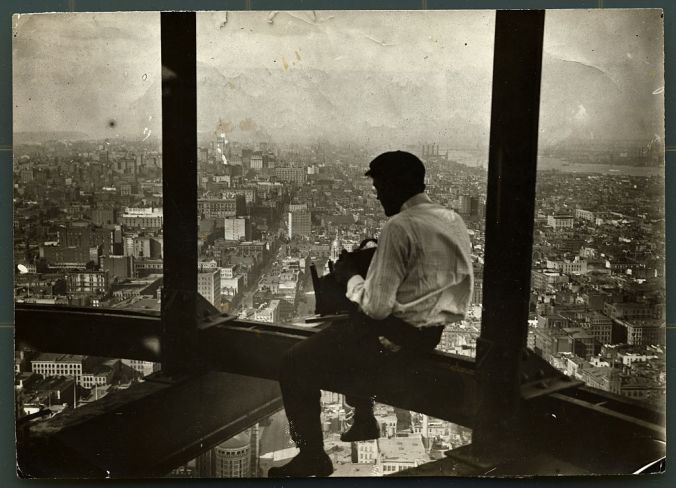
I have mentioned more than once about my brief blacksmithing experience. I have a respect for the profession. I have a new level of respect for this particular blacksmith featured in Matthew Weaver’s article below, so would encourage you to visit his website by clicking the image to the left:

Tim Westley making a zero-waste knife at his forge. Photograph: Xavier D Buendia/XDBPhotography

‘My customers like zero waste’: the blacksmith recycling canisters into cult kitchen knives

Tim Westley takes up chef friend’s challenge to transform laughing gas litter

Discarded nitrous oxide gas canisters. Photograph: Gareth Fuller/PA

The little steel bulbs that litter parks, roadsides and city centres – the discarded canisters from Britain’s second favourite drug, laughing gas – cause misery to many communities. But now one blacksmith has found an innovative use for them: turning them into handmade kitchen knives.

The prevalence of the canisters has prompted some councils to impose local bans, while the home secretary is keen to outlaw them nationally. But Tim Westley’s handmade kitchen knives are gaining a cult following among environmentally conscious foodies after being endorsed by chefs committed to low waste. Continue reading

Birds, Habitat & The Value Of Ecosystem Services

Fruit-eating animals spread the seeds of plants in ecosystems around the world. Their decline means plants could have a harder time finding new habitats as the climate changes. Karl-Josef Hildenbrand/DPA/AFP via Getty Images

From the time we started managing lodges in biodiversity hotspots, bird habitat became an important sub-component of my professional life. Later, when Seth was working at the Cornell Lab of Ornithology, I learned to appreciate a bit more about the ecosystem services birds provide their habitats. I think more frequently about the protection of bird habitats now due to our coffee work,  as well as the conservation benefits that bird watchers might provide to bird habitats.

The importance of the ecosystem services birds provide their habitats will become more obvious as a result of disruptive rising temperatures. Thanks to Lauren Sommer and National Public Radio (USA) for one more way to think about birds’ services as the planet adapts:

To get by in a changing climate, plants need animal poop to carry them to safety

Evan Fricke knows exactly how long it takes, after a bird on the island of Saipan eats a piece of fruit, for it to come out the other end (Answer: as little as 10 minutes).

“There’s always this poop angle to my research,” says Fricke, an ecologist with Rice University. “PhD in bird poop basically.” Continue reading

Plastic Transformed With Purpose

Interior detail of “Earth Poetica,” which is a huge globe created out of plastic waste. Amit Elkayam for The New York Times

The challenge of plastic is a topic that goes back a decade in our pages.  We have featured artisanal plastic upcycling initiatives that we have supported entrepreneurially, as well as articles about other artisanal initiatives.

Today, in the same vein: Israeli Artist Turns Plastic Pollution Into ‘Earth Poetica’.

Beverly Barkat in her Jerusalem studio assembling “Earth Poetica,” a huge globe, from plastic waste. Its permanent home will be a building at ground zero in Manhattan. Amit Elkayam for The New York Times

In Beverly Barkat’s quest to connect people with nature, she found that environmental waste could be a powerful medium.

JERUSALEM — When the Jerusalem artist Beverly Barkat began to create an artwork for the lobby of a building in the new World Trade Center complex overlooking ground zero in Lower Manhattan, she aimed to come up with something architecturally site specific and impactful, large enough to connect with the space but not so enormous as to disconnect from the observer.

Barkat had a stark message to convey. Years earlier, she said, she had been struck by an image of children scavenging on a once-beautiful beach awash in plastic waste. Continue reading

Too Much Hype About Too Much Stuff

The Economist recently promoted a notion:

Rags to riches – fashion as an asset class HOW DID second-hand clothes become fashion’s hottest buy? Online resale and rental firms are changing the calculus on what it means to buy fashion “as an investment”

Hype? We will see. The “trapped” value of fashion items in our homes might get liberated as discussed, but what about the fundamental trap of fashion?

Ryan McVay/Getty Images

Kenneth P. Pucker shares an important lesson from his time in industry, and kudos to Harvard Business Review for giving him the platform to explain The Myth of Sustainable Fashion:

Few industries tout their sustainability credentials more forcefully than the fashion industry. Products ranging from swimsuits to wedding dresses are marketed as carbon positive, organic, or vegan while yoga mats made from mushrooms and sneakers from sugar cane dot retail shelves. New business models including recycling, resale, rental, reuse, and repair are sold as environmental life savers. Continue reading

A Question Worth Asking, Again And Again

Photograph by Matthew Porter for The Atlantic

Surprising the question needs asking, but after reading HOW BAD ARE PLASTICS, REALLY? you will understand the rhetorical purpose. The author, Rebecca Altman, has written plenty on the topic, and here in the Atlantic her perspective is clear:

They’re harmful to health, environment, and human rights—and now poised to dominate this century as an unchecked cause of climate change.

This is hardly the time to talk about plastics is what I think when Dad, hovering over the waste bin at a post-funeral potluck, waves me over, his gesture discreet but emphatic. He has retrieved from the trash a crystalline plastic cup, with fluted, rigid sides. “Polystyrene,” he grins, inverting the cup to reveal its resin code (a 6 stamped inside the recycling symbol). “But not my kind.” Continue reading