Thames Is Alive, Again

Species living in the Thames include seahorses and sharks. Photograph: ZSL

We will take good news where and how we can get it:

Seahorses and sharks living in River Thames, analysis shows

Zoological Society of London carries out most comprehensive survey since 1950s

Since 2003 there has been as steady increase in seal populations in the Thames estuary. Photograph: ZSL

Seahorses, eels, seals and sharks are living in the tidal Thames, according to the most comprehensive analysis of the waterway since it was declared biologically dead in the 1950s.

But scientists from the Zoological Society of London (ZSL), who carried out the work, warn that the 95 miles of the tidal Thames is suffering from rising nitrate levels as a result of industrial runoff and sewage discharges. Water levels and temperature are also rising as a result of global heating. Continue reading

Quirky, Old-School Enterprise Versus Doom

Powell’s anticipated that every part of its business would need to be closed, but then quickly realized that it could continue operating the warehouse. Amanda Lucier for The New York Times

We have used the word doom in a post title on four previous occasions, most recently this one. Doomsaying is not our goal here, but when it comes to the environment, particularly climate change, sometimes no other word will do.

A customer in Powell’s flagship store downtown. Amanda Lucier for The New York Times

On this fifth occasion I use the word just as seriously, but without reference to environmental challenges.  This book retailer has been on the front lines of one of the other big dangers I have had my eye on, and I am thankful to Peter S. Goodman for this account of their approach to survival:

Powell’s Books Survived Amazon. Can It Reinvent Itself After the Pandemic?

As much as any city, Portland, Ore., has been through hell. Its landmark store, Powell’s Books, must finally build a viable online business while recapturing its downtown success.

Powell’s anchors a once dicey neighborhood now dotted with glass-fronted condos and furniture boutiques. Amanda Lucier for The New York Times

PORTLAND, Ore. — Over its half-century in the heart of Portland, Powell’s Books has survived an unending array of foundational threats — the oft-anticipated death of reading, the rise of Amazon, the supposedly irretrievable abandonment of the American downtown.

None of that provided preparation for the tumult of the past two years. Continue reading
Big Hydro’s Climate Change

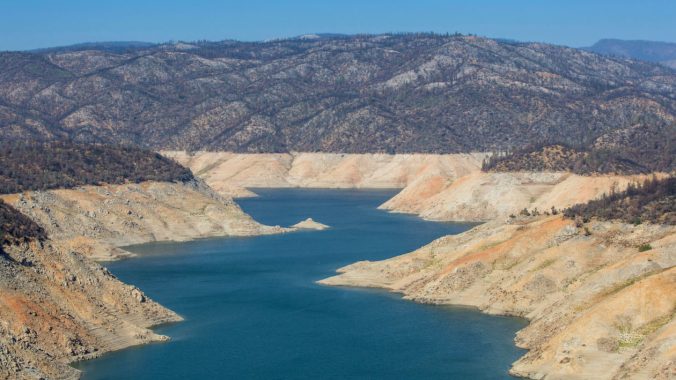
Lake Oroville, the reservoir behind the Oroville Dam in California, at a near-record low level on September 1. Because of drought, the dam has not operated since August 5. GEORGE ROSE / GETTY IMAGES

Jacques Leslie, a Yale e360 regular and Los Angeles Times op-ed contributor, is a leading authority on dams, so his opinion here is worth noting:

As Warming and Drought Increase, A New Case for Ending Big Dams

The argument against major hydropower projects — ravaged ecosystems and large-scale displacement of people — is well known. But dam critics now say that climate change, bringing dried-up reservoirs and increased methane releases, should spell the end of big hydropower.

As the hydroelectric dam industry tries to reposition itself as a climate change solution, more and more evidence shows that climate change actually undermines the case for hydro dams. Continue reading

1992 Earth Summit Revisited

Illustration by João Fazenda

In her look back at last week’s events in Glasgow, Elizabeth Kolbert comments in Running Out of Time at the U.N. Climate Conference that we were set up for this moment at the first such event nearly three decades earlier:

To really appreciate America’s fecklessness, you have to go back to the meeting that preceded all the bad COPs—the so-called Earth Summit, in 1992.

For those inclined to see them, there were plenty of bad omens last week as the latest round of international climate negotiations—cop26—got under way in Glasgow. A storm that lashed England with eighty-mile-per-hour winds disrupted train service from London to Scotland, leaving many delegates scrambling to find a way to get to the meeting. Just as the conclave began, Glasgow’s garbage workers went on strike, and rubbish piled up in the streets. Continue reading

Global North, Global South & Responsibilities

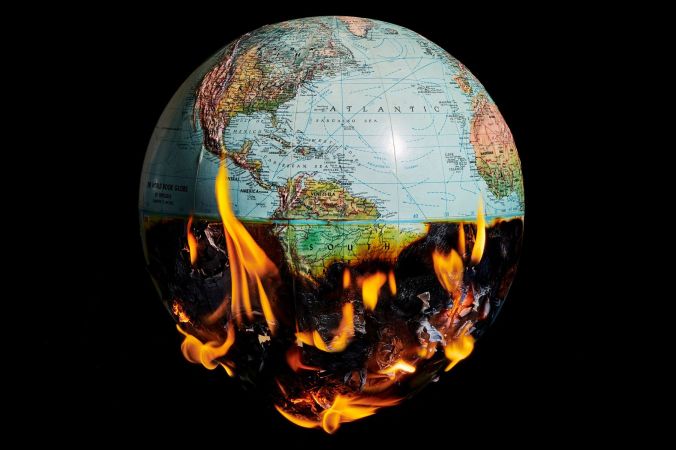
Photo: Hannah Whitaker; Prop Styling: Marina Bevilacqua.

David Wallace-Wells has done it again. Devastated me with considerations I should have had on my own, but had not. And he makes it so vivid that once you see his point you cannot stop seeing it. Having lived in the Global South for a majority of my adult years, but having been born into and lived in the Global North for the first half of my life, this story resonates with me in ways I cannot quite describe. But the quote from Proverbs in yesterday’s post seems even more intensely relevant:

Climate Reparations

A trillion tons of carbon hangs in the air, put there by the world’s rich, an existential threat to its poor. Can we remove it?

I. What Is Owed

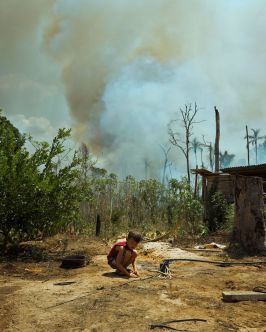
Brazil, 2019. Photo: Cristina de Middel/Magnum Photos

The math is as simple as the moral claim. We know how much carbon has been emitted and by which countries, which means we know who is most responsible and who will suffer most and that they are not the same. We know that the burden imposed on the world’s poorest by its richest is gruesome, that it is growing, and that it represents a climate apartheid demanding reparation — or should know it. We know we can remove some of that carbon from the atmosphere and undo at least some of the damage. We know the cost of doing so using tools we have today. And we know that unless we use them, the problem will never go away. Continue reading
Anglophiles, We, This Observation Is Useful

On a good day, Prime Minister Boris Johnson’s energy can change the political weather. But he will say, and forget, anything to get where he wants to be. Photography by Christopher Furlong / Getty

The last line of this article quotes the book of Proverbs, and it stings: ‘Where there is no vision, the people perish.’ We have a  borrowed phrase–not my circus, not my monkeys–for situations that are frustrating but technically none of our business. I did not like any element of the Brexit campaign, and I especially did not like Boris Johnson’s “solutions” to its challenges. None of my business, in a sense, because I am not a citizen of that country. But I care about the UK, so I care about Brexit. I care about the UK so I care about its leadership (or lack thereof). For that reason, I share this:

Boris Johnson’s Fickle Climate Leadership

In the face of scientific reality, the host of the U.N. climate-change talks comes up short.

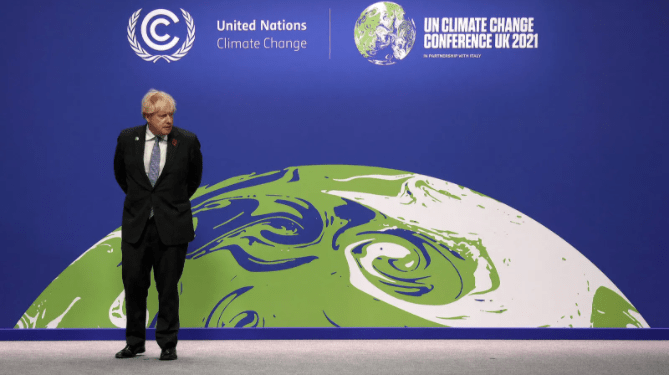
For more than an hour on Monday morning, Boris Johnson, the British Prime Minister, stood on a gray carpet in front of a bright-blue-and-green backdrop—a swirling, hopeful suggestion of the Earth—at the Scottish Event Campus, in Glasgow, welcoming international leaders to cop26, the climate-change talks. A few feet away, António Guterres, the U.N. Secretary-General, a more placid presence, occupied his own stretch of carpet. Continue reading

Greek Islands & Cleaner Energy

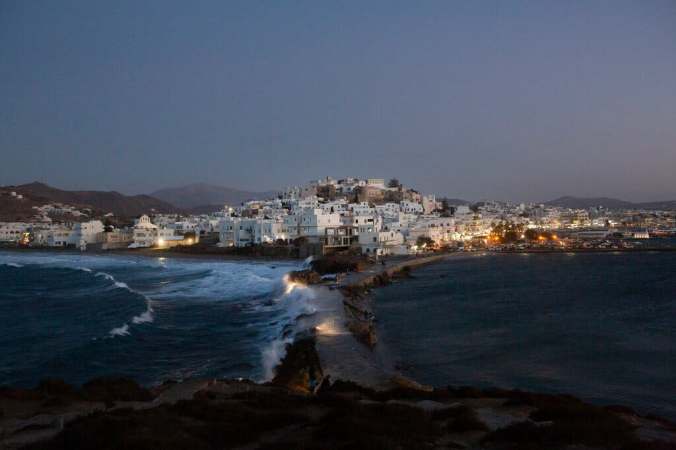
The island of Naxos is now linked to the Greek mainland via an underwater electrical cable. Eirini Vourloumis

Writing from Costa Rica, which currently generates nearly all of its electricity from renewable sources, but thinking of Greece, which is moving in that direction, my thanks to Liz Alderman and Eirini Vourloumis for the excellent reporting and photography about that journey:

Greece Is Getting Rewired for the Future

As climate change bears down, Greece is upending its sources of energy and trying to reshape its economic destiny.

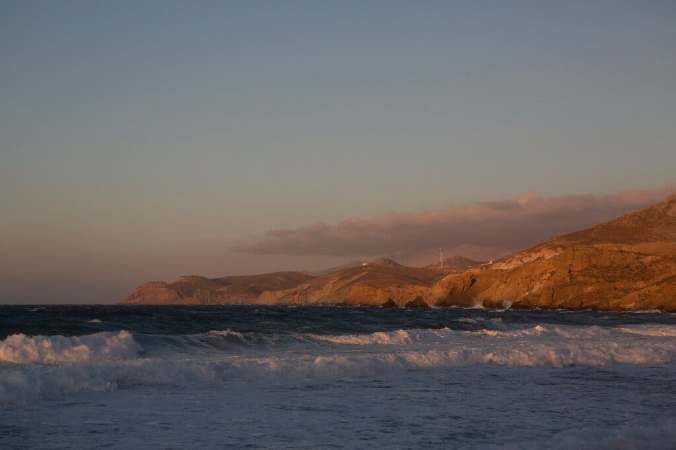
Two wind turbines on a hill outside the main town of Naxos. Eirini Vourloumis

NAXOS, Greece — On the windswept western tip of one of Greece’s largest islands, an unassuming stone building above the Aegean Sea has become an unlikely outpost in this country’s fight against climate change. Continue reading

Sign Up For McKibben

James Watt, at work in the small University of Glasgow workshop where he basically invented the fossil fuel era

I am trying to imagine getting tired of reading Bill McKibben’s constant flow of commentary and news, even though most of it is dismal. It would be like getting tired of paying attention to the environment, especially climate issues. Yesterday’s observations from Glasgow are particularly rewarding, and I hope you will consider subscribing to his newsletter:

Glasgow: where climate wreckage began

And where it’s definitely not going to end

I spent part of the morning wandering the gorgeous Victorian courtyards of the University of Glasgow (they would seem familiar to you—it’s where they shot the exteriors for the Harry Potter films), trying to find the university chapel where I was supposed to give a lecture. Instead of that august sanctuary, I stumbled across the James Watt building—and with it a poignant set of reminders about just how quickly we’ve managed to bring the world to the edge of ruin. Continue reading

Humanity & Melting History

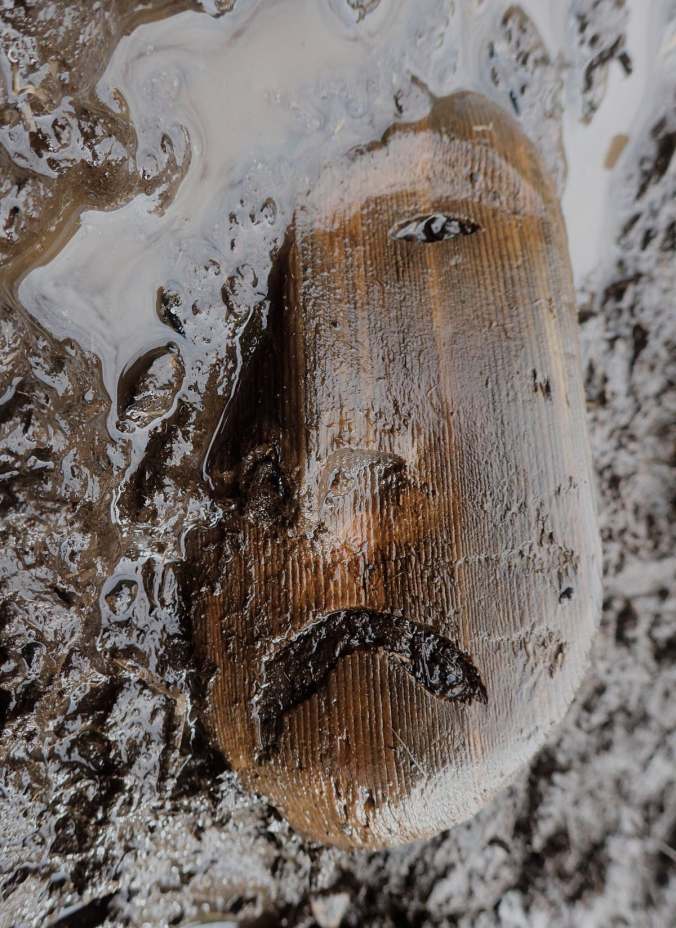
A mask belonging to the Yup’ik people of Alaska emerging from the permafrost. It is one of more than 100,000 artifacts retrieved from Nunalleq, the site of a village that was attacked by rivals 350 years ago. University of Aberdeen

When I posted about this book yesterday I had the long arc of history on my mind all day, and now this:

As Earth Warms, Human History Is Melting Away

Climate change is revealing long-frozen artifacts and animals to archaeologists. But the window for study is slender and shrinking.

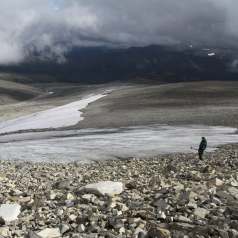
The Langfonne ice patch in Norway. Glacier Archaeology Program, Innlandet County Council

For the past few centuries, the Yup’ik peoples of Alaska have told gruesome tales of a massacre that occurred during the Bow and Arrow War Days, a series of long and often brutal battles across the Bering Sea coast and the Yukon. According to one account, the carnage started when one village sent a war party to raid another. But the residents had been tipped off and set an ambush, wiping out the marauders. The victors then attacked the undefended town, torching it and slaughtering its inhabitants. No one was spared. Continue reading

The Dawn Of Everything

Occupy Wall Street never showed up in these pages until now, which is maybe too late. I recall visiting Zuccotti Park in late 2011, to observe more than to occupy. I remember a box of books, many young people and some my own age, and a palpable sense of purpose combined with a pretty straightforward logic. Also, tranquil. That ballerina meant something. But I could not stay. I was in New York on a very brief visit. I have the opposite of anarchist beliefs and my understanding at the time was that the animating philosophy had something to do with anarchy.

I shared views with Occupy Wall Street in opposition to historic inequalities that I could see as a ticking time bomb. But my time that day was limited. I had to leave. No regrets. Until now, perhaps. Maybe I should have stayed. This book, which I have now read several reviews of, gives me reason to wonder. That protest was the brainchild of someone who then spent a decade producing a book to offer a very different view of human history:

…The Big History best-sellers by Harari, Diamond and others have their differences. But they rest, Graeber and Wengrow argue, on a similar narrative of linear progress (or, depending on your point of view, decline). Continue reading