Humpback Whale Rebound

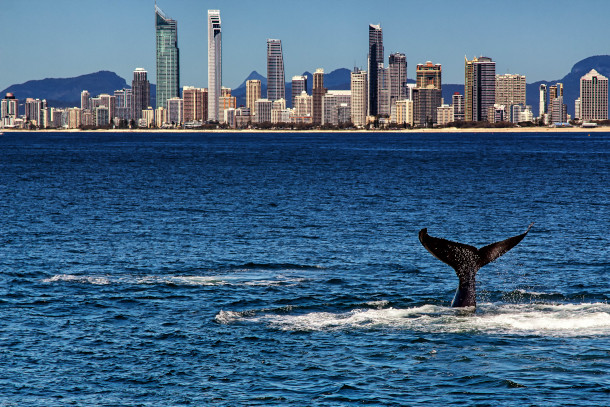
A humpback whale off the shore of the Gold Coast in Australia. (Photo: Steve Austin, Flickr, CC BY-ND 2.0)

Just absorb this (thanks to the Living on Earth podcast for this short segment):

…Experts estimate there are about 40,000 humpbacks that migrate each year between the southern oceans around Antarctica and the oceans around Australia. And there used to be 1500 a half century ago, mostly wiped out due to wailing. Continue reading →

Crazy Yellow Ants, Be Gone From This Island

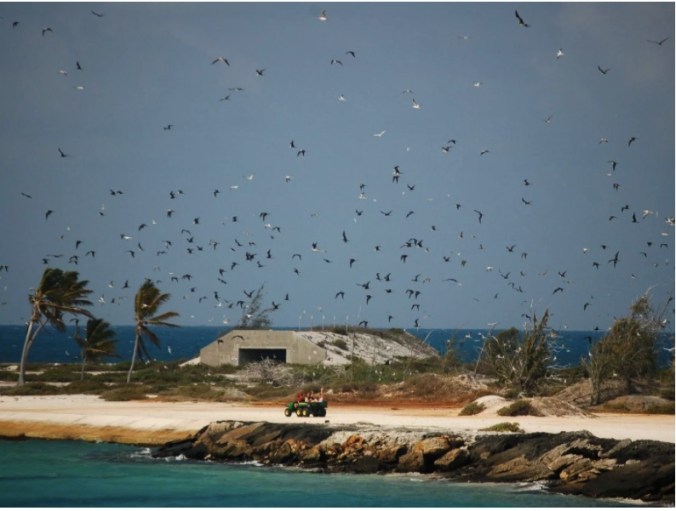
Hundreds of frigate birds and boobies fly over a Crazy Ant Strike Team crew of volunteers at Johnston Atoll NWR.
USFWS

In common language, they are called crazy. They terrorize birds on an island where they did not belong. On this platform we are always going to side with the birds. Full stop. But, even these lousy things ants do are impressive. They remind us that one day ants will rule the planet.

Yellow Crazy Ants, An Enemy To Seabirds, Have Been Wiped Out On A Remote Atoll

The yellow crazy ant was last spotted by Crazy Ant Strike Teams on the vital seabird nesting grounds in December 2017, but it was too soon to tell if they’d been fully extinguished because their colonies are found underground. Robert Peck/HCSU/USGS

After more than a decade, the terrorizing reign of the yellow crazy ant is over on the Johnston Atoll National Wildlife Refuge, part of the Pacific Remote Islands Marine National Monument.

The nonnative invasive insect had been threatening ground-nesting seabirds on the atoll since at least 2010, nearly wiping out the island’s red-tailed tropicbird colony in just a few years and wreaking havoc on other seabirds. But the U.S. Fish and Wildlife Service announced Wednesday that its campaign to eradicate the insects has been a success. Continue reading →

Heat & Humanity

Last week, researchers at nasa and noaa found that “the earth is warming faster than expected.” Photograph by Kyle Grillot / Bloomberg / Getty

This week’s newsletter ponders how adaptable we are and serves as a reminder that we cannot take for granted that we are sufficiently so for the changes upon us:

It’s Not the Heat—It’s the Humanity

Rising air temperatures remind us that our bodies have real limits.

By Bill McKibben

It’s hard to change the outcome of the climate crisis by individual action: we’re past the point where we can alter the carbon math one electric vehicle at a time, and so activists rightly concentrate on building movements large enough to alter our politics and our economics. But ultimately the climate crisis still affects people as individuals—it comes down, eventually, to bodies. Which is worth remembering. In the end, we’re not collections of constructs or ideas or images or demographics but collections of arteries and organs and muscles, and those are designed to operate within a finite range of temperatures. Continue reading →

When Renewables Are Less Expensive Than Coal…

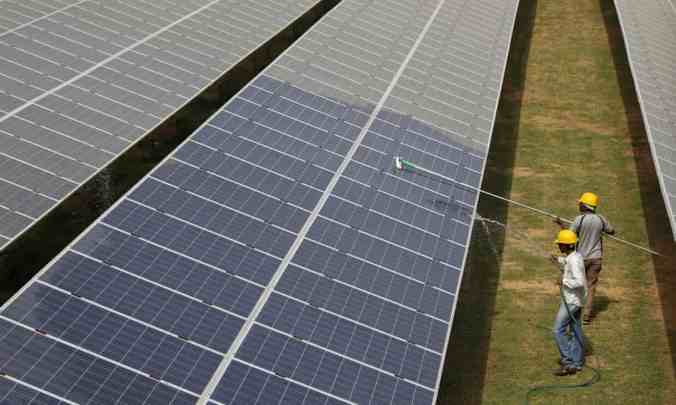
A solar power plant in Gujarat, India. Renewable energy in the country would be cheaper than between 87% and 91% of new coal plants, the report says. Photograph: Amit Dave/Reuters

Looks like we are almost there:

Most new wind and solar projects will be cheaper than coal, report finds

Almost two-thirds of renewable energy schemes built globally last year expected to undercut coal costs

Almost two-thirds of wind and solar projects built globally last year will be able to generate cheaper electricity than even the world’s cheapest new coal plants, according to a report from the International Renewable Energy Agency (Irena). Continue reading →

Methane Leaks Plugged With Help From Above

Thanks to Public Broadcasting Service (USA) for this:

Satellites seek out methane leaks from pipelines, oil fields, landfills and farms

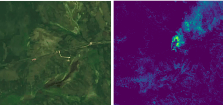
Satellite imagery shows a Russian gas pipeline (left) and highlights huge amounts of methane (right) being emitted from the pipeline on September 6, 2019. Kayrros and Modified Copernicus Data, 2019

The threat was invisible to the eye: tons of methane billowing skyward, blown out by natural gas pipelines snaking across Siberia. In the past, those plumes of potent greenhouse gas released by Russian petroleum operations last year might have gone unnoticed. But armed with powerful new imaging technology, a methane-hunting satellite sniffed out the emissions and tracked them to their sources.

Thanks to rapidly advancing technology, a growing fleet of satellites is now aiming to help close the valve on methane by identifying such leaks from space. The mission is critical, with a series of recent reports sounding an increasingly urgent call to cut methane emissions. Continue reading →

Finnish Food Future

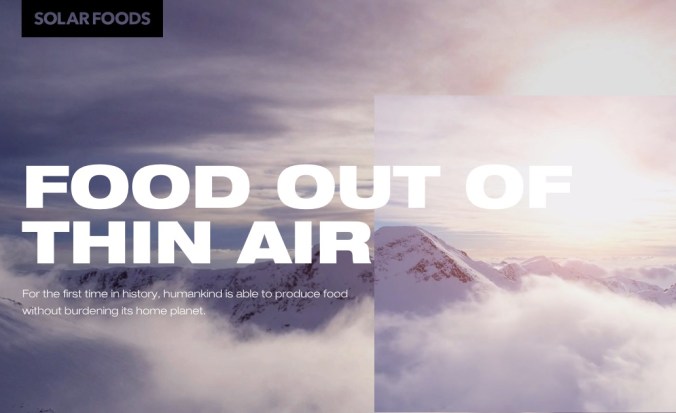
Solar Foods, a Finnish company, makes a weird promise on the landing page of its website; but still, thanks to the Guardian for this story behind the story:

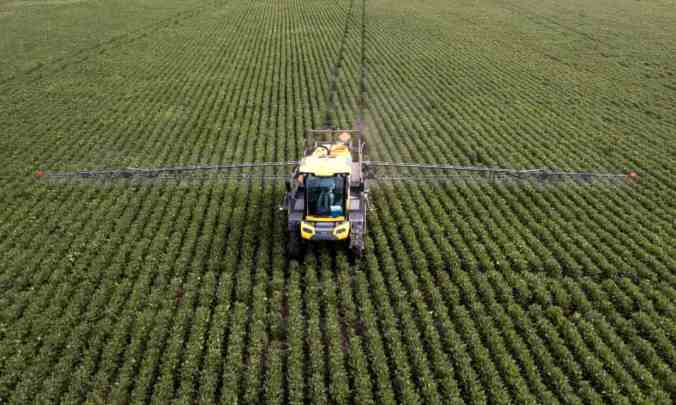
A soya bean field in Argentina. The study found a hectare of soya beans could feed 40 people, the solar-microbial process 520 per hectare. Photograph: Ivan Pisarenko/AFP/Getty Images

Microbes and solar power ‘could produce 10 times more food than plants’

The system would also have very little impact on the environment, in contrast to livestock farming, scientists say

Combining solar power and microbes could produce 10 times more protein than crops such as soya beans, according to a new study. Continue reading →

The Gulf Stream’s Weakening Arm

Again, exceptional infographics tell an important environmental story–it is worth opening if only for the quality of the interactive illustrations:

In the Atlantic Ocean, Subtle Shifts Hint at Dramatic Dangers

The warming atmosphere is causing an arm of the powerful Gulf Stream to weaken, some scientists fear.

By MOISES VELASQUEZ-MANOFF
and JEREMY WHITE

IT’S ONE OF THE MIGHTIEST RIVERS you will never see, carrying some 30 times more water than all the world’s freshwater rivers combined. In the North Atlantic, one arm of the Gulf Stream breaks toward Iceland, transporting vast amounts of warmth far northward, by one estimate supplying Scandinavia with heat equivalent to 78,000 times its current energy use. Without this current — a heat pump on a planetary scale — scientists believe that great swaths of the world might look quite different. Continue reading →

One Of The Most Mind-blowing Discoveries In The History Of 20th- And 21st-Century Ornithology

Whimbrel returning to Deveaux Bank for their night roost. Photo: Damon Winter/The New York Times

We have not featured Deborah Cramer in our pages previously, but this seems like a fine time to start. She is a visiting scholar at M.I.T.’s Environmental Solutions Initiative and the author of the book to the right.  Accompanied by excellent photographs from Damon Winter as well as exceptionally lucid infographics, her interactive essay in the New York Times is a forceful plea for conservation of a sensitive bird habitat:

An Oystercatcher on the bank. Photo: Damon Winter/The New York Times

Leave This Wondrous Island to the Birds

An ever-changing spit of sand on the Carolina coast is a haven for multitudes of shorebirds. But nature and humans threaten it.

ABOUT 20 MILES south of Charleston, S.C., at the mouth of the North Edisto River, a small, horseshoe-shaped sandbar rises above the water. The claim of land is tenuous on Deveaux Bank, about a half-mile offshore. At high tide, it’s three-quarters submerged. Deveaux’s sand is continually shifting as swirling currents build it up and wash it away. In some years, the island disappears altogether. Continue reading →
Botanical Migration

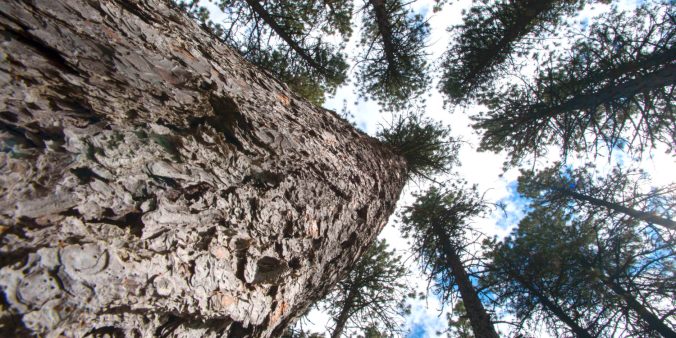
Ponderosa pine, now widely distributed in North America, were exceedingly rare during the last ice age. WOLFGANG KAEHLER / GETTY IMAGES

Thanks to Zach St. George for this:

As Climate Warms, a Rearrangement of World’s Plant Life Looms

Previous periods of rapid warming millions of years ago drastically altered plants and forests on Earth. Now, scientists see the beginnings of a more sudden, disruptive rearrangement of the world’s flora — a trend that will intensify if greenhouse gas emissions are not reined in. Continue reading →