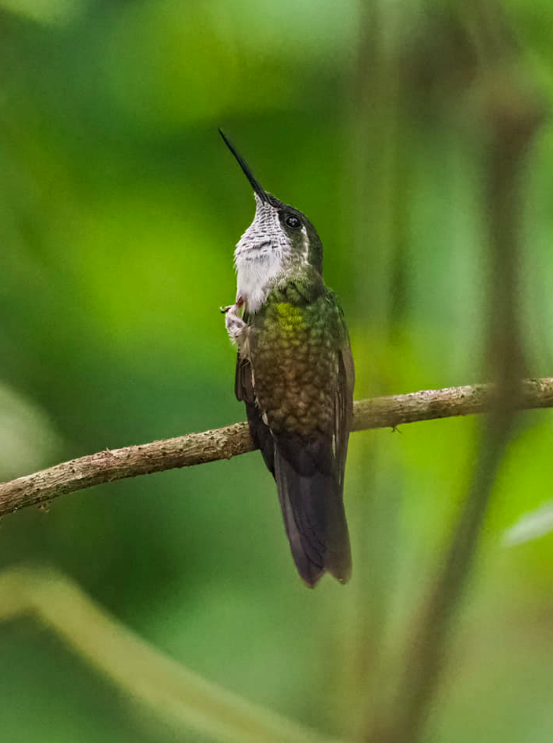
Santa Rosalía, Guatemala
Santa Rosalía, Guatemala
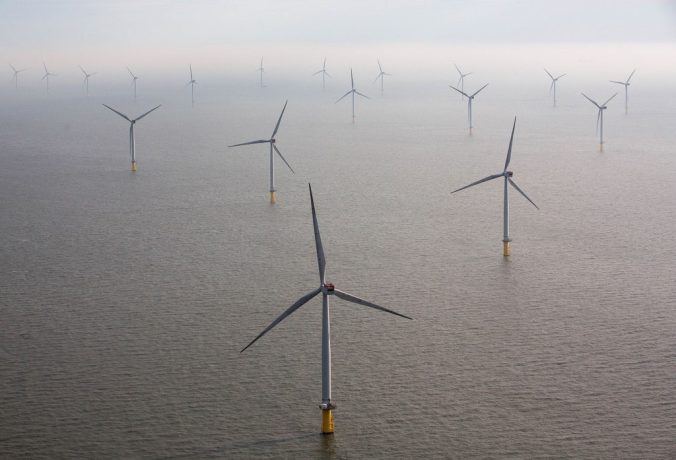
A good method for converting so-called NIMBY opponents of turbines and other renewable-energy infrastructure would be to give locals a stake in the enterprise’s economic success. Photograph by Simon Dawson / Bloomberg / Getty
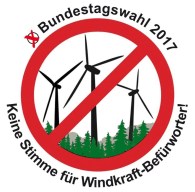
“No vote for wind power advocates” – wind power opponents’ election poster for the 2017 parliamentary elections. Source: windwahn.com
We have giant turbines along the ridge at the top of the mountain where we live. I enjoy looking at them, not because they are pretty, or perfect, but because they represent progress. I never had the NIMBY inclination. If the turbines were in my face all day, every day, or if I had some sense that they were affecting my property value, perhaps I would feel differently. I had thought of the acronym PIMBY, thanks to those turbines uphill from us, before reading this, but am glad to see it is a thing. Thanks, as always, to Bill McKibben for his newsletter’s role in getting us to see further down the road:
The Shift to Renewable Energy Can Give More Power to the People
The pandemic has driven a lot of people outdoors: reports show that park visits are up around the world and parking lots at hiking trails are packed. That’s understandable—by now you’d need to chop down a sizable forest to print out the studies showing that time in nature reduces stress, cuts healing times, and enhances the functioning of the immune system. As Sadie Dingfelder wrote in the Washington Post in December, “I’ve always found it relaxing and rejuvenating to be outdoors, but the anxiety and isolation of the pandemic, the uncertainty of civil unrest and, oh, I don’t know, the potential crumbling of American democracy have made me crave nature like a drug.” Continue reading
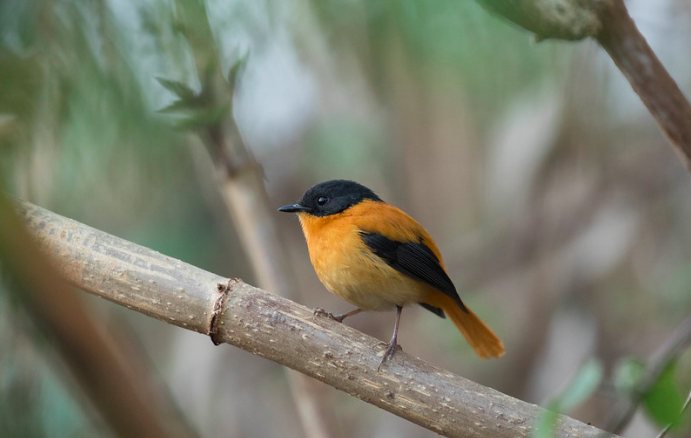
Ooty, Tamil Nadu
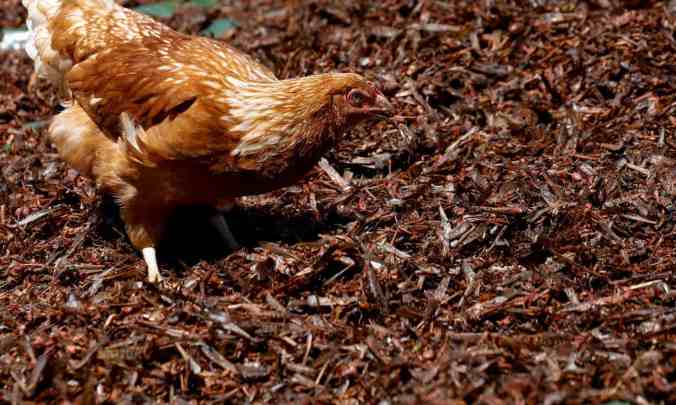
A chicken tucks into crushed desert locusts at a farm near the town of Rumuruti, Kenya
The Guardian shares a photo documentary of a lemons-to-lemonade story with locusts as the lemons. Click the title below, or any image, to go to the story:
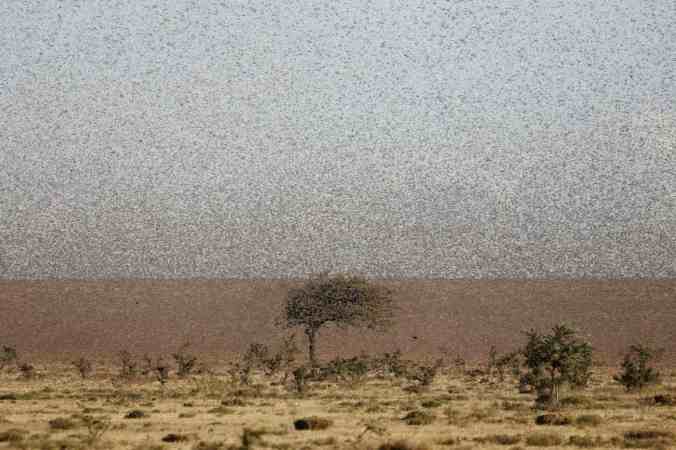
Kenya is facing its worst plagues of locusts in decades. Since December 2019, huge swarms have caused devastation across east Africa
Turning plagues of locusts into chicken feed – in pictures
The biggest swarms of the insects in a generation have devastated crops and grazing across Africa but are now being turned into sustainable, high-protein animal fodder and fertiliser

A net is used to harvest desert locusts near Rumuruti, Kenya. A 100 sq km swarm can eat what 3.5 million people would eat in a day
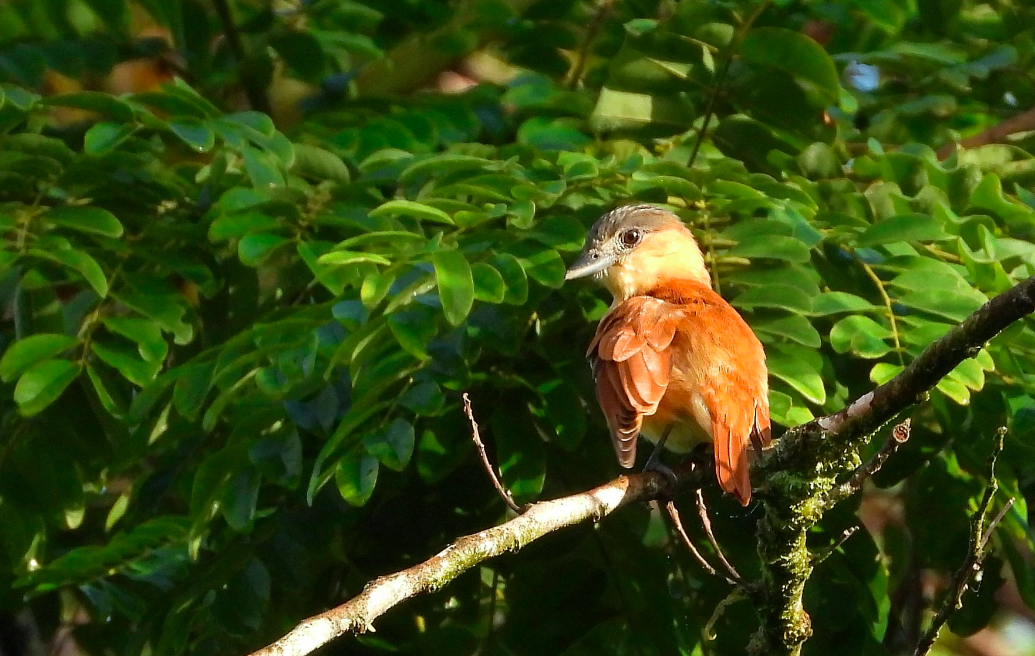
female – Macaw Lodge, Costa Rica

Hooked: Food, Free Will, and How the Food Giants Exploit Our Addictions, by Michael Moss. Random House
I have made progress, but not enough, changing my diet. Reducing meat consumption by more than half was challenging, but with more vegetarian restaurants and more vegetarian recipes being shared, tasty meatless is easier. I have succeeded more at eliminating processed foods than I have in becoming vegetarian, with maybe 80% processed foods eliminated. But on occasion I have slipped, put something crunchy in my mouth, and end up feeling like an addict on a binge. Barbara J. King, last seen in our pages nearly seven years ago, graces National Public Radio (USA) with another review, There Are So Many Flavors Of Potato Chips; ‘Hooked’ Looks At Why, that helps me understand the challenge I am up against:
Around the corner from where I live in small-town Virginia is a Kroger’s grocery store. According to its website, the store sells 20 flavors of Lay’s potato chips: classic, wavy, wavy ranch, baked, barbecue, sour cream and onion, salt and vinegar, lightly salted, cheddar and sour cream, limon-flavored, honey barbecue, sweet southern heat, dill pickle, flamin’ hot, flamin’ hot and dill pickle, cheddar jalapeno, jalapeno ranch, lime and jalapeno, kettle-cooked, and kettle-cooked mesquite barbecue. Continue reading

Costa Rica

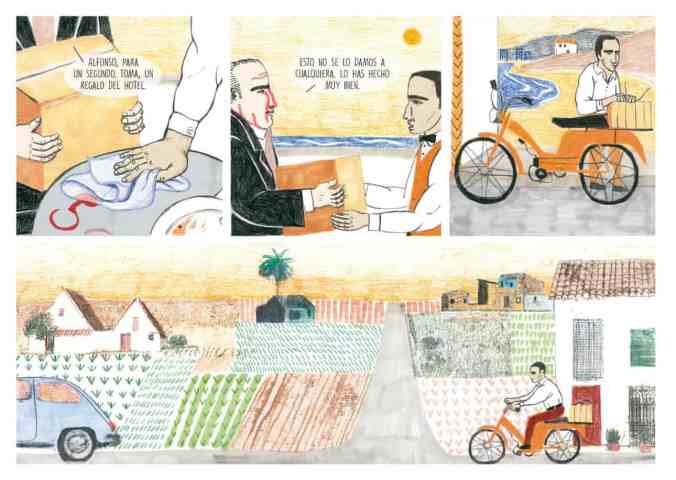
One of the early images in Todo Bajo el Sol shows a group of fishermen hauling their boat on to a beach that will eventually be given over to the towels and umbrellas of foreign holidaymakers. Photograph: Penguin/Random House
Thanks to the Guardian for this review. I had not even heard of this novel yet, let alone had a chance to read it. But since my last 25 years have been dedicated to helping places avoid the pitfalls of mass tourism, I look forward to reading it:
Todo Bajo el Sol: Spanish graphic novel explores history of mass tourism
Ana Penyas’s book tells story of three generations of a family whose lives reflect Spain’s socioeconomic transformation
Alfonso, one of the novel’s protagonists, is rewarded for his hard work as a waiter. The box contains a souvenir plate that reappears at the end of the book. Photograph: Penguin/Random House
The opening pages of a new graphic novel charting Spain’s long, profitable and often counter-productive relationship with tourism show four fishermen hauling their boat on to a Mediterranean beach already in the early stages of occupation by the new breed of foreign holidaymakers.
While the fishermen, rendered in monochrome to reflect their looming obsolescence, heave their boat ashore, a tourist, drawn in colour, sits beneath the shade of his beach umbrella and prepares to study a guidebook produced by the Franco regime. Continue reading

Guatemala Highlands
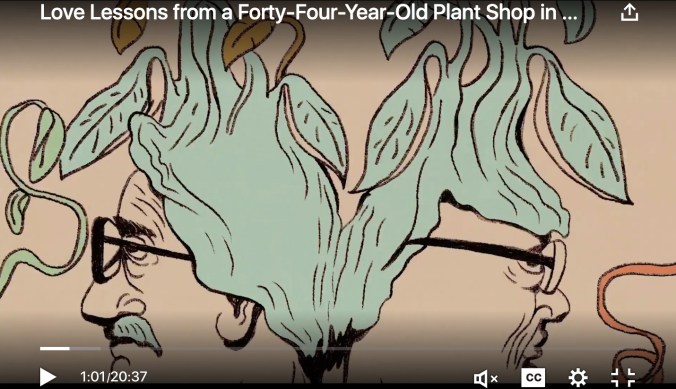
Listening to your plants may be easier than listening to your loved ones, “Noble Planta,” a short documentary about a long partnership, suggests.
I saw the name Markovic, and was intrigued. It has the ring of being from somewhere in the former Yugoslavia. I started the video, and was as certain as could be without further investigation–the accent sounds like those from my years working in Croatia and Montenegro. But then I got pulled in to the story of this short video, and can tell you it is a short amount of time abundantly well spent. If you know any people, especially couples, who practice/share a passion for plants–their growing needs, the desire to promote them to others–you might want to take a look at the video above, and maybe share it with them. Or if you know any couples in business together, also, maybe share it. Read on to understand:
Caring for Plants, and a Marriage, in “Noble Planta”
By
Film by
The inside of Noble Planta, Ched and Maria Markovic’s shop on Twenty-eighth Street, in Manhattan, is a green world, full of leafy, spiky vegetation. The pandemic seems to be good for business. Matthew Beck, who directed the short documentary “Noble Planta,” about the Markovics’ relationship with each other and their photosynthetic merchandise, recently visited. “Ched mentioned that people are spending so much time inside right now that going to get a plant seems a little more important at the moment, in an emotional or a spiritual way,” he said. In Beck’s film, Ched often talks about the care and feeding of plants as an almost mystical pursuit. But the documentary is about something more complex than the soulful rewards of gardening. While Ched extols succulents and waxes poetic about soil, his wife, Maria, can be seen glowering from behind a layer of fronds, a scathing look on her face. When Ched delivers an especially enthusiastic speech about plants’ sending messages to their keepers, she finally pipes up with a simple “B.S.!” Continue reading
Kuranda, Tablelands
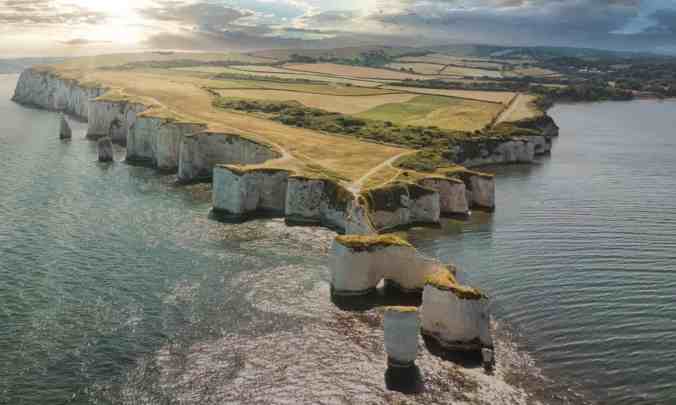
Old Harry Rocks in Dorset. Photograph: Adam Wearing/Getty Images/500px
Thanks to the Guardian for this long read on rocks and the people who dedicate their lives to studying them, and informing we lay people about them:
Rock of ages: how chalk made England
Swathes of England’s landscape were shaped by the immense block of chalk that has lain beneath it for 100 million years. For a long time, even geologists paid it little heed – but now its secrets and symbolism are being revealed
The Seven Sisters cliffs in East Sussex, England. Photograph: eye35.pix/Alamy
On the British Geological Survey’s map, chalk is represented by a swathe of pale, limey green that begins on the east coast of Yorkshire and curves in a sinuous green sweep down the east coast, breaking off where the Wash nibbles inland. In the south, the chalk centres on Salisbury Plain, radiating out in four great ridges: heading west, the Dorset Downs; heading east, the North Downs, the South Downs and the Chilterns. Continue reading
female – Macaw Lodge, Costa Rica

Radiocarbon from a 42,000-year-old kauri tree in New Zealand helped unravel Earth’s last magnetic upheaval. JONATHAN PALMER
Science magazine is accessible for most lay readers, even if their articles occasionally include a word we have never heard of, such as paleomagnetist:
Ancient kauri trees capture last collapse of Earth’s magnetic field
Several years ago, workers breaking ground for a power plant in New Zealand unearthed a record of a lost time: a 60-ton trunk from a kauri tree, the largest tree species in New Zealand. The tree, which grew 42,000 years ago, was preserved in a bog and its rings spanned 1700 years, capturing a tumultuous time when the world was turned upside down—at least magnetically speaking. Continue reading
La Paz, Baja California Sur, Mexico

Click on text above to go to the article at Politico
BlackRock, shmackrock. Now we can see clearly that advocating for market solutions, BlackRock’s CEO just meant that he did not want any public solutions to the climate crisis, because those would be inconvenient for him and his shareholders. Phooey on that. We should have been more skeptical, rather than optimistic, about what the financial titan meant all along, which Bill McKibben hinted at a couple months ago:
Annals of a Warming Planet
On Climate, Wall Street Out-Orwells Orwell
It was likely too much to hope that the Biden Administration, as it tries to get a handle on climate change, might find some help from Wall Street. Instead, last week, we saw financial heavyweights turn in a performance so rigid and so short-sighted that it makes one wonder whether capitalism in anything resembling its current form can, or should, survive. Continue reading
 Costa Rica

Construction work underway at the Coastal Virginia Offshore Wind project, located 27 miles off the coast of Virginia Beach. DOMINION ENERGY
Thanks to Yale e360:
On U.S. East Coast, Has Offshore Wind’s Moment Finally Arrived?
After years of false starts, offshore wind is poised to take off along the East Coast. Commitments by states to purchase renewable power, support from the Biden administration, and billions in new investment are all contributing to the emergence of this fledgling industry.
The Block Island Wind Farm off the Rhode Island coast was the first commercial offshore wind farm in the U.S. when it became operational in 2016. DON EMMERT/AFP VIA GETTY IMAGES
About 60 miles east of New York’s Montauk Point, a 128,000-acre expanse of the Atlantic Ocean is expected to produce enough electricity to power around 850,000 homes when it’s populated with wind turbines and connected to the onshore grid in the next few years.
Fifteen miles off Atlantic City, New Jersey, another windy swath of ocean is due to start generating enough power for some 500,000 homes when a forest of 850-foot-high turbines start turning there in 2024.
Continue reading
Guatemala City, Guatemala

Illustration by The New York Times; photograph by Quince Mountain
One year ago, when I first encountered Blair Braverman, I did not follow through to find out more. It is easy to remember why because it was the last stretch of pre-pandemia, and it was the last time I travelled, and that last portion of February, 2020, remains vividly clear in my memory.
As it happens this morning, exactly one year later, we are getting on an airplane and traveling from Costa Rica to Ithaca, New York where we will spend a few days taking care of some paperwork that is a legal requirement for operating our businesses in Costa Rica. I would not get on an airplane right now if it was not a legal requirement, and while we are taking all possible precautions it would be impossible not to have the obvious concerns. In that context, hearing Blair Braverman talk about her work in an odd way has a calming effect. And given that yesterday I was reading about life under the southern ice, it is fitting today to share some perspective on life above the northern ice. Click the image above or the title below to go to the podcast for a half hour of pure escape.
Lessons on Resilience From Dogs and Dog Sledders
The adventurer Blair Braverman has led a team of sled dogs over a 900-mile race in Alaska, seen her skin dissolve in the desert and overcome Covid-19. What makes it all less terrifying? Accepting the unknown. Continue reading

 Organikos