female – Leimakhong, Manipur
female – Leimakhong, Manipur
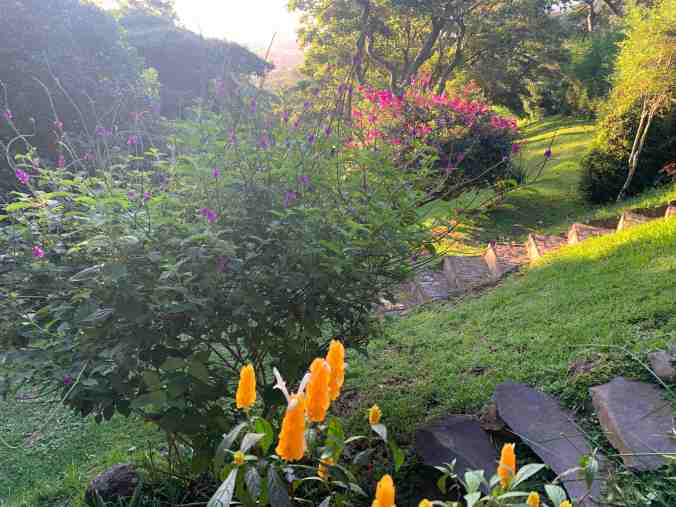
In the early stages of regenerating this erstwhile coffee farm, moving decades-old ornamentals to the periphery has been an important activity. But some ornamentals stay put. The purple flowers center-left in the image above are a favorite of both hummingbirds and butterflies, so that bush, planted only one year ago, was a no-go. And behind it, a bougainvillea that was planted in 2001 remains because it has become a favorite place for hens to bring their chicks to hide under the foliage from a grey hawk that has taken up residence above in the poro trees.
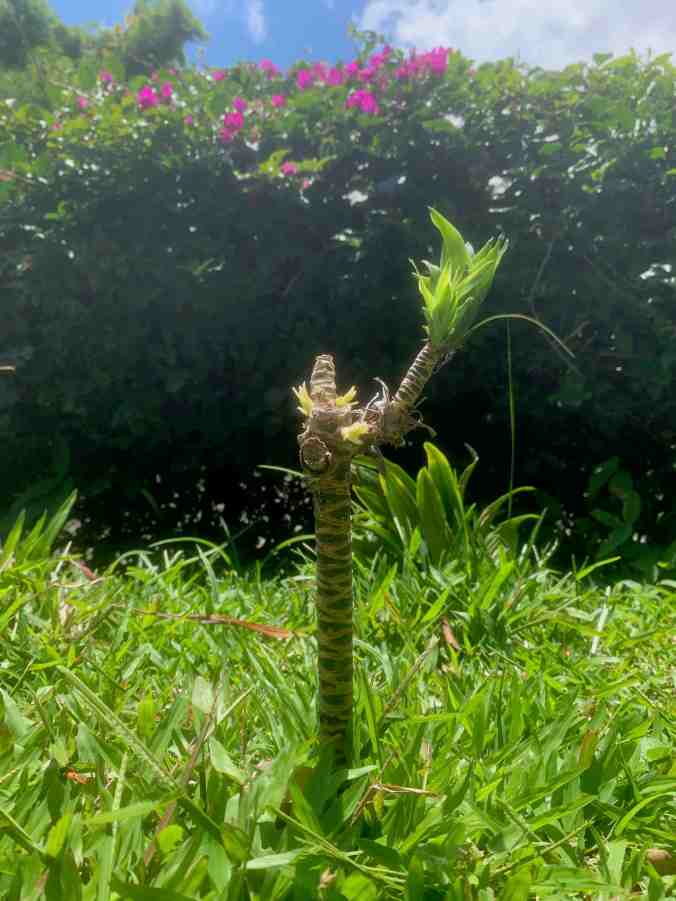
In this image above, in the background is a sibling of the bougainvillea planted in 2001, and this one was already closer to the periphery so did not need moving. But in the foreground is an example of another ornamental that has a completely different purpose. It is, frankly, an ugly ornamental as these things go. It does not produce flowers, instead putting its energy and other resources underground to create a strong, deep root system. It is planted for soil retention. And this stalk was cut from a mature version of the same, as seen below. Continue reading

Boca Tapada de San Carlos, Costa Rica
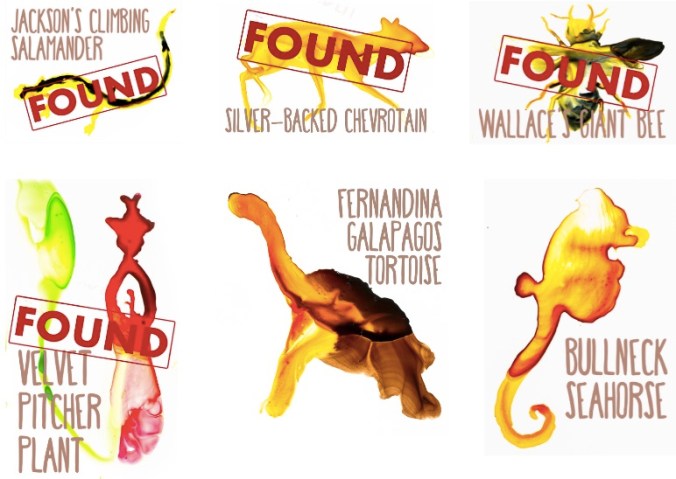
Yesterday’s happy surprise is the reason for today’s look at one organization’s work to support finding lost species. If you look at the image below you will see in the upper right quadrant the species mentioned yesterday, and that find is so fresh they still have not stamped FOUND on it.
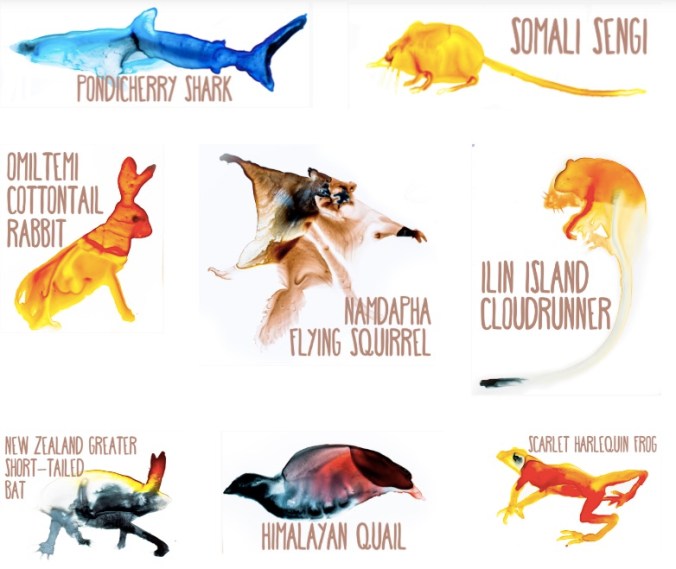
 Global Wildlife Conservation has created a graphic for what they consider the 25 Most Wanted species, and this colorful display is the trigger to get you hooked on helping:
In collaboration with more than 100 scientists, Global Wildlife Conservation has compiled a list of 1,200 species of animals and plants that are missing to science. GWC and our partners search some of the planet’s forgotten places and then work to protect species once found.
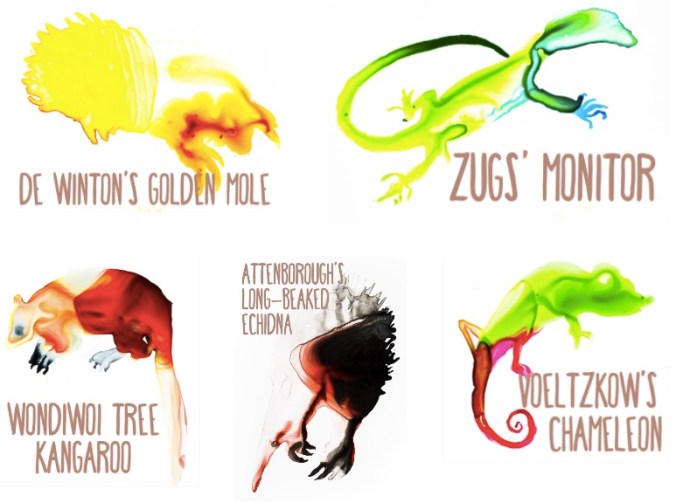
But this is about much more than the expeditions GWC is directly involved in. We’re calling on others to join the search and conduct their own expeditions for the lost species that have captured their hearts. GWC is working with teams and individuals the world over to publicize their stories of rediscovery and adventure as part of this shared campaign of hope and celebration. Read more in our FAQ and explore the partners behind the search.
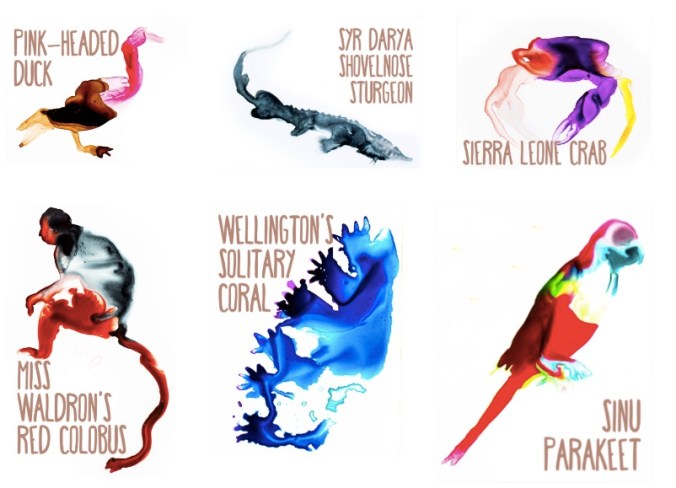
For those of you not triggered by this display, there is also a photo of Daniel Craig holding a lost & found tortoise. He is looking you in the eye, asking you to donate. Resistance is futile.

Baja California Sur, Mexico
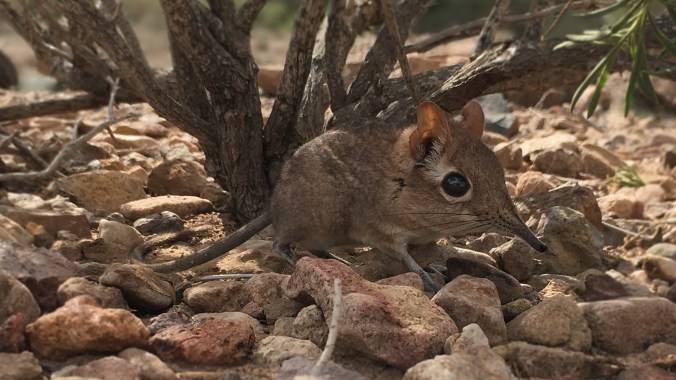
Researchers have spotted the Somali sengi, a relative of aardvarks and elephants, in Djibouti.
Steven Heritage/Duke University Lemur Center
We have used lost & found within post titles enough times since we started that maybe it should be a category. They are mostly happy surprise stories. More complicated than cute kitten videos, but worth the read. For now, our congratulations to the scientists who made the discovery and our thanks to National Public Radio (USA) for reporting this:
Tiny Elephant Shrew Resurfaces After More Than 50 Years On Lost Species List
For more than 50 years, the mouse-size Somali sengi was thought to be a lost species.
Turns out, it wasn’t. Continue reading

Tarcoles River Mangroves, Costa Rica

Harvard, with an endowment of more than $40 billion, has resisted calls to drop fossil fuel investments from its portfolio. Credit…Tony Luong for The New York Times
This successful petition campaign is in good company. Bravo Harvard for taking fact-forward action.
Climate Activists Gain Seats on Harvard Oversight Board
The candidates were the first ones elected through a petition campaign since 1989, when anti-apartheid activists put Archbishop Desmond Tutu on the panel.
Bucking tradition, a group of climate activists has won three seats in an election to an important governing body at Harvard University, the Board of Overseers, the university announced Friday.
The slate of candidates ran on a platform that included calls for the university to drop fossil fuel investments from its portfolio, part of a divestment movement that has swept college campuses for the better part of a decade.
Harvard, with an endowment of more than $40 billion, has resisted those calls. In April, the university’s president, Lawrence Bacow, said that divestment “paints with too broad a brush” and instead announced that Harvard was setting a course to become greenhouse-gas neutral by 2050, a move that he correctly predicted would not satisfy those seeking total divestment.
Candidates for the six-year terms on the board are customarily nominated through the Harvard Alumni Association. These candidates were elected through a petition campaign, the first to successfully do so since 1989, when a group seeking divestment from South Africa put forward Archbishop Desmond Tutu. Continue reading
Tumling, Nepal
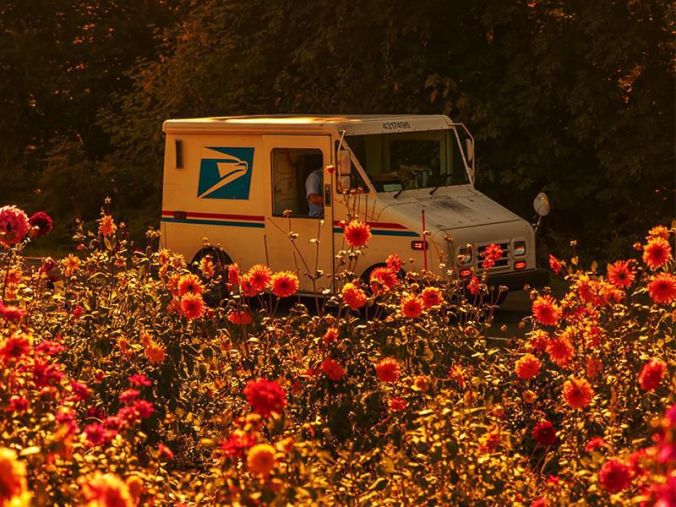
“The postal service is one of the oldest federal agencies,” says Daniel Piazza, a curator of philately at the Smithsonian’s National Postal Museum. “Maybe for that reason, we tend to take it for granted. But we have always relied on it, whether for news from home, prescription medications or e-commerce.” (Levi Mandel)
We have committed to using the US Postal Service for delivery of our coffees in the USA We already believed it to be a historically essential institution in that country and we want to support it as much as we want to benefit from its services. We have no second thoughts about this commitment, even while it is in the news for all the wrong reasons. We have known the agency needs attention, but we have not known exactly what that attention should look like. So, it is helpful to read this background history:
A Brief History of the United States Postal Service
To forge a nation, the founders needed an efficient communications network
From 1753 to 1774, as he oversaw Britain’s colonial mail service, Benjamin Franklin improved a primitive courier system connecting the 13 fragmented colonies into a more efficient organization that sped deliveries between Philadelphia and New York City to a mere 33 hours. Franklin’s travels along the post roads would inspire his revolutionary vision for how a new nation could thrive independent of Britain. But not even he imagined the pivotal role that the post would play in creating the Republic. Continue reading
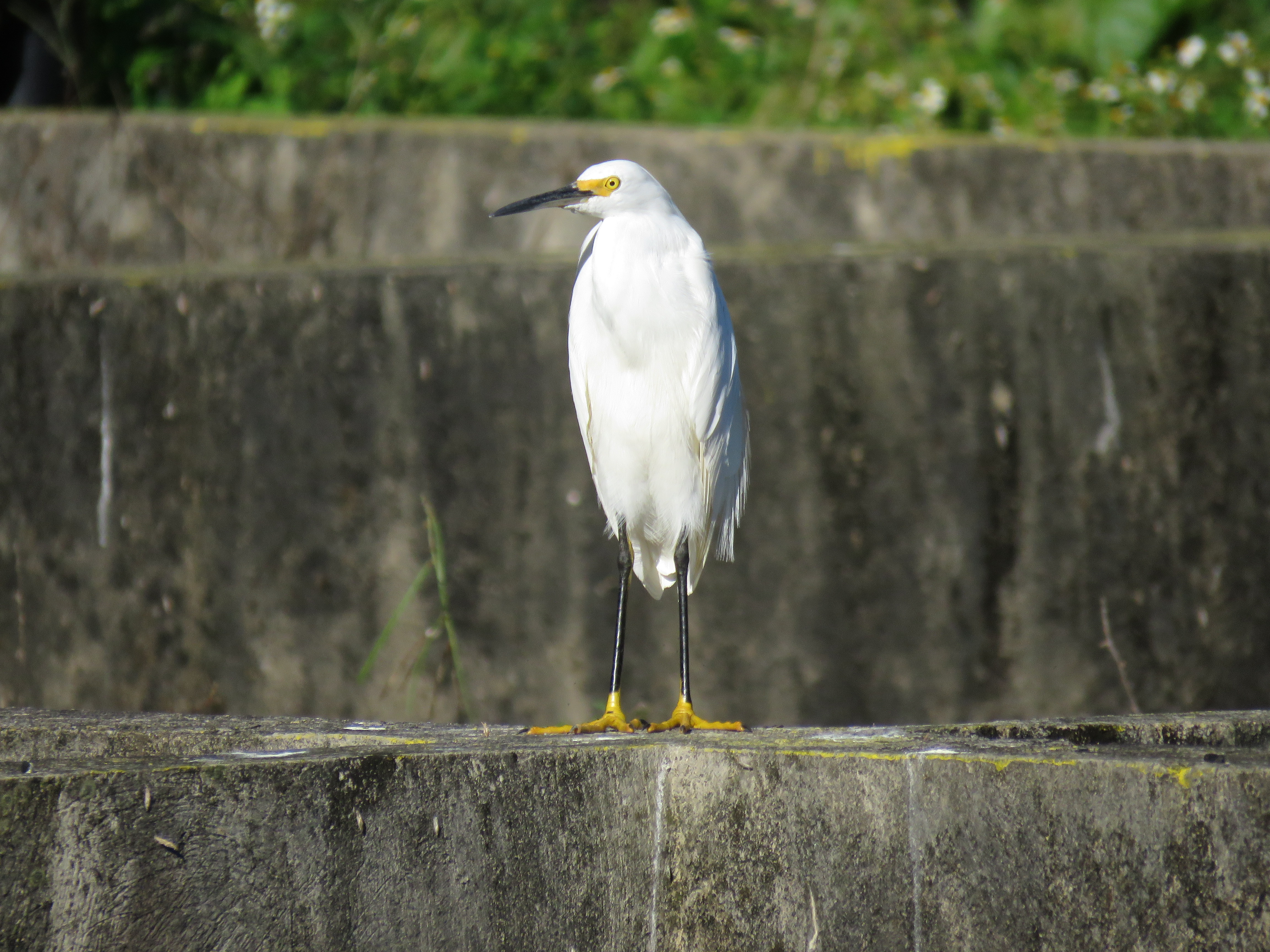
Las Terrenas, Dominican Republic
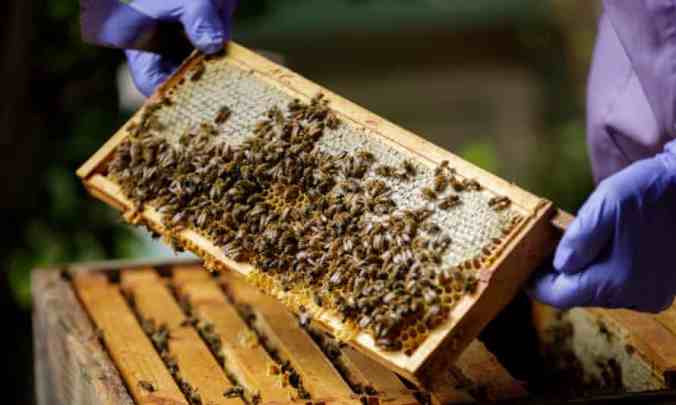
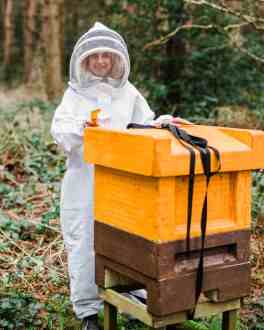
Anne Rowberry, chair of the British Beekeepers Association, with some of her bees. Photograph: Sam Frost/The Guardian
Thanks to the Guardian for this report:
British apiarists knew it all along: honey is the bee’s knees
As a study trumpets the food’s medicinal properties, there’s a buzz about beekeeping in the UK
Carly Hooper: ‘Bees are my life’. Photograph: Anita Parry
When honey made headlines this week as a better treatment for coughs and colds than antibiotics, beekeepers sat smugly by. “I’ve been saying this for ages,” says Carly Hooper, who has 12 hives near her home in Fleet, Hampshire, and a honey-based business.
The study, published in the journal BMJ Evidence Based Medicine, found that honey was a more effective treatment for coughs, blocked noses and sore throats than many remedies more conventionally prescribed. Continue reading
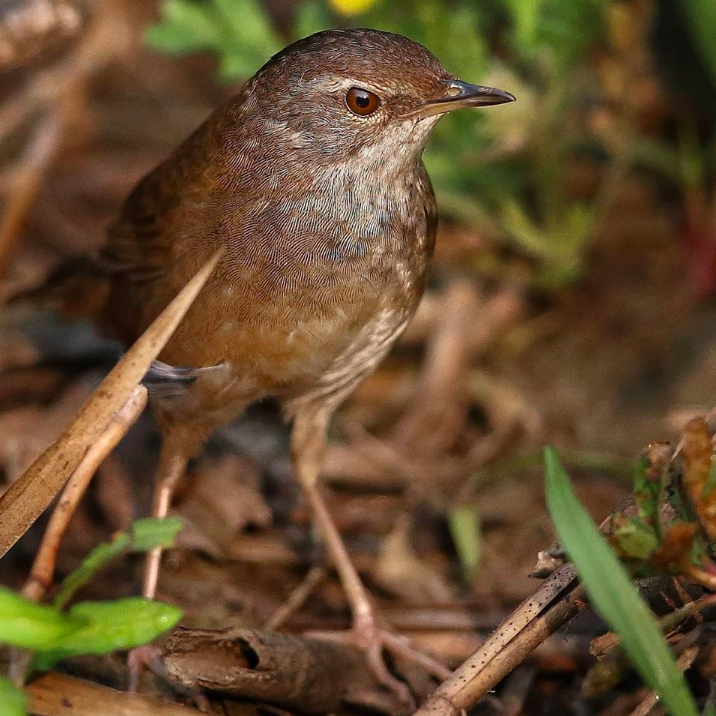
Maguribeel Wildlife Sanctuary, Assam
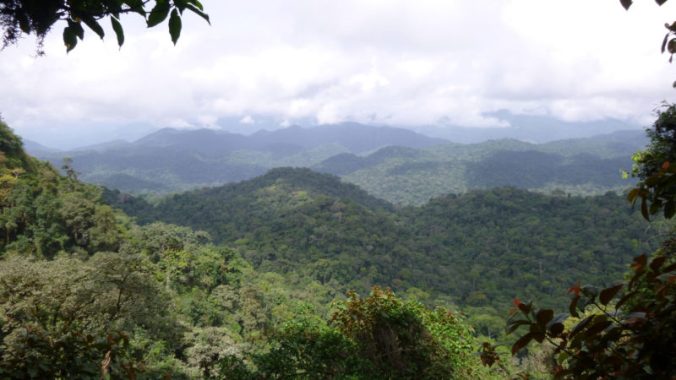
View of the Ebo Forest. DANIEL MFOSSA / SAN DIEGO ZOO GLOBAL
Yale e360 brings us this story, a reminder from one year ago when Seth was in the neighborhood:
Cameroon Cancels Plan to Log Half of the Ebo Forest, a Key Biodiversity Hotspot in Central Africa
A gorilla in the Ebo Forest, located in southwestern Cameroon. SAN-DIEGO GLOBAL ZOO
The Cameroon government has announced it is canceling a plan to log nearly 170,000 acres of the Ebo Forest following sharp criticism from indigenous communities, conservation groups, and scientists. The ecosystem is one of the last intact forests in central Africa and a biodiversity hotspot, harboring hundreds of rare plant and animal species, including the tool-using Nigeria-Cameroon chimpanzee, western gorilla, and giant frogs. Continue reading
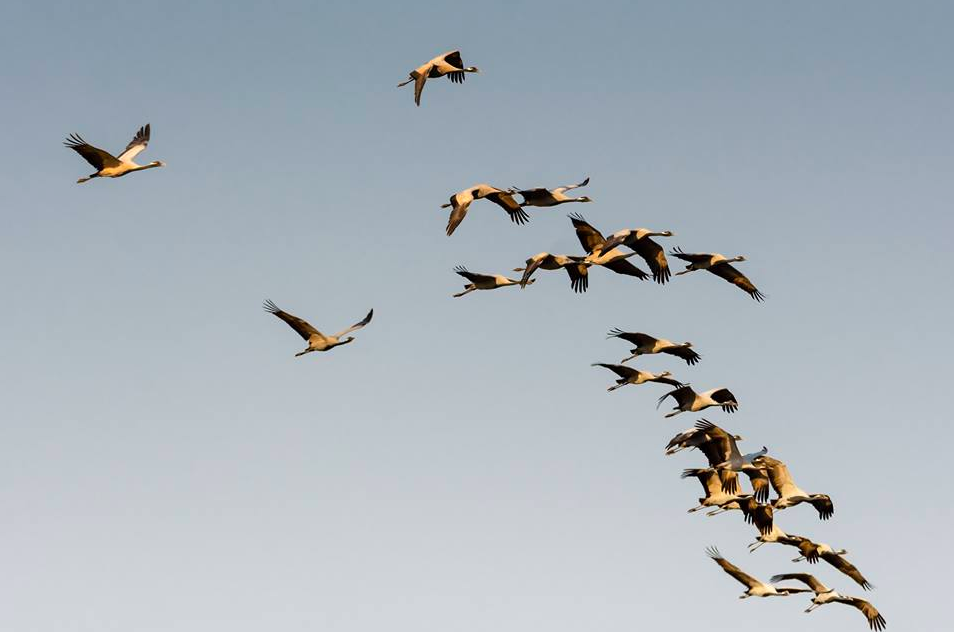
Northern Karnataka
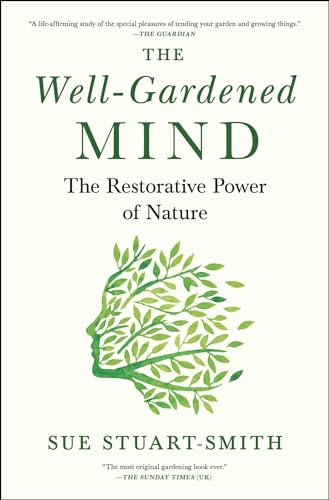 First, a recommendation of AbeBooks, one of the many alternatives you might consider for buying this or other books. Second, I recommend Rebecca Mead‘s riff on the book, The Therapeutic Power of Gardening in the current issue of the New Yorker. When I last read her work there it was a stretch of the culinary imagination. This time, the opposite, with the subtitle of the essay asking “Can anxious minds find solace working with plants? A therapist and her husband, a garden designer, say yes.” We are in the middle of a perfect case study for the core thesis of the book and of Mead’s essay.
In the last six days we planted nearly 100 trees, like those pictured here, which will fix nitrogen in the soil, provide shade for the coffee, and beckon birds for both food–parrots in particular mob these trees when the flowers are in bloom–and nesting. There is an obvious connection between the concept of biophilia and what is discussed in this book and essay, but this quote captures a nuanced point differentiating cultivated versus wild nature:
“When we sow a seed, we plant a narrative of future possibility,” Sue Stuart-Smith, a British psychiatrist and psychotherapist, writes in her new book, Continue reading
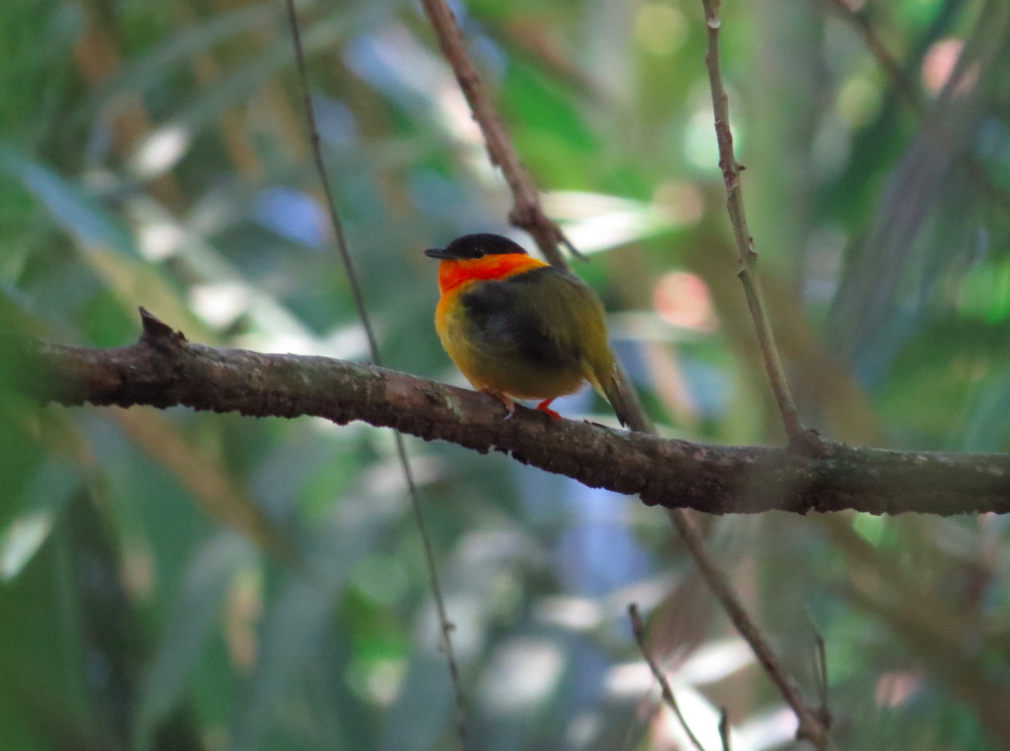
male – Carara National Park, Costa Rica

Food and Beverage as conservation themes have been long time interests at this site, whether it be recreating ancient ales or maintaining the artisan ethos of ancient food ways.
I have to admit that the blend of cuisine and archaeology are equally fascinating; I would have been one of the first of the “curious passersby” at the feast described here. The article is behind a paywall, but worth the read.
A taste of antiquity: what’s it like to eat 2,500-year-old food?
How Fuchsia Dunlop sampled food from the tomb of a long dead king
The four sheep turned on their spits, wafting out rich aromas over the bleached Turkish landscape. Nearby, I stirred a vast potful of lentil stew over an open fire, lashed by smoke and sunlight. A long table in the yard was already laden with dishes: handmade hummus and fava bean paste, whole honeycombs, stacks of tandoor-baked bread and piles of pomegranates. Beyond it loomed the great burial mound of a ruler of the Phrygian kingdom who had died here in the eighth century BC — thought to be a historical King Midas or his father. Aided by a team of Turkish cooks and food experts, I was doing my best to recreate his funeral feast.
This wasn’t an idle exercise. In the 1950s, archaeologists from the Penn Museum at the University of Pennsylvania had excavated the tomb, near the old Phrygian capital at Gordion. Although this King Midas was not the mythical man with the golden touch, they still found a treasure trove of bronze cauldrons, drinking bowls and clay pots in his burial chamber, including the largest Iron Age drinking set ever discovered. The vessels contained the physical remnants of a banquet the mourners had shared, but it was about 40 years before advances in science permitted chemical analysis of the residues.
This was done in the late 1990s by experts from the Penn Museum, led by Patrick McGovern, scientific director of its Biomolecular Archaeology Project for Cuisine, Fermented Beverages and Health, and author of Ancient Brews: Rediscovered & Re-created.Using modern techniques such as infrared spectroscopy, liquid and gas chromatography and mass spectrometry, McGovern and his team examined the vestiges of both food and drink found in the bronze vessels. The mourners, they concluded, had shared an unusual brew made from a mixture of honey, grapes and barley — a sort of cocktail of mead, wine and beer. And although the researchers couldn’t be sure, they suspected it had also contained saffron because of the intense yellow colour of the residue (and because some of the finest saffron of the ancient world was produced in what is now Turkey).
The chemical detective work on the brown clumps of food matter showed these were the leftovers of a great stew made from lamb or goat that had first been seared over fire to produce caramelisation, then simmered with some kind of pulse (probably lentils) along with ingredients such as honey, wine, olive oil, fennel or anise and other herbs and spices. Continue reading

Macaw Lodge’s gardens fill the landscape with color and provide shelter and food for hundreds of species of animals. All photos by Hugo Santa Cruz
It is regularly the first to wake, its song encouraging us all to do the same. It is still dark but the Great Tinamou is already singing, while a couple of hundred more species begin to flap their wings, to soon sing different songs––some very complicated and sophisticated, to make them stand out from the rest.
As I get ready for the day, I mentally identify and count the different sounds I hear––trying to imitate some of them with little success. While brushing my teeth I go through the 13 identified species, leaving 2 or 3 that I don’t recognize.
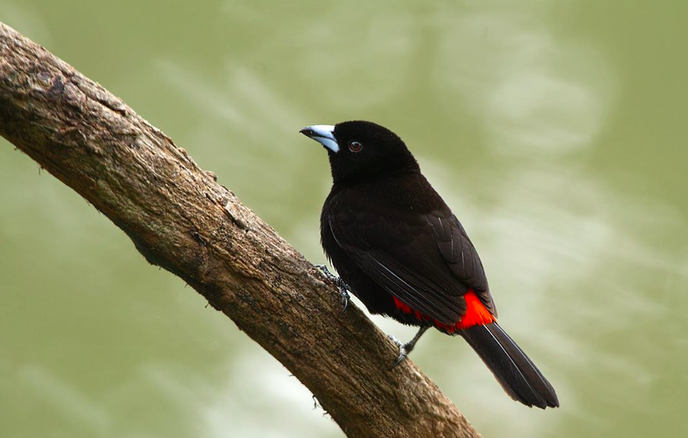
Male Scarlet-rumped Tanager
The recognition of birds by songs and calls is essential to count effectively; some of these songs will delight the most demanding ears, as much as good jazz; and others not so much. Some people living in wilderness areas like this may even come to hate some of the calls, such as the tireless, insistent and unending calls of the Ferruginous Pygmy-Owl. You will feel that it follows your steps day by day, night by night; wherever you move or where you try to sleep… Unfortunately you’re unlikely to actually see it, because it has excellent camouflage, and at scarcely 15 cm tall but living 20m high in the trees, it will remain invisible, but you will know it is there, because you’ll hear it even in your dreams…
If you’re “lucky” to encounter the little owl when he’s looking for a girlfriend, you’ll understand what I mean … and that’s that all people in this area have their history with the “Maja-Fierro” – local name of the owl, due to his shrill and constant monotonous whistle. Continue reading

 Organikos