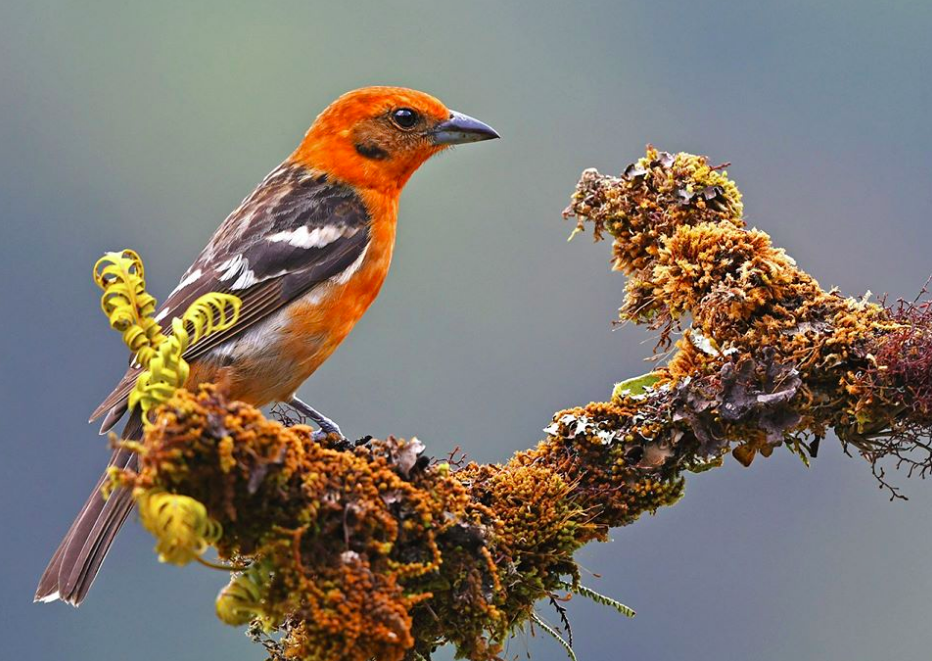
male – San Gerardo de Dota, Costa Rica
male – San Gerardo de Dota, Costa Rica

Credit: Jimmy Simpson
We tend to be bird and bee centric on this site, but somehow we missed this lovely opinion piece–What the Honeybees Showed Me–by Helen Jukes in the NYTimes.
While many people look back to the basics of gardening and baking during the current crisis, beekeeping may be next on some wish lists.
When I first became keeper of a colony of honeybees, I was thinking more than anything of escape. I’d just turned 30 and had recently moved from Brighton to Oxford, having taken a job on a whim, again, moving out of one rented house in one city and into another as I had done throughout my 20s. But the new job was stressful. I spent long hours at the office in front of a screen. I was under pressure from company targets and deadlines, thrown into frenetic communications with colleagues who sounded as stretched as I felt, and disconnected from the world — the world! — I glimpsed as I cycled to and from work each day.
Our garden was little more than a slim patch of weeds within spitting distance of a busy road, but it was secluded enough that I could go there and remain hidden, and so I began imagining a hive out there; imagined myself finding some respite among the bees, away from the hecticness of the city.
Of course, things rarely turn out as we imagine them, and when later that year I was given a honeybee colony as a gift by a group of friends, it was not respite, and not quiet that I found at first. Quite suddenly I was made accountable to another creature, many of them, really — responsible for ensuring the bees were healthy, free from predators and disease. If all went well, I might take a little honey at the end of the season; but for the first few weeks, eyeing the hive at the end of the garden, I was more concerned that they’d either die or fly away.
The thing is that honeybees are so strange.
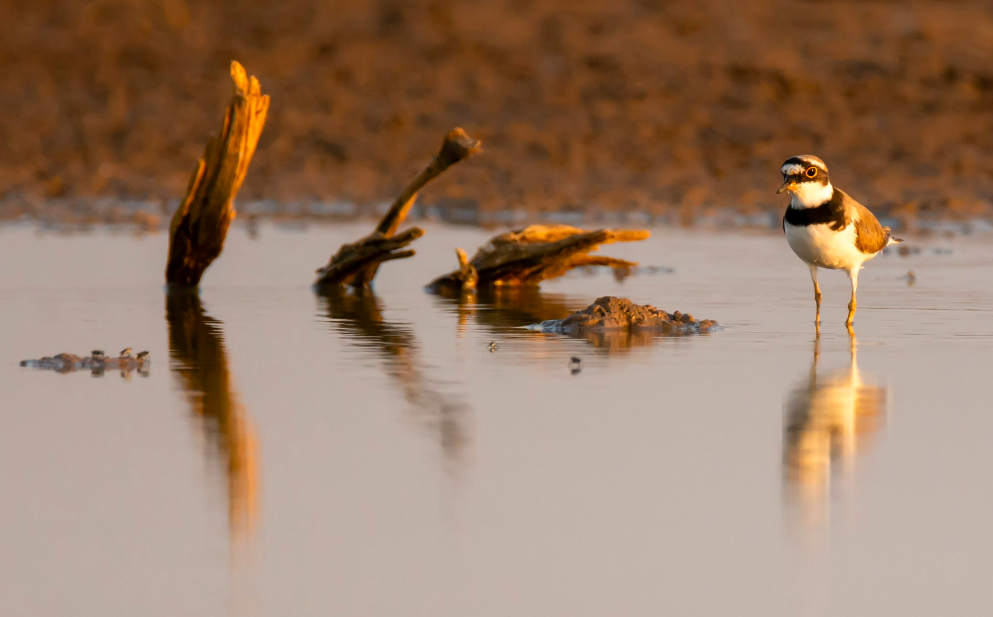
North Karnataka

AVE CALVAR / QUANTA
At a time when microscopic phenomena are the cause of fear and loss, it is surprising and enlightening to read about microbial discoveries that could help answer some of the eternal questions about life, the universe, and everything.
The Last Place on Earth We’d Ever Expect to Find Life
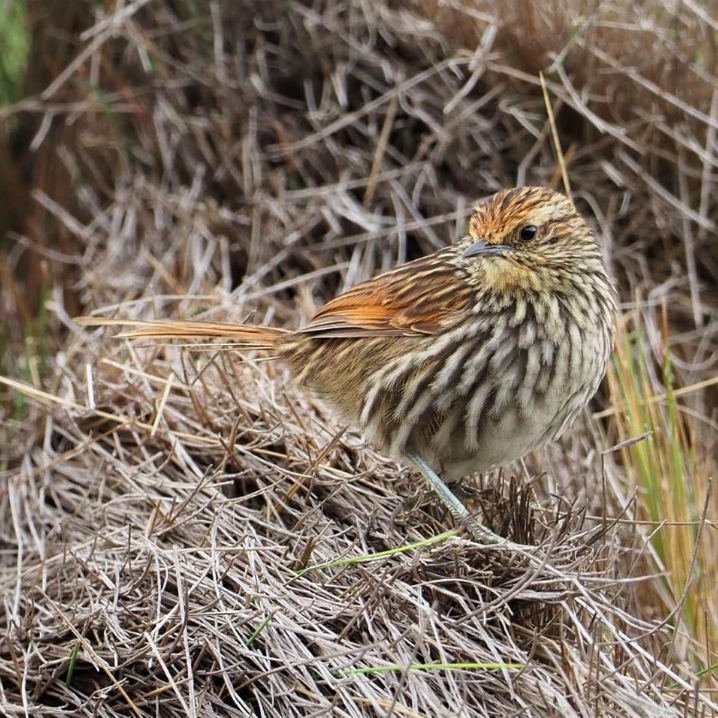
Antisana Reserve, Ecuador
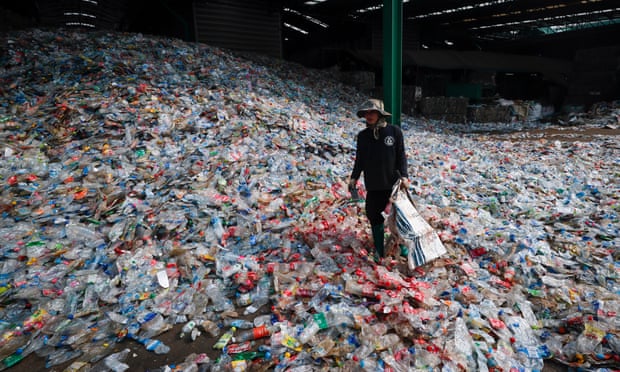
A mound of plastic bottles at a recycling plant near Bangkok in Thailand. Around 300 million tonnes of plastic is made every year and most of it is not recycled. Photograph: Diego Azubel/EPA
We’re always happy to give credit when due. While beer isn’t the first beverage that comes to mind when thinking about the scourge of plastics in the world, bottled soda and water certainly are. So it’s heartening to hear that a company like Coca-Cola, which has contributed to the proliferation of the world’s plastic problem, is backing a bioplastic project that could help to control it.
Carlsberg and Coca-Cola back pioneering project to make ‘all-plant’ drinks bottles
Beer and soft drinks could soon be sipped from “all-plant” bottles under new plans to turn sustainably grown crops into plastic in partnership with major beverage makers.
A biochemicals company in the Netherlands hopes to kickstart investment in a pioneering project that hopes to make plastics from plant sugars rather than fossil fuels.
The plans, devised by renewable chemicals company Avantium, have already won the support of beer-maker Carlsberg, which hopes to sell its pilsner in a cardboard bottle lined with an inner layer of plant plastic.
Avantium’s chief executive, Tom van Aken, says he hopes to greenlight a major investment in the world-leading bioplastics plant in the Netherlands by the end of the year. The project, which remains on track despite the coronavirus lockdown, is set to reveal partnerships with other food and drink companies later in the summer.

Little Rann of Kutch, Gujarat
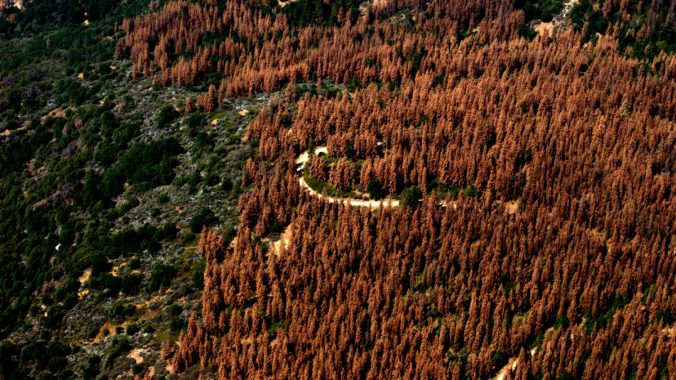
Dead trees in a California forest in August 2016. U.S. FOREST SERVICE
It sounds like the inverse of rewilding’s restorative approach, when there is a large patch of expired trees; decisions must be made. Thanks to Jane Braxton Little for laying out the questions:
In California, A Push Grows to Turn Dead Trees into Biomass Energy
As forests in California and the Western U.S. are hit by rising numbers of fires and disease outbreaks related to climate change, some experts argue that using dead and diseased trees to produce biomass energy will help to restore forests and reduce CO2 emissions.
Jonathan Kusel owns three pickups and a 45-foot truck for hauling woodchip bins. He operates a woodchip yard and a 35-kilowatt biomass plant that burns dead trees, and he runs a crew marking trees for loggers working in national forests. Those are a lot of blue-collar credentials for a University of California, Berkeley PhD sociologist known for his documentation of how the decline of the timber industry affects rural communities. Continue reading
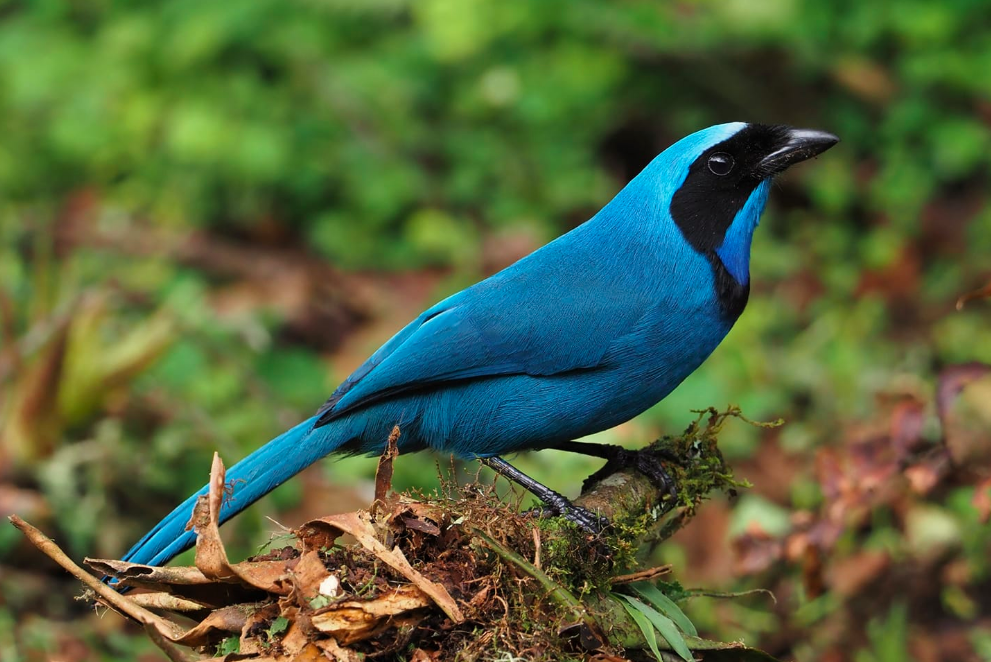
Guango Lodge, Ecuador
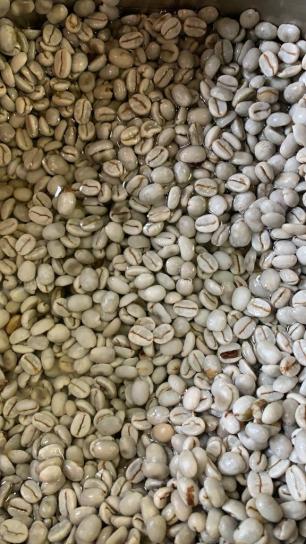
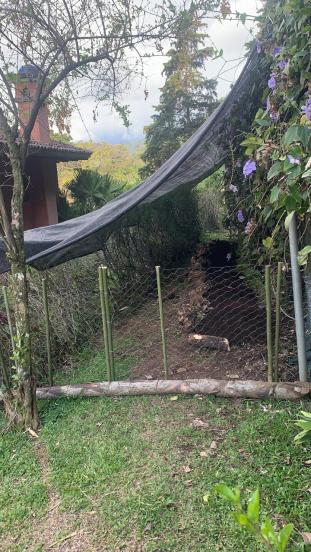 Time to see what our coffee is capable of. After cleaning the last parchment off, hundreds of beans unsuitable for planting were removed. For germination we took the path with a ratio of lowest cost to highest probability of success. On the spectrum of possibilities is no seedlings in August, or more than the few thousand we expect. The area in this photo, normally with no chicken wire or covering, has for two decades served no other purpose than for our dogs to run along the ivy-covered fence line on the right, chasing the occasional passing horse or cow or car. All that running has packed the earth pretty well so we built up a base of compost and potting soil, about two feet wide and thirty feet long. Diagonally above it all is agricultural mesh, to shade the seeds and to keep the rain from washing the seeds away.
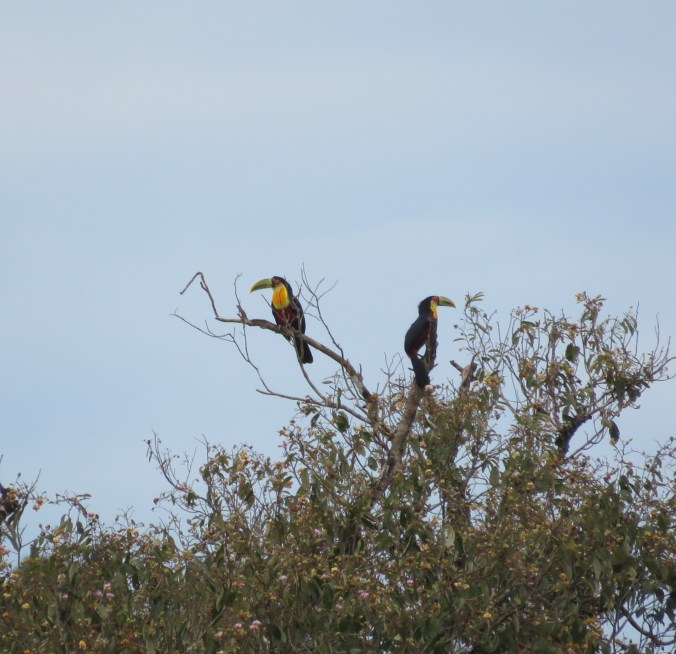
Iguazú, Argentina

Tamara and Steve Davey’s woodland, on the fringes of Dartmoor national park. Photograph: Courtesy of Woodland Wildlife
Thanks to the Guardian for this story about the contentments of ecosystem restoration:
‘It’s good for the soul’: the mini rewilders restoring UK woodland
By buying and managing small wooded plots, enthusiasts are bringing biodiversity back to the countryside
Woodland owners Steve and Tamara Davey. Photograph: Patrick Greenfield/The Guardian
Tamara and Steve Davey cannot help but grin at the suggestion they are “miniature rewilders”. Standing proudly in the weak sunlight on the fringes of Dartmoor national park, the full-time grandmother and taxi company owner delight in their eight-acre woodland.
Robins, tits and siskins chortle in the trees. Nightjars are welcome visitors in the summer. Seven bat species have been recorded in their small plot. There’s a badger’s sett somewhere in the hillside scrub. And the couple feel at peace.
The Daveys, like many woodland owners, are replacing fast-growing conifer trees with diverse native species to support wildlife. Photograph: Courtesy of Woodland Wildlife
“It’s good for the soul,” says Tamara, speaking before the coronavirus lockdown. “It’s one of the best things we’ve ever done,” Steve agrees. “If we can make a difference and help what’s here, I’ll be happy.” Continue reading
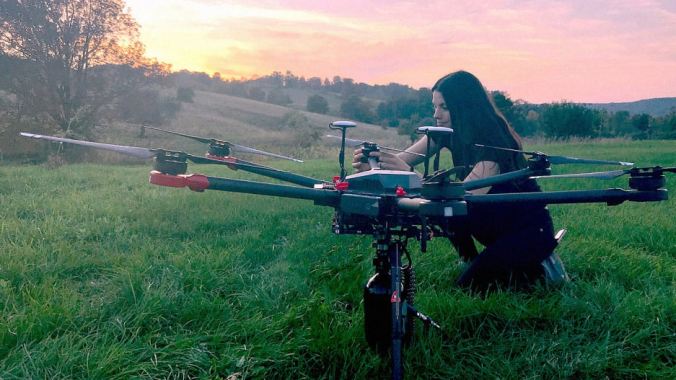
[Photo: courtesy Flash Forest] One of Flash Forest’s prototype drones
Here’s to a billion trees!
These drones will plant 40,000 trees in a month. By 2028, they’ll have planted 1 billion
We need to massively reforest the planet, in a very short period of time. Flash Forest’s drones can plant trees a lot faster than humans.
This week, on land north of Toronto that previously burned in a wildfire, drones are hovering over fields and firing seed pods into the ground, planting native pine and spruce trees to help restore habitat for birds. Flash Forest, the Canadian startup behind the project, plans to use its technology to plant 40,000 trees in the area this month. By the end of the year, as it expands to other regions, it will plant hundreds of thousands of trees. By 2028, the startup aims to have planted a full 1 billion trees.
[Photo: courtesy Flash Forest]
Drones don’t address deforestation, which is arguably an even more critical issue than planting trees, since older trees can store much more carbon. But to restore forests that have already been lost, the drones can work more quickly and cheaply than humans planting with shovels. Flash Forest’s tech can currently plant 10,000 to 20,000 seed pods a day; as the technology advances, a pair of pilots will be able to plant 100,000 trees in a day (by hand, someone might typically be able to plant around 1,500 trees in a day, Ahlstrom says.) The company aims to bring the cost down to 50 cents per tree, or around a fourth of the cost of some other tree restoration efforts.When it begins work at a site, the startup first sends mapping drones to survey the area, using software to identify the best places to plant based on the soil and existing plants. Next, a swarm of drones begins precisely dropping seed pods, packed in a proprietary mix that the company says encourages the seeds to germinate weeks before they otherwise would have. The seed pods are also designed to store moisture, so the seedlings can survive even with months of drought. In some areas, such as hilly terrain or in mangrove forests, the drones use a pneumatic firing device that shoots seed pods deeper into the soil. “It allows you to get into trickier areas that human planters can’t,” Ahlstrom says. Continue reading
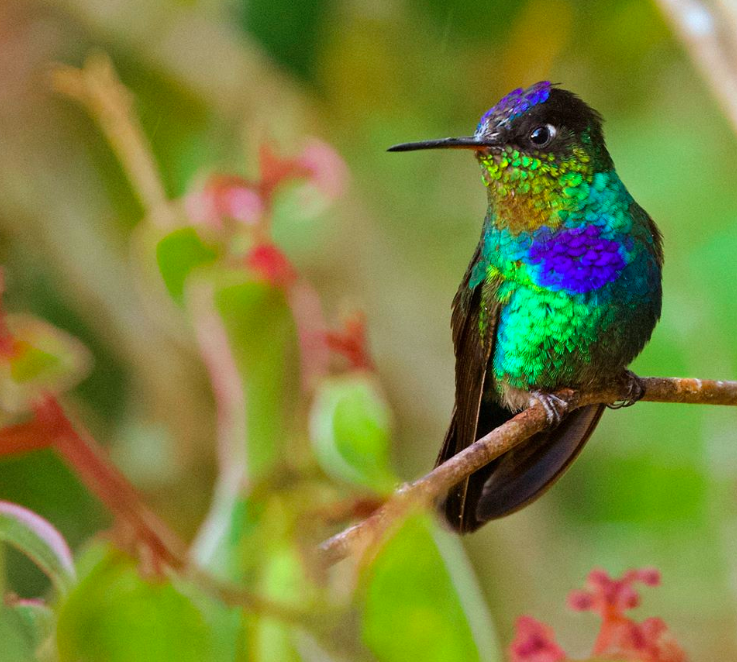
Talamanca Highlands, Costa Rica
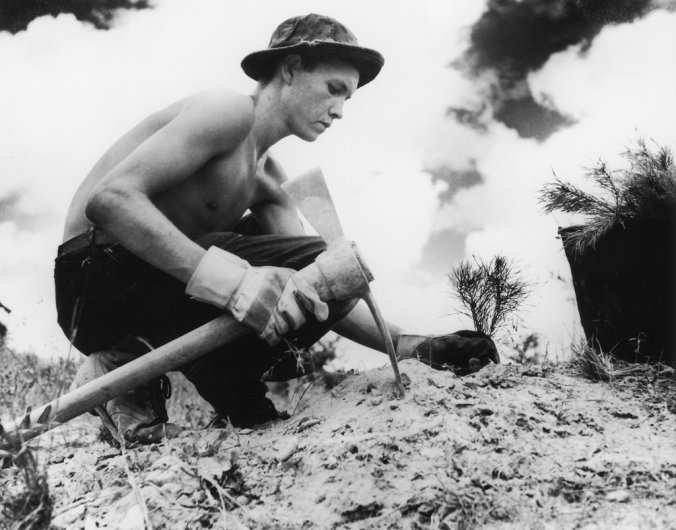
A Civilian Conservation Corps enrollee planting a tree circa 1938. Fotosearch/Getty Images
Thanks to Collin O’Mararough, president and C.E.O. of the National Wildlife Federation, for his idea about how to employ some of the unemployed. Deploy them. Planting trees is not sufficient to solve the looming crisis of climate change, but it is a start:
7.7 Million Young People Are Unemployed. We Need a New ‘Tree Army.’
The Depression-era Civilian Conservation Corps helped build America at a time of national crisis. Let’s do it again.
Nearly 7.7 million American workers younger than 30 are now unemployed and three million dropped out of the labor force in the past month. Combined that’s nearly one in three young workers, by far the highest rate since the country started tracking unemployment by age in 1948.
Nearly 40 percent worked in the devastated retail and food service sectors. And as the most recently hired, young workers are typically the first let go and often the last rehired, especially those of color.
As our country’s leaders consider a range of solutions to address this crisis, there’s one fix that will put millions of young Americans directly to work: a 21st-century version of the Civilian Conservation Corps.
In 1933, when President Franklin Roosevelt created the C.C.C., he was facing, as we are today, the possibility of a lost generation of young people. The conservation-minded president’s idea was to hire young unemployed men for projects in forestry, soil conservation and recreation. By 1942, the 3.4 million participants in “Roosevelt’s Tree Army” had planted more than three billion trees, built hundreds of parks and wildlife refuges and completed thousands of miles of trails and roads.
Big Sur, California
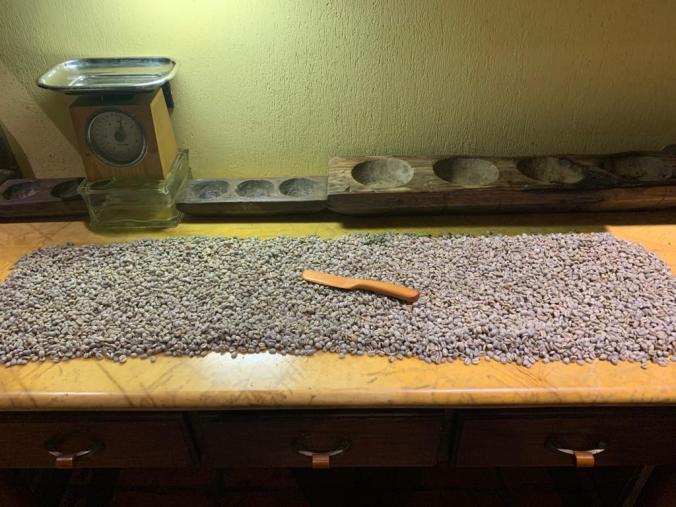
 As we prepare to plant coffee Amie and I yesterday completed washing 14,000 beans, give or take, from the most recent harvest of coffee from this land where we live. As big as that number sounds, it is just a few pounds of green beans, picked from several trees that have held on over the years.

In previous years this would provide a month’s drinkable coffee, but this year we will germinate the beans instead. We selected the fully formed, unbroken beans like those above, separating out the small percentage of broken or misshapen beans like those to the right. After germination, by August we expect to have between 3,000 and 4,000 viable seedlings we will keep in a nursery. One year from now those will be saplings ready to plant in the ground. We are approaching this task traditionally, by hand, sight of eye, and a few simple analog tools.
 This morning we will dig holes for the first of the shade trees going onto that land where the coffee will be planted. But first, the news. The best I could find, for motivation, involves a man temporarily in New York City, working in a museum. His work, and the exhibition he is tending to, provides me context for the countryside as it still is for many coffee farmers here, and the technology transforming the countryside for future generations. Already plenty of coffee farmers are using technology as advanced as that of the tomato man in the story below. Without romanticizing the hard labor of traditional coffee farming, the work we are doing makes me more appreciative of the coffee farmers we source from. Thanks to Elizabeth A. Harris for this story:
The Museum Is Closed, but Its Tomato Man Soldiers On
Although the Guggenheim’s “Countryside” show was shuttered by the pandemic, its crop of cherry tomatoes is still growing, and feeding New Yorkers.

Jeenah Moon for The New York Times
Jeenah Moon for The New York Times
The halls of the Guggenheim Museum are pretty quiet these days, with mostly just its ghosts and some security guards as company for the art.
Oh, and there’s the guy who takes care of the tomatoes.
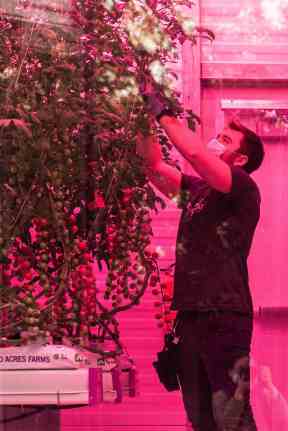
David Litvin, an indoor crop specialist, tends the plants in a temporarily shuttered exhibition, “Countryside, The Future.” He moved to New York from Tel Aviv in February, along with his wife, Stefanie, and their Dutch shepherd, Ester, with a plan to stay six months harvesting the Guggenheim tomatoes. He was going to see the city, too.
“I went out once to a comedy bar, but that’s it,” he said.
The museum has been closed since March 13, but Mr. Litvin still walks across Central Park every day around noon from his rental on the Upper West Side to tend to his flock. “When you grow tomatoes on Fifth Avenue, you want to have the perfect tomatoes, there’s no room to mess up,” he said. “If I have ugly plants, I’ll hear it from the neighbors.” Continue reading
Refugio Pantanos de Villa, Peru
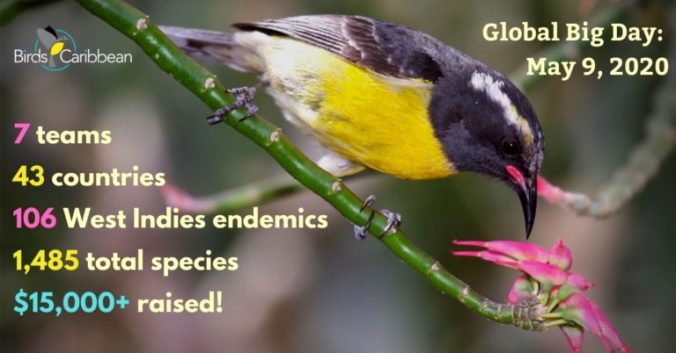
Happy to see the results and first post from Birds Caribbean about the various teams’ contributions to the 2020 Global Big Day. Looking forward to reading the highlights of all the teams.
BirdsCaribbean Takes Global Big Day by Storm, Despite COVID-19
The biggest birding day of the year — Global Big Day —took place on Saturday May 9, 2020. More than 50,000 people from around the world joined in to record their sightings. Close to 300 participants from throughout the West Indies recorded 345 different species of birds! Cuba had the most species by country (135) followed closely by the Bahamas (126) and Puerto Rico (125). Regionally, 1,051 checklists were submitted, 205 more than last year. That’s an incredible achievement — way to go birders!
Birders from Cuba looking great with their BirdsCaribbean buffs in Zapata Swamp on Global Big Day. We will share more about the birding experiences on the different teams in a second blog post
This year was quite a different experience as much of the world remains under stay at home orders or is following social distancing guidelines. Certainly many of the great open spaces that are go-to spots for birders were not open to the public for safety reasons. Nevertheless, eBird recorded a 32% participation increase from Global Big Day 2019 and more than 120,000 eBird checklists were submitted. Continue reading
Magee Marsh Wildlife Area, Ohio



 Organikos