Surfing On Light

Starting in 2012, bioluminescence has been on our radar, and the phenomenon never fails to impress. We appreciate  the potential utility, and will continue linking to the science. But for now, consider California, hard hit by so many other unwelcome phenomena, and how it deserves a bit of light fun now:
3600 (1)

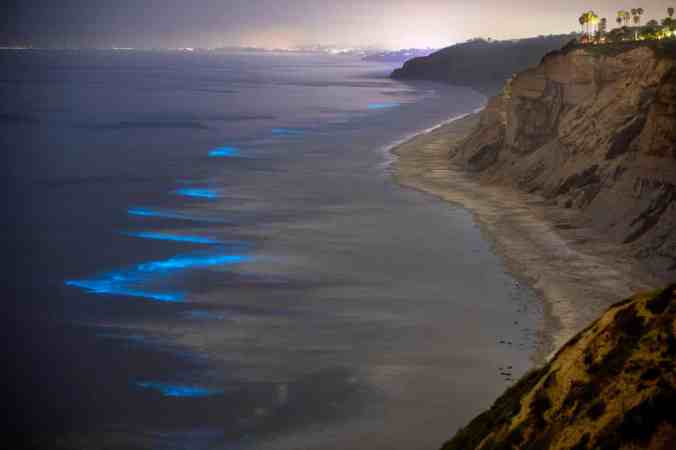
Blue waves, illuminated by the light of bioluminescent organisms, crash along the coast of Blacks Beach in the community of La Jolla. Photograph: KC Alfred/ZUMA Wire/REX/Shutterstock

Bioluminescent waves dazzle surfers in California: ‘Never seen anything like it’

Crowds are coming to see the light show as beaches begin to reopen after an almost month-long closure due to coronavirus
3233

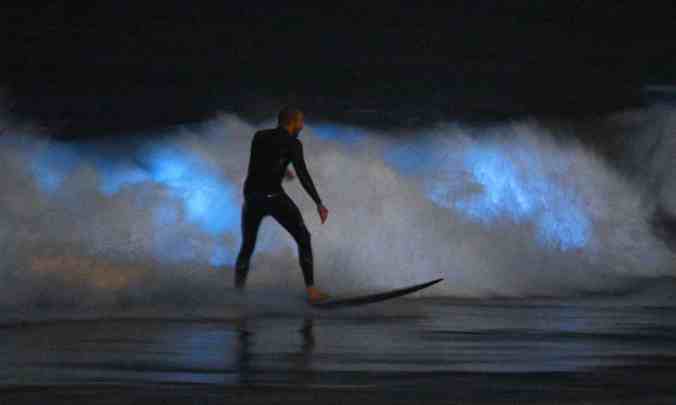
A surfer rides a wave as bioluminescent plankton lights up the surf around him, in Newport Beach, California. Photograph: Mark J Terrill/AP

Mother nature has provided a radical gift to nighttime beach-goers in southern California, in the form of bioluminescent waves that crash and froth with an otherworldly light.

The event occurs every few years along the coast of southern California, though locals say this year’s sea sparkle is especially vibrant, possibly related to historic rains that soaked the region and generated algal bloom. Continue reading
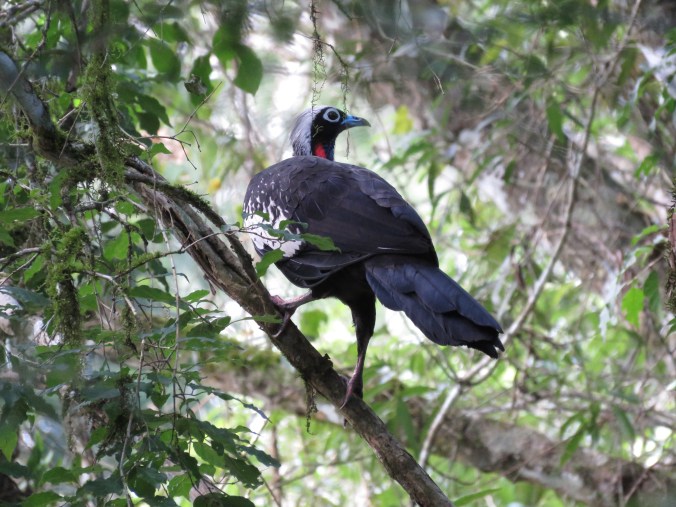
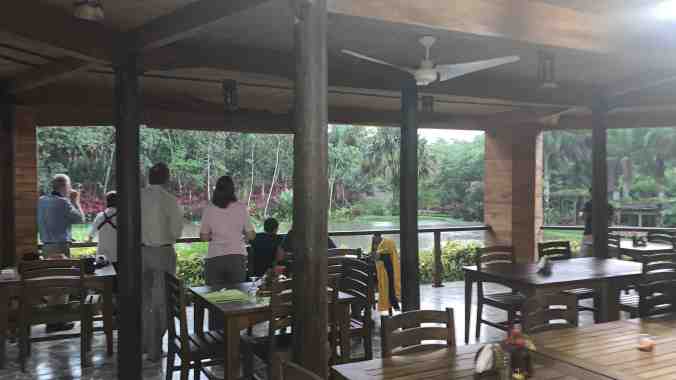
Spoonbills Dream Team @ Macaw Lodge, Global Big Day 2020

DeckJan2020

Macaw Lodge dining room observation deck, January 29, 2020

Three years ago today, a few countries north of where I type this, Team Sapsucker had excellent results on Global Big Day 2017. Today I am reporting on the efforts of one part of the Spoonbills Dream Team.

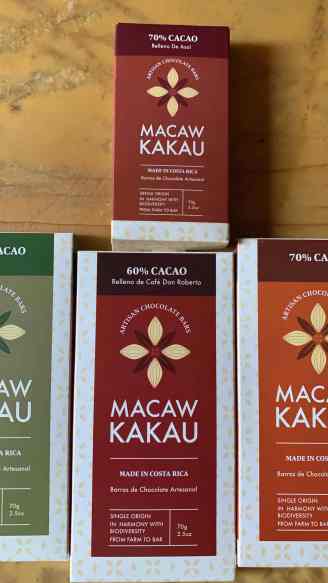
MacawChocThis team’s dream is spread across multiple geographies and results will be shared later. I will share what I know from Costa Rica. A few months ago, in a world that now seems far, far away Amie and I visited the farm where the cacao is grown for the farm-to-bar chocolate we offer in our shops. The farm has a lodge (or vice versa depending on your perspective), and before our visit to the cacao plantation and chocolate-making facilities we started, at dawn, on the deck of the lodge. That is what you see in the photo above. The lodge is closed at present but the deck that you see in that photo normally has birders from all over the world because of the forest conservation surrounding the cacao and the neighboring Carara National Park.
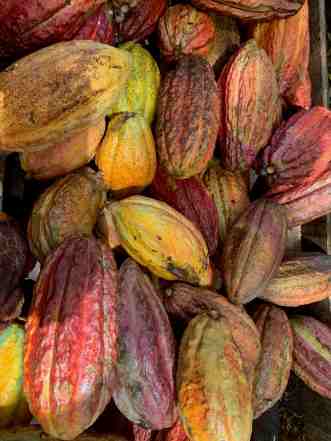
CacaoMore on the cacao-growing and the chocolate-making later. Plus, this is where I first saw a melipona bee hotel and I have photos and video from the recent harvest, so more on that later also. For now, birds. Seth, in New Haven, CT USA joined this team, then asked Amie to join the team, and she asked some birding guides who work at the lodge in the cacao plantation to join the team. I am the scribe for that Costa Rica part of the team. I do not even know who else is on the team in other countries, so will leave that for Seth or Amie to report later.
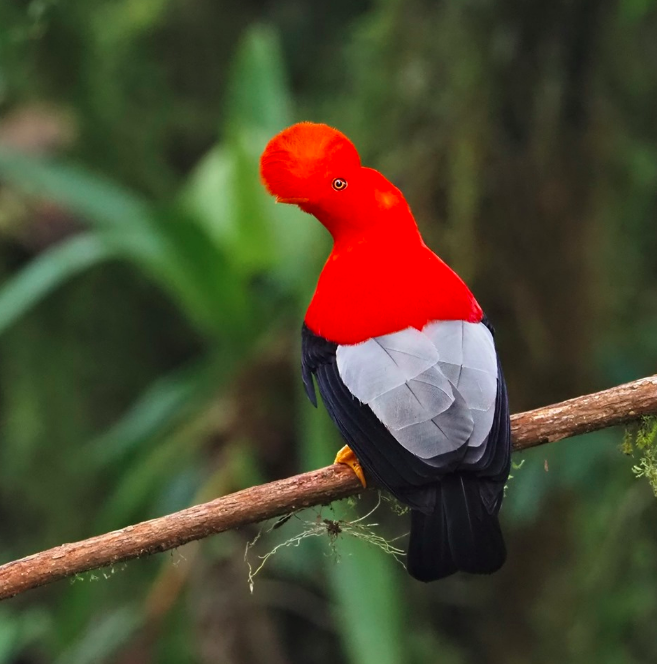
For now, some photos from the location where the bird experts have spent much of their time in recent years. Continue reading

Support Chefs Who Support Immigrant Workers

p&f_askchefsanything_LA_bigsquare_collage1-04-04

Los Angeles’s participating chefs Photo: Courtesy of Ask Chefs Anything

Devorah Lev-Tov, a writer who covers food, among other things, surprisingly has not shown up in our pages before. I am happy to link to this particular story as a first. Food and agriculture have been central to this platform since we started it in 2011. Also, immigrants-r-us, so I appreciate the effort on their behalf as much as I appreciate the visibility it is receiving in a location surprising to me. Vogue is an unlikely publication for me to source from, but credit where due, a great story:

Ask Chefs Anything: Famous Foodies Are Auctioning Their Time in Support of Immigrant Workers

As the COVID-19 pandemic continues to ravage the country and force businesses to shut down, among the hardest hit are immigrant workers—many of whom worked in the restaurant or other service industries. Now, they are left with no jobs and no unemployment benefits, struggling to put food on their plates and send money home to their families, while fearing getting sick without any support from the government.

In an effort to help them, dozens of famous chefs—including Alison Roman, Nancy Silverton, Tom Colicchio, Eric Ripert, Suzanne Goin, and Dominique Ansel—are auctioning off 30-minute virtual discussions where they will share recipes and cooking tips via a new initiative called Ask Chefs AnythingNew York City’s ended last week, Los Angeles’s auction is going on now through May 11, and Philadelphia’s takes place May 13 to 17, with more cities to follow. Continue reading

If You Happen To Be On Line

There are themes we’ve returned to frequently since the beginning of this site, in the different ways we’ve posted about collective action conservation or cultural events. The titles of those posts began with the words, “If You Happen to be in…” – followed by the location of our conservation public service announcement.

The internet has obviously played an enormous role in people’s lives for decades now, but even more so in the time of Covid-19, when so many of life’s gatherings, from education to business meetings and conferences, has shifted to the virtual realm.

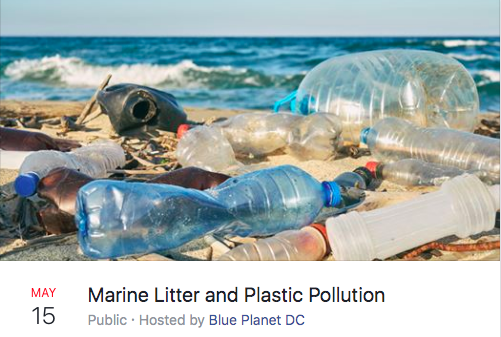
So, here’s a PSA for the Oceans. Hosted by Blue Planet, DC, with guest speaker Phil Karp (a frequent contributor to this site on themes of citizen science and marine conservation) this virtual seminar will discuss both the serious problem of marine pollution, but also some emerging solutions.

If you have an hour to spare on May 15th, join the conversation!

Details

Did you know that between 8 million and 13.5 million metric tons of plastic enter the ocean every year, equivalent to a garbage truck full of plastic EVERY MINUTE?!

Plastic entering the ocean can cause harm to marine organisms and ecosystems, coastal economies and human health. This virtual seminar by guest speaker Phil Karp will examine the magnitude and dynamics of marine litter and ocean plastic along with emerging solutions. In addition, it will discuss what governments and consumers can do to address the problem.Phil Karp recently retired from the World Bank where he was Lead Knowledge Management Specialist in the Urban Development Global Practice. He is longtime diver, citizen scientist and ocean advocate focusing on the interface between marine ecosystem conservation and livelihoods of coastal communities.

Sign up today! Join below on May 15.
https://us02web.zoom.us/j/89825590123


Crunch, Buzz, Twist & Shout

merlin_172190433_b4c20a45-587a-43e7-b808-0dd5d710645f-jumbo

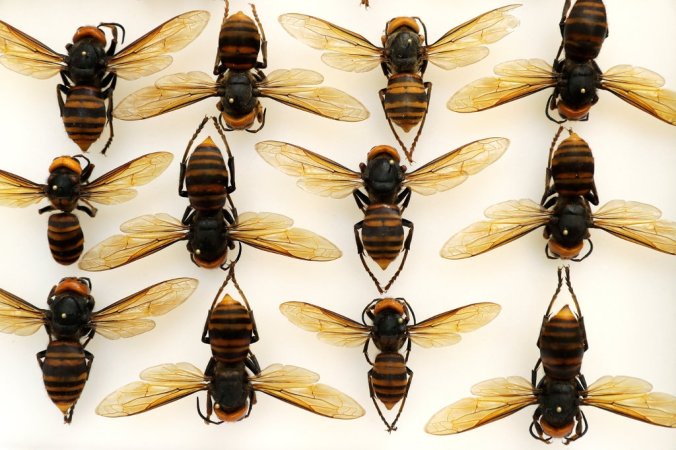
Asian giant hornets from Japan in a display case at the Washington State Department of Agriculture. Ted S. Warren/Associated Press

For every invasion there is an appropriate response, and sometimes it is culinary. Thanks to Ben Dooley for this set of ideas:

In Japan, the ‘Murder Hornet’ Is Both a Lethal Threat and a Tasty Treat

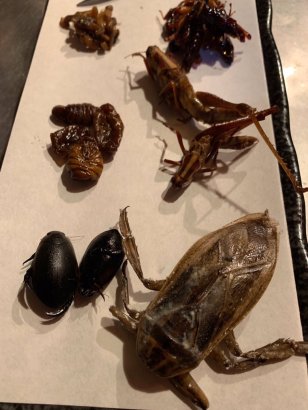
Long before the insects found their way to American shores, some Japanese prized them for their numbing crunch and the venomous buzz they add to liquor.

D-Tp6RhUwAAGMYtTOKYO — Long before the Asian giant hornet began terrorizing the honeybees of Washington State, the ferocious insects posed a sometimes lethal threat to hikers and farmers in the mountains of rural Japan.

But in the central Chubu region, these insects — sometimes called “murder hornets” — are known for more than their aggression and excruciating sting. They are seen as a pleasant snack and an invigorating ingredient in drinks.

The giant hornet, along with other varieties of wasps, has traditionally been considered a delicacy in this rugged part of the country. The grubs are often preserved in jars, pan-fried or steamed with rice to make a savory dish called hebo-gohan. The adults, which can be two inches long, are fried on skewers, stinger and all, until the carapace becomes light and crunchy. They leave a warming, tingling sensation when eaten. Continue reading

Actions Speak Louder With Words

4256bc

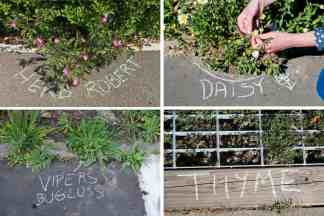
Sophie Leguil, founder of More Than Weeds, stands over chalk names of plants on the pavement.
Photograph: Jill Mead/The Guardian

Thanks to Alex Morss for this story in the Guardian about actions in the interest of botanical awareness:

‘Not just weeds’: how rebel botanists are using graffiti to name forgotten flora

Pavement chalking to draw attention to wild flowers and plants in urban areas has gone viral across Europe – but UK chalkers could face legal action

A rising international force of rebel botanists armed with chalk has taken up street graffiti to highlight the names and importance of the diverse but downtrodden flora growing in the cracks of paths and walls in towns and cities across Europe.

4592

Boris Presseq and fellow botanists write chalk plant names on the pavement in Toulouse, France. Photograph: Claire Van Beek/Handout

The idea of naming wild plants wherever they go – which began in France – has gone viral, with people chalking and sharing their images on social media. More than 127,000 people have liked a photo of chalked-up tree names in a London suburb, while a video of botanist Boris Presseq of Toulouse Museum of Natural History chalking up names to highlight street flowers in the French city has had 7m views.

4040

Chalkers say their work encourages connection with the natural world around us. Photograph: Jill Mead/The Guardian and Handout

Presseq told the Guardian: “I wanted to raise awareness of the presence, knowledge and respect of these wild plants on sidewalks. People who had never taken the time to observe these plants now tell me their view has changed. Schools have contacted me since to work with students on nature in the city.” Continue reading

I Believe In The United States Postal Service

Cep-USPS01

For the past forty years, Republicans have been seeking to starve, strangle, and sabotage the U.S. Postal Service, hoping to privatize one of the oldest and most important public goods in American history.Photograph by Dan Brouillette / Bloomberg / Getty

The first time Casey Cep came to my attention, from the vantage point of our life in India, it was like reading a message from a future we had left behind. A couple months after that, a historical note of interest. Both times, I was captivated. Nearly seven years later, I am captivated and motivated by We Can’t Afford to Lose the Postal Service. I have been watching this story unfold during my adult lifetime, and while it is not the only ideology-driven frustration I have, it is one so wrapped in big picture history that the personal history here motivates me to respond by sharing:

I am probably one of the least consequential things my mother has ever delivered. She has two other daughters, for starters—one’s a public servant and the other is a special-education teacher. But she’s also spent her working life delivering love letters, college acceptances, medications, mortgage papers, divorce filings, gold bars, headstones, ashes, and care packages. In her thirty-eight years as a rural letter carrier with the United States Postal Service, she’s delivered just about everything you can legally send through the mail. Continue reading

Marine Biodiversity and Public Health

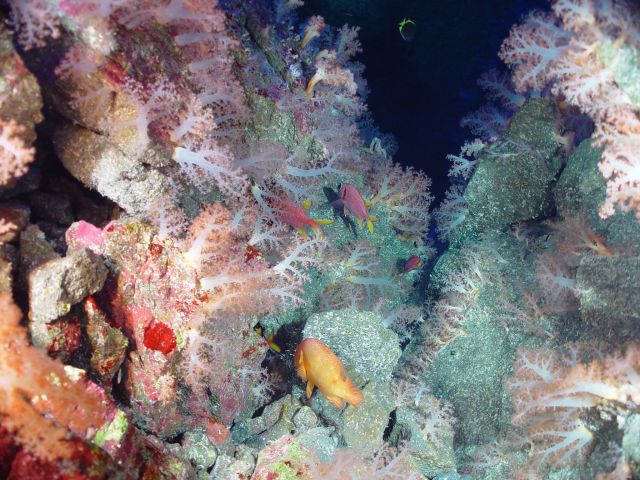
Ocean ecosystems are rich sources of compounds used in medicine. Photo by Bob Embley/NOAA.

Life within the world’s oceans have an ineffable beauty that will always defy the limitations of our discoveries. If we ever needed reasons beyond that acknowledgement, then here are timely examples of the interconnected nature of life on earth and reasons to protect our oceans and the biodiversity within them.

The Ocean Genome Helps Fight Disease: Here’s How We Save It

The ocean plays a surprising role in fighting COVID-19. With death and infection numbers escalating daily, the World Health Organization has made it clear that countries need to do three things to successfully fight this pandemic: test, test and test.

The dramatic increase in demand for testing has drawn renewed attention to the ocean’s genetic diversity. This “ocean genome” is a rich source of anti-viral compounds. In particular, enzymes from a remarkable hydrothermal vent bacterium have been key to the technology in virus test kits, including those used to diagnose COVID-19. Similarly, a protein derived from a coral reef red alga around the Canary Islands has been valuable in the fight against the Middle East Respiratory Syndrome, an illness caused by a coronavirus closely related to the one responsible for COVID-19.

This renewed attention to the genetic diversity of ocean organisms also brings conservation and equity concerns — the subject of two recent research papers commissioned by the High Level Panel for a Sustainable Ocean Economy (Ocean Panel). This research has found that multiple threats face the ocean genome, jeopardizing opportunities for new commercial and scientific uses. At the same time, there is an unbalanced relationship between low- and middle-income countries that are home to most marine biodiversity and higher-income countries, which possess the research capacity, technology, infrastructure and finances to develop marine biotechnology.

These recent papers lay out a clear list of actions that governments and marine researchers can take to safeguard the ocean genome and share its benefits equitably.

Continue reading

In Anticipation of Global Big Day, 2020

In a bit over a week, the Cornell Lab of Ornithology’s yearly push for a massive, coordinated citizen science effort in birdwatching will take place. On May 9th, I’ll be trying to see as many bird species as I can within my neighborhood of New Haven, Connecticut, just like I did last year, when I photographed the Black-and-white Warbler pictured below (recently featured as a Bird of the Day, if it looks familiar). But this time around, I’ll be part of the Spoonbills Dream Team, raising money for the BirdsCaribbean campaign to support the Journal of Caribbean Ornithology.

Continue reading